
How to estimate the mixing time of a mixing tank? Set the mixing duration by impeller type, viscosity and speed
10/22/2026
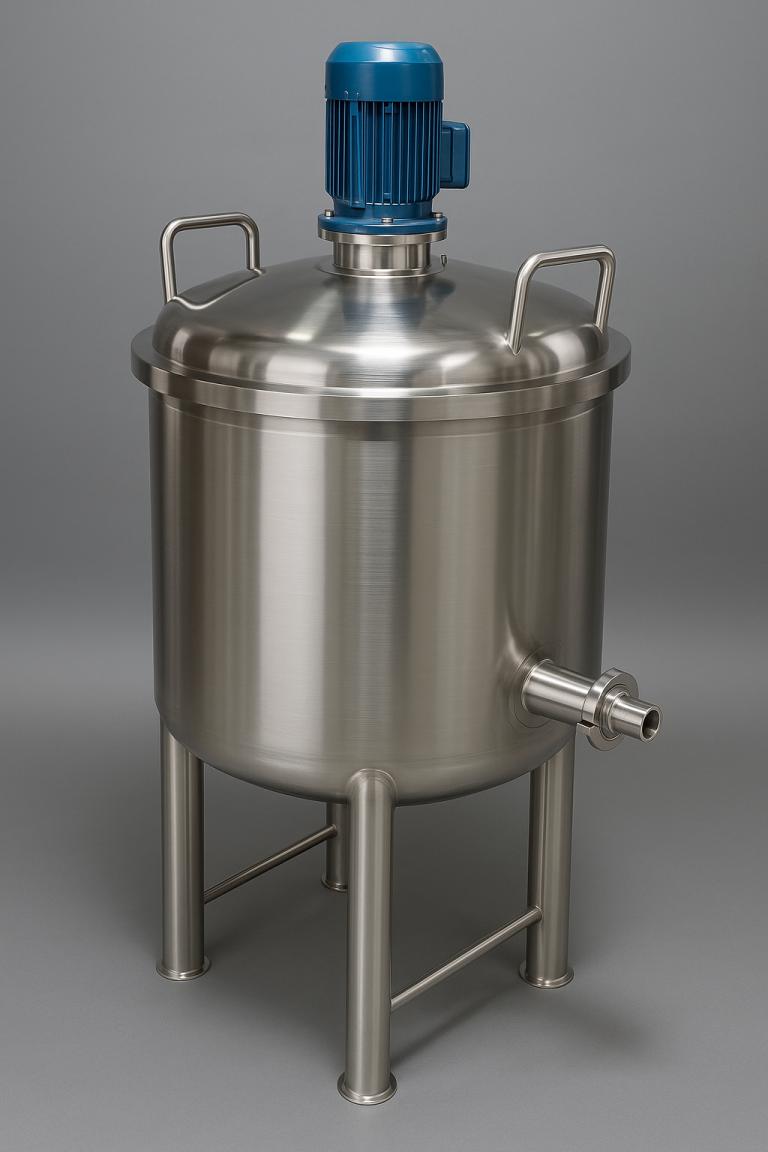
How long to stir after feeding into a mixing tank — many workshops decide by feel: ten minutes, twenty minutes, all based on the operator's experience. If the mixing time is too short, batches are uneven and downstream processes fluctuate; if too long, energy and man-hours are wasted, and high-viscosity materials heat up. Mixing time depends on impeller type, viscosity, speed and tank geometry. This article explains the influencing factors, empirical estimation methods and verification approaches, so you can set the mixing duration on a rational basis.
Why does mixing time matter?
One-sentence conclusion: mixing time directly decides batch uniformity and production cadence; if set wrong, quality fluctuates or capacity is wasted, and it is a question every mixing-tank selection and daily operation must answer.
The direct consequence of inadequate mixing is uneven component distribution within a batch — sampling fluctuates and downstream steps (reaction, emulsifying, filling) vary accordingly. Excessively long mixing extends the batch cycle, and high-viscosity systems heat up under continuous shear. For most batch production, mixing time is a quantifiable process parameter: the common industry practice is to start with an empirical estimate and then verify and correct it by tracer or sampling. During selection, mixing time also affects motor power, agitation speed and impeller type — the shorter the target mixing time, the higher the agitation intensity requirement and the higher the equipment cost. Treating mixing time as a calculable parameter rather than a guessed number of minutes is the first step towards professional mixing-tank selection and operation.
What factors affect mixing time?
One-sentence conclusion: the main factors are impeller type and size, speed (Reynolds number), material viscosity, tank geometry and baffle configuration; viscosity and impeller type matter most.
Mixing time is decided not by a single equipment parameter but by the combination of the agitation system and the material. The impeller type determines the flow pattern: axial-flow impellers (propeller, anchor with draft tube) circulate fast vertically and suit low-viscosity mixing; radial-flow impellers (turbine) give strong shear and suit dispersion; anchor and gate impellers scrape the wall and suit high viscosity and heat transfer. Higher speed mixes faster, but not without limit — beyond a certain Reynolds number the improvement in mixing time slows. As viscosity rises, turbulence weakens and laminar flow increases, so mixing time grows clearly. Tank height-to-diameter ratio and baffles also affect the flow pattern; baffles convert tangential flow into axial flow and clearly shorten mixing time in low-viscosity systems. Before estimating mixing time, fix four parameters — impeller type, speed, viscosity and tank size — and the estimate becomes meaningful.
How should mixing time be estimated?
One-sentence conclusion: engineering practice uses the dimensionless mixing-time correlation — calculate the Reynolds number first, then read the mixing-time number; without experimental data, start from industry trial values and correct by measurement.
The dimensionless mixing time θ is related to the Reynolds number Re: in the low-Re laminar region the mixing-time number is large and mixing is slow; in the high-Re turbulent region it tends to a plateau. As a general industry experience, mixing time for low-viscosity liquids ranges from tens of seconds to a few minutes, depending on the ratio of impeller diameter, speed and tank diameter; high-viscosity systems take minutes or longer. Without experimental data, start from similar-equipment experience values (for example, low-viscosity aqueous solutions 5~15 minutes with conventional agitation, medium-viscosity coating-type materials 20~40 minutes, high-viscosity pastes 40~90 minutes depending on the impeller), then verify by tracer measurement after commissioning. The estimate serves selection and preliminary process setting; the final mixing time is confirmed by measurement.
| Viscosity range | Typical systems | Common impellers | Empirical mixing time (starting value) |
|---|---|---|---|
| Low (<100mPa·s) | Aqueous solutions, solvent mixing | Propeller, turbine, baffled | 5~15 min |
| Medium (100~10000mPa·s) | Coatings, resins, adhesives | Turbine, gate, anchor | 20~40 min |
| High (>10000mPa·s) | Pastes, high-viscosity resins, adhesives | Planetary, ribbon, horizontal | 40~90 min |
How should low-, medium- and high-viscosity cases be set separately?
One-sentence conclusion: low viscosity is mixed fast with baffles and high speed; medium viscosity needs both shear and circulation; high viscosity needs larger impellers at lower speed, and the mixing time is relaxed step by step with viscosity.
Low-viscosity systems (aqueous solutions, solvents, generally below 100mPa·s) establish flow easily; with baffles the tangential flow becomes axial and mixing time shortens clearly. Speed follows the empirical impeller-tip velocity, generally 2~5m/s for good mixing, with time starting at 5~15 minutes. Medium-viscosity systems (coatings, resins, about 100~10000mPa·s) need both shear and circulation — turbine or gate impellers at moderate speed, tip velocity generally 1~3m/s, with mixing time relaxed to 20~40 minutes. High-viscosity systems (pastes, high-viscosity resins, above 10000mPa·s) are beyond conventional impellers; use a planetary mixer, ribbon or horizontal design — low speed but the blades turn the whole mass, with mixing time 40~90 minutes or longer. Every order of magnitude of viscosity raises difficulty non-linearly, so the estimated time is relaxed accordingly.
How should mixing effectiveness be verified?
One-sentence conclusion: three ways — tracer method, sampling analysis and visual flow-pattern check; the tracer is most quantitative, sampling is most direct, and visual inspection suits quick judgement.
The tracer method adds dye or tracer at the moment of feeding, samples at multiple points over time at the outlet or inside the tank, and measures concentration change; the time until uniformity (concentration deviation enters the set range) is the mixing time. It is the most quantitative method, suitable for formal calibration. Sampling analysis checks key component content per batch and looks at between-batch and within-batch fluctuation; it cannot give the mixing time directly but verifies whether mixing is sufficient — the most practical daily method. Visual flow-pattern checks suit quick judgement: observing the surface vortex, the surge behind baffles and the flow near the impeller roughly indicates whether the flow pattern is normal; obvious anomalies usually mean insufficient speed or mismatched impeller. Use the three together: tracer calibration at selection stage, sampling monitoring after commissioning, and visual inspection daily.
How should mixing time be adjusted when the charge changes?
One-sentence conclusion: when the charge deviates from the design value, adjust the mixing time by the fill factor — too little charge gives a shallow vortex and poor mass transfer, too much gives a high level and a long circulation path, so both cases need longer mixing time.
The fill factor is the ratio of the charge volume to the nominal tank volume; most mixing tanks are designed for a fill factor of 0.6~0.8. Below about 0.4 or above 0.9, mixing performance degrades. With too little charge, the liquid level is too far below the impeller, the vortex becomes shallow, the baffle effect weakens, axial circulation is insufficient and mixing time clearly lengthens. With too much charge, the level is above the design point and there is a circulation dead zone above the impeller, so more time is needed to mix evenly. In practice, when the charge deviates from the design value by more than plus or minus 10%, extend or shorten the mixing time proportionally and verify once by sampling or tracer; in small trial batches, rather stir 5~10 minutes longer than risk uneven batches. Write the fill factor into the process card, alongside impeller type and speed, as a precondition of mixing time, so estimation and verification stay stable and repeatable.
Common misunderstandings
One-sentence conclusion: three common mistakes — treating speed as the only means, treating mixing time as a fixed constant, and ignoring baffles and liquid level — all cause estimation errors.
Mistake one: the higher the speed the better. Beyond a certain Reynolds number the improvement in mixing time is limited; blindly raising speed wastes energy, and in high-viscosity systems it aggravates heating. The right approach is to match the impeller first, then adjust speed. Mistake two: mixing time is fixed. Batch viscosity variation and temperature changes alter mixing time; the process should keep a range or adjust by testing rather than sticking to one number. Mistake three: ignoring baffles and liquid level. At the same speed, mixing efficiency with and without baffles can differ by a factor of two; low and high liquid levels also have different flow patterns, so estimation and verification should follow the actual fill. Avoiding these three mistakes makes mixing-time estimation and verification practical.
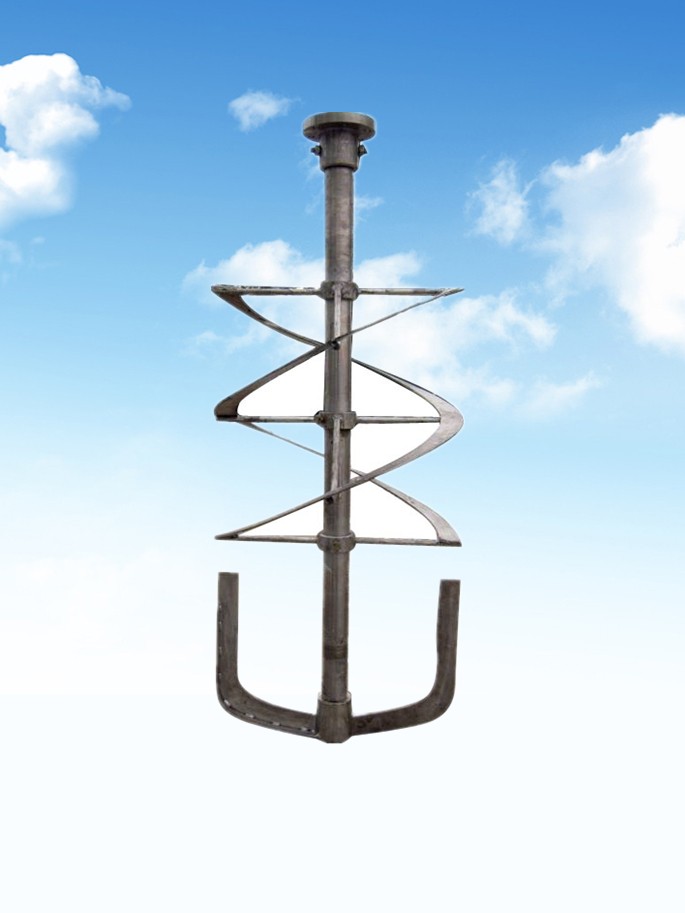
The core of mixing-time estimation is to fix four parameters first — impeller type, speed, viscosity and tank size — then take the empirical starting value by viscosity range, and verify or correct by tracer or sampling after commissioning. Write the target mixing time into the technical requirements at the selection stage so that the motor power and impeller have a basis, and re-check by measurement after the equipment arrives. Mixing time is not a value fixed once; in the early production stage we suggest tracking three to five batches in a row and gradually converging to a stable range — whether the mixing solution fits is ultimately judged by batch stability in mass production.
Hyline Shengda manufactures stainless steel mixing tanks (https://hyline.cn/zh/products/stainless-mixing-tank) and agitation systems, supporting propeller, turbine, anchor, ribbon and planetary impellers, with variable-frequency drive, weighing metering and temperature control options. Before making a mixing plan, we suggest fixing three parameters — material viscosity, charge volume and target mixing time — before discussing impeller type and power.
Further reading: - How to judge Reynolds number and flow pattern of a mixing tank? Selection significance of turbulent, transitional and laminar flow - How to configure variable-frequency speed control for a mixing tank? Correspondence between speed range and process parameters
This article is compiled by Hyline Shengda Equipment Manufacturing Co., Ltd. (hyline.cn), mainly producing stainless steel reactors, mixing tanks, storage tanks, dispersers, concentrators and complete chemical lines, supporting non-standard customization.
Q&A from this article
Frequently asked questions and answers from this article
One-sentence conclusion: mixing time directly decides batch uniformity and production cade…
Related Products

Stainless Steel Mixing Tank (Dispersion Drum)
Supporting vessel for dispersers and mixers in paints, coatings, adhesives, color slurries, inks and electronics. Available in 201/304 stainless with internal/external polishing and sloped bottom side discharge for complete draining.
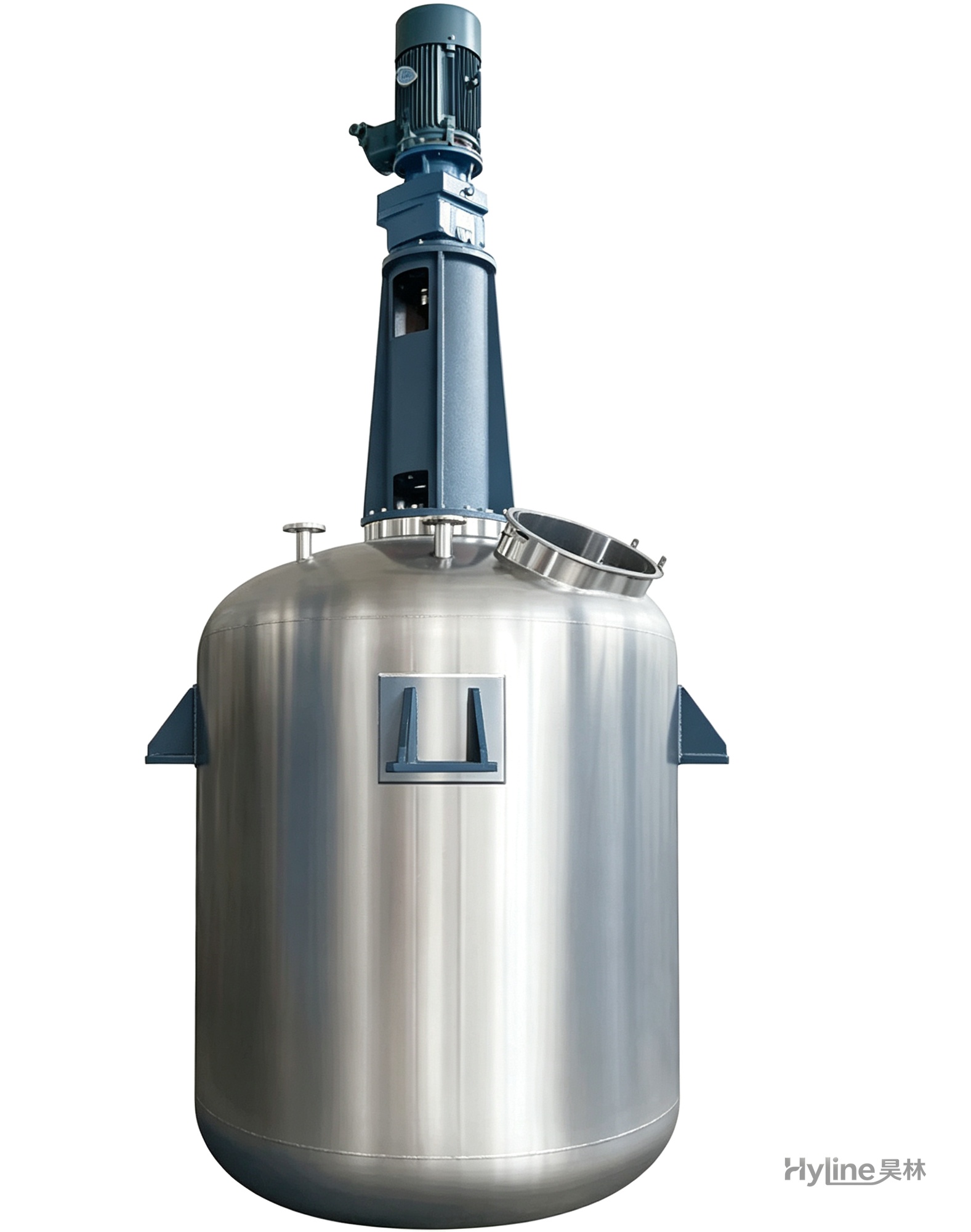
TC Series Mixing Kettle (Tinting)
For color matching in the paint industry and liquid-liquid / liquid-solid mixing in other industries. Uniform tinting, good miscibility, reasonable structure and powerful stirring.
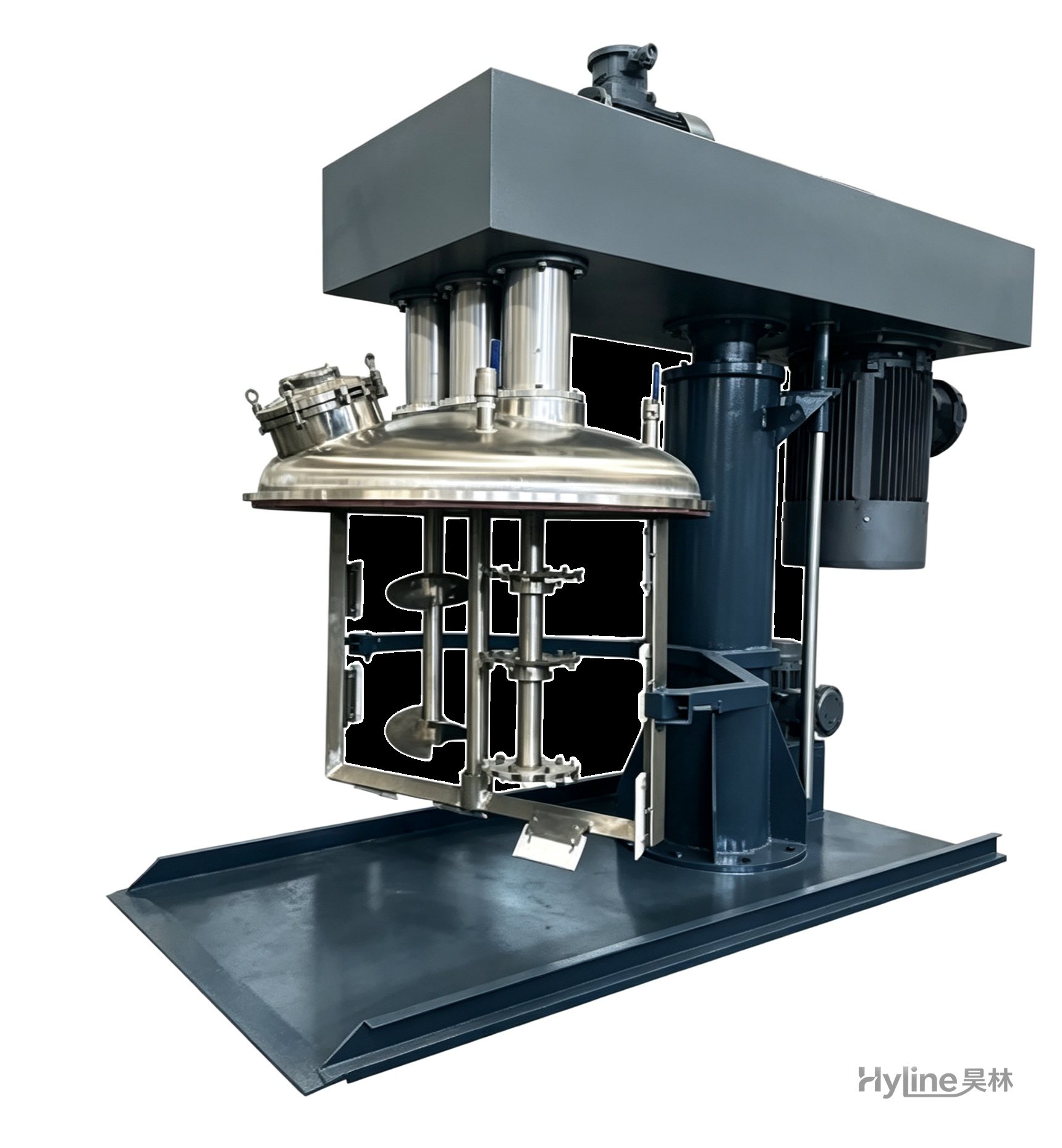
SJ Series Multi-Function Mixer
A new high-efficiency mixer for high-viscosity materials, rapidly dispersing, dissolving and homogenizing. Widely used in offset printing inks, putties and adhesives. Vacuum type customizable.
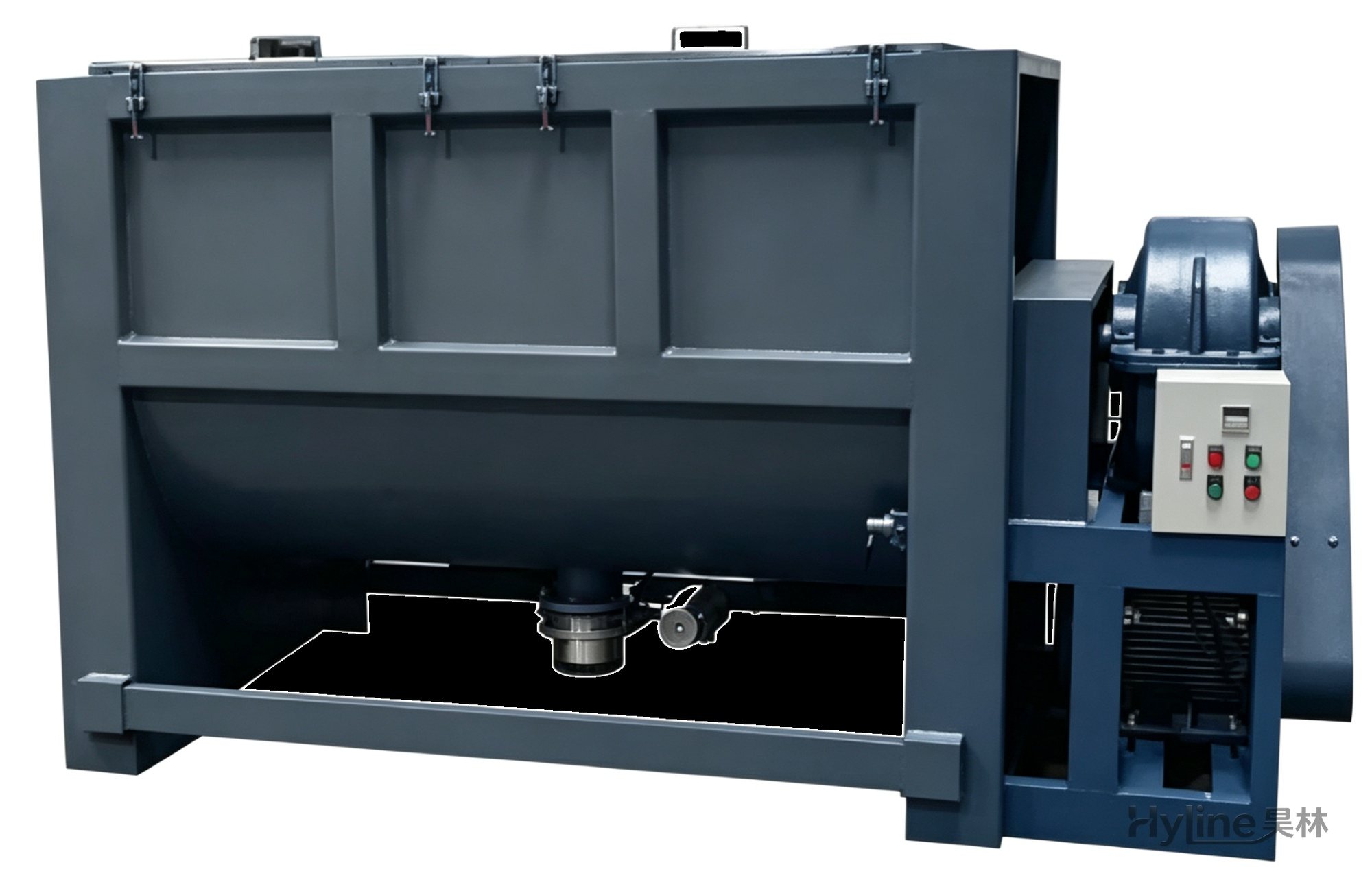
Horizontal Mixer
For color blending of plastic pellets, new/old materials and additives. Single-layer for mixing; double-layer with oil heating of 50-150℃ (custom up to 300℃). Ideal for PVC/PP/PE pellets and chemical powders such as calcium carbonate and titanium dioxide.
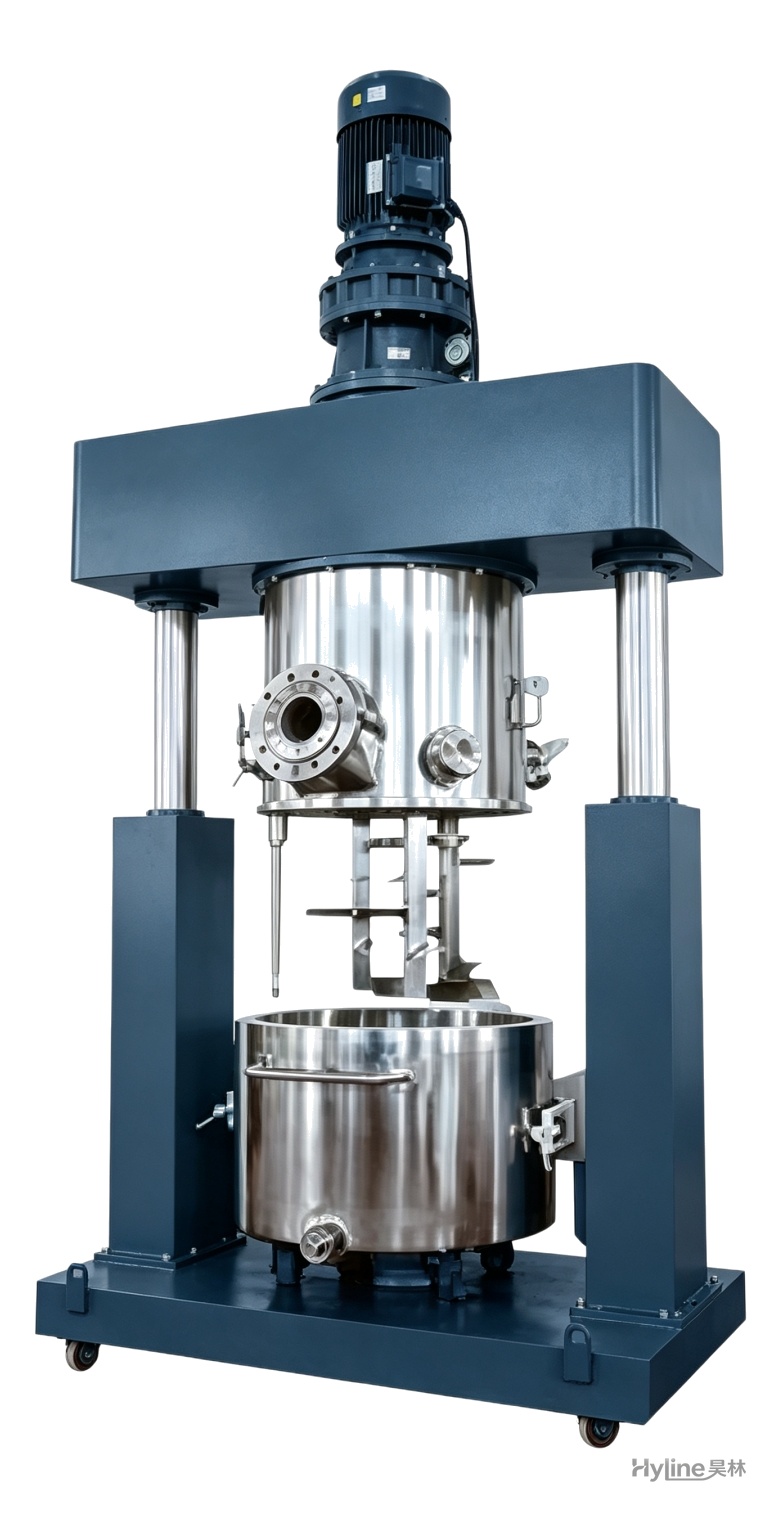
XJB Series Planetary Mixer
Planetary blades rotate and revolve simultaneously, creating complex material flow with no dead corners and easy discharge. Handles ultra-high-viscosity pastes of 10,000-8,000,000 cps for silicone, PU sealants, liquid silicone and electronic adhesives.