
Batch or Continuous Concentration: How to Choose a Concentrator Tank? Match Evaporation Rate with Production Rhythm
10/10/2026
How to Choose Between Batch and Continuous Concentration Tanks? Match Evaporation Rate with Production Rhythm
Concentration is one of the most common unit operations in chemical, pharmaceutical and food industries, but when it comes to choosing between a batch and a continuous concentration tank, many people's first reaction is "look at the output". In fact, output is only one variable. Conclusion first: small batches, multiple product grades and frequent changeover suit batch concentration; large output, single material and continuous production suit continuous concentration. The anchors for the decision are evaporation rate and the number of product grades, not simply the tank size. This article explains the applicable boundaries and configuration points of both modes.
### What is the fundamental difference between batch and continuous concentration?
Batch concentration processes one tank at a time: material is charged once, heated and evaporated under vacuum, discharged at the target concentration, then the tank is cleaned and the next batch is charged. Continuous concentration feeds and discharges material continuously: feeding, evaporation and discharging happen simultaneously in the system, and the concentration remains basically constant during stable operation. This difference defines the character of the two modes: batch concentration is flexible and suits multiple product grades, but the throughput per unit time is limited by the charging and cleaning cycle; continuous concentration has high efficiency and stable output, but requires stable material properties and a single product grade. Choosing between them is essentially a trade-off between flexibility and efficiency.
### What kind of small-batch multi-grade production suits batch concentration?
Fine chemical intermediates, traditional Chinese medicine extraction liquids produced by front-end stainless steel reactors before concentration, and small-batch flavor and fragrance production usually suit batch concentration better. There are three reasons. First, many product grades: two or three materials may be changed every day, and the batch mode can complete concentration, discharging and cleaning in one tank with fast changeover. Second, small batch size: several hundred kilograms to two or three tons per batch, and the volume and vacuum level of the batch tank are easier to match. Third, flexible process requirements: different materials have different requirements for evaporation temperature, vacuum level and concentration end point, and the batch mode can adjust parameters batch by batch, while changing parameters of a continuous system requires stopping the whole line, which is costly. Generally, a vertical batch concentration tank with a vacuum system, condenser and solvent recovery tank is selected for such conditions, with the volume determined by the single-batch processing amount.
### When should a large-output single-material line use continuous concentration?
The typical scenario for continuous concentration is a continuous production line with stable output and a single material, such as large solvent recovery systems, single-grade juice concentration and stable-grade resin desolventizing. Such conditions process dozens of tons per day, and the batch cycle of charging, evaporation, discharging and cleaning would consume a large part of the capacity; a continuous system can keep the evaporation area and vacuum system fully utilized. It should be noted that continuous concentration has high requirements on feed concentration and flow stability. When the fluctuation of upstream processes is large, the concentration control of the continuous system will be affected. It is generally recommended to equip on-line concentration detection interlocked with the feed pump, and automatically adjust the feed rate when the concentration deviates from the set value.
### How to estimate the evaporation rate? It determines the equipment size
Regardless of batch or continuous mode, the selection of concentration equipment starts with the evaporation rate. Evaporation rate refers to the amount of solvent or water evaporated from the material per unit time, in kilograms per hour. The estimation method is generally as follows: first determine the material processing amount, initial concentration and target concentration, calculate the solvent amount to be evaporated, then divide it by the planned production time to get the required evaporation rate; then select the heating area and vacuum level according to the evaporation rate. Generally, under atmospheric or low vacuum, the evaporation rate is roughly proportional to the heating area; after the vacuum level is increased, the same area can maintain evaporation capacity at a lower temperature. In the industry, the empirical value of how much evaporation per square meter of heating area is commonly used for preliminary selection, but the specific value is affected by the material boiling point, viscosity and vacuum level. It is recommended to ask the manufacturer to calculate according to the material parameters rather than copying the value directly.
### How to calculate the batch cycle? It determines the single-tank volume
The single-tank volume of batch concentration is essentially derived backwards from the batch cycle. Generally, first set the time budget of each batch according to the process: how many hours for charging, evaporation concentration, discharging and cleaning, and how many batches are planned per day; then divide the daily processing amount by the daily batches to get the single-batch processing amount, and further deduce the tank volume by the charging coefficient (generally 60%–75% of the tank volume). For example, for 10 tons of material per day and 8 batches per day, the single batch is about 1.25 tons; with a 70% charging coefficient, a single-tank volume of about 2 cubic meters is appropriate. If the batch cycle is extended to 12 batches, the single batch drops to 0.85 tons and the tank volume can be reduced accordingly. The key here is to determine the production rhythm accurately first, so that the tank volume has a basis; if the rhythm is misestimated, the tank will either be oversized and idle or undersized and overloaded. The blending and homogenization of material before concentration is generally completed in a mixing tank, and the tank volume and agitation configuration should also be included in the batch plan.
### How does the concentration tank configuration follow the process?
The core configuration of a concentration tank is four sections: heating, vacuum, condensation and recovery. The heating section generally uses a jacket or external coil with steam; for materials with high viscosity or temperature sensitivity, an internal coil is considered to increase the heat exchange area. The vacuum section is equipped with a vacuum pump and vacuum regulating valve; the vacuum level is determined by the boiling point and heat sensitivity of the material; for temperature-sensitive materials, the vacuum is raised to lower the evaporation temperature. The condensation section is equipped with a shell-and-tube or spiral plate condenser to condense and recover the evaporated solvent vapor. The recovery section is equipped with a solvent receiving tank, and the recovered solvent can be reused to reduce loss and emission. For pharmaceutical and food conditions, attention should also be paid to the cleanliness requirements of the contact surfaces of the concentrate and condensate; the material and polishing grade should follow the hygienic standard.
| Configuration item | Batch concentration | Continuous concentration | Notes |
|---|---|---|---|
| Heating section | Jacket / external coil / internal coil | Tubular heater / falling-film evaporator | Determined by viscosity and heat sensitivity |
| Vacuum section | Vacuum pump + regulating valve | Vacuum pump + stable pressure control | Raise vacuum for heat-sensitive materials |
| Condensation section | Shell-and-tube / spiral plate condenser | Multi-stage condensation + recovery | Solvent recovery rate is key |
| Control section | Manual / semi-automatic batch control | On-line concentration + automatic adjustment | Continuous system needs interlocking |
### How to control the concentration end point and concentration?
The end point of batch concentration and the concentration stability of continuous concentration are two different control problems. In batch mode, a sampling port or on-line concentration meter is generally equipped on the concentration tank; evaporation stops and discharging starts when the target concentration is reached. Concentration judgment relies on manual sampling plus instrument recheck. During operation, note that sampling should be done while hot to prevent the concentrate from cooling and crystallizing, which affects the reading. In continuous mode, an on-line concentration meter is interlocked with the feed pump; when the concentration deviates from the set value, the feed rate or steam volume is automatically adjusted so that the discharge concentration stays stable within the target range. One reminder here: the choice of concentration meter is strongly related to material properties. A refractometer suits clear solutions, a density meter suits homogeneous liquids, and for liquids containing solid particles, on-line sampling and filtration should be considered, otherwise the reading will drift.
### How to configure solvent recovery and the vacuum system?
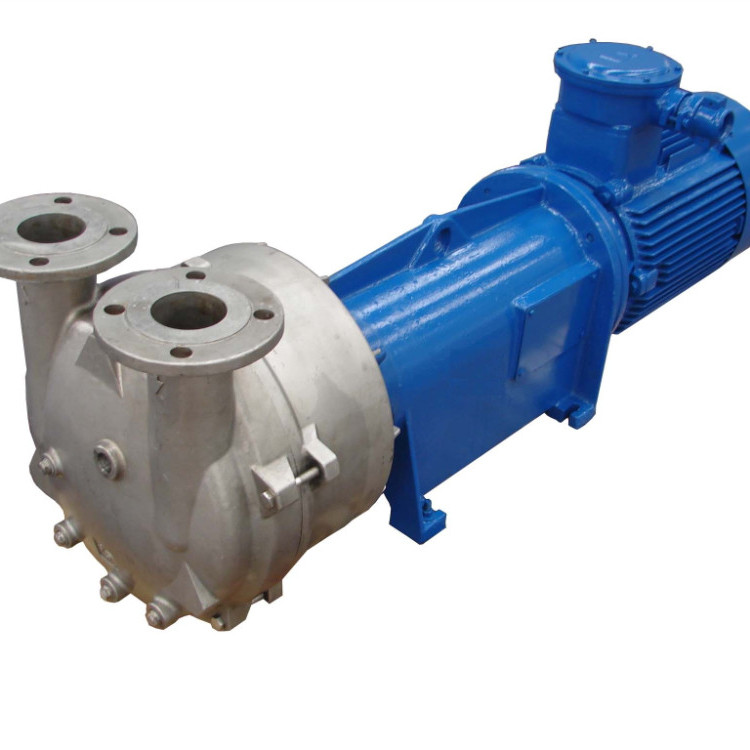
A large part of the operating cost of a concentration system lies in solvent recovery and vacuum energy consumption. Solvent recovery mainly depends on the cooling capacity of the condenser and the capacity of the recovery tank: with low cooling water temperature and sufficient condensation area, the solvent recovery rate can generally reach above 95%, and the recovery tank volume should be reserved according to the single-batch or single-day recovery amount. For the vacuum system, the common configuration is a water-ring vacuum pump with a buffer tank; for materials containing volatile components or requiring high vacuum, a Roots pump is added for two-stage evacuation, and the vacuum level can be further reduced from several hundred pascals. A frequently underestimated point here: the pipe diameter and filter configuration of the vacuum pipeline. If the pipeline is too thin or no demister is installed, the entrained liquid will directly enter the vacuum pump, affecting pump life and vacuum stability.
### What extra requirements do heat-sensitive materials impose on the configuration?
When concentrating heat-sensitive materials (such as antibiotics, vitamins and natural extracts), temperature is the biggest enemy, and the configuration should lean toward low-temperature evaporation. The general practice is to raise the vacuum level to lower the boiling point: a material that needs 90 degrees to evaporate under atmospheric pressure can have its evaporation temperature reduced to about 50–60 degrees when the vacuum reaches around -0.08MPa, significantly reducing the decomposition risk of heat-sensitive materials. At the same time, control the residence time of the material in the heating section. For batch concentration, pay attention to the problems of low liquid level and local overheating in the later stage of concentration; for continuous concentration, choose a falling-film or short-path evaporation structure, so that the material stays on the heat exchange surface for a short time and is heated evenly. After the evaporation temperature is lowered, the cooling burden of the condensation section increases, and the cooling water temperature and condensation area should be recalculated according to the lower boiling point. This is a link that is easy to miss in heat-sensitive material concentration schemes.
### Summary
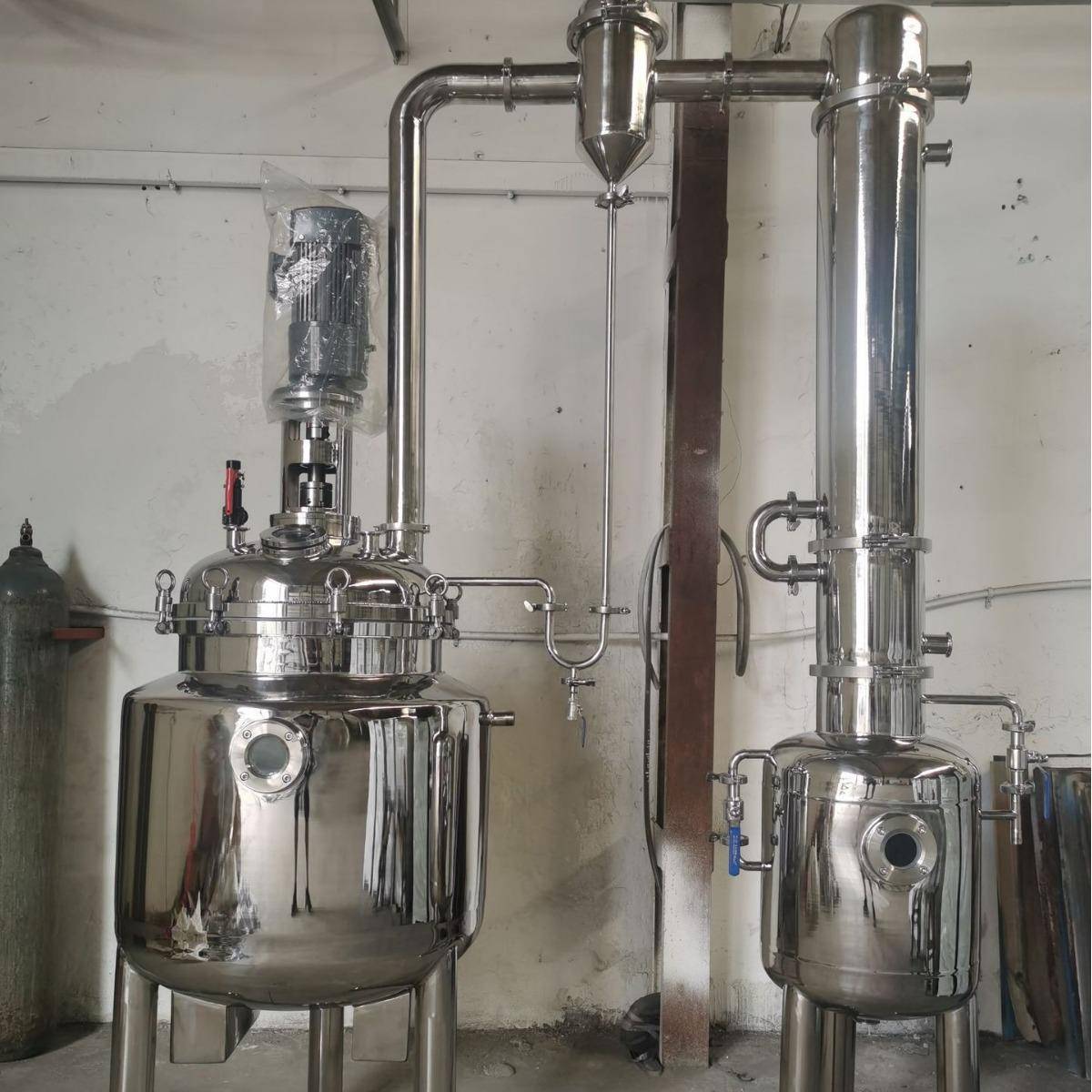
Batch and continuous concentration are not about which is more advanced, but about process matching. Choose batch for many product grades, small batches and variable parameters; choose continuous for large output, stable materials and continuous production. Regardless of the mode, the starting point of selection is to calculate the evaporation rate, and then match the four-section configuration of heating, vacuum, condensation and recovery with the material properties. When purchasing, write the material composition, feed concentration, target concentration, production time and temperature sensitivity requirements into the technical agreement; the manufacturer calculates the heating area and vacuum configuration according to the evaporation rate, so that the equipment can be debugged in place at one time after arrival. Below is a set of real photos of the concentration unit and vacuum system, and the on-site layout of the vacuum concentration unit can be used as a reference.

Further reading: - How to control the vacuum level of a concentration tank: vacuum regulating valve and system configuration essentials - How does a vacuum concentration tank work? Evaporation principle, structure and daily maintenance essentials
This article is compiled by Shenzhen Hyline Equipment Manufacturing Co., Ltd. (hyline.cn); all information rights belong to the original authors. Main products: stainless steel reactors, mixing tanks, storage tanks, dispersers, concentration tanks and complete chemical process lines; custom (non-standard) manufacturing supported.
Q&A from this article
Frequently asked questions and answers from this article
How to choose between batch and continuous concentration? This article compares the two processes by evaporation rate, material properties and production rhythm, and gives configuration and selection basis.
Related Products
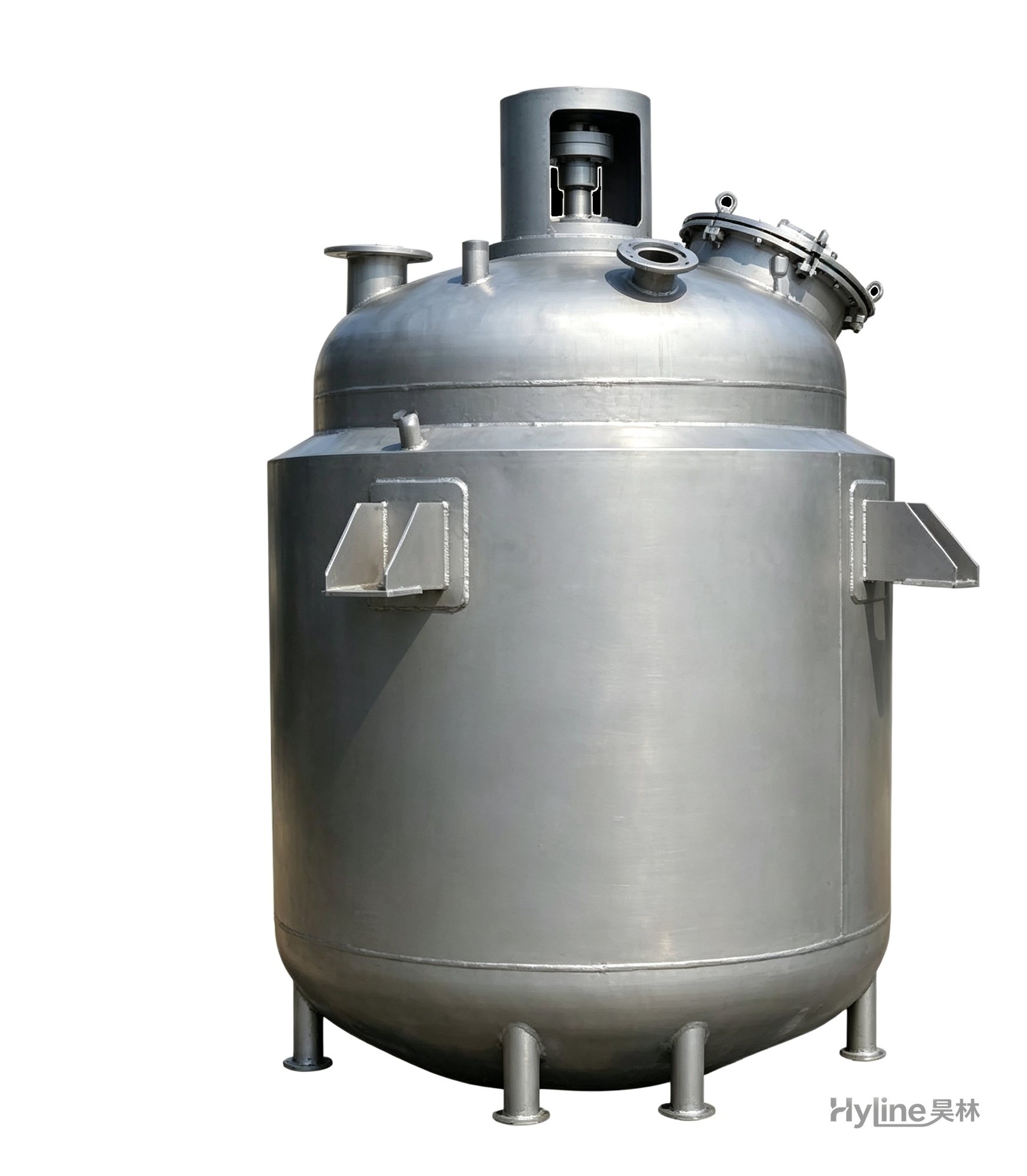
Jacketed Reactor
The typical main reaction vessel in chemical production. Mixing, heating and cooling disperse and mix materials for reaction and polymerization. The jacket circulates thermal oil/steam for heating or cooling water for temperature control.
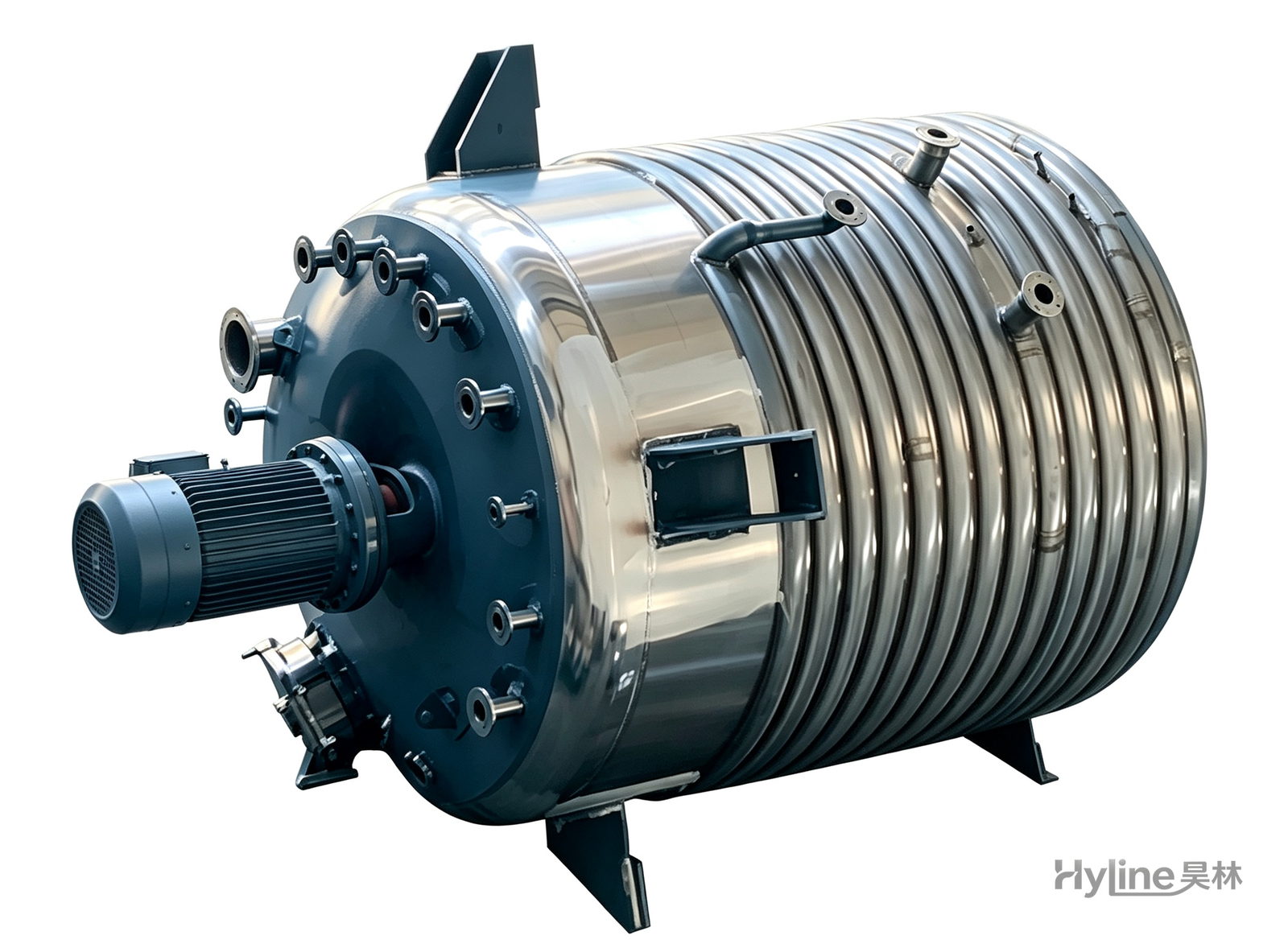
External Half-Coil Reactor
External half-pipe heating & cooling coils provide uniform, efficient heat exchange with zero material dead zones inside. Mirror-polished 304/316L stainless tank is clean and corrosion-resistant. For resin, new-energy slurry and pharmaceutical synthesis.
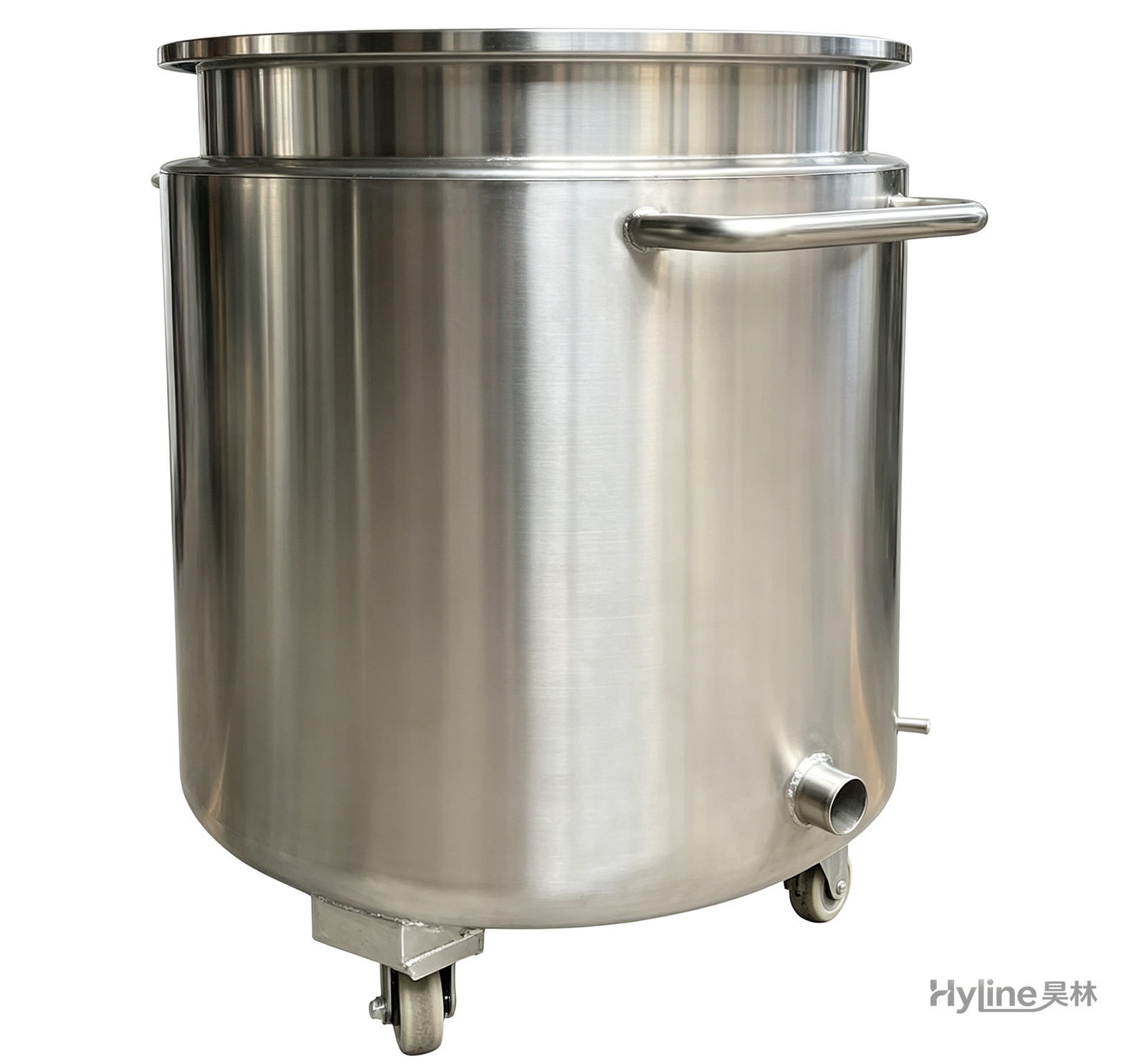
Stainless Steel Mixing Tank (Dispersion Drum)
Supporting vessel for dispersers and mixers in paints, coatings, adhesives, color slurries, inks and electronics. Available in 201/304 stainless with internal/external polishing and sloped bottom side discharge for complete draining.
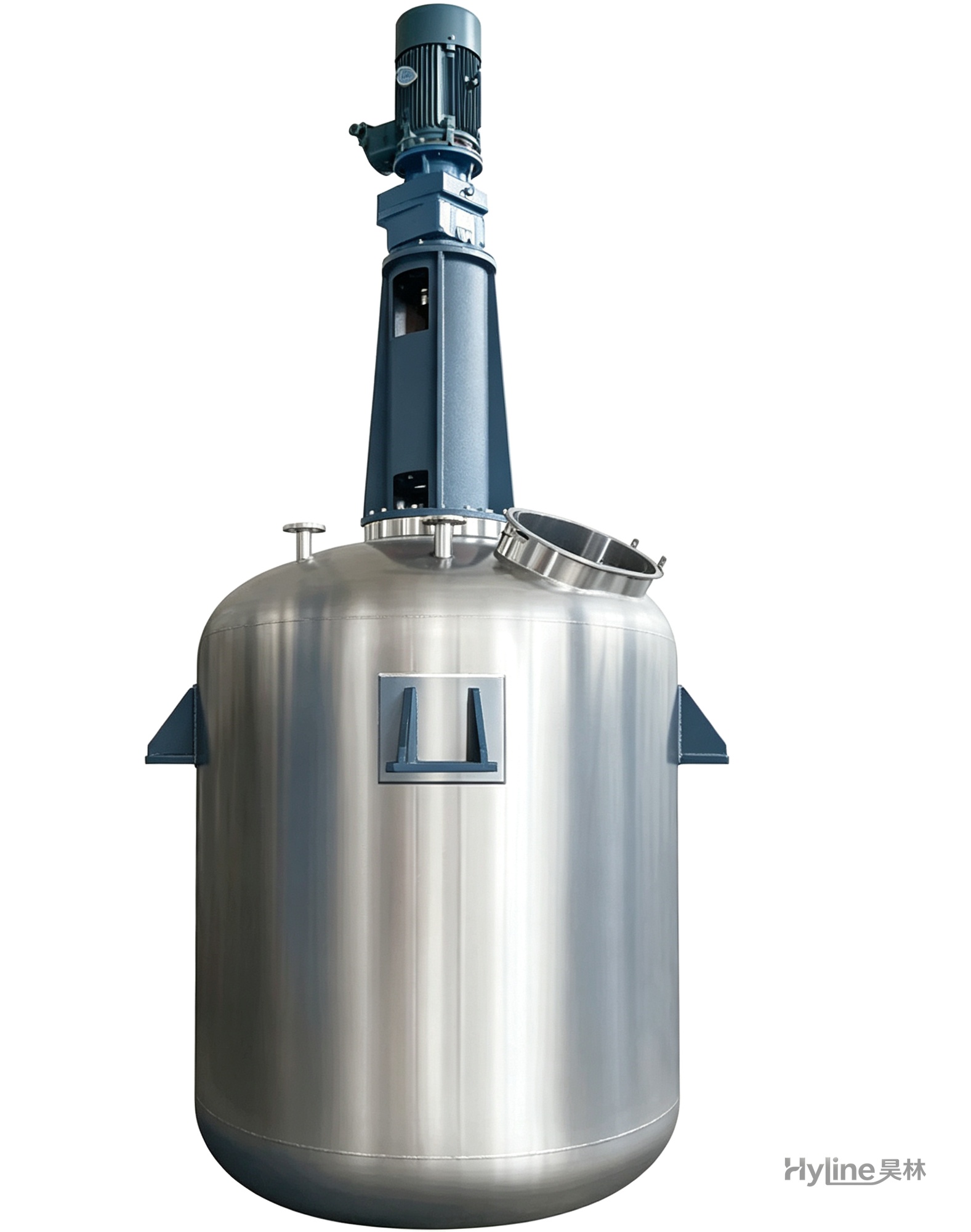
TC Series Mixing Kettle (Tinting)
For color matching in the paint industry and liquid-liquid / liquid-solid mixing in other industries. Uniform tinting, good miscibility, reasonable structure and powerful stirring.
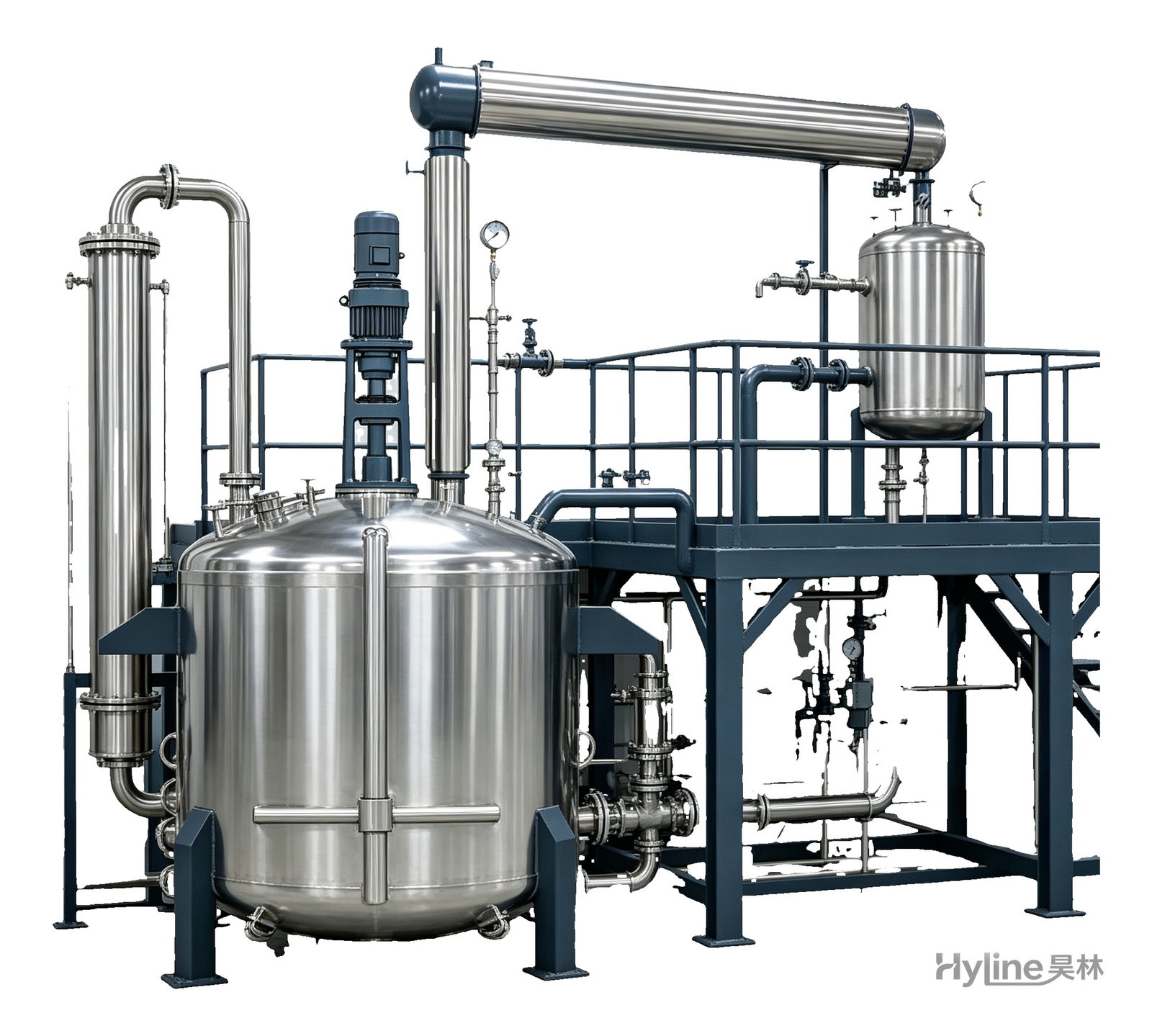
Complete Resin Production Equipment
Resin production packages built around the reactor, with vertical fractionating column, horizontal condenser and water separator for full synthesis, dehydration and reflux processes. Sizes from 300L to 30000L.