
How to Choose the Heating Medium of a Concentrator? Steam, Thermal Oil and Electric Heating by Material Heat Sensitivity and Evaporation Capacity
10/15/2026
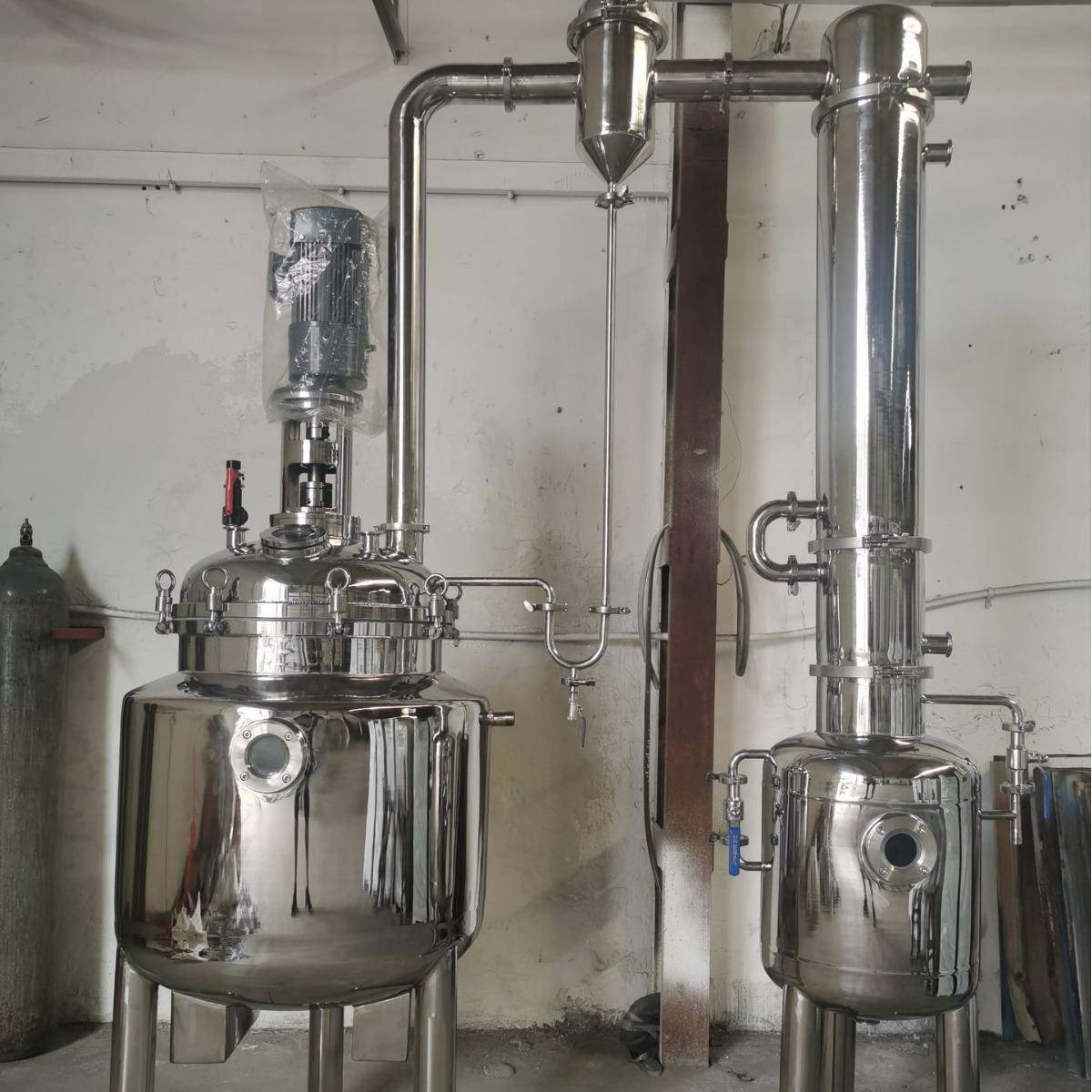
The heating medium of a concentrator decides three things: evaporation rate, energy consumption and material quality. With the same concentration task, the evaporation temperature curves of steam, thermal oil and electric heating are completely different: heat-sensitive materials use low-differential steam evaporation, high-boiling-point solvents need the stable high temperature of thermal oil, and workshops without a boiler can only rely on electric heating. Choosing the wrong medium means either slow evaporation and lengthened batches, or local overheating and loss of active ingredients. This article explains the applicable conditions, heat-load estimation and checking points of the three media along the lines of material heat sensitivity and evaporation capacity; final parameters are confirmed by process trials and manufacturer calculation.
Why Does the Heating Medium Decide Concentration Efficiency?
One-line conclusion: the heating medium decides the evaporation temperature and heat-transfer differential, thus the evaporation rate, energy consumption and material thermal stability - the first parameter of concentrator selection.
The essence of concentration is heating to vaporize and discharge the solvent; the evaporation rate relates to heating temperature, heat-transfer differential and area. A high medium temperature and large differential evaporate fast but carry a higher local overheating risk; a low temperature and small differential are safe for the material but slow. Vacuum concentration lowers the boiling point, achieving a higher evaporation rate at a lower medium temperature - the standard route for heat-sensitive materials. The medium also decides the energy form and auxiliary equipment: steam needs a boiler and piping, thermal oil needs a heater, electric heating needs power capacity. So choosing a medium is not choosing "which kind of heat" but deciding evaporation capacity, material thermal stability and site energy together. The sequence is: fix evaporation capacity and material requirements first, then choose the medium against the site energy, and finally calculate the heat-transfer area.
Steam Heating: Mainstream Choice and Applicable Conditions
One-line conclusion: steam heating has a high heat-transfer coefficient and controllable temperature, suits concentrators with a steam source on site, larger evaporation capacity or low-differential temperature control, and is the first choice of most chemical and food concentration.
Steam transfers heat to the liquid through the jacket or heat exchanger, releasing latent heat upon condensation with high efficiency. Steam pressure decides the saturation temperature: 0.1MPa is about 120℃ and 0.2MPa about 134℃, with the jacket temperature controlled by pressure reducing and regulating valves. Concentration commonly uses low-pressure steam with vacuum to lower the liquid boiling point to 60-80℃, keeping the medium-liquid differential within 20-40℃ while balancing evaporation rate and material safety. Points to note for steam heating: condensate must be discharged in time (steam traps), otherwise the water film lowers heat transfer; steam pressure fluctuation affects evaporation stability, so stabilize it upstream. For projects with a steam source and large evaporation capacity, steam heating has relatively low operation cost and is the priority option.
Thermal Oil Heating: High-Temperature Stability and Uniformity
One-line conclusion: thermal oil heating is uniform and stable, can exceed 200℃, and suits high-boiling-point, stable-high-temperature or differential-sensitive concentration.
Thermal oil is heated in the heater and sent through a circulation pump to the jacket or heat exchanger, with temperature regulated by furnace load and flow, giving better uniformity and stability than direct steam. Applicable conditions: solvents with high boiling points (some solvents boil at 120-180℃ at atmospheric pressure) where steam temperature is insufficient or fluctuation affects the process; concentration requiring stable high temperature over long periods. A thermal oil system needs a heater, circulation pump, expansion tank and temperature control, with higher investment than steam. The medium temperature is generally 180-250℃; when calculating the area, control the differential between oil and liquid, using low-differential design for heat-sensitive materials. Operation points: periodically test the oil quality and control the furnace temperature limit to avoid oil coking.
Electric Heating: For Workshops without a Boiler
One-line conclusion: electric heating has no boiler dependency and controllable heating, suits small batches, workshops without steam and pilot concentration; estimate power by evaporation capacity, generally 20-50kW per ton of water-equivalent evaporation.
Electric heating uses heating elements in the jacket or an external electric heater, regulated by the temperature control system with fast response and higher accuracy. Applicable conditions: workshops with only electricity and no boiler or thermal oil heater; small-batch or pilot concentration that does not justify a dedicated boiler. Estimate power by evaporation: convert the water evaporated per unit time into heat load (the latent heat of water is about 2260kJ/kg, plus heating and heat loss), with the common industry value of 20-50kW per ton of water-equivalent evaporation. Points to note: too high a power density causes local overheating; explosion-proof workshops need explosion-proof elements; confirm the power capacity in advance. Electricity cost is higher than steam and thermal oil, so compare the overall cost for long-term large-batch concentration.
How to Decide by Material Heat Sensitivity? Low-Temperature Evaporation Requirements
One-line conclusion: heat-sensitive materials (herbal extraction liquids, fruit juice, flavors, vitamins) use vacuum plus low-differential heating, keeping the differential between medium temperature and liquid boiling point within 10-30℃ to avoid degrading active ingredients.
The core constraint of heat-sensitive concentration is liquid temperature and heating time. Vacuum lowers the boiling point to 40-70℃ and the medium temperature correspondingly to 60-100℃; the smaller the differential the safer the material, but the slower the evaporation, compensated by a larger area. Design points: write the maximum jacket medium temperature (e.g. 90℃), control the liquid boiling point by vacuum, design the differential at 10-30℃; use stirring or forced circulation to strengthen heat transfer and shorten the residence time at the heating surface. For heat-sensitive concentration such as fruit juice and herbal extraction, steam or hot water with low differential is mainstream; configurations with large differential and fast evaporation look high-capacity but actually lose active ingredients on heat-sensitive materials, so treat "maximum material temperature" as a hard constraint in selection.
How to Decide by Evaporation Capacity? Heat-Load Estimation
One-line conclusion: evaporation capacity decides the heat load and heat-transfer area: heat load equals evaporated water x latent heat plus sensible heating plus heat loss; for large evaporation prefer steam, and calculate the area by heat-transfer coefficient.
The heat load of a concentrator consists of three parts: the latent heat absorbed by the evaporated solvent, the sensible heat of heating the liquid, and heat loss from the tank and piping. Common industry estimation: evaporating 1 ton of water needs about 2.5-3 million kilojoules (including latent heat and loss), corresponding to about 0.5-0.7 tons of steam; calculate the area by heat-transfer coefficient (steam jacket generally 300-600 W/(m2·℃)) and average differential. For large-capacity continuous production, steam heating has lower unit energy cost; for small intermittent batches, electric heating is flexible. Write the four numbers - daily evaporation, batch time, liquid boiling point and vacuum - into the inquiry so the supplier calculates the heat load and area, avoiding "evaporation below target and lengthened batches".
How to Configure the Heating Structure and Heat-Transfer Area?
One-line conclusion: a concentrator commonly uses jacket heating; add an external coil or heater when the jacket area is insufficient, and vacuum concentration equips a condenser for solvent recovery, with the area calculated by heat load and differential.
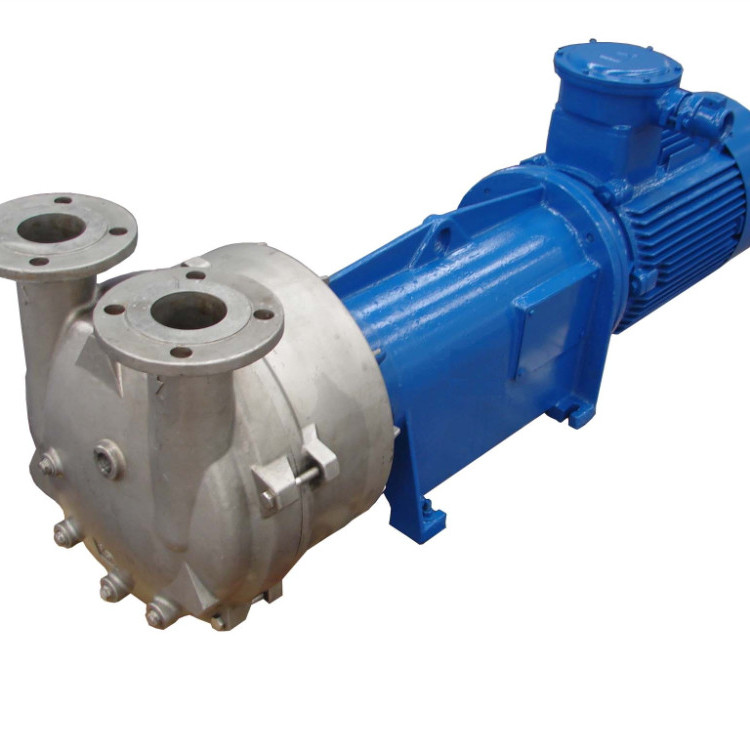
The heating structure of a concentrator is mainly the jacket, with the liquid boiling under vacuum and the jacket supplying heat uniformly. The jacket area is limited by the tank; for large evaporation add an external coil or an internal heat exchanger; borrow the half-pipe structure of an external half-coil reactor to add area without occupying internal space. Vacuum concentration is equipped with a condenser and vacuum pump: solvent vapor from evaporation is condensed and recovered in the condenser, and the vacuum pump maintains the system vacuum; both must match the heating capacity, otherwise the condenser cannot keep up no matter how fast evaporation is, and the vacuum cannot be reached. Heat-transfer area, condenser area and vacuum pump capacity are the three matching parameters of a concentration system and should be checked together in the technical agreement.
How to Compare and Choose the Three Media?
One-line conclusion: choose by the three groups of conditions in the table - energy, material heat sensitivity and evaporation capacity: prefer steam when steam is available, use thermal oil for high boiling points without steam, and electric heating for small batches without a boiler.
| Medium | Common temperature range | Evaporation characteristics | Applicable conditions | Main cost |
|---|---|---|---|---|
| Steam | 100-170℃ (by pressure) | Fast heat transfer, low differential controllable | Steam source, batch production | Boiler and steam cost |
| Thermal oil | 180-250℃ | Stable uniform high temperature | High-boiling solvents, differential-sensitive | Heater and oil |
| Electric | Ambient to 150℃ | Fast response, controllable | No boiler, small batch, pilot | Higher electricity |
The table is a common industry reference. Selection order: first confirm the site energy (steam/thermal oil/electricity), then check material heat sensitivity (heat-sensitive materials need low differential and a medium temperature limit), and finally calculate the heat load and area by evaporation capacity. After the three conditions intersect, most projects have a clear tendency: steam for regular chemical concentration, thermal oil for high-boiling solvents, electric heating for pilot and small batches. When unsure, compare three parameters - medium temperature, liquid boiling point and evaporation time - in bench trials, which is more reliable than guesswork.
Purchasing Checklist
One-line conclusion: check quotations by five groups of parameters: heating medium, heat load, heat-transfer area, vacuum matching and safety configuration.
When receiving a concentrator quotation, check item by item: first, heating medium and temperature range - whether it matches the site energy and whether the medium temperature limit is written; second, heat-load calculation - whether the load for daily evaporation and batch time is met; third, heat-transfer area - whether the jacket and supplemental structures are calculated by load and differential; fourth, vacuum matching - whether the condenser area and vacuum pump capacity match the evaporation; fifth, safety configuration - whether electric explosion-proofing, steam pressure matching and thermal oil safety valves are in place. Choosing a concentrator heating medium is essentially matching energy conditions, material thermal stability and evaporation capacity; write the three conditions clearly before discussing price, and evaporation efficiency and energy consumption are settled at this step. As part of a complete chemical line, the concentrator should also be coordinated with upstream and downstream equipment, with capacity and energy calculated as a whole.
Further Reading
- How to Match Concentrator Evaporation Temperature and Vacuum? Low-Temperature Evaporation and Condensate Recovery Points
- How to Choose between Single-Effect and Double-Effect Concentrators? Evaporation Capacity and Energy by Material and Capacity
This article is provided by Haolin Shengda Equipment Manufacturing Co., Ltd. (hyline.cn), specializing in stainless steel reactors, mixing tanks, storage tanks, dispersers, concentrators and complete chemical line support, with non-standard customization available.
Q&A from this article
Frequently asked questions and answers from this article
The concentrator heating medium is decided by material heat sensitivity and evaporation capacity: heat-sensitive materials use low-differential steam heating, high-boiling-point solvents use thermal oil, and workshops without a boiler use electric heating; this article gives heat-load estimation and a comparison table.
Related Products
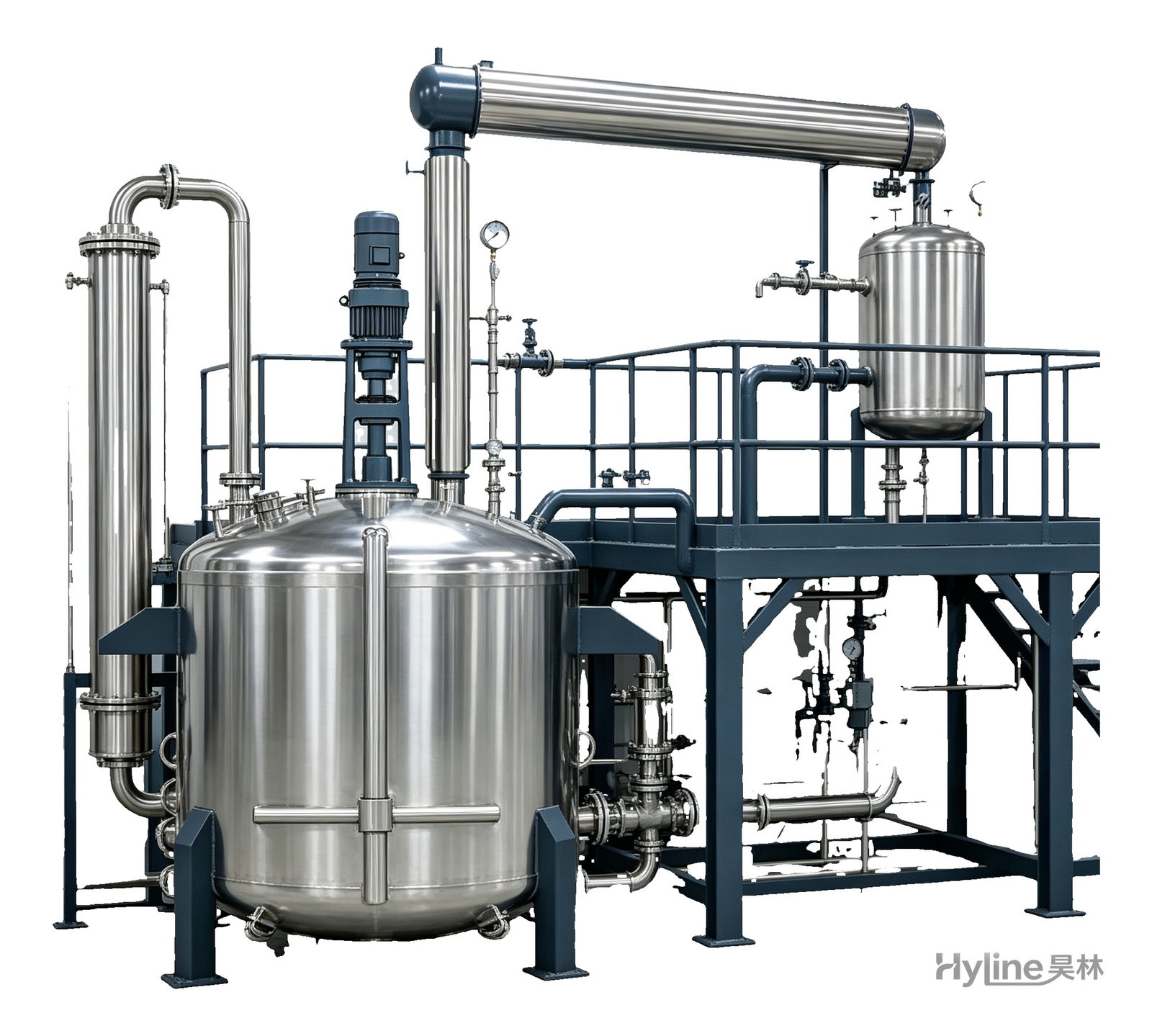
Complete Resin Production Equipment
Resin production packages built around the reactor, with vertical fractionating column, horizontal condenser and water separator for full synthesis, dehydration and reflux processes. Sizes from 300L to 30000L.
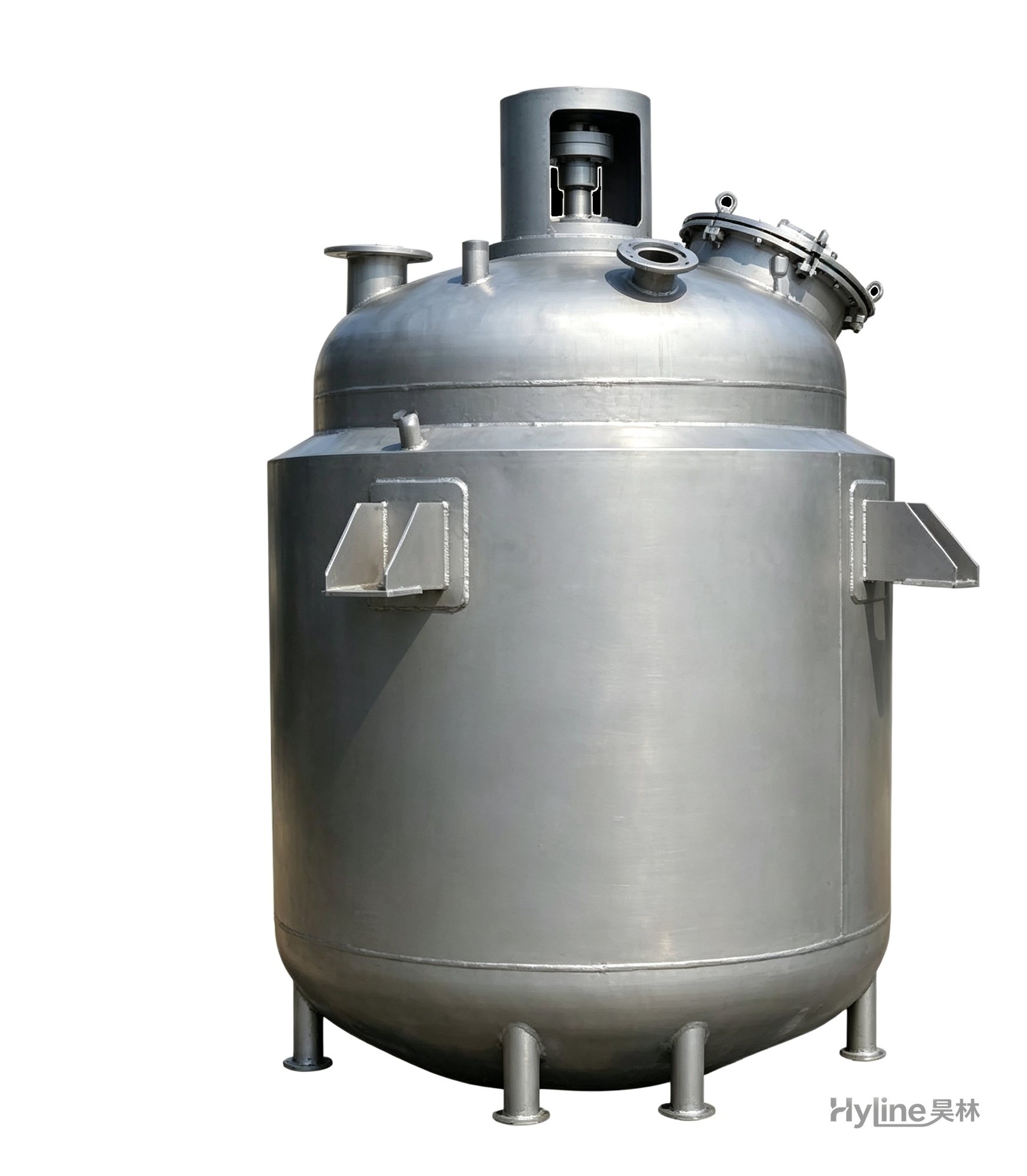
Jacketed Reactor
The typical main reaction vessel in chemical production. Mixing, heating and cooling disperse and mix materials for reaction and polymerization. The jacket circulates thermal oil/steam for heating or cooling water for temperature control.
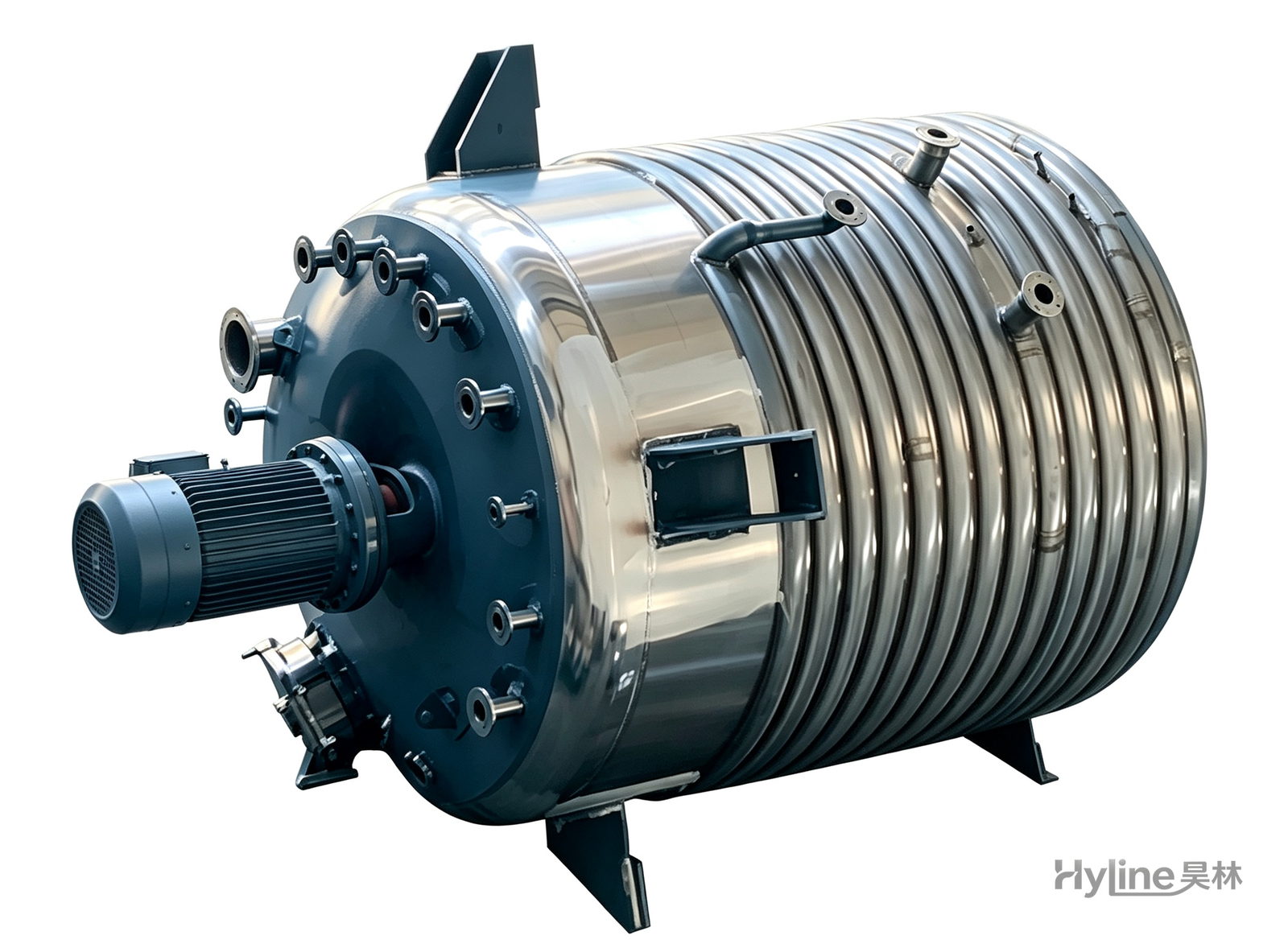
External Half-Coil Reactor
External half-pipe heating & cooling coils provide uniform, efficient heat exchange with zero material dead zones inside. Mirror-polished 304/316L stainless tank is clean and corrosion-resistant. For resin, new-energy slurry and pharmaceutical synthesis.
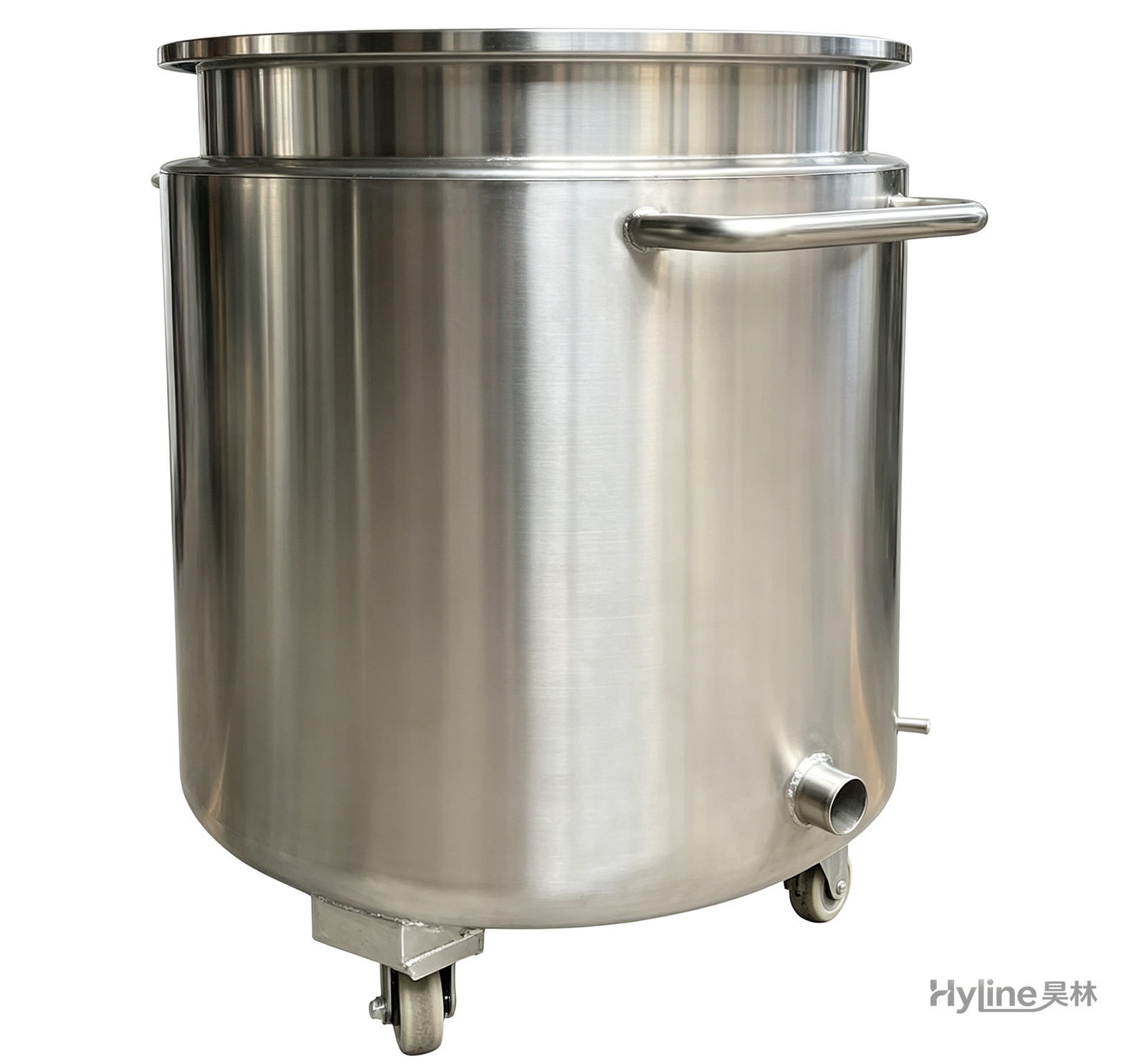
Stainless Steel Mixing Tank (Dispersion Drum)
Supporting vessel for dispersers and mixers in paints, coatings, adhesives, color slurries, inks and electronics. Available in 201/304 stainless with internal/external polishing and sloped bottom side discharge for complete draining.