
How to choose a reactor for the concrete admixture industry: temperature control and dosing configuration for polycarboxylate superplasticizer synthesis
11/3/2026
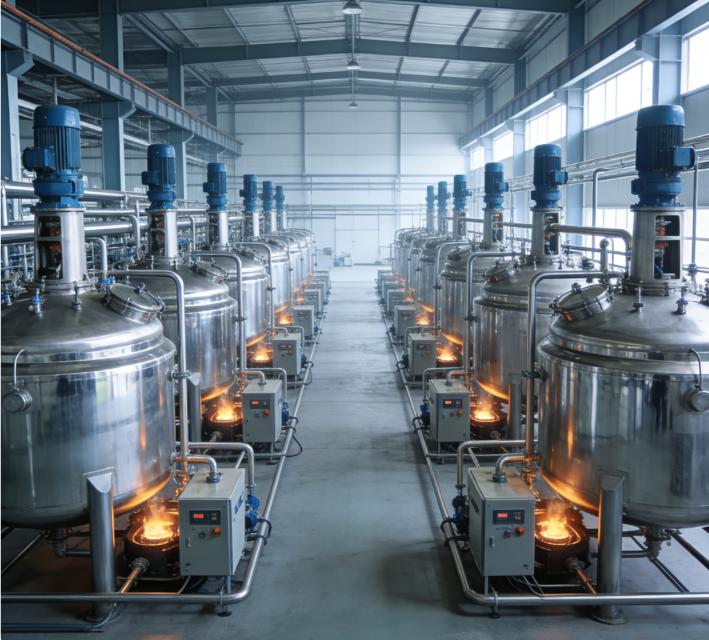
Polycarboxylate superplasticizer is a standard admixture for ready-mixed concrete, and its synthesis takes place in a reactor: aqueous free-radical polymerization, with molecular weight distribution controlled by dosing monomer and initiator, and polymerization heat removed by cooling. The duty sets clear requirements on the equipment: atmospheric pressure, moderate temperature, aqueous system, medium heat release. The real difficulty is not the pressure class but temperature control and dosing accuracy. If temperature is not held, molecular weight distribution widens and water reduction varies; if dosing is uneven, local overheating causes runaway polymerization and the whole batch is lost. Hyline Shengda (hyline.cn) supplies non-standard stainless steel reactors, mixing tanks and complete chemical lines. What can be customized: vessel volume and aspect ratio, number of impeller stages and impeller types, heat transfer area of jacket and coil, dosing nozzles and distributor type, temperature measurement point, discharge and filtration arrangement. This article covers reactor selection for typical concrete admixture duty so that the parameters are right before you place the order.
What does superplasticizer synthesis demand of the equipment?
One-line conclusion: four things, temperature must be controllable, dosing must be even, the material must resist an acidic environment, and discharge must be filtered clean. Temperature control is the first of these, because it decides product quality.
A typical profile runs like this: charge base water and part of the monomer, heat to 60 to 80 °C, then dose the remaining monomer and the initiator solution separately over 2 to 4 hours, hold for 1 to 2 hours to complete the reaction, and finally cool below 40 °C and neutralize with alkali solution to pH 6 to 8, giving a mother liquor of 40% to 50% solids. The whole process runs at atmospheric pressure with no high-pressure risk, but polymerization releases heat intensively: if cooling cannot keep up, the temperature climbs more than ten degrees in a few minutes and the molecular weight distribution broadens with it.
This sets the first principle of selection: heat transfer area takes priority over volume. Many buyers choose on how many tonnes one batch produces, and end up with a large vessel whose heat transfer area was never increased, so production has to be cut back when summer cooling water runs warm. The correct order is to estimate the heat release rate first, fix the heat transfer area, and derive the vessel volume from that.
How to set volume and batch size?
One-line conclusion: take nominal volume as batch output times 1.25 to 1.4, take the fill coefficient at 0.7 to 0.75, and leave head space able to absorb the volume increase during dosing.
The material volume changes through the batch: base water goes in first, then monomer and initiator solution keep entering during dosing, and the final volume is 20% to 30% larger than at the start. Working on the usual fill coefficient of 0.8 means the level approaches the high-level alarm towards the end of dosing. The practical rule is to choose nominal volume at 1.25 to 1.4 times the final volume.
| Mother liquor per batch | Recommended nominal volume | Recommended final level | Matching configuration |
|---|---|---|---|
| 5 t | 8000 L | about 70% | two-stage impeller, jacket and internal coil |
| 10 t | 15000 L | about 70% | two-stage impeller, jacket and coil, external loop optional |
| 15 t | 20000 L | about 72% | two-stage impeller, jacket and coil, external loop |
| above 20 t | 30000 L | about 72% | two-stage impeller, jacket, coil, external loop, twin dosing system |
Batch size must also match downstream blending capacity. Mother liquor is rarely used directly; it goes to blending vessels where set-retarding, air-entraining and slump-retaining components are added to make the finished product, and blending vessels are usually smaller and more numerous than the synthesis reactor. Take the reactor cycle as 6 to 8 hours, meaning 1 hour charging and heating, 2 to 4 hours dosing, 1 to 2 hours holding, and 1 hour cooling and neutralization; two to three batches a day is the common rhythm.
How to choose agitation?
One-line conclusion: use a two-stage combination with a radial-flow lower impeller and an upper gate, four baffles, and tip speed of 3 to 5 m/s, to serve both the instant dispersion of dosed monomer and bulk circulation once viscosity rises.
Viscosity changes through the batch: near that of water at the base water stage, a few hundred mPa·s in mid-dosing as polymer forms, and up to around a thousand mPa·s in the mother liquor at the end. A single impeller type rarely covers that range. The common arrangement is a pitched or straight blade turbine lower, which disperses the dosed monomer quickly and prevents local high concentration, and a gate or anchor upper, which handles bulk circulation and wall heat transfer, both driven from one shaft and one gearbox.
Baffles are again mandatory: four of them, width one tenth of vessel diameter. Without them, at fast dosing rates the incoming monomer drifts on a swirling surface for a long time before mixing in, giving high local concentration and uneven reaction. Tip speed sits at 3 to 5 m/s: slower and the dosed monomer does not disperse, faster and air is drawn in, and foam in polycarboxylate mother liquor affects later metering and loading.
How to arrange heat transfer?
One-line conclusion: jacket plus internal coil is the base configuration. Above 10 t per batch, or where summer water temperature is high, add an external circulation loop; only all three together are enough.
The peak heat release comes in the early to middle part of dosing, when cooling must hold temperature within ±2 °C of set point. A jacket is mandatory, sized at roughly 1.5 to 2.5 m² of heat transfer area per cubic metre of contents. An internal coil adds a further 30% to 50% of area, sits directly in the product and responds faster than the jacket, which makes it well suited to shaving the peak.
| Configuration | Heat transfer capacity | Response | When to use |
|---|---|---|---|
| Jacket | base, about 1.5-2.5 m²/m³ | slow | mandatory in every case |
| Internal coil | adds 30%-50% area | fast | shaving the mid-dosing peak |
| External circulation exchanger | expandable as required | medium | above 10 t or warm summer water |
| Chilled water unit | stable low-temperature source | stable | summer or continuous production |
The cold source is the part most often overlooked. With mains water or cooling tower water, summer temperatures exceed 30 °C, the temperature difference for heat transfer is halved and cooling capacity drops sharply. Where possible, install a chilled water unit holding cooling water at 7 to 15 °C, and batch consistency improves markedly. Temperature should be measured where the product flows well and close to the dosing zone, normally through a wall-mounted thermowell or on the lower side wall, never in a dead pocket.
How to configure the dosing system?
One-line conclusion: the dosing system influences product quality more than the reactor body itself. Use head tanks with metering pumps, make the dosing rate adjustable and interlocked with temperature, and build the dosing outlet as a distributor rather than a single pipe jetting into the liquid.
Monomer and initiator must be dosed separately, each line with its own head tank, filter, flow meter and control valve, with the dosing rate settable and displayed in real time on the control panel. The safer arrangement is to interlock dosing rate with vessel temperature: when temperature exceeds the upper limit the feed automatically reduces or stops, and it resumes once temperature falls back. This single interlock prevents the great majority of runaway polymerization incidents.
Nozzle position and form are critical. A single jetting pipe creates a locally high concentration zone beneath the outlet, where polymer grows first and molecular weight runs high; changing to a distributor, such as a perforated ring or spray pipe, spreads the dosed material evenly across the surface and narrows the molecular weight distribution noticeably. The distributor is normally fitted close to but below the liquid surface, with outlets pointing down or obliquely down so that nothing is sprayed onto the wall where it can skin over.
How to choose material and discharge?
One-line conclusion: use 316L for all product contact parts, fit filtration and a return line at the outlet, and pass the mother liquor through a filter before it goes to storage.
The system is acidic during dosing: monomer of the acrylic type and the initiator solution sit at roughly pH 3 to 5, returning to 6 to 8 after neutralization. 304 is acceptable in the finished product section, but long exposure to the acidic dosing environment tends to leave corrosion marks at welds and in the heat-affected zone. 316L contains molybdenum and is a grade better against organic acids and chlorides, and the difference in service life shows within three to five years. Polish the internal wall to Ra no greater than 0.8 μm, grind welds flush and pickle and passivate, which clearly reduces polymer build-up and skinning on the wall.
On the discharge side, match the mother liquor characteristics: fit a basket or inline filter at the bottom outlet to catch any gel particles that could block downstream pumps and loading lines, and provide sampling valves before and after the filter so that the need to clean the screen can be judged. When the mother liquor goes to a storage tank, that tank needs low-speed agitation or periodic recirculation to prevent separation during long standing, and its material is chosen on the same basis from finished product pH and storage period.
Which parameters to confirm before ordering?
One-line conclusion: confirm formulation characteristics, output per batch, heat release rate, dosing process and cold source conditions, and the reactor configuration can be fixed.
The checklist is: first, formulation characteristics, meaning monomers and initiator type, pH range during dosing, final solids content and viscosity, and whether chlorides are present. Second, batch output and cycle: mother liquor per batch, batches per day, permitted cycle time. Third, heat release rate, which must be estimated from the formulation and is the direct basis for heat transfer area. Fourth, dosing process: number of dosing lines, total quantities, dosing time, whether temperature interlock is needed, and the dosing outlet form. Fifth, cold source conditions: cooling water source, maximum summer temperature, whether a chilled water unit is installed.
Once these five are settled, vessel volume, impeller stages and types, heat transfer area and form, material and polish grade, and dosing nozzles and instrumentation can all be calculated. Remaining details such as manway size, sight glass specification, weighing modules and control cabinet form follow site practice. If the configuration is still uncertain, run a trial first: take the proposed dosing rate and cooling capacity into a test reactor, record the temperature curve and molecular weight distribution, and only then fix the design for scale-up.
Further reading: - Comparing reactor heating and cooling methods: how to choose between jacket, external half coil and internal coil - How to choose the material of a stainless steel reactor: 304, 316L and clad plate by media corrosivity
This article is compiled by Hyline Shengda Equipment Manufacturing Co., Ltd. (hyline.cn). The information ownership belongs to the original author. Main products: stainless steel reactors, mixing tanks, storage tanks, dispersers, concentrators and complete chemical line supporting equipment; non-standard customization supported.
Q&A from this article
Frequently asked questions and answers from this article
One-line conclusion: take nominal volume as batch output times 1.25 to 1.4, take the fill …
Related Products

Jacketed Reactor
The typical main reaction vessel in chemical production. Mixing, heating and cooling disperse and mix materials for reaction and polymerization. The jacket circulates thermal oil/steam for heating or cooling water for temperature control.
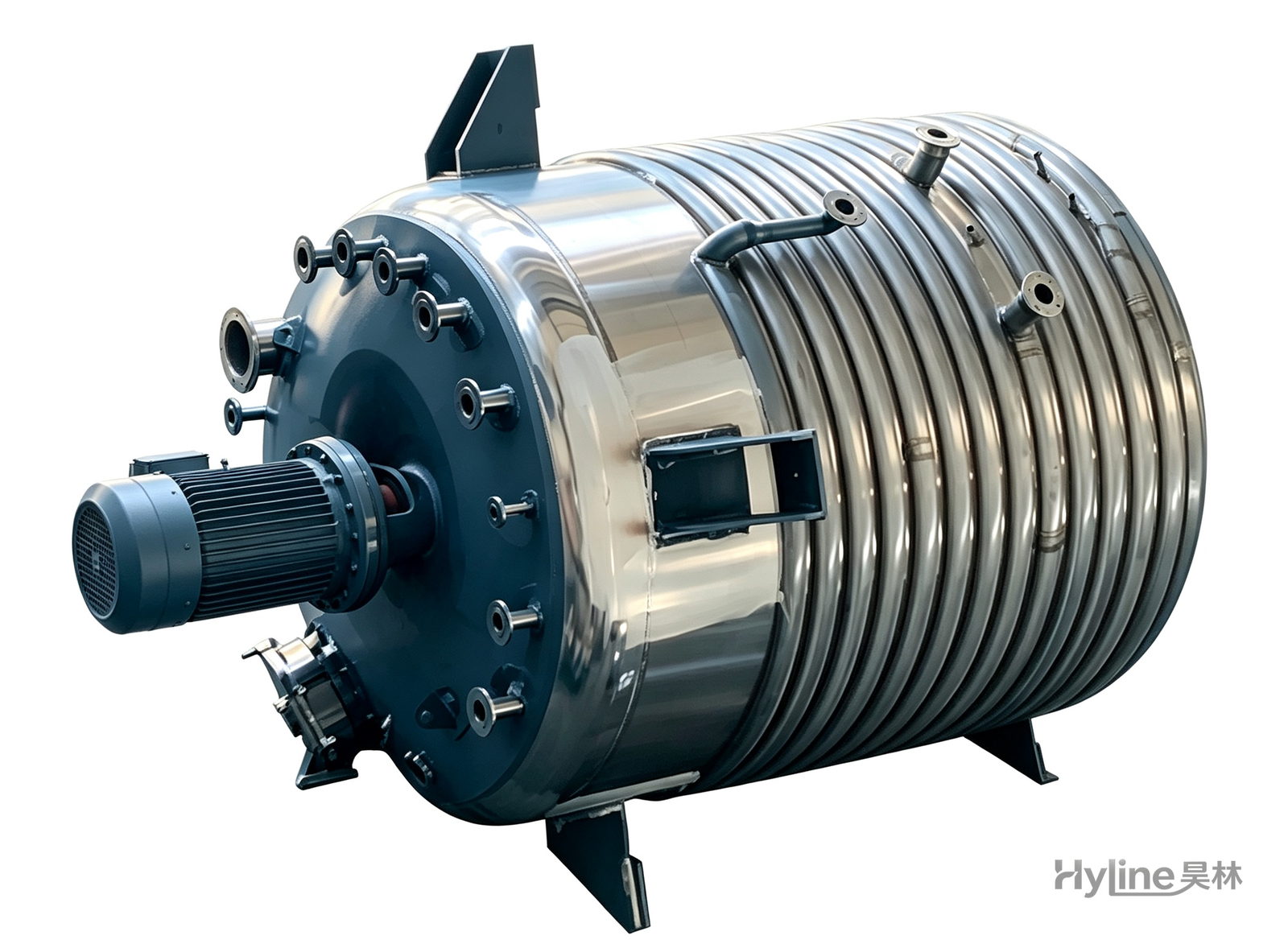
External Half-Coil Reactor
External half-pipe heating & cooling coils provide uniform, efficient heat exchange with zero material dead zones inside. Mirror-polished 304/316L stainless tank is clean and corrosion-resistant. For resin, new-energy slurry and pharmaceutical synthesis.

Stainless Steel Mixing Tank (Dispersion Drum)
Supporting vessel for dispersers and mixers in paints, coatings, adhesives, color slurries, inks and electronics. Available in 201/304 stainless with internal/external polishing and sloped bottom side discharge for complete draining.
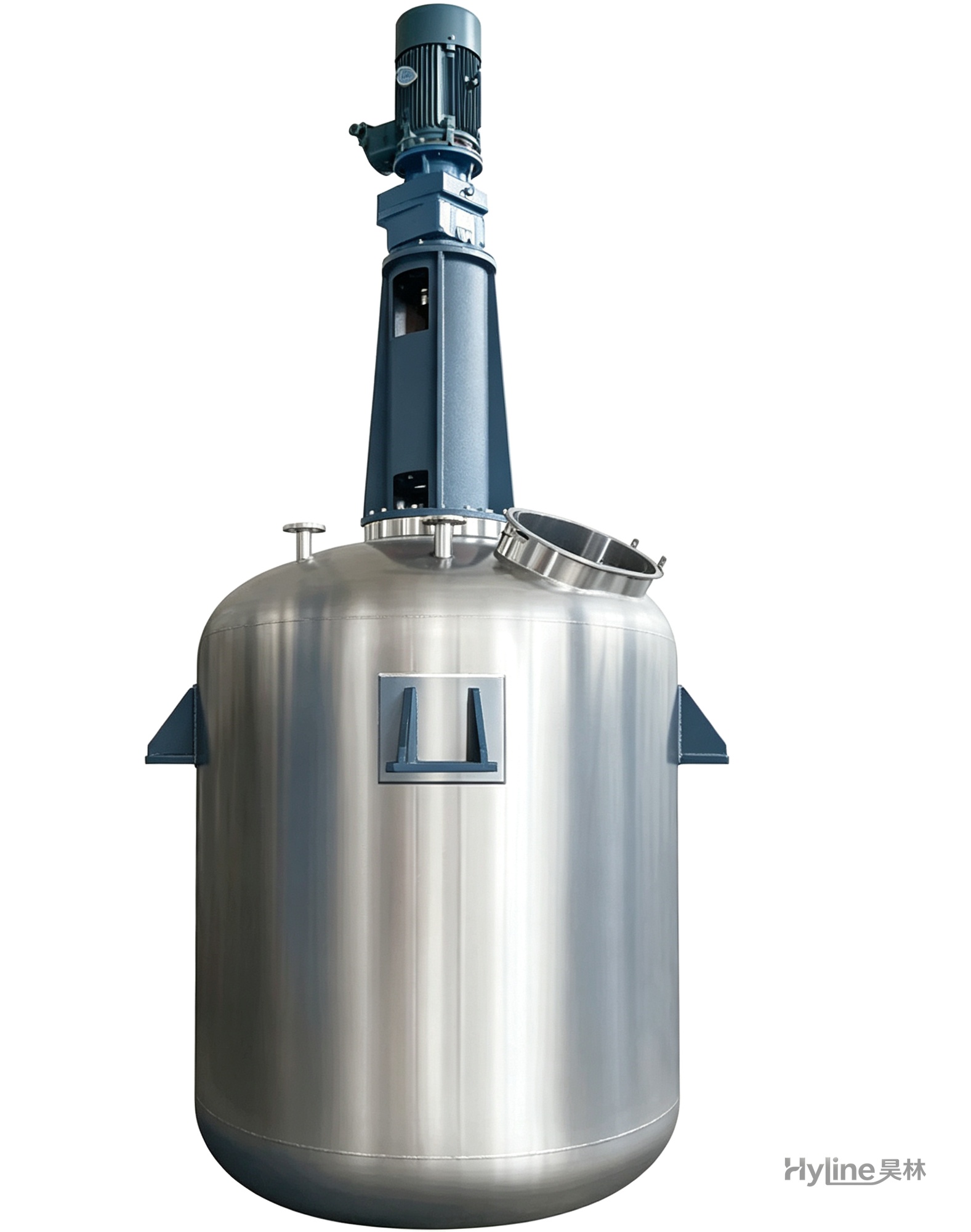
TC Series Mixing Kettle (Tinting)
For color matching in the paint industry and liquid-liquid / liquid-solid mixing in other industries. Uniform tinting, good miscibility, reasonable structure and powerful stirring.
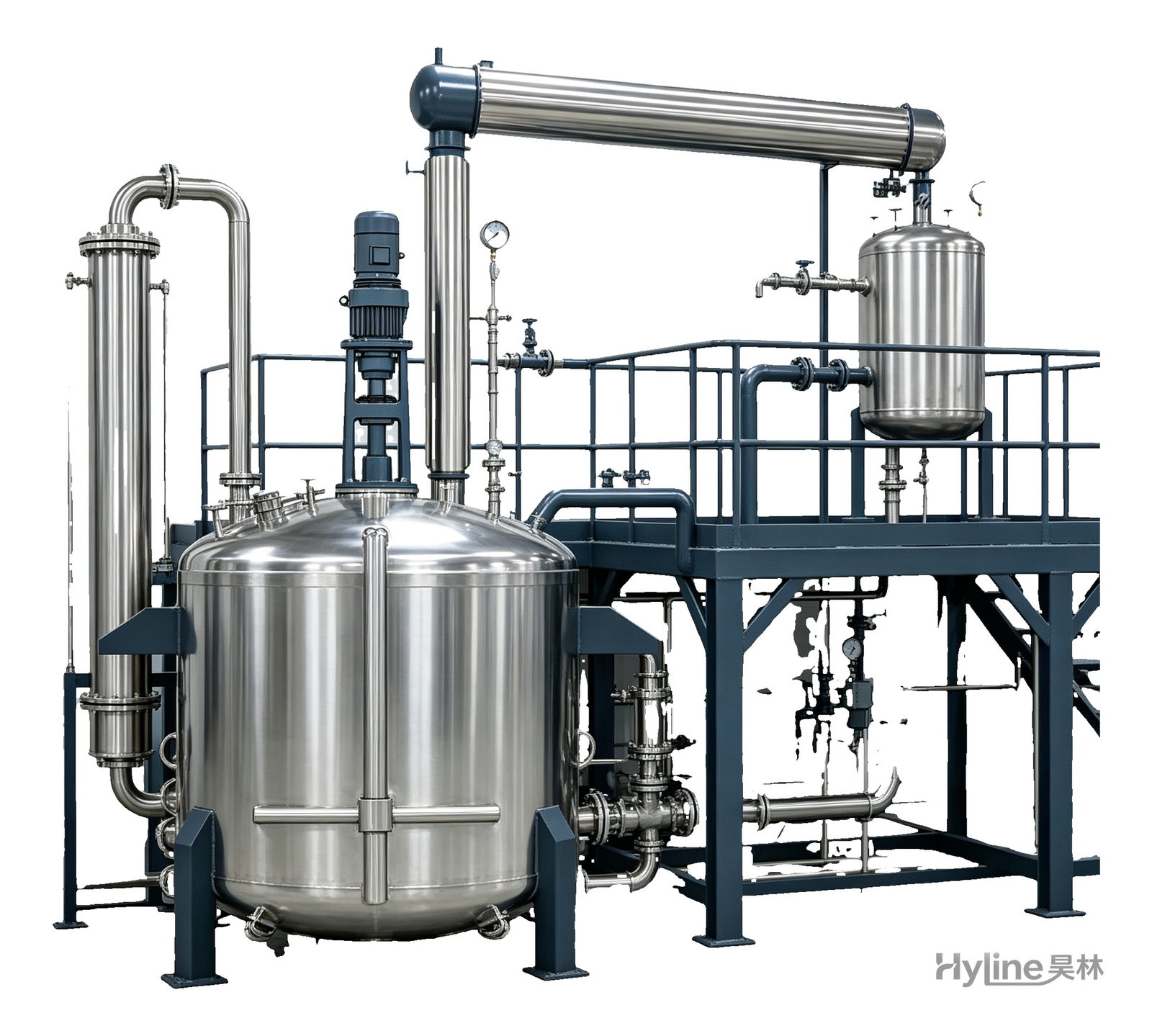
Complete Resin Production Equipment
Resin production packages built around the reactor, with vertical fractionating column, horizontal condenser and water separator for full synthesis, dehydration and reflux processes. Sizes from 300L to 30000L.