
How to choose mixing tanks for dyeing auxiliaries? Surfactant blending, thickening and batch changeover
11/11/2026
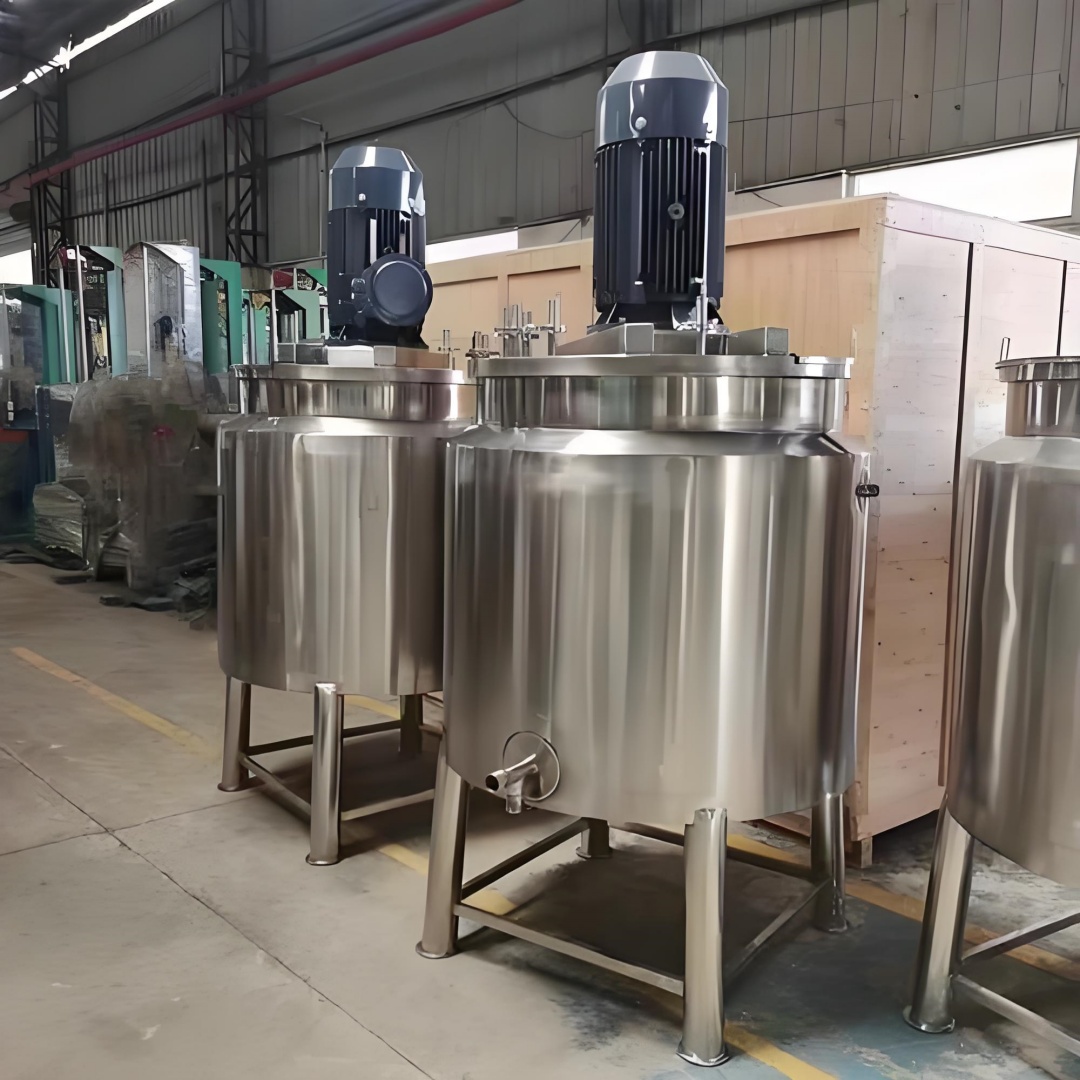
Equipment procurement at dyeing-and-finishing auxiliary plants has a common signature: wide product lines, moderate batch sizes and frequent formula switching. Scouring agents, leveling agents, softeners, thickeners, dispersants and fixing agents — a single plant often runs a dozen or more product lines in parallel, each differing in material form and viscosity. Many plants order one large vessel designed for a single material type when expanding, only to find that the low-viscosity blends mix fine while the high-viscosity thickener pastes stall the impeller and mix unevenly, forcing slower batches until capacity is stuck at the agitation step. Choose the mixing tank by reading your own material spectrum first. Stainless mixing tanks can be configured by material class, and this article covers selection for the dyeing-auxiliary industry across four angles: material types, agitation form, heating and material, and cleaning-changeover.
How do the material characteristics of dyeing auxiliaries determine the tank?
Short answer: low-viscosity liquid blending, powder-swelling thickening and emulsification coexist — one vessel trying to do everything loses on both ends.
Surfactant products such as scouring and leveling agents are mainly blends of several liquids with solvents, at a few hundred to one or two thousand mPa·s — easy to mix and wash, with the agitation demand focused on uniformity and foam control. Thickeners such as sodium alginate paste and polyacrylic thickeners swell on contact with water, viscosity climbing from a few thousand to over ten thousand mPa·s; the agitation problem becomes preventing lumps, wall fouling and vortexing, and how the powder is introduced is a discipline of its own. Softeners and finishing agents often carry emulsion or suspension systems that need moderate shear for stability but break down under excessive shear. The three classes ask for different impellers, speeds and power, so when expanding, order tanks by product line: standard blending tanks for the blend class, a dedicated high-viscosity tank for the thickener class — cheaper and calmer than forcing one large vessel through everything.
The three classes also differ in feeding method. Low-viscosity liquid components come in by pump or vacuum suction, powders in weighed bags; thickener-class powder volumes are large — manual bag dumping raises dust and hurts batch consistency, so once scale grows, powder conveying or vacuum feeding is fitted, with the tank-top feed port sealed by a water seal or dust control. Decide the feeding method when ordering: top nozzle layout, dust interface and load-cell supports all follow it; retrofitting later means re-cutting openings and hot work.
How to configure agitation? Low-viscosity blending and high-viscosity thickening are two separate routes
Short answer: propeller or pitched-blade impellers at medium speed for low-viscosity blends; gate or anchor impellers with wall scrapers for high-viscosity thickening — the speed and power differ by an order of magnitude.
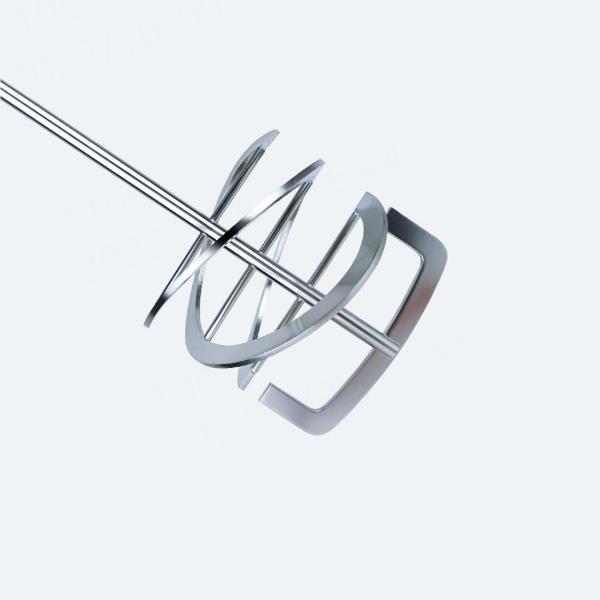
For low-viscosity blending the goal is uniformity and fast dispersion: a propeller with baffles, or a disc turbine where mild shear helps. Speed follows viscosity — a tip speed of 1-3 m/s usually suffices, and faster only entrains air and foams; surfactant systems foam as a matter of course, and excess foam disturbs both dosing and filling, so reduce speed or add foam measures at the top when needed. High-viscosity thickening follows entirely different logic: after the powder goes in, viscosity rises locally and rapidly, ordinary impellers stall in the viscous zone, and a gate or anchor impeller sweeping close to the wall across the full section — with scrapers returning the fouled layer back into the batch — is the answer. Low speed, high torque: the motor-gearbox is selected for low-speed high-torque duty, a transmission configuration entirely different from the low-viscosity tank.
| Material class | Typical viscosity | Impeller configuration | Speed character |
|---|---|---|---|
| Blends (scouring / leveling agents) | 0.2-2 Pa·s | Propeller / pitched blade + baffles | Medium-high speed |
| Thickener pastes (alginate / PA) | 5-30 Pa·s | Gate / anchor + scrapers | Low speed, high torque |
| Emulsions (softeners / finishing) | 1-8 Pa·s | Turbine + gate combination | Stepped variable speed |
The two tank classes coexist in the same plant routinely — reserve power and floor space in the layout early. For in-between viscosities you are unsure about, have the manufacturer calculate agitation power against your highest-viscosity duty with a 20% margin — better a size up than a size down.
High-viscosity tanks also need one often-missed feature: a dispersion disc or high-speed premix stage for powder addition. Powder sprinkled onto the surface of a slow gate impeller forms floating lumps; a high-speed disc first disperses and wets the powder locally, then a low-speed gate stage homogenizes the batch — two-step swelling quality is clearly better. Such tanks are built as dual-speed or twin-motor units; the cost is modest, but they save hours of manual lump-breaking and raise batch consistency.
How to decide heating and material?
Short answer: steam jackets as the mainstay with electric heating for small batches; 304 as the baseline for product-contact surfaces, 316L where acids, alkalis and salts appear.
Many auxiliary processes need temperature control: surfactants solidify in winter and need warming to melt, some blends handle best at 40-60°C where viscosity bottoms out, and emulsions have their own stability window. Steam jackets are the mainstay where the plant has a boiler; without one, and for batches of only a few hundred liters, an electrically heated jacket with a temperature controller is simpler. On material: surfactant systems are mostly near-neutral and 304 suffices; formulas containing organic acids, sodium sulfate or alkali agents corrode the shell over time — move contact surfaces to 316L and polish the interior to visual smoothness, which cuts fouling and eases cleaning. For small-batch trials and color adjustments, run a small mixing kettle separately without occupying the production tank's rhythm, then scale the proven formula up to the production vessel.
Do not forget insulation and tracing. In cold northern winters, blend viscosity rises and individual components can precipitate; trace heating or insulation on the shell and discharge line keeps feeding and discharge smooth, and in humid southern climates insulation also prevents condensation drips on the stainless surface. Insulation thickness follows medium temperature and workshop environment — the manufacturer has standard practice; just state it clearly at ordering.
How to plan batch changeover and cleaning?
Short answer: design the cleaning access around the main product lines; dark-color or odor-sensitive lines get their own vessel or a reinforced cleaning regime.
The pain of auxiliary plants is cross-contamination: residual paste in the thickener tank shifts the next batch's viscosity outright, and color residue from dye-related auxiliaries is visible to the eye. For frequently switched lines, polished walls, structurally simple impellers and enlarged quick-open manways all exist to make washing faster; a fixed spray ball handles daily rinsing, stubborn fouling gets manual attention. For genuinely hard-to-wash dark products, the common industry practice is a dedicated vessel that never shares with light-color lines — trading a production line for capacity. When ordering, tell the manufacturer your hardest cleaning case and have the manway position and spray coverage checked against it — cheaper than improvising afterwards.
Schedule cleaning into production planning, too: sequence changeovers from light to dark colors and from low to high viscosity, and large amounts of washing time are saved; rinse right after each batch while residue is still wet — the easiest moment to handle it. Write the standard cleaning actions into workshop procedures for operators to follow; this beats personal experience and underwrites product consistency.
Make the daily spray-ball rinse a timed program: a ten-minute hot-water circulation at batch end carries away most residue before manual inspection, cutting manual hours roughly in half. Do not overdo the rinse temperature — for surfactant residues, water that is too hot foams worse; around 50°C with a caustic circulation works best — test this point on your own formulas during trial production and write it into the procedure.
How to size volume and configuration?
Short answer: size tank volume by the main line's batch quantity and batches per day; lay out low-viscosity and high-viscosity tanks separately; load cells make the yield arithmetic honest.
Thickener paste and blend output structures differ a lot, so size the tanks separately: blending tanks follow high-frequency batches, commonly 1-5 m³; thickener tanks have long swelling cycles — size by batch interval and keep the fill factor at 0.75 for swelling expansion. List the top-configuration items by process: powder feed port with dust control or water seal, sight glass, thermowell, spray-ball port and spares — keep at least one spare nozzle, because later additions beat vessel modifications by a wide margin. For level and metering, load cells beat level gauges: auxiliaries ship by kilogram, and honest metering is the only way to account for losses. Bottom valves follow viscosity — full-open bottom valves or ball valves, with large-bore valves plus jacketed insulation for high-viscosity pastes so discharge does not take half a day.
Confirm tank legs and foundations against the workshop floor: slab loading, anchor fixing or mobile casters affect entry, exit and future modifications. For tall tanks, watch door height and lifting space — measure the site once before ordering, far easier than improvising after arrival.
Review the order list one last time: vessel, agitation drive, heating system, cleaning package, weighing and metering, bottom discharge — have the manufacturer write warranty terms and consumables lists into the contract for all six blocks. Keep one spare set of belts, mechanical seals and gaskets from acceptance, so future replacements never wait on delivery.
How to finalize the configuration?
Mixing-tank selection for the dyeing-auxiliary industry is essentially tiered configuration by material spectrum: blends, thickeners and emulsions each take their own impeller and power class, heating and material follow the formula's corrosivity, and cleaning changeover follows the strength of each product line. Hyline Shengda Equipment Manufacturing Co., Ltd. (hyline.cn) has delivered numerous customized mixing tank and supporting-equipment solutions for dyeing-auxiliary and textile-chemical enterprises, from single-vessel configuration to whole tank-area layout. Send us your product list, viscosity range per line and batch sizes, and you will get the configuration and quotation worked out together.
Further reading: - How to choose a stainless mixing tank? Material and agitation matching by process - How to choose a mixing tank mechanical seal? Single versus double seals by speed, medium and cleanliness
This article is prepared by Hyline Shengda Equipment Manufacturing Co., Ltd. (hyline.cn)
Q&A from this article
Frequently asked questions and answers from this article
Short answer: steam jackets as the mainstay with electric heating for small batches; 304 a…
Related Products
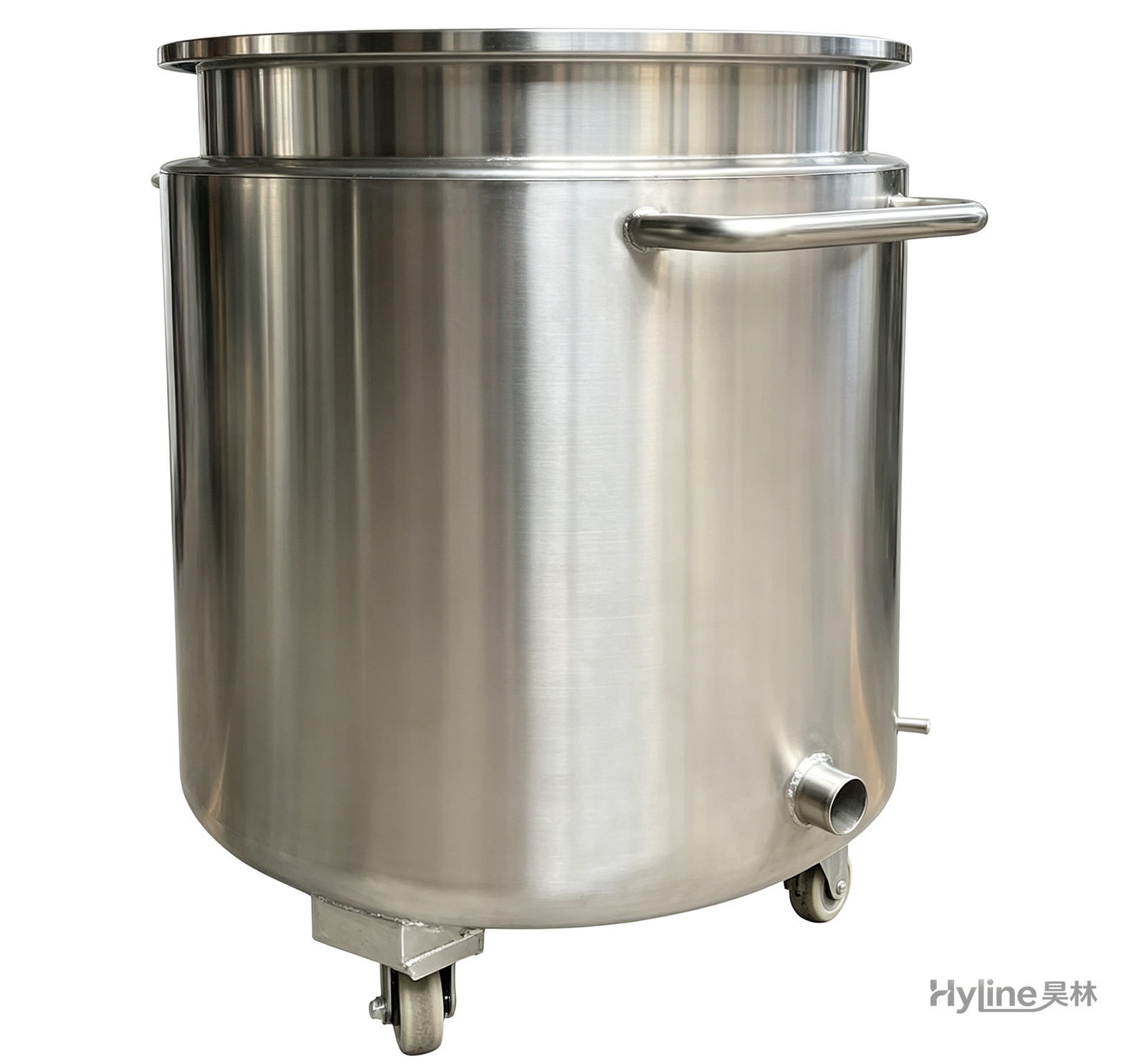
Stainless Steel Mixing Tank (Dispersion Drum)
Supporting vessel for dispersers and mixers in paints, coatings, adhesives, color slurries, inks and electronics. Available in 201/304 stainless with internal/external polishing and sloped bottom side discharge for complete draining.
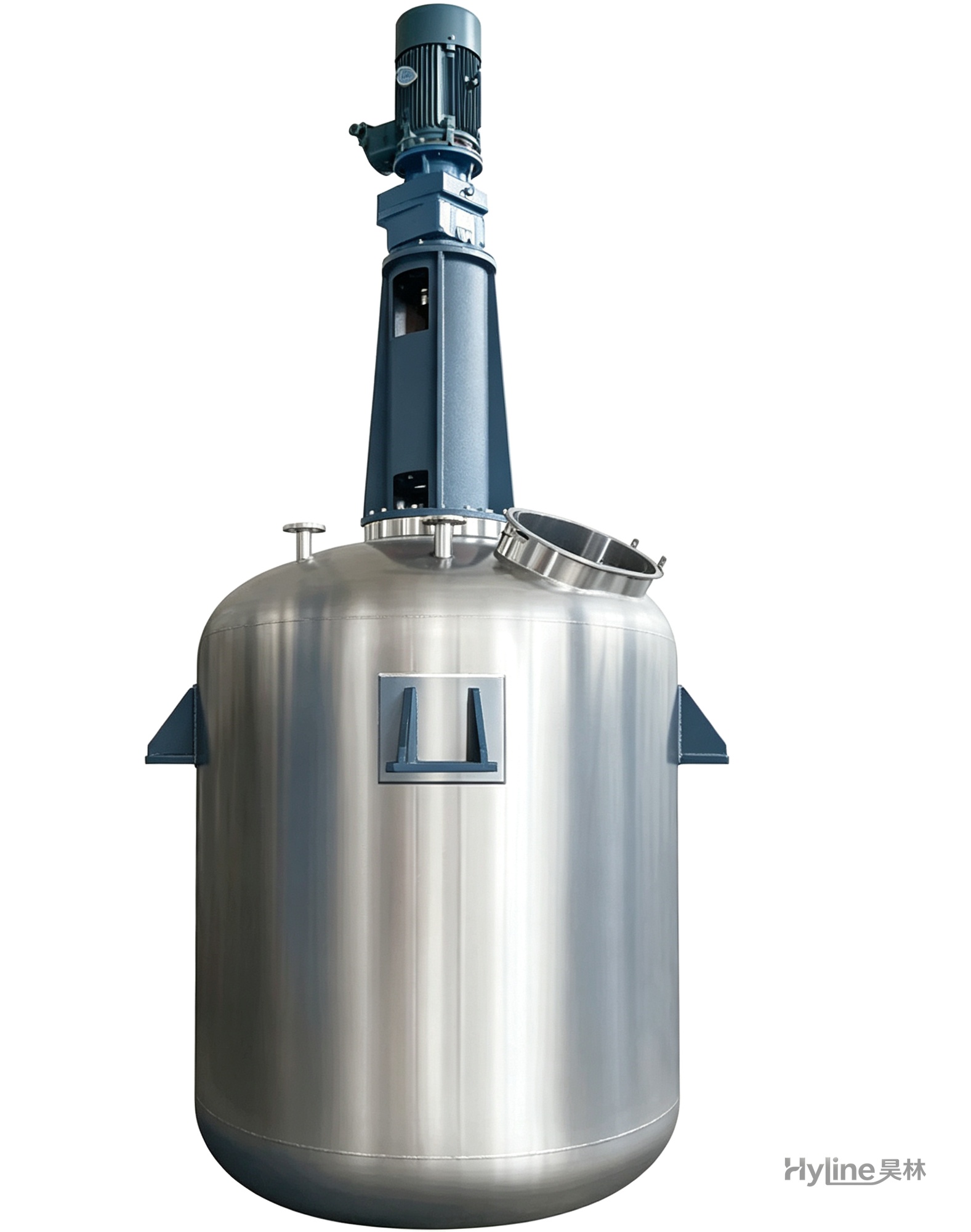
TC Series Mixing Kettle (Tinting)
For color matching in the paint industry and liquid-liquid / liquid-solid mixing in other industries. Uniform tinting, good miscibility, reasonable structure and powerful stirring.
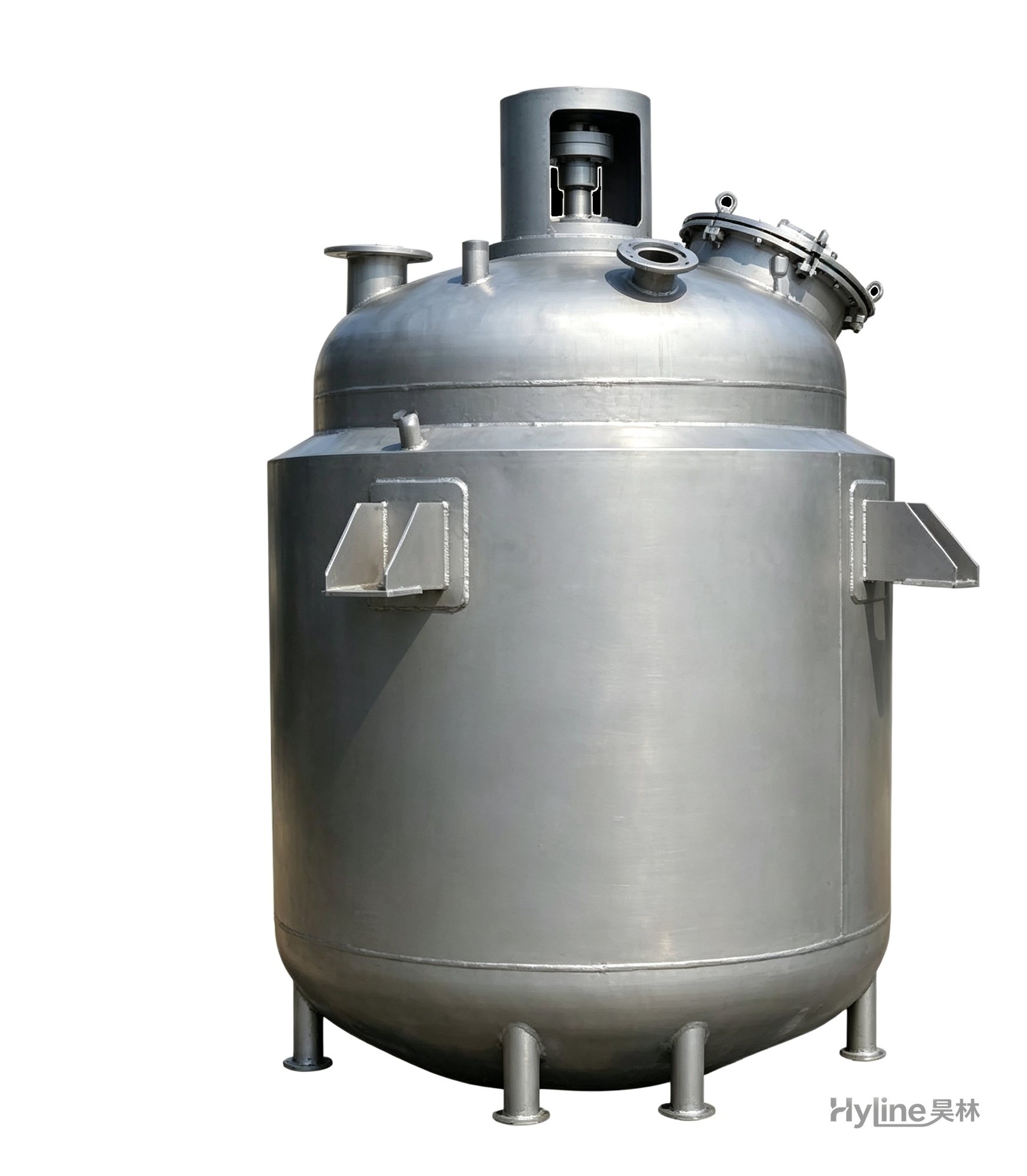
Jacketed Reactor
The typical main reaction vessel in chemical production. Mixing, heating and cooling disperse and mix materials for reaction and polymerization. The jacket circulates thermal oil/steam for heating or cooling water for temperature control.
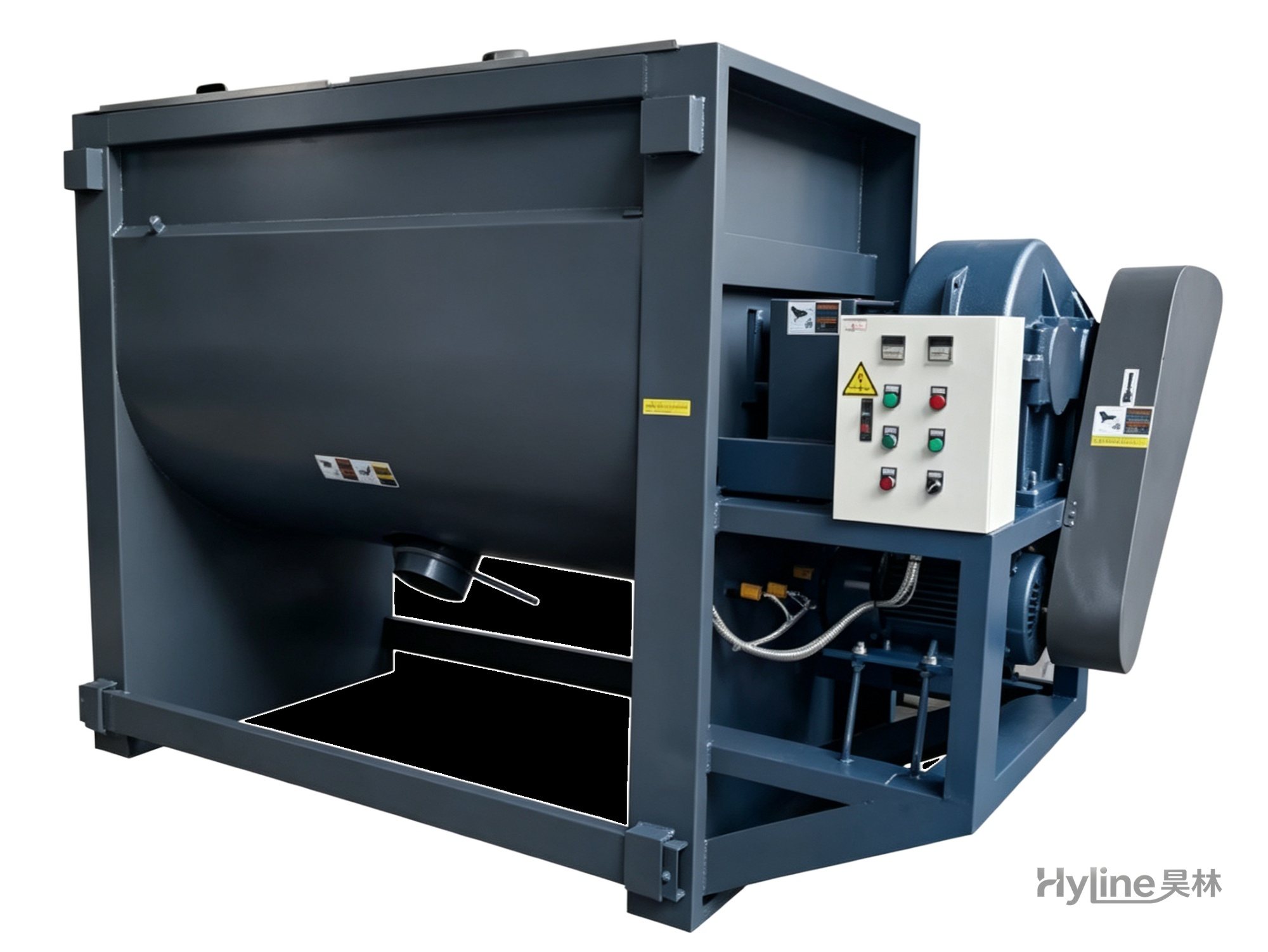
Horizontal Mixer (Heating Type)
Double-layer U-shaped stainless horizontal mixer with thermal oil heating of 50-150℃ (custom up to 300℃). S-shaped stainless blades for even mixing; dual mixing & drying functions with multiple safety protections.