
How to configure baffles in a mixing tank? Anti-vortexing and mixing enhancement essentials
10/23/2026
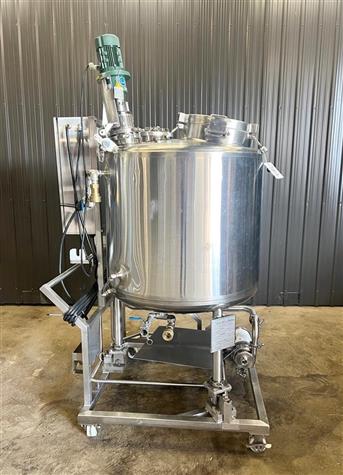
Material vortexing in a mixing tank — the liquid surface sinks into a funnel, the impeller spins but the liquid barely moves — is very common in low-viscosity mixing processes. Many people first raise the speed or switch to a larger impeller, but the result is often limited; the root cause is usually the lack of baffles inside the tank. Baffles look like simple plates, yet they determine the flow pattern and mixing efficiency inside the tank. This article explains what baffles do, when they are required, and how to decide quantity, width and position, so you can configure baffles correctly for your own process.
Why does material vortex in a mixing tank?
One-sentence conclusion: low-viscosity liquid rotates as a whole along the tank wall under high-speed agitation, forming a vortex; the impeller and the liquid have almost no relative velocity, so mixing relies mainly on molecular diffusion and efficiency drops sharply — this is vortexing.
Vortexing means the liquid rotates together with the impeller. When the impeller rotates, the low-viscosity liquid is driven tangentially, the liquid surface sinks in the middle into a funnel-shaped vortex, and the liquid inside the tank rotates almost as a whole around the shaft, leaving little relative speed between impeller and liquid, so agitation contributes little to mixing. As a common industry rule, the impeller Reynolds number Re is estimated by Re=ρND²/μ, where ρ is liquid density, N rotational speed, D impeller diameter and μ viscosity; low-viscosity liquids (such as water and dilute solutions) usually exceed Re 10000 at normal speeds, in the turbulent regime, where vortexing is most likely. Vortexing not only lowers mixing efficiency but also draws air into the liquid, which strongly affects emulsification, reaction and dissolution processes.
What do baffles do? What changes after installation?
One-sentence conclusion: baffles convert tangential circulation into axial and radial flow, break the integral rotation, increase turbulence and turnover, and can significantly shorten mixing time.
Baffles are long plates installed vertically on the inner tank wall that stop the liquid from rotating as a whole along the wall. With baffles installed, the rotating liquid hits the baffle and is deflected toward the tank centre, creating axial and radial flows and a clear up-and-down circulation pattern. The most visible change is that the surface funnel disappears and the liquid shows a rolling pattern, and mixing time shortens markedly; as a common industry rule, baffled tanks usually cut mixing time by 30%~50% under the same conditions. For solid-liquid suspension, liquid-liquid dispersion and heat-transfer processes, the improvement from baffles is more obvious than simply raising power, making them one of the most cost-effective agitation enhancements.
When are baffles necessary? Judging by Reynolds number and process
One-sentence conclusion: low-viscosity, high-speed processes with radial-flow or axial-flow impellers generally need baffles; high-viscosity laminar processes and wall-scraping agitators such as ribbon and anchor types normally do not.
To decide whether baffles are needed, first look at liquid viscosity and agitation type. Low-viscosity liquids (high Reynolds number, prone to vortexing) with propellers, turbines or paddle impellers almost always need baffles, otherwise mixing and dispersion are poor; medium to high-viscosity liquids enter the transition or laminar regime, where the impeller itself moves and shears the liquid, vortexing weakens and baffle contribution drops. Ribbon mixers and anchor impellers operate with a small clearance to the wall and force the liquid to turnover, so baffles are normally not fitted — they would obstruct scraping and increase material adhesion. For a specific decision, list liquid viscosity, target speed and impeller type, then compare with the Reynolds number range, which is more reliable than deciding by feel.
How many baffles? How to determine width, position and wall clearance?
One-sentence conclusion: generally 4 baffles, width about 1/10~1/12 of tank diameter, wall clearance about 1/4~1/2 of baffle width, and bottom clearance adjusted by bottom impeller and discharge method.
Baffle quantity and dimensions follow common industry experience. Quantity is generally 2~6, with most standard mixing tanks using 4 evenly spaced; baffle width b is generally 1/10~1/12 of tank inner diameter D — too narrow gives poor vortex-breaking, too wide occupies volume and creates dead zones; a gap δ of about 1/4~1/2 of baffle width is kept between baffle and wall so that some liquid passes through and no stagnant zone forms behind the plate; the baffle bottom clearance is generally about half to one baffle width above the tank bottom, adjusted by the bottom impeller and discharge opening, so as to block upper rotation without hindering bottom discharge. The baffle top is generally below the maximum liquid level to avoid overflow over the baffle. These are general experience values; final dimensions should be calculated together with tank diameter, impeller type and process requirements.
How to avoid interference with coils, thermowells and manholes?
One-sentence conclusion: vertical baffles must avoid jacket coils, thermowells and access openings; segmented baffles or offset installation can be used to preserve maintenance space and instrument accuracy.
The space inside a tank is limited, and baffles often compete with other internals. Thermowells, level nozzles and manholes on the wall can conflict with baffle positions; coils extending to the wall can also interfere. Three common solutions: segmented baffles — split a full baffle into upper and lower sections, leaving space in the middle for coils or instruments; offset installation — rotate the baffle angle around the wall to avoid manholes and nozzles; and shorter baffles covering only the main agitation zone. In all cases, baffles must not block manhole opening and maintenance space, nor hinder temperature or level measurement. Baffles are usually welded or bolted to the wall; a detachable structure eases cleaning and maintenance and is preferred for high-cleanliness industries.
Why are baffles usually omitted for high-viscosity materials?
One-sentence conclusion: high-viscosity liquid operates in the laminar regime, where the impeller itself is the main mixing driver; baffles help little and add dead zones and material-adhesion risk.
High-viscosity materials (such as adhesives and paste-like liquids) have a very low Reynolds number during agitation, in the laminar regime, and integral rotation hardly exists, so vortexing is basically not a problem. Mixing relies mainly on impeller shear and pushing; ribbon, anchor and frame impellers carry the liquid through the small clearance to the wall, creating up-and-down circulation. If baffles were fitted, stagnant zones would form behind them, material would adhere and build up, and cleaning would be harder. High-viscosity processes therefore explicitly omit baffles and focus instead on impeller-wall clearance, scraping structure and agitation power. As a general guide, liquids above about 5000 mPa·s are usually treated as laminar, where baffle contribution is already limited.
What else do baffles help with? Solid suspension, gas dispersion and heat transfer
One-sentence conclusion: baffles improve solid-liquid suspension and gas-liquid dispersion, and strengthen wall heat transfer; combined with a jacket they noticeably raise heat-transfer coefficients.
The value of baffles goes beyond anti-vortexing. In solid-suspension processes, baffles convert tangential flow into axial flow, so particles are more easily carried into the tank centre and suspend more evenly; in gas-liquid dispersion, baffles increase turbulence, break bubbles and lengthen residence time, improving mass transfer; for heat transfer, baffles keep liquid washing over the wall, destroying the boundary layer, so the jacket or coil heat-transfer coefficient improves markedly. As a common industry rule, baffled tanks generally raise jacket heat-transfer coefficients by 20%~40% — a real gain for tanks that need heating or cooling. Baffle configuration should therefore be considered within the whole agitation system, not treated as an optional accessory.
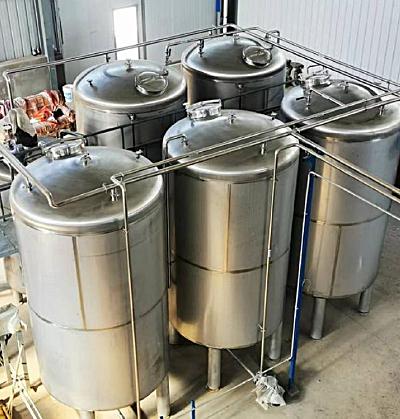
Baffle configuration summary and selection checklist
One-sentence conclusion: first fix liquid viscosity and agitation type, then size baffle quantity, width and wall clearance from tank diameter, and finally check clearance with coils, instruments and manholes to complete the configuration.
Configure baffles in four steps. First, judge the process: low-viscosity, high-speed, radial- or axial-flow impellers generally need baffles, while high-viscosity laminar and wall-scraping agitators do not. Second, size: generally 4 baffles, width 1/10~1/12 of tank diameter, wall clearance 1/4~1/2 of baffle width. Third, arrange positions: avoid thermowells, coils and manholes; use segmented baffles or offset installation when needed. Fourth, verify space: confirm baffles do not affect maintenance, cleaning or discharge. Putting these four parameters into the equipment specification gives the mixing tank a basic guarantee of mixing performance. After configuration, we suggest checking during commissioning whether the liquid surface still shows vortex or dead zones, and fine-tuning baffle width or quantity if needed before fixing the parameters.
Hyline Shengda produces stainless steel mixing tanks and agitation support equipment, and supports baffle, reactor and high-speed disperser configuration and complete-line design according to liquid viscosity, agitation type and tank diameter. Before making an agitation plan, we suggest fixing liquid viscosity, target speed and impeller type first, and then discussing baffle and impeller configuration.
Related reading: - How to judge the Reynolds number and flow regime of a mixing tank? Impeller selection in laminar, transition and turbulent flow - How to arrange mixing tank nozzles? Tank-top connections and maintenance space design essentials
This article is compiled by Hyline Shengda Equipment Manufacturing Co., Ltd. (hyline.cn), mainly producing stainless steel reactors, mixing tanks, storage tanks, dispersers, concentrators and complete chemical lines, supporting non-standard customization.
Q&A from this article
Frequently asked questions and answers from this article
Material vortexes and poor mixing in your mixing tank? This article explains baffle function, quantity, width and installation, helping you configure baffles for your process.
Related Products

Stainless Steel Mixing Tank (Dispersion Drum)
Supporting vessel for dispersers and mixers in paints, coatings, adhesives, color slurries, inks and electronics. Available in 201/304 stainless with internal/external polishing and sloped bottom side discharge for complete draining.

Jacketed Reactor
The typical main reaction vessel in chemical production. Mixing, heating and cooling disperse and mix materials for reaction and polymerization. The jacket circulates thermal oil/steam for heating or cooling water for temperature control.
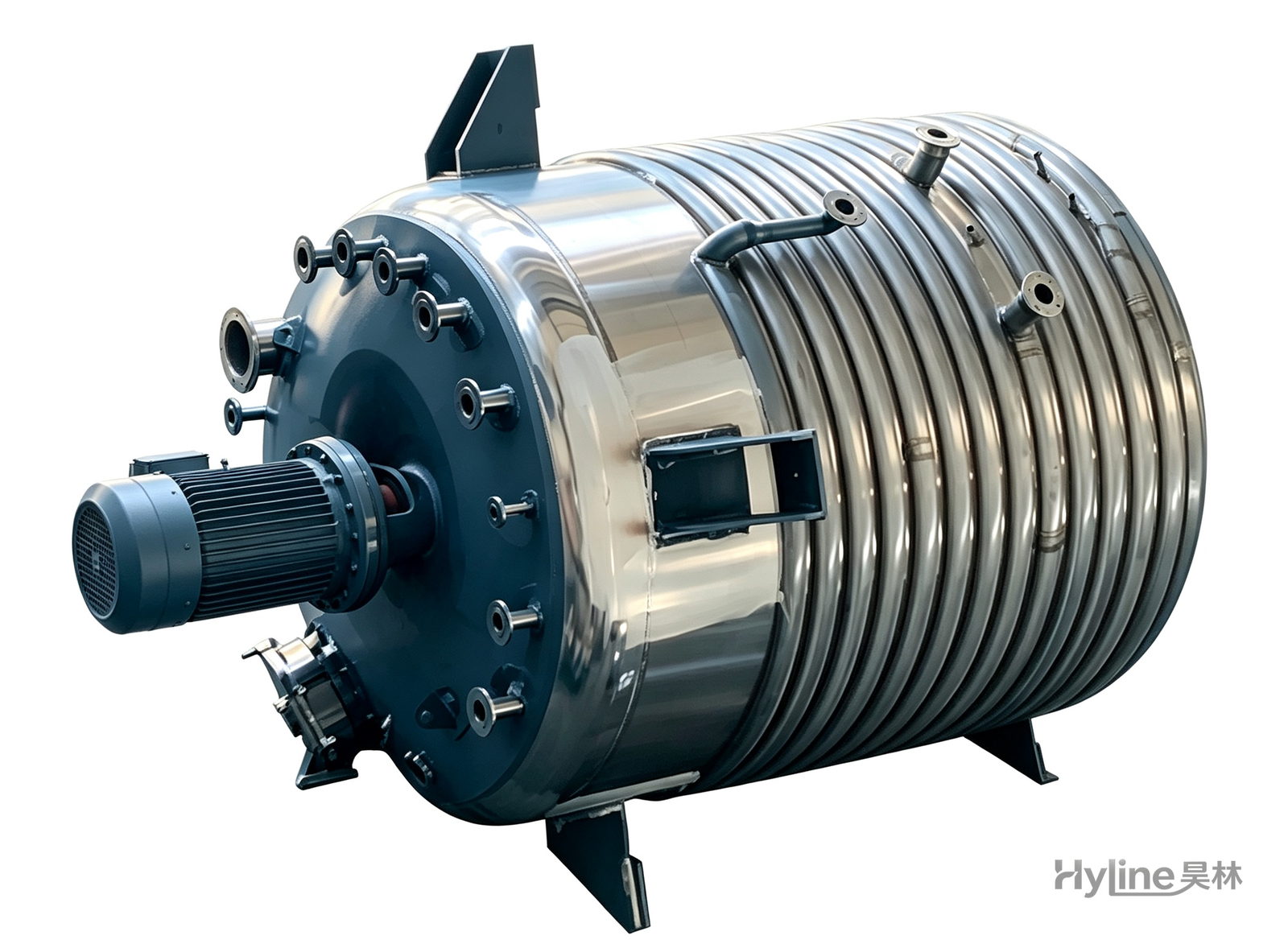
External Half-Coil Reactor
External half-pipe heating & cooling coils provide uniform, efficient heat exchange with zero material dead zones inside. Mirror-polished 304/316L stainless tank is clean and corrosion-resistant. For resin, new-energy slurry and pharmaceutical synthesis.
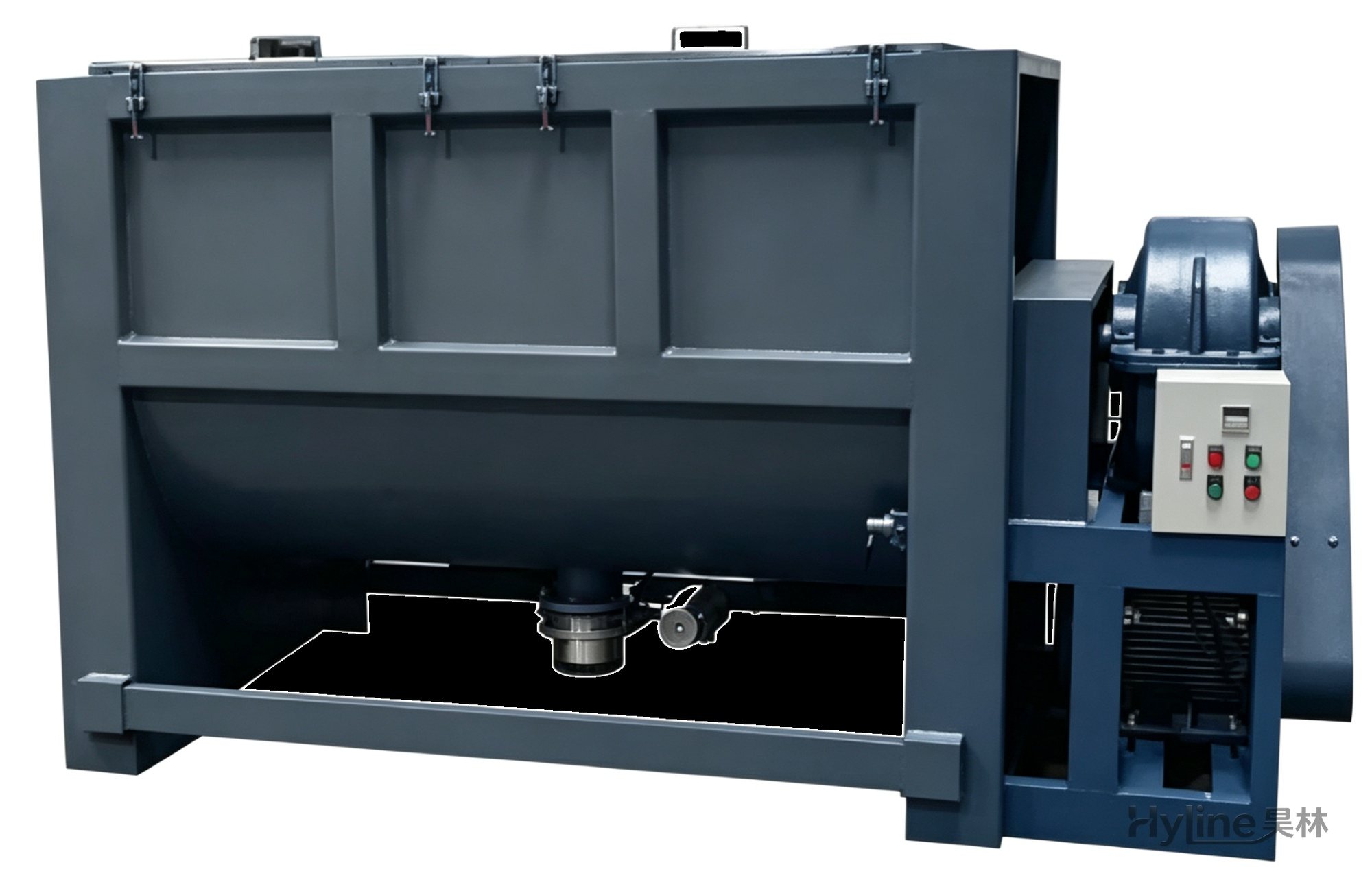
Horizontal Mixer
For color blending of plastic pellets, new/old materials and additives. Single-layer for mixing; double-layer with oil heating of 50-150℃ (custom up to 300℃). Ideal for PVC/PP/PE pellets and chemical powders such as calcium carbonate and titanium dioxide.
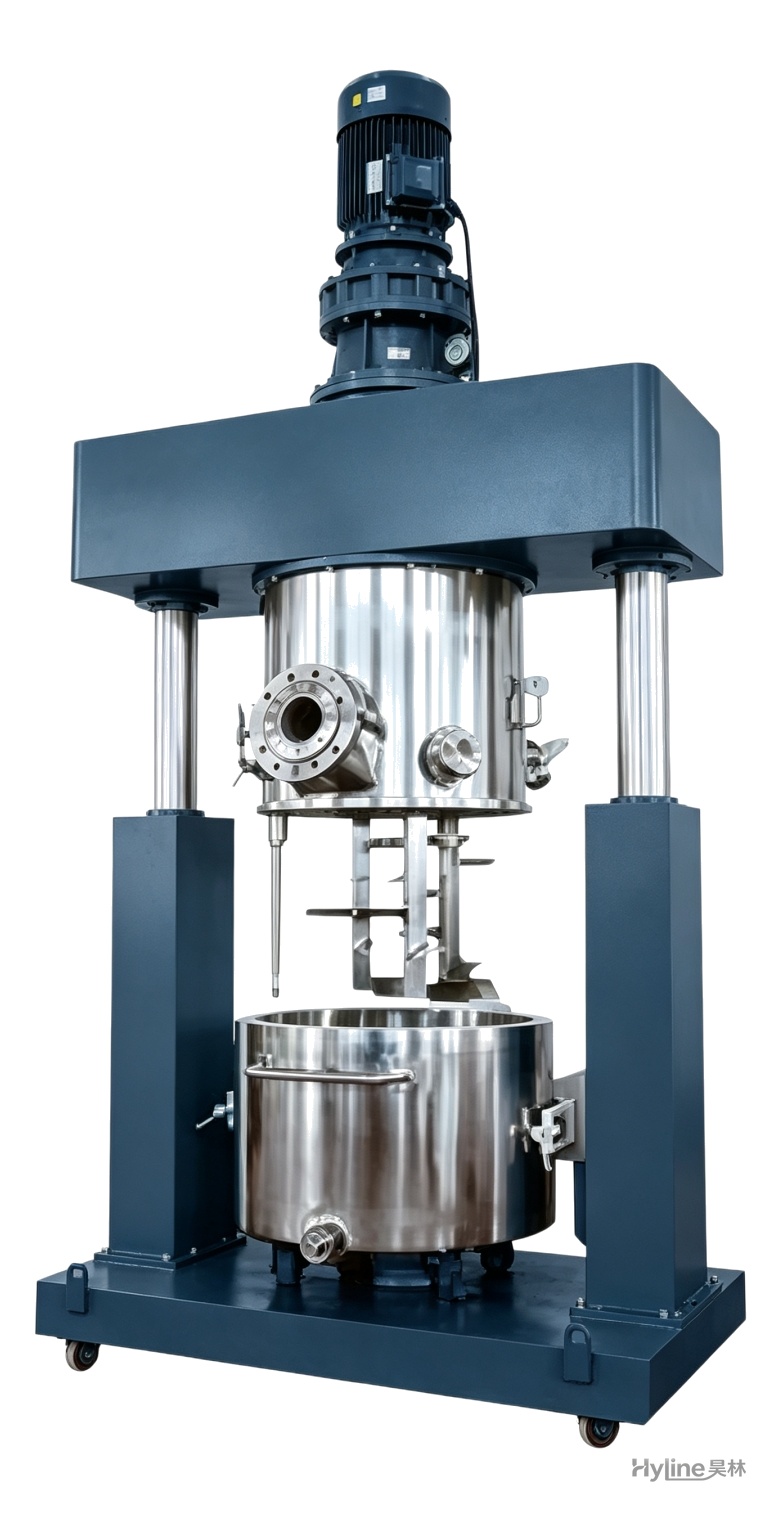
XJB Series Planetary Mixer
Planetary blades rotate and revolve simultaneously, creating complex material flow with no dead corners and easy discharge. Handles ultra-high-viscosity pastes of 10,000-8,000,000 cps for silicone, PU sealants, liquid silicone and electronic adhesives.
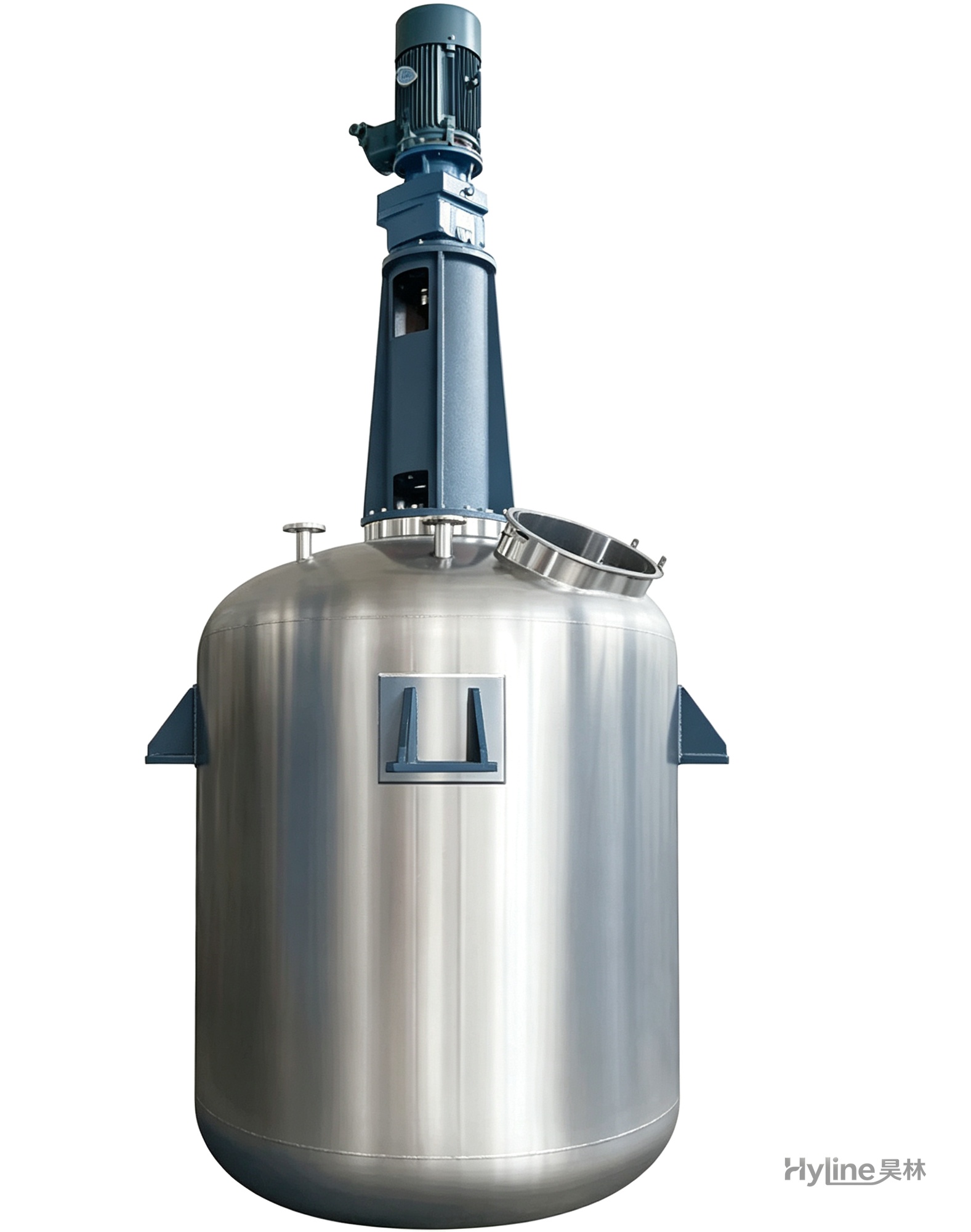
TC Series Mixing Kettle (Tinting)
For color matching in the paint industry and liquid-liquid / liquid-solid mixing in other industries. Uniform tinting, good miscibility, reasonable structure and powerful stirring.