
How Is the Heat-Transfer Jacket of a Mixing Tank Configured? Heat-Transfer Area and Agitation Enhancement by Working Condition
10/13/2026
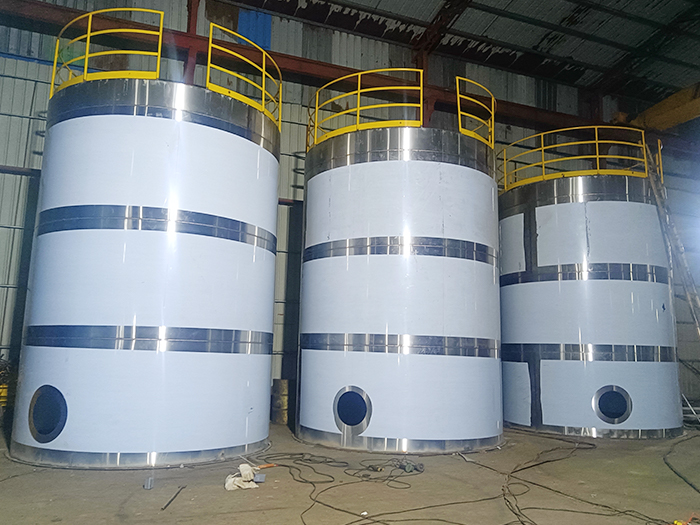
Why Should Heat Transfer Be Considered Separately for a Mixing Tank?
One-sentence conclusion: the heat-transfer capacity of a mixing tank determines heating/cooling speed and batch cycle; only when the jacket type, heat-transfer area and agitation intensity match each other is the selection complete, and selecting only by volume tends to overlook the heat-transfer bottleneck.
A mixing tank is not just a material container. Blending, dissolving, reaction and cooling processes all have clear temperature requirements: paint tinting needs dispersion at a certain temperature, resin dissolution needs heating to a specified temperature, and color-paste cooling needs fast temperature reduction. Insufficient heat-transfer capacity slows heating and lengthens the batch time, while slow cooling delays the next process step.
Heat transfer is determined by three parts together. The jacket or coil provides the heat-transfer surface, the heating or cooling medium provides the heat, and agitation keeps the material in the tank flowing to renew the heat-transfer surface. When the three do not match, even a large heat-transfer area cannot prevent the material near the wall from heating first while the center lags, producing an uneven temperature field.
How Do You Choose a Jacket Type?
One-sentence conclusion: a full jacket suits routine heating and heat preservation; half-pipe and external coil jackets have higher heat-transfer efficiency, and the choice depends on medium pressure, heat-transfer requirement and manufacturability.
The full jacket is simple in structure and has moderate pressure capacity. The jacket and vessel are welded to form an annular space through which steam or hot water flows; it suits routine heating, heat preservation and cooling and is easy to manufacture and clean, making it the most common configuration for mixing tanks. The working pressure of a full jacket is generally designed separately for the process medium pressure and the jacket medium pressure, typically on the order of 0.3–0.6 MPa.
The external coil offers a large heat-transfer area and high heat-transfer coefficient. The coil is spirally welded around the outside of the vessel and the medium flows inside the tube; the high tube-side velocity gives a high film coefficient, saving material for the same heat-transfer requirement, but welding work is heavier and the outside surface is less convenient to clean than a full jacket. The half-pipe jacket lies between the two: half-round pipes are welded to form flow channels, combining pressure capacity and heat-transfer advantages, and it is often used where faster heating and cooling are required.
| Jacket type | Heat-transfer features | Typical pressure (typical) | Suitable service |
|---|---|---|---|
| Full jacket | Simple structure, large area | 0.3–0.6 MPa | Routine heating/preservation, steam heating |
| External coil | High tube-side velocity, high coefficient | 0.6–1.0 MPa | Larger area, faster heating/cooling |
| Half-pipe jacket | Good pressure capacity, even transfer | 0.6–1.0 MPa | Heat-sensitive materials, high temperature uniformity |
How Is the Heat-Transfer Area Calculated?
One-sentence conclusion: the heat-transfer area is derived from the heating or cooling requirement, material quantity and temperature difference; the common industry practice is to calculate the required heat first, then obtain the area from the overall heat-transfer coefficient and mean temperature difference, with a 10–20% margin.
First calculate the required heat. The heat needed to raise the material from the initial temperature to the target temperature equals the product of material mass, specific heat and temperature difference; phase change or reaction heat is added when present. Dividing the required heat by the allowed heating time gives the average heat-transfer rate.
Then calculate the area. The heat-transfer rate equals the product of the overall heat-transfer coefficient, area and mean temperature difference; knowing two of them allows the area to be derived. The overall coefficient is related to jacket type, material viscosity and agitation intensity, with common industry values ranging from several hundred to over one thousand watts per square meter per degree Celsius; a 10–20% margin is recommended to cover fouling and fluctuation.
How Does Agitation Cooperate with Heat Transfer?
One-sentence conclusion: agitation carries wall heat into the tank; rotation speed and impeller type determine in-tank flow and temperature uniformity, and high-viscosity materials require large-diameter impellers or low-speed, high-torque configurations.
Agitation intensity directly affects the heat-transfer coefficient. Higher speed and larger impeller diameter intensify in-tank flow and wall renewal and raise the coefficient, but power consumption also increases. The common industry practice is to keep the speed in a reasonable range while meeting the mixing requirement, avoiding excessive power waste.
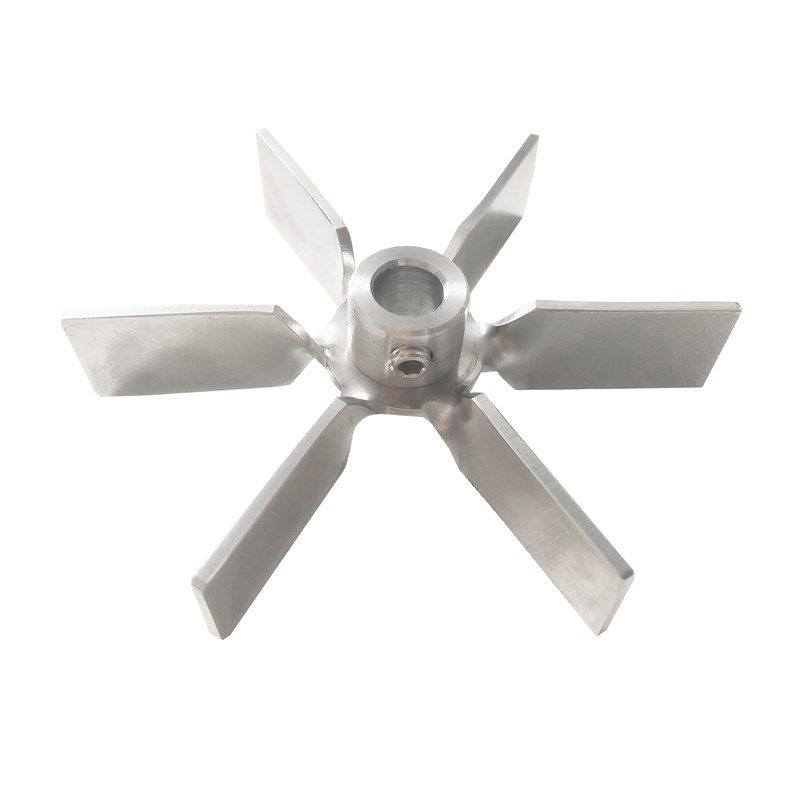
Impeller type is selected by viscosity and tank diameter. For low-viscosity materials, a propeller or turbine impeller satisfies both mixing and heat transfer; for medium- and high-viscosity materials, anchor, frame or ribbon impellers are needed, with blades close to the wall to scrape and circulate the viscous material while improving heat transfer. The impeller diameter is generally 1/2–2/3 of the tank diameter (about 2/3 for anchor impellers, determined by the material), and speed and power are calculated by viscosity.
How Do You Set the Configuration by Working Condition?
One-sentence conclusion: routine heating uses a full jacket with medium-speed agitation, fast cooling uses an external coil or half-pipe jacket with large circulation, and high-viscosity materials use a ribbon or anchor impeller with an enlarged heat-transfer surface.
Three typical conditions are summarized. For heating and dispersion of low- to medium-viscosity materials such as paints and adhesives, a full jacket with a propeller or turbine impeller is enough, with steam heating and hot-water preservation, simple configuration and controlled cost. For cases requiring fast cooling, such as color-paste cooling or reaction termination, the heat-transfer surface uses an external coil or half-pipe jacket with increased cooling-water flow, and an external circulation heat exchanger may be added. For dissolution and reaction of high-viscosity materials, an anchor or ribbon impeller with a jacket is used, the heat-transfer area is enlarged, and the heating speed is controlled to prevent local overheating.
The associated piping must also be considered in the configuration. Jacket inlet/outlet, condensate drain, thermometer well and bottom discharge nozzle should be reserved in advance, and a drain port should be provided between the jacket and the vessel to prevent liquid accumulation. When mixing tanks, reactors and storage tanks are on the same line, the heating medium and cooling-water system can be shared, but the temperature control of each vessel should be independently adjustable.
What Are Common Heat-Transfer Problems and How Are They Traced?
One-sentence conclusion: slow heating is usually checked through steam pressure and condensate drainage, slow cooling through cooling-water flow and fouling, and uneven temperature through agitation and liquid level, eliminating each item in order.
Slow heating is commonly caused by insufficient steam or incomplete condensate drainage. Accumulated condensate in the jacket noticeably reduces the effective heat-transfer area; check whether the steam trap is failing and whether the drain line is unobstructed; when steam pressure is insufficient, verify the supply capacity and line pressure drop. For slow cooling, first check cooling-water flow and inlet temperature, then check fouling on the jacket and vessel wall, since a fouling layer conducts heat poorly and requires periodic cleaning.
Uneven temperature is mainly related to agitation. Low speed, worn blades or an overly high liquid level all weaken in-tank flow and create a difference between the wall region and the center; for high-viscosity materials, confirm that the impeller type matches the tank diameter. When local overheating or charring appears, reduce the heating difference and strengthen agitation.
What Parameters Should Be Confirmed at Purchase?
One-sentence conclusion: when purchasing a mixing tank, check four items: jacket type and pressure rating, heat-transfer area, agitation power and speed, and material and polishing grade, and confirm they match the process heating/cooling requirements.
First check the jacket and pressure rating. The jacket working pressure, test pressure and heating medium (steam or hot water) should be stated in the technical agreement, and the drain and vent positions confirmed. Then check the heat-transfer area: compare the area calculated from the process with the area supplied by the equipment and confirm that the heating/cooling time requirement is met.
Then check the agitation configuration. Agitation power, speed range, impeller type and diameter are checked against material viscosity and tank diameter; for variable-frequency drives, confirm the speed range. Material is selected by corrosiveness; food and pharmaceutical grades require inner-wall polishing to a specified roughness, while conventional industrial grades are less demanding. Finally confirm the temperature measurement and control points: the thermometer well position should represent the average tank temperature, and control-valve and instrument interfaces should be reserved according to the automation requirement.
Related reading: - Reactor heating and cooling methods compared: jacket, half-coil and internal coil selection - How are mixing-tank nozzles laid out? Feed, discharge, temperature and drain ports
This article is compiled by Hyline Shengda Equipment Manufacturing Co., Ltd. (hyline.cn); the information belongs to the original authors. We specialize in stainless steel reactors, mixing tanks, storage tanks, dispersers, concentrators and complete chemical line support, with non-standard customization available.
Q&A from this article
Frequently asked questions and answers from this article
One-sentence conclusion: a full jacket suits routine heating and heat preservation; half-p…
Related Products

Stainless Steel Mixing Tank (Dispersion Drum)
Supporting vessel for dispersers and mixers in paints, coatings, adhesives, color slurries, inks and electronics. Available in 201/304 stainless with internal/external polishing and sloped bottom side discharge for complete draining.

Jacketed Reactor
The typical main reaction vessel in chemical production. Mixing, heating and cooling disperse and mix materials for reaction and polymerization. The jacket circulates thermal oil/steam for heating or cooling water for temperature control.
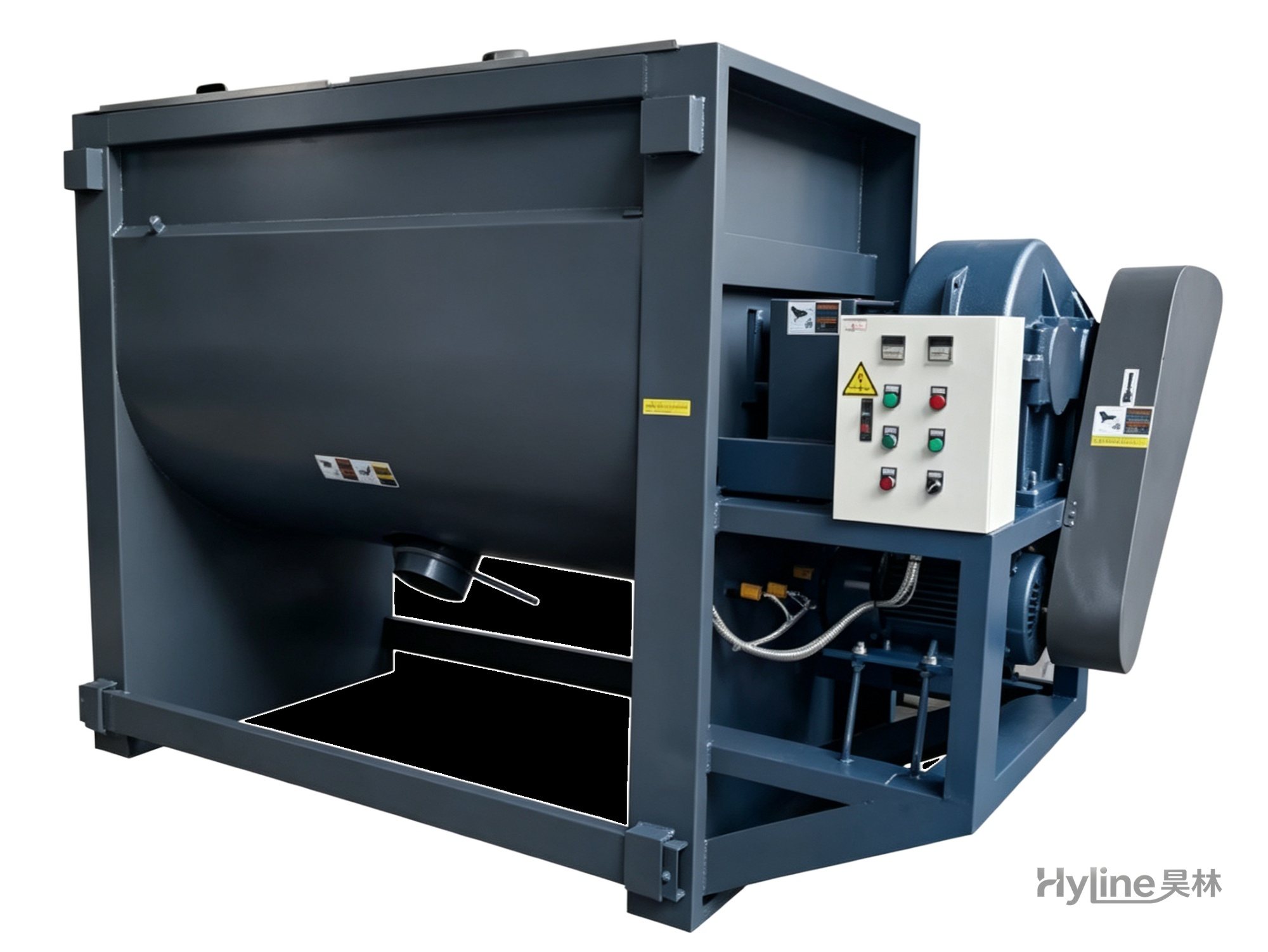
Horizontal Mixer (Heating Type)
Double-layer U-shaped stainless horizontal mixer with thermal oil heating of 50-150℃ (custom up to 300℃). S-shaped stainless blades for even mixing; dual mixing & drying functions with multiple safety protections.
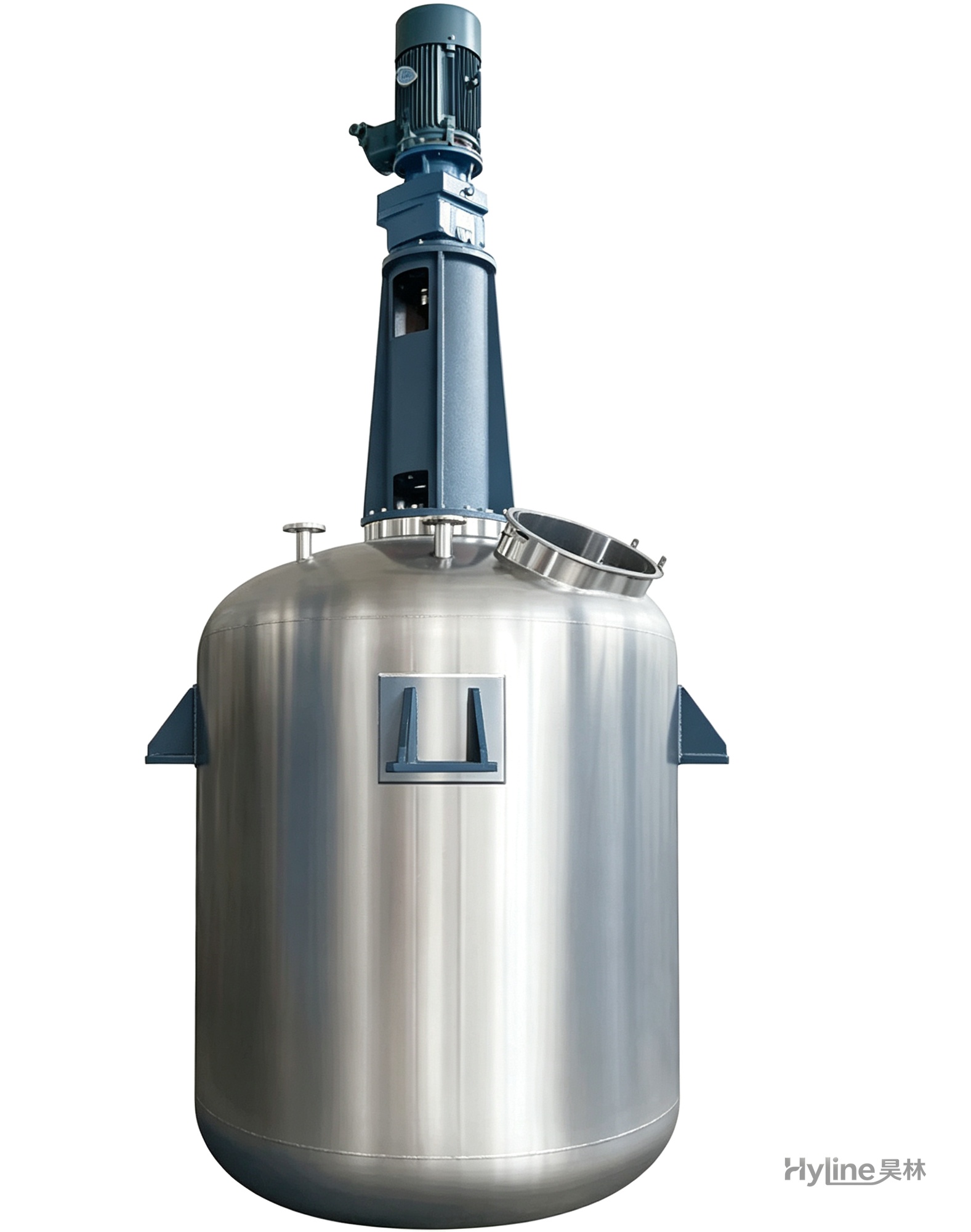
TC Series Mixing Kettle (Tinting)
For color matching in the paint industry and liquid-liquid / liquid-solid mixing in other industries. Uniform tinting, good miscibility, reasonable structure and powerful stirring.