
How does a planetary mixer work? Revolution-rotation principle and configuration for high-viscosity mixing
11/9/2026
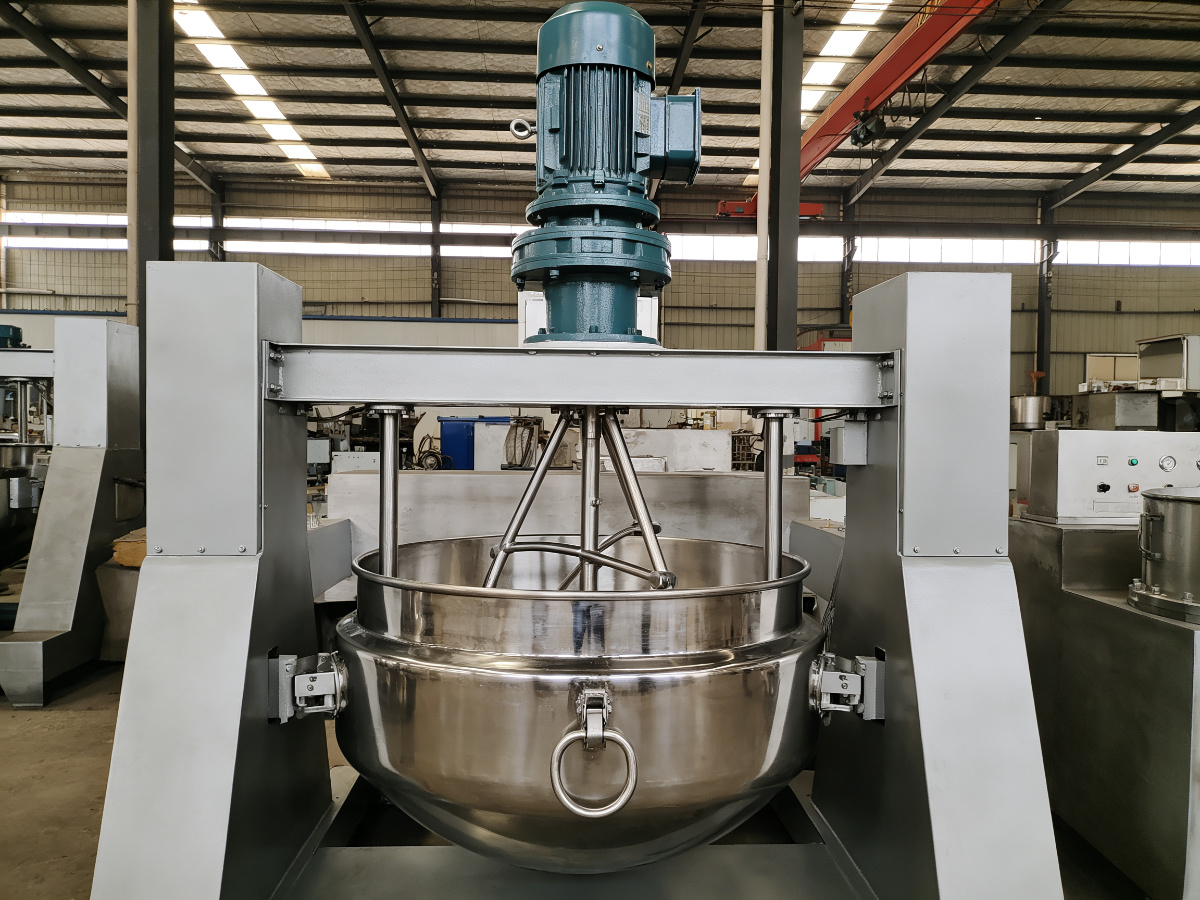
In workshops making silicone sealants, electronic potting compounds and battery slurries, the hardest problem is often not the formula but the last hundred kilograms that never blend evenly. Once viscosity climbs past tens of thousands of mPa*s, a conventional vertical stirring vessel simply drags the whole batch around with the blade, forming one rotating lump while the impeller digs a hole in the middle. A planetary mixer is built for exactly this duty: the blade rotates on its own axis while revolving around the tank axis, so every turn sweeps a fresh patch of material and nothing gets the chance to spin in place. This article explains the mixing principle, blade-to-tank matching, and how vacuum and heating are configured.
Why do high-viscosity materials need a planetary design?
In one sentence: the higher the viscosity, the less the material flows on its own, and mass transfer can only happen where the blade physically passes. At low viscosity, blades build an overall flow field and material follows; as viscosity rises, shear propagation distance collapses and any un-swept zone becomes a dead zone. The planetary design makes sweeping a forced action: the blade revolves along the wall while rotating, so the wall and bottom zones where material loves to stick are scraped again and again, the bulk performs a convective loop, and the blade helical faces keep shearing, folding and renewing interfaces. For pastes and compounds between tens of thousands and one million mPa*s, the combination of full-coverage revolution plus shearing rotation is practically the only proven mechanical solution.
How do revolution and rotation work together?
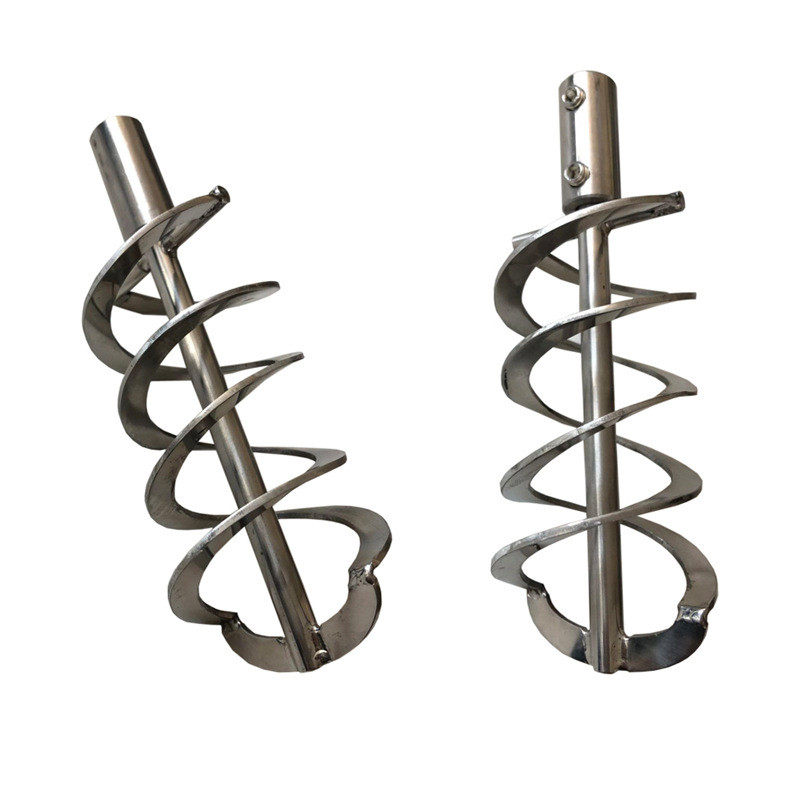
In one sentence: revolution covers the vessel, rotation shears the material, and the speed ratio decides mixing efficiency. Revolution is typically a fraction to a tenth of rotation speed; the higher the viscosity and the larger the tank, the lower the revolution share, so the blade keeps enough tip speed to scrape the wall. The helical blade lifts material from the bottom, revolution carries that column to another corner, and a lift-transfer-lift macro loop forms. On twin-blade machines the two blades counter-rotate and intermesh, squeezing powder and additives added in batches straight into the main stream. When judging a machine, check whether the speed ratio is adjustable: a fixed ratio forces a compromise whenever material viscosity spans a wide range.
Frame, ribbon or helical blades? Match by viscosity
In one sentence: blade type follows viscosity and material behavior; there is no universal blade.
| Blade type | Typical viscosity | Features |
|---|---|---|
| Frame blade | Low-to-mid viscosity pastes | Simple, reliable wall scraping, weaker shear |
| Ribbon blade | Mid-to-high viscosity | Good axial circulation, mixing plus heat transfer |
| Helical plus scraper | High viscosity, wall-sticking | Strong lifting, usually with scrapers |
| High-low dual blade | High solids, multi-component | Slow large blade mixes, high-speed disc disperses |
Note the difference from a concentric twin shaft mixer: the concentric twin shaft shares one axis between a slow scraping blade and a high-speed dispersing shaft, without any orbiting motion; a planetary machine covers the whole cross-section through revolution. Below one hundred thousand mPa*s, where wetting and dispersing dominate, the concentric twin shaft is often more efficient; for compounds so thick they will not flow, nothing replaces the coverage of a planetary design.
How are vacuum and heating built into the structure?
In one sentence: both demand rotary sealing, which is the biggest structural difference from a plain tank. Because the blade revolves, the shaft penetration through the lid cannot use ordinary packing; a double mechanical seal with isolating fluid keeps vacuum stable. Heating is usually a jacket, but highly viscous materials conduct heat poorly, so jacket-only heating creates a gradient of overheated walls and a cold core; many machines route heating media inside the blade itself, extending the heat surface into the batch. Vacuum solves two issues: entrained bubbles from high-solids mixing, and sensitivity of some systems to moisture or oxygen. A machine with weak devolatilization releases bubbles only after filling, and rework is expensive, so always run acceptance tests under vacuum.
How to estimate mixing time and confirm homogeneity?
In one sentence: mixing time follows tank diameter, revolution tip speed and batch size, and acceptance must rely on sampling rather than the clock. One revolution means the blade sweeps the wall once and the batch completes one macro loop; converting by revolution speed, most paste batches need tens of minutes of effective mixing, longer at higher viscosity. To confirm homogeneity, stop the machine and take samples near the top, the wall and the bottom, then compare solids content, color or viscosity; only when all three agree is the batch done. Watching the clock without sampling simply passes the risk on to the filling line.
How to match volume and batch size?
In one sentence: the usable fill factor of a planetary machine is lower than that of a plain tank, so size by actual charge, not nominal volume. Revolution needs free space, and the headroom must also accommodate powder float and vacuum expansion; plan on a fill factor of roughly zero point five to zero point seven. Overfilling pushes material into the lid and seal zone and ruins both vacuum and cleaning; underfilling leaves the blades starved so revolution becomes idling. For small-batch multi-product workshops, several small machines sized to the main batch beat one compromise large tank.
What does daily maintenance focus on?
In one sentence: rotary seals, the drive train and scraper clearance. Check double mechanical seal isolating fluid level and pressure weekly; once the level drops, dry running follows and leakage is only a matter of time. Replace lubricant in gearboxes and orbit drives on schedule and stop at once on noise or temperature rise. Scraper-to-wall clearance grows with wear; lost scraping lets wall deposits thicken until both mixing time and cleaning time stretch. Between products, clean with a solvent circulation pass plus manual wiping, paying special attention to the blade root and the seal area under the lid.
How we help customers finalize the configuration
As the company behind hyline.cn, Hyline Shengda Equipment Manufacturing Co., Ltd. starts from three things: the viscosity curve of the material, the batch size, and whether the workshop needs vacuum or heating. For customers whose viscosity spans a wide range we make the speed ratio adjustable and keep power in reserve; since high-viscosity paste will not flow on its own, discharge usually needs a hydraulic discharge machine to press the whole batch out, and the outlet size and position must be confirmed before ordering. If you are struggling with a high-viscosity mixing scheme, send us the viscosity, batch size and process requirements, and we will finalize the configuration with you.
Further reading: - Selecting mixing equipment for high-viscosity materials: from high-speed dispersers to planetary mixers - How to configure wall-scraping agitation for high-viscosity materials: anchor plus ribbon combined blade selection and design
This article is compiled by Hyline Shengda Equipment Manufacturing Co., Ltd.
Q&A from this article
Frequently asked questions and answers from this article
In one sentence: the usable fill factor of a planetary machine is lower than that of a pla…
Related Products
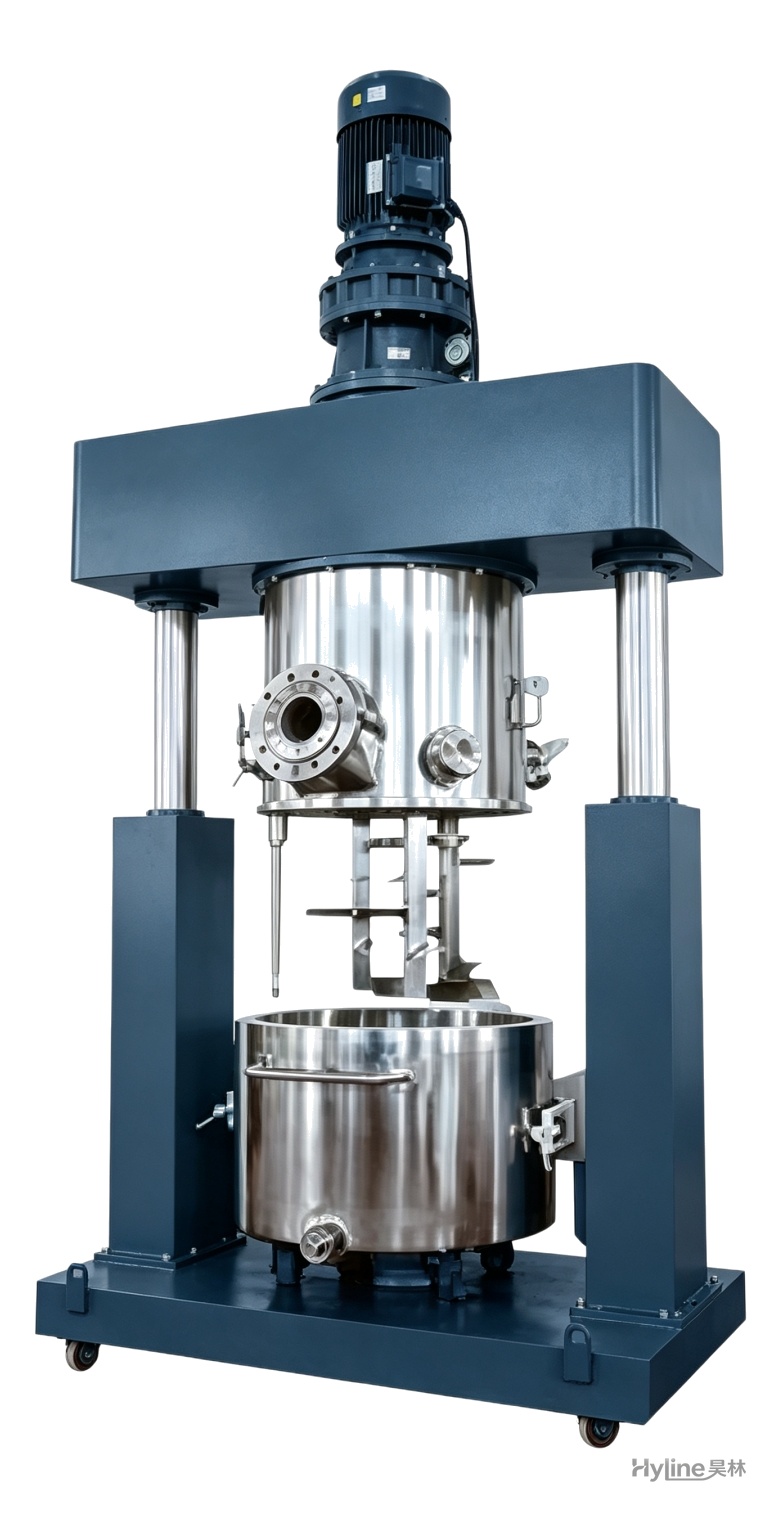
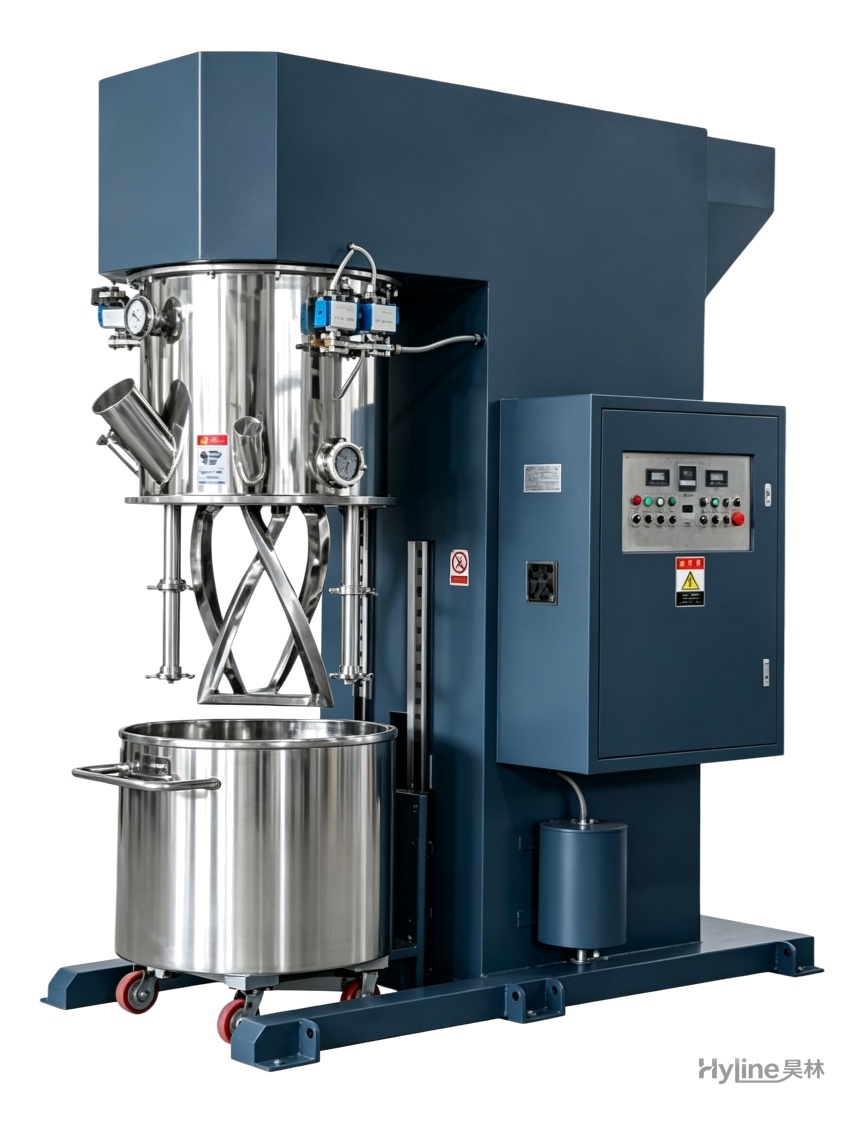
XJB Series Planetary Mixer
Planetary blades rotate and revolve simultaneously, creating complex material flow with no dead corners and easy discharge. Handles ultra-high-viscosity pastes of 10,000-8,000,000 cps for silicone, PU sealants, liquid silicone and electronic adhesives.
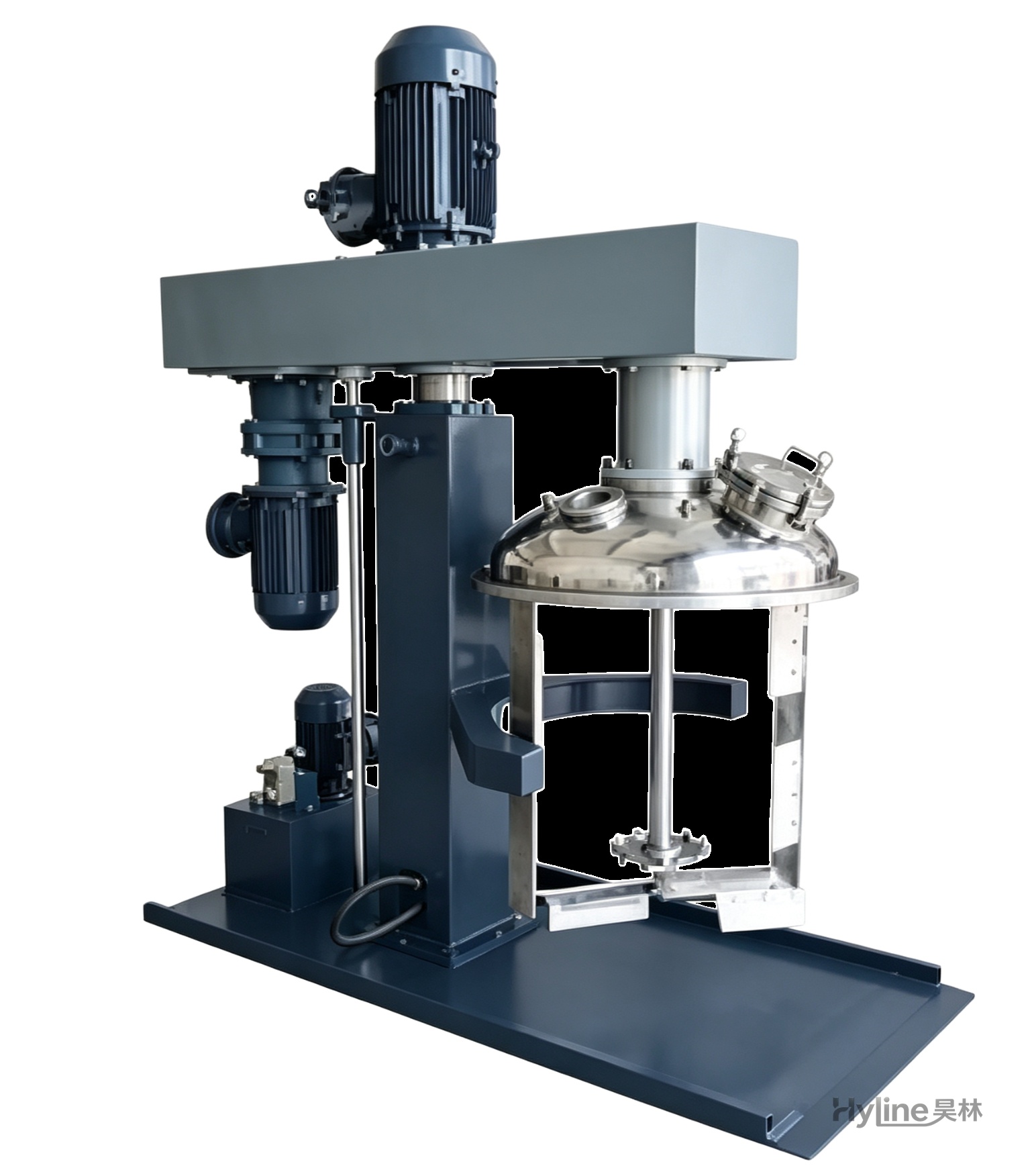
TSJ Series Concentric Twin-Shaft Mixer
Mixes materials of 3000-20000 cps. Low-speed blades with Teflon scrapers sweep the tank wall and push material to the center; high-speed toothed impellers disperse powerfully. High and low speeds run independently.
XJB Series Hydraulic Discharge Machine
Works with planetary mixers, power mixers and strong dispersers for pressure filling of viscous flowable materials. Simple structure, easy operation, with a balanced closed-welded steel frame.
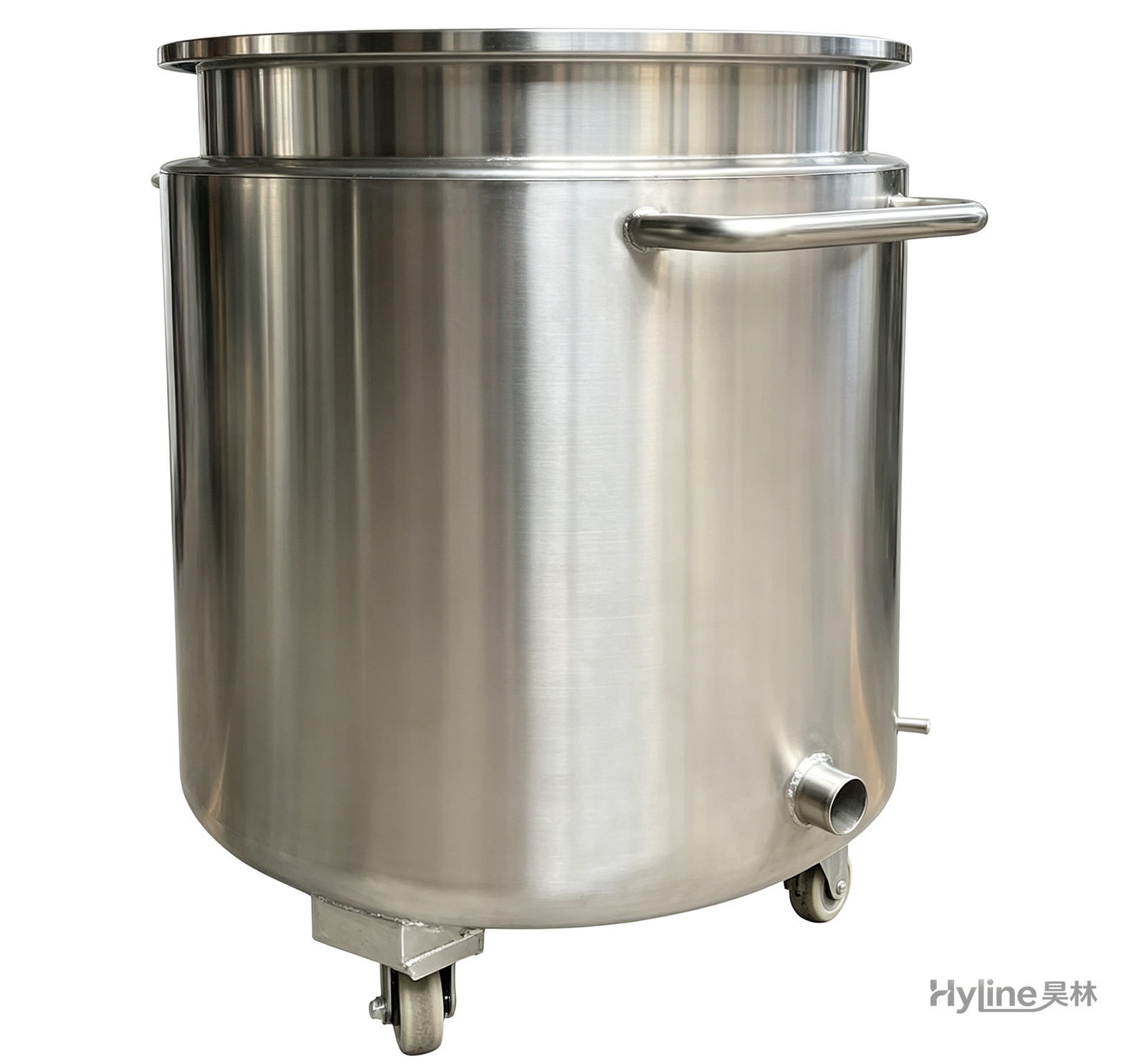
Stainless Steel Mixing Tank (Dispersion Drum)
Supporting vessel for dispersers and mixers in paints, coatings, adhesives, color slurries, inks and electronics. Available in 201/304 stainless with internal/external polishing and sloped bottom side discharge for complete draining.