
How to select a stainless steel reactor for the resin industry? Configuration essentials for esterification, polycondensation and polymerization conditions
10/25/2026
# How to select a stainless steel reactor for the resin industry? Configuration essentials for esterification, polycondensation and polymerization conditions
Resin synthesis is the process of turning polyols, polybasic acids and other raw materials into resin in a reactor through esterification, polycondensation or polymerization, and its requirements on equipment are stricter than ordinary chemical batch processes: the reaction temperature must follow the process curve, too fast heating increases side reactions and too slow heating occupies reactor time; the polycondensation stage must dehydrate under high vacuum, and a fluctuation in vacuum directly changes the molecular weight; during the reaction the material viscosity rises from a few hundred centipoise to tens of thousands of centipoise, and both agitation and heat transfer keep changing. Many buyers look only at capacity and price, and only discover at trial production that temperature control lags, the vacuum cannot be pulled, and the agitator cannot turn; the cost of modifying the reactor is far higher than the money saved at the beginning. This article explains how to select a stainless steel reactor for the resin industry from five aspects: material, heating and cooling, agitation, vacuum and condensation, and automation.
What typical conditions does resin synthesis have?
One-sentence conclusion: the temperature, vacuum and viscosity ranges of esterification, polycondensation and polymerization differ greatly; define the temperature-pressure and agitation boundaries by reaction type first when selecting a reactor.
Resin processes can be roughly divided into three types by reaction. The boundary ranges are given according to common industry experience and should be confirmed by the actual recipe: esterification generally runs at medium temperature, atmospheric or slight negative pressure, with the material going from thin to thick; polycondensation runs at higher temperature and needs high-vacuum dehydration, with viscosity rising notably; polymerization varies by system, with the widest span of temperature and vacuum, and the fastest viscosity rise. The three types have different requirements on the reactor; define the type first and then discuss configuration - the order must not be reversed.
| Reaction type | Typical temperature | Vacuum | Material viscosity change | Main control point |
|---|---|---|---|---|
| Esterification | Generally 150-250℃ | Atmospheric or slight negative pressure | Medium-low viscosity, thin to thick | Temperature and water removal rate |
| Polycondensation | Generally 200-280℃ | High vacuum, residual pressure generally below 20kPa | Notable viscosity rise | Vacuum and dehydration amount |
| Polymerization | Depends on system, generally 80-200℃ | Atmospheric to medium vacuum | Large viscosity rise | Temperature uniformity and agitation |
How to determine the material? How to choose 304 and 316L?
One-sentence conclusion: conventional resin recipes can use 304; systems containing chloride ions, organic acid catalysis or sensitive to iron ions should choose 316L, and the inner wall on the medium contact side is generally required to be polished.
Resin raw materials commonly contain dibasic acids, polyols and catalysts, and most systems can meet the corrosion resistance requirement with 304. There are three typical cases for upgrading to 316L: first, the recipe contains chloride ions - for example, some epoxy and phenolic systems have raw materials or by-products containing chlorine, and 304 is prone to pitting; second, the reaction system is strongly acidic at high temperature, where 316L with higher molybdenum content is more stable; third, light-coloured resins sensitive to iron ion contamination choose 316L for the inner wall with polishing to reduce metal ion release. The inner wall and nozzles on the medium contact side generally require polishing treatment, with roughness determined by the resin's sensitivity to cleanliness, generally requiring Ra≤0.8μm, and higher for light-coloured transparent systems.
How to configure heating and cooling? How to choose jacket, half-coil and internal coil?
One-sentence conclusion: resin reactions heat up and cool down frequently; generally configure jacket thermal oil circulation or steam heating, size the heat transfer area by the maximum heat load, and add an internal coil when rapid cooling is needed.
Resin reactions usually need programmed heating, holding and cooling. The heating medium is selected by process temperature: steam is common below 180℃, and thermal oil circulation is mostly used above 180℃. On the heat transfer structure, the jacketed reactor has the widest application range; its heat transfer area is proportional to the shell wall area, suitable for medium capacity; for large capacity or high heating/cooling rate requirements, an internal coil can be added on the basis of the jacket to supplement the area, generally raising the heat transfer capacity by 30%-50%; only for occasions requiring a clean external surface or overall heat exchange is the half-coil reactor considered. The heat transfer area should be calculated back from the maximum process heat load and the allowable heating/cooling rate, not guessed by capacity proportion.
How to configure agitation? Which impeller type for systems with a large viscosity span?
One-sentence conclusion: resin systems have a large viscosity span; generally choose anchor or frame agitators with scraping, switch to ribbon or twin-impeller combinations at the high-viscosity stage, with low speed and high torque, and power estimated by viscosity and capacity.
At the esterification stage the material is thin and ordinary blades can mix; at the polycondensation and polymerization stages viscosity reaches tens of thousands of centipoise, and large-area low-shear impellers are needed to drive the overall circulation. Anchor and frame agitators stay close to the tank wall, and with scrapers also solve the renewal of the heat transfer film at the wall under high viscosity; for even higher viscosity, ribbon impellers or planetary mixer type twin-impeller combinations are used. Agitation power is estimated by tank diameter, liquid level and peak viscosity; generally the motor power of a resin reactor starts at the level of several kilowatts per cubic metre of capacity, and is confirmed by the process; the speed is generally not high and the reducer ratio should be large.
How to configure vacuum and condensation? How to build the polycondensation dehydration system?
One-sentence conclusion: polycondensation dehydration uses a water-ring vacuum pump and a shell-and-tube condenser, with a liquid catcher before the condenser to prevent entrainment; vacuum needs regulated control, and the suction volume is calculated by the dehydration rate and non-condensable gas amount.
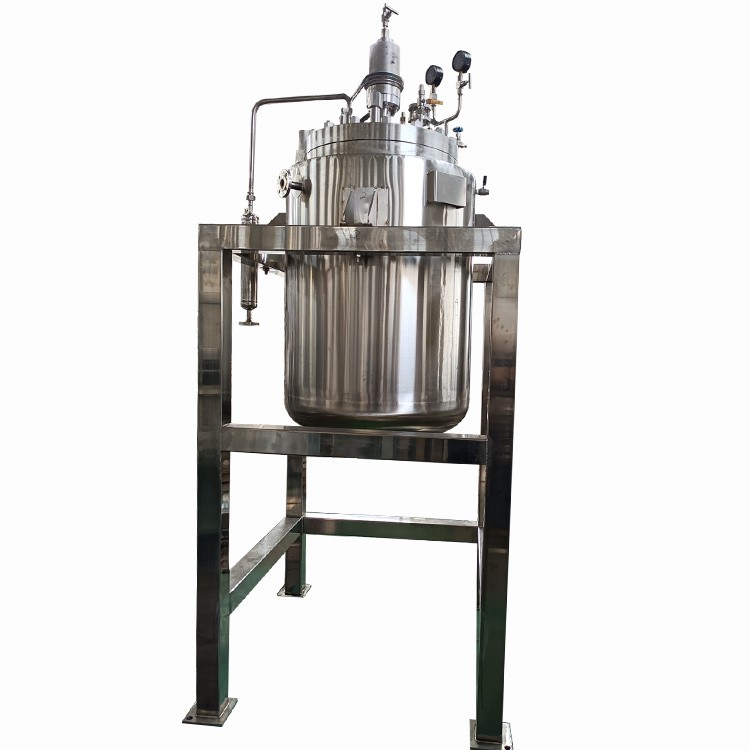
At the polycondensation stage, the water generated by the reaction must be drawn off under vacuum. The configuration order of the vacuum system is: reactor → liquid catcher → condenser → vacuum pump. The liquid catcher collects resin droplets entrained by the vapour to prevent them from entering the condenser and coking; the condenser condenses and recovers the water vapour, generally a shell-and-tube type, with the heat transfer area calculated by the evaporation amount; the vacuum pump is commonly a water-ring pump, and the suction volume must consider both water vapour and non-condensable gas. Vacuum stability has a large influence on molecular weight; generally it is recommended to configure a vacuum regulating valve and buffer tank to avoid direct fluctuation from the vacuum pump being transmitted into the reactor. The vacuum pipe at the condenser outlet should be short and straight; the more elbows and valves, the greater the pressure loss; the vacuum pump exhaust should be led outdoors or to exhaust gas treatment to avoid solvent odour returning to the workshop. Before the end of polycondensation, vacuum is usually released for sampling to measure viscosity, and the sampling opening should be convenient to operate; confirming these details at the drawing stage is easier than modifying after delivery.
How to configure automation? How to implement the temperature program of resin reactions?
One-sentence conclusion: programmed heating, vacuum regulation and batch records are standard for resin reactors; heating rate, holding time and vacuum curve are programmed by recipe, and operation records are fully retained.
Resin processes emphasize reproducibility; temperature differences and vacuum fluctuations between batches show up in molecular weight and colour. Automation configuration generally includes three parts: the temperature program sets the heating rate, holding temperature and cooling curve by recipe, executed by the thermal oil valve or steam valve; the vacuum regulating valve automatically adjusts to the target residual pressure of the polycondensation stage; batch records write temperature, vacuum, time and water removal data into reports for traceability and reproduction. On site, three signals of in-tank temperature, jacket temperature and pressure display are generally configured to prevent single-point failure.
How to avoid common pitfalls in resin reactor selection?
One-sentence conclusion: capacity is calculated back by batch size and loading factor, temperature control accuracy is set by recipe, and sampling and feeding openings are planned in advance; do not compare only price and ignore configuration.
First, capacity should not be set directly by tonnage: resin reactions generally have foaming and reflux, the loading factor is generally 60%-80%, and the actual effective capacity is calculated back by dividing the batch size by the factor; buying small and replacing large later is costly. Second, temperature control accuracy directly affects molecular weight distribution; generally resin processes require the temperature deviation in the reactor to be controlled within ±2℃, and for thermal oil systems confirm that the heat transfer area and circulation flow are sufficient. Third, plan sampling and feeding openings in advance: the esterification stage needs intermediate sampling to measure the acid value, and the polymerization stage may need batchwise addition of monomers; openings that are missing are hard to add later. Fourth, leave margin in vacuum and condensation: at the end of polycondensation the viscosity is high and water removal is slow, so enlarge the suction volume by 20%-30% of the peak dehydration amount for stability. Bringing these items into the inquiry sheet makes it less likely to step into pitfalls than comparing only capacity and price.
Hyline Shengda produces stainless steel reactors, resin production complete equipment and stainless steel mixing tanks, multi-function mixers and other supporting equipment for the resin industry, and supports configuring heating, agitation and vacuum systems by reaction type, capacity and process curve. Before making a resin reactor scheme, it is suggested to settle the three parameters of reaction type, peak viscosity and heating/cooling rate first, and then discuss material and heat transfer structure.
Related reading: - Comparison of reactor heating and cooling methods: how to choose jacket, half-coil and internal coil - How to configure reactor agitation power, motor and reducer? Estimate by capacity, viscosity and agitation type
This article is compiled by Hyline Shengda Equipment Manufacturing Co., Ltd. (hyline.cn), mainly producing stainless steel reactors, mixing tanks, storage tanks, dispersers, concentrators and complete chemical lines, supporting non-standard customization.
Q&A from this article
Frequently asked questions and answers from this article
What should reactor selection for the resin industry look at? This article explains the configuration essentials of material, heating and cooling, agitation and vacuum condensation by esterification, polycondensation and polymerization conditions.
Related Products

Jacketed Reactor
The typical main reaction vessel in chemical production. Mixing, heating and cooling disperse and mix materials for reaction and polymerization. The jacket circulates thermal oil/steam for heating or cooling water for temperature control.
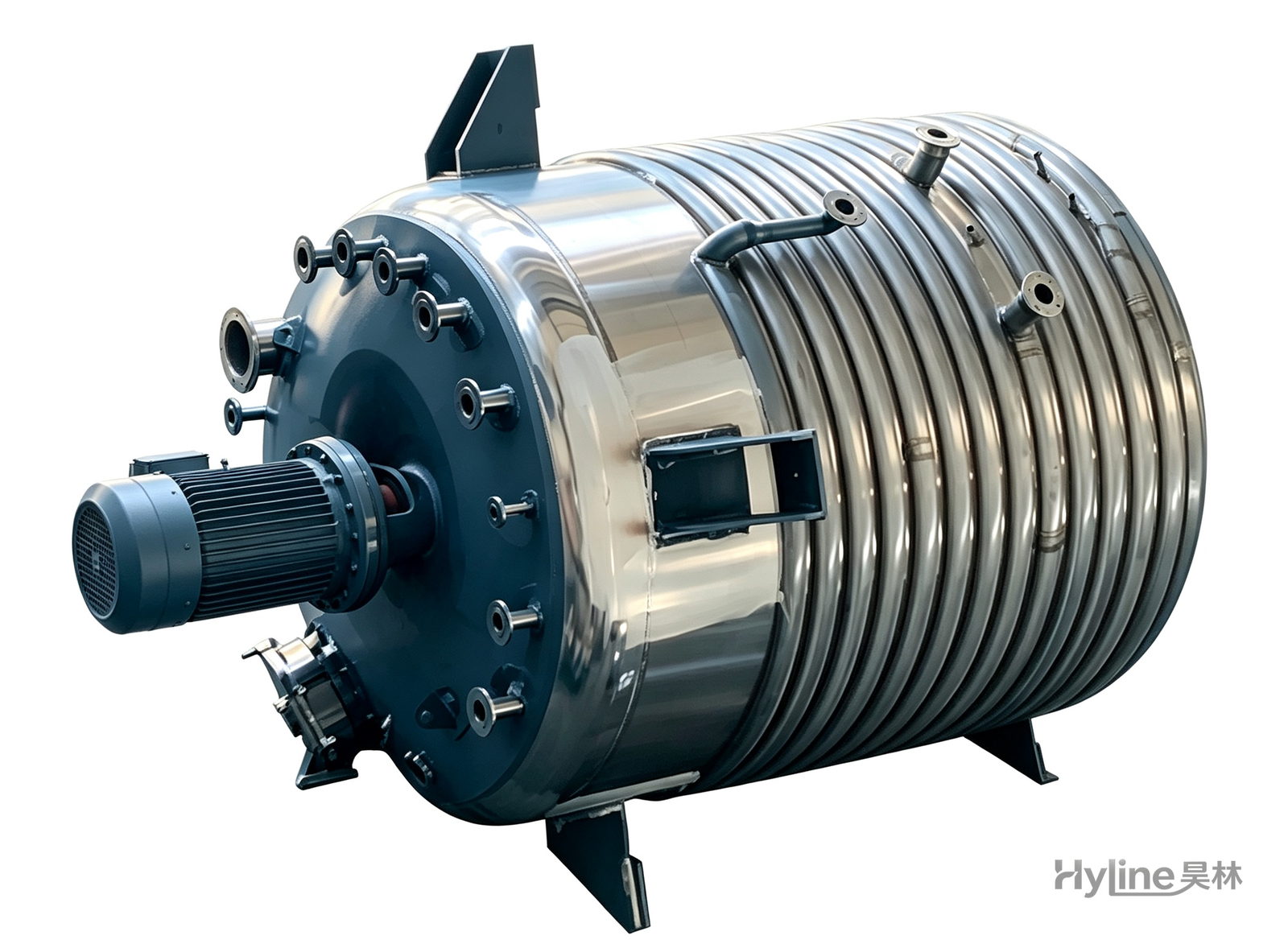
External Half-Coil Reactor
External half-pipe heating & cooling coils provide uniform, efficient heat exchange with zero material dead zones inside. Mirror-polished 304/316L stainless tank is clean and corrosion-resistant. For resin, new-energy slurry and pharmaceutical synthesis.
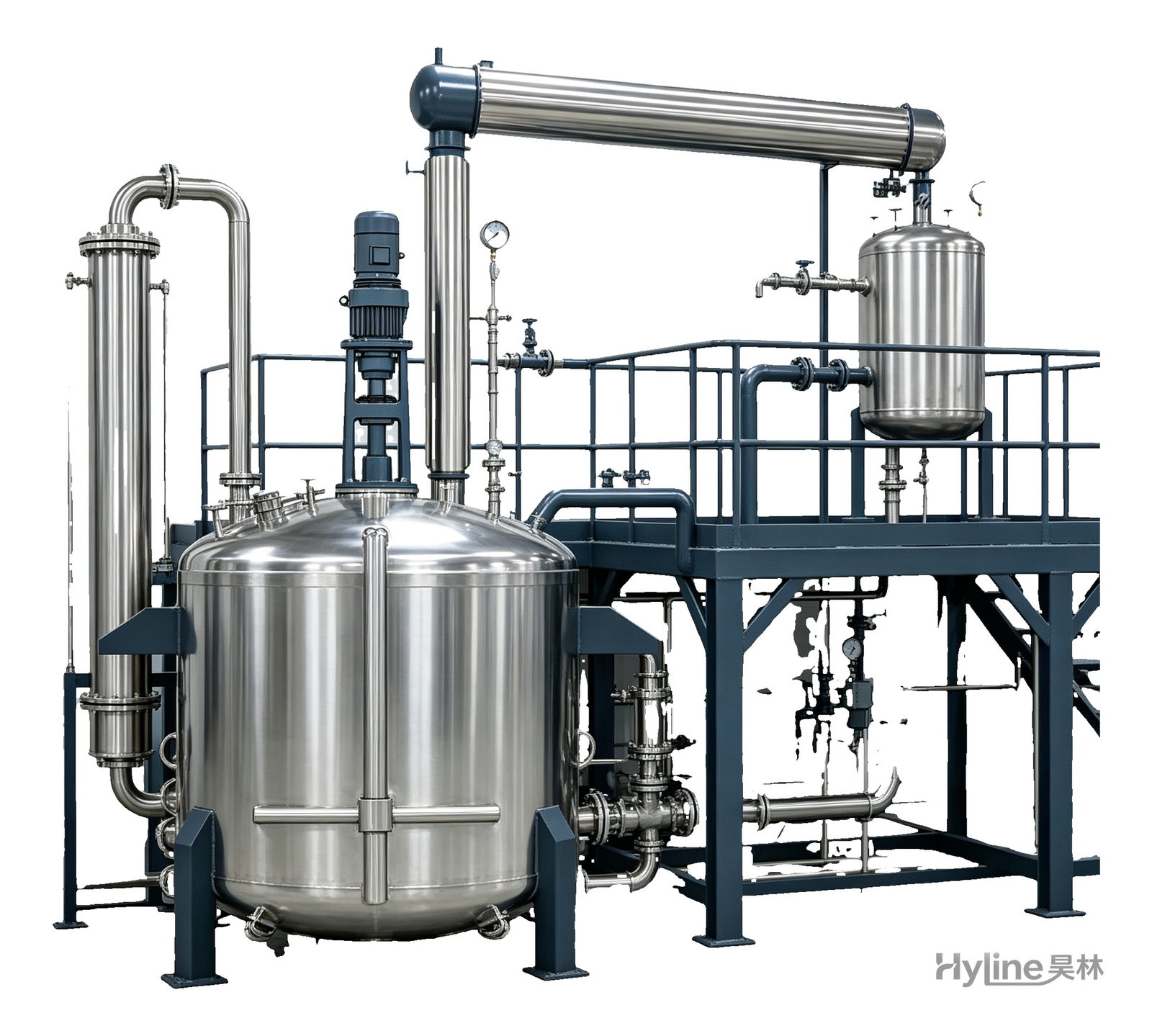
Complete Resin Production Equipment
Resin production packages built around the reactor, with vertical fractionating column, horizontal condenser and water separator for full synthesis, dehydration and reflux processes. Sizes from 300L to 30000L.

Stainless Steel Mixing Tank (Dispersion Drum)
Supporting vessel for dispersers and mixers in paints, coatings, adhesives, color slurries, inks and electronics. Available in 201/304 stainless with internal/external polishing and sloped bottom side discharge for complete draining.
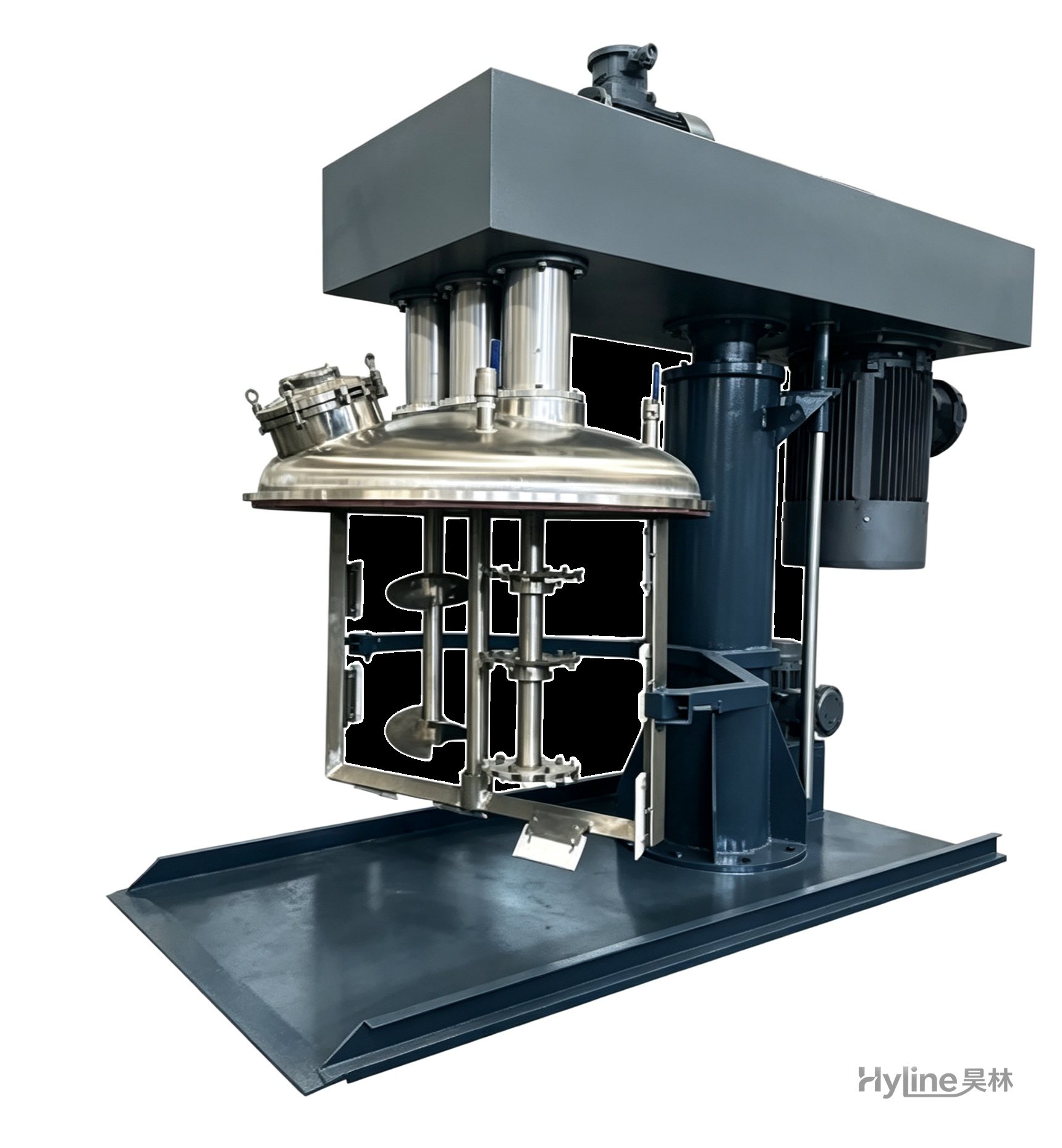
SJ Series Multi-Function Mixer
A new high-efficiency mixer for high-viscosity materials, rapidly dispersing, dissolving and homogenizing. Widely used in offset printing inks, putties and adhesives. Vacuum type customizable.