
How to choose a stainless steel reactor for thermal reaction flavors: temperature control, reflux and cleaning for the Maillard process
11/8/2026
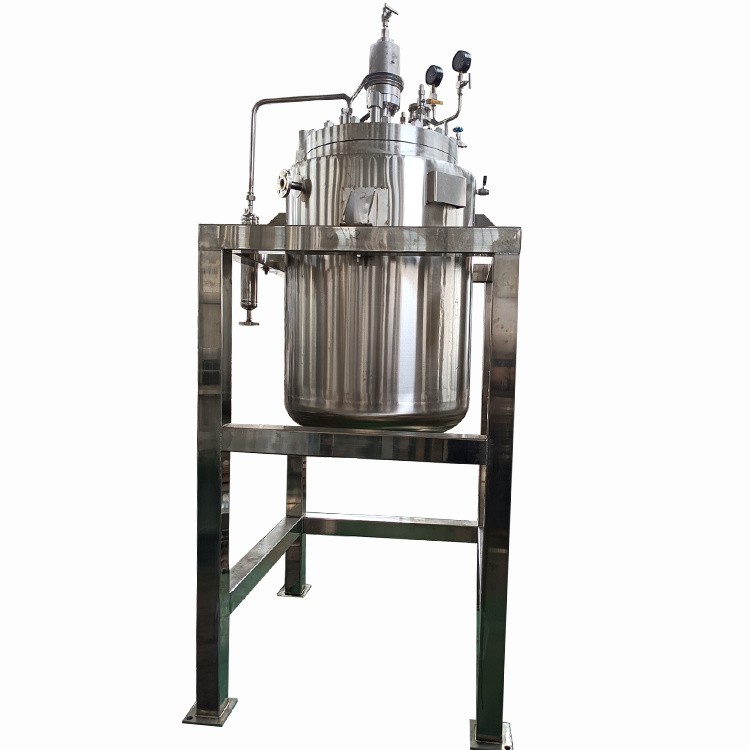
The rich cooked aromas in savory flavors, bouillons and seasoning bases often come from thermal reaction flavors — aroma substances generated when amino acids and reducing sugars react under heat through the Maillard reaction. The process sounds like "cooking a pot of soup", yet it tests the equipment in very concrete ways: the reaction temperature must be held precisely, volatile compounds must be condensed back, and residual odors must be washed out between changeovers. A small gap in the equipment configuration shows up as batch-to-batch flavor drift. Starting from the thermal reaction process, this article explains how to configure temperature control, reflux, materials and cleaning of a stainless steel reactor, so the key items are right at selection.
A typical thermal reaction flavor process mixes an amino acid source (such as hydrolyzed vegetable protein or yeast extract) with reducing sugars, fats and other ingredients, reacts them at elevated temperature for one to several hours, then blends, dries or dilutes into the finished flavor. The reaction is sensitive to both temperature and time, and the same line must switch between different flavor profiles — which means the equipment must work hard on two fronts: "controllable" and "cleanable".
What does the thermal reaction process demand from the equipment?
In one sentence: accurate temperature, even heat-up and controllable time — every core configuration of the reactor serves these three points.
The Maillard reaction window lies roughly between 100 and 130 degrees Celsius, varying by recipe; drifting out of the window changes the aroma direction: too low and the reaction slows with incomplete conversion, too high and scorched notes appear. Temperature control is therefore not just a thermometer — it is the interplay of heating method, sensor placement and mixing. During heat-up the bulk temperature must rise uniformly; locally overheated zones (usually the layer against the wall) generate off-note precursors first. Confirm your recipe's reaction temperature and allowed tolerance first, then let the supplier size the heating power and control method from that — do not skip this step.
Time control matters equally. Reaction timing starts when the bulk reaches the target temperature; the equipment must reach and hold that temperature steadily, and cool down quickly to stop the reaction — flavor "timing" is counted in minutes, and equipment with sluggish heat-up and cool-down cannot hold flavor stable. Agitation must keep up as well: slurry consistency changes as the reaction proceeds, and the impeller and speed must guarantee uniform temperature across the vessel; otherwise the measured temperature does not represent the bulk, and precise timing is wasted.
How to configure temperature control?
In one sentence: prefer jacket heating with an internal coil as reinforcement, place sensors at representative positions in the flowing material, and control with stepped heat-up.
Jacket steam heating is the mainstay for this duty — smooth and controllable; for fast exothermic recipes add an internal coil or external loop to strengthen heat removal. Sensor placement matters more than sensor count: thermowells must sit in the flowing material, away from the wall zone next to the jacket, so what is measured is the temperature the process needs to control. On strategy, stepped heat-up is steadier than one-shot heating — rise to an intermediate hold, observe, then rise to the target and start timing; this favors flavor formation and avoids wall overshoot. For high-end lines demanding tight control, jacket and coil are controlled on separate loops to narrow the fluctuation band further.
The control scheme should be written into the contract stage: number and position of sensors, number of control loops, heat-up rate targets — checked item by item at acceptance, leaving no vague "we'll see later".
How to configure reflux and off-gas?
In one sentence: water vapor and volatile aromas must be condensed and returned, odorous off-gas must be routed away for treatment — the condenser directly affects yield and workshop odor.
As the reaction heats up, water and part of the volatile fractions keep evaporating; letting them escape loses flavor precursors and over-concentrates the batch. A reflux condenser at the vessel top condenses the vapors back into the reactor, stabilizing concentration and volume. Characteristic odor off-gas is ducted separately to the workshop exhaust treatment system, not mixed with the reflux line. This arrangement follows the same logic we described in our article on reactor condenser and reflux configuration — for thermal reaction flavors, "solvent recovery" simply becomes "aroma retention". Give the supplier the reaction temperature, evaporation intensity and odor sensitivity, and the condenser area and line sizes will be sized accordingly.
Recipes requiring pressure reaction (some thermal reactions need higher temperatures) must also be configured to the pressure rating, with safety accessories considered together with the vessel — per pressure vessel codes, not improvised from an ordinary atmospheric tank. The condensation loop also needs freeze protection in winter: outdoor lines need tracing or drain design, since residual liquid that cannot be drained after shutdown is a common cause of burst lines.
How to set materials and hygiene?
In one sentence: product-contact surfaces follow food-grade configuration; salty or acidic recipes take 316L, internal surfaces are polished to reduce residue and cleaning dead zones.
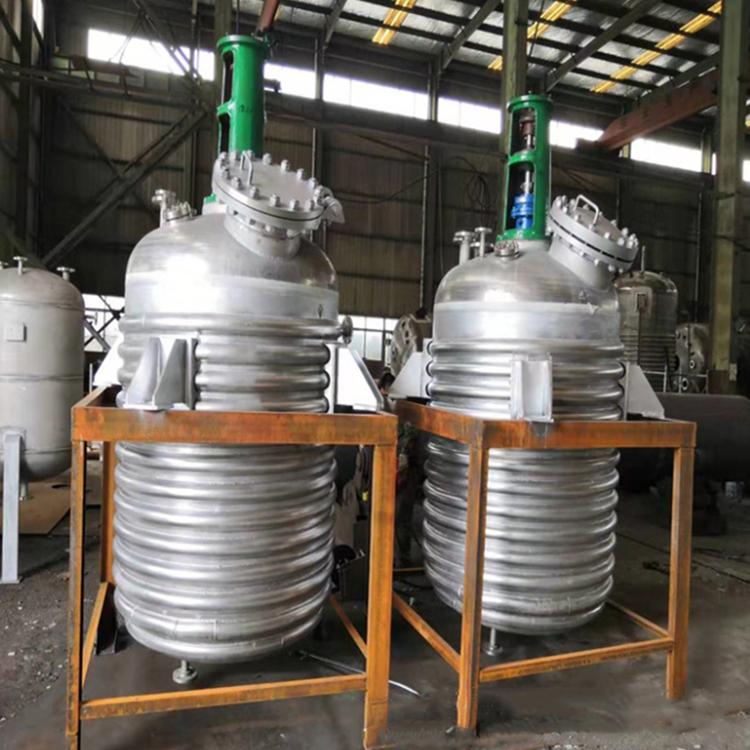
Thermal reaction flavors are food ingredients, so food-grade product-contact configuration is the baseline. Recipes containing salt or organic acids raise pitting risk on ordinary grades — 316L is the steadier choice. Internal polishing is not about looks: it reduces residue and adhered material; set the polish grade by product tier rather than chasing mirror finish blindly. Piping and valves follow sanitary selection with clamp connections for easy disassembly and washing. The blending and holding steps after the reactor can use a mixing tank built to the same standard, keeping material and cleanliness consistent so the downstream never drags down the upstream.
Seal materials deserve a pass too: gaskets and seals must withstand the reaction temperature, or hot batches leak — bringing cleaning burden and safety concerns together.
Volume and batch size: how to decide?
In one sentence: size the vessel from the main product's batch charge divided by a fill coefficient (typically 0.7 to 0.8, lower for foaming recipes); for multi-product lines, prefer small-to-medium vessels running more batches over one large vessel with slow heat-up and cool-down.
The calculation itself is simple. The real trade-off is batch count versus line rhythm: heat-up and cool-down are non-production time, and the larger the vessel the longer they take, reducing batches per day. For lines switching between many flavors, two small-to-medium vessels in parallel beat one large vessel — one cleans while the other reacts, and the line never stops. Lay out daily output and cycle time (including cleaning) in a table with the supplier, and the volume will be decided on solid ground.
How to handle changeover cleaning?
In one sentence: cleaning dead zones matter more than cleaning intensity — minimize dead zones structurally and add clean-in-place, and changeovers will not carry flavors over.
The changeover pain in flavor plants is odor carryover: a pungent batch tainting the next delicate one scraps the whole lot. Control residue structurally first — rounded transitions inside the vessel, no crevices or weld flaws, with selection-time confirmation of the prone spots: shaft seal area, thermowell roots, and similar material traps. Then add clean-in-place with spray coverage of the vessel head, following the rhythm of "caustic wash, water rinse, acid wash, water rinse". For strongly odor-absorbing recipes, add a dedicated deodorizing rinse step. Cleaning hot right after the reaction is far easier than after cooling — reserve the cleaning window in the production plan.
Verify cleaning by records, not by nose: sample after each cleaning for conductivity or sensory comparison and build a cleaning baseline per line — extended changeover intervals will show up in the data immediately. Gaskets and seals, the odor-absorbing wear parts, go on a scheduled replacement list rather than being investigated only after tainting.
What conditions to state before ordering?
Our experience with flavor and fragrance customers condenses to a checklist: the reaction temperature and time curve of the target product, batch volume and batches per day, whether the recipe contains salt or acid, any pressure-reaction requirement, the current status of workshop off-gas treatment, and changeover frequency with cleaning method. With these written down, heating method, control scheme, material grade and cleaning configuration are set in one pass.
As the company behind hyline.cn, Hyline Shengda Equipment Manufacturing Co., Ltd. configures the stainless steel reactor for the flavor industry by the recipe's temperature curve for heating and control, by medium corrosivity for material grade, and delivers the reflux condenser and off-gas connections fully fitted before shipment; for heating-reinforced options such as the half-coil reactor we also give fit-for-duty advice rather than default upsizing. If you are equipping a thermal reaction flavor line, send us the recipe conditions and we will set the configuration together.
Further reading: - How to configure a reactor condenser: reflux, solvent recovery and tail-gas condensation - How to choose reactor material: 304, 316L and clad plate by medium corrosivity
This article is compiled by Hyline Shengda Equipment Manufacturing Co., Ltd.
Q&A from this article
Frequently asked questions and answers from this article
In one sentence: prefer jacket heating with an internal coil as reinforcement, place senso…
Related Products

Jacketed Reactor
The typical main reaction vessel in chemical production. Mixing, heating and cooling disperse and mix materials for reaction and polymerization. The jacket circulates thermal oil/steam for heating or cooling water for temperature control.
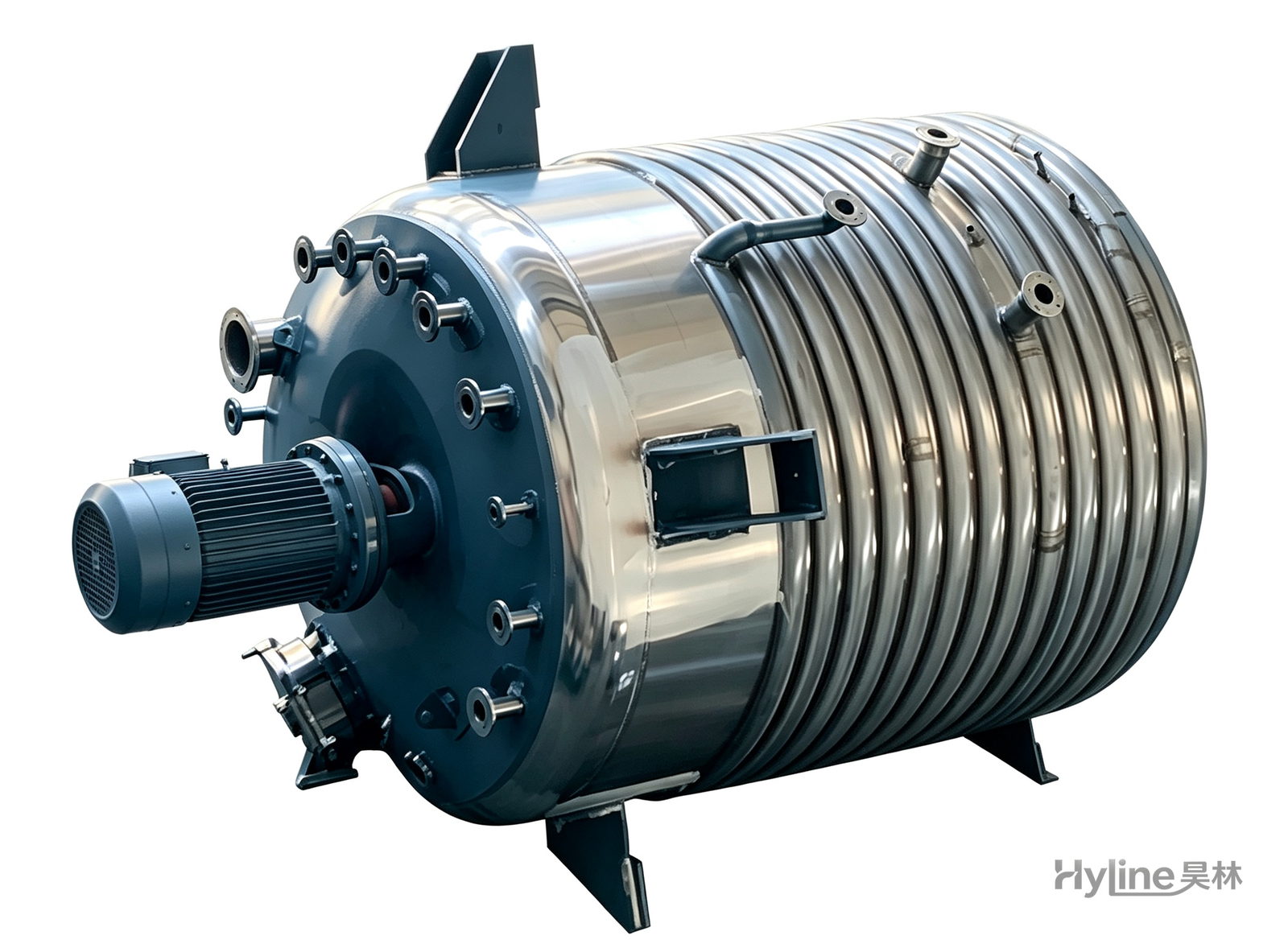
External Half-Coil Reactor
External half-pipe heating & cooling coils provide uniform, efficient heat exchange with zero material dead zones inside. Mirror-polished 304/316L stainless tank is clean and corrosion-resistant. For resin, new-energy slurry and pharmaceutical synthesis.

Stainless Steel Mixing Tank (Dispersion Drum)
Supporting vessel for dispersers and mixers in paints, coatings, adhesives, color slurries, inks and electronics. Available in 201/304 stainless with internal/external polishing and sloped bottom side discharge for complete draining.
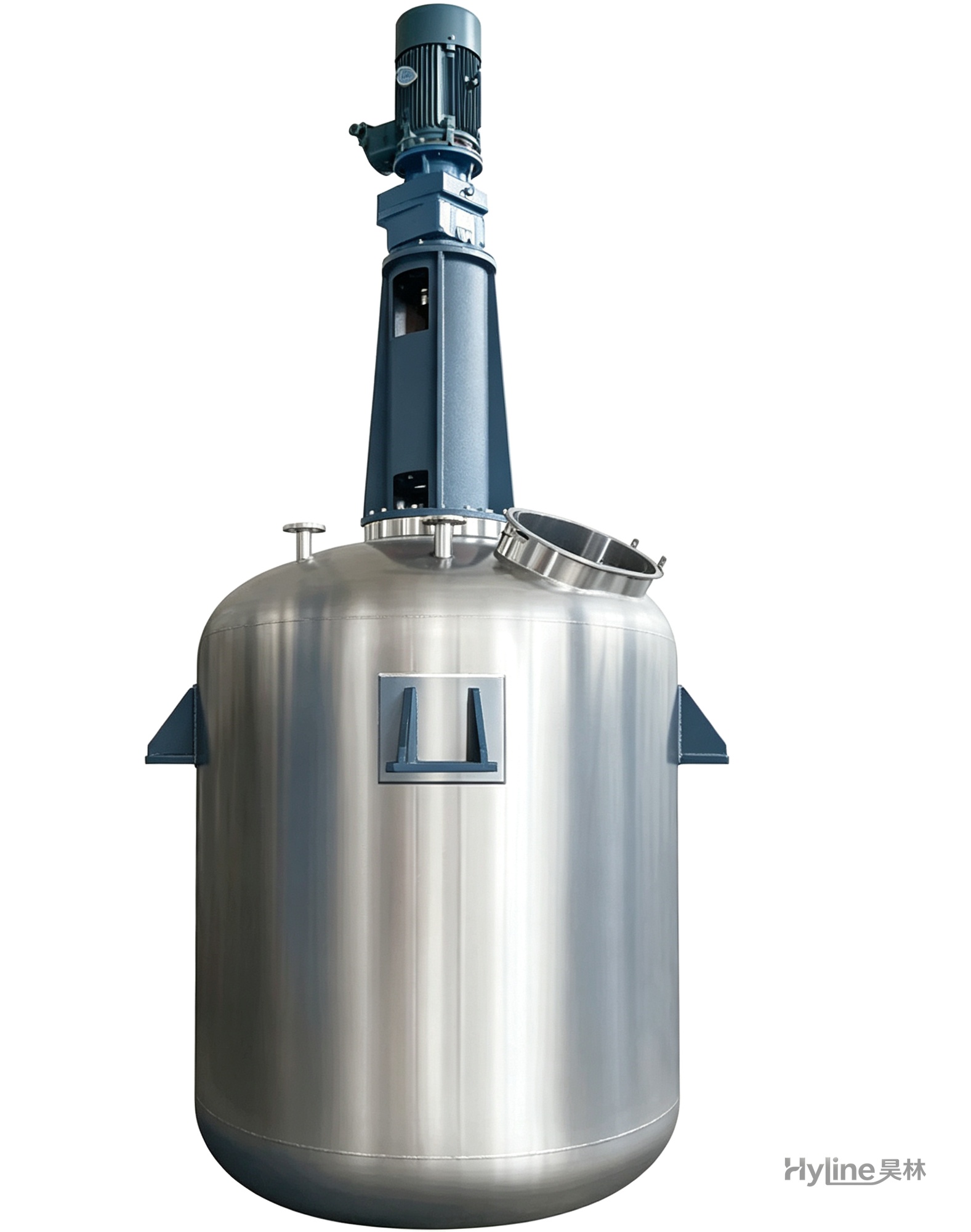
TC Series Mixing Kettle (Tinting)
For color matching in the paint industry and liquid-liquid / liquid-solid mixing in other industries. Uniform tinting, good miscibility, reasonable structure and powerful stirring.