
How to Judge the Concentration Endpoint of a Concentrator? Specific Gravity, Refractive Index and Evaporation Operation Essentials
10/16/2026
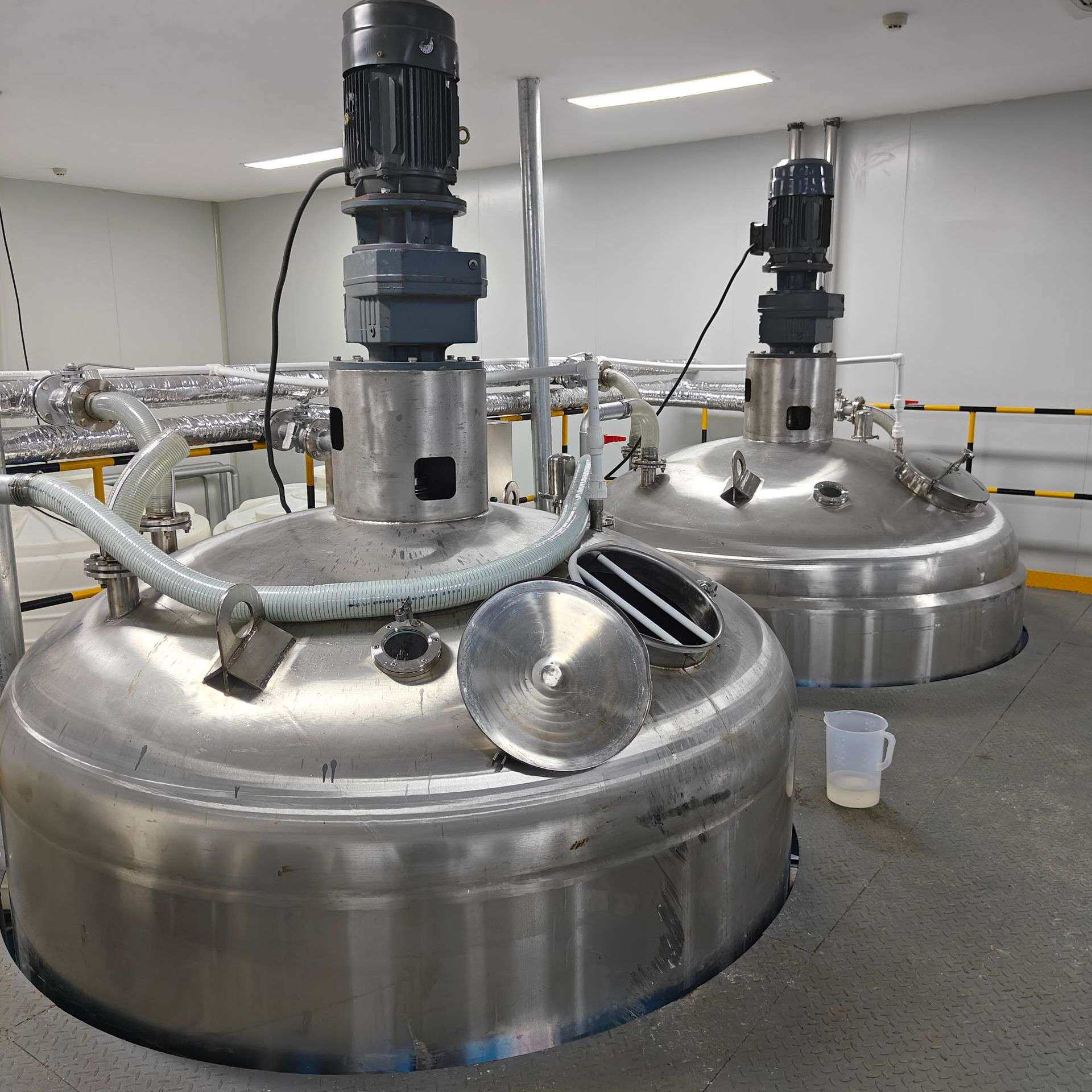
A concentrator is an evaporation-concentration device commonly used in Chinese herbal extraction, food and chemical industries. It removes part of the water or solvent from a low-concentration liquid under vacuum to obtain a product at the target concentration. How far a batch should be concentrated determines product quality and batch qualification rate: if the endpoint is not reached, the product concentration is below target and downstream processing and drying become heavier; if it is passed, the material stays heated for too long, heat-sensitive components degrade, color darkens and yield drops. In practice many batches are stopped "by feel," which makes results fluctuate between batches. This article gives two measurable methods, specific gravity and refractive index, plus the essentials of working with vacuum level and sampling, so endpoint judgment can be based on numbers.
Why Is the Concentration Endpoint Hard to Judge?
Short answer: during concentration the liquid concentration changes, the temperature changes, and sampling is affected by vacuum, so a single indicator is easy to misread.
There are three reasons. First, as water is evaporated, concentration rises gradually, but concentration cannot be read online directly and must be inferred from indirect indicators such as specific gravity or refractive index. Second, the boiling point under vacuum concentration changes with vacuum level; the same concentration gives different temperatures at different vacuum levels, so using temperature alone to judge concentration causes errors. Third, the concentrator is a closed negative-pressure system; sampling requires breaking vacuum or using a sampling valve, so sampling frequency is limited and operators tend to sample less and stop by experience.
The key is therefore to choose an indicator strongly correlated with concentration, and to fix the sampling and reading conditions so every judgment is repeatable.
How to Judge the Endpoint by Specific Gravity?
Short answer: specific gravity is the most common method in traditional Chinese medicine and food concentration; use a Baume hydrometer or specific gravity hydrometer to measure the liquid, compare with the process target endpoint gravity, and stop when it approaches.
Typical operation: measure the initial specific gravity before concentration, determine the endpoint specific gravity from the process formula (usually calibrated in pilot trials), sample every 15-30 minutes during concentration to measure specific gravity, and stop and discharge when the gravity reaches the target. Specific gravity corresponds to solids content: the higher the solids, the higher the gravity. It suits sugar, salt and extract-type liquids well.
Three points to note. First, fix the sampling temperature; specific gravity changes with temperature, generally read at 20°C, cool the sample or apply a temperature correction table. Second, liquids containing a large amount of light components such as alcohol are affected by alcohol content and need conversion. Third, read the hydrometer with the eye level with the meniscus and a stable surface; a float touching the wall or with bubbles gives wrong readings.
Which Materials Suit the Refractive Index Method?
Short answer: the refractive index method suits materials whose refractive index changes linearly with concentration; syrup, fruit juice and some extracts can be quickly judged with a handheld refractometer.
The refractometer reading (Brix or refractive index nD) is approximately linear with soluble solids content. A measurement needs only one drop of liquid and gives a result in about ten seconds, faster than the specific gravity method, suitable for high-frequency batch production. Calibrate the instrument before use (usually zero with pure water), ensure the liquid covers the prism and the temperature is stable, and wipe the prism dry after measuring to prevent dry residue affecting accuracy.
The limitation should also be known: liquids containing insoluble suspended solids, deep pigments, or mixed oil phases give distorted readings; for such materials, still use specific gravity as the primary method and refractive index as a cross-check.
How to Coordinate Vacuum Level and Sampling in Operation?
Short answer: sample quickly, read stably, and maintain the vacuum level; when these three work together, endpoint judgment is reliable.
Under vacuum concentration the tank is under negative pressure. Sampling is usually done through a tank sampling valve or port: first close the agitator or reduce speed, let the liquid settle briefly, discharge a small amount to flush the sampling line, then take the formal sample to avoid dilution by line residue. Read at the 20°C baseline; if possible keep a suitably ranged hydrometer and thermometer beside the sampling station. The vacuum fluctuates briefly during sampling; restore the set vacuum after sampling so the liquid does not stay at an abnormal boiling point for long.
In typical production, sample every 30 minutes in the early stage and tighten to every 10-15 minutes near the endpoint, with dual-indicator cross-checking (specific gravity plus refractive index), then hold or discharge directly after the endpoint is confirmed.
How to Correct Concentration and Temperature Deviation?
Short answer: the same sample reads differently at different temperatures; use temperature correction or a unified sampling temperature to avoid mistaking temperature deviation for concentration deviation.
Both specific gravity and refractive index are affected by temperature: hydrometers are usually calibrated at 20°C, apply the correction when the measured temperature deviates; most handheld refractometers have automatic temperature compensation, but it is still recommended to let the sample and instrument temperatures approach before reading. During vacuum concentration the liquid temperature is determined by vacuum level; it is normal for the sampled temperature to be above or below the baseline, the key is unified reading conditions.
Another common deviation comes from the liquid itself: samples taken from different points in the tank (vertical concentration layering) give different readings. Agitate for 3-5 minutes before sampling to homogenize the tank concentration so the reading is more representative.
What Should You Note When Reading Specific Gravity?
Short answer: read specific gravity at the 20°C baseline; let the sample and hydrometer reach the same temperature before measuring, keep the eye level with the liquid surface when reading, and re-measure if the deviation exceeds 0.5%.
Hydrometers (Baumé or density meters) are calibrated at 20°C; when the sample temperature deviates from 20°C, correct the reading, generally about 0.0002-0.0005 per 1°C deviation (by medium coefficient; sugar and salt solutions have different coefficients). After sampling, let the sample settle in the cylinder for 1-2 minutes to remove bubbles, then lower the hydrometer slowly to avoid hitting the bottom; read with the eye level with the lower edge of the meniscus, and re-measure if two readings deviate by more than 0.5%. The key point of temperature correction is consistent conditions: sample temperature, hydrometer temperature and ambient temperature as close as possible, so readings are comparable.
How Do Refractometry and Specific Gravity Work Together?
Short answer: refractometry is sensitive to sugars and soluble solids, specific gravity is sensitive to salts and total solids; when both agree the result is reliable, and when they deviate, follow the indicator verified by process trials.
A refractometer measures the refractive index of the liquid, indirectly reflecting soluble solids content, sensitive for sugar solutions, extracts and juices; a hydrometer measures density, affected by both salt and total solids. How to combine: measure both indicators for the same batch; when both approach the target simultaneously, the endpoint is reliable; when they deviate, first check whether the sampling port retains the previous material and whether the liquid is stratified, then follow the indicator verified in small trials for that material. For emulsified and suspended materials, specific gravity is easily disturbed by bubbles, while refractometry is relatively stable and can be the main criterion.
How to Verify the Endpoint for Different Materials?
Short answer: for a new material, do a small-scale calibration first, map concentration time, specific gravity/refractive readings and yield rate into an endpoint file for the batch, and follow the file in scale-up production.
Yield rate and endpoint indicators differ by material; do not copy experience values. Small-scale method: take 10-50 L of liquid, record initial specific gravity and refractive index, sample every 10-15 minutes to measure, record concentration time and vacuum simultaneously, weigh the concentrate after discharge to calculate the yield rate; organize the "reading-yield rate" relationship into a table and calibrate the qualified endpoint range. In scale-up production, follow the small-scale range, take two extra samples in the first batch for verification, and relax sampling frequency after stability. Archive the calibration data and re-check when the raw material batch changes.
How Does Vacuum Fluctuation Affect Endpoint Judgment?
Short answer: take readings after the vacuum is stable; vacuum fluctuation changes temperature and boiling state, and sampling during initial vacuum draw or vacuum release is not representative.
Vacuum level determines the boiling point; when vacuum fluctuates, the liquid temperature and boiling intensity follow, and the sample taken at this moment is poorly representative. Operation essentials: stabilize vacuum for 3-5 minutes before sampling; brief vacuum release during sampling lowers the reading, so restore the set vacuum quickly after sampling; keep the vacuum as stable as possible near the endpoint to avoid local over-concentration from large fluctuation. Observe the vacuum gauge and thermometer together; when readings are abnormal, check the vacuum first before judging the material.
Common Judgment Mistakes and How to Avoid Them
Short answer: most mistakes come from non-representative sampling, inconsistent reading temperature and single-indicator misjudgment; the corrective actions are specific.
First, wall fouling and scaling make the actual tank concentration lower than the sample concentration, shown as "reading reached the endpoint but actually not reached"; check the heating tubes and tank wall scaling regularly and clean when found. Second, when specific gravity and refractive index readings disagree, do not trust only one; re-check sampling and instruments, and when necessary follow the indicator verified by process. Third, keep a safety margin: generally start winding down at 95%-98% of the target value and let residual heat and the discharge process complete the final concentration, avoiding over-concentration.
When a concentrator is combined with downstream drying and packaging equipment into complete lines, the stability of endpoint judgment directly affects the yield of the whole line.
Judging the endpoint of a concentrator is not complicated: master the two indicators of specific gravity and refractive index, combine them with fixed sampling and reading conditions, and batch stability will visibly improve.
Further Reading
- How to Control the Vacuum of a Concentrator? Vacuum Regulating Valve and System Configuration
- How Do Evaporation Temperature and Vacuum Level Correspond in a Concentrator? The Boiling Point Curve Decides Evaporation Efficiency
This article is provided by Haolin Shengda Equipment Manufacturing Co., Ltd. (hyline.cn). Main products: stainless steel reactors, mixing tanks, storage tanks, dispersers, concentrators and complete chemical line supporting equipment; non-standard customization supported.
Q&A from this article
Frequently asked questions and answers from this article
How to judge the concentration endpoint of a concentrator? This article explains specific gravity and refractive index detection combined with vacuum operation, so batch endpoint judgment is based on numbers and over-concentration is reduced.
Related Products
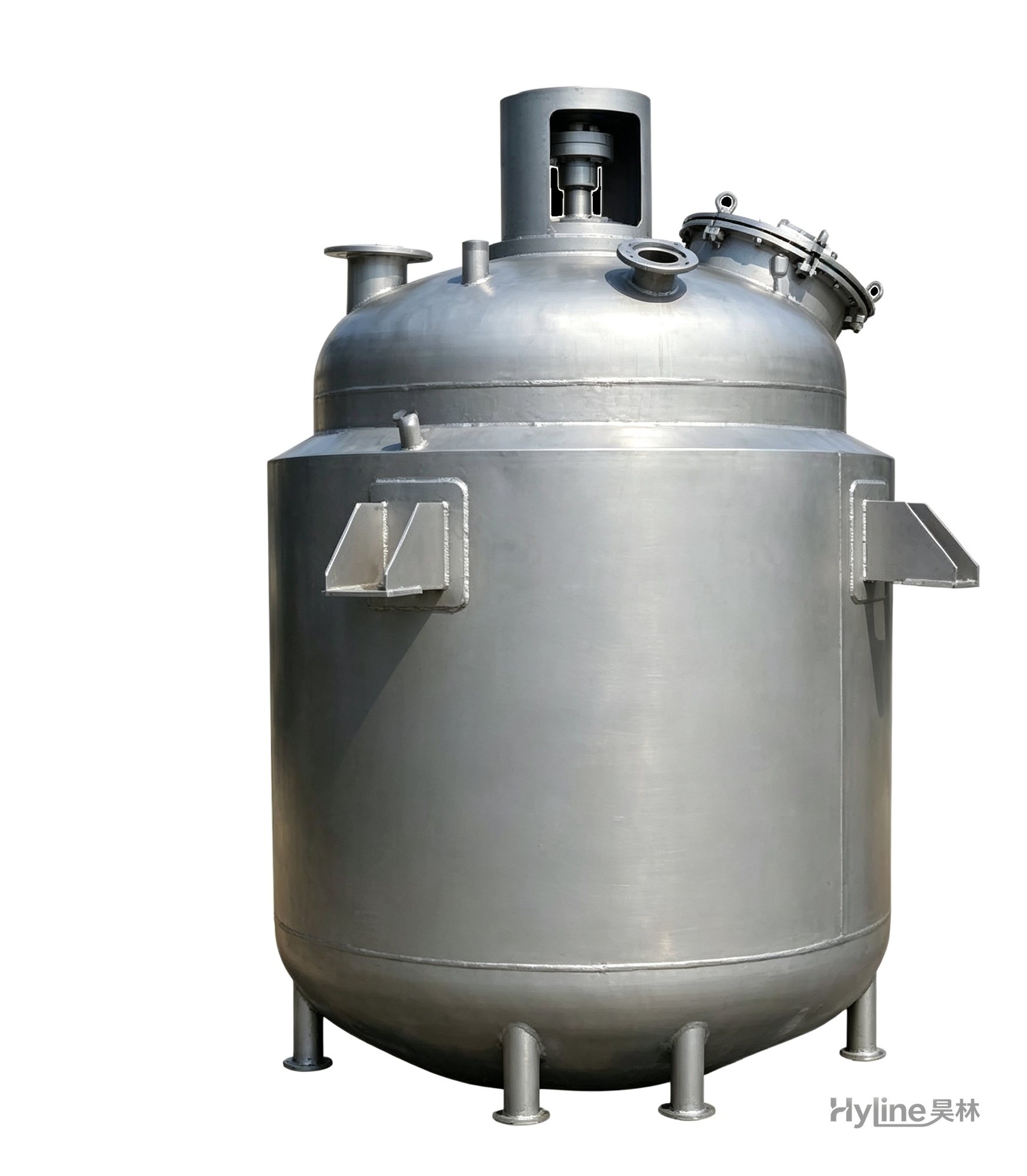
Jacketed Reactor
The typical main reaction vessel in chemical production. Mixing, heating and cooling disperse and mix materials for reaction and polymerization. The jacket circulates thermal oil/steam for heating or cooling water for temperature control.
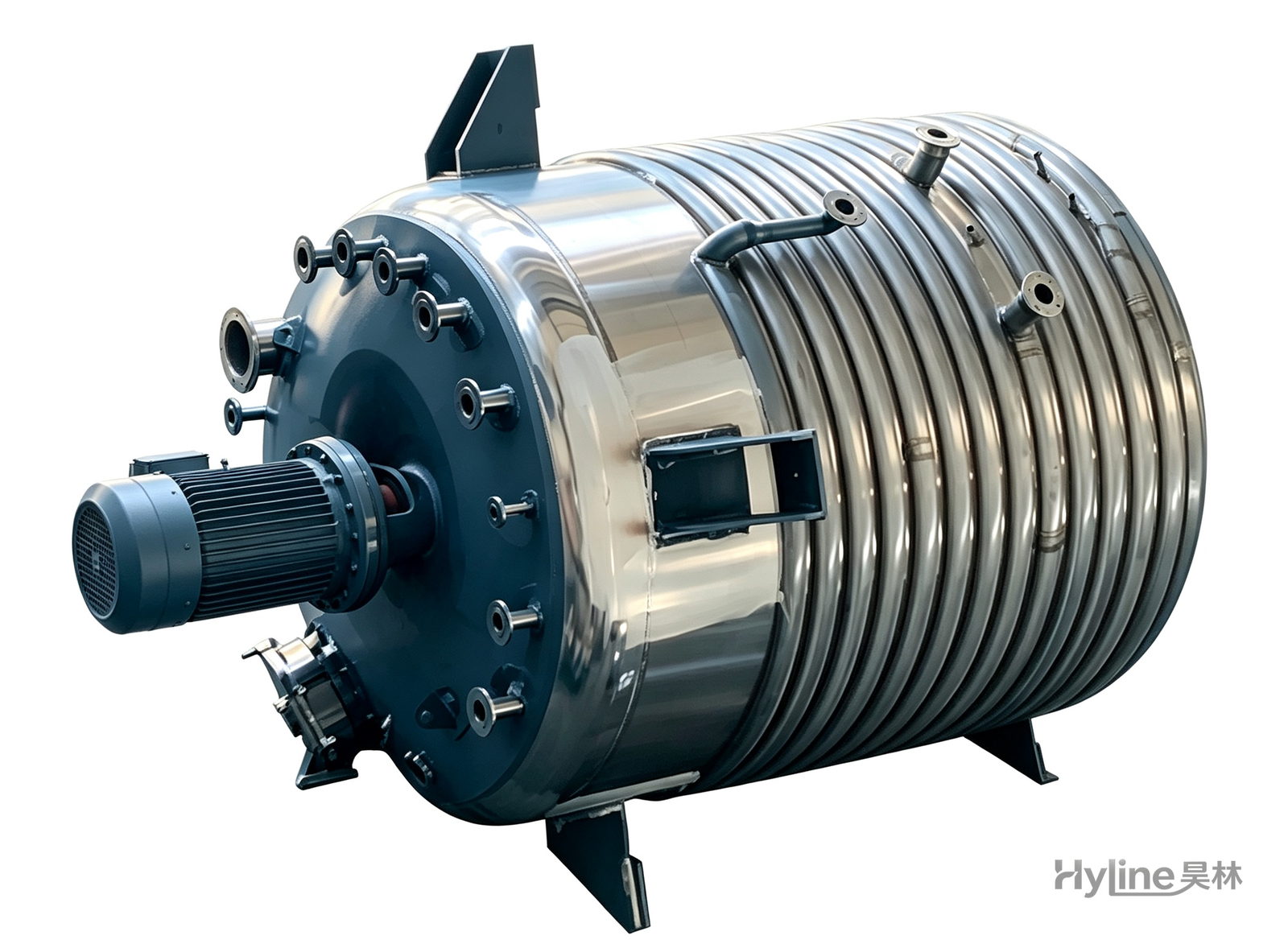
External Half-Coil Reactor
External half-pipe heating & cooling coils provide uniform, efficient heat exchange with zero material dead zones inside. Mirror-polished 304/316L stainless tank is clean and corrosion-resistant. For resin, new-energy slurry and pharmaceutical synthesis.
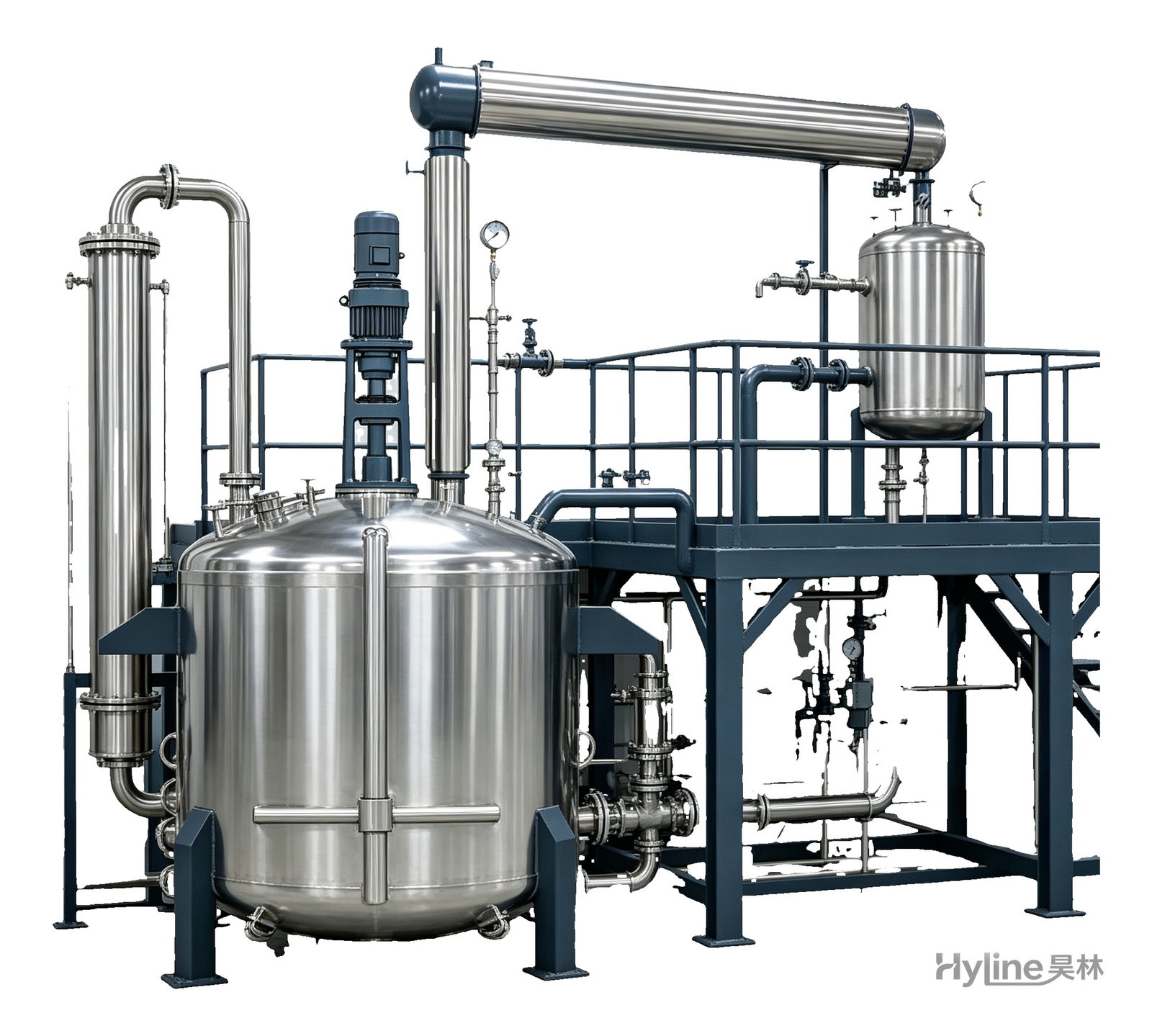
Complete Resin Production Equipment
Resin production packages built around the reactor, with vertical fractionating column, horizontal condenser and water separator for full synthesis, dehydration and reflux processes. Sizes from 300L to 30000L.
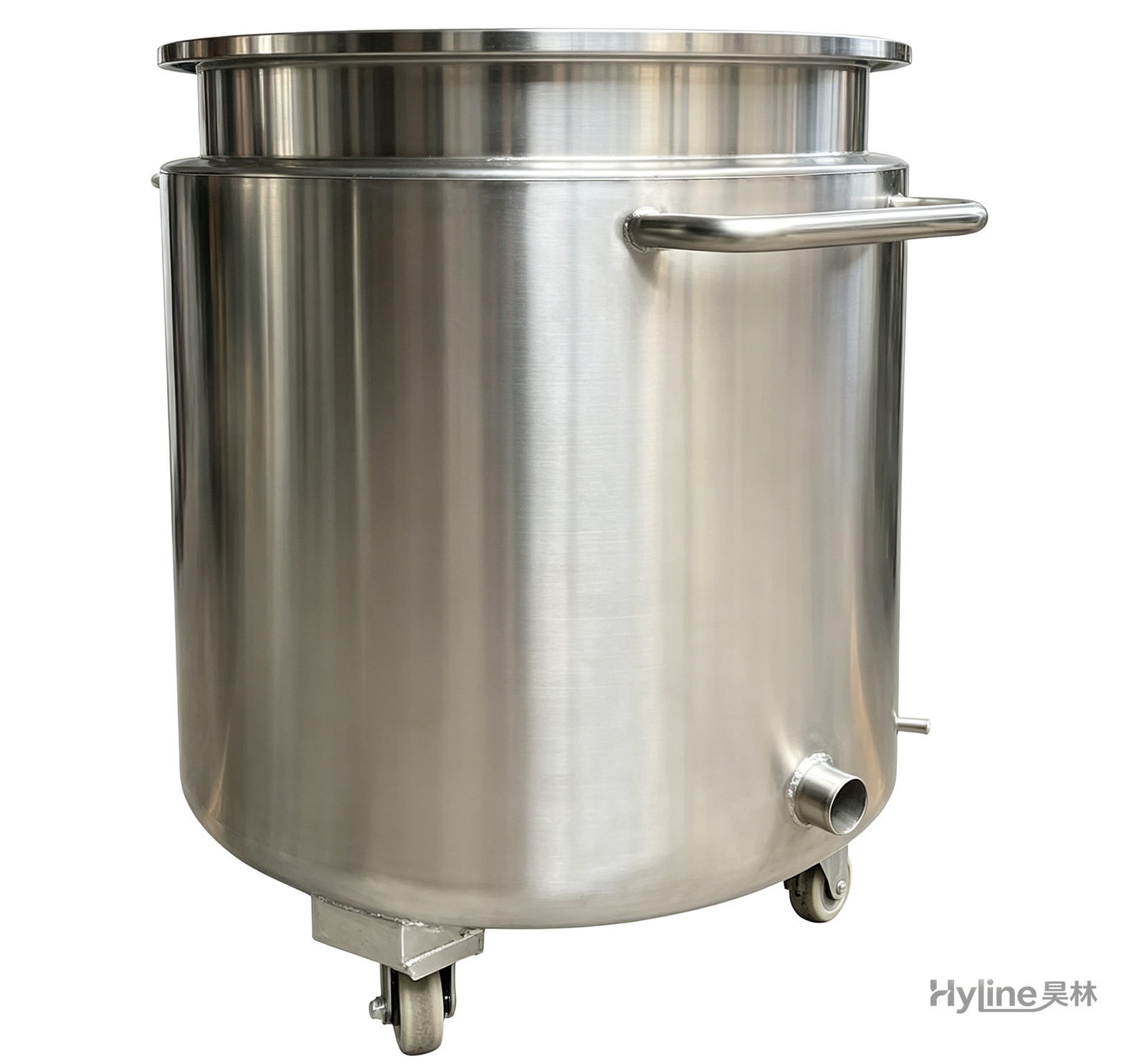
Stainless Steel Mixing Tank (Dispersion Drum)
Supporting vessel for dispersers and mixers in paints, coatings, adhesives, color slurries, inks and electronics. Available in 201/304 stainless with internal/external polishing and sloped bottom side discharge for complete draining.