
How does falling-film evaporation work in a concentrator? Film structure and suitability for heat-sensitive materials
10/22/2026
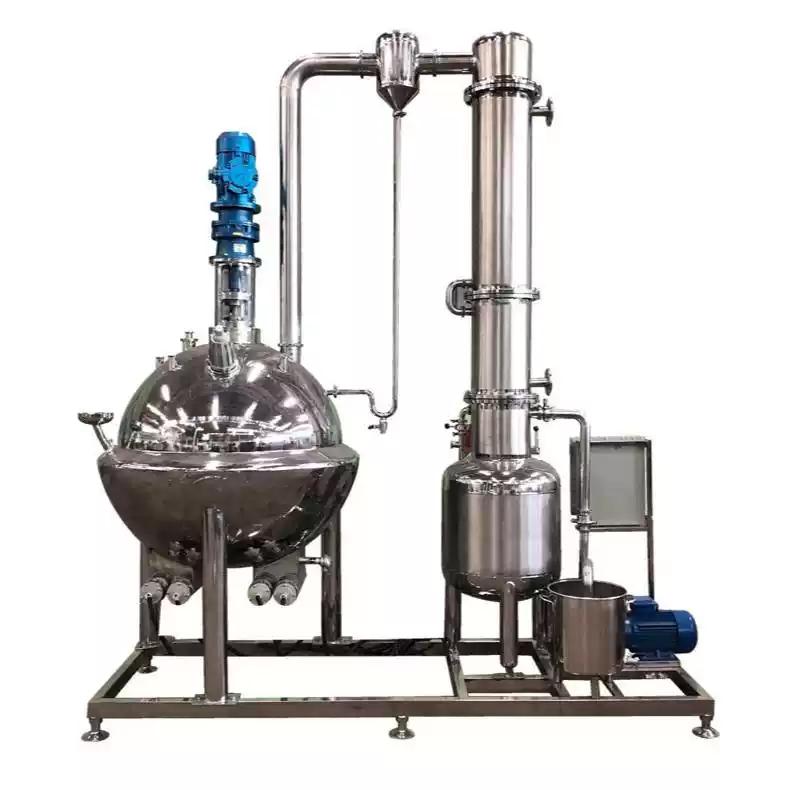
Slow evaporation, material carryover and discolouration of heat-sensitive products — the problem is often not the concentrator itself but the evaporation method. On the same concentrator, recirculation type and falling-film type differ greatly in evaporation efficiency and product quality. Falling-film evaporation spreads the liquid into a thin film on the inner wall of the heating tubes and evaporates it in one quick pass, which is the most common choice for heat-sensitive and foaming materials. This article explains how falling-film evaporation works in a concentrator, how it differs from other methods, and which materials suit it, so you can decide whether falling-film is right for your process.
How does falling-film evaporation work in a concentrator?
One-sentence conclusion: the liquid is distributed by a top distributor into a uniform thin film on the inner wall of the heating tubes, evaporates quickly under gravity and vapour flow, the vapour is recovered by the condenser, and the concentrate is discharged from the bottom.
A falling-film evaporator consists of a distributor, heating tubes, a vapour-liquid separation section and a condenser. The liquid is fed by pump or gravity into the top distributor, which spreads it evenly onto the inner wall of every heating tube. The liquid flows downward as a thin film while being heated from outside the tubes, and the film surface keeps evaporating. Because the film is thin, the heating time is short — generally from several seconds to dozens of seconds from inlet to outlet — so heat-sensitive components are not damaged by prolonged high temperature. The secondary vapour goes to the separation section and is recovered by the condenser, while the concentrate is discharged continuously or intermittently from the bottom outlet. The whole process can run under vacuum, which lowers the evaporation temperature and further protects the product.
How does falling-film differ from recirculation and submerged types?
One-sentence conclusion: in the recirculation type the liquid passes through the heating chamber repeatedly and stays hot for a long time; in the submerged type the heating tubes are immersed in the liquid and boil; in the falling-film type the liquid passes once as a film, so the heating time is the shortest.
The key difference is how the liquid contacts the heating surface. The recirculation type (natural or forced circulation) sends the liquid through the heater repeatedly; concentration rises, but the liquid stays in the high-temperature zone for a long time and heat-sensitive products may be overheated. The submerged type immerses the tubes in the liquid; boiling is vigorous and heat transfer is good, but residence time is long and foaming liquids tend to carry over. The falling-film type passes the liquid once as a film with the shortest residence time, which suits heat-sensitive products best, but it demands even distribution — an unstable feed rate can cause dry patches on the tube wall.
| Evaporation type | Liquid residence time | Heat transfer coefficient | Suitable materials | Main limitation |
|---|---|---|---|---|
| Recirculation | Long (repeated passes) | Moderate | Common aqueous solutions, heat-resistant materials | Heat-sensitive materials may be overheated |
| Submerged | Relatively long | High | High-boiling, scaling materials | Foaming materials may carry over |
| Falling-film | Shortest (single pass) | High | Heat-sensitive, foaming materials | Needs even film and stable feed |
Why does the liquid film distribution decide evaporation efficiency?
One-sentence conclusion: the thinner and more uniform the film, the faster and more stable the evaporation; uneven distribution causes dry patches, scaling and local overheating, which directly reduces throughput and concentrate quality.
Heat transfer in falling-film evaporation depends on film thickness and coverage. The film on the inner wall is normally on the order of 1~3mm; a thinner film transfers heat better, but too thin causes dry patches. Feed rate, viscosity and surface tension together determine the film state. The distributor is the key component — common types include overflow, tangential-slot and nozzle designs, chosen by liquid viscosity and flow rate. High-viscosity liquids are hard to form into film and often need higher feed temperature or special tube-wall treatment. When the feed rate fluctuates, the film thins or breaks; dry patches then scale up, the concentrate is repeatedly heated on the wall, and colour and odour deteriorate. So daily control focuses on stabilising the feed rate rather than simply raising steam.
How should vacuum and evaporation temperature be matched?
One-sentence conclusion: falling-film concentration usually runs with vacuum; vacuum determines boiling point, and boiling point determines the heating temperature of the liquid; higher vacuum lowers the evaporation temperature but enlarges the secondary vapour volume, increasing condenser and vacuum-pump load.
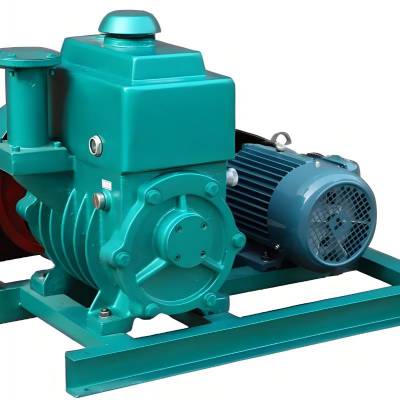
The boiling point falls as vacuum rises. As a general industry experience, water boils at about 50℃ at a gauge pressure of about -90kPa (vacuum about 0.09MPa); check the boiling-point curve of the actual material for exact values. Heat-sensitive materials need the evaporation temperature held below a target, so the vacuum has to be raised accordingly. The higher the vacuum, the lower the vapour density and the larger the vapour volume, so both condenser area and pump capacity must grow. Two typical problems occur in practice: the vacuum is enough but throughput stays low, usually an area or distribution issue; or throughput is fine but the vacuum cannot deepen, usually poor condensing or accumulation of non-condensable gas. It is best to size the vacuum pump, condenser and falling-film section on one system drawing — evaporation temperature, condensing temperature and vacuum constrain each other, and adjusting only one often worsens another.
Which materials suit falling-film evaporation?
One-sentence conclusion: heat-sensitive, foaming and low-to-medium viscosity materials suit falling-film best; high-viscosity, scaling and solid-bearing materials need caution, because poor film formation or tube scaling quickly cuts efficiency.
Typical suitable cases fall into three groups. Heat-sensitive materials (herbal extraction liquids, fruit juice, vitamin-type liquids) need fast evaporation at low temperature; the falling-film type has short residence time and low heating temperature. Foaming materials (saponin, protein-type liquids) form no deep liquid layer in film evaporation, so carryover risk is lower than with the recirculation type. Low-viscosity, clean aqueous solutions and organic solvents form films easily and evaporate efficiently. Less suitable cases also fall into three groups: very viscous paste-like liquids can hardly form film and tend to dry on the wall; scaling materials foul the tube wall and lose heat transfer quickly, requiring frequent cleaning; liquids with solid particles can wear or block the distributor and tubes. To decide whether to use falling-film, first fix three parameters — viscosity, heat sensitivity and solids content — then choose the evaporation method.
How should the heating medium and heat-exchanger configuration be chosen?
One-sentence conclusion: the heating medium is chosen by heat sensitivity and evaporation temperature — hot water or low-pressure steam for low-temperature evaporation, steam or thermal oil for high-temperature duty; heat-exchange area is estimated from evaporation rate with a margin.
Falling-film evaporation commonly uses three heating media: saturated steam, hot water and thermal oil. For heat-sensitive materials that need low-temperature evaporation (below about 60℃), hot water or low-pressure steam is steadier and avoids local hot spots. For higher evaporation temperatures and larger throughput, saturated steam is used; a steam pressure of about 0.1~0.4MPa covers most concentration needs. Thermal oil suits processes that need higher temperature or more uniform temperature control, but the system cost and maintenance demand are higher. The heat-exchange area is estimated from the evaporation rate and latent heat; a common practice is to calculate the heat load first, then derive the area from heat-transfer coefficient and temperature difference, and add a 15%~30% margin for scaling, load fluctuation and hot-weather cooling conditions. When the heating medium and condensing conditions match, falling-film evaporation becomes stable and efficient.
Common faults and maintenance points
One-sentence conclusion: common faults concentrate on uneven film, tube scaling, vacuum fluctuation and vapour entrainment; the maintenance focus is stable feed, regular cleaning and distributor inspection.
Feed fluctuation is the most common cause of uneven film; a feed pump with variable-frequency drive is recommended to keep level and flow stable. After long operation the tube wall scales and heat transfer drops, shown as lower throughput at the same steam rate; clean periodically according to the material — normally with hot water or dilute alkali, and for heavy scaling every shift or every week. Vacuum fluctuation usually comes from poor condensing or non-condensable gas accumulation; check the condenser and the non-condensable vent, and add a vapour-liquid separator or trap if needed. Vapour entrainment means the separation section or vapour velocity is inadequate; check the entrainment separator and the secondary-vapour piping. Daily inspection covers three indicators: stable throughput, qualified concentrate concentration and stable vacuum; when all three are normal, the unit can run with confidence.
Falling-film evaporation suits heat-sensitive, foaming and low-to-medium viscosity materials; the core is to make the film thin and even so the liquid passes once quickly. Before selection, fix four parameters — viscosity, heat sensitivity, solids content and target evaporation rate — then match vacuum, condenser and heating system; this is more reliable than fixing the equipment first and adapting the process afterwards.
Hyline Shengda manufactures stainless steel concentrators (https://hyline.cn/zh/cases/api-extraction-concentration) and complete concentration systems, supporting falling-film and recirculation configurations, and can design the whole line with vacuum systems, condensers and turnkey solutions. Before making an evaporation plan, we suggest fixing three parameters — material characteristics, target concentration and evaporation rate — before discussing the evaporation method.
Further reading: - How does mechanical vapour recompression (MVR) save steam? Heat-pump evaporation principle and limits - How do evaporation temperature and vacuum correspond? Boiling-point curve decides efficiency
This article is compiled by Hyline Shengda Equipment Manufacturing Co., Ltd. (hyline.cn), mainly producing stainless steel reactors, mixing tanks, storage tanks, dispersers, concentrators and complete chemical lines, supporting non-standard customization.
Q&A from this article
Frequently asked questions and answers from this article
How does falling-film evaporation work in a concentrator? This article explains film structure, liquid-film distribution and vacuum matching, helping you decide whether falling-film suits heat-sensitive materials.
Related Products

Jacketed Reactor
The typical main reaction vessel in chemical production. Mixing, heating and cooling disperse and mix materials for reaction and polymerization. The jacket circulates thermal oil/steam for heating or cooling water for temperature control.
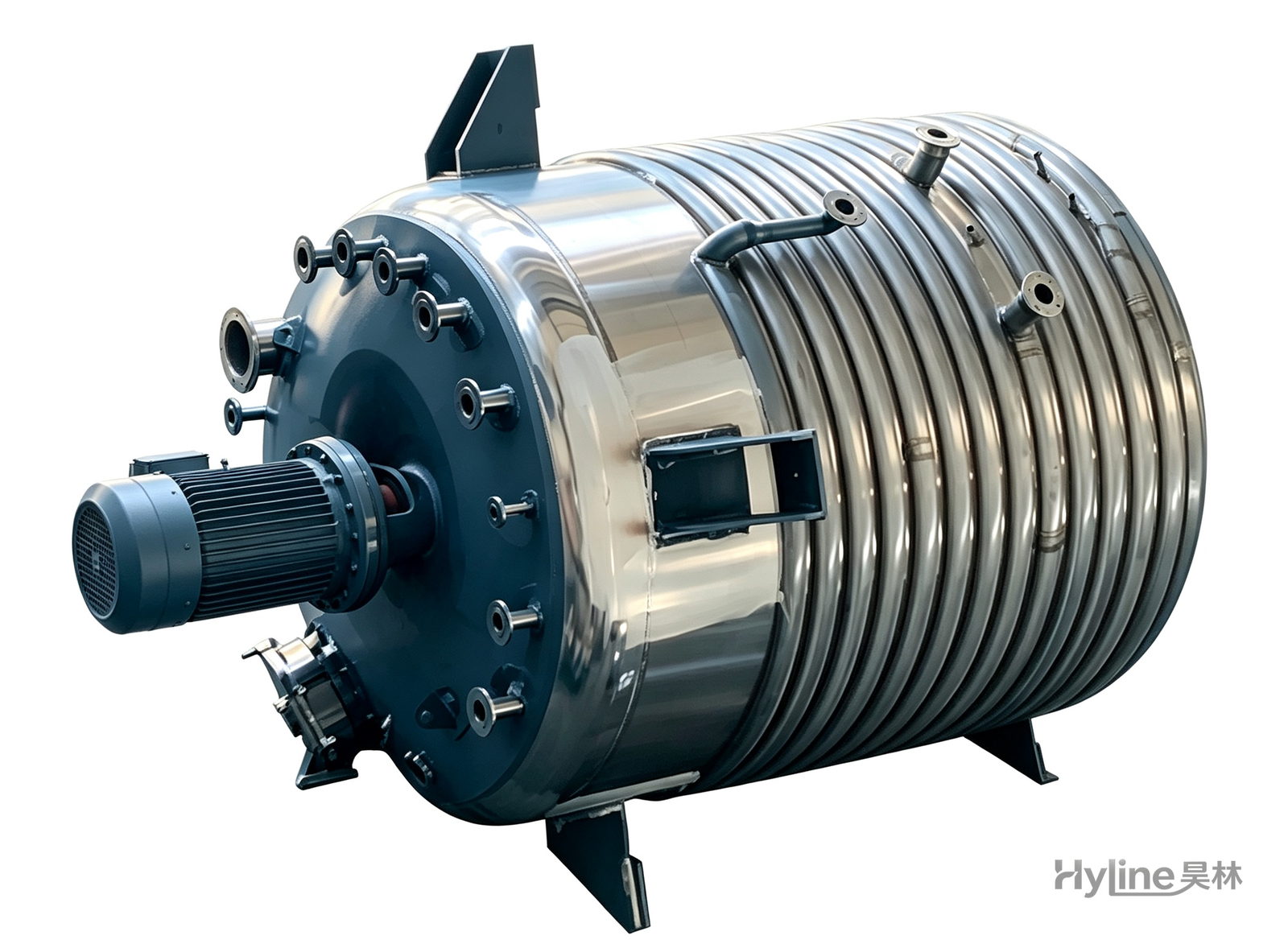
External Half-Coil Reactor
External half-pipe heating & cooling coils provide uniform, efficient heat exchange with zero material dead zones inside. Mirror-polished 304/316L stainless tank is clean and corrosion-resistant. For resin, new-energy slurry and pharmaceutical synthesis.

Stainless Steel Mixing Tank (Dispersion Drum)
Supporting vessel for dispersers and mixers in paints, coatings, adhesives, color slurries, inks and electronics. Available in 201/304 stainless with internal/external polishing and sloped bottom side discharge for complete draining.
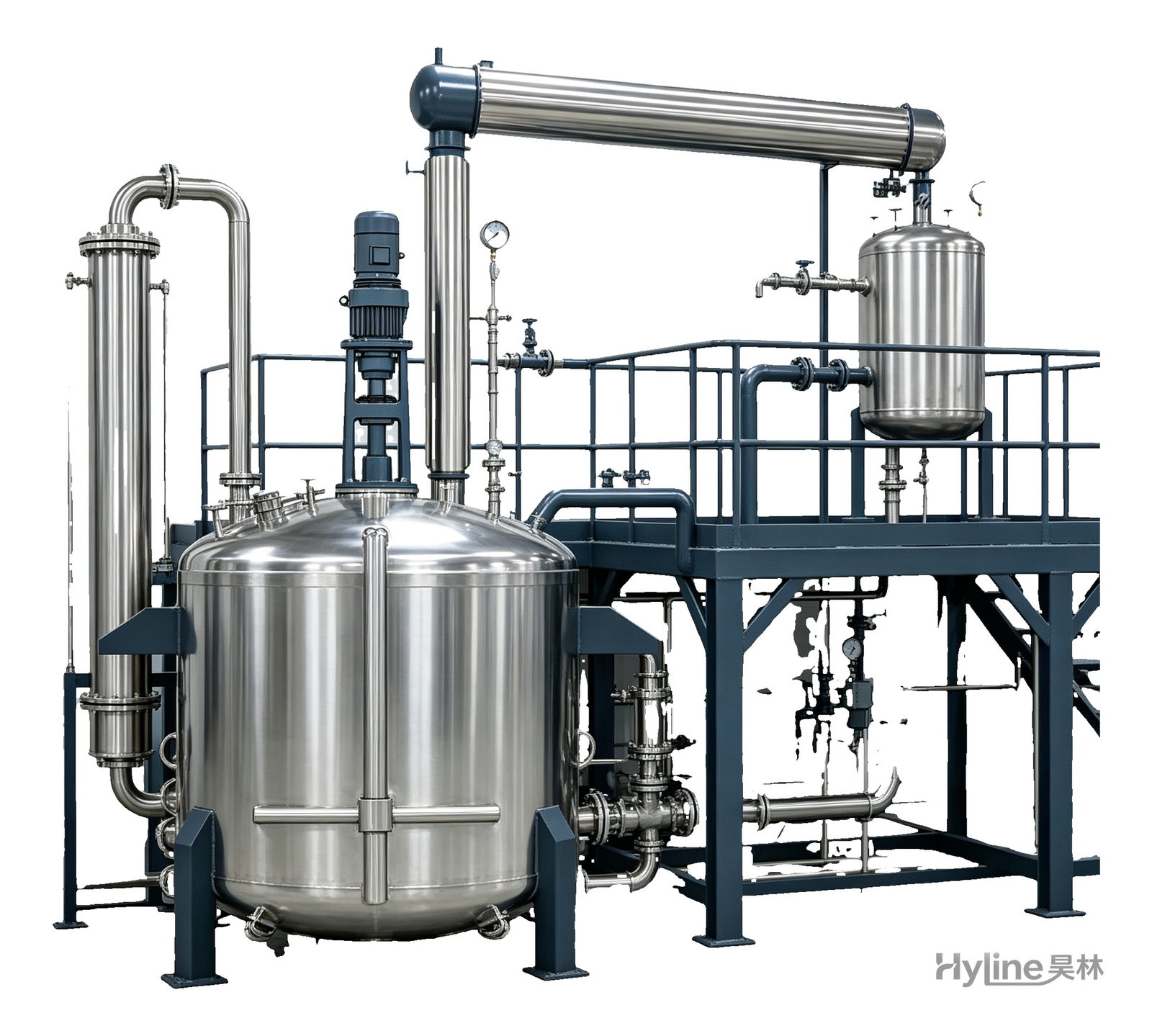
Complete Resin Production Equipment
Resin production packages built around the reactor, with vertical fractionating column, horizontal condenser and water separator for full synthesis, dehydration and reflux processes. Sizes from 300L to 30000L.
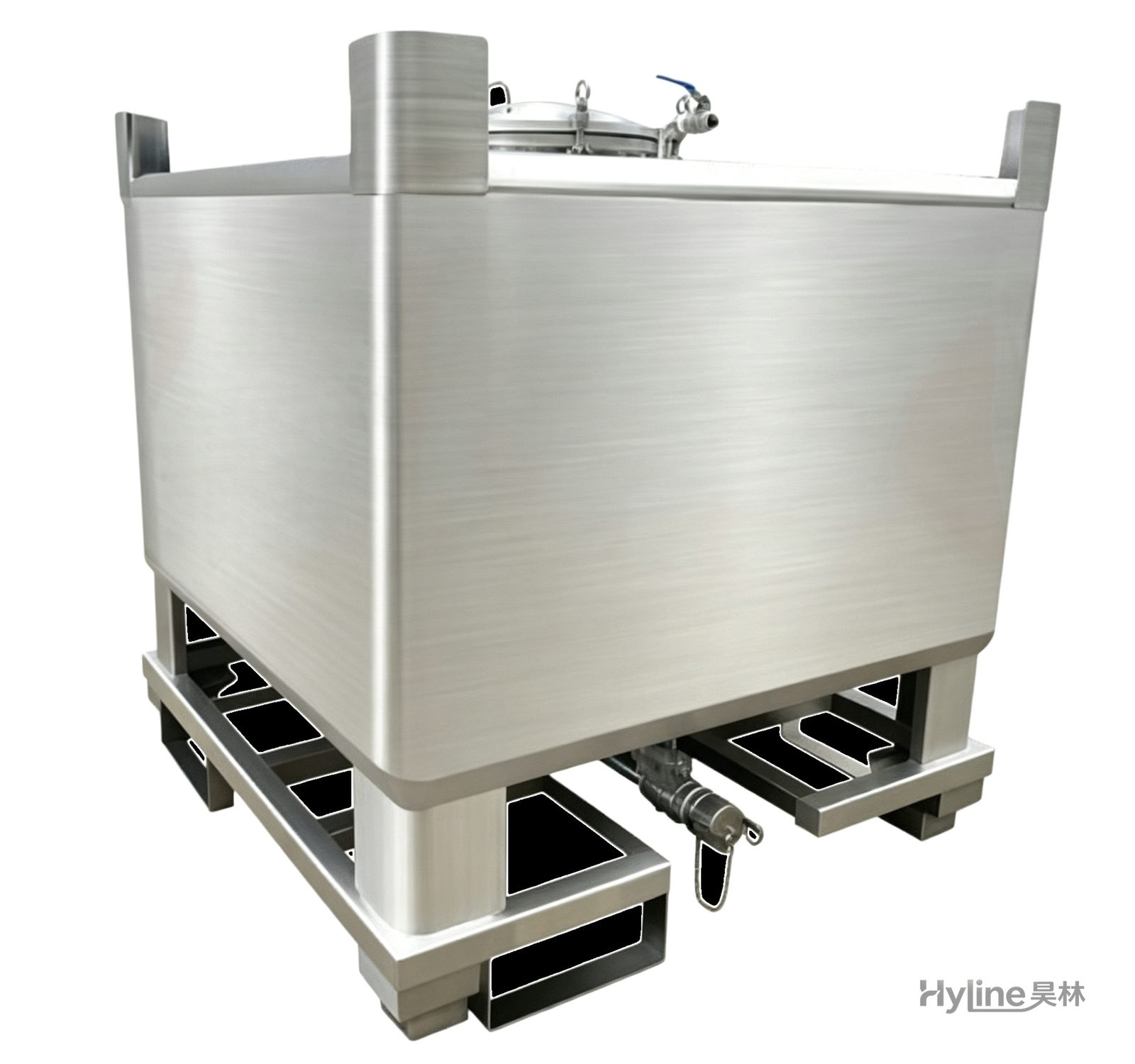
IBC Tank (Intermediate Bulk Container)
HDPE blow-molded liner with hot-dip galvanized steel frame - UV resistant, anti-aging, easy to clean, non-toxic. Four-way fork base for easy handling and stacking; ideal for liquid storage and transport.