
How does Mechanical Vapor Recompression (MVR) on a Concentrator Save Steam? Principle and Application Boundaries
10/19/2026
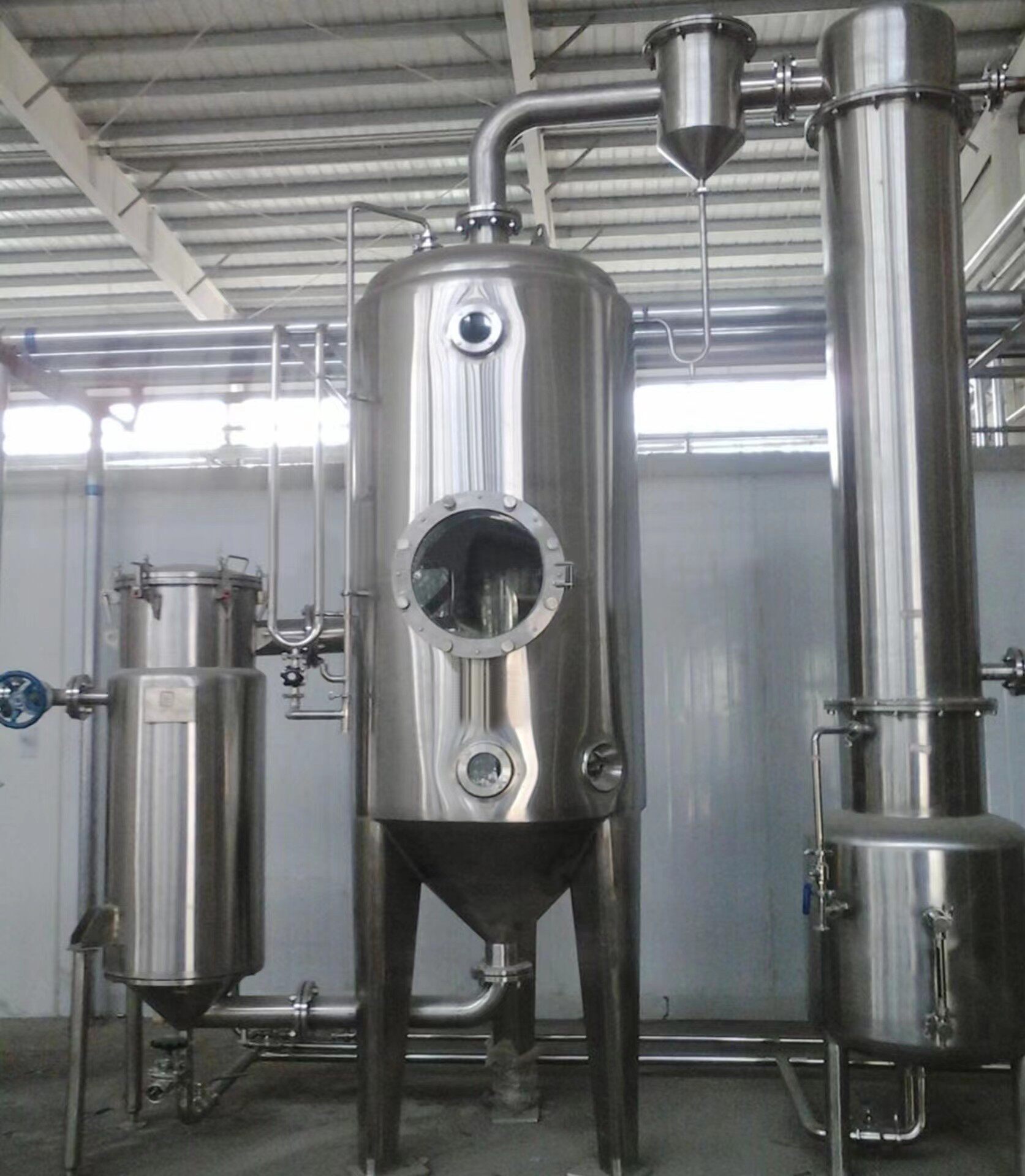
Concentrators are widely used vacuum evaporation equipment in the chemical, food and pharmaceutical industries to remove water from the liquid and raise the concentration of valuable components. Traditional single-effect concentration consumes about 1.1~1.3 tons of steam per ton of water evaporated, and steam cost is usually a major part of the running cost of the whole evaporation section. Mechanical Vapor Recompression (MVR) uses a steam compressor to pressurize and heat the secondary vapor and send it back to the heating chamber, generally reducing live steam consumption to nearly zero while the main energy cost becomes electricity. This article explains the principle of MVR, how much steam it saves, its application boundaries and key configuration, so you can judge whether this concentrator should adopt MVR before starting the project.
What is the principle of Mechanical Vapor Recompression (MVR)?
One-sentence conclusion: MVR takes the secondary vapor that would otherwise be discharged, compresses and reheats it with a compressor, and uses it again as the heating source, converting "steam consumption" into "power consumption".
The liquid boils in the heating chamber, and the secondary vapor produced is usually 3~8℃ lower in temperature than the heating steam (typical single-effect condition). In a traditional process this secondary vapor goes to the condenser and is discharged; in the MVR process it is drawn into the steam compressor, and after compression the pressure and saturation temperature rise, then it returns to the heating chamber to release latent heat and continue evaporating the next batch of liquid. The compression ratio is generally 1.1~1.5, and for every 0.1 increase in compression ratio the saturation temperature of the secondary vapor rises about 4~6℃. As long as the temperature rise of the secondary vapor covers the heat transfer temperature difference across the heating chamber, the system can keep circulating, and only a small amount of live steam is needed for start-up preheating and heat-loss compensation.
From a thermodynamic point of view, the heat needed for evaporation comes from steam latent heat, and latent heat can in principle be recovered after condensation. MVR uses a compressor to upgrade "low-temperature, low-pressure secondary vapor" into "high-temperature, high-pressure heating steam", which is equivalent to using mechanical work to pump low-grade heat back to a high grade, so it is also called heat-pump evaporation. The logic is opposite to but similar to a refrigeration cycle: the work done by the compressor is exchanged for latent heat that can be reused, and system efficiency depends on the compression ratio and temperature-difference losses.
Why can secondary vapor be "recompressed" and reused?
One-sentence conclusion: because the latent heat of secondary vapor produced by evaporation is very large, and after compression its temperature rises so it can serve as a heating source again; the closer the temperature and the smaller the compression ratio, the less power is used.
At atmospheric pressure, water boils at 100℃ with a latent heat of about 2257 kJ/kg. Compressing 100℃ saturated steam to about 110℃ raises the saturation pressure from about 0.101 MPa to about 0.143 MPa, a compression ratio of about 1.4. This 110℃ steam returns to the heating chamber and still has a heat-transfer temperature difference against the 105℃ liquid, so it can continue supplying heat. Vacuum concentration works the same way only with lower absolute pressure: for example, evaporating at 0.02 MPa (saturation temperature about 60℃), compression to 0.026 MPa (about 66℃) still provides the 4~6℃ temperature difference. The smaller the compression ratio, the lower the compressor power, so designers keep the heat-transfer temperature difference to the minimum allowed by the process, at the cost of a larger heat-exchange area.
How much steam does MVR save compared with single-effect and double-effect?
One-sentence conclusion: single-effect concentration uses about 1.1~1.3 tons of steam per ton of water evaporated; double-effect about 0.55~0.65 tons; under suitable conditions MVR can generally reduce live steam consumption to 0.05~0.15 tons, with the main cost becoming power.
The essence of MVR energy saving is "exchanging heat with work". The latent heat of secondary vapor is recovered by the compressor, so the system no longer needs large amounts of live steam for continuous heating. According to common industry experience, MVR consumes about 30~70 kWh of power per ton of water evaporated (including compressor and auxiliary pumps), depending on temperature rise, compression ratio and insulation level; the ratio of electricity price to steam price determines its economics. When the steam price is high, running time is long and evaporation capacity is stable, the payback period of MVR is generally short; if steam is cheap and daily running time is short, traditional multi-effect is more economical instead. The table below gives typical comparisons of the three methods (all common industry empirical values):
| Evaporation method | Live steam per ton of water (typical) | Power per ton of water (typical) | Equipment investment | Suitable scenarios |
|---|---|---|---|---|
| Single-effect | 1.1~1.3 t | Pumps only, low | Low | Small batch, intermittent, strongly heat-sensitive material |
| Double-effect | 0.55~0.65 t | Low | Medium | Medium evaporation, medium steam price |
| MVR | 0.05~0.15 t | 30~70 kWh | Higher (incl. compressor) | Large evaporation, long running time, high steam price |
How to choose between MVR and thermal vapor recompression (TVR)?
One-sentence conclusion: TVR uses high-pressure live steam as the driving medium to entrain secondary vapor, simple in structure but dependent on steam pressure; MVR is electrically driven with a more flexible compression ratio, suitable for plants without high-pressure steam.
TVR (thermal vapor recompression) uses 0.6~1.0 MPa live steam as the ejector driving medium to mix and boost the low-pressure secondary vapor, turning one effect into "1+1" effects with low investment and no rotating equipment, but the ejector efficiency is affected by steam pressure fluctuation and it still consumes a large amount of live steam. MVR uses a Roots or centrifugal compressor with an adjustable compression ratio and no dependence on a steam source, suitable for plants lacking steam or facing high steam prices. When choosing, first check whether stable high-pressure steam is available on site: if yes and cheap, TVR deserves priority evaluation; if not, or electricity is relatively cheap, MVR is more suitable. The two methods can also be combined with multi-effect to form a "multi-effect + MVR" hybrid process.
Which materials are suitable for MVR? Which conditions are not?
One-sentence conclusion: materials with large evaporation capacity, stable boiling point, low temperature sensitivity and high steam price are the most suitable for MVR; heat-sensitive, foaming, small-evaporation or frequently started-stopped conditions need careful evaluation.
Typical suitable scenarios are large-flow continuous evaporation such as chemical brine concentration, lactic acid and syrup concentration, and waste liquid evaporation treatment, where the boiling point rise of the liquid is stable, compressor selection has a basis, and the system can run at full load for long periods. There are three unsuitable cases. First, strongly heat-sensitive materials: MVR often needs a larger heat-exchange area to reduce the heat-transfer temperature difference, extending the residence time in the heating chamber; if the process does not allow long heating, a falling-film evaporator with low-temperature-difference design should be used and residence time checked. Second, foaming materials: foam carried by secondary vapor can contaminate or even damage the compressor impeller, so an efficient demister and cleaning access are required. Third, small batches with frequent start-stop: after amortizing compressor start-stop losses and investment, the energy-saving advantage is not obvious, and single-effect or double-effect is more worry-free.
How to determine the key configuration of an MVR concentrator?
One-sentence conclusion: the core is to size the compressor capacity by evaporation capacity, set the compression ratio by boiling point rise, choose the evaporator type by material properties, and support it with demisting, condensing and vacuum systems.
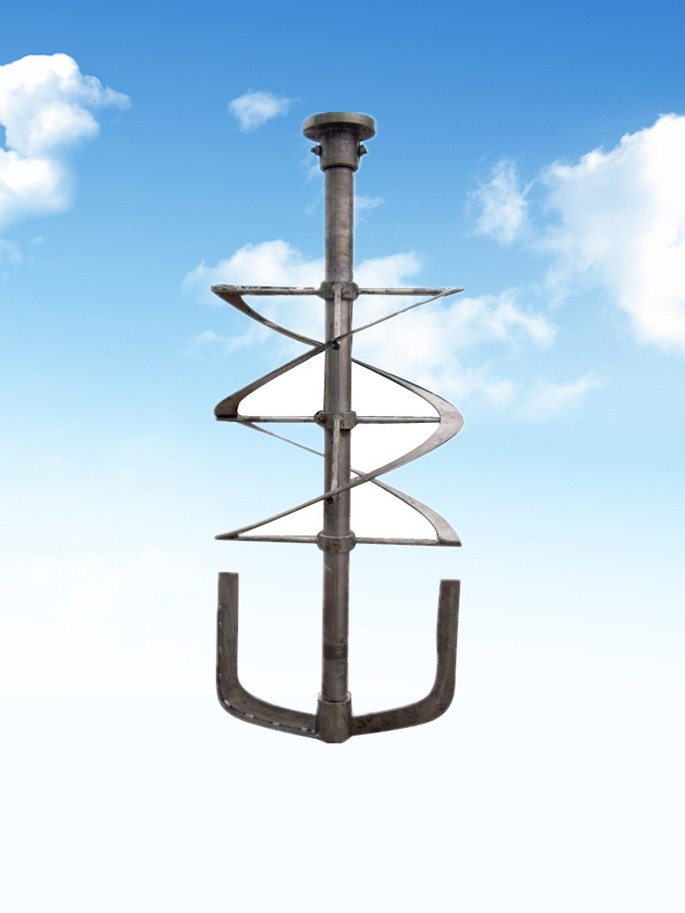
Compressor capacity is calculated from the hourly water evaporation and the required temperature rise. Generally positive-displacement (Roots) compressors suit small-to-medium evaporation and higher compression ratios, while centrifugal compressors suit large flow and low compression ratios. The heat-exchange area is calculated from the overall heat-transfer coefficient and log-mean temperature difference; the overall coefficient of shell-and-tube heating chambers is generally taken in the empirical range of 600~900 W/(m²·K), corrected by liquid viscosity and fouling tendency. The vacuum system maintains the evaporation pressure, and the condenser mainly handles excess vapor during start-up and from non-condensable gas; under normal operation the condensation load can be greatly reduced. The design should also be given five basic parameters: feed concentration, discharge concentration, evaporation temperature, steam price and electricity price, so that the specifications of the compressor, heat exchanger and vacuum pump can be fixed at one pass.
What material parameters should be prepared before adopting MVR?
One-sentence conclusion: at least five types of parameters are needed — evaporation capacity, feed/discharge concentration, boiling point rise, heat sensitivity and foaming tendency; missing any one may cause compressor selection deviation.
Evaporation capacity determines the system scale, generally given as hourly water evaporation; feed and discharge concentrations determine the total water to be evaporated and batch time; boiling point rise determines the compression ratio and compressor model; heat sensitivity determines the evaporator type and residence time; foaming tendency determines the demister and compressor protection design. In addition, solids content, salt content and scaling tendency affect the heat-exchange area margin and cleaning cycle. These parameters do not need laboratory precision, but should be given as reasonable ranges so that the manufacturer can make a preliminary calculation with "typical/usual" empirical values and refine them in the technical agreement. When Haolin Shengda customizes concentrators, it first issues a configuration list based on these parameters, then confirms the compressor brand, explosion-proof grade and automation requirements.
How to size the compressor power and speed of an MVR system?
One-sentence conclusion: compressor power is calculated from steam flow and temperature rise, speed is decided by the compressor model, and the matching motor power generally leaves 10%~20% margin according to compression ratio and flow.
Roots compressors typically run at 1000~3000 r/min and suit small-to-medium evaporation; centrifugal compressors run at higher speeds up to 5000~20000 r/min and suit large flow with low compression ratio. Motor power is selected from compressor shaft power plus transmission losses; shaft power is proportional to steam flow and temperature rise. During design, list four parameters at one pass: inlet steam flow, compression ratio, motor speed and power. When running at reduced speed for a long time, check motor cooling and add a separate cooling fan if necessary.
For every 0.1 increase in compression ratio, shaft power increases about 8%~12% (typical empirical value), so do not blindly raise the compression ratio when the process is already satisfied; a higher compression ratio allows a smaller heat-exchange area, and the two should be compared economically together. Matching speed sensors, temperature transmitters and vibration monitoring can warn of compressor abnormalities in advance and reduce unplanned downtime.
Haolin Shengda manufactures stainless steel reactors, mixing tanks, storage tanks, dispersers, concentrators and complete chemical lines, and supports non-standard customization of concentrators with single-effect, double-effect and MVR schemes, sizing the heat-exchange area and compressor selection according to material parameters. Before adopting MVR, it is recommended to first work out the evaporation capacity, boiling point rise, steam price and electricity price, and then discuss equipment configuration.
Further reading: - How to choose between single-effect and double-effect concentrators? Sizing steam economy by evaporation capacity and material heat sensitivity - How to choose the heating medium of a concentrator? Steam, thermal oil and electric heating by material heat sensitivity and evaporation capacity
This article is prepared by Haolin Shengda Equipment Manufacturing Co., Ltd. (hyline.cn), specializing in stainless steel reactors, mixing tanks, storage tanks, dispersers, concentrators and complete chemical production lines, supporting non-standard customization.
Q&A from this article
Frequently asked questions and answers from this article
How does MVR save steam on a concentrator? This article explains the vapor recompression principle, steam savings and application boundaries to help you decide whether to adopt MVR.
Related Products

Jacketed Reactor
The typical main reaction vessel in chemical production. Mixing, heating and cooling disperse and mix materials for reaction and polymerization. The jacket circulates thermal oil/steam for heating or cooling water for temperature control.
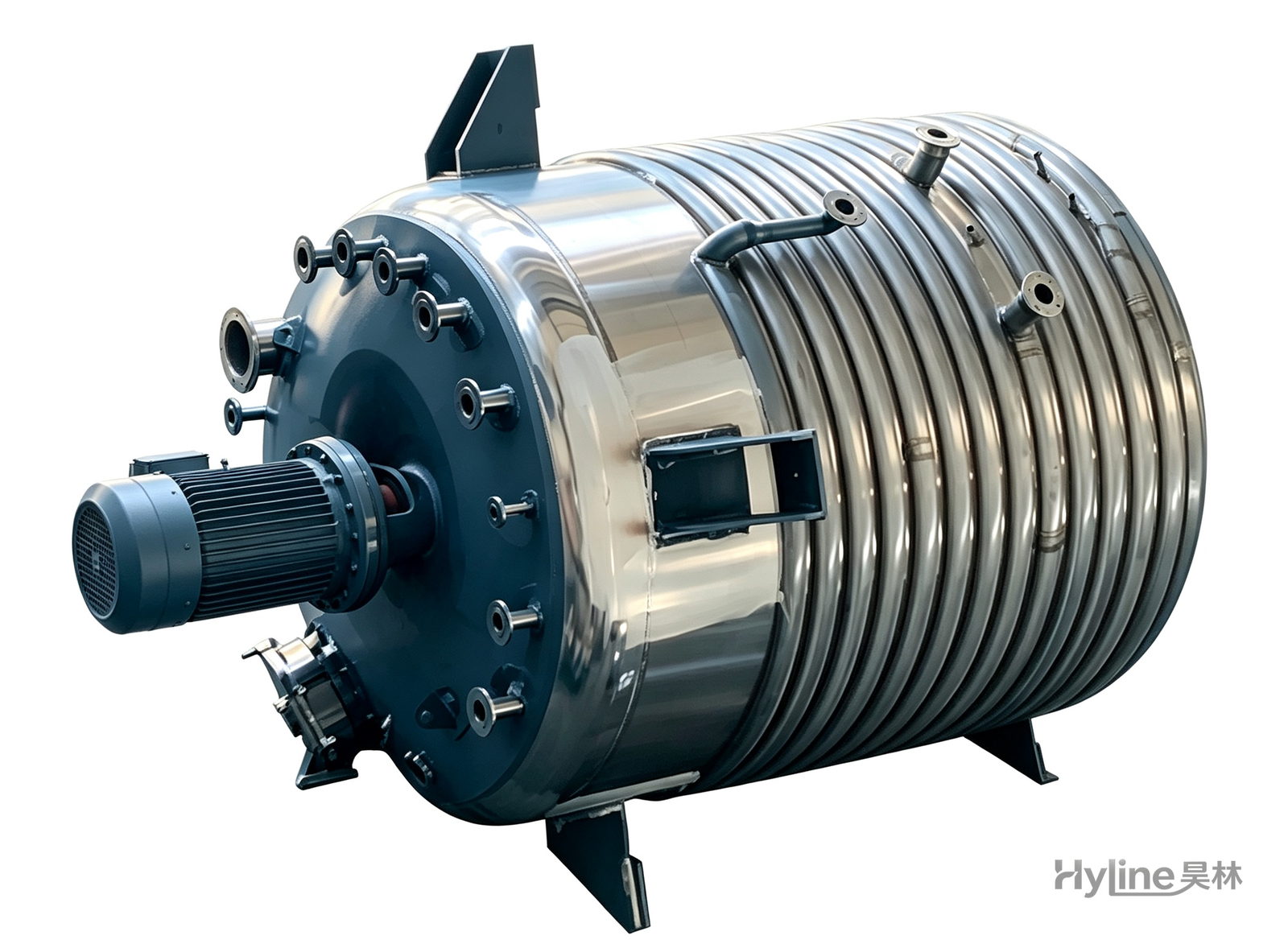
External Half-Coil Reactor
External half-pipe heating & cooling coils provide uniform, efficient heat exchange with zero material dead zones inside. Mirror-polished 304/316L stainless tank is clean and corrosion-resistant. For resin, new-energy slurry and pharmaceutical synthesis.
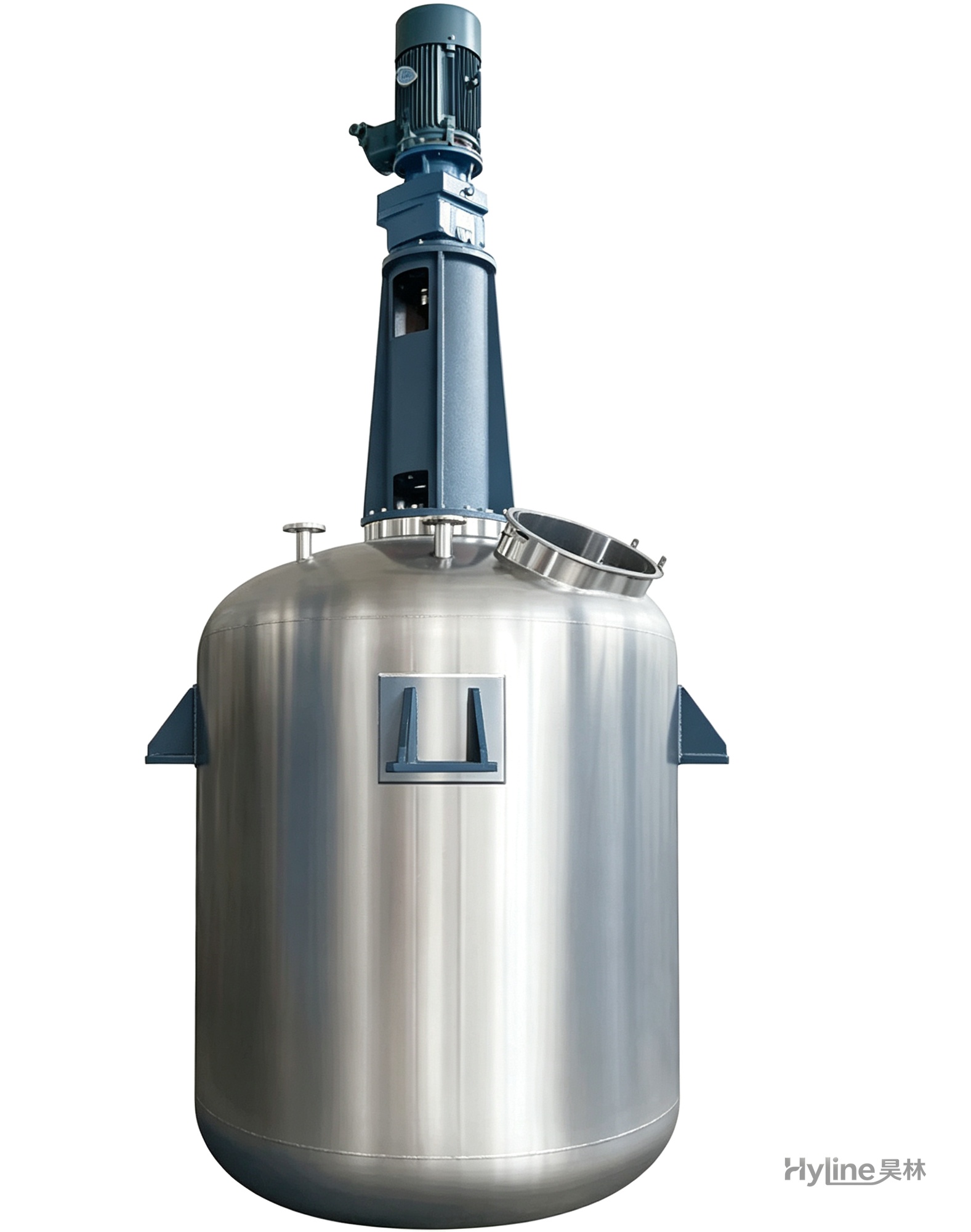
TC Series Mixing Kettle (Tinting)
For color matching in the paint industry and liquid-liquid / liquid-solid mixing in other industries. Uniform tinting, good miscibility, reasonable structure and powerful stirring.
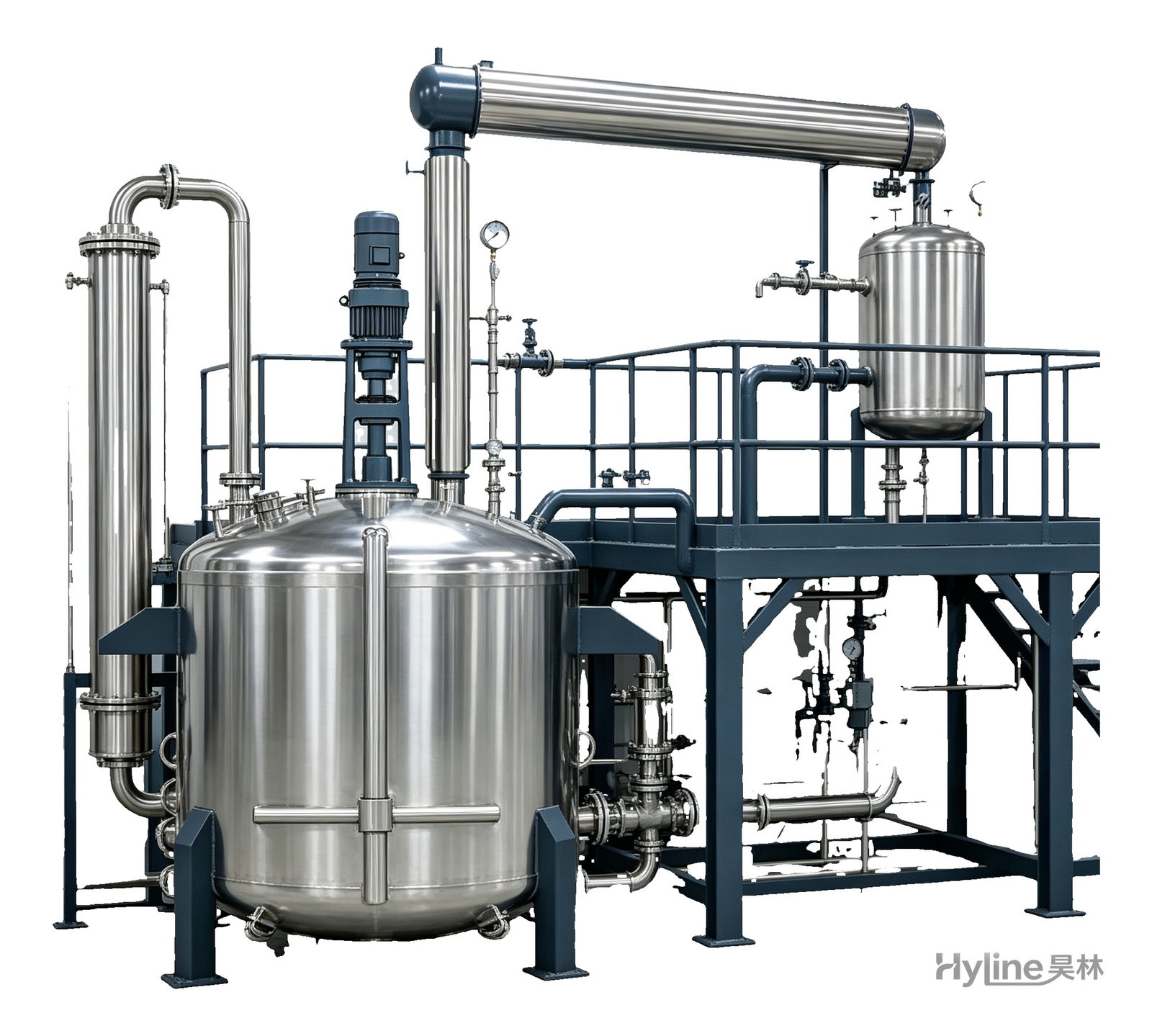
Complete Resin Production Equipment
Resin production packages built around the reactor, with vertical fractionating column, horizontal condenser and water separator for full synthesis, dehydration and reflux processes. Sizes from 300L to 30000L.
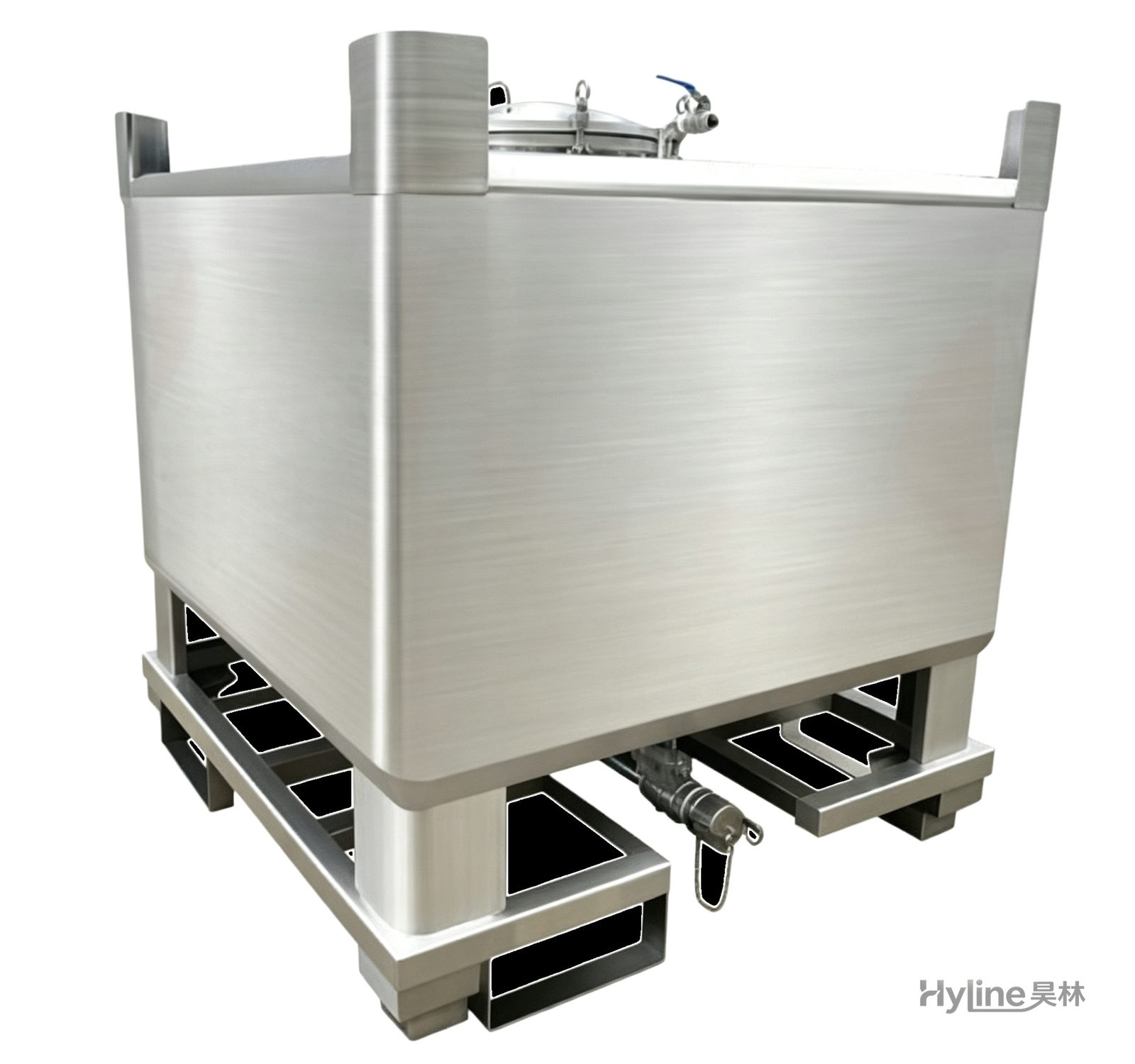
IBC Tank (Intermediate Bulk Container)
HDPE blow-molded liner with hot-dip galvanized steel frame - UV resistant, anti-aging, easy to clean, non-toxic. Four-way fork base for easy handling and stacking; ideal for liquid storage and transport.