
How to Choose Between Single-Effect and Double-Effect Concentrating Tanks? Determine Steam Economy by Evaporation Capacity and Material Heat Sensitivity
10/12/2026
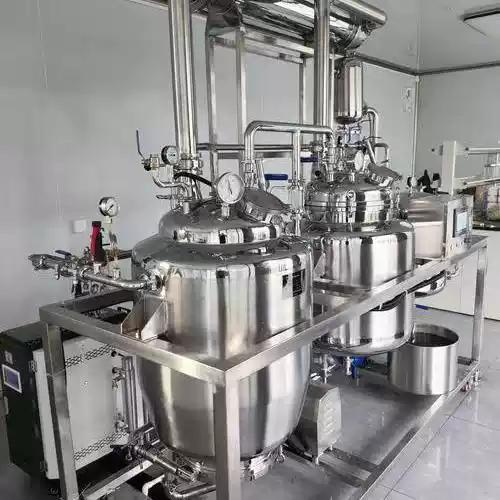
How to Choose Between Single-Effect and Double-Effect Concentrating Tanks? Determine Steam Economy by Evaporation Capacity and Material Heat Sensitivity
People working on traditional Chinese medicine extracts, food concentrates and chemical solvent recovery often hesitate over concentrating tank selection: single-effect is simple and cheap, double-effect saves steam but costs more — how to decide? Conclusion first: single-effect evaporates about 0.8–1 kg of water per 1 kg of steam, while double-effect evaporates about 1.6–2 kg of water per 1 kg of steam, saving about 40%–50% of steam, but equipment investment and automation complexity are clearly higher; decide by three factors — "evaporation capacity + material heat sensitivity + steam price": for small evaporation, batch production and highly heat-sensitive materials choose single-effect; for large evaporation, continuous production and high steam cost, the payback period of double-effect is usually 1–2 years and it is worth adopting. This article explains the principle, steam economy, applicable duty and configuration points of single and double effects from a purchasing point of view.
### The principle difference between single and double effect
Single-effect concentration heats the material in a heater with steam; the secondary vapor generated by evaporation goes directly into the condenser and is not reused. Double-effect concentration uses the secondary vapor from the first effect as the heat source of the second-effect heater, and condenses it after secondary use. The more effects, the more fully the steam is utilized; three-effect and four-effect are common in large evaporation projects, but each added effect raises equipment, piping and automation complexity, and the steam saved per added effect diminishes. For medium and small chemical and pharmaceutical concentration, single and double effect are the two most common choices. Remember one sentence in principle: number of effects = number of times the steam heat is used; double effect uses the heat of the secondary vapor one more time than single effect, so it saves steam, but the evaporation temperature of each effect drops step by step, and the second effect must work at lower pressure and temperature.
### How to calculate steam economy
Steam economy (kg of steam consumed to evaporate 1 kg of water) is the core number for selection. Single-effect theoretical steam economy is close to 1; considering heat loss, actual is about 0.8–1. Double-effect theoretical is about 0.5–0.6, actual about 0.5, i.e. saving about 40%–50% of steam; the more effects, the closer to the theoretical limit, but with diminishing marginal gain. Example calculation: a concentration task evaporating 10 tons of water per day, steam at 200 yuan per ton: single-effect consumes about 10–12 tons of steam per day, costing about 2,000–2,400 yuan; double-effect consumes about 5–6 tons, costing about 1,000–1,200 yuan, saving 1,000–1,400 yuan per day, about 300,000–420,000 yuan per year at 300 running days; the price difference of double-effect equipment is generally on the order of hundreds of thousands of yuan, with a payback of 1–2 years. For small evaporation the opposite: evaporating 1 ton per day saves only 30,000–40,000 yuan per year, and the double-effect price difference takes years to recover — not necessarily worthwhile. So first calculate the daily evaporation and steam unit price, then discuss the number of effects.
### When to choose single-effect: small evaporation, batch, heat-sensitive
Single-effect suits three types of duty. First, small evaporation: below several tons per day, the steam saving cannot pay back the equipment difference — single-effect is simple and cost-effective. Second, batch production with many varieties: single-effect is easy to start, stop and clean between batches, suitable for multi-variety small-batch concentration of traditional Chinese medicine and food. Third, highly heat-sensitive materials: heat-sensitive materials fear long high-temperature exposure; single-effect has a simple structure, relatively controllable residence time, and combined with low temperature and vacuum operation it is easier to preserve active components; double-effect saves steam but the material path in the system is long with long residence time, and the loss risk of heat-sensitive materials is higher. After equipping a single-effect concentrating tank with a vacuum system, the boiling point in the tank drops to the 40–70 °C range; for heat-sensitive materials (such as some TCM extracts and fruit juice concentrates), the single-effect plus vacuum scheme is preferred. In addition, single-effect equipment has low investment, simple maintenance and lower operator requirements — quick to get started for small plants.
### When to choose double-effect: large evaporation, continuous, expensive steam
Double-effect suits three types of duty. First, large evaporation: above 10 tons per day, the steam saving is considerable and the equipment difference is quickly recovered. Second, continuous production: the double-effect system suits stable continuous feeding and discharge; frequent start-stop takes long adjustment time, and intermittent operation cannot bring out its advantage. Third, high steam cost or tight steam supply: when the steam unit price is high, the saving value is large; when steam supply is tight, double-effect produces more evaporation with the same steam, equivalent to "saved steam" for other processes. The equipment investment, piping, valves and automation of double-effect are more complex than single-effect, and the footprint is larger; before choosing double-effect, add these three costs into the calculation. Steam and electricity prices should be quoted locally, not by book estimates.
### Vacuum level and boiling point: the key to heat-sensitive materials
Concentrating tanks basically all come with vacuum systems; the vacuum level determines the boiling point of the liquid and directly the safety of heat-sensitive materials. General rule: the higher the vacuum, the lower the boiling point and the lower the heating temperature, but too high a vacuum lowers evaporation intensity, enlarges the specific volume of secondary vapor, raises condenser load, and increases equipment and operating cost. Empirical values: single-effect concentration commonly uses a vacuum of about -0.06 to -0.09 MPa (absolute pressure about 10–40 kPa), corresponding to a boiling point of about 45–75 °C; set specifically by material heat sensitivity — the more heat-sensitive, the higher the vacuum and the lower the boiling point. In double-effect, the second effect operates at lower pressure and boiling point, but the first effect is at a higher temperature; if a heat-sensitive material must stay at low temperature throughout, the single-effect high-vacuum scheme is actually more suitable. So "double-effect saves steam" and "heat-sensitive preservation" often conflict; first set the heat-sensitivity grade of the material, then decide the number of effects and the vacuum scheme.
### Heater and condenser configuration
The heater and condenser configuration of a concentrating tank directly affects evaporation efficiency and running stability. Heaters generally use shell-and-tube or plate heat exchangers, material in the tubes and steam on the shell side (or vice versa), sizing the heat-exchange area by evaporation capacity and heat-transfer coefficient; shell-and-tube is simple and fouling-resistant, suitable for extract-type materials prone to fouling; plate exchangers have large area and small footprint, suitable for food and pharmaceutical duty with high cleanliness requirements. The condenser condenses the secondary vapor into condensate; the condenser load of single-effect is the secondary vapor corresponding to the whole evaporation, while the second-effect condenser load of double-effect is clearly smaller than single-effect; size the condenser by the specific volume of the secondary vapor — at high vacuum the specific volume is large and the condensing area must be sufficient. In addition, equipping a vapor-liquid separator (demister) to prevent liquid carry-over into the condenser is an easily overlooked but important part of a concentration system.
### Case angle: TCM extract concentration duty
Use TCM extract concentration as a typical duty illustration. Such materials are relatively heat-sensitive, prone to foaming and fouling, and the single-batch concentration volume is often 0.5–3 tons. Typical practice: medium and small batches choose single-effect plus vacuum, vacuum about -0.08 MPa (absolute about 20 kPa), boiling point about 55–65 °C, steam economy 0.8–1; only extraction workshops with large batches, continuous production and high steam cost consider double-effect, while adding a demister and controlling evaporation temperature to prevent decomposition of heat-sensitive components. The key point of this example: for heat-sensitive materials, first decide the number of effects by temperature, then calculate the steam account by evaporation capacity; only when both conditions are met do you adopt double-effect — if either is missing, go back to single-effect. Chemical solvent recovery duty is the opposite: the solvent has a low boiling point, low heat sensitivity, large continuous volume — double-effect is usually more cost-effective, provided that explosion-proof design and the solvent recovery condensing system follow the codes.
### Summary
Single-effect or double-effect for a concentrating tank: first calculate the daily evaporation and steam unit price, then set the material heat-sensitivity grade. Small evaporation, batch production and heat-sensitive materials choose single-effect, using vacuum to lower the boiling point and preserve components; large evaporation, continuous production and expensive steam choose double-effect, saving 40%–50% of steam with a payback of generally 1–2 years. In selection, write six items into the technical agreement — evaporation capacity, steam price, liquid boiling point, heat-sensitivity grade, heat-exchange area and condenser load — and let the manufacturer calculate the number of effects and supporting systems by the duty; far easier than changing the configuration after delivery. Below are real photos of a concentration unit and a heat exchanger for reference of the heating, condensing and vacuum matching layout.

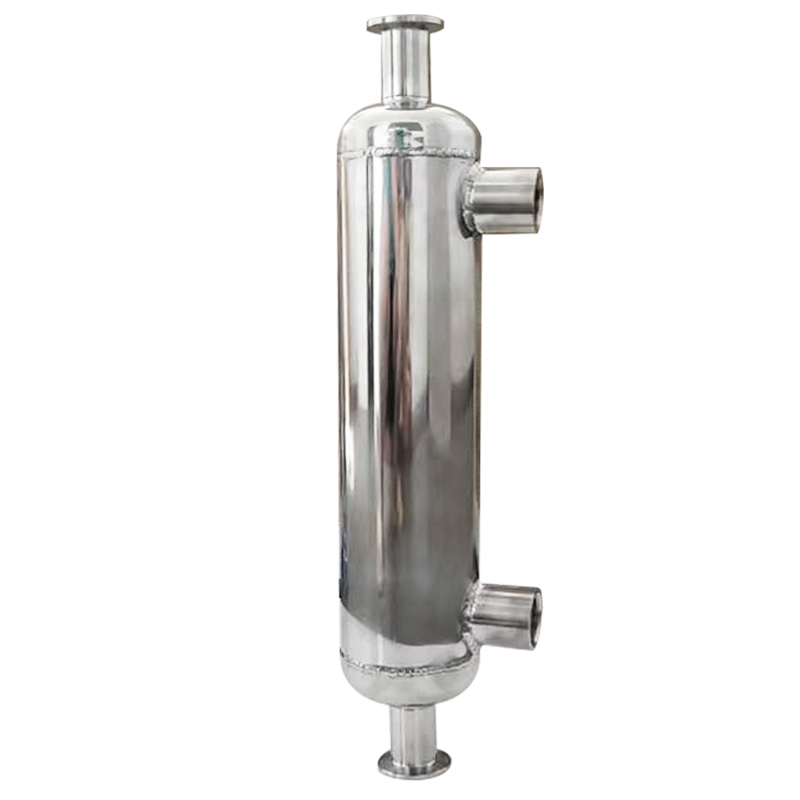
Further reading: - How to control the vacuum level of a concentrating tank? Balancing boiling point, evaporation intensity and condenser load - Batch or continuous concentration? Deciding the concentration mode by material characteristics and capacity
This article is compiled by Shenzhen Hyline Equipment Manufacturing Co., Ltd. (hyline.cn); all information rights belong to the original authors. Main products: stainless steel reactors, mixing tanks, storage tanks, dispersers, concentration tanks and complete chemical process lines; custom (non-standard) manufacturing supported.
Q&A from this article
Frequently asked questions and answers from this article
How to choose between single-effect and double-effect concentrating tanks? By evaporation capacity and material heat sensitivity, this article compares steam economy, equipment investment and applicable duty, giving selection basis.
Related Products
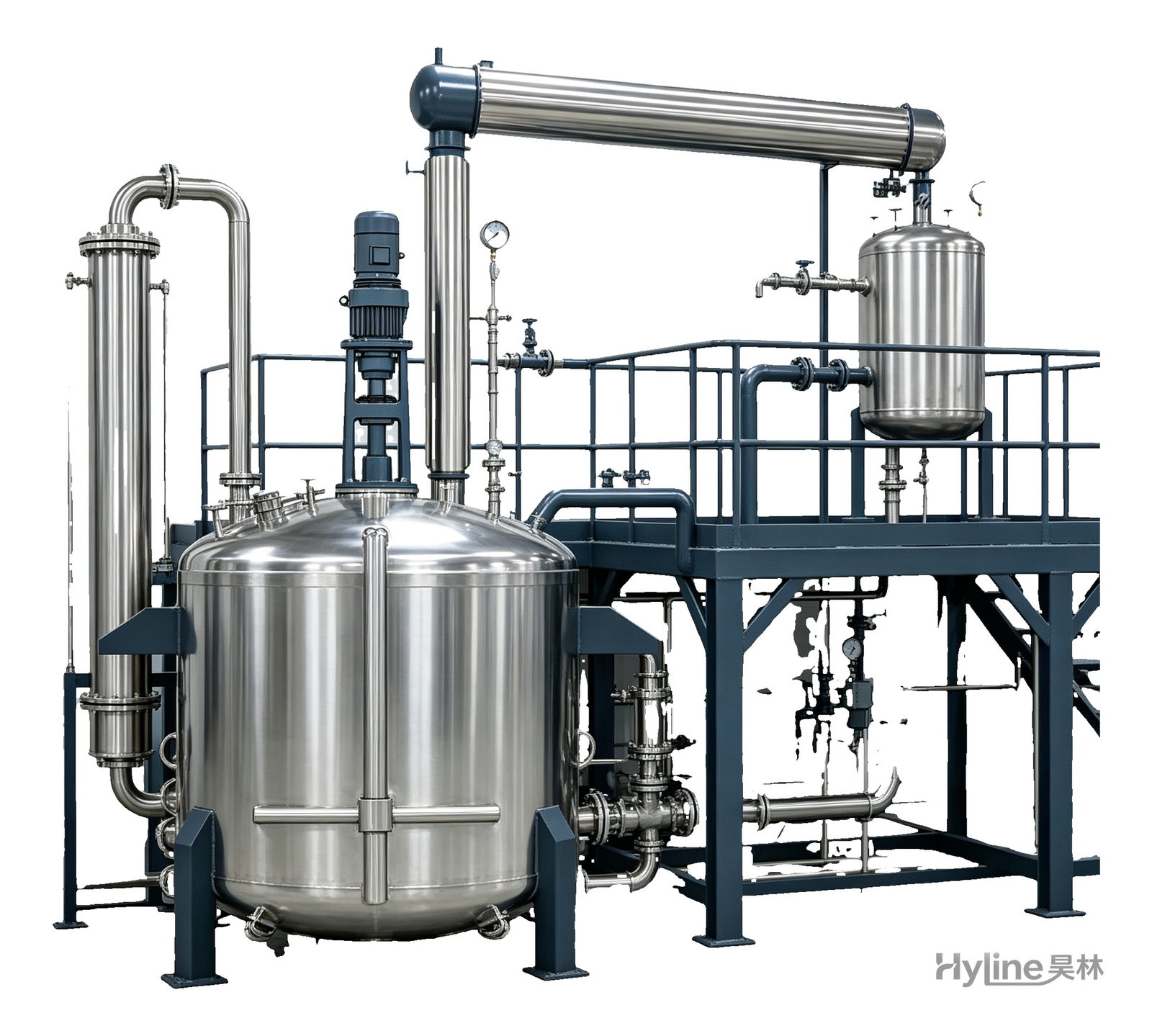
Complete Resin Production Equipment
Resin production packages built around the reactor, with vertical fractionating column, horizontal condenser and water separator for full synthesis, dehydration and reflux processes. Sizes from 300L to 30000L.
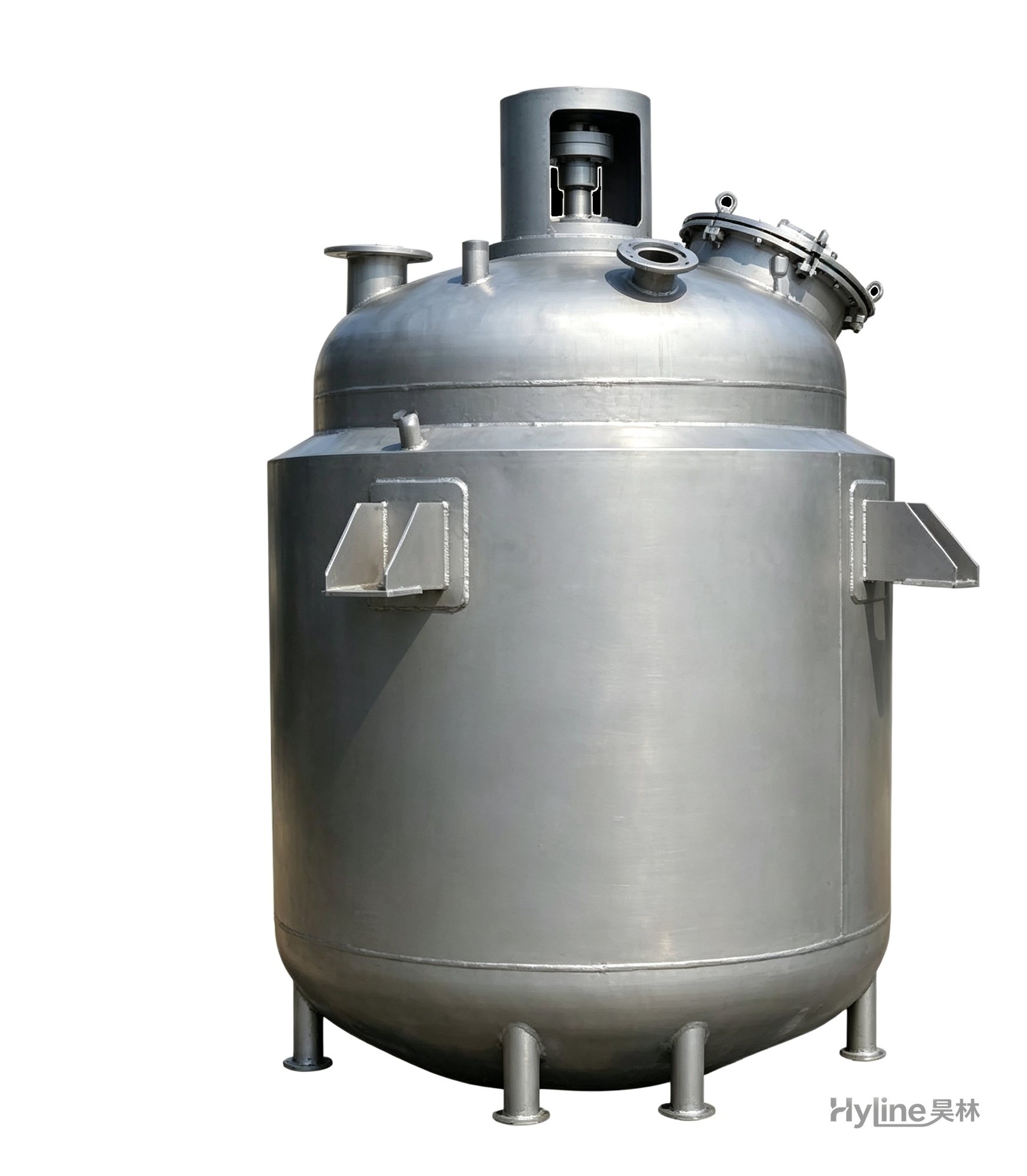
Jacketed Reactor
The typical main reaction vessel in chemical production. Mixing, heating and cooling disperse and mix materials for reaction and polymerization. The jacket circulates thermal oil/steam for heating or cooling water for temperature control.
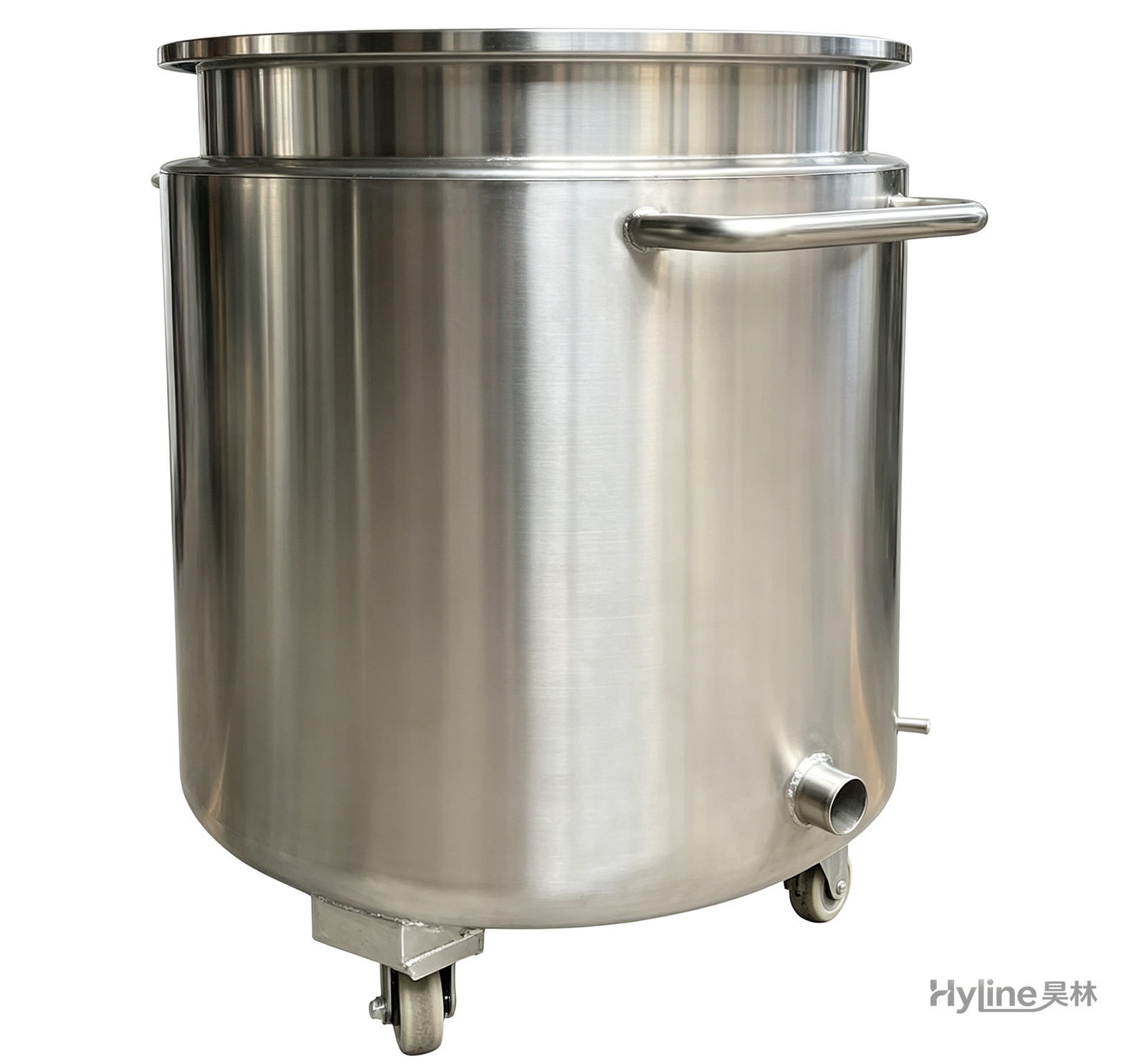
Stainless Steel Mixing Tank (Dispersion Drum)
Supporting vessel for dispersers and mixers in paints, coatings, adhesives, color slurries, inks and electronics. Available in 201/304 stainless with internal/external polishing and sloped bottom side discharge for complete draining.
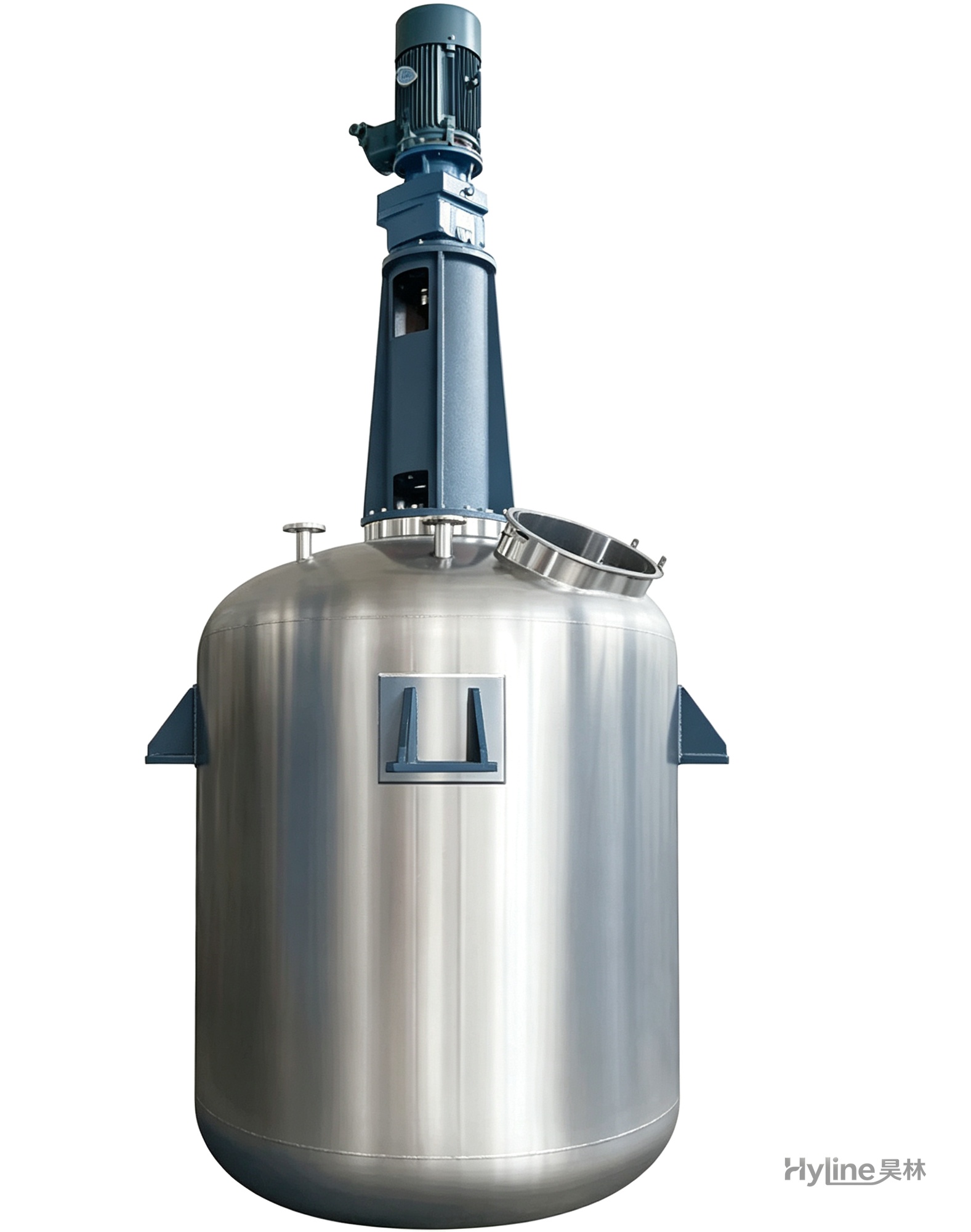
TC Series Mixing Kettle (Tinting)
For color matching in the paint industry and liquid-liquid / liquid-solid mixing in other industries. Uniform tinting, good miscibility, reasonable structure and powerful stirring.
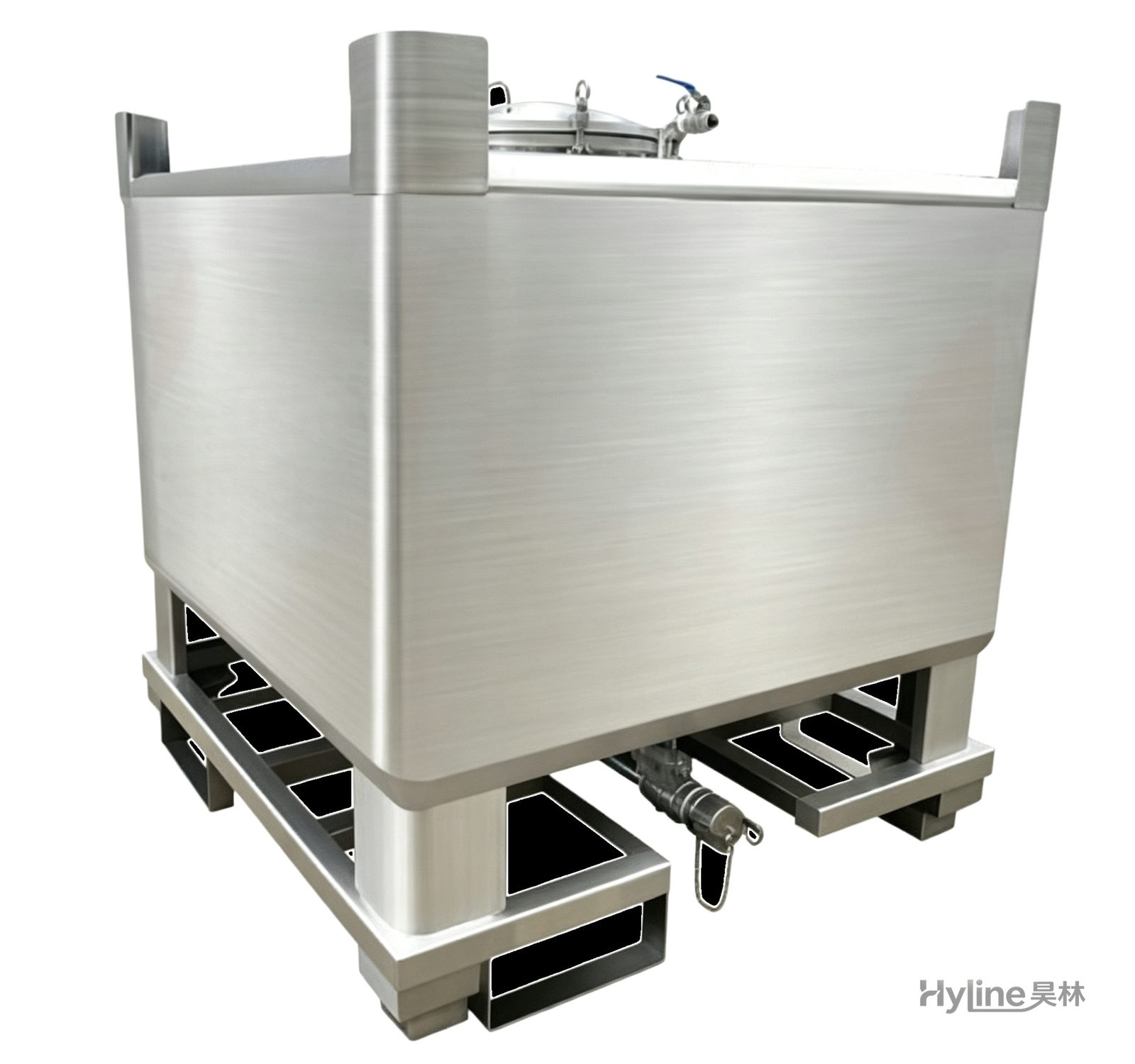
IBC Tank (Intermediate Bulk Container)
HDPE blow-molded liner with hot-dip galvanized steel frame - UV resistant, anti-aging, easy to clean, non-toxic. Four-way fork base for easy handling and stacking; ideal for liquid storage and transport.
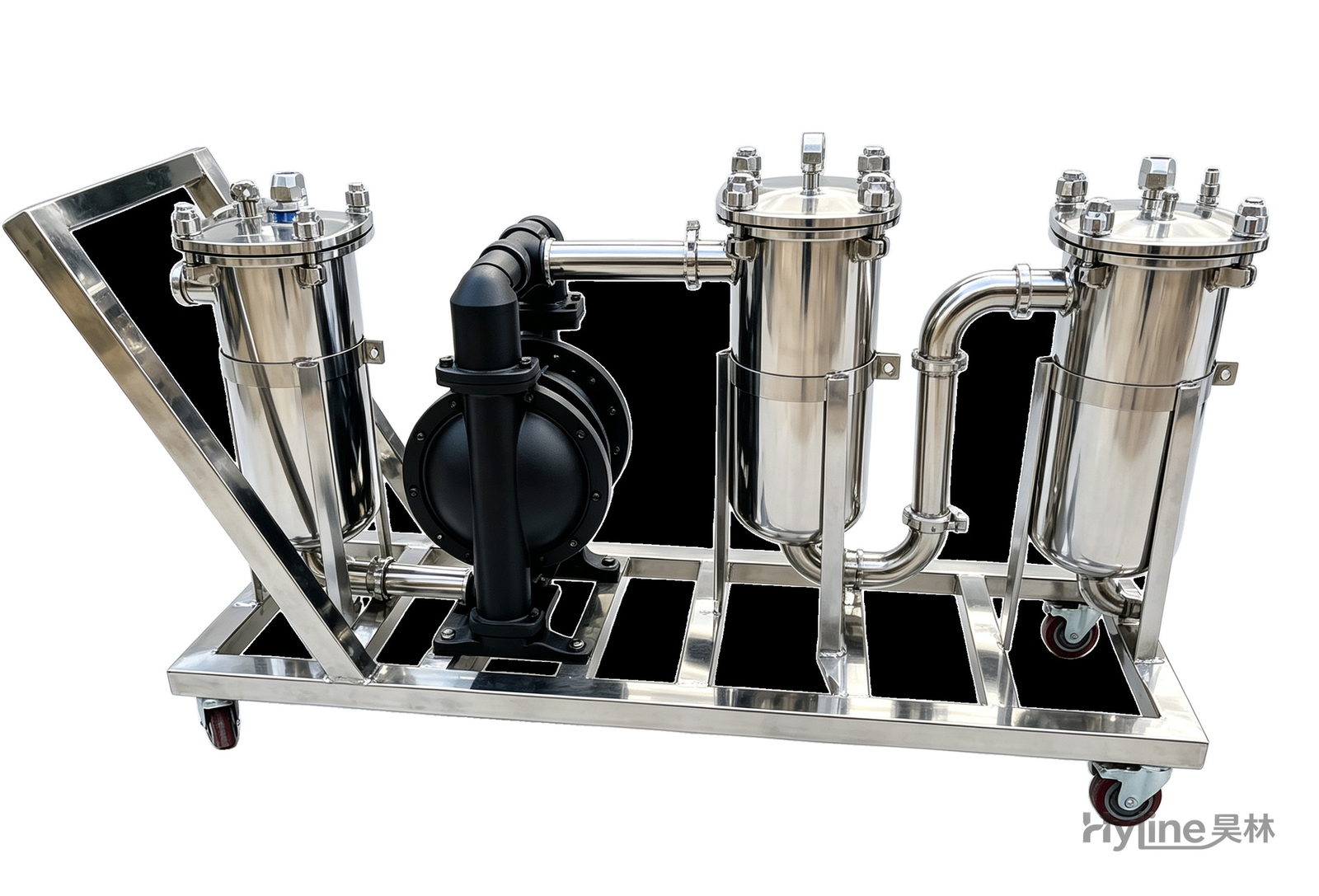
DL Series Bag Filter
A novel, compact, flexible and airtight multi-purpose filter widely used in chemicals, coatings, inks and food. Single and duplex models available, mountable on mobile carts with transfer pumps.