
How to choose stainless steel storage tanks for the distilling industry: new-make storage, maturation and sanitary configuration
11/9/2026
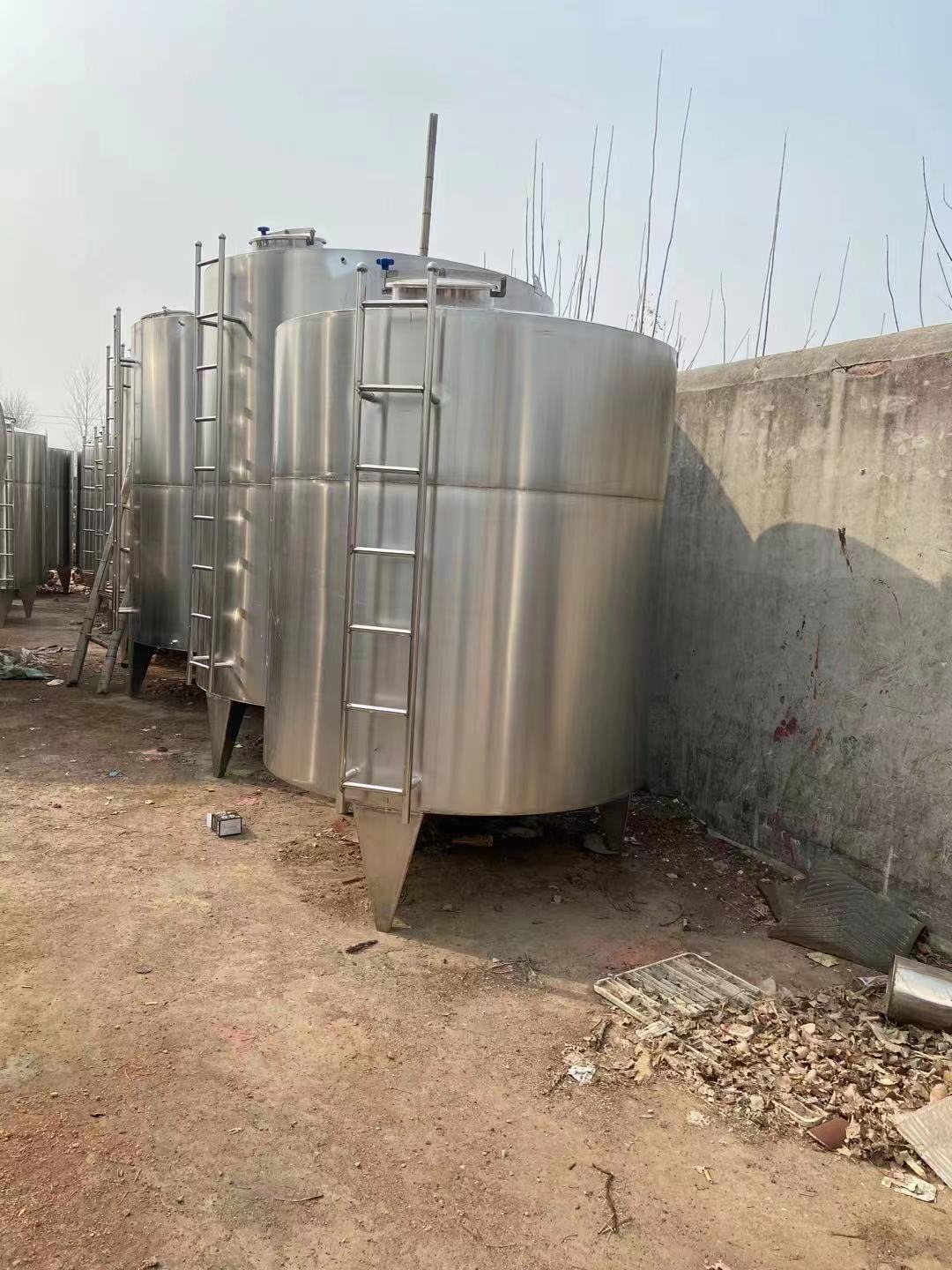
Half of a liquor's final flavor comes from the process, the other half from storage. A distillery's new-make spirit rests for years waiting to mature, fruit liquors age and clarify at low temperature, and blending combines batches of different ages and proofs in set ratios — and the carrier for all of these is the storage tank. Problems in storage are the most insidious: off-flavors, evaporative losses, leaks and cleaning dead zones usually surface only after the finished product ships, when tracing them back costs multiples. This article covers tank types, fittings, materials and sanitary configuration for the three typical duties — turnaround, maturation and blending — so purchasing gets this batch of tanks right. Before buying, be clear about what each tank will hold and how many times a year it will be filled; configure by duty and the budget lands where it matters.
Why should turnaround and maturation tanks not be bought interchangeably?
In one sentence: turnaround tanks serve throughput, maturation tanks serve stability, and their fittings differ completely. A new-make turnaround tank fills and empties daily; the priorities are a large manway, quick-release outlet and accurate level metering so every transfer is accounted for. A maturation tank sits for most of a year; the priorities are full-tank storage to shrink headspace, small temperature swings and minimal disturbance of the spirit. Using a turnaround tank for maturation exposes the spirit to oxygen and evaporation through frequent openings and level swings; using a maturation tank for turnaround wastes its nitrogen blanket and insulation. Classify the duty first, then configure — that is the cheapest order.
How to decide tank type and volume?
In one sentence: back-calculate single-tank volume from the warehouse's flow rhythm, and build turnaround and maturation separately.
| Duty | Configuration logic | Fitting priorities |
|---|---|---|
| New-make turnaround | Mid-small volume, fast in and out | Large manway, quick outlet, metering-level gauge |
| Spirit maturation | Large tanks, full storage, low disturbance | Full-tank duty, nitrogen blanket or quality breather, temperature monitoring |
| Blending | Sized to batch | Slow agitation or air circulation, dosing nozzle for water addition |
Bigger is not automatically cheaper: large maturation tanks save floor space but stretch cleaning cycles, and one batch occupies a whole tank, hurting scheduling. A common practice keeps one or two small mobile tanks beside the main fleet for tails and samples. Blending must combine batches evenly; the spirit is thin, yet uniformity requirements are high, so follow mixing tank logic with slow mechanical agitation or air circulation — gentle, not violent; over-agitation entrains air and oxidizes flavor compounds.
How to plan the tank area and transfer piping?
In one sentence: draw the flow lines before fixing tank positions — good piping saves both metering and hygiene headaches. Put the turnaround area near the unloading point, arrange maturation tanks in rows with inspection aisles; run transfer piping fixed and sloped to drain points, avoiding gas pockets at high points and trapped liquor at low points; give each tank isolation valves on inlet and outlet so servicing one tank never stalls the whole row. Leave generous spacing for maintenance and safety — a manway squeezed against a wall costs half a shift of shuffling. Group pumps in a drained pump area and check suction and head against the least favorable tank, so the furthest tank never becomes the one that never fills properly. Half a day spent on layout spares years of irritation across thirty years of service.
Where do evaporation losses come from and how to control them?
In one sentence: losses concentrate in evaporation and residue, and both control points live in fittings and habits. Evaporation rides the breath: filling, emptying and day-night temperature swings push headspace vapor out; a correctly sized breather plus a nitrogen blanket presses this down to very little. Residue losses live in tank bottoms and piping: poorly sloped bottoms and undrained dead legs leave liters behind at every transfer. Keep a per-tank ledger of every movement; tanks that fail to reconcile get their fittings and seals checked individually — once the ledger exists, unexplained losses almost always reveal themselves in two or three tanks.
How to choose level measurement and metering?
In one sentence: set accuracy by duty — turnaround tanks answer to the books, blending tanks answer to the recipe. Hydrostatic, radar and magnetic gauges each have their place: prefer radar or hydrostatic with temperature compensation on turnaround tanks; a weighing module is the most direct answer on blending tanks, with water addition and spirit dosing read straight off weight. Calibrate at multiple points against actual volume, not one point; even with an accurate level, volume needs temperature-based density conversion, done in the system rather than by mental math. Metering is the root of the distillery's accounts; buy it together with the tanks, since retrofitting costs more. Reconcile inspection sheets with system data periodically — when the two never agree, the instrument is due for service.
How to manage full-tank storage and temperature?
In one sentence: run maturation tanks as full as possible, give each product a temperature band, and make monitoring part of the daily routine. The larger the headspace, the more room for oxidation and evaporation — full storage or a nitrogen blanket, ideally both. Temperature swings make the spirit breathe inside the tank; cool storage is steadier, but set the band by product rather than one rule for all. Fit remote-reading thermometers and watch trends, not single points — an abnormal warming trend often precedes a leak and costs nothing as an early warning. Keep condensation and humidity in view too: tanks that sweat heavily need a vapor barrier on their insulation. Manage full storage, nitrogen and temperature trends, and the warehouse's annual losses stay at a respectable level.
How to configure sealing and safety fittings?
In one sentence: ethanol is flammable and volatile, so seals and safety fittings follow flammable-medium standards with no shortcuts. Fit a breather valve plus flame arrester on the tank top to control evaporative losses from filling, emptying and diurnal breathing; where conditions allow, add a nitrogen blanket to push down headspace oxygen — steadier maturation and lower losses. Choose level gauges without spark hazards, and complete tank grounding and pipe bonding per code. Warehouse ventilation and explosion-proof electrics belong to the site design, but state the required explosion-proof rating of tank electrical interfaces at ordering; retrofitting on site costs double. Put safety fittings on a scheduled inspection plan — a stuck breather valve is the most common hazard in spirit warehouses, and an annual move and wash costs little.
How to decide materials and inner-wall treatment?
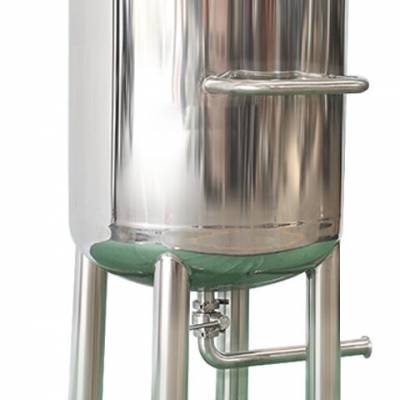
In one sentence: 304 stainless covers low-acid spirits such as baijiu; acidic systems like fruit liquors justify 316L; never skimp on sanitary inner treatment. Liquors corrode stainless mildly and 304 is the industry mainstream; fruit liquors and fermented compounding bases are acidic over long contact, favoring 316L. Grind internal welds smooth and pickle-passivate them — the weld zone traps soil and starts local corrosion first. Set the surface finish by cleaning method: uniform smoothness suffices for manually cleaned tanks; tanks with cleaning systems deserve full sanitary treatment. Slope the tank bottom toward the outlet so it drains clean and holds no residue — for warehouses rotating many products, this decides changeover efficiency for multi-product warehouses. Set outer-surface treatment by environment: outdoor tanks deserve equally smooth weld appearance, and the vapor-barrier joints of insulated tanks are fixed at ordering — retrofit quality never matches.
How to handle cleaning and metering acceptance?
In one sentence: clean to food-grade standards, and include a water-fill test plus level calibration in acceptance. After a changeover or idle period, circulate alkaline solution then rinse with clean water, steaming where needed; treat the inner rim of the manway, valve cavities and level-gauge nozzles individually — cleaning dead zones are the number-one source of off-flavors. At acceptance, a water-fill test checks weld leakage, and static observation matches real duty better than pressurization; calibrate the level gauge point by point against actual volume — liquor trades by volume, and one percent of level error is real money on the books. Archive the calibration table with the equipment documents so every later stocktake has a reference.
How to design the connection to blending and filling?
In one sentence: every transfer removed between tank area and filling removes one health and metering risk. For tank areas feeding the filling line, lay out nozzles along the supply direction of the filling machine, using fixed piping and sanitary fittings instead of temporary hoses; locate filtration, water dosing and spirit return lines on the drawing rather than improvising on site. Also account for the dead volume of piping between blending sign-off and filling — it is not a small quantity, and undrained lines quietly blend consecutive batches. Standardize hose fittings on one size of sanitary quick coupling and keep spare hoses and gaskets in the storeroom; replace gaskets on schedule rather than waiting for leaks — alcohol ages gaskets faster than water-based products, so never bet a whole batch on the lifespan of a rubber ring.
How we help customers finalize the configuration
As the company behind hyline.cn, Hyline Shengda Equipment Manufacturing Co., Ltd. first asks about the warehouse's flow rhythm, storage cycles and electrical conditions, then configures turnaround, maturation and blending tanks separately, with fittings specified to both flammable-medium and food-grade standards. Every tank ships with a level-calibration table and weld inspection records, so acceptance has evidence and later expansion can connect. If you are planning a spirit warehouse or upgrading a tank area, send us the site and process conditions, and we will match the tanks with you.
Further reading: - Choosing stainless steel storage tanks for food and pharma: CIP cleaning and sanitary requirements decide the tank - Choosing outdoor insulated storage tanks: wall insulation structure, heat tracing and anti-freeze by medium temperature
This article is compiled by Hyline Shengda Equipment Manufacturing Co., Ltd.
Q&A from this article
Frequently asked questions and answers from this article
In one sentence: back-calculate single-tank volume from the warehouse's flow rhythm, and b…
Related Products
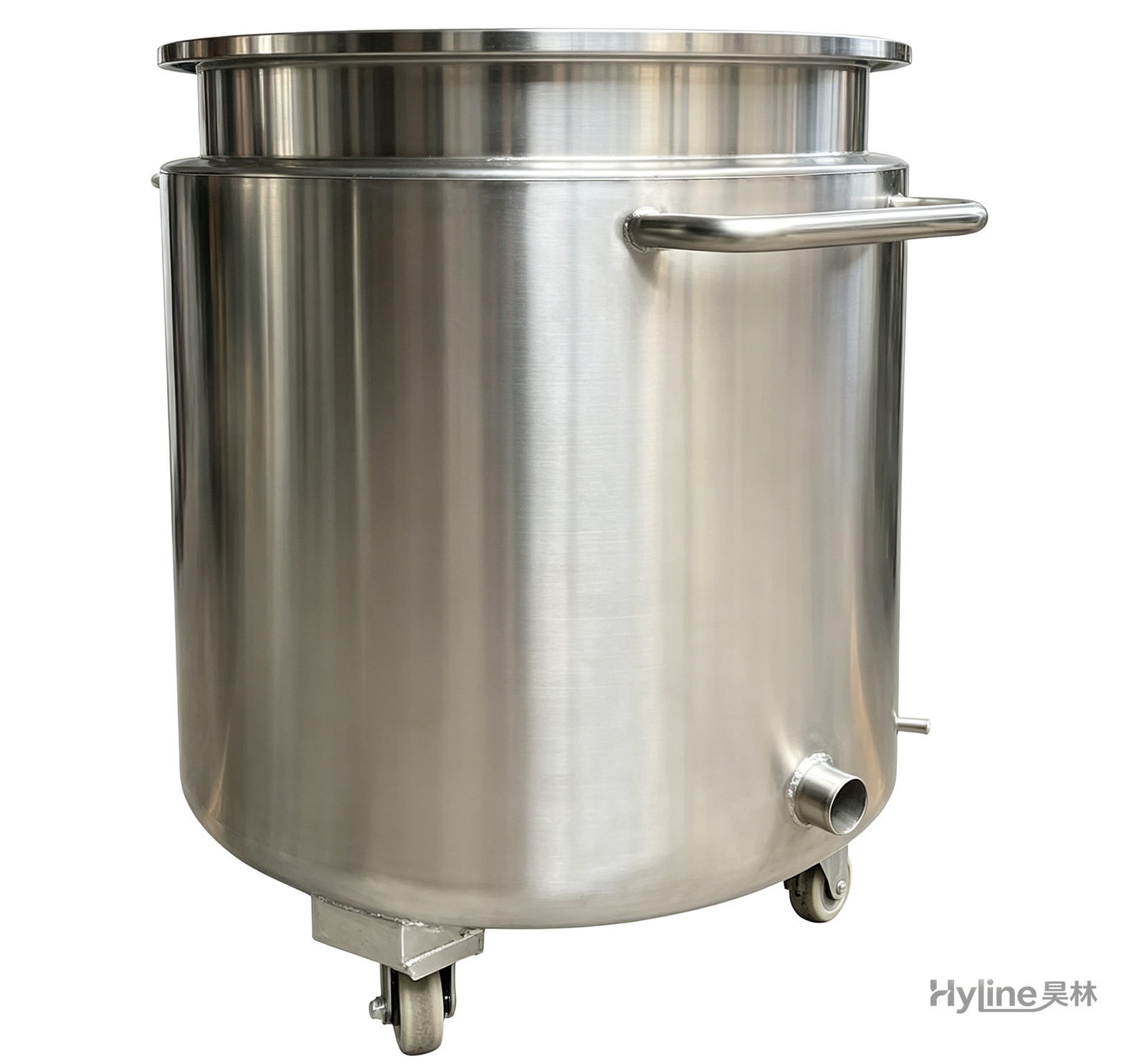
Stainless Steel Mixing Tank (Dispersion Drum)
Supporting vessel for dispersers and mixers in paints, coatings, adhesives, color slurries, inks and electronics. Available in 201/304 stainless with internal/external polishing and sloped bottom side discharge for complete draining.
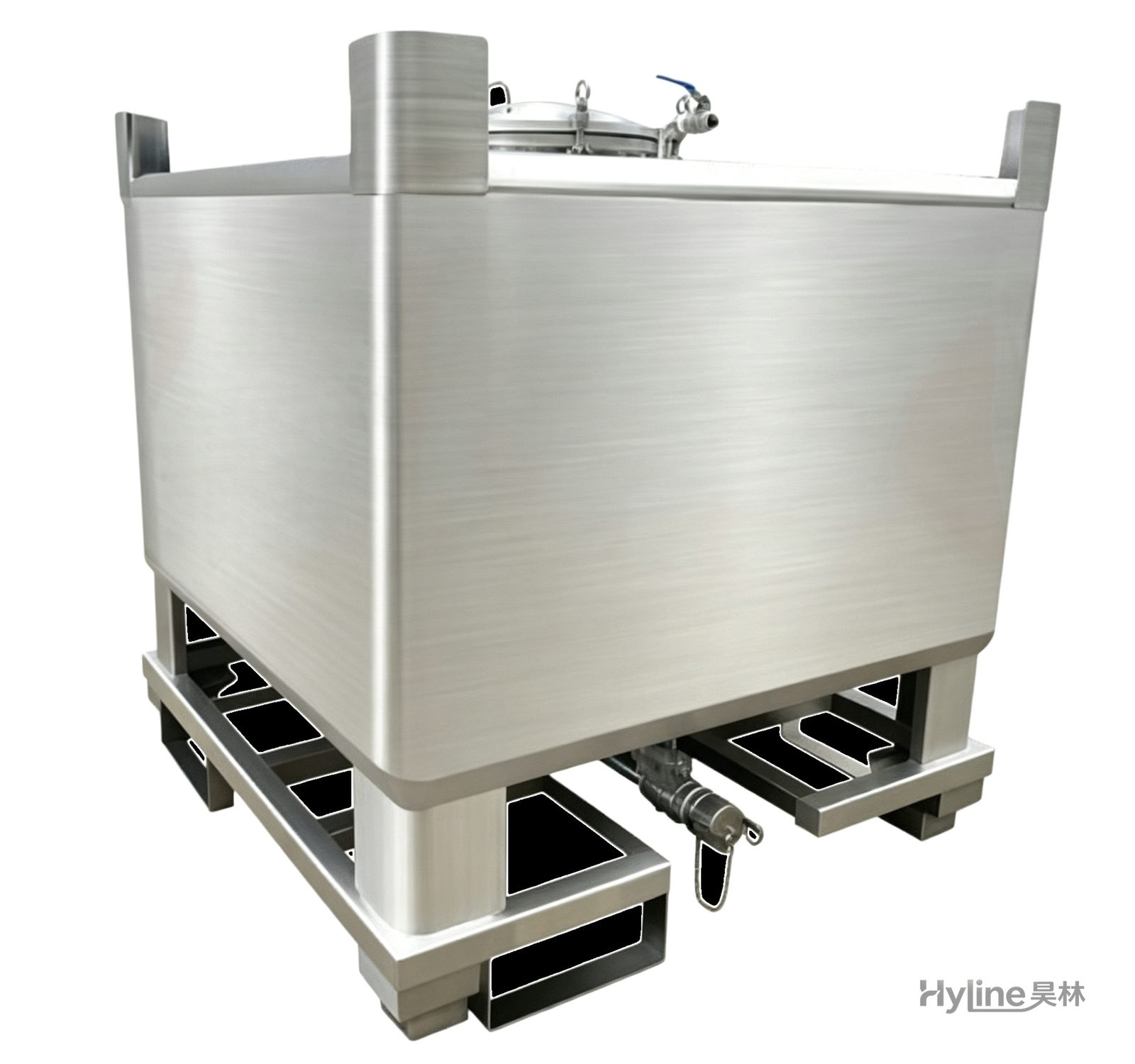
IBC Tank (Intermediate Bulk Container)
HDPE blow-molded liner with hot-dip galvanized steel frame - UV resistant, anti-aging, easy to clean, non-toxic. Four-way fork base for easy handling and stacking; ideal for liquid storage and transport.
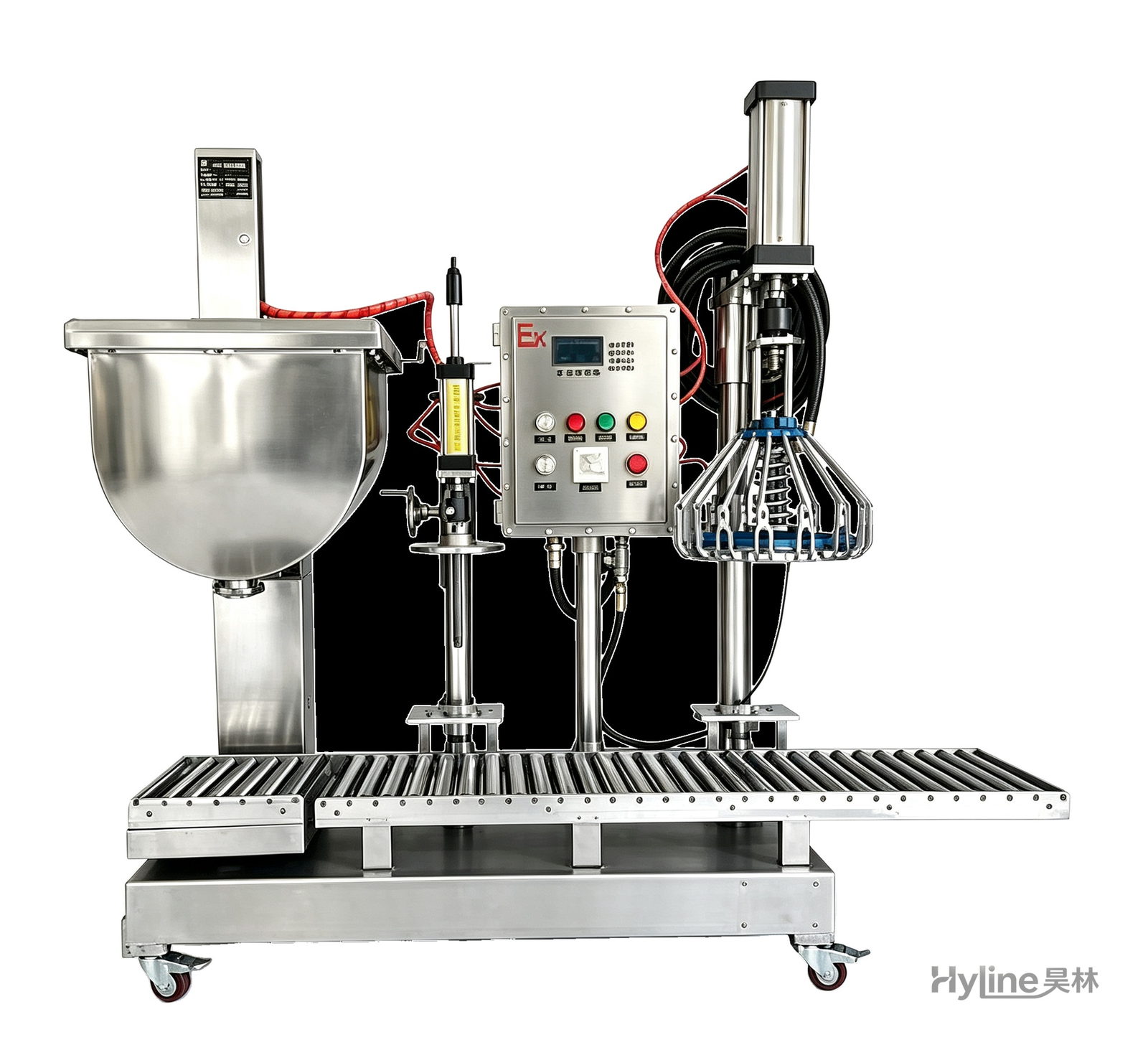
Weighing Semi-Automatic Filling Machine
Designed for frequent packaging changes with dual capping. European weighing technology with Siemens PLC: automatic feed speed adjustment and precision correction, triple protection (emergency stop/power-off/tank removal), explosion-proof fittings.
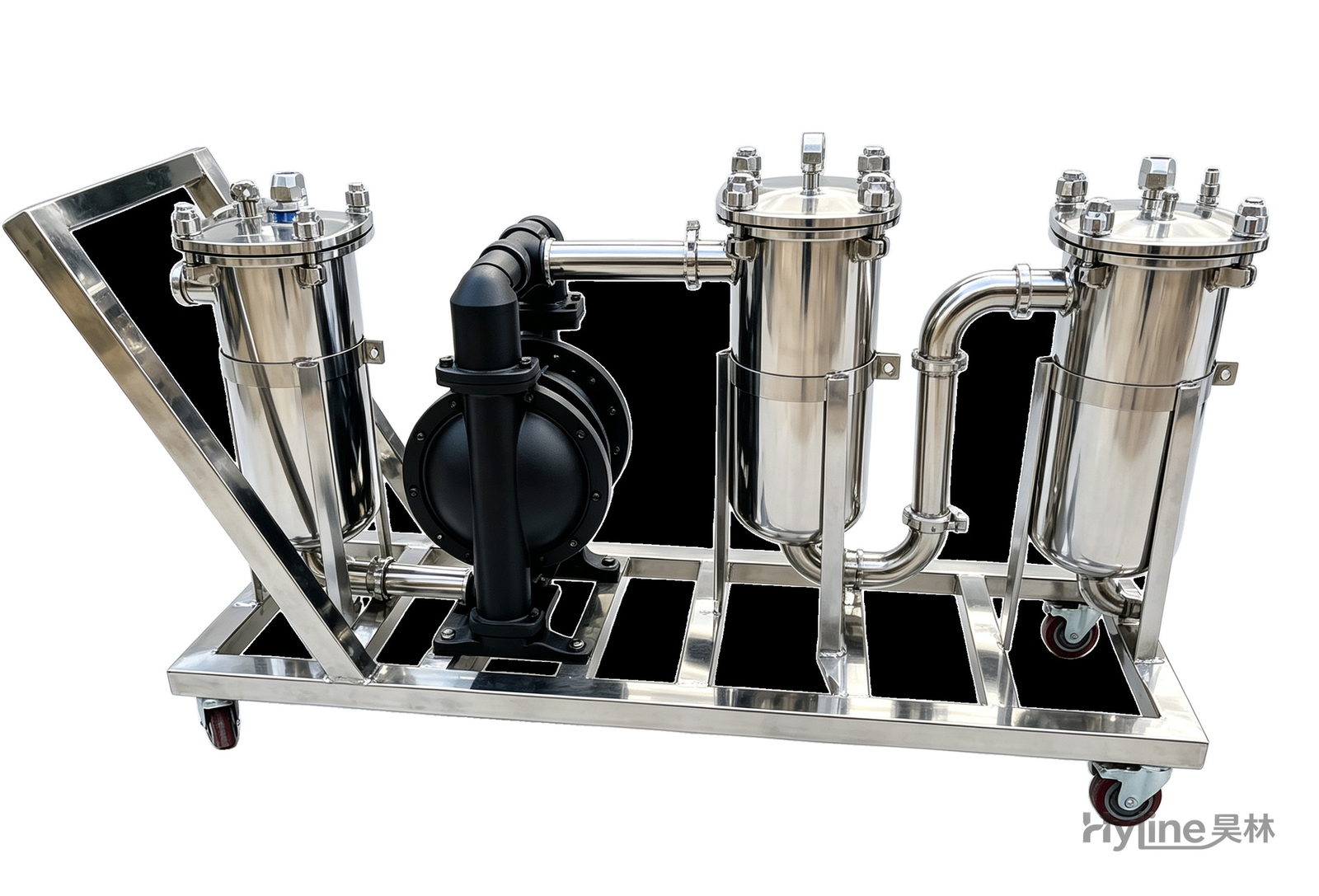
DL Series Bag Filter
A novel, compact, flexible and airtight multi-purpose filter widely used in chemicals, coatings, inks and food. Single and duplex models available, mountable on mobile carts with transfer pumps.