
How to Select the Heating Structure of a Half-Coil Reactor? Configuration Points of Steam, Thermal Oil and Half-Pipe Coil
11/1/2026
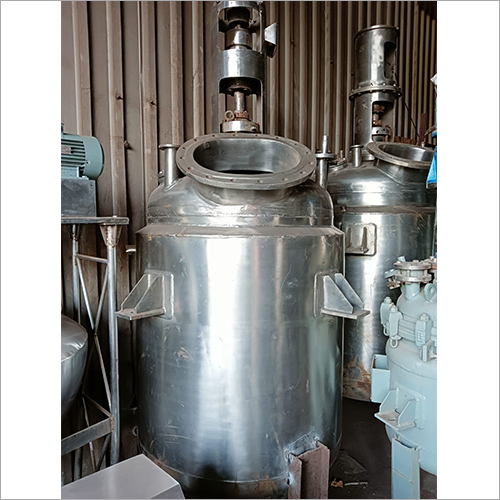
In pharmaceutical and fine chemical workshops, the half-coil reactor is the core equipment for synthesis, crystallization and polymerization; the heating structure directly determines whether the reaction temperature can follow the process curve. The "heating structure" of a half-coil reactor refers to the heat exchange form outside the vessel — full jacket or half-pipe coil (half-pipe ribbon jacket), steam or thermal oil, and how much heat transfer area is configured. If the heating structure is selected wrongly, heating is slow, temperature control is unstable and local overheating occurs, affecting the yield and quality of the whole reaction. This article explains how to select the heating structure of a half-coil reactor for typical pharmaceutical fine chemical conditions.
What exactly does the heating structure of a half-coil reactor mean?
One-sentence conclusion: the heating structure = heat exchange form (full jacket/half-pipe coil) + heating medium (steam/thermal oil/electric) + heat transfer area; all three are decided together, and a half-coil reactor specifically refers to the heat exchange form in which half-pipe coils are welded onto the outer wall of the shell.
A traditional jacketed reactor has a whole jacket wrapped around the shell: the heat transfer area is large, but the pressure-bearing capacity is limited by the jacket structure, and the steam or thermal oil in the jacket flows slowly with possible heat transfer dead zones. A half-coil (half-pipe) reactor welds semicircular steel tubes spirally onto the outer wall, forming separate half-tube channels: the medium flows at high speed in turbulent state inside the tubes, and the heat transfer coefficient is clearly higher than a full jacket; the half-tube has strong pressure-bearing capacity and can carry higher-pressure steam or higher-temperature thermal oil; it also saves material and reduces weight. The trade-off is that the heat transfer area is only about 60%-70% of a full jacket on the same shell, and when the area is insufficient the heating speed cannot keep up. So the first step of selection is to confirm whether your process needs "area" or "coefficient": for reactions with large heat release requiring fast heating, the two are often combined; for ordinary heating and holding needs, the half-pipe coil structure offers better value. Selection should also bring the agitator into the picture: a half-coil reactor is usually equipped with a top agitator, and the agitation speed is chosen by material viscosity and vessel volume — for low-viscosity materials 60-130 r/min is common, for high-viscosity or crystal suspension 30-80 r/min; the motor power of the agitator is calculated from the paste viscosity and volume, ranging roughly from 1.5 kW to 22 kW — too small and the contents cannot be stirred evenly, too large and energy is wasted. With a proper agitation speed, the heated material near the heating surface is carried away in time and the whole vessel temperature is uniform; with an improper speed, the heating surface locally overheats and the wall-attached material decomposes or cokes.
How to select steam heating: saturated steam pressure and half-pipe coil configuration?
One-sentence conclusion: steam heating suits fast heating and high-temperature (100-180°C) conditions; select the saturated steam pressure level by the target temperature, and for half-pipe coils pay attention to condensate draining and non-condensable gas venting.
The advantages of steam heating are fast heating, high heat transfer coefficient and low cost; the disadvantage is that the temperature is determined by the steam pressure and the control accuracy is limited, so it suits heating stages without strict temperature accuracy. The saturated steam temperature corresponds one-to-one with pressure: for example, saturated steam at 0.4 MPa gauge is about 151°C, at 0.6 MPa about 165°C, and at 1.0 MPa about 184°C. When selecting the steam pressure level, first reverse-calculate from the process target temperature and leave a 10-20°C heat transfer temperature difference margin. When steam flows in the half-pipe coil, two things matter most: first, condensate draining — the half-tube channel has a small cross-section, and if condensate cannot be drained it accumulates at low points forming a water film and heat transfer drops sharply; steam traps should be installed on each section or at the manifold; second, non-condensable gas venting — at startup, air and inert gas occupy the tube cavity if not discharged, so a vent valve is needed. Also calculate the steam flow: divide the total heat needed in the heating stage by the latent heat of steam to get the steam consumption, and size the inlet pipe by the consumption; if the inlet pipe is too small, steam supply is insufficient during the heating stage.
How to select thermal oil heating: circulation system and temperature uniformity?
One-sentence conclusion: thermal oil heating suits 150-300°C high temperature and fine temperature control conditions; it relies on an external circulation oil system with temperature control, and when oil flows in the half-pipe coil, ensure uniform flow through each turn.
Thermal oil (heat transfer oil) heating is completed through an external circulation system: the oil heater or electric heater heats the oil to the set temperature, the circulation pump feeds the oil into the reactor half-pipe coil, and the return oil goes back to the heater, forming a closed loop. Its advantage is that it is not limited by the pressure-temperature correspondence like steam; the temperature can be continuously adjusted with high control accuracy, suiting polymerization, crystallization and other processes requiring slow heating, constant temperature and controlled temperature curves. The disadvantage is that the system is complex (heater, circulation pump, expansion tank, piping and valves as a whole), heating is slower than steam, and the oil must be tested and replaced periodically. When thermal oil flows in the half-pipe coil, heat transfer uniformity depends on the flow distribution of each turn: ensure the flow velocity of each turn from inlet to outlet is close, avoiding the inlet turns overheating and the outlet turns being underheated; the half-pipe coil pitch and tube diameter must also match the pump flow, and the oil flow velocity is generally controlled at 1-2 m/s — too low gives poor heat transfer, too high increases pump consumption.
How to decide the heating medium: by temperature, control and safety?
One-sentence conclusion: below 100°C prefer hot water/low-pressure steam, 100-180°C use saturated steam, above 180°C or for fine control use thermal oil, then add safety and explosion-proof requirements.
Choose the heating medium by temperature first: for low-temperature slow heating below 100°C, use hot water or low-pressure steam; in the 100-180°C range steam is the most economical, and where accurate temperature is required a regulating valve on the steam line can help; above 180-300°C, steam pressure becomes too high (300°C needs about 8 MPa-class pressure, unrealistic for a common half-pipe coil), so thermal oil is necessary. Then look at control requirements: exothermic and temperature-sensitive reactions need continuous temperature adjustment — choose thermal oil plus a temperature control system; where there is only heating without strict control, steam is enough. Finally look at safety: thermal oil has thermal stability and flash point requirements; if the oil temperature exceeds its allowable film temperature, coking and degradation occur, so select the oil type with a margin above the maximum service temperature; for pharmaceutical workshops with explosion-proof requirements, configure the electric heater and circulation system to the explosion-proof zone. Comparing these three criteria, most pharmaceutical fine chemical reactors fall into two options: "steam + half-pipe coil" or "thermal oil + half-pipe coil".
How to determine the half-pipe coil dimensions: tube diameter, pitch and heat transfer area?
One-sentence conclusion: the half-pipe coil commonly uses DN50-DN65 half tubes, the pitch is 1.5-2 times the tube outer diameter, and the heat transfer area is calculated back from the heat demand and overall heat transfer coefficient; all three must satisfy the heating time requirement.
There are three key dimensions of the half-pipe coil geometry: tube diameter, pitch and winding height. The tube diameter (half-tube inner diameter) determines the medium flow velocity and pressure drop; DN50 and DN65 half tubes are common, and choose a larger diameter for large medium flow or high viscosity; the pitch (distance between adjacent turns) is 1.5-2 times the tube outer diameter — too dense causes welding stress concentration and incomplete shell coverage, too sparse gives insufficient heat transfer area; the winding height covers the straight section of the shell heating zone, and the bottom head can be wound or not as needed. Calculate the heat transfer area back from the heat demand: first calculate the total heat needed in the heating stage (sensible heat of material heating + reaction heat + heat loss), divide by the overall heat transfer coefficient and the mean temperature difference to get the required area, then compare with the actual coverage area of the half-pipe coil; if insufficient, enlarge the tube diameter, tighten the pitch or switch to a full jacket. For the heat transfer coefficient, the half-pipe coil with steam heating can be taken at the level of 500-1000 W/(m²·K), and with thermal oil heating at 200-400 W/(m²·K); adjust by medium, flow velocity and fouling factor, avoiding calculating by ideal values so the actual heating is far slower than designed. When calculating back the heat transfer area, always include the volume and fineness parameters of the process: for the same 5000 L vessel volume, if the heat transfer area gap exceeds 20%, the heating time can double; crystallization products are sensitive to crystal fineness (particle size distribution) — too fast heating gives more nuclei and finer particles, while slow heating allows crystal growth; these requirements in turn decide whether the half-pipe coil should be extended or supplemented on the head. Write the target fineness and the allowable heating rate into the process card, so the manufacturer has a basis for calculation.
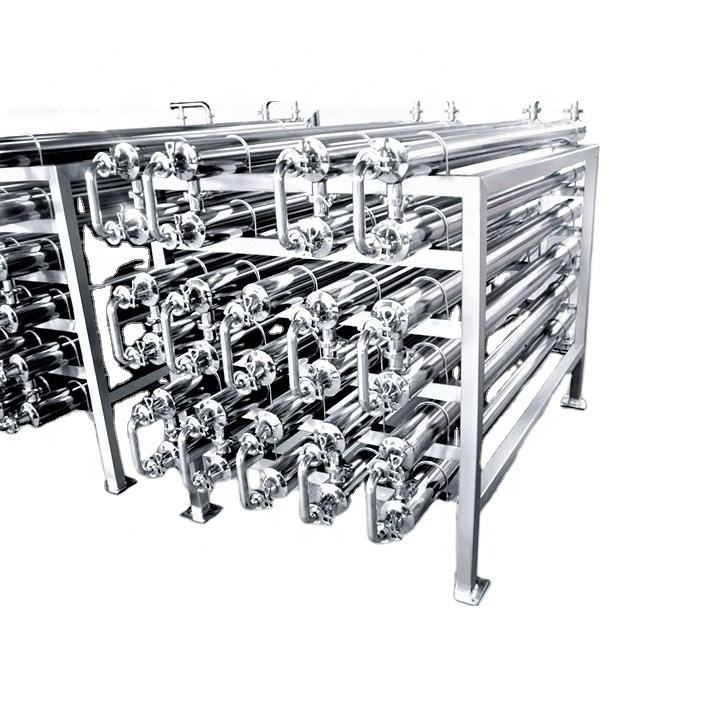
How is the heating structure selection list finalized?
One-sentence conclusion: when finalizing the list, write out six items — reaction temperature curve, heating time, heat exchange form, medium parameters, heat transfer area and half-tube specification — and reverse-calculate the structure from the process curve; that works far better than "add a jacket".
When sending parameters to the equipment manufacturer, recommend reverse-calculating from the process: first write the reaction temperature curve (starting temperature, target temperature, heating time, holding temperature and time, whether fast cooling is needed); second, calculate the heat demand and mean heat transfer temperature difference from the curve; third, decide the heat exchange form — half-pipe coil or full jacket, or a combination of half-pipe coil on the shell plus a jacket on the head; fourth, decide the medium and parameters — steam pressure level and consumption, or thermal oil temperature and circulation flow; fifth, verify the heat transfer area and half-pipe coil specification (tube diameter, pitch, winding height); sixth, list the safety accessories — safety valve, pressure gauge, thermometer, steam trap, expansion tank. With these six items complete, the manufacturer can directly match the heating structure. It should be reminded that the heating selection of a half-coil reactor cannot only look at "whether there is a jacket"; treat the medium, area, flow and temperature control mode as a system, and verify the two hard indicators of heating time and temperature control accuracy against the process curve during acceptance — that is more reliable than paper parameters. It is best to add two more rows to the list: agitation parameters (speed, power) and the product fineness requirement. The agitation parameters decide the mixing and heat transfer uniformity inside the vessel, and the product fineness decides the upper limit of the heating rate; putting the two data together with the heating structure parameters allows the manufacturer to match "heating" and "agitation" as a whole. The six paper items plus these two rows form the complete selection input.
Further reading: - How to select the heating and cooling methods of a reactor: jacket, coil and medium comparison - How to select reactor jacket insulation: configuration points of the insulating layer and insulation structure
This article is compiled by Hyline Shengda Equipment Manufacturing Co., Ltd. (hyline.cn). The information ownership belongs to the original author. Main products: stainless steel reactors, mixing tanks, storage tanks, dispersers, concentrators and complete chemical line supporting equipment; non-standard customization supported.
Q&A from this article
Frequently asked questions and answers from this article
Should the half-coil reactor in pharmaceutical fine chemical plants use steam or thermal oil heating? This article gives the selection method for half-pipe coil, jacket and heating medium by temperature control accuracy, heating demand and safety.
Related Products
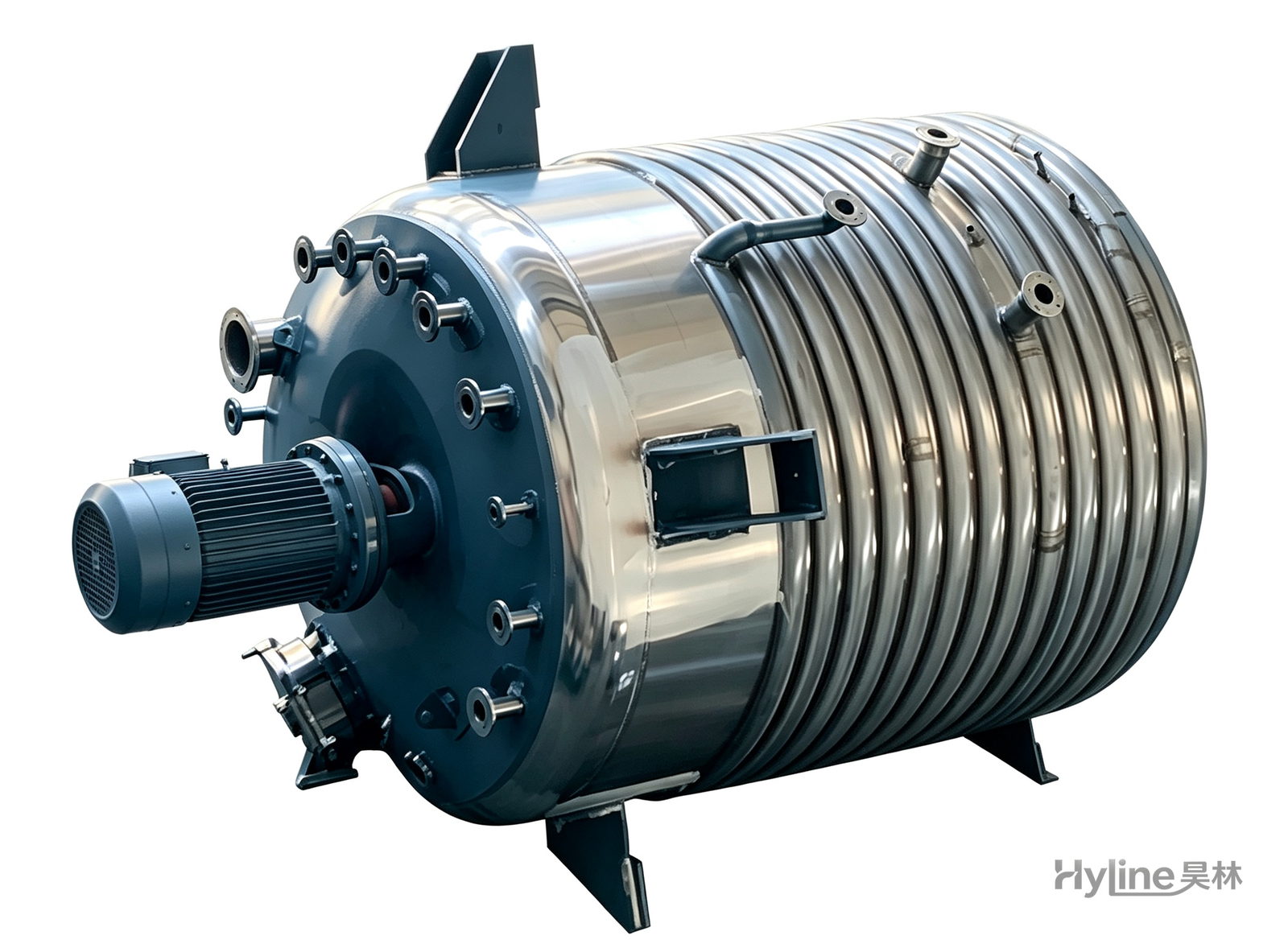
External Half-Coil Reactor
External half-pipe heating & cooling coils provide uniform, efficient heat exchange with zero material dead zones inside. Mirror-polished 304/316L stainless tank is clean and corrosion-resistant. For resin, new-energy slurry and pharmaceutical synthesis.

Jacketed Reactor
The typical main reaction vessel in chemical production. Mixing, heating and cooling disperse and mix materials for reaction and polymerization. The jacket circulates thermal oil/steam for heating or cooling water for temperature control.

Stainless Steel Mixing Tank (Dispersion Drum)
Supporting vessel for dispersers and mixers in paints, coatings, adhesives, color slurries, inks and electronics. Available in 201/304 stainless with internal/external polishing and sloped bottom side discharge for complete draining.
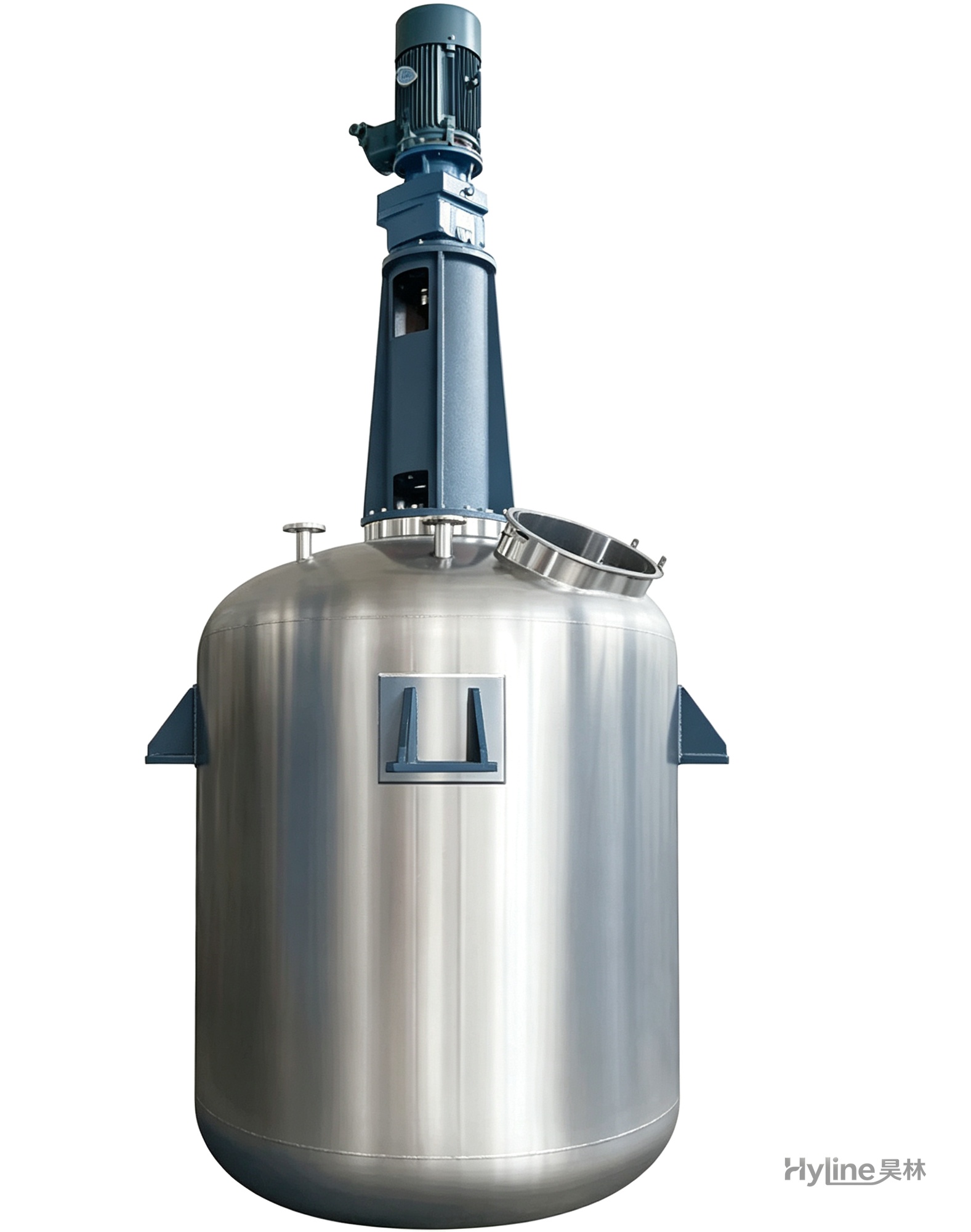
TC Series Mixing Kettle (Tinting)
For color matching in the paint industry and liquid-liquid / liquid-solid mixing in other industries. Uniform tinting, good miscibility, reasonable structure and powerful stirring.
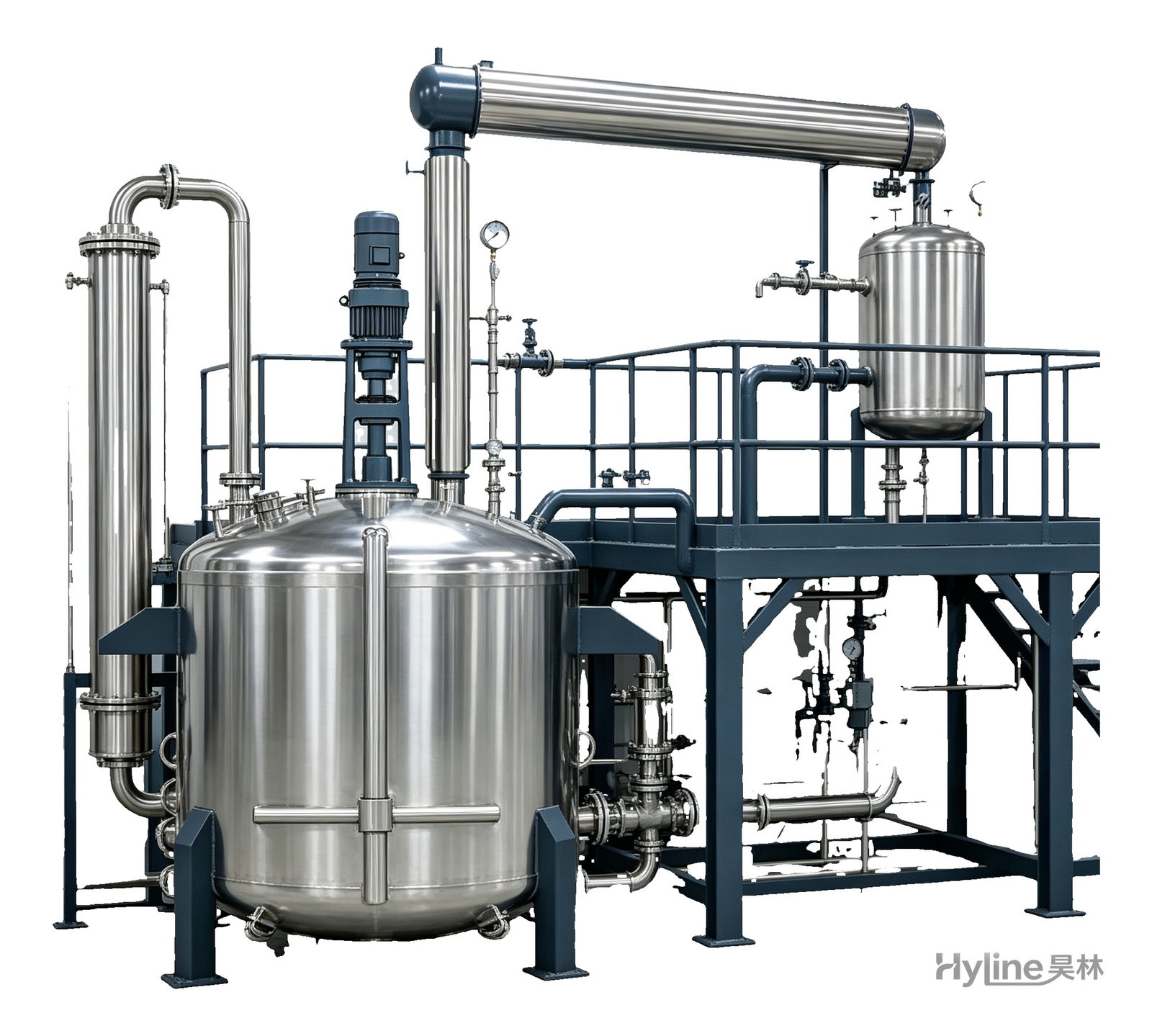
Complete Resin Production Equipment
Resin production packages built around the reactor, with vertical fractionating column, horizontal condenser and water separator for full synthesis, dehydration and reflux processes. Sizes from 300L to 30000L.