
How to choose a stainless mixing tank for liquid water-soluble fertilizers: high-salt dissolution, solids suspension and batch changeover
11/6/2026
Liquid water-soluble fertilizer sounds like "just dissolving salts in water", yet in practice a clear macronutrient solution, a humic-acid suspension and a chelated micronutrient blend demand very different mixing tanks. The most common mistake in specifying a stainless mixing tank is applying one generic vessel to every recipe: high salt pits the welds, high solids settle to the bottom, and a multi-product line never gets clean. This article sets out the selection basis for material, volume, agitation, heating and cleaning across these typical services, so the budget lands where it actually affects output.
The process itself is simple: charge, dissolve, chelate or blend if needed, filter, fill. The mixing tank handles the first three steps, and its configuration decides whether powders wet out, whether salt concentrates locally, and how long a product changeover takes. Before selecting anything, state three things: roughly how high the salt and chloride levels are, whether there is an insoluble or suspended solid phase, and how many recipes share one vessel. Those three sentences decide more than "how many cubic metres" ever will.
Start with the service: what is actually in the liquid?
In one sentence: define salt, solids, pH and viscosity before discussing tank type or power.
Even within water-soluble fertilizers, media differ widely. The table below lists the selection emphasis for three typical recipe families — note these are service characteristics, not any single producer's formula:
| Typical system | Medium characteristics | Selection emphasis |
|---|---|---|
| Clear macronutrient | High salt, essentially no solids, water-like viscosity | Chloride-resistant material, dissolution speed |
| Humic / fulvic suspension | Fine particles, dark colour, wall build-up | Anti-settling agitation, cleanable structure |
| Chelated micronutrients | Temperature and pH control, small batches, many recipes | Heating, temperature control, changeover cleaning |
Classify the system and every later choice has a basis. Clear solutions barely worry about settling, so material and dissolution dominate; suspensions invert that, with agitation and drainage as the main items; chelated blends usually mean "one vessel for several products", so cleaning and temperature control matter more than volume. Asking for a price before the service is classified almost guarantees rework.
How to set the material? High salt is the dividing line
In one sentence: for long-term contact with high salt, chloride or acidic/alkaline media prefer 316L; for neutral, low-chloride clear solutions 304 is normally enough.
Raw materials such as potassium nitrate, potassium chloride, phosphates and trace-element salts push ionic strength well above ordinary water. Once chloride is elevated, 304 can pit at welds and the heat-affected zone, eventually leaking, shedding particles and carrying metal ions into the product. 316L adds molybdenum and resists pitting better, so it suits continuous contact with such media. Conversely, a neutral low-chloride clear recipe is fully served by 304; paying more brings no perceptible gain and is classic over-specification.
One easily missed point: material is not only the shell. Shaft, impellers, sampling valve, pump wetted parts and seals should follow the same logic — avoid a "316L vessel with a cast-iron valve" weak link. Choose seal materials by pH and organic content, and for dark humic systems confirm the elastomer neither absorbs nor leaches colour. Listing the whole wetted path and confirming it item by item is safer than staring at the shell plate alone.
How to set volume? Work back from batch size
In one sentence: derive nominal volume from batch charge and filling ratio, leave headspace, and do not simply "buy bigger".
The arithmetic is straightforward: fix how much finished product one batch must yield, then allow room for agitation and splash — keeping roughly 20–30% headspace is a safe rule. Overfill and the impeller throws liquid, while powder agglomerates above the liquid line; underfill and the impeller is barely submerged, circulation collapses, and nothing dissolves. The table below gives an empirical volume range by batch size, to be adjusted for foaming tendency and charging method:
| Batch charge | Suggested nominal volume | Note |
|---|---|---|
| 1 tonne class | 1.5–2 m³ | Small batches, many products |
| 3 tonne class | 4–5 m³ | Stable single-product output |
| 5 tonne class | 6–8 m³ | Check building height and floor load |
Multi-product lines must also respect the minimum agitation level. Buy for the largest batch and a small recipe may drop the level below the impeller, where agitation simply stops working. For such service we usually suggest one main vessel sized for the dominant batch plus a smaller vessel for minor recipes — steadier than one large tank forced to cover everything, and with less to clean.
How to configure agitation? Float the solids, dissolve the salt
In one sentence: use propeller or paddle impellers for low-viscosity clear liquid, a larger impeller with baffles for solids suspension, and two tiers where needed.
Agitation must do two jobs at once: draw powder into the liquid and wet it, then spread dissolved salt quickly and evenly. Water-like clear solutions need one propeller or paddle tier, the priority being top-to-bottom turnover rather than surface swirl. Humic or filled suspensions carry dense, fast-settling solids and need a larger impeller, lower speed and baffles to keep bottom sediment moving. The table below maps systems to impeller types:
| System | Recommended impeller | Configuration focus |
|---|---|---|
| Low-viscosity clear | Propeller / paddle | Single tier, larger diameter, anti-swirl |
| Solids suspension | Paddle / pitched blade + baffles | Lower tier near the bottom, anti-settling |
| High viscosity or high solids | Anchor / helical ribbon, two tiers | Check torque and motor power |
Draw one boundary here: if the process includes temperature control, pH control or timed dosing for chelation or reaction, a plain mixing tank is no longer enough — specify a reactor with jacket, temperature measurement, dosing and reflux. Separating "just dissolving" from "actually reacting" is where fertilizer lines most often save the wrong money: the saving is one vessel, the cost is batch stability.

Do you need a heating jacket for dissolution?
In one sentence: add heating only where solubility rises clearly with temperature, and do not chase high control precision.
Many raw materials dissolve far faster in warm water, so a hot-water or low-pressure steam jacket can noticeably shorten a batch. But a jacket is not standard: recipes that dissolve at ambient temperature only add purchase and scale-cleaning cost, while humic or active-ingredient systems should not sit hot for long and may need a tighter upper temperature limit. Place the temperature sensor in a representative liquid position, not against the jacket wall — otherwise it reads wall temperature and the controller keeps chasing the wrong value.
Jacket form follows the process too: a full jacket gives large area and even heating, a half-coil is segmented and handles pressure better. Where the only need is "warm the water", an external heat exchanger with a circulation pump can be cheaper than a whole-tank jacket and easier to descale separately. Weigh these against batch rhythm before deciding whether heating is worth its cost at all.
How to account for cleaning on a multi-recipe line?
In one sentence: treat "how long a product changeover takes" as a selection criterion, and prefer drainable, low-dead-leg, quick-strip structures.
Cross-contamination between trace-element recipes is the main fear, and humic systems leave a dark film on walls and welds. The structural requirements are therefore concrete: a drainable bottom, a low-dead-volume discharge valve, a strippable sampling port, no ledges on impeller and shaft where liquid pools, and welds ground smooth even at a moderate polish grade. Choose the cleaning method by product count — infrequent changeovers favour manual strip-cleaning, while daily multi-product work justifies CIP spray balls and a fixed washing programme.
A common misconception is that CIP removes the need for good structure. Spray balls cannot reach dead legs, so an uncleanable geometry still retains product. We advise solving "can it drain, can it be stripped" first and automating second; reversing that order often spends money and still carries flavour over. When scheduling a multi-product line, also count cleaning into the batch cycle — a fast vessel still bottlenecks at changeover if washing is ignored.
How do filtration, discharge and filling connect?
In one sentence: solids-bearing products must leave room for filtration, and pump and filling capacity should match the batch cycle so the tank does not wait on downstream.
Suspension fertilizers are usually filtered before filling to remove unwetted particles and agglomerates; clear products also benefit from an inline guard filter. Size filtration rating, pump type, line slope and filling speed together: if the tank finishes a batch in an hour but filtration and filling take two, capacity is set downstream. The table below gives configuration tiers by line scale:
| Tier | Suitable service | Main configuration |
|---|---|---|
| Basic | Single product, clear liquid | Mixing tank + inline filter + gravity/pumped discharge |
| Common | 2–3 products, some solids | Add jacket, baffles, strippable sampling and discharge valves |
| Multi-product | Many recipes, frequent changeover | Add CIP, closed sampling, batch records and filling machine interlock |
Specifying filtration, discharge and filling together with the tank is smoother than piping them in afterwards. Give lines a slope, avoid sharp elbows and keep air pockets out of the pump suction — these details decide whether a solids-bearing liquid slowly settles into a hard layer in the pipe.
Should you switch equipment for viscous or fibrous media?
In one sentence: as viscosity or solids rise, a mixing tank loses efficiency — change equipment rather than forcing it.
Recipes heavy in organic matter, thickeners or fibrous carriers make ordinary paddles spin while the product barely moves, with swirl and dead zones. Such service suits a planetary mixer or a multi-function dispersing vessel, which bring stronger shear and wall scraping to high-viscosity material. The test is simple: if a lab trial already shows clear wall build-up and persistently high agitator current, do not expect a bigger motor to fix it at scale. The flow field only gets less uniform when scaled up, and forcing it usually just stretches the batch time.
Where should the budget go first?
In one sentence: secure material and agitation first, then heating and automation, and exterior finish last.
With a limited budget the priority is clear: wrong material means leaks and downtime, wrong agitation means powder that never dissolves — these two are the baseline. Heating, jacket, CIP, load cells and variable-speed drives form a second layer added by service; polish brightness, cladding and decorative fittings come last. Spend on the first layer and the equipment will not be reworked within six months. A bright exterior over a minimum-spec material is often the most expensive way to save money.
How we work through a selection
As Hyline Shengda Equipment Manufacturing Co., Ltd. behind hyline.cn, we start by asking the service through before sizing the vessel: salt level and pH, solids content, batch charge, how many recipes per day, building height and floor load decide more than "how many cubic metres". From there we set material, impeller type, number of baffles, jacket and CIP, sampling and discharge valve forms, and the filtration-to-filling link.
We also advise listing recipe families, batch rhythm and cleaning requirements in one table before ordering, so we can propose a configuration — rather than picking a standard tank and squeezing the service into it. Bigger is not safer; matching the process is what matters. If you are dealing with high-salt pitting, bottom sediment or flavour carry-over between products, share your conditions and we will help you set the configuration right.
Further reading: - How to choose a stainless mixing tank: material and agitator matching for food, chemical and battery slurry service - How to configure baffles in a mixing tank: preventing swirl and strengthening mixing
This article is compiled by Hyline Shengda Equipment Manufacturing Co., Ltd.
Q&A from this article
Frequently asked questions and answers from this article
In one sentence: secure material and agitation first, then heating and automation, and ext…
Related Products

Stainless Steel Mixing Tank (Dispersion Drum)
Supporting vessel for dispersers and mixers in paints, coatings, adhesives, color slurries, inks and electronics. Available in 201/304 stainless with internal/external polishing and sloped bottom side discharge for complete draining.
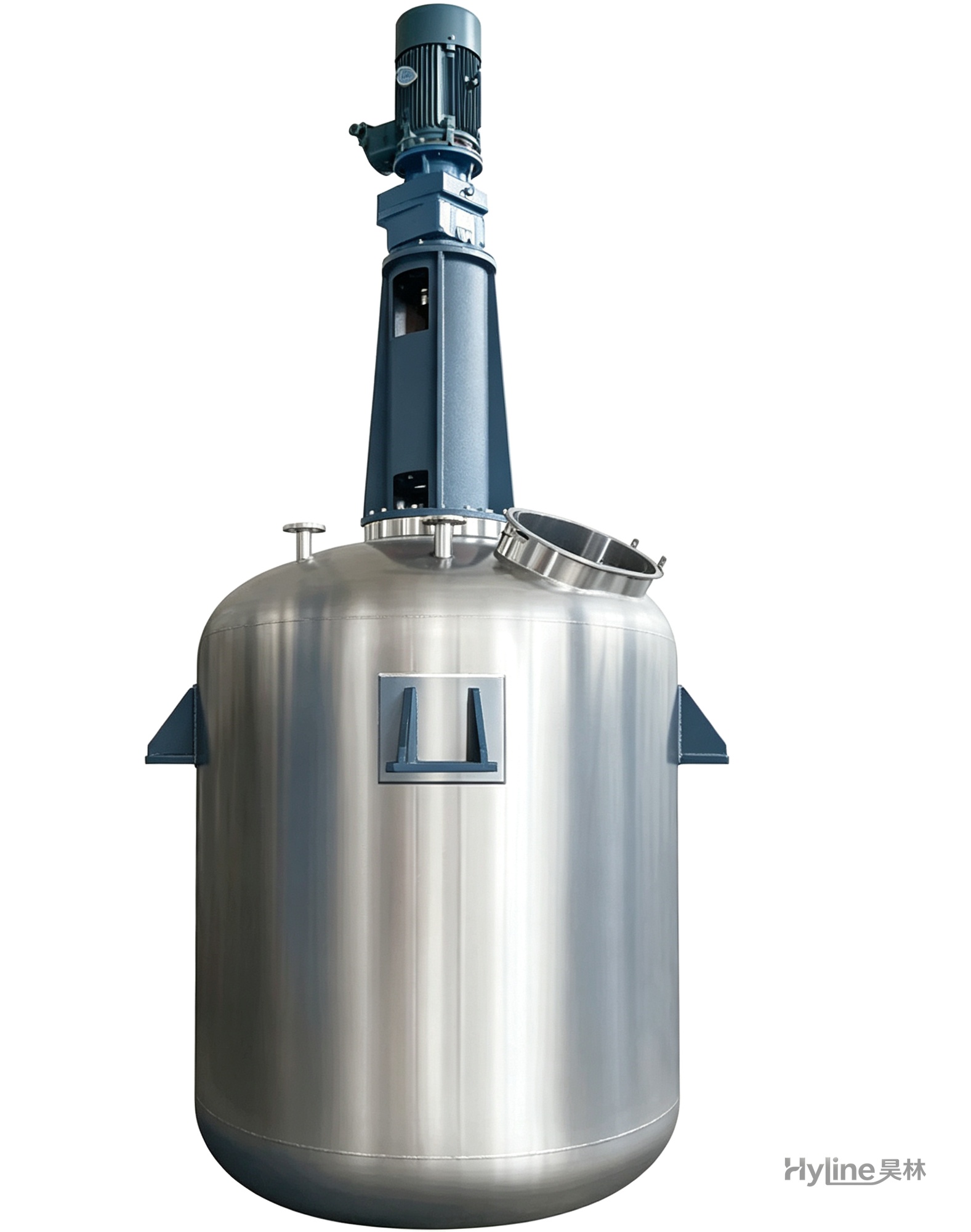
TC Series Mixing Kettle (Tinting)
For color matching in the paint industry and liquid-liquid / liquid-solid mixing in other industries. Uniform tinting, good miscibility, reasonable structure and powerful stirring.
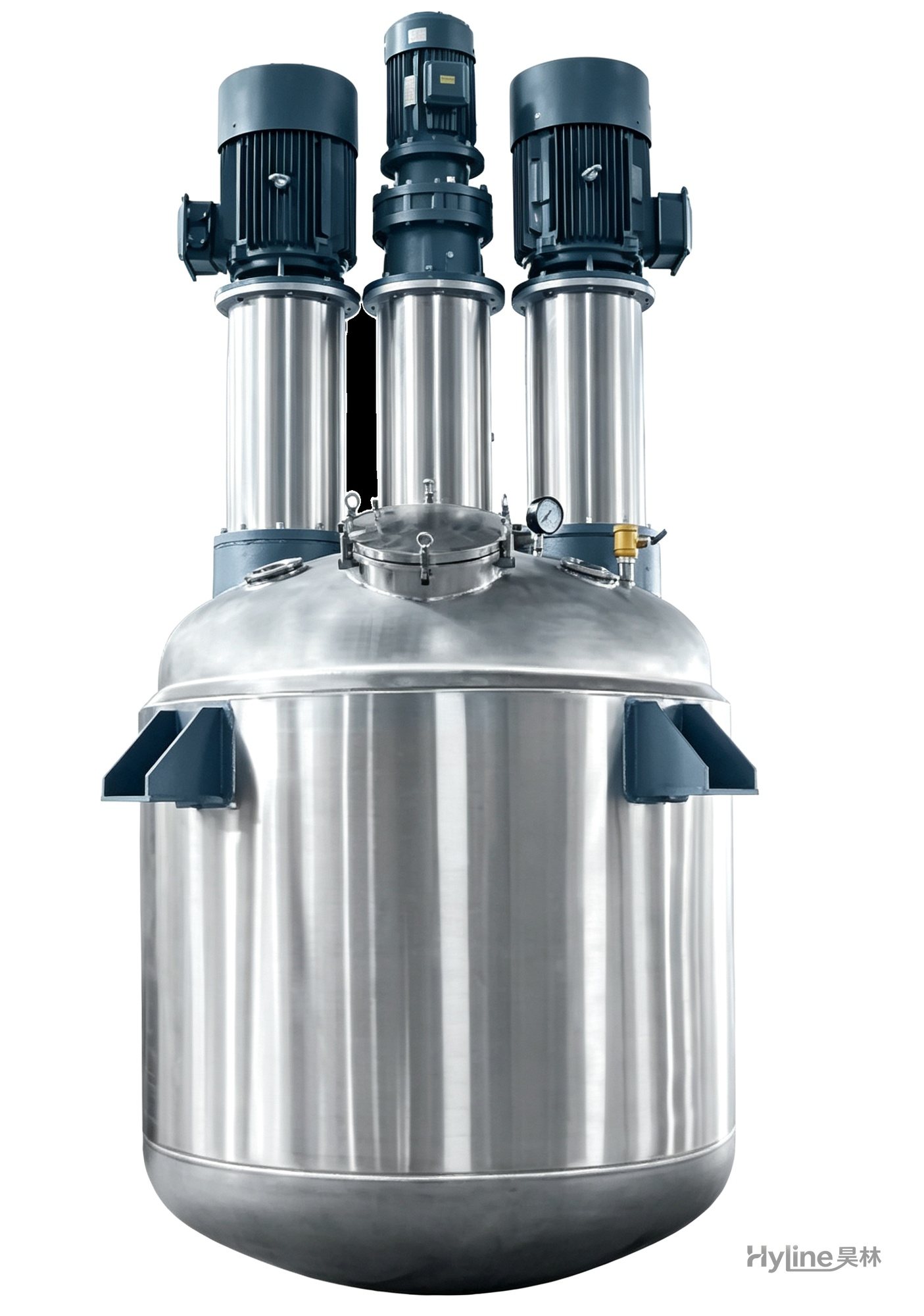
FS Series Multifunctional Dispersing Kettle
Integrates low-speed heavy-duty stirring with high-speed dispersion for medium/high-viscosity and thixotropic materials. Stirring and dispersion proceed simultaneously for ideal results in mixing, dissolving, dispersing and tinting.
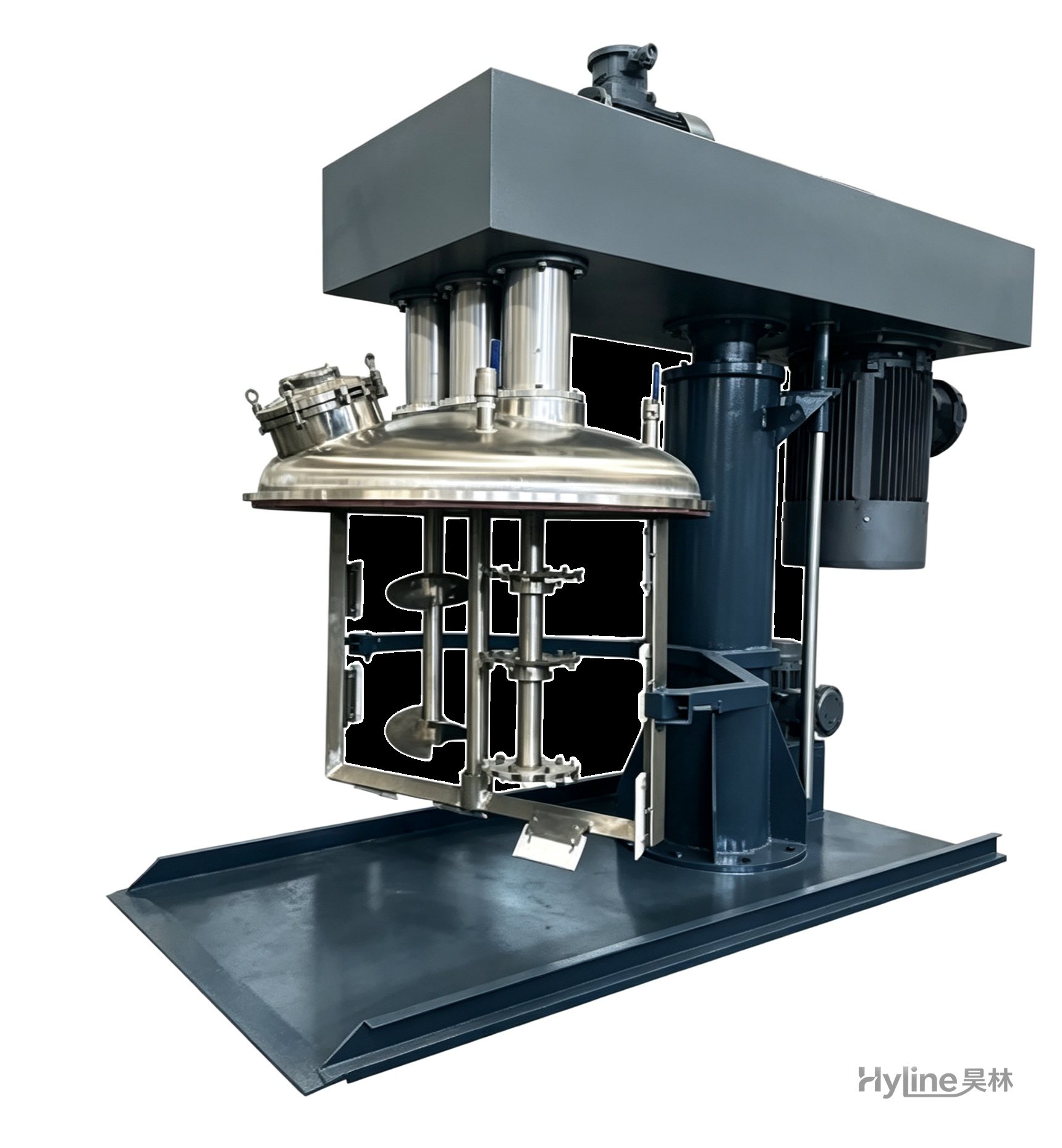
SJ Series Multi-Function Mixer
A new high-efficiency mixer for high-viscosity materials, rapidly dispersing, dissolving and homogenizing. Widely used in offset printing inks, putties and adhesives. Vacuum type customizable.

Jacketed Reactor
The typical main reaction vessel in chemical production. Mixing, heating and cooling disperse and mix materials for reaction and polymerization. The jacket circulates thermal oil/steam for heating or cooling water for temperature control.