
How to set the number of impeller tiers on a stainless mixing tank: single vs multi by diameter, level and viscosity
11/5/2026
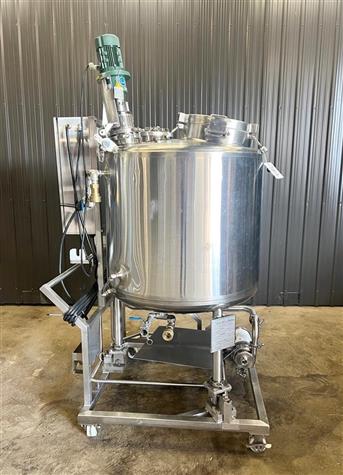
When customers buy a mixing tank, many fixate on volume and power but overlook one detail that directly decides mix uniformity: how many impeller tiers sit on the shaft. Some believe "more tiers mix more evenly" and stack three or four; others save money with a single tier and then suffer chronic settling and batch variation. Tier count is neither "more is better" nor "less is cheaper" — it depends on how vessel diameter, liquid height and viscosity work together. This article clarifies that relationship so each tier lands where it should.
What actually decides tier count?
In one sentence: the essence of tier count is "let the agitation flow field cover the whole liquid column". The deeper the column, the higher the liquid level, the more viscous the material, the more the single tier fails to reach — and only then do you add tiers.
An impeller builds a main circulation loop in the tank: the upper tier pushes surface material down or up, the lower tier rolls bottom material up. When the column is short (liquid height under about 1.2 times the diameter) and the material thin (low viscosity), one tier's loop drives the whole tank; adding tiers is waste and only adds shaft load and balance difficulty. Conversely, with a tall column and high viscosity, one tier's loop never reaches the bottom, a "dead zone" forms and material settles — then a second or even third tier must relay the flow downward.
Which service fits a single tier?
Shallow liquid, low viscosity, moderate uniformity needs — single tier is the most economical. A common paint mixing kettle for low-viscosity paint pre-mix, daily-chemical thin-liquid blending, or water-treatment dosing usually has a column under 1.5 diameters, where one propeller or paddle tier suffices.
The merit of single tier is simple structure, easy dynamic balance, low maintenance and low cost. For many standard lines, single tier with a proper diameter ratio meets the mixing time. So do not assume "one more tier is safer"; calculate liquid height and viscosity first, and use single if enough.
When must you go to a second tier?
Upgrade from single tier when any signal appears: liquid height exceeds 1.5–2 diameters and a single loop can't reach bottom, sampling shows obvious top-bottom concentration difference; material is viscous (paste, high solids) and a single tier's shear and push attenuate fast, settling at bottom; or the process demands small top-bottom temperature difference and high batch reproducibility, such as resin polymerization or adhesive blending.
The second tier usually sits in the lower-middle of the liquid; its job is relay — the upper tier sends surface material down, the lower tier rolls bottom material up, together forming a through-tank circulation. The dead zone at the bottom is then activated and mixing time can drop by 30–50%. For most medium-deep, medium-viscous tanks, two tiers are the sweet spot.
Is three tiers "the more the better"?
No. Three tiers are considered only for exceptionally deep columns (over 3 diameters) or very wide viscosity spread, such as large storage-blend tanks or deep multiphase suspensions. The problem: more tiers raise demands on shaft rigidity, critical speed and dynamic balance, and raise the risk of inter-tier interference and flow turbulence.
We have seen a customer force four tiers onto a 4-metre column; the top tier flung material onto the wall, the middle tiers fought each other, mixing got slower, and the shaft cracked from shaking. So tiers should only "cover enough": confirm the dead zone vanishes via flow simulation or a simple tracer test, then stop. Do not stack tiers to look professional.
How to place tiers along the shaft? Read the column in segments
The logic is to cut the liquid column into segments by height, put one tier per segment, and place each tier near that segment's centroid. Common practice: lower tier about one to 1.5 diameters above the bottom to ensure bottom material is rolled up; middle tier in the column mid; upper tier just below the surface to prevent surface vortex and air entrainment.
If the tank has baffles (against vortexing), tier positions must also avoid the baffle support zone so the flow field is not cut. For conical or elliptical bottoms, raise the lower tier a bit to aim at the effective column bottom rather than the head dead space. We often reverse-calculate tier positions from liquid height at the drawing stage to avoid on-site rework.
Empirical spacing between tiers
The vertical gap between adjacent tiers is not arbitrary. Experience puts it at 1.5–2.5 times the impeller diameter: too close and tiers rob each other, forming local short-circuits; too far and a blank band appears between them. For high viscosity, lean to the upper end so each tier's push fully develops; for low-viscosity high-flow, lean lower to strengthen top-bottom connection. Also coordinate with internal parts (coil, baffle, thermowell) positions, avoiding blade sweep with adequate radial and axial clearance.
How to match frequency control with tier count?
Tier count is hardware; variable frequency is operation — they must be seen together. For deep tanks with multiple tiers, use VFD: start slow so each tier forms a stable field, then raise speed gradually, avoiding high initial rpm flinging material to the wall and failing to mix. For materials whose viscosity changes with temperature (resin thinning on heating), VFD can match speed per batch in real time, keeping fixed tiers effective across conditions. So we advise fixing VFD and tier count together, not adding VFD after tiers are set.
How do viscosity and impeller type pair with tier count?
Tier count and impeller type are bound. Low viscosity favours propellers and turbines, where one tier covers a deeper column; high viscosity needs wall-hugging anchors, frames and ribbons whose reach is limited, so deep tanks need two tiers or an "anchor + ribbon" combo relaying high-viscous material from bottom to top.
A common pitfall: two turbine tiers on high-viscous material, where the turbine's radial flow attenuates fast in thick fluid and a gap remains between tiers. The correct move for high-viscous deep tanks is "bottom anchor/ribbon + upper frame", each tier serving its own liquid layer. So decide tier count after impeller type; decide impeller type after measuring the viscosity range.
Maintenance and disassembly also constrain tier count
More tiers mean more shaft parts, more seals, longer teardown. For lines needing frequent cleaning and product change, too many tiers directly lengthen downtime and raise maintenance of mechanical seals and sleeves. So count "ease of service" in: deep tank, high viscosity, must multi-tier — then prefer quick-disassembly blades and modular shaft sections; shallow tank, low viscosity, single tier enough — don't add tiers for "redundancy". Total cost of ownership is not just purchase price but the time the equipment sits idle while you cannot produce.
A field counter-example: too many tiers slowed it down
We saw a blend tank about 4 m deep, column over 3 diameters, originally with four turbine tiers; the top tier flung surface material to the wall, middle tiers fought, and the bottom got worse. Reworked to "bottom anchor plus one frame tier" with VFD, mixing time shortened versus the four-tier case and batches stabilized. The example shows tiers are a means, not a goal; covering the dead zone is the purpose. The standard is consistent top-middle-bottom sampling, not how many tiers look impressive.
How we help customers set the tier count
Hyline Shengda Equipment Manufacturing Co., Ltd. asks for three things on a mixing-tank order: vessel inner diameter and liquid height, viscosity range, and uniformity/mixing-time requirements. From these we estimate the dead zone with experience formulas, then judge single vs multi-tier; for deep or high-viscous tanks we use simple flow-field analysis to confirm each tier's coverage and mark tier positions directly on the drawing.
We also remind customers: do not judge by "looks like it mixes"; use batch sampling. After installation, sample concentration or particle size at top, middle and bottom; only when the dead zone is gone and batch variation small is the tier count right. If your mixing tank keeps settling or never mixes evenly, send us the diameter, liquid level and material traits and we will recalculate the tier count together.
Further reading: - How to configure baffles on a mixing tank: against vortexing and mixing intensification - How to judge Reynolds number and flow regime of a mixing tank: impeller selection under laminar, transitional and turbulent flow
This article is compiled by Hyline Shengda Equipment Manufacturing Co., Ltd.
Q&A from this article
Frequently asked questions and answers from this article
In one sentence: the essence of tier count is "let the agitation flow field cover the whol…
Related Products

Stainless Steel Mixing Tank (Dispersion Drum)
Supporting vessel for dispersers and mixers in paints, coatings, adhesives, color slurries, inks and electronics. Available in 201/304 stainless with internal/external polishing and sloped bottom side discharge for complete draining.
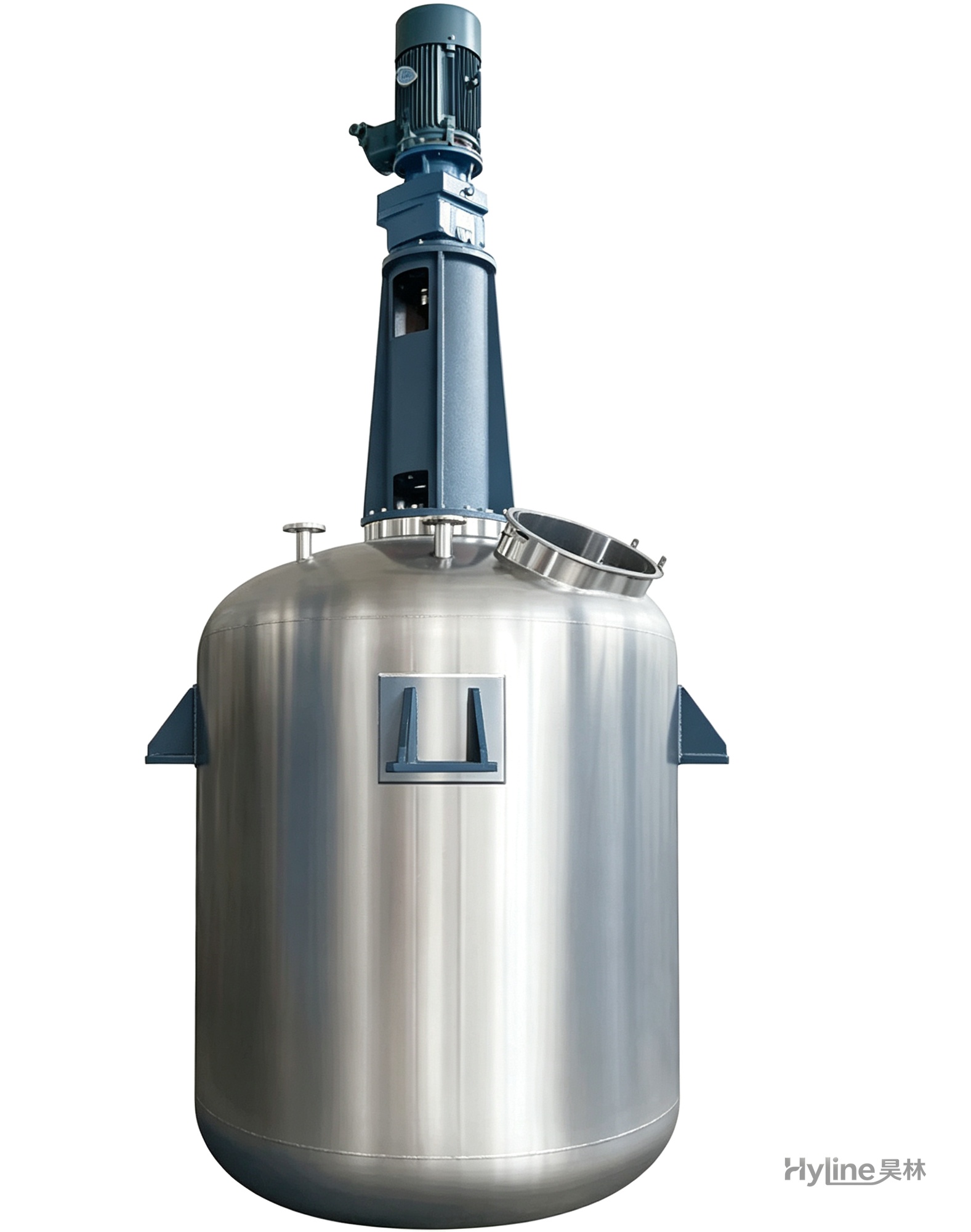
TC Series Mixing Kettle (Tinting)
For color matching in the paint industry and liquid-liquid / liquid-solid mixing in other industries. Uniform tinting, good miscibility, reasonable structure and powerful stirring.
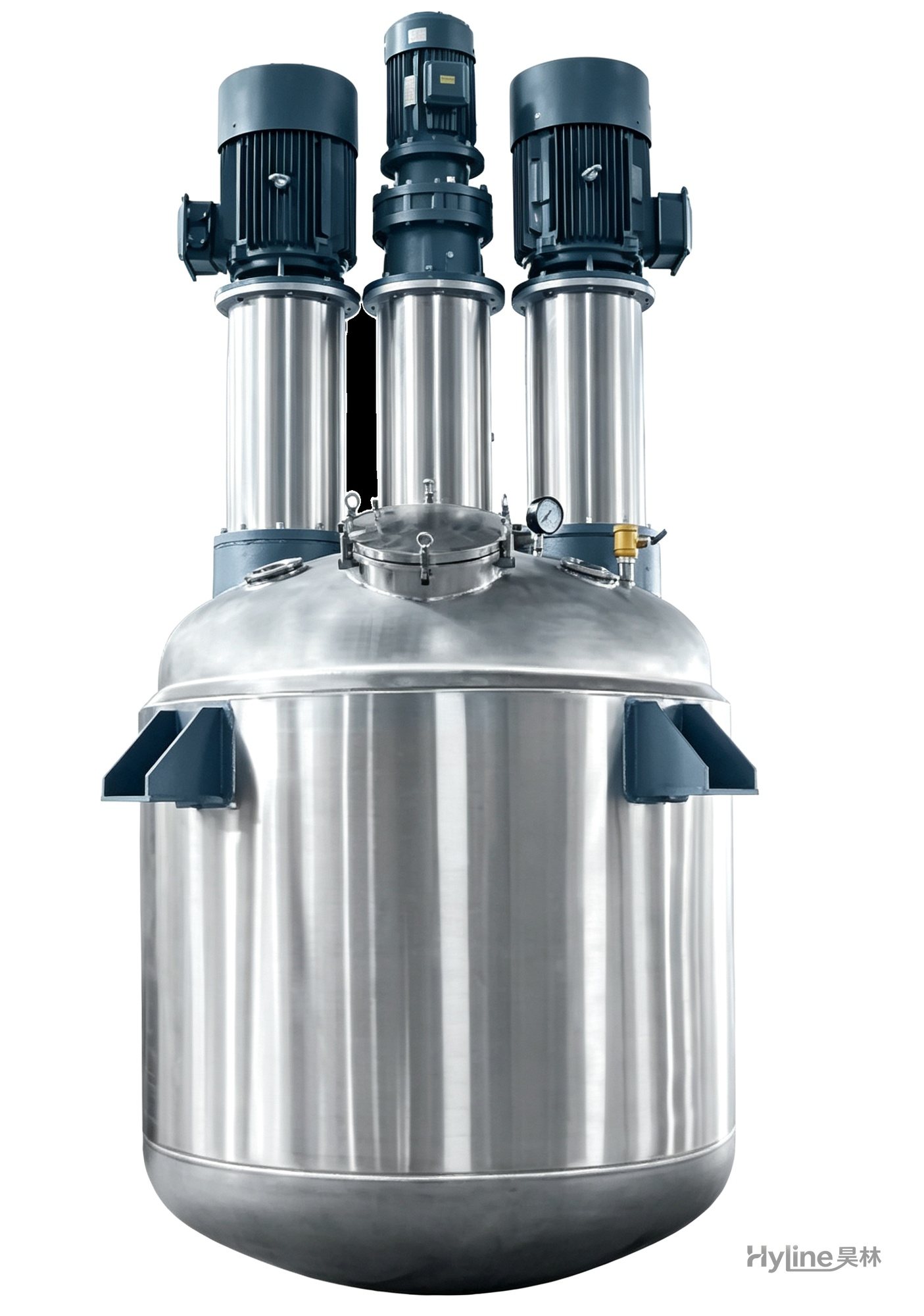
FS Series Multifunctional Dispersing Kettle
Integrates low-speed heavy-duty stirring with high-speed dispersion for medium/high-viscosity and thixotropic materials. Stirring and dispersion proceed simultaneously for ideal results in mixing, dissolving, dispersing and tinting.
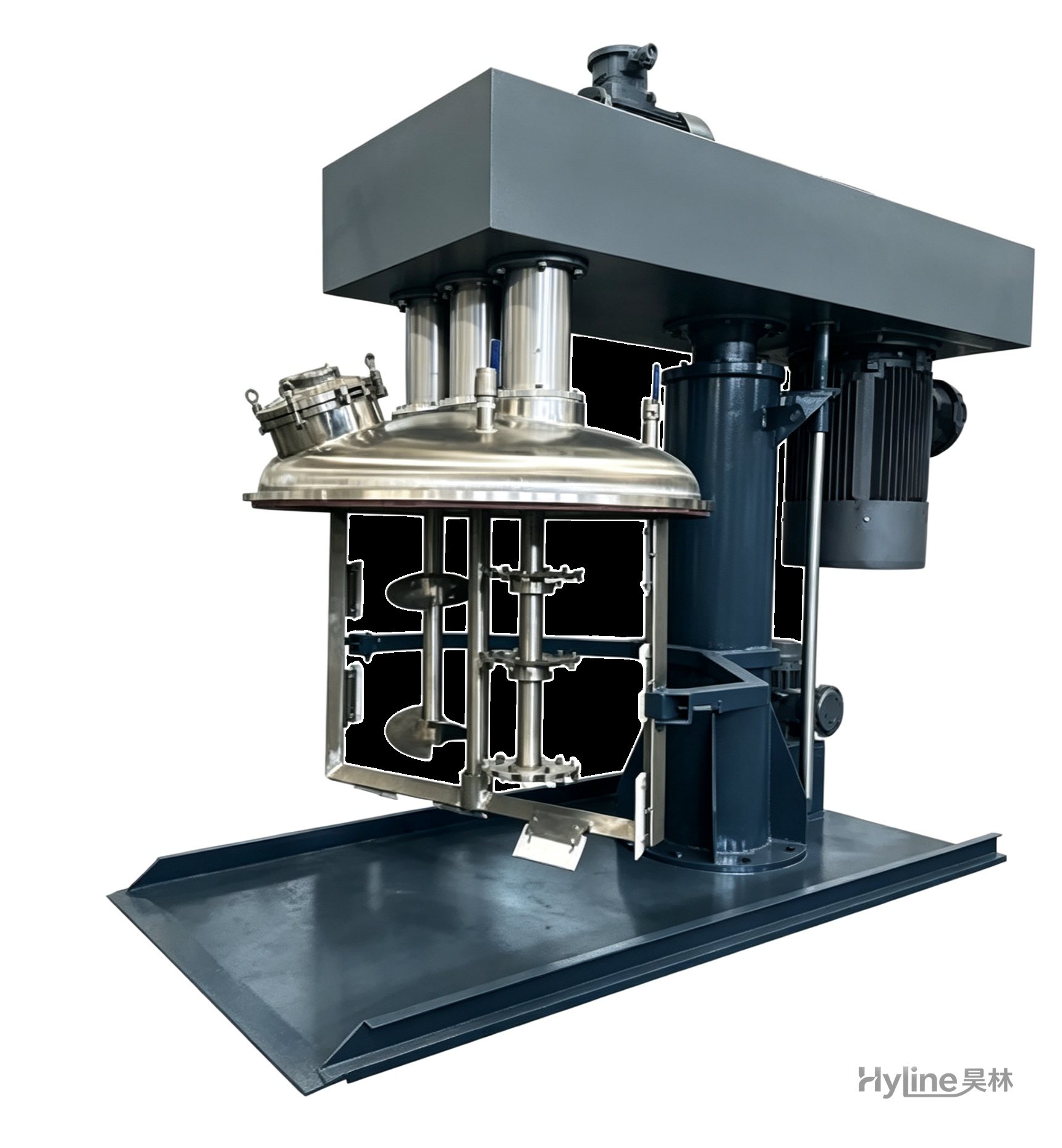
SJ Series Multi-Function Mixer
A new high-efficiency mixer for high-viscosity materials, rapidly dispersing, dissolving and homogenizing. Widely used in offset printing inks, putties and adhesives. Vacuum type customizable.
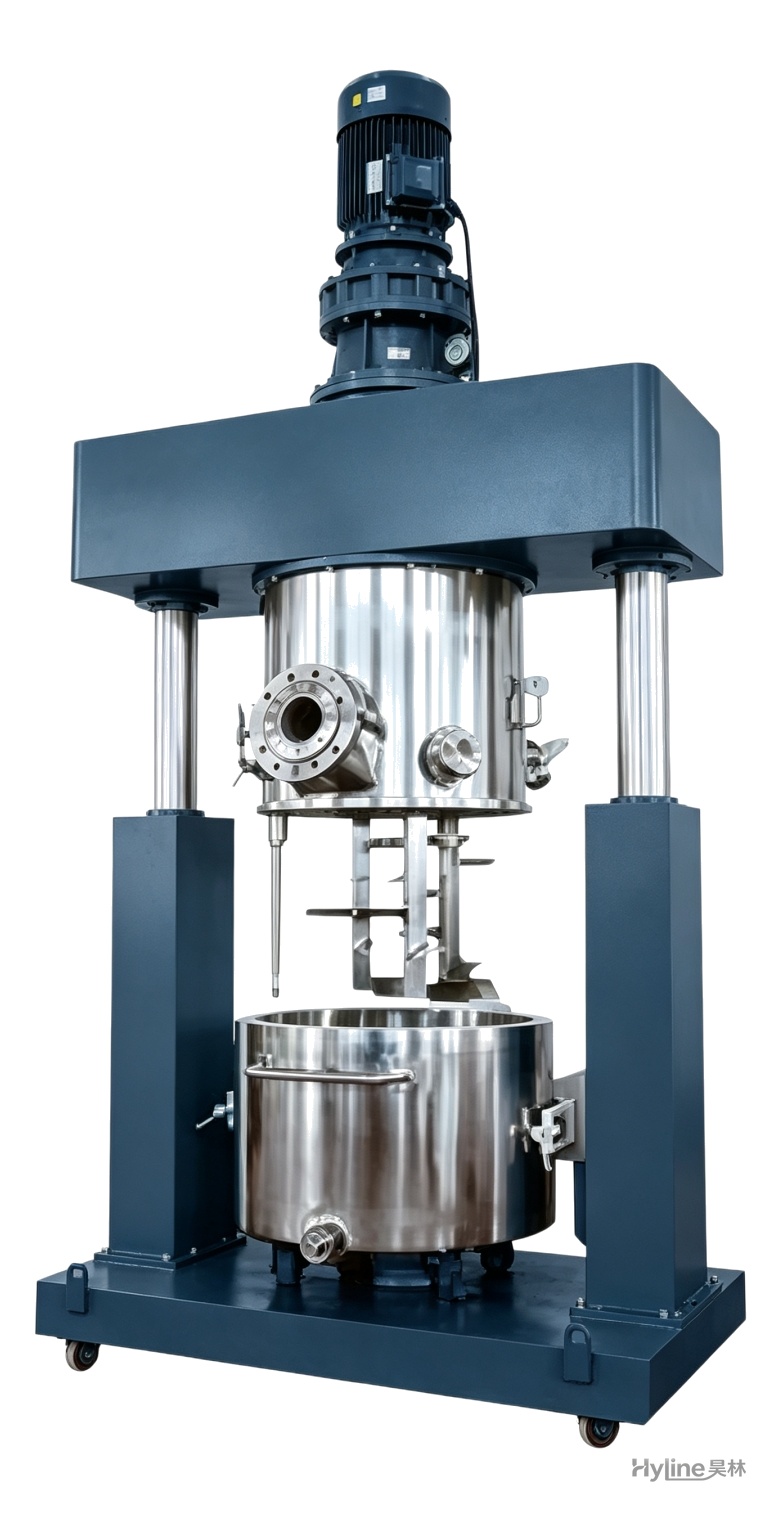
XJB Series Planetary Mixer
Planetary blades rotate and revolve simultaneously, creating complex material flow with no dead corners and easy discharge. Handles ultra-high-viscosity pastes of 10,000-8,000,000 cps for silicone, PU sealants, liquid silicone and electronic adhesives.