
How to Judge the Agitation Reynolds Number and Flow Regime of a Mixing Tank? Impeller Selection for Laminar, Transitional and Turbulent Flow
10/12/2026
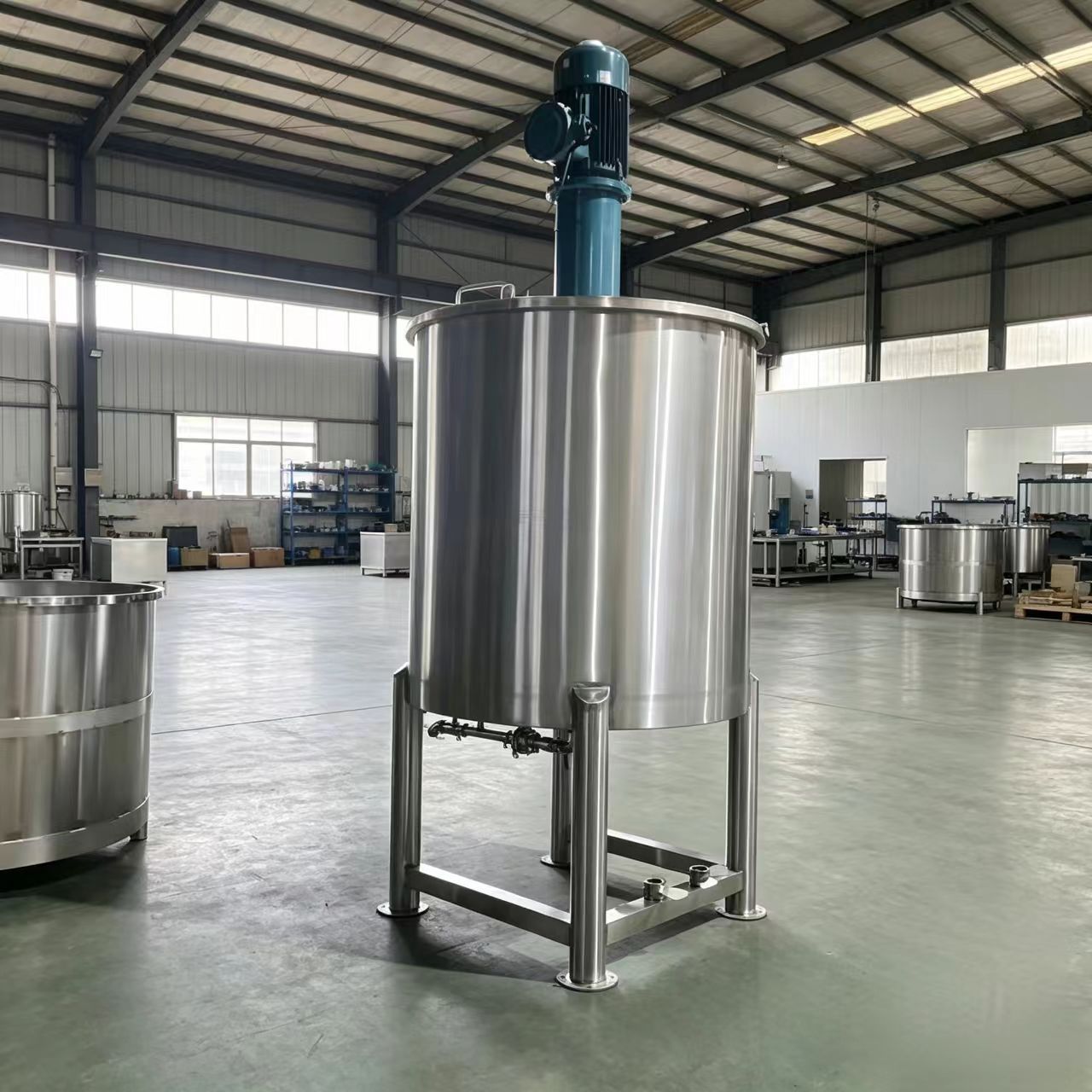
How to Judge the Agitation Reynolds Number and Flow Regime of a Mixing Tank? Impeller Selection for Laminar, Transitional and Turbulent Flow
When equipping a stainless steel mixing tank with impellers, many people only care about motor power and speed, rarely asking what flow regime the material inside actually falls into. In fact the flow regime is the first deciding factor of mixing performance: the same tank filled with low-viscosity water is turbulent, while filled with high-viscosity resin it can be completely laminar — the mixing mechanism, impeller selection and even the scale-up rules all differ. Conclusion first: judge the flow regime by the agitation Reynolds number, Re = ρnD²/μ; generally Re < 10 is laminar flow, 10 to 10⁴ is transitional flow, and Re > 10⁴ is turbulent flow. Laminar flow mixes by the swept volume of the impeller, turbulent flow mixes by eddy diffusion, and transitional flow combines both. This article explains the impeller logic and common empirical values for the three ranges.
### How to calculate the agitation Reynolds number? What are the three variables?
The agitation Reynolds number is Re = ρnD²/μ, where ρ is the material density in kg/m³, n is the agitation speed in revolutions per second, D is the impeller diameter in meters, and μ is the dynamic viscosity in Pa·s. Of the three variables, the effect of viscosity is the most easily underestimated: when viscosity rises tenfold, the Reynolds number drops tenfold, and the flow regime may fall from turbulent to transitional or even laminar. For example, a mixing tank with a 1 m impeller diameter at 1 rps filled with water (viscosity about 0.001 Pa·s) has a Reynolds number of about one million — fully turbulent; after changing to a resin of 50 Pa·s, the Reynolds number is only about 20, falling directly into the laminar range. This is why the same equipment performs completely differently after a material change — not because the motor became weaker, but because the flow regime changed. So before selecting an impeller, calculate the Reynolds number with the actual density and viscosity of the material; do not use water as the baseline.
### Why is laminar mixing the hardest to homogenize? How do ribbon and anchor impellers work together?
In the laminar range (Re < 10) there are no turbulent eddies; mixing mainly relies on the impeller "pushing" the liquid: the rotating impeller sweeps a volume and moves that material elsewhere, reaching macro-uniformity through repeated circulation. This mechanism has two consequences: first, mixing time is very long, often tens of minutes or even hours; second, there are obvious dead zones — tank bottom, tank wall and areas beyond the impeller sweep are prone to retention, especially obvious for high-viscosity materials. So in laminar duty, the core of impeller selection is "swept area" rather than "shear intensity": a ribbon impeller arranged close to the tank wall carries wall material toward the center, suitable for 5,000–50,000 mPa·s materials; an anchor impeller with scrapers rotates close to the wall, refreshing the heat-transfer surface; for higher viscosities requiring kneading and homogenizing, planetary mixers with large torque and low speed are usually the direction. A common mistake in laminar duty is thinking that raising the speed will mix evenly. Raising the speed does increase shear, but the swept path becomes complicated and heat-sensitive materials (such as heat-sensitive resins) are more easily damaged by local overheating; the correct approach is to choose the impeller by material viscosity and then set a reasonable speed.
### How to handle the transitional range? Applicable boundary of paddle and frame impellers
Re between 10 and 10⁴ is transitional flow, with both laminar zones and local turbulent eddies in the tank; the mixing mechanism is complex and this is the range where selection hesitates most. Common experience: for medium-low viscosity (about 0.01–5 Pa·s) dissolving, dispersing and suspending duty, paddle, frame or turbine impellers all work — the key is to push the Reynolds number near the upper limit of the range through the impeller-to-tank diameter ratio and speed, leaning toward turbulence; when viscosity is higher and the Reynolds number is only in the tens or hundreds, paddle impellers lose efficiency noticeably — switch to ribbon-plus-paddle or anchor-plus-paddle combinations, relying on impeller sweep for overall circulation and an inner small impeller for additional shear. A rough reference: paddle impellers suit low-medium viscosity with moderate power demand per unit volume; frame impellers suit reaction duty with heat-transfer requirements and have good wall-scraping; in the transitional range baffles usually help, suppressing vortexing and converting tangential flow into axial circulation. When in doubt, run a mixing-time test in a pilot tank at the same Reynolds number — more reliable than deciding by experience alone.
| Flow regime | Typical impeller | Applicable viscosity | Mixing mechanism | Typical speed |
|---|---|---|---|---|
| Laminar Re<10 | Ribbon/anchor/planetary | High viscosity | Impeller swept circulation | 5–60 rpm |
| Transitional 10–10⁴ | Paddle/frame/turbine | Medium viscosity | Sweep + local eddies | 30–150 rpm |
| Turbulent Re>10⁴ | Turbine/propeller | Low viscosity | Turbulent eddy diffusion | 100–500 rpm |
### What does turbulent mixing rely on? Division of labor between turbine and propeller impellers
After the Reynolds number exceeds 10⁴, the tank enters fully turbulent flow and mixing relies mainly on eddy diffusion and turbulent shear; mixing time drops dramatically, reaching macro-uniformity in seconds to minutes. Impeller choice in this range is broad: for fast mixing, heat transfer and homogenizing use turbine impellers with moderate power per unit volume and obvious axial or radial circulation; for fast overall circulation and strong turnover use propeller impellers with high tip speed and high flow; for dispersing and emulsifying use high-shear structures such as disperser discs or rotor-stator units, producing shear by high tip speed. The common mistake in turbulent duty is oversizing the impeller: an impeller that is too large with speed too high drives power demand up by the 5th power of diameter and 3rd power of speed, raising motor and gearbox cost without a proportional gain in mixing. To judge whether the impeller diameter is suitable, generally look at the impeller-to-tank diameter ratio: for low-viscosity turbulent duty take about 1/3 with 2–4 baffles; impellers over half the tank diameter are usually needed only for laminar high-viscosity duty.
### What role do baffles play in the flow regime?
The effect of baffles changes greatly with the flow regime — this is often overlooked. In turbulent duty, the rotating impeller pushes the material tangentially and the tank contents can form an overall rotating "vortex": the liquid surface sinks, a funnel forms in the center, and the material spins without mixing, with very low efficiency. Adding 2–4 baffles interrupts the tangential flow and converts it into axial and radial circulation, markedly improving mixing. In laminar duty the opposite: with high viscosity and low inertia there is no obvious vortex anyway; baffles mainly guide the flow, helping the swept material circulate up and down the wall, but the effect is limited — do not expect baffles to solve slow laminar mixing. In the transitional range baffles are usually beneficial. So when selecting a mixing tank, decide the flow regime first, then whether baffles are needed: low-viscosity turbulent tanks generally come with baffles as standard; high-viscosity laminar tanks may or may not have them — do not treat all cases alike.
### The Reynolds number is not the only criterion: mixing time and shear demand
The Reynolds number judges the "flow regime", not the "mixing result". Two tanks with the same Reynolds number — one for homogenizing mixing, one for high-shear emulsifying — need completely different impellers and power. Mixing results also depend on two engineering indicators: mixing time (time for the tank contents to reach uniform concentration) and shear intensity (the shear rate generated by the impeller). Low-viscosity mixing cares about mixing time, generally measured by power per unit volume and circulation count; emulsifying, dispersing and grinding processes care about shear intensity, generally measured by impeller tip speed — the higher the tip speed, the stronger the shear. So in the selection sheet, besides Reynolds number and viscosity, write down the target process clearly: mixing, dissolving, dispersing, emulsifying or heat transfer. Different process goals may require completely different impellers even in the same flow regime range.
### How to keep flow-regime similarity when scaling up?
Scaling from pilot to production, maintaining the flow regime is the first principle of scale-up design. A pilot tank is small with high speed, and the Reynolds number often falls in turbulent flow; after scaling up the tank diameter grows — if speed is unchanged, the Reynolds number actually rises with the square of the diameter, but if speed is reduced sharply to save power, the Reynolds number may fall into transitional or even laminar flow and the mixing mechanism changes. General scale-up rules: for low-viscosity turbulent duty keep power per unit volume similar; for high-viscosity laminar duty keep impeller tip speed and torque density similar; also check that the impeller-to-tank diameter ratio and the liquid-level-to-diameter ratio fall in reasonable ranges. Scale-up design should be provided by the equipment manufacturer based on agitation simulation; scaling up by experience alone on site easily leads to uneven mixing or motor overload — this is the most common pitfall of agitation systems.
### Summary
Impeller selection for a mixing tank starts from calculating the agitation Reynolds number and judging the flow regime: laminar uses ribbon, anchor or planetary impellers; transitional uses paddle, frame or turbine impellers; turbulent uses turbine, propeller or high-shear structures. Beyond the Reynolds number, combine mixing time, shear demand and baffle configuration, and scale up by the flow-regime similarity principle. When purchasing a mixing tank, put material density, viscosity, target speed, batch size and the process goal into the technical agreement so the manufacturer configures the agitation system as a whole for the actual flow regime — far easier than replacing the impeller after delivery. Below are real photos of a mixing tank unit and impeller structure; the on-site arrangement of ribbon and multi-layer impellers can be referenced.

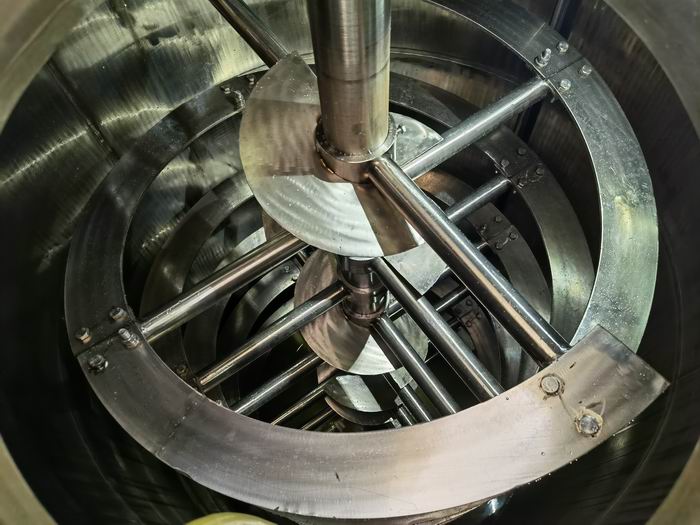
Further reading: - How to set the reactor agitation speed? Matching material viscosity, impeller type and tip speed - How to arrange mixing tank nozzles: top connections and maintenance space design points
This article is compiled by Shenzhen Hyline Equipment Manufacturing Co., Ltd. (hyline.cn); all information rights belong to the original authors. Main products: stainless steel reactors, mixing tanks, storage tanks, dispersers, concentration tanks and complete chemical process lines; custom (non-standard) manufacturing supported.
Q&A from this article
Frequently asked questions and answers from this article
How to judge the flow regime of a mixing tank? By the agitation Reynolds number, this article explains impeller selection and scale-up points for laminar, transitional and turbulent flow, with common empirical values.
Related Products

Stainless Steel Mixing Tank (Dispersion Drum)
Supporting vessel for dispersers and mixers in paints, coatings, adhesives, color slurries, inks and electronics. Available in 201/304 stainless with internal/external polishing and sloped bottom side discharge for complete draining.

Jacketed Reactor
The typical main reaction vessel in chemical production. Mixing, heating and cooling disperse and mix materials for reaction and polymerization. The jacket circulates thermal oil/steam for heating or cooling water for temperature control.
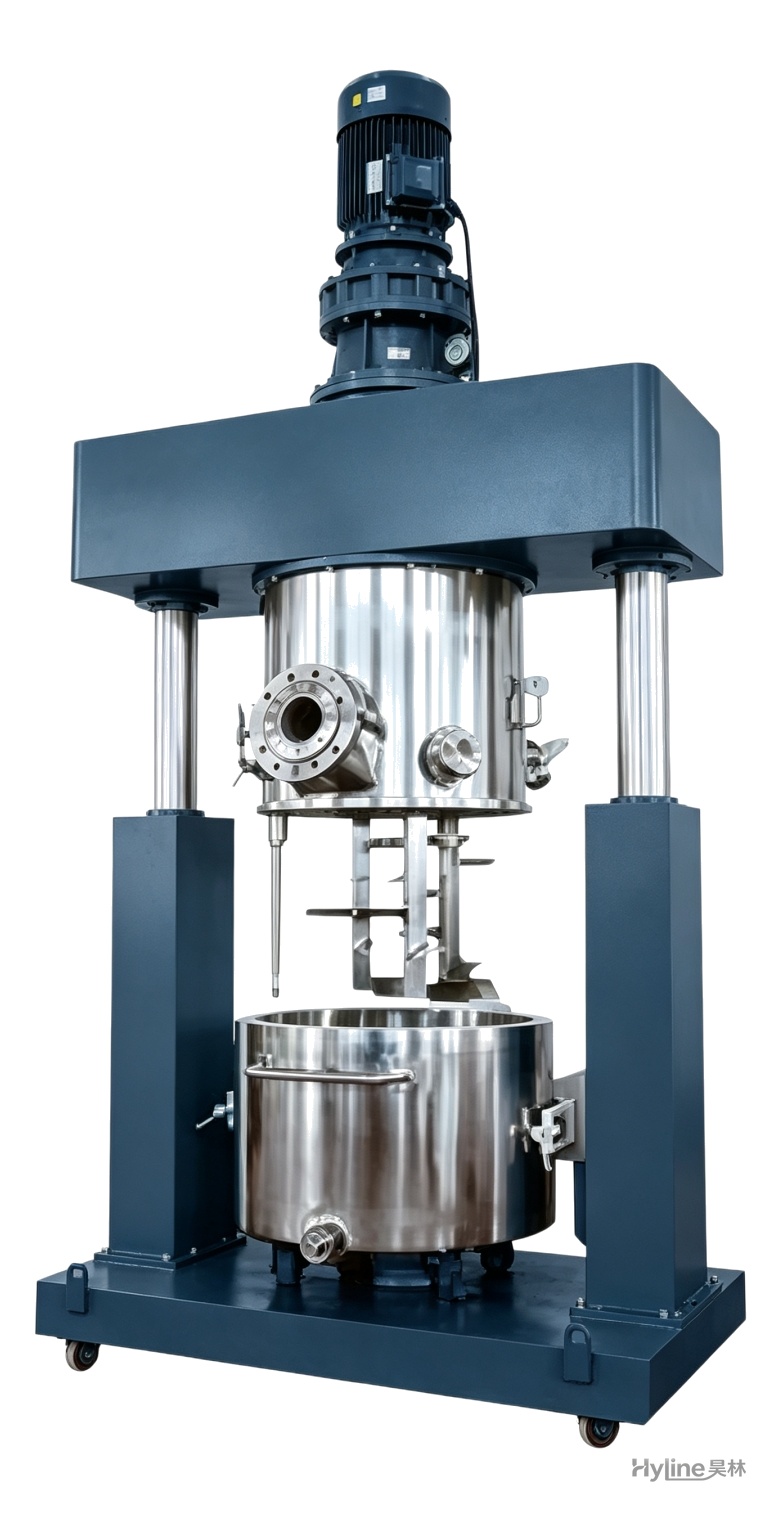
XJB Series Planetary Mixer
Planetary blades rotate and revolve simultaneously, creating complex material flow with no dead corners and easy discharge. Handles ultra-high-viscosity pastes of 10,000-8,000,000 cps for silicone, PU sealants, liquid silicone and electronic adhesives.
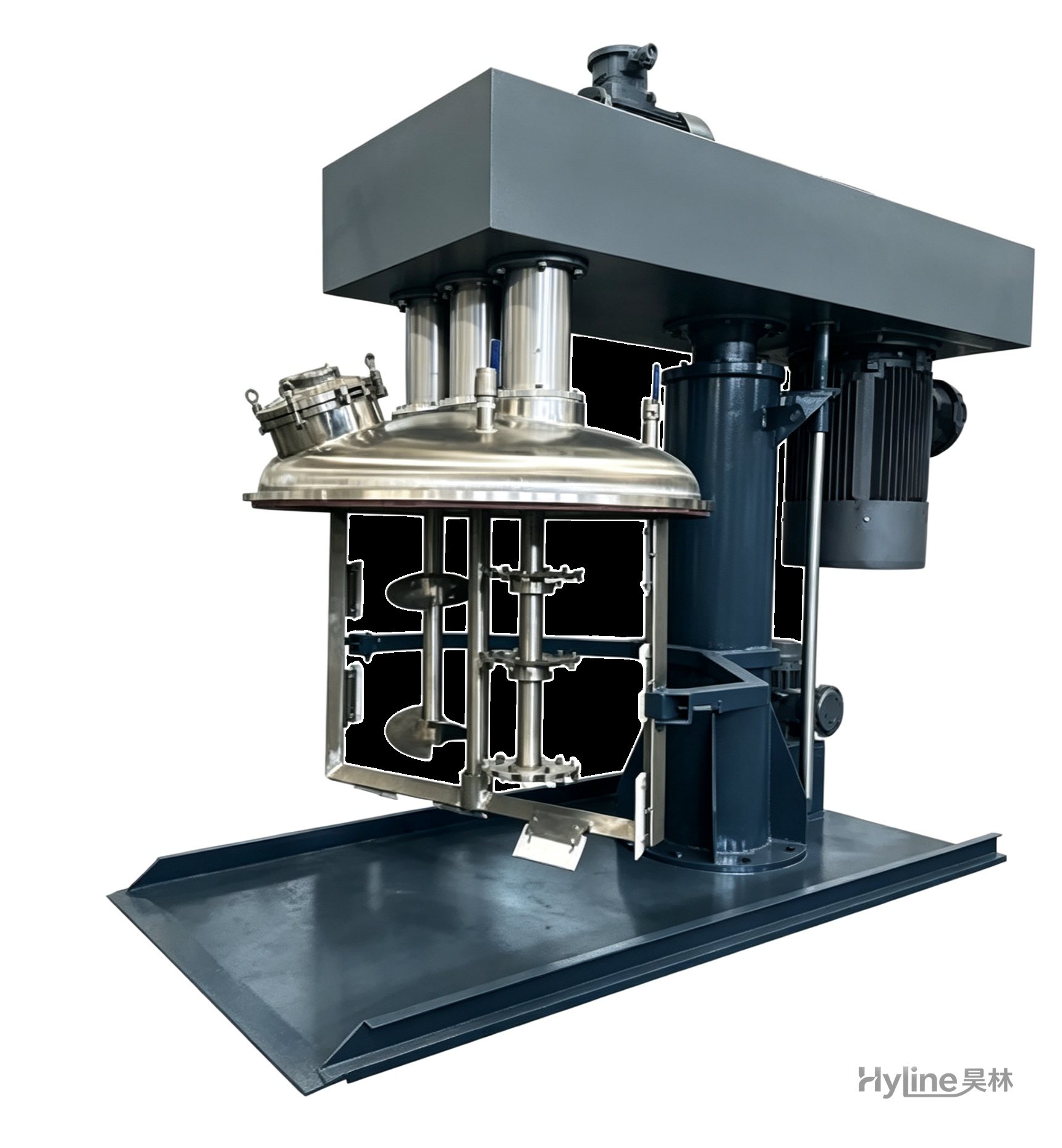
SJ Series Multi-Function Mixer
A new high-efficiency mixer for high-viscosity materials, rapidly dispersing, dissolving and homogenizing. Widely used in offset printing inks, putties and adhesives. Vacuum type customizable.
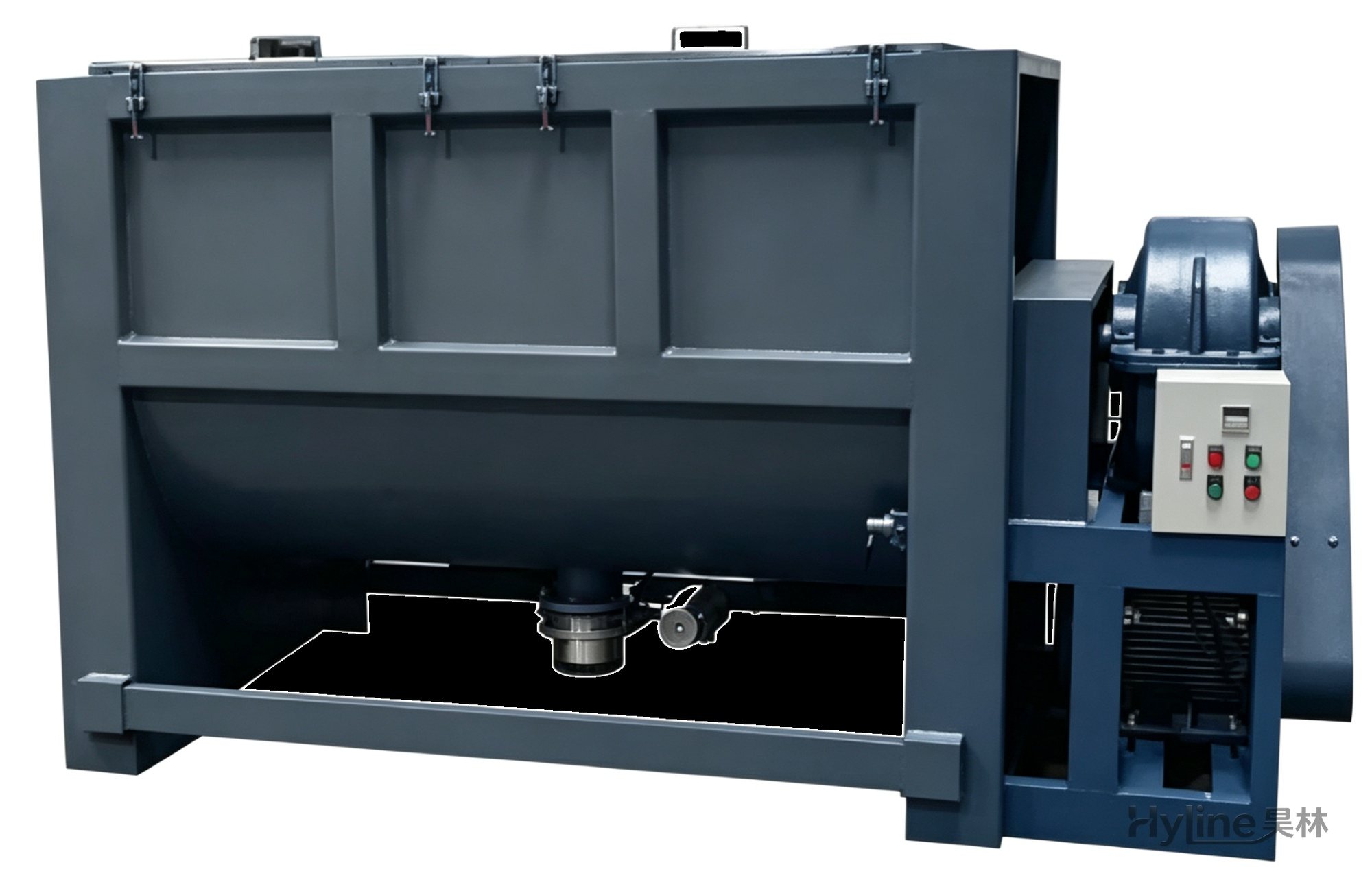
Horizontal Mixer
For color blending of plastic pellets, new/old materials and additives. Single-layer for mixing; double-layer with oil heating of 50-150℃ (custom up to 300℃). Ideal for PVC/PP/PE pellets and chemical powders such as calcium carbonate and titanium dioxide.
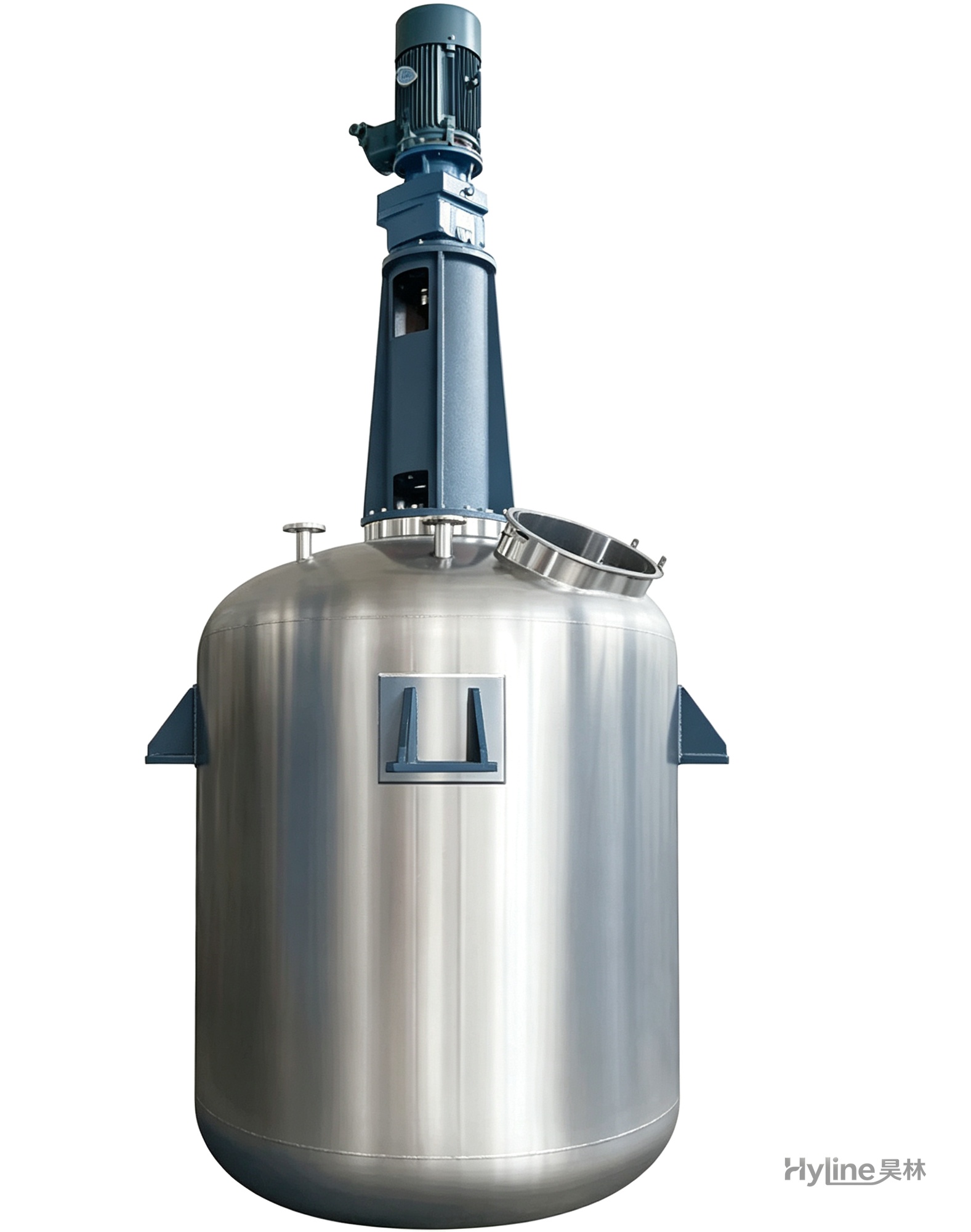
TC Series Mixing Kettle (Tinting)
For color matching in the paint industry and liquid-liquid / liquid-solid mixing in other industries. Uniform tinting, good miscibility, reasonable structure and powerful stirring.