
How to choose a high-speed disperser for paper coating: high-solids coating, filler dispersion and wear resistance
11/4/2026
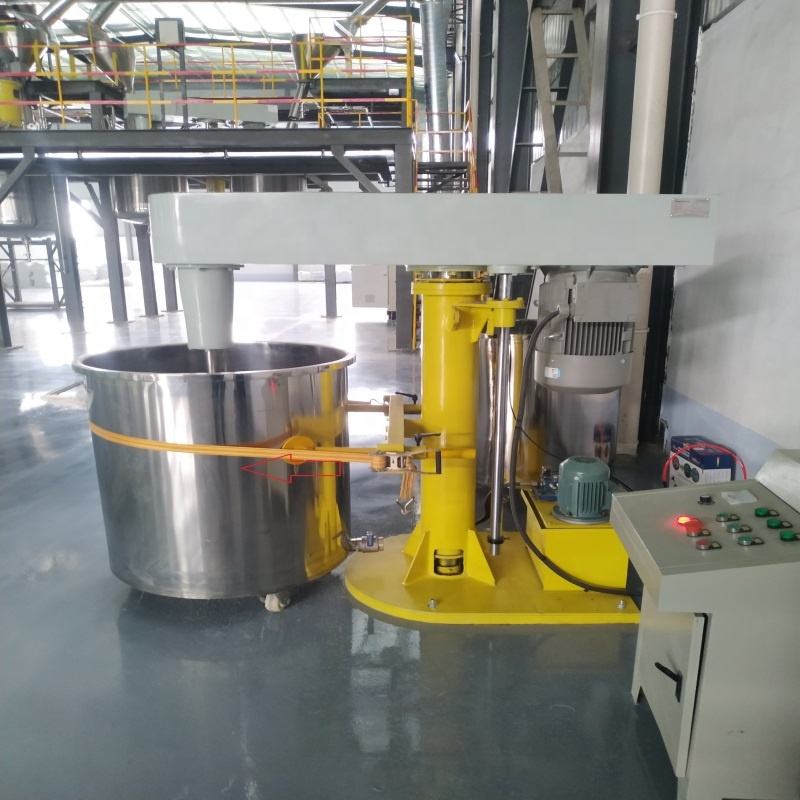
Coating colour for papermaking is essentially a water-dispersed system of pigment, latex and additives, and its solids content typically runs sixty to seventy percent — a good deal higher than architectural paint. The point of that high solids is to carry less water into the drying cylinders and save drying energy, but it places hard demands on dispersion: the powder must be fully wetted, broken down and stably suspended in very little water, and any shortfall shows up on the coater as scratches, spots and uneven gloss. The high-speed disperser is the first gate on that line and the machine that decides coating fineness and stability. Hyline Shengda (hyline.cn) supplies matched high-speed dispersers, sand mills and dispersing kettles. What can be specified: disc-to-vessel ratio, motor power and speed range, lift type, vessel material and wear treatment. This article covers solids, disc diameter, tip speed and wear resistance.
How is paper coating dispersion different from paint and ink?
The short answer: higher solids, harder fillers and larger batches. Those three mean a paper coating plant cannot simply copy a paint plant's equipment.
High solids means little water. A paint plant running forty to fifty percent solids has plenty of water as carrier, so wetting and flow are easy. Paper coating has only about thirty-odd percent water to wrap sixty to seventy percent powder, which pushes the average spacing between particles very small; viscosity becomes extremely sensitive to solids, and one extra bag of powder can turn a flowing batch into one that will not stir.
Hard fillers mean heavy abrasion. The main pigments are ground calcium carbonate and clay, plus some talc, titanium dioxide and barium sulphate. Their Mohs hardness ranges from one to six, and under continuous high-shear flow they erode the disc and vessel wall far faster than organic pigment duty does.
Large batches mean continuous operation. A medium or large coating line prepares several tonnes to tens of tonnes per batch, often running dispersion and milling in series, with equipment operating ten-plus hours a day at full load rather than starting and stopping. In such duty, reliability and wear-part life matter more than peak performance.
Why is high-solids dispersion difficult?
The short answer: for two reasons — the powder will not go in, and once it is in, viscosity spikes and shear can no longer be transmitted.
Powder will not go in because of wetting. Powder particles carry an adsorbed air layer; if wetting is too slow when they hit the water, they float on the surface as air-bound clumps or "fish eyes". Two things solve it: charging method — feed powder into the vortex created by the rotating disc so particles are forced under the surface rather than dusted onto a still surface — and additives, with dispersant dissolved before powder addition so each particle is enveloped by surfactant on contact.
Viscosity spikes when solids hit a critical value. Viscosity of a water-dispersed system does not rise linearly with solids; at some point it turns up sharply. That point, the critical solids content, depends on particle size distribution, shape and surface treatment. Beyond it, most of the work input goes into overcoming viscosity rather than into shear at the agglomerates, and the symptom is "stirred for ages, fineness still will not come down".
This also explains why high-solids formulations work on particle size distribution. Coarse and fine particles together — the fine filling the gaps between the coarse — raise packing density and lower viscosity at the same solids. What the disperser can do is break agglomerates down close to primary particle size so the designed grading actually exists, rather than letting soft agglomerates occupy the space.
How do disc diameter and vessel diameter match?
The short answer: disc diameter is 0.3 to 0.5 of vessel diameter, commonly 0.4. Too small and the shear zone is insufficient; too large and the batch stratifies and splashes.
This ratio sets the flow pattern. A high-speed disc produces the classic double loop: material thrown from the disc edge rises along the wall, turns inward at the surface, descends at the centre and is drawn back under the disc. At 0.4 of vessel diameter the two loops are reasonably balanced and the whole batch passes through the shear zone at the rim.
Below 0.3, the circulation range shrinks: shear near the rim is strong while regions far from it barely move, giving "excellent dispersion locally, uneven overall". Above 0.5, tip speed is high but the clearance to the wall becomes small, material is forced to accelerate through the gap, splashing is likely and a stagnant layer forms on the wall.
Geometry matters too: the disc centre should sit 0.5 to 1 disc diameter above the vessel bottom. Lower risks scraping and wearing the bottom; higher leaves a dead zone beneath the disc where settled material never returns.
How is tip speed set?
The short answer: 18 to 25 m/s at the disc rim for pigment dispersion, as low as 15 m/s for wetting pre-dispersion, and above 25 m/s both temperature rise and wear stop being worthwhile.
Tip speed and rotational speed are different things, and many buyers treat rpm as the specification when shear intensity is actually set by rim speed. The conversion is tip speed equals pi times disc diameter times rpm divided by sixty. A concrete example: a 400 mm disc at 1000 rpm gives about 20.9 m/s, comfortably in range; the same 1000 rpm with a 250 mm disc gives only 13 m/s, clearly insufficient.
Too low and shear stress cannot break the agglomerates, so fineness stalls. Too high and two things happen: shear-generated heat raises batch temperature quickly, and latex components are temperature-sensitive and can coagulate beyond a limit; and wear rises with a high power of tip speed, so disc and wall life fall sharply. High-solids formulations are therefore rarely fixed by "turn up the speed" but by extending effective dispersion time and optimising charge order and dispersant dose.
| Stage | Recommended tip speed | Notes |
|---|---|---|
| Powder wetting and pre-dispersion | 15-18 m/s | Ensures incorporation, avoids over-shearing and foaming |
| Main pigment dispersion | 18-25 m/s | Breaks soft agglomerates, controls fineness |
| Latex and additives added later | 8-12 m/s | Low-speed blending, avoids coagulation and air entrainment |
How is motor power estimated?
The short answer: start at 20 to 40 kW per cubic metre, go higher for high-solids, high-density fillers, and let the supplier verify by viscosity.
There is no universal formula because viscosity varies so widely. A common rough estimate uses power per unit volume: 20 to 40 kW/m³ for conventional coatings, 30 to 50 kW/m³ for high-solids, high-density systems such as paper coating, and more again with heavy filler loading.
The figure is only for budgeting and shortlisting. The real power must be verified by the supplier against viscosity, disc diameter, speed and vessel geometry, because at the same volume and disc size a tenfold viscosity difference can triple the power required. When enquiring, give solids, viscosity range, density and batch size together — far more useful than "I need a two-tonne disperser".
Undersized power shows up directly: speed will not build, the motor heats and the drive trips on overcurrent. Oversized power does not damage product, but no-load current is high, energy is wasted, and a big disc with a big motor feels clumsy on small batches. The compromise is a variable frequency drive: size the motor for the worst case and adjust speed to the recipe in service.
How are disc and vessel materials chosen for abrasive fillers?
The short answer: fillers harder than Mohs 5 require tungsten carbide coating or ceramic discs, and even 316L discs in calcium carbonate duty benefit from surface hardening.
| Filler | Mohs hardness | Disc material | Vessel wall |
|---|---|---|---|
| Talc | 1 | 316L sufficient | 316L |
| Clay (kaolin) | 2-2.5 | 316L | 316L |
| Ground calcium carbonate | 3 | 316L, surface hardening advised | 316L or wear liner |
| Barium sulphate | 3-3.5 | 316L, surface hardening advised | 316L or wear liner |
| Titanium dioxide | 5.5-6 | Tungsten carbide coating or ceramic | 316L with wear liner |
| Quartz, silica powder | 7 | Tungsten carbide coating or ceramic | Wear liner mandatory |
The consequence of wear is not only a thinner disc. Once the teeth round off, shear degrades from cutting to pushing, fineness drops immediately — and operators rarely notice, concluding only that "this batch is hard to disperse", so they extend time and raise speed, which accelerates wear further. Disc condition should be measured periodically; replace when tooth height is down by thirty percent.
Vessel walls wear too, particularly the band directly opposite the disc. For highly abrasive systems, fit a replaceable wear liner or locally thicken the wall at that band. That investment is far cheaper than stopping the line to replace a vessel.
How is a high-capacity line configured?
The short answer: dispersion only handles wetting and pre-dispersion. Where fineness matters, a sand mill must follow — two stages in series use less energy and are more stable than one machine working harder.
The shear zone of a high-speed disperser is a thin layer at the rim, and material spends only a limited time in it. That opens soft agglomerates but can hardly grind primary particles finer. Paper coating fineness is usually in the micrometre range, so long dispersion runs mean high energy, large temperature rise and unstable results.
The sensible arrangement is dispersion plus milling in two stages: the disperser wets the powder and breaks it into a uniform premix, the sand mill grinds to target size. A filter or buffer vessel between them keeps coarse particles out of the mill and prevents bead blocking. High-volume lines can run several continuous mills in series with small grinding media for higher efficiency.
Where there are many products in small batches, a dispersing kettle that combines dispersion and milling can complete pre-dispersion and let-down in one machine and reduce transfer losses. Its limitation is that milling capacity is below a dedicated sand mill, so it suits products with moderate fineness requirements.
What is checked at acceptance and in maintenance?
The short answer: no-load checks for vibration and shaft runout, load checks for temperature rise and fineness, and routine checks on disc teeth and the lift mechanism.
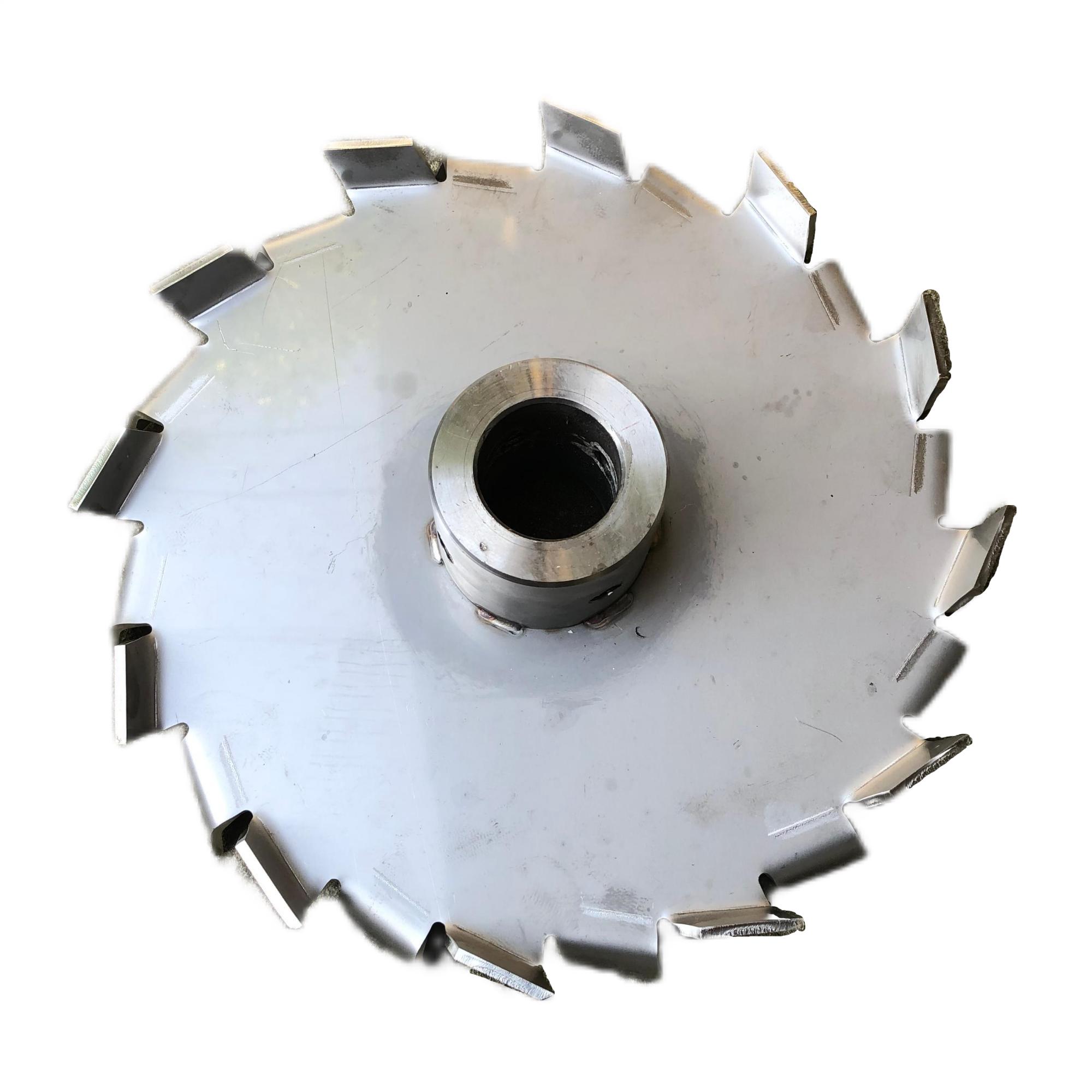
The focus of no-load running is vibration. A disperser is a cantilever structure with a long shaft overhang, so poor assembly alignment or excessive bearing clearance shows up immediately. Measure radial runout at the disc rim with a dial gauge; above 0.5 mm, investigate before load testing.
Load testing looks at two numbers: the rate of batch temperature rise and the time needed to reach target fineness. For the same recipe and disc, a faster-than-expected temperature rise points to excess power or excessive tip speed; a longer-than-expected time should first prompt a check of disc teeth and charge order, and only then of power adequacy.
The most neglected maintenance item is the lift mechanism. Check oil level and seals on hydraulic columns, keep guide surfaces clean and lubricated. Once the column wobbles, the disc centre drifts, shear efficiency falls and the shaft suffers. On belt-driven machines check tension: a slipping belt can show normal rpm on the gauge while actual disc speed has already dropped.
Further reading: - How to choose a high-speed disperser for coatings and inks: disc and power by viscosity and vessel diameter - How to set the tip speed of a dispersion disc: matching speed, disc diameter and fineness
This article is compiled by Hyline Shengda Equipment Manufacturing Co., Ltd. (hyline.cn). The information ownership belongs to the original author. Main products: stainless steel reactors, mixing tanks, storage tanks, dispersers, concentrators and complete chemical line supporting equipment; non-standard customization supported.
Q&A from this article
Frequently asked questions and answers from this article
The short answer: for two reasons — the powder will not go in, and once it is in, viscosit…
Related Products
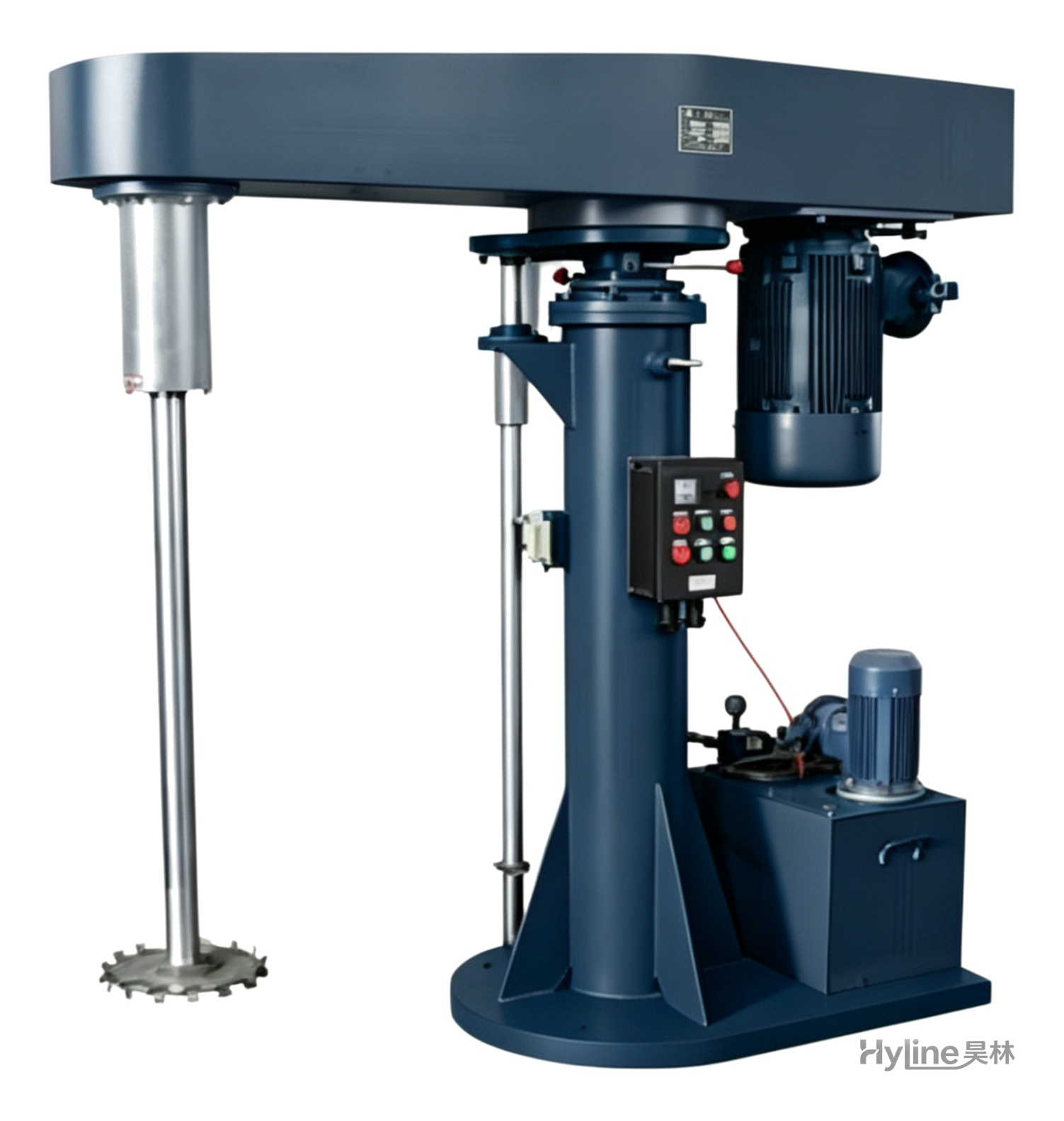
FL Series High-Speed Disperser
Stirs, dissolves and disperses liquids and powders, working alone or matched with sand mills. Variable-frequency drive with hydraulic lift, widely used in paints, inks, coatings, dyestuffs and papermaking.
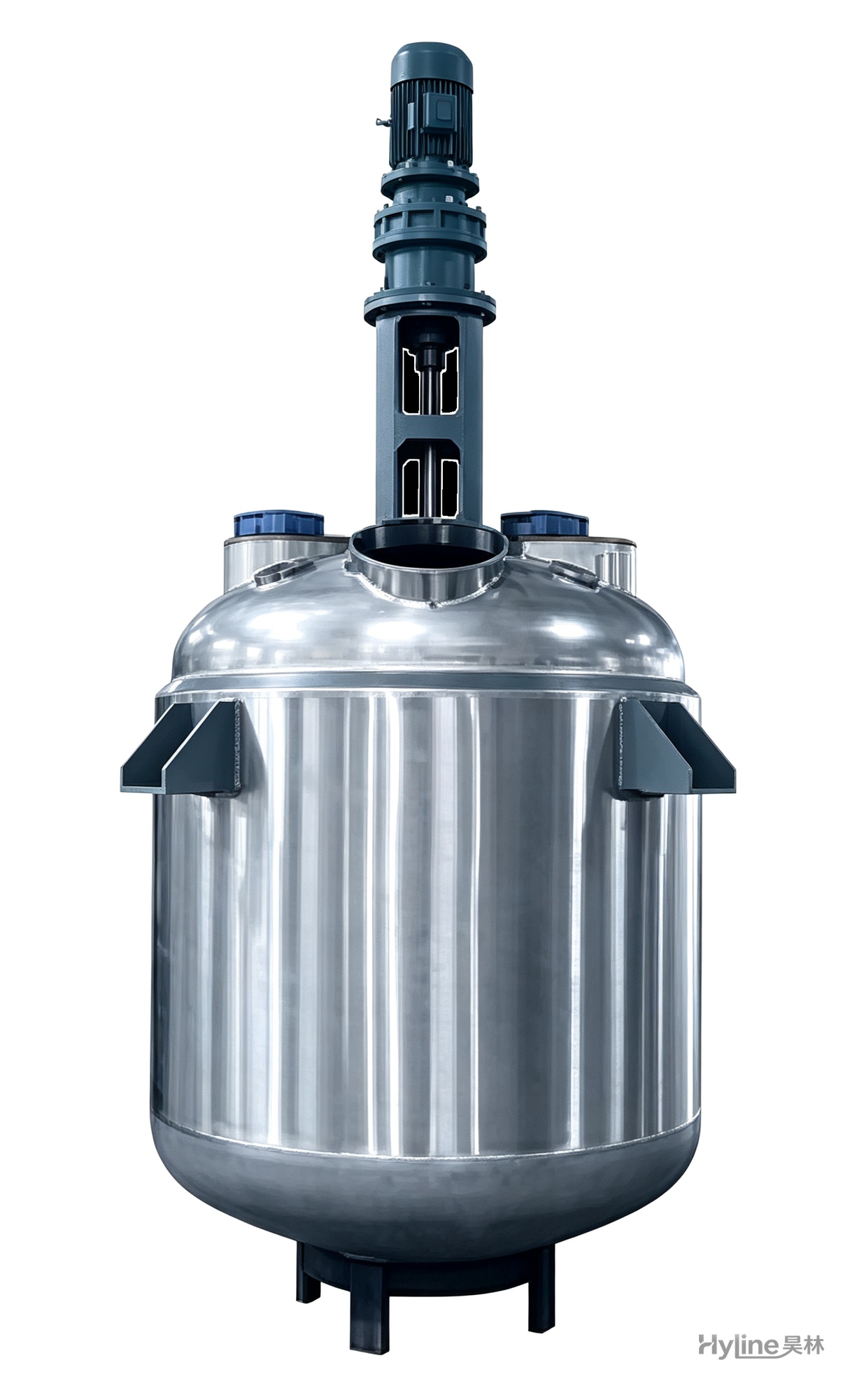
HS Series High-Speed Dispersing Vessel
Specially for dissolving, mixing and dispersing coating materials. The shear force and high speed of the dispersion disc deliver excellent solid-liquid dispersion and homogenization.
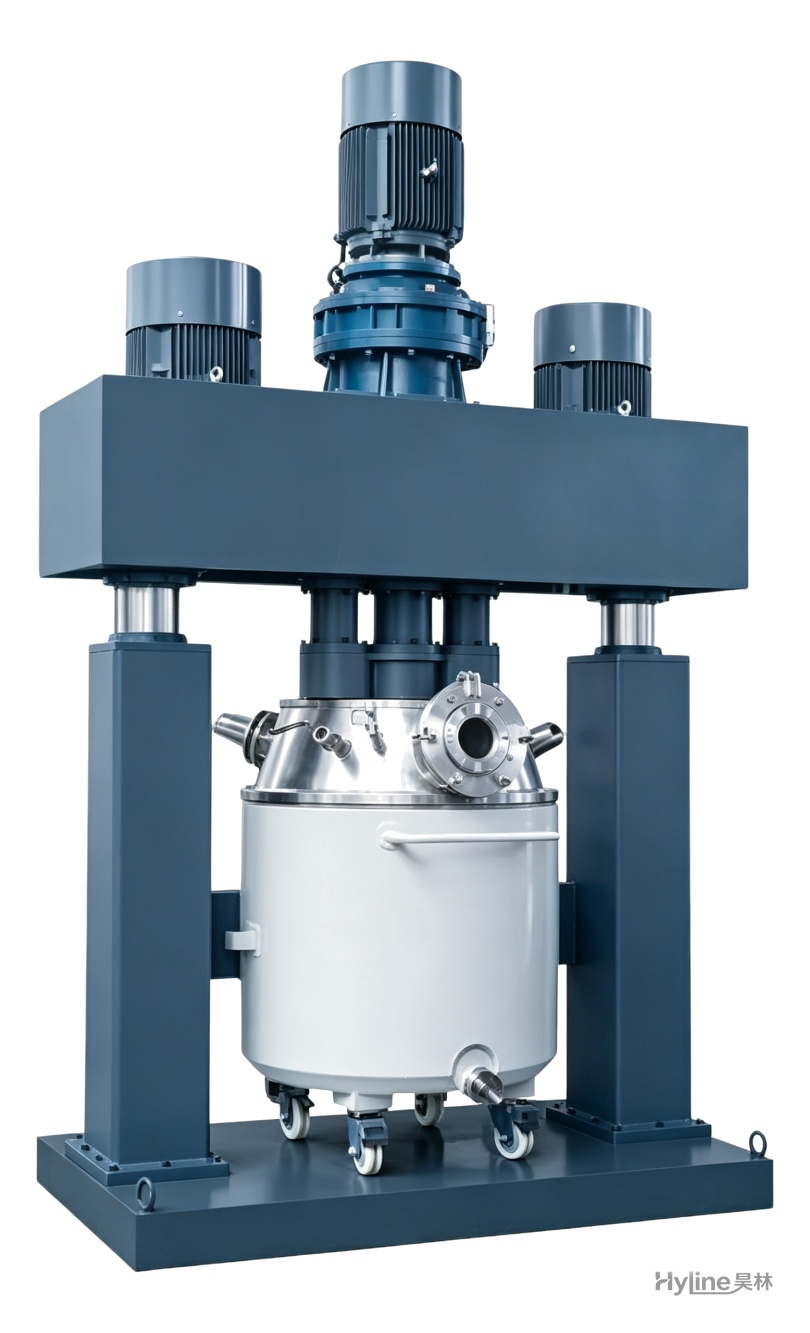
QLF Series Powerful Triple-Shaft Disperser
Two high-speed dispersers plus wall/bottom scraping create complex material flow for rapid dispersion and grinding. Handles high-viscosity pastes of 10,000-2,000,000 cps - widely used for silicone sealants, PU sealants, liquid silicone and electronic adhesives.
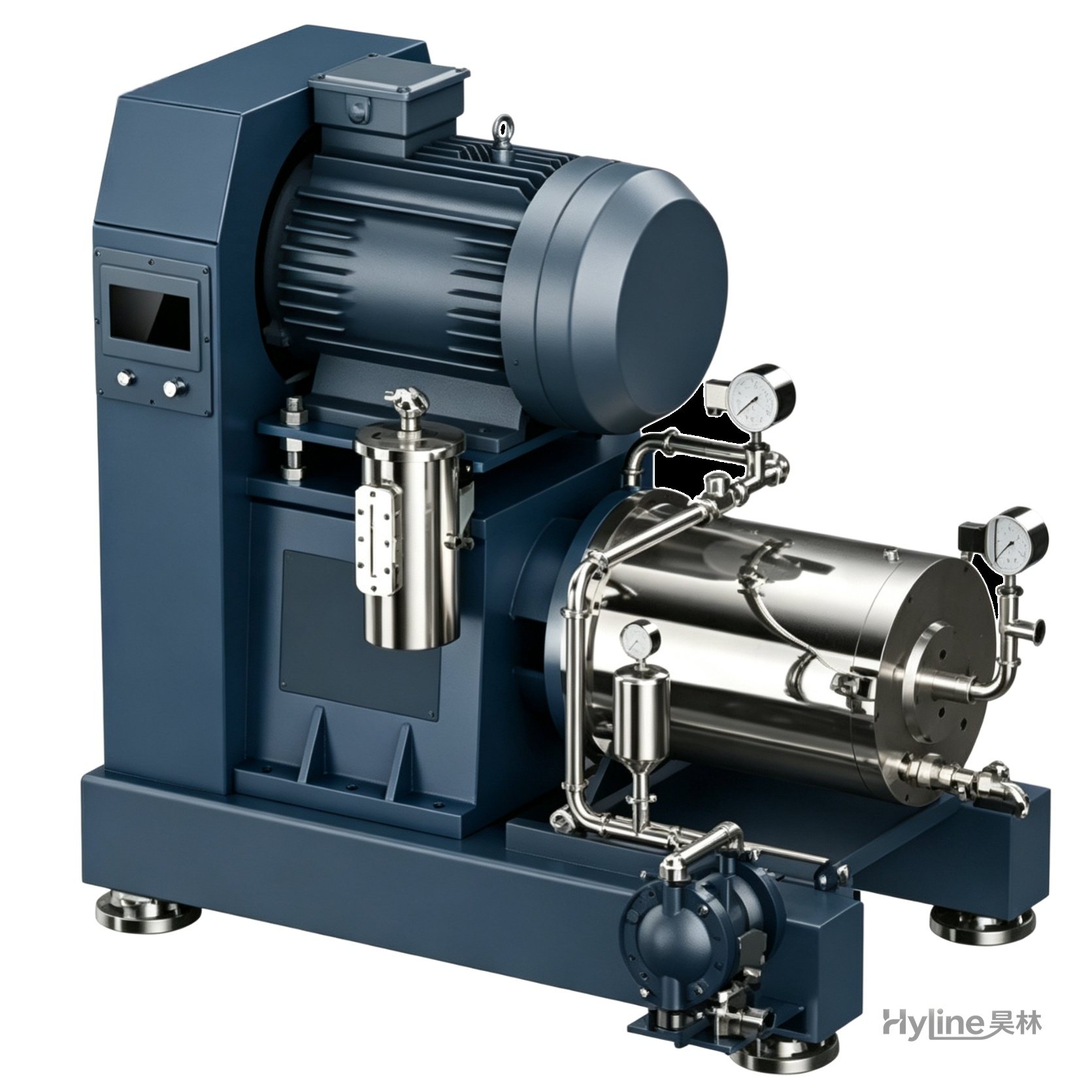
TDB Nano Sand Mill (Rod Pin Type)
Designed to advanced European standards with ample flow, excellent temperature control and high energy efficiency, achieving narrow particle size distribution at nano grade. Widely used in ceramics, inks, lithium battery materials, electronic slurries, nano pastes and pesticides.

Stainless Steel Mixing Tank (Dispersion Drum)
Supporting vessel for dispersers and mixers in paints, coatings, adhesives, color slurries, inks and electronics. Available in 201/304 stainless with internal/external polishing and sloped bottom side discharge for complete draining.