How to understand water hammer in a reactor jacket: causes and the correct steam-up sequence
11/5/2026
Steam heating is one of the most common ways to raise the temperature of a reactor. Many operators are startled the first time they open the steam valve: a metallic "bang-bang" hammering echoes from inside the jacket, and in severe cases the whole vessel trembles, with leaks appearing at welds and nozzles. That sound does not mean the equipment is falling apart; it is the classic phenomenon of water hammer. This article explains the causes, the hazards and the correct steam-up sequence, so you can run your steam-heated reactor safely and steadily.
Why does the jacket bang when steam enters?
In one sentence: condensate left at the bottom of the jacket is driven forward by high-speed steam and slams into the elbow, valve and head — that instant impact is the hammering you hear.
When steam enters the jacket it is hot and fast, while the jacket at standstill often still holds condensate from the previous batch. The steam meets that cold water, condenses rapidly and shrinks in volume, and more steam rushes in behind it, pushing the water mass like a piston. Water is nearly incompressible; when it hits a blind end or an elbow, kinetic energy turns into a huge pressure spike in an instant, and the equipment is struck as if by a hammer. This is water hammer. It usually happens in the first minute or two of steaming, often faster than a human can react, and afterwards the surface shows no obvious injury — so it is easily misread as "abnormal noise" and the real cause is missed.
How does water hammer actually form?
Mechanically, water hammer is a violent momentum exchange between vapor and liquid in a confined space. The jacket is a relatively closed annular cavity bounded by two heads, with a steam inlet, a drain and a vent on the side. When the inlet is low and drainage is poor, condensate settles at the bottom; steam rushes in from that same point, cools against the cold water, then entrains the water mass and drives it at high speed along the cavity.
The water mass is heavy and fast; hitting any obstruction produces a pressure peak several times the normal operating pressure. That peak often exceeds the design pressure — at best a loud noise and loose holding bolts, at worst a cracked nozzle-root weld or a bent valve stem. Worse, it happens the instant steam enters, before anyone can react, leaving no visible external damage to inspect afterwards. So when you hear hammering, the first response is to close the steam valve slightly and open the drain wide — not to tighten bolts.
Why is condensate at the low point the root cause?
The jacket re-floods with condensate after every cooling and every batch interval. If the drain is high, or the steam trap is undersized, or its strainer is clogged, the condensate never drains fully. A common misconception is that steam will simply "blow" the water out. In reality steam is far less dense than water and prefers to travel through the upper layer, pushing the water mass further to the far end of the jacket where it accumulates.
So draining at the low point is the first line of defense. The correct practice is a properly sized steam-trap set at the lowest point of the jacket, plus a bypass manual drain; before steaming, open the bypass and drain the free water, then switch to automatic trap drainage. For a half-coil reactor, the half-coil is a spiral groove welded in segments, each with its own low point and more dispersed water, so each segment needs its own trap — you cannot rely on a single total outlet to "sweep it all through".
Why must air at the high point be vented?
If air remains in the jacket or coil it blocks the top and forms vapor binding: steam cannot get in, heat is not transferred, the heating curve slows noticeably, and the top-to-bottom temperature spread widens. Worse, a mixture of air and steam creates unstable vapor-liquid interfaces locally, breeding small water hammers.
Therefore a vent valve must be fitted at the highest point of the jacket. Keep it cracked open at the start of steaming to continuously discharge air and the initial light condensate, closing it only when stable steam emerges. Many sites permanently close the vent "for convenience", and then suffer slow heating, local cold spots and intermittent dull thuds — the root cause is vapor binding. The vent is not decoration; it is a necessary part of water-hammer control and must be confirmed operable during inspection.
What is the correct steam-up sequence?
Putting the points above together, correct steaming is a stepped routine of "drain first, supply later, small to large". The table lists the order and purpose:
| Step | Action | Purpose |
|---|---|---|
| 1 | Open low-point bypass, drain free water | Remove the source of water hammer |
| 2 | Open high-point vent | Remove vapor binding, avoid local cold |
| 3 | Crack steam valve, low-pressure warm-up | Heat the cavity slowly, reduce thermal stress |
| 4 | Put steam trap on automatic | Continuously discharge new condensate |
| 5 | Raise pressure in steps, hold 3–5 min each | Let water mass be carried away gradually |
| 6 | Reach process pressure, close vent | Enter normal heating |
The core is one sentence: do not open the steam valve fully at once. A few extra minutes of low-pressure warm-up costs far less than a hammered and cracked head. For reactors with a large jacket area or volume over 5 m³, extend the warm-up time accordingly.
How do jacket and coil differ in water hammer?
There is a clear difference. A full jacket is one large water cavity; once condensate pools at the bottom it forms a continuous water column, the hammer propagates far and the impact is concentrated — heard as a single dull thud. A half-coil cuts the cavity into small spiral segments, each with small volume and little water, so even if water hammer occurs the energy is absorbed segment by segment and the impact is much weaker.
But that does not mean coils need no drainage. Precisely because they are segmented, if any segment's trap is blocked that segment becomes a "dead water cavity" — its heating fails and it still bangs on steaming. So coil-reactor inspection focuses on confirming each segment's trap discharges warm water, not just watching the total outlet.
How to tell water hammer has occurred?
On site it is easy: three signals. First, a regular metallic impact at the instant of steaming; second, visible trembling of the steam pipe or the jacket body; third, the trap discharge mixing large amounts of "steam-water simultaneous spray" with fluctuating pressure. If any appears, close the steam valve a little, open the drain bypass wider, let the water mass drain away calmly, and only raise pressure slowly after the noise stops — do not force it open.
A hidden form occurs when restarting after shutdown. Condensate from the cooled jacket was not drained, and the next day steam is applied directly — the first hammer is often the loudest. The good habit is, at the end of each batch after cooling to a safe temperature, to open the low-point bypass briefly and drain the residual water before shutdown.
How we help customers configure the system
As the company behind hyline.cn, Hyline Shengda Equipment Manufacturing Co., Ltd. builds water-hammer control into the equipment itself when we make steam-heated reactors: a properly sized drain interface at the lowest point of the jacket, a standard vent seat at the highest point, a slow-opening globe valve and pressure gauge on the steam inlet, and a steam stabilizer tank when necessary to flatten incoming pressure fluctuations before they reach the jacket. For corrosive service we unify jacket and vessel materials to avoid stress risks at dissimilar-steel welds.
We also advise customers to tell us the medium temperature, working pressure, heating curve and batch rhythm before ordering, so we can decide the jacket form (full jacket or half-coil) and the number and size of drain points. Bigger is not safer; matching the process is what matters. If you are selecting equipment or hearing steaming noises, tell us your conditions and we will help you smooth out that breath of water hammer.
Further reading: - Reactor heating and cooling methods compared: jacket, half-coil and internal coil - How to control heat loss of a stainless steel reactor: insulation structure and thickness
This article is compiled by Hyline Shengda Equipment Manufacturing Co., Ltd.
Q&A from this article
Frequently asked questions and answers from this article
Mechanically, water hammer is a violent momentum exchange between vapor and liquid in a co…
Related Products
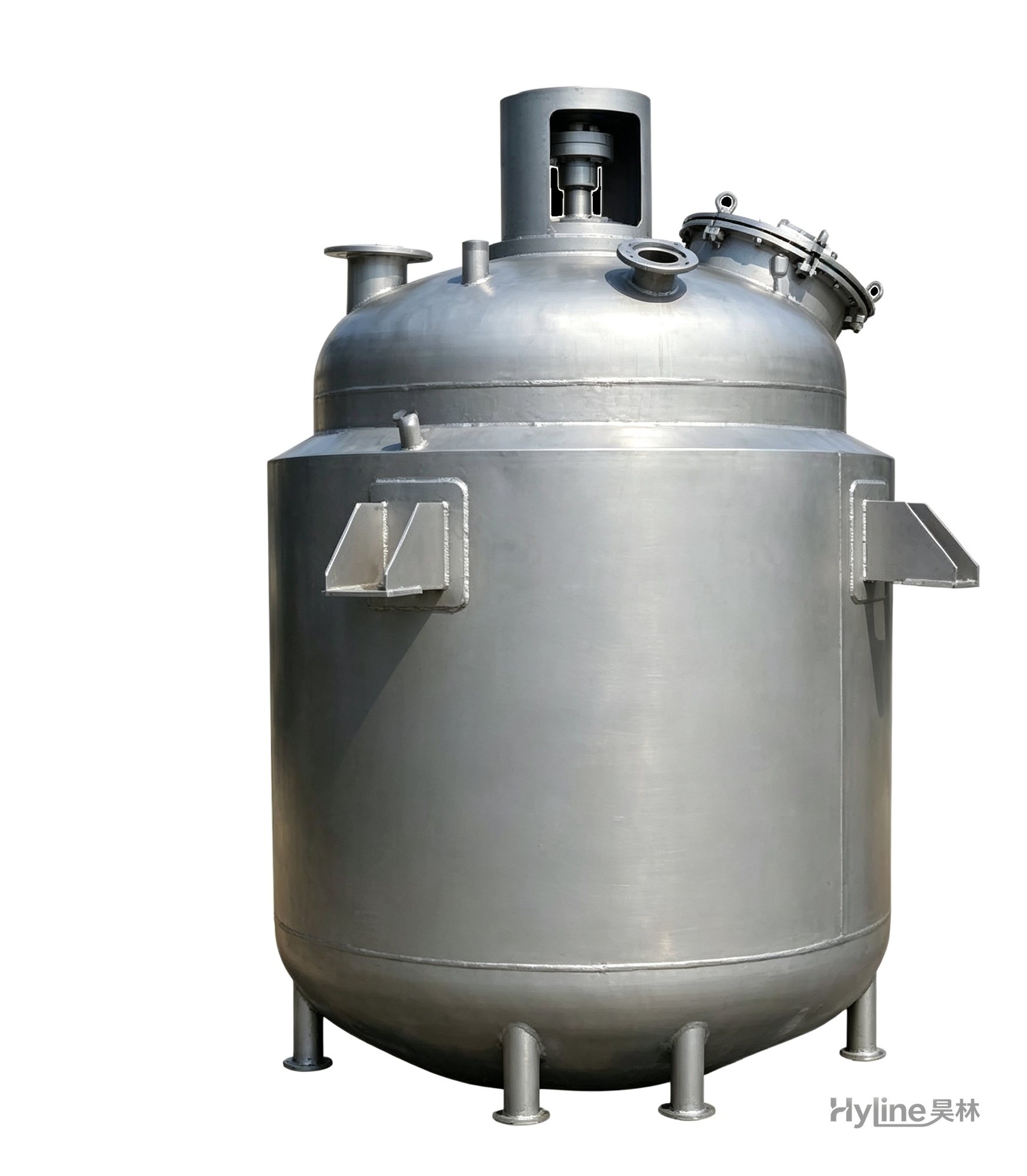
Jacketed Reactor
The typical main reaction vessel in chemical production. Mixing, heating and cooling disperse and mix materials for reaction and polymerization. The jacket circulates thermal oil/steam for heating or cooling water for temperature control.
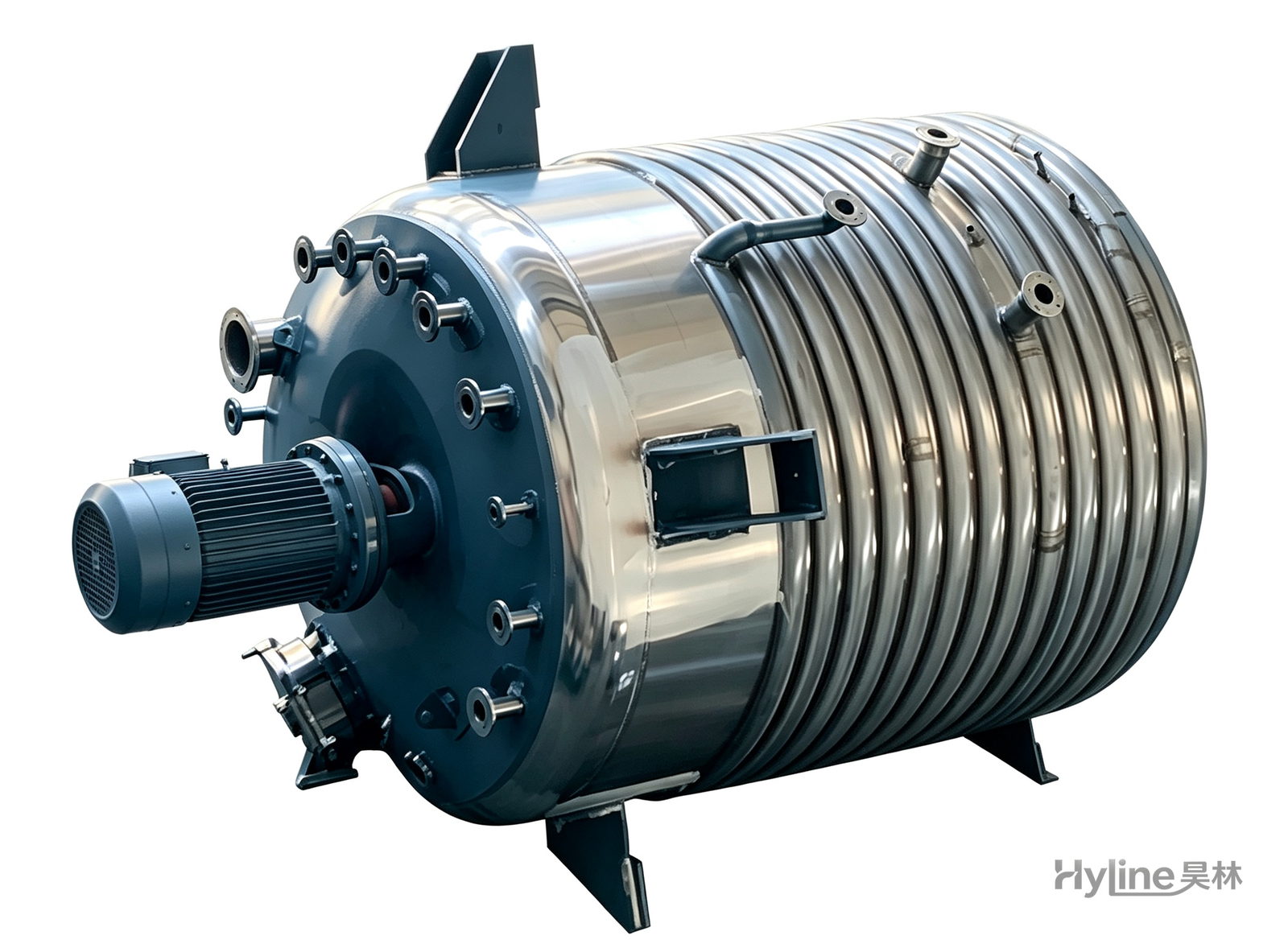
External Half-Coil Reactor
External half-pipe heating & cooling coils provide uniform, efficient heat exchange with zero material dead zones inside. Mirror-polished 304/316L stainless tank is clean and corrosion-resistant. For resin, new-energy slurry and pharmaceutical synthesis.
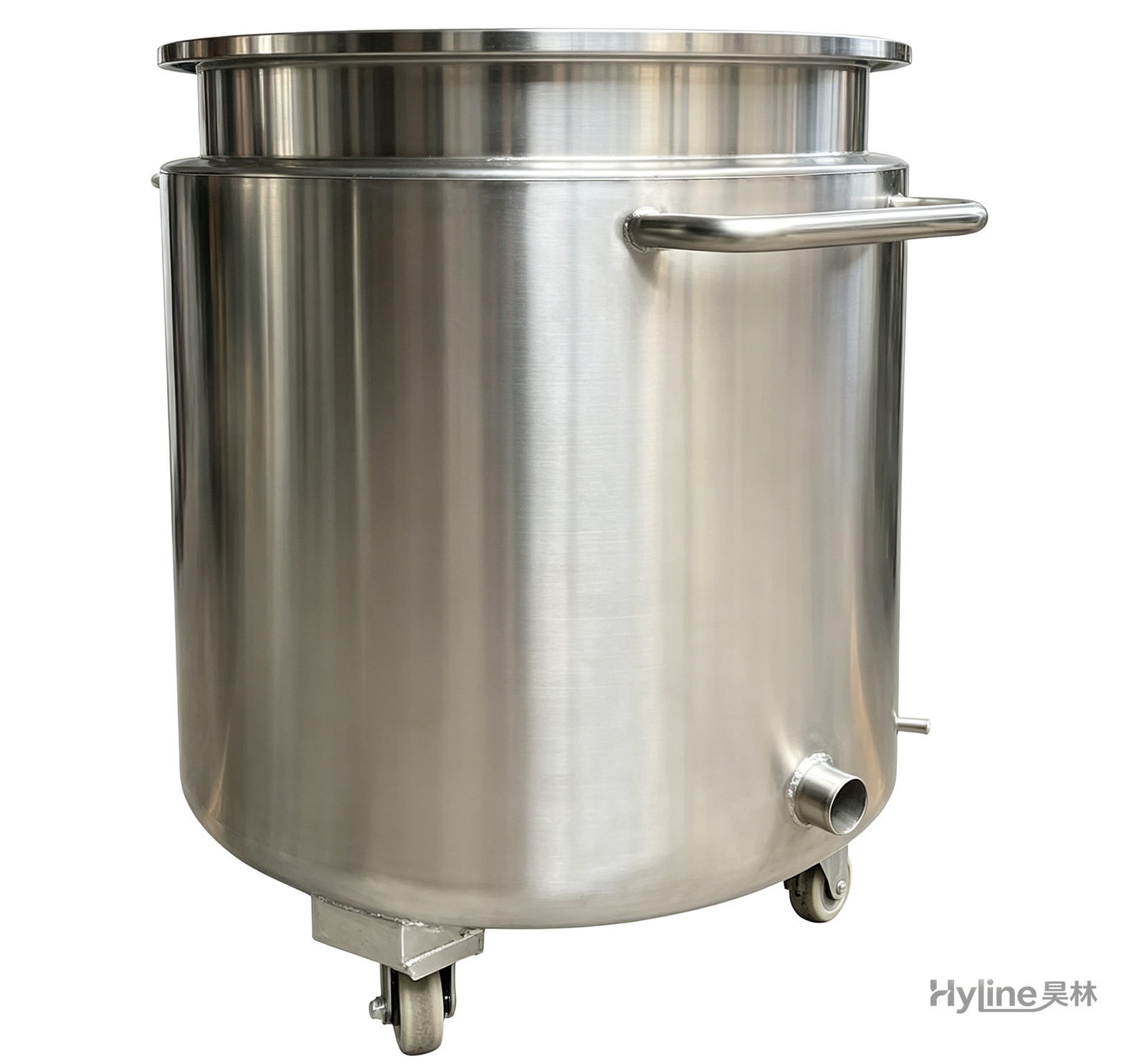
Stainless Steel Mixing Tank (Dispersion Drum)
Supporting vessel for dispersers and mixers in paints, coatings, adhesives, color slurries, inks and electronics. Available in 201/304 stainless with internal/external polishing and sloped bottom side discharge for complete draining.
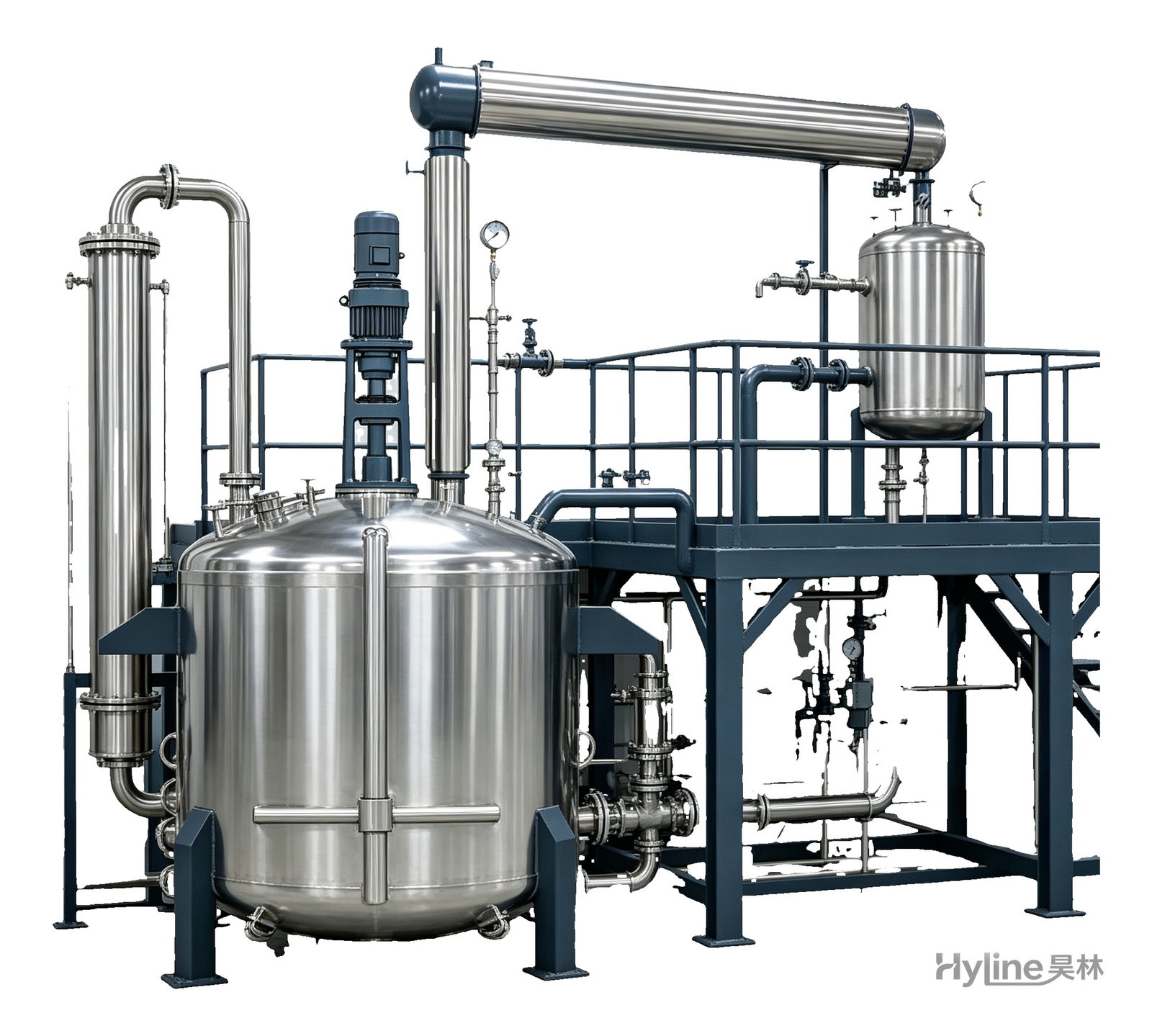
Complete Resin Production Equipment
Resin production packages built around the reactor, with vertical fractionating column, horizontal condenser and water separator for full synthesis, dehydration and reflux processes. Sizes from 300L to 30000L.