
How to configure low-temperature cooling for a reactor? Match chilled water, brine and cryogenic media to the reaction temperature
11/14/2026
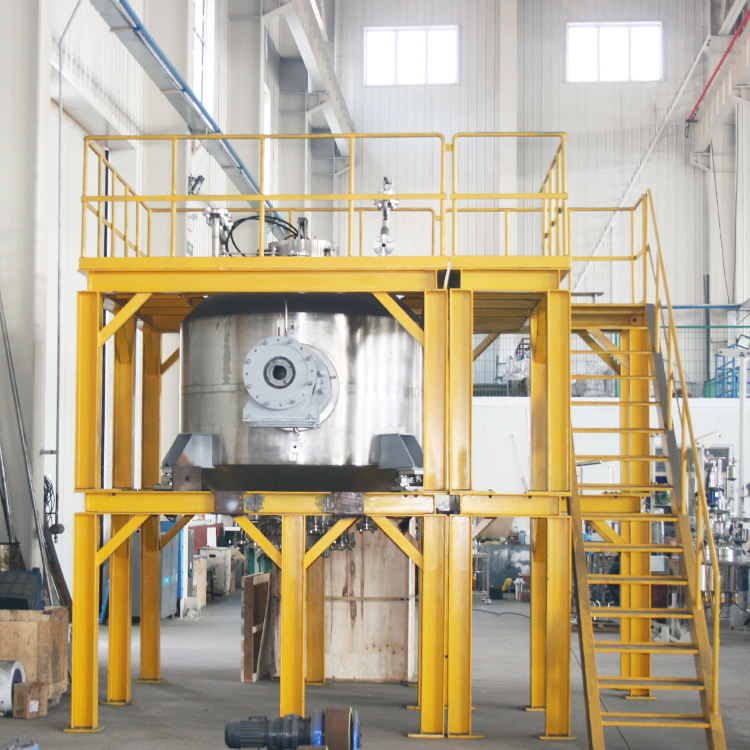
Many chemical reactions release heat as they proceed: resin polymerization, nitration, sulfonation, low-temperature condensation, and some crystallization and decolorization steps all require the reactor temperature to stay within a narrow band. When selecting equipment, buyers often focus on the heating side, while the low-temperature cooling side only shows its problems after start-up: insufficient cooling rate, condensation dripping from the jacket, frozen brine lines, or temperature that cannot be stopped where it should be. This article explains cooling media by reaction temperature, then covers the influence of cold media on jacket and coil design, freeze protection and corrosion control, and the configuration of temperature control interlocks, so that the cooling system is specified correctly at the ordering stage. The example below is a jacketed reactor; the same logic applies to other structures.
Why does an exothermic reaction need a dedicated cooling system?
One-line conclusion: cooling is not simply another water line attached to the heating side; it must match the heat release rate, the process temperature and the required cooling time, and must be designed as an independent system. The control logic of an exothermic reaction is that the heat removal rate equals the heat release rate. If the heat released at the peak of the reaction cannot be removed, the reactor temperature climbs, and as the temperature rises the reaction accelerates further, forming a vicious circle. That is why reactions are harder to control in summer than in winter: the circulating water inlet temperature is nearly ten degrees higher, and with the same jacket area the heat removal capacity drops noticeably.
Low-temperature processes, on the other hand, require cooling that can pull the temperature down and then hold it steady. Pulling down means the time to bring the batch from charging temperature to the reaction temperature fits the production rhythm; holding steady means the cooling capacity can be trimmed as the heat release fluctuates instead of overshooting downward. The recommendation for buyers: state the heat release, an estimated heat release curve, the target reaction temperature and the required cooling time in the technical agreement at the quotation stage. The same two-cubic-meter vessel configured with ambient circulating water or with chilled brine is a completely different proposal in jacket structure, heat transfer area and piping; clarifying it in advance costs far less than retrofitting later.
How are cooling media classified by reaction temperature?
One-line conclusion: the medium follows the process temperature; the medium temperature is usually kept ten to fifteen degrees below the target material temperature to preserve the heat transfer driving force.
| Process temperature range | Common cooling media | Features and cautions |
|---|---|---|
| Above 40°C | Circulating cooling water | Lowest cost; verify cooling capacity in summer when inlet temperature rises |
| 5°C to 40°C | Chilled water (7°C/12°C class) | Requires a chiller; protect piping against condensation |
| -15°C to 5°C | Glycol solution or carrier fluid | Set concentration by freezing point; note rising viscosity |
| -45°C to -15°C | Calcium chloride brine, special carrier fluids | Strongly corrosive; match pump and valve materials |
| Below -45°C | Cascade refrigeration, liquid nitrogen | High investment and operating cost; mostly batch processes |
Use this table as follows: first define the target material temperature, then move to the corresponding band; the temperature difference below the target is the driving force for the jacket and coil. For example, if the material must be held near 0°C, 7°C chilled water gives only a few degrees of driving force and a very large jacket area is needed; switching to a -10°C glycol solution provides ample driving force so the same vessel needs less heat transfer area and heating switchover is easier. Cryogenic media are not the colder the better: an overly cold medium can locally overcool the material near the vessel wall, which is harmful for crystallization processes, so confirm this with the process side during selection.
How are chilled water and brine systems connected to the reactor?
One-line conclusion: low-temperature cooling is usually generated centrally in the refrigeration station, delivered as a carrier fluid to the jacket and internal coil, with a control valve and temperature interlock on the vessel side. The chilled water system is relatively simple: the chiller produces water at about 7°C, a distribution header feeds the users, and an electric control valve on the jacket inlet adjusts the flow according to the reactor temperature. The key points are pipeline insulation and condensation control: chilled water lines, valves and the jacket outer wall will condense heavily in humid seasons. The energy loss is one issue, but dripping onto materials and electrical components is the greater hazard, so the insulation must be continuous and the jacket outer wall also needs insulation and a vapor barrier.
Brine and glycol systems feature a closed circulation loop with constant concentration, usually cooled in a central brine tank and pumped to each reactor. Two things matter on the vessel side: first, brine is more viscous than water with a lower heat transfer coefficient, so the heat removal of the same jacket area is reduced and the design must be verified with the fluid properties rather than copied from water-cooling experience; second, the piping must be designed with slope and drain points so that low points can be emptied at shutdown, because frozen dead legs bursting pipes and valves are an annual event in northern workshops. If the plant also uses the chilled fluid to hold material in a stainless steel mixing tank, the carrier fluid concentration and distribution must be calculated for all cooling users together, otherwise adding a new user drops the capacity available to the existing ones.
How do low-temperature media affect jacket and coil design?
One-line conclusion: the lower the temperature, the more attention must be paid to flow uniformity inside the jacket and to the low-temperature toughness of the vessel material; where necessary, change to an external half-pipe coil structure. In a plain jacket the medium flows slowly and can short-circuit; with warm water and its high heat transfer coefficient this hardly matters, but with a cold carrier fluid of higher viscosity and lower heat transfer coefficient, dead zones in the jacket receive insufficient cooling and the vessel wall temperature becomes uneven where the heat release is concentrated. In such cases the jacket is often converted to a spiral baffle structure, or the vessel is built as an external coil reactor with a half-pipe jacket: the medium is confined in a spiral channel at forced velocity, the heat transfer coefficient rises, and the shell no longer needs to be designed for the full-jacket external pressure condition, so the wall thickness can be more economical.
The second issue is material toughness at low temperature. Carbon steel loses toughness as temperature drops; burst brine lines in cold weather usually start at dead legs. Although the medium on the vessel side may not reach sub-zero temperature, the temperature difference between faces and the frequent alternation of hot and cold cycles put extra demands on welds. For low-temperature duty, specify additional weld inspection, radiographic testing of jacket and half-pipe welds, and select gaskets and seals rated for the medium temperature range; ordinary nitrile parts harden and lose elasticity at the cold end, and such details must be written into the drawings.
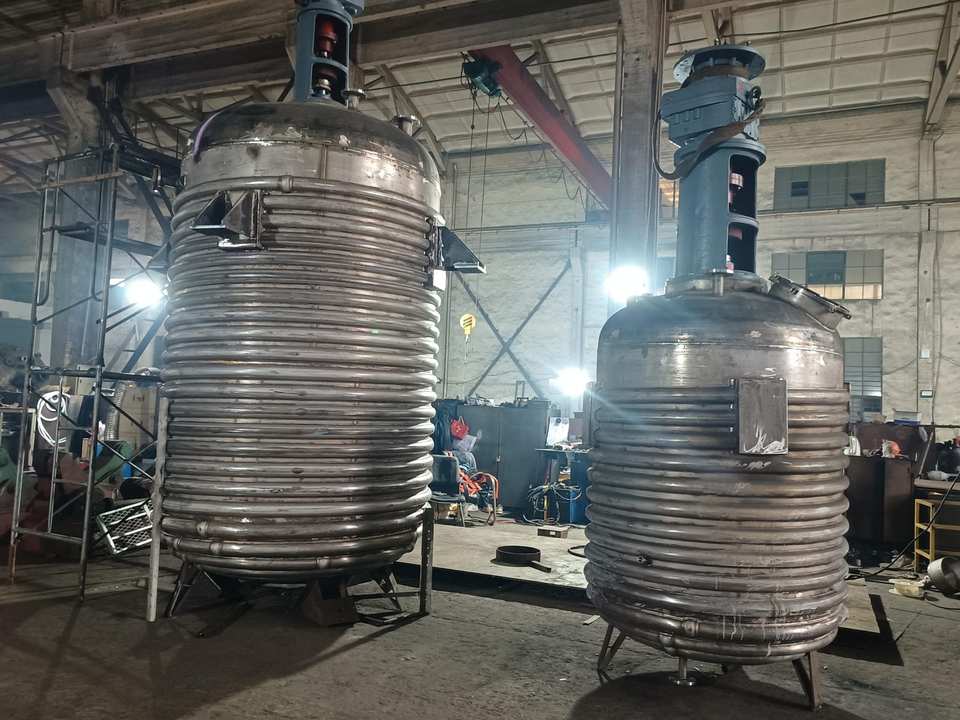
How are corrosion and freeze protection of brine and glycol handled?
One-line conclusion: set the concentration by freezing point, the corrosion control by the medium, and the freeze protection by the shutdown practice; all three must be written into the proposal. First the concentration: the freezing point of glycol solution and calcium chloride brine depends on concentration; set it with a margin of about five degrees below the process temperature. Too low and it freezes; too high and the specific heat drops and pump power rises, which costs more than it gains. Glycol solution is relatively mild and, with corrosion inhibitors, works as a common carrier fluid; calcium chloride brine corrodes metals noticeably, so pumps, valves and piping must be selected for chloride duty, and mixed materials in contact with the brine should be avoided to prevent galvanic corrosion.
Freeze protection has an operating side and a shutdown side. On the operating side it relies on concentration and continuous circulation; intermittently used branch lines need a bypass circulation to prevent dead water from freezing. On the shutdown side it relies on draining and blowing; in northern workshops, a brine line merely shut by valves but not drained in winter will show freeze cracks after one cold snap. Glycol systems tolerate short shutdowns better, but after maintenance and refill the concentration must be rechecked and recorded; repeated top-ups with plain water dilute the mixture above its freezing point, which is the most common failure in practice.
What happens if cooling capacity is insufficient? How are control and interlocks configured?
One-line conclusion: insufficient cooling does not merely mean slower cooling but loss of control at the heat release peak; size the system for the peak and add temperature interlock protection. A common mistake is sizing for the average heat release, while at the dosing peak the release rate can be several times higher. Once the jacket cannot keep up, the only remedy is to slow the dosing; a longer batch is the minor issue, while temperature runaway leading to slopping or runaway polymerization is the real risk. Verify the heat removal capacity against the peak with a margin of about twenty percent.
For control, the low-temperature control valve must fail-safe: on loss of air or power it should close the cold source to prevent uncontrolled overcooling. Record three temperatures: the bulk material, the jacket inlet and the jacket outlet; a sudden change in the difference often precedes loss of control and can serve as an alarm. For violently exothermic processes, a dual cooling route is recommended, ambient water plus cold carrier fluid: the water route runs economically in normal stages and the cold route takes over automatically at the heat release peak, saving refrigeration cost and providing a fallback if the low-temperature system fails. Pumps for both circuits should be installed one duty one standby, and the interlock logic confirmed with the process side item by item and fixed in the drawings.
How to write low-temperature cooling into the procurement plan?
One-line conclusion: state the reaction temperature, heat release characteristics, cooling time and plant cold-source conditions once and completely, so that the heat transfer design follows the fluid properties instead of a standard jacket drawing. A single vessel can be self-checked against the table in this article; when several units share one refrigeration station, the carrier fluid concentration, piping distribution and the cooling load of all users should be evaluated as a whole. Hyline Shengda Equipment Manufacturing Co., Ltd. (hyline.cn) has accumulated years of experience in customized reactor delivery: jacket, half-pipe and internal coil structures are verified against fluid properties, and insulation, materials and seal selection for low-temperature duty are written into the drawings at once, with the cold-source interfaces and interlock scheme agreed with the process side. Send us your target reaction temperature, heat release conditions and plant constraints, and the low-temperature cooling scheme will be delivered together with the equipment.
Further reading: - Reactor heating and cooling methods compared: how to choose between jacket, external coil and internal coil - How to arrange the internal coil of a mixing tank? Coordination of heating coils with the mixing flow field
This article is prepared by Hyline Shengda Equipment Manufacturing Co., Ltd. (hyline.cn)
Q&A from this article
Frequently asked questions and answers from this article
Need low-temperature reactions or tight temperature control in a reactor? This article compares circulating water, chilled water, glycol and brine by process temperature so you can configure the cooling system correctly.
Related Products
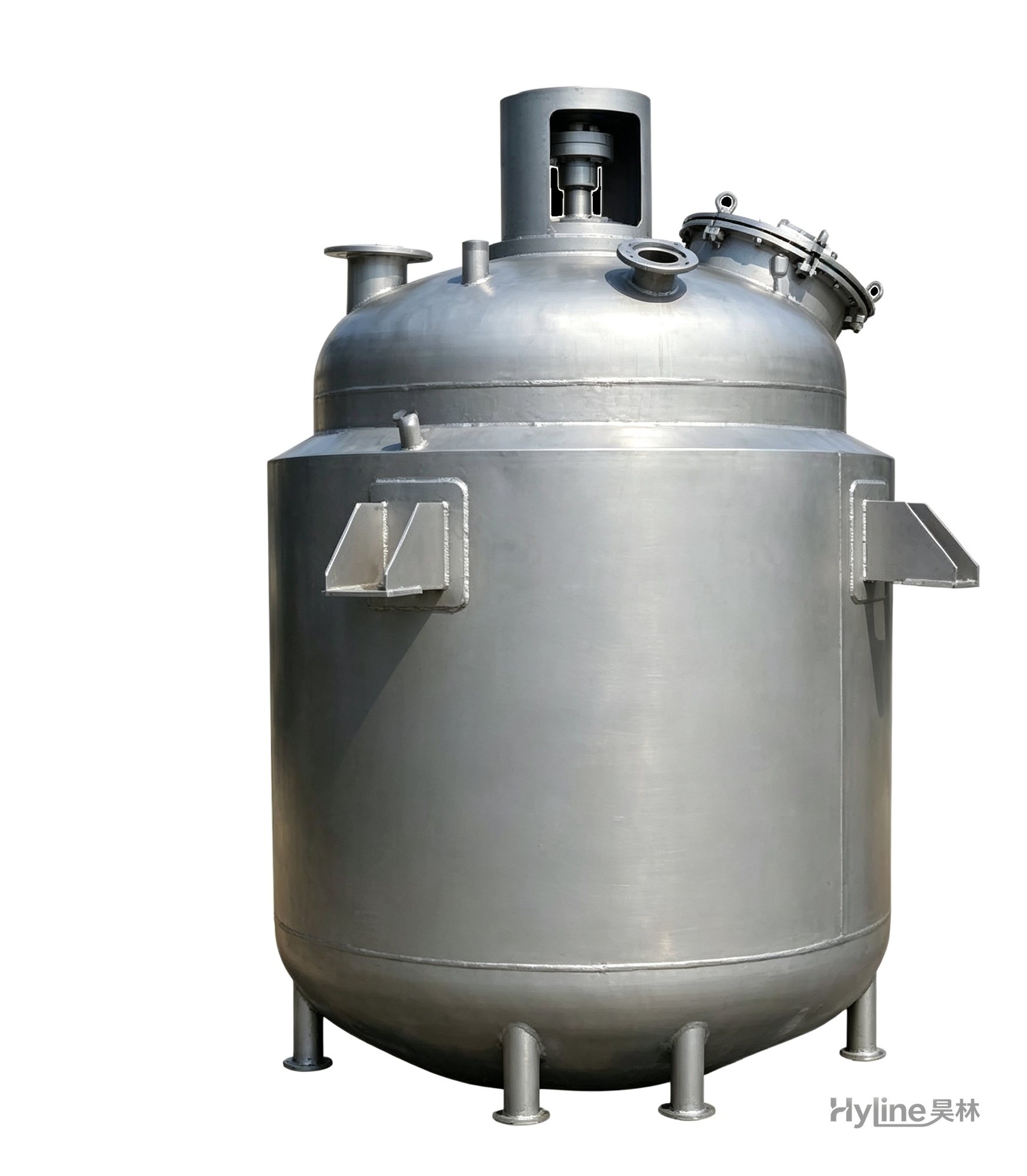
Jacketed Reactor
The typical main reaction vessel in chemical production. Mixing, heating and cooling disperse and mix materials for reaction and polymerization. The jacket circulates thermal oil/steam for heating or cooling water for temperature control.
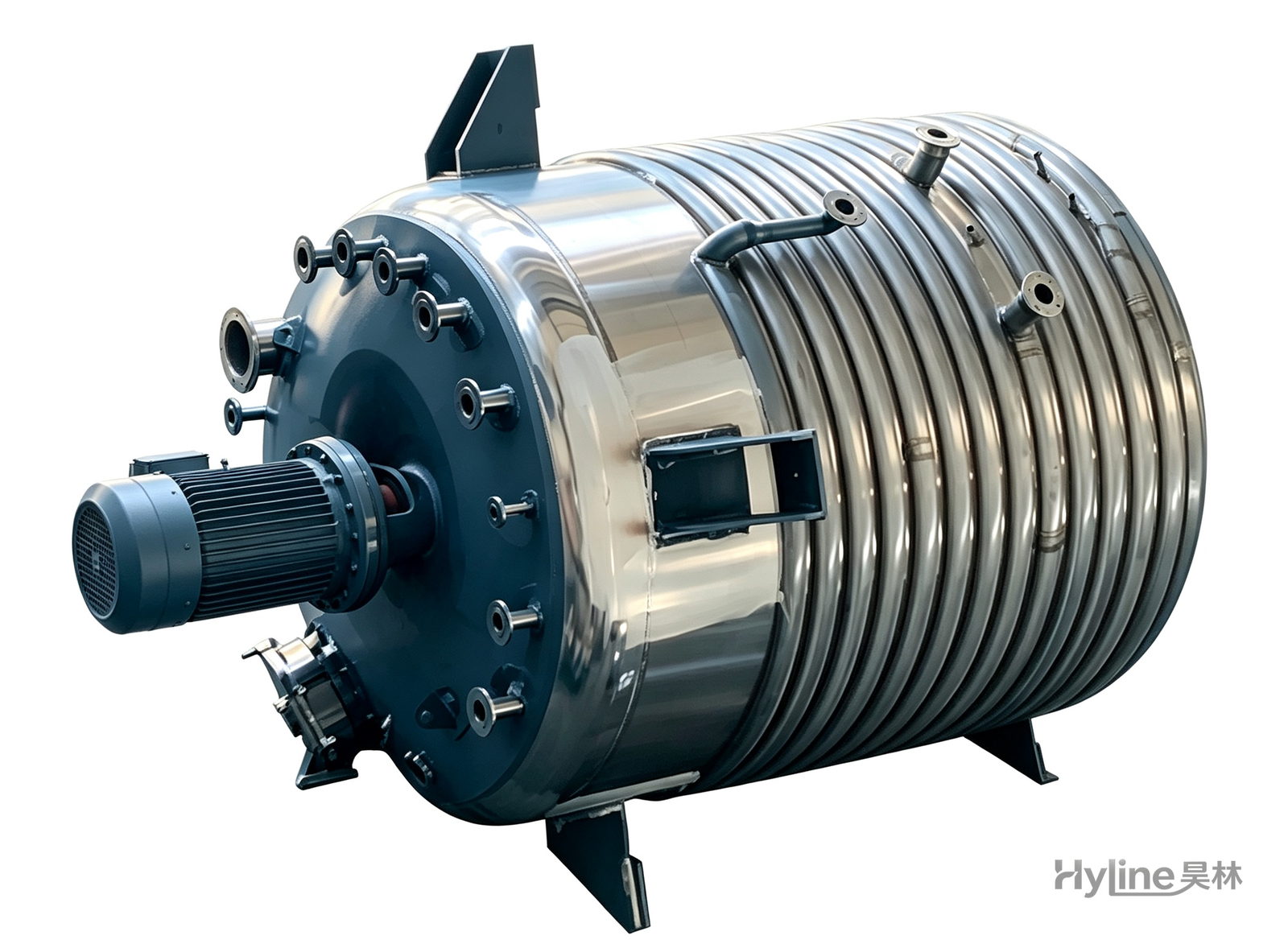
External Half-Coil Reactor
External half-pipe heating & cooling coils provide uniform, efficient heat exchange with zero material dead zones inside. Mirror-polished 304/316L stainless tank is clean and corrosion-resistant. For resin, new-energy slurry and pharmaceutical synthesis.
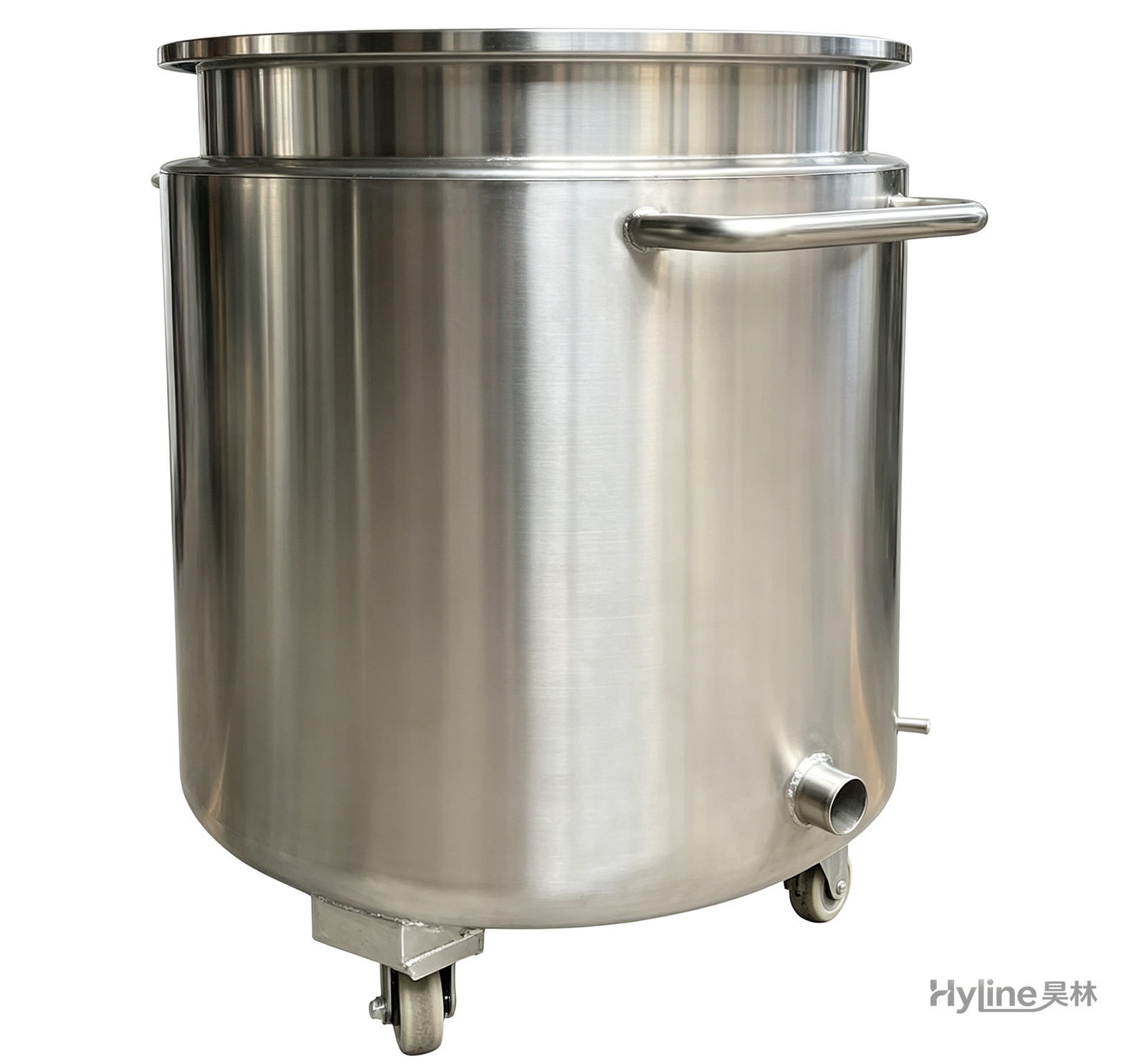
Stainless Steel Mixing Tank (Dispersion Drum)
Supporting vessel for dispersers and mixers in paints, coatings, adhesives, color slurries, inks and electronics. Available in 201/304 stainless with internal/external polishing and sloped bottom side discharge for complete draining.
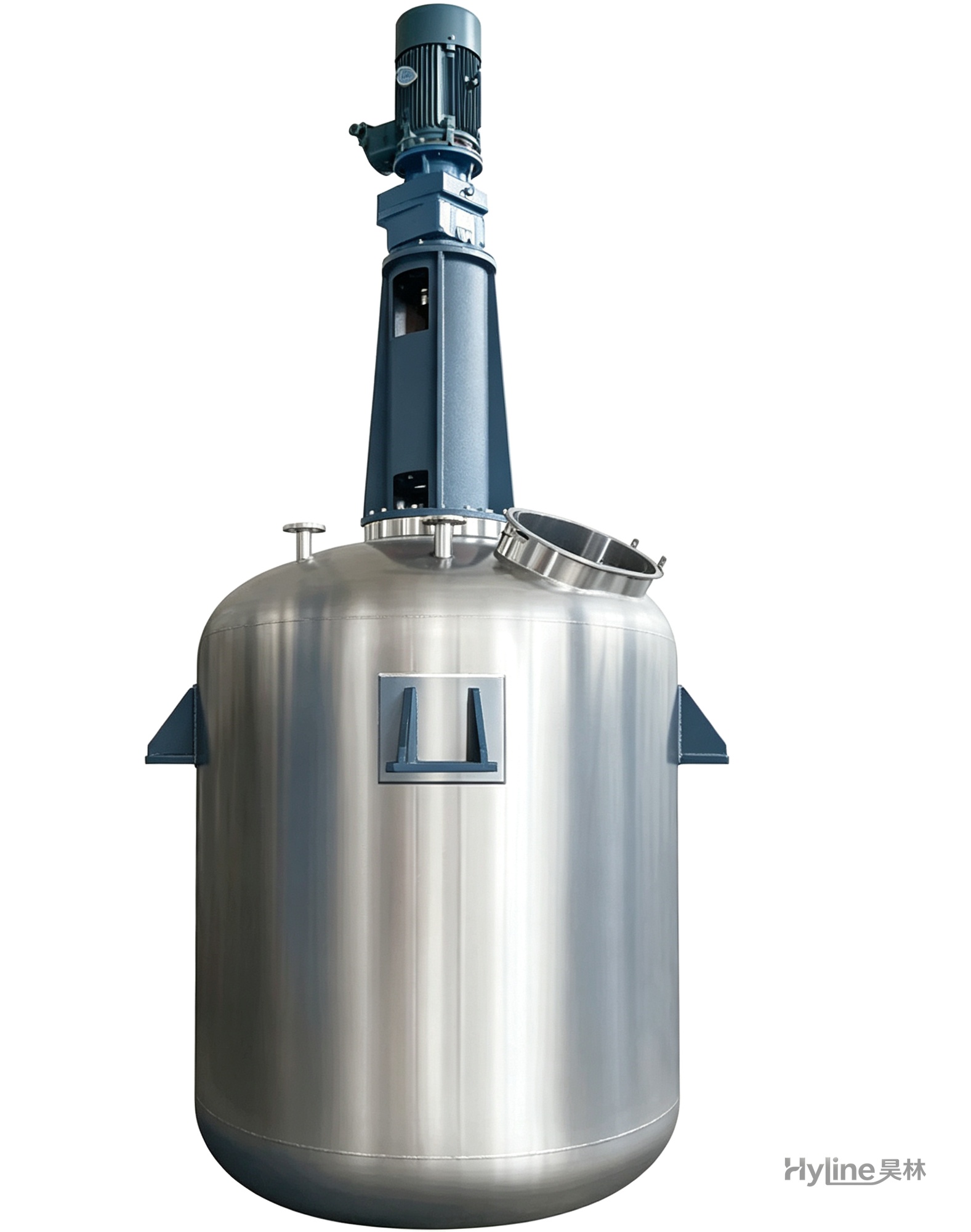
TC Series Mixing Kettle (Tinting)
For color matching in the paint industry and liquid-liquid / liquid-solid mixing in other industries. Uniform tinting, good miscibility, reasonable structure and powerful stirring.