
How Do You Choose the Material of a Stainless Steel Reactor? 304, 316L and Clad Plate by Media Corrosiveness
10/27/2026
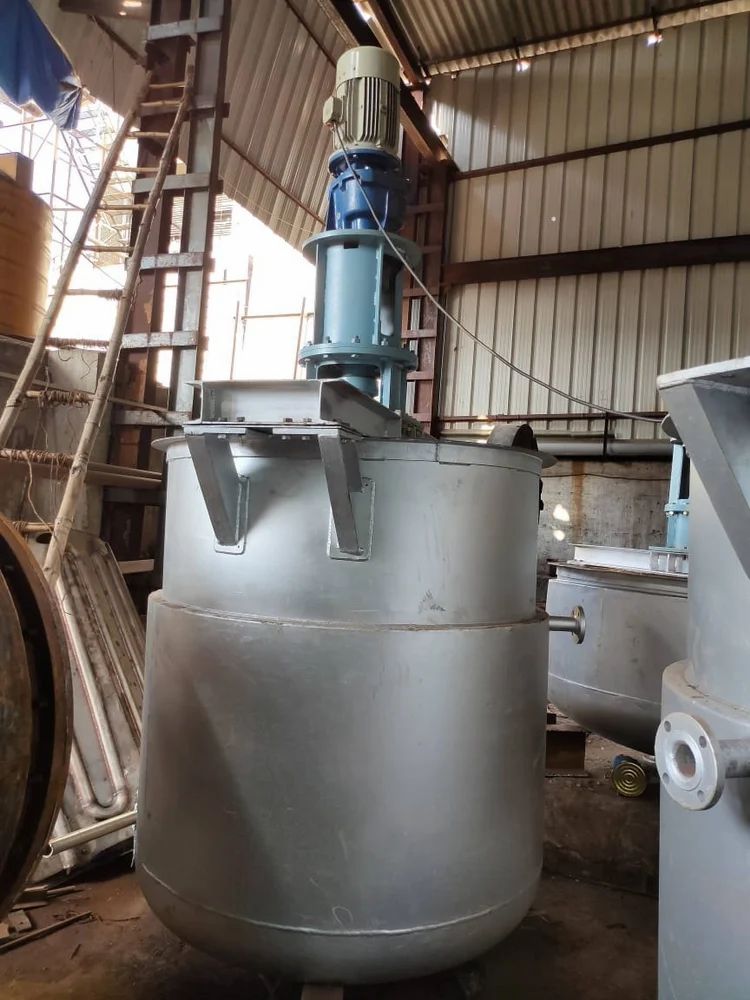
Why is material the first decision in reactor selection?
Bottom line first: material decides corrosion life, cleanliness level and cost. Choosing the wrong material costs far more in later rework than the initial price difference.
The media a stainless steel reactor contacts are mostly acids, alkalis, salts, solvents and liquids, and their corrosiveness toward the material differs greatly. For neutral or mildly corrosive media, 304 is enough; for chloride-containing or acidic media, use 316L; for strongly corrosive media, consider clad plate or lining. Choose too low a grade and the reactor corrodes and leaks within a year or two—rework, downtime and replacement cost far more than the saved material price difference; choose too high a grade and the cost is wasted. So the first step in reactor selection is to fix the material by media corrosiveness.
Common industry judgment: 304 stainless steel resists general organic acids and neutral salt solutions, but not chloride pitting; 316L contains molybdenum and handles chlorides and reducing acids noticeably better; carbon steel Q235 is cheap and, with lining or anti-corrosion coating, suits non-clean, weakly corrosive duties. Food and pharmaceutical industries also add cleanliness requirements, typically 304/316L with polished inner wall.
Which duties suit 304, 316L and carbon steel respectively?
Bottom line first: choose by media corrosiveness in three tiers—304 for general use, 316L for chlorides and acids, carbon steel with lining for weakly corrosive low-cost duties.
Put the three tiers side by side in a table:
| Material | Suitable media | Typical industries | Relative cost |
|---|---|---|---|
| 304 | Neutral liquids, general organic acids, weak alkalis | Food, daily chemicals, general chemicals | Baseline |
| 316L | Chloride-containing liquids, dilute sulfuric acid, organic acids | Pharmaceutical, pesticide, fine chemicals | About 1.2–1.4x |
| Q235 + lining | Oils, asphalt, weakly corrosive media | Auxiliary tanks in petrochemicals | About 0.5–0.7x |
The molybdenum content of 316L is generally 2%–3%, and its resistance to pitting and crevice corrosion is significantly better. For duties with clearly elevated chloride concentration or temperature, 316L is the most common upgrade. Note that carbon steel lining options mainly suit storage and reaction duties at atmospheric or low pressure with no cleanliness requirement; pressure vessels with carbon steel bodies must be evaluated by pressure class and media, and must not be chosen by cost alone.
How do you choose between clad plate and lining options?
Bottom line first: for strongly corrosive media, varying media or duties that also need pressure capacity, consider stainless steel clad plate or a lining solution.
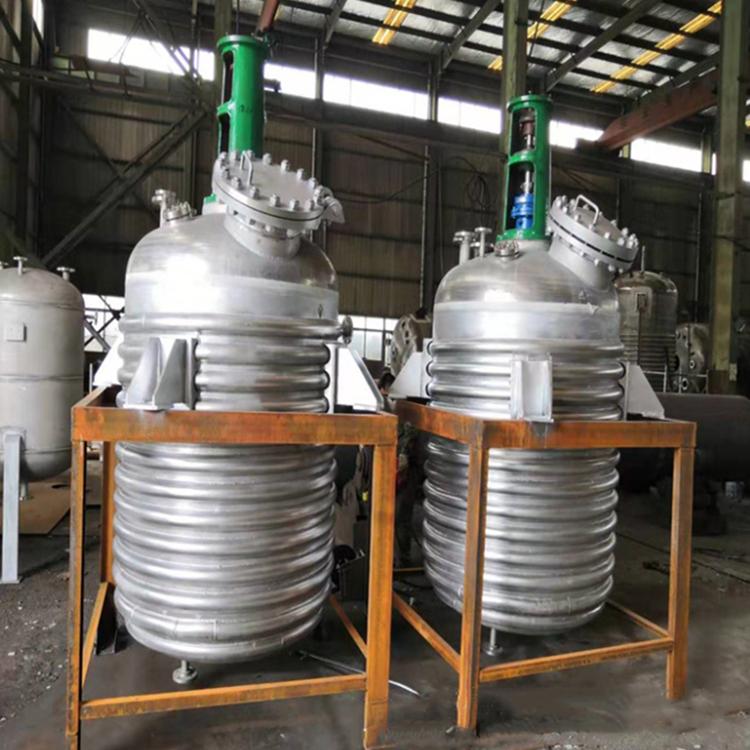
Some media are highly corrosive (concentrated hydrochloric acid, strong oxidizing acids). Making the whole vessel of high-alloy or nickel-based steel is extremely expensive, so clad plate is common: a carbon steel base for strength and a 316L, 2205 duplex steel or similar cladding layer for corrosion resistance, with the cladding layer generally 3–6 mm thick. Lining solutions line the carbon steel base with rubber, glass-lined or PP for specific corrosive media. Whether to choose clad plate or lining depends on three points: whether the vessel is pressurized (clad plate can be designed as a pressure vessel, while glass-lined has limited pressure capacity), the media temperature, and whether the equipment needs frequent cleaning. After the material is fixed, the heat-transfer structure should be considered together—for example, duties needing uniform heat transfer and fast cooling often use a half-coil reactor, where the half-pipe coils give a large heat-exchange area and better rigidity, and the material is chosen from 304/316L by the media.
How do you make a preliminary judgment of media corrosiveness?
Bottom line first: grade preliminarily by three factors—media acidity, chloride content and temperature—and when in doubt, choose the strictest grade and verify with corrosion coupon tests.
Without corrosion data on site, make a preliminary judgment by three factors. First, pH: neutral media (pH 6–8) carry little corrosion pressure, and 304 is generally enough; for acidic media, distinguish by the acid type—dilute sulfuric acid and phosphoric acid are reducing acids friendlier to 316L, while concentrated acids and oxidizing acids require a higher grade. Second, chlorides: the higher the chloride content, the greater the pitting risk; as a rule of thumb, when chloride is clearly elevated, start with 316L directly; rising temperature amplifies chloride corrosion—the same salt-solution grade conclusion at ambient temperature differs completely from the one at 80 degrees Celsius. Third, temperature and oxidizing character: the higher the temperature, the faster the corrosion; strongly oxidizing media visibly damage the passive film of stainless steel and may need clad plate or even high-nickel alloys.
This preliminary grading is only for the proposal stage. Before placing the order, run corrosion coupon tests on the critical media or check application records in the same industry, so the material conclusion rests on data rather than experience alone.
How is the heat-transfer structure decided together with the material?
Bottom line first: material and heat-transfer structure must be ordered together; the material and weld requirements of the jacket, coils and internal coils follow the body material.
Many selections discuss material and heat transfer separately, with the result that the body is 316L but the jacket or coils are quoted in 304, and the weld and contact-surface standards are inconsistent—the corrosion chain is broken. The right way is to bring the heat-transfer elements into the same material system: the jacket shell of a jacketed reactor uses the same material as the body or is selected by pressure requirement; the half-pipe coils of a half-coil reactor use the same material as the body, with high heat-exchange efficiency and good rigidity, chosen from 304/316L by the media; internal coils contact the media and must use the same contact-surface material as the vessel, with welds treated by the same corrosion grade. When ordering, write three items—body material, heat-transfer element material, weld and passivation requirements—into the technical agreement together, so that no material mismatch appears after arrival.
How do you decide material for typical duties?
Bottom line first: decide material by the three factors of media, temperature and cleanliness, and when in doubt, leave margin for the harshest case.
Food industry: media are mostly weakly acidic, 304 with mirror-polished inner wall is enough; with frequent CIP cleaning, upgrading to 316L strengthens resistance to chloride cleaners. Pharmaceutical industry: the vessel and piping in contact with the drug liquid are generally 316L with electrolytic polishing of the inner wall to meet GMP cleanliness and dead-leg requirements. Pesticide active ingredients: media often contain strong acids and organic solvents; 316L or clad plate are common choices, and the chloride concentration must be checked. Resin synthesis: esterification and polycondensation media are mostly neutral to slightly acidic; 304 is general-purpose, with emphasis on heat-transfer area and agitation rather than material pressure. Lithium-battery precursors: sulfate systems contain chlorides and acids and usually start with 316L. The experience values in every industry are only starting points; the final choice is based on media composition, temperature and concentration.
How much does temperature affect material selection?
Bottom line first: rising temperature significantly accelerates corrosion; the material conclusion for the same media at 60 degrees Celsius and at 120 degrees Celsius can be completely different.
The effect of temperature on corrosion is often underestimated. As a general rule, the reaction rate rises noticeably for every 10 degrees Celsius increase, and so does the chloride pitting and intergranular corrosion risk of stainless steel. Example: for media with a little chloride, 304 may suffice at ambient temperature; above 80 degrees Celsius the pitting risk grows, and the usual move is to upgrade to 316L; at even higher temperature with non-negligible chloride, 2205 duplex steel or clad plate may be needed. The other temperature-related point is intergranular corrosion: when stainless steel stays long in the sensitization range (generally 450–850 degrees Celsius), chromium carbide precipitates at grain boundaries and reduces corrosion resistance—the weld heat-affected zone deserves special attention. When selecting material, give the manufacturer four parameters—media composition, concentration, temperature and pressure; a material conclusion is reliable only with these. Reporting only the media name without temperature easily leaves a hidden risk.
What are the common misconceptions in material selection?
Bottom line first: taking 304 as a universal default, choosing only by cost, and ignoring the material of contact parts are the three most common misconceptions, and each leaves corrosion risks.
The first misconception is defaulting to 304 everywhere. In duties with slightly elevated chloride or temperature, the pitting risk of 304 is obvious; short-term it looks fine, but long-term leakage and rework cost more. The second is comparing only plate thickness and price. At the same thickness, different material grades differ greatly in corrosion life; price comparisons must lock the grade and the material certificate, otherwise a low price may correspond to a lower grade. The third is checking only the vessel body and not the contact parts. Agitators, coils, thermowells and flange sealing faces all contact the media; when their material differs from the body, the weak parts corrode first and the whole corrosion chain is broken. When ordering, list the body, the heat-transfer elements and all media-contact parts in one material list and check the grade item by item.
What are the key points for material certificates and acceptance?
Bottom line first: agree on the material certificate and passivation in the agreement; check the grade certificate against the heat number on arrival, and spot-check the passive film and surface finish.
Material compliance must be double-checked by documents and physical parts. In the technical agreement, require a material certificate with the equipment, stating the heat number, grade and chemical composition; on arrival, check that the heat number on the certificate matches the marks on the shell, heads and nozzles, and that the grade complies with the 304/316L standard. Surface quality is accepted by cleanliness and corrosion requirements: for food and pharmaceutical duties, spot-check the roughness of the inner wall; mirror polishing generally requires Ra 0.4–0.8 micrometers; stainless steel equipment is usually acid-washed and passivated, so spot-check the uniformity of the passive film, especially in weld zones and dead corners. A batch with incomplete certificates or mismatched grades should be returned rather than put into production, so that hidden risks do not enter the line.
Summary
The recommended order for reactor material selection: first list the media composition and temperature and judge the corrosion grade; then decide 304/316L/clad plate by cleanliness and pressure requirements; finally place the order together with the heat-transfer structure (jacket, half-coil). Material is the upfront cost; corrosion life is the long-term return. Our factory supports 304/316L/clad plate and non-standard customization of stainless steel reactors; feel free to share your media and duty when selecting.
Further reading: - How do you decide the wall thickness and pressure class of a reactor? - How do you choose the heating and cooling methods of a reactor?
This article is compiled by Shenzhen Haolin Shengda Equipment Manufacturing Co., Ltd. (hyline.cn). We specialize in stainless steel reactors, mixing tanks, storage tanks, dispersers, concentrators and complete chemical production lines, and support non-standard customization.
Q&A from this article
Frequently asked questions and answers from this article
Reactor material directly decides corrosion life and cost. This article explains how to choose 304, 316L, carbon steel lining and clad plate by media corrosiveness, so you can spend the material budget where it counts.
Related Products

Jacketed Reactor
The typical main reaction vessel in chemical production. Mixing, heating and cooling disperse and mix materials for reaction and polymerization. The jacket circulates thermal oil/steam for heating or cooling water for temperature control.
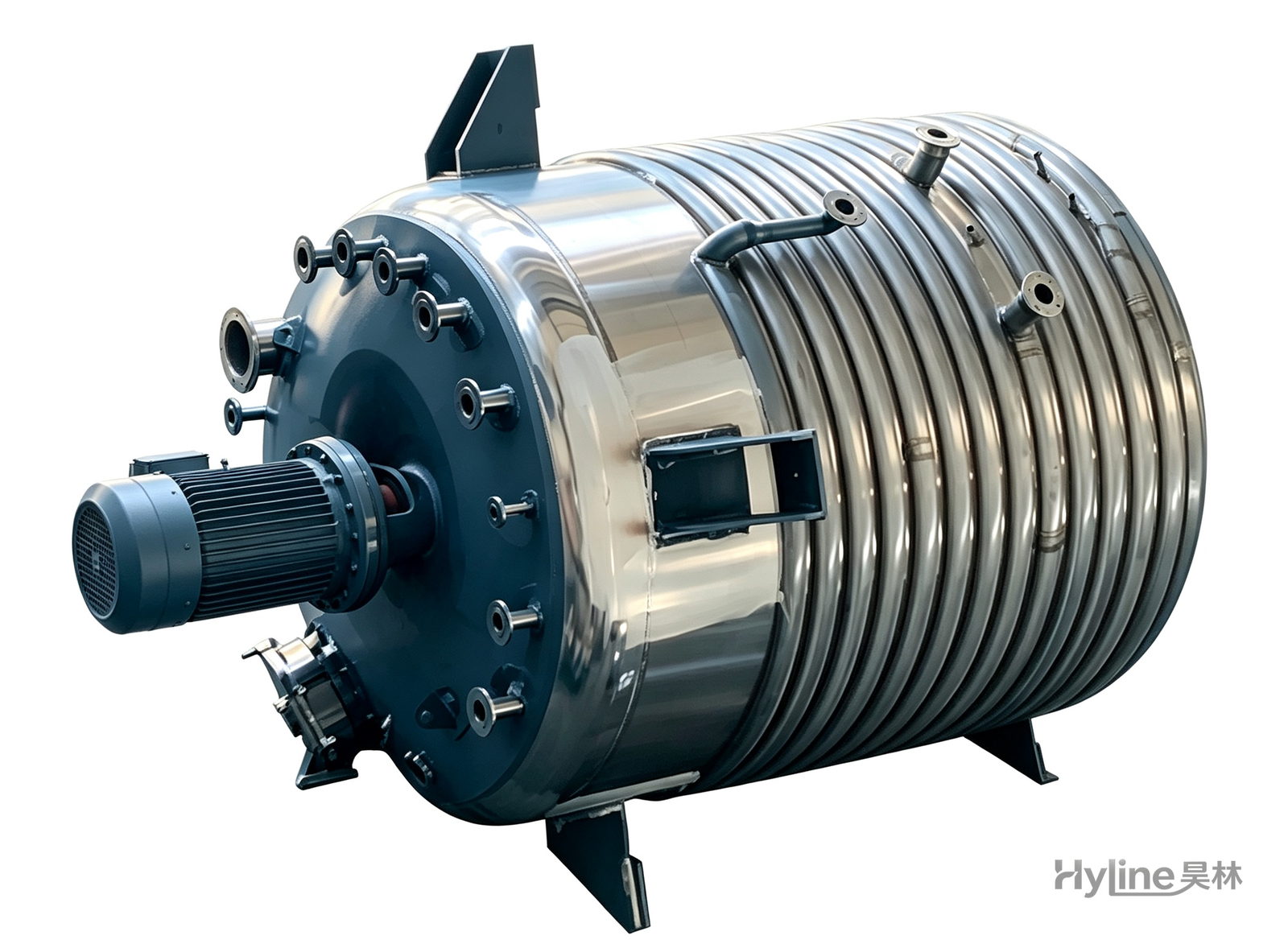
External Half-Coil Reactor
External half-pipe heating & cooling coils provide uniform, efficient heat exchange with zero material dead zones inside. Mirror-polished 304/316L stainless tank is clean and corrosion-resistant. For resin, new-energy slurry and pharmaceutical synthesis.

Stainless Steel Mixing Tank (Dispersion Drum)
Supporting vessel for dispersers and mixers in paints, coatings, adhesives, color slurries, inks and electronics. Available in 201/304 stainless with internal/external polishing and sloped bottom side discharge for complete draining.
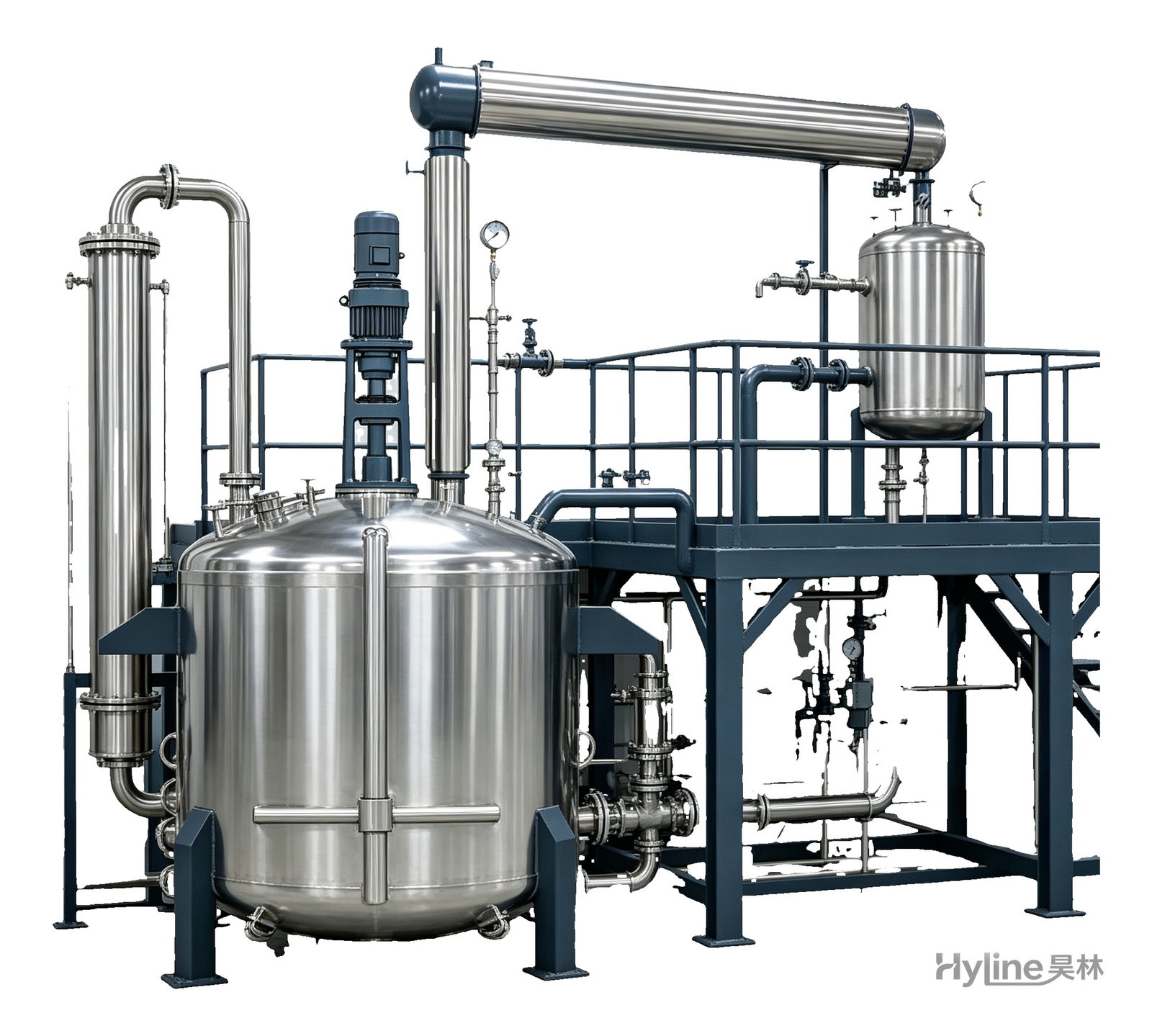
Complete Resin Production Equipment
Resin production packages built around the reactor, with vertical fractionating column, horizontal condenser and water separator for full synthesis, dehydration and reflux processes. Sizes from 300L to 30000L.