
How to Select Stainless Steel Storage Tanks for Food and Pharmaceutical Plants? CIP Cleaning and Cleanliness Requirements Decide Tank Type
10/9/2026
How to Select Stainless Steel Storage Tanks for Food and Pharmaceutical Plants? CIP Cleaning and Cleanliness Requirements Decide Tank Type
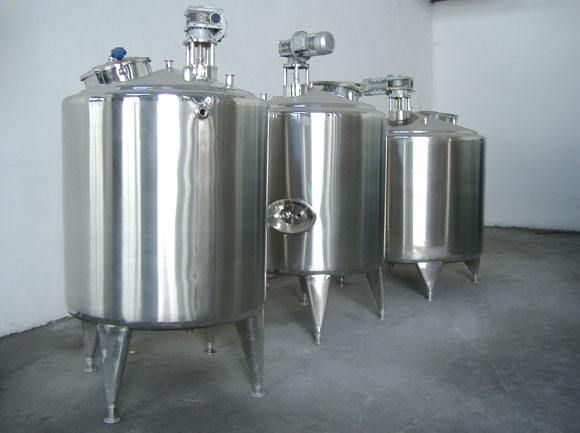
In food, beverage and pharmaceutical plants, a stainless steel storage tank is more than a container for material: it also handles blending, temporary storage, CIP cleaning and hygiene validation. Choosing the wrong tank most often leads to cleaning dead corners, incomplete bottom draining, wall material buildup and failed hygiene audits. Conclusion first: storage tank selection for food and pharmaceutical use focuses on four points — material and surface finish, tank type and bottom structure, manhole/sight glass accessory configuration, and cleaning method; the first two determine the hygiene foundation, the latter two determine the user experience. This article explains the selection basis under clean working conditions.
### How do food and pharmaceutical storage tanks differ from ordinary storage tanks?
Surface treatment standards and cleaning requirements differ. For ordinary chemical storage tanks an inner wall of Ra0.6–0.8 µm is acceptable; food and pharmaceutical storage tanks generally require an inner wall around Ra0.4 µm, welds ground and polished flush with the base metal, and every dead corner inside the tank eliminated as far as possible. On material, food and pharmaceutical plants commonly use 304 or 316L stainless steel; 316L contains molybdenum, giving better resistance to chloride ion corrosion, and is preferred when contacting brine, disinfectants and acidic materials. Material certificates and polishing reports should be delivered with the tank, and this should be clarified with the manufacturer at purchase.
### Step 1: Set material and polishing by cleanliness level
The higher the cleanliness level, the stricter the material and surface requirements. Generally food conditions use 304 with an inner wall of Ra0.4 µm; conventional pickling and passivation plus mechanical polishing is enough. Dairy, beverage and pharmaceutical conditions are advised to use 316L with an inner wall below Ra0.4 µm, and some scenarios require electropolishing plus passivation for a denser surface that is less prone to material buildup. Before setting the level, first clarify which audit has to be passed: food production license, GMP, or customer factory inspection; set the level by the strictest one to avoid a second retrofit. Every surface in contact with the material must be at the same level, including coils, agitator blades and baffles; one missed part affects the overall cleanliness.
### Step 2: Set tank type by cleaning method
CIP in-place cleaning is the mainstream cleaning method for food and pharmaceutical tanks, and the tank type must be designed for spray ball coverage and drainage. Tanks are generally made vertical, with a CIP spray ball on the top head; cleaning liquid flushes down the wall from top to bottom, and the bottom drain port drains the liquid completely. The wall must be smooth and step-free, welds must transition smoothly, and the angle between the tank bottom and the wall cannot be a square dead corner. If the process requires in-tank agitation, the agitator blades and baffles should be removable so they can be taken out and handled separately during cleaning.

### How to choose conical, flat and hopper bottoms?
The bottom structure directly decides whether the tank can be fully drained. Food and pharmaceutical tanks generally use a conical or hopper bottom with a cone angle of 15–30 degrees, so material and cleaning liquid drain naturally and no liquid remains in the tank; flat-bottom tanks suit only dry materials or manual cleaning scenarios — liquid materials in a flat bottom easily accumulate and spoil. A hopper bottom suits small tanks and precise emptying needs; a conical bottom suits medium and large storage tanks; the taller the tank, the more carefully the cone angle must be controlled, and an anti-vortex device should be added at the drain pipe mouth to avoid drawing air during emptying.
### How to configure manholes, sight glasses and sampling valves?
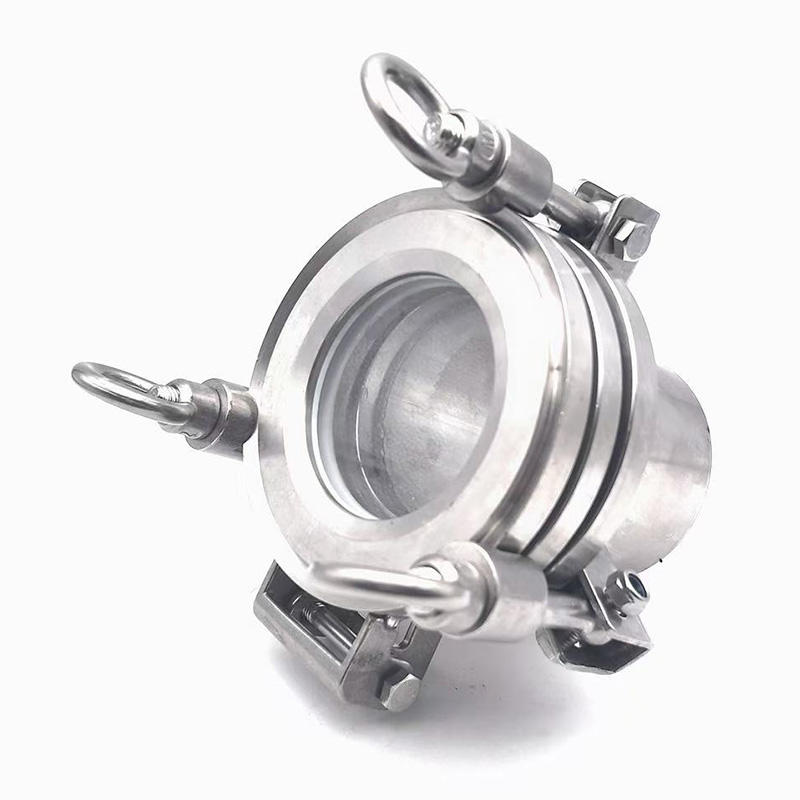
Accessory configuration revolves around three needs: observable, samplable, cleanable. A manhole is generally set on the top or side, with a diameter sized so a hand can reach in to clean; quick-open manholes are more convenient for daily inspection than bolted ones. Sight glasses are installed on the tank side or top head, made of pressure-resistant, cleaning-resistant material, with lighting even better. Sampling valves should be dead-corner-free sanitary sampling valves, with the sampling port steam sterilizable. All accessory surfaces in contact with material must be of the same material and polish as the stainless steel tank body; ordinary carbon steel parts must not be mixed in.
### Should insulation and temperature control be configured?
It depends on the process requirements. Tanks needing insulation are made with a jacket or insulation layer: the jacket passes hot water or steam to maintain material temperature; the insulation layer uses polyurethane or rock wool, with a stainless steel outer skin for easy cleaning. Tanks needing temperature control are fitted with a temperature sensor and temperature control valve; the length and position of the temperature probe inserted into the tank must avoid the agitator blades. For jacketed tanks, pay attention to the welding quality between the jacket and the tank body, and the jacket inlet/outlet ports should be positioned for convenient maintenance; these details are decided together at selection — retrofitting a jacket later is basically impossible.
### What is the difference between food and pharmaceutical conditions?
Food and pharmaceutical management requirements differ, so the configuration differs slightly. Food conditions focus on cleaning residue and foreign matter control: CIP spray ball coverage, smooth tank walls and clean drainage are the key points. Pharmaceutical conditions add validation requirements on top of food: surface roughness testing, passivation validation, material certificates, and welding records for the tank and accessories all need archiving. Pharmaceutical tanks usually have a higher polish grade, electropolishing is more common, and in-tank welds need pickling and passivation with a report. At selection, report the industry and audit requirements to the manufacturer so nothing is missing from the configuration.
### How to validate CIP cleaning coverage?
The coverage effect of the CIP spray ball is the key acceptance point for clean conditions — you cannot just look at whether a spray ball is installed. Three validation methods are common: visual inspection of the spray trajectory to see whether the cleaning liquid covers all areas of the tank wall; fluorescent tracer with UV lamp to check residue — whether fluorescent residue remains on the wall after cleaning is obvious at a glance; and for strict pharmaceutical conditions, microbiological swab sampling to validate the hygiene level after cleaning. Spray ball selection must match the tank diameter and cleaning liquid flow rate: a ball too small gives insufficient coverage, one too large wastes cleaning liquid. For equipment with agitator blades, coils and baffles inside, spray coverage is blocked, so the internal part positions must be reported to the manufacturer at selection and the spray ball quantity and angle designed per the actual layout.
### How to set wall thickness and pressure rating?
Most food and pharmaceutical storage tanks run at atmospheric or slight pressure, but wall thickness cannot be calculated as atmospheric only. Tank wall thickness is determined jointly by material specific gravity, tank height, agitation load and jacket pressure; generally vertical tanks start at 3–6 mm wall thickness, larger-volume tanks and agitated tanks are thickened, and the bottom head and leg stress zones are locally reinforced. For jacketed tanks, the jacket itself is a pressure part; jacket wall thickness and inlet/outlet flanges are selected by the jacket design pressure, and steam jackets must also consider thermal stress at high temperature. Design pressure and test pressure parameters must be confirmed with the manufacturer in writing; pressure vessels are pressure-tested at the factory with test records delivered with the tank, and checked item by item at acceptance.
### How to configure level gauges and temperature monitoring?
Storage tank monitoring configuration is set by process needs, with three common types: weighing, level, and temperature. Weighing modules are installed under the legs and measure material weight directly — high accuracy, unaffected by foam and wall buildup, suiting conditions requiring high batching accuracy. Level gauges come in magnetic flap, radar and ultrasonic types: magnetic flap is intuitive, radar is unaffected by medium properties, ultrasonic is cheap but foam interferes; choose by material transparency and foaming. Temperature monitoring generally uses a platinum resistance thermometer with a temperature transmitter, with the probe reaching the main material position, avoiding agitator blades and coils. All monitoring signals can be connected to the control cabinet or central control system, and process parameters for batching, disinfection and CIP are recorded for traceability and audit.
### How to plan tank farm layout and pipe connections?
Storage tanks are not isolated; tank farm layout affects operation efficiency and safety. Tank spacing must leave operation and maintenance access, with room in front of and behind each tank for connections, valves, sampling and cleaning. The positions and sizes of feed, discharge, CIP return, overflow and drain connections must be agreed with the piping design before purchase, and the tank is manufactured with reserved ports to avoid on-site drilling that damages the surface treatment layer. The tank farm floor is sloped with floor drains so rinse water drains away, and hazardous material areas are equipped with eyewash stations and emergency measures. For pipe connections, sanitary quick-clamp fittings or food-grade flanges are preferred, of the same material as the tank body, with food-grade silicone or EPDM seals that withstand cleaning and disinfection.
### Common issues and acceptance points
Three issues deserve the most attention. First, cleaning dead corners: the tank bottom angle, pipe flange lip and agitator blade root are the places most prone to material retention — confirm the processing technology at these positions during selection. Second, weld quality: in-tank welds must be smoothly polished; weld spatter and oxidation color indicate incomplete pickling and passivation. Third, missing documentation: if any of the material certificate, polishing report or passivation record is missing, the audit will be troublesome. At acceptance, use a roughness tester to measure the inner wall Ra value, focusing on welds and the tank bottom, then check whether the manhole, sight glass and sampling valve positions are convenient for operation.
### Summary
Food and pharmaceutical stainless steel storage tank selection comes down to four steps: set material and polishing by cleanliness level, set tank type by cleaning method, set the tank bottom by drainage needs, and set accessories by process — get these four right and you basically cannot go wrong. Start with 304 for food and 316L for pharmaceutical; conical or hopper bottom, sanitary accessories, and smooth polished welds are the three hard baselines. CIP coverage validation and tank farm layout should be planned at the selection stage to avoid on-site changes after the equipment arrives. For storage tanks, mixing tanks and complete line matching customized to clean working conditions, non-standard design can be done by cleaning method and audit requirements, and the tank and pipe interfaces of complete production lines can be planned together.
Further reading: - How to arrange mixing tank nozzles: tank-top connections and maintenance space design - How to open reactor tank covers: hydraulic lift and quick-open structure selection
---
This article is compiled by Shenzhen Hyline Equipment Manufacturing Co., Ltd. (hyline.cn); all information rights belong to the original authors. Main products: stainless steel reactors, mixing tanks, storage tanks, dispersers, concentration tanks and complete chemical process lines; custom (non-standard) manufacturing supported.
Q&A from this article
Frequently asked questions and answers from this article
The coverage effect of the CIP spray ball is the key acceptance point for clean conditions…
Related Products

Stainless Steel Mixing Tank (Dispersion Drum)
Supporting vessel for dispersers and mixers in paints, coatings, adhesives, color slurries, inks and electronics. Available in 201/304 stainless with internal/external polishing and sloped bottom side discharge for complete draining.
IBC Tank (Intermediate Bulk Container)
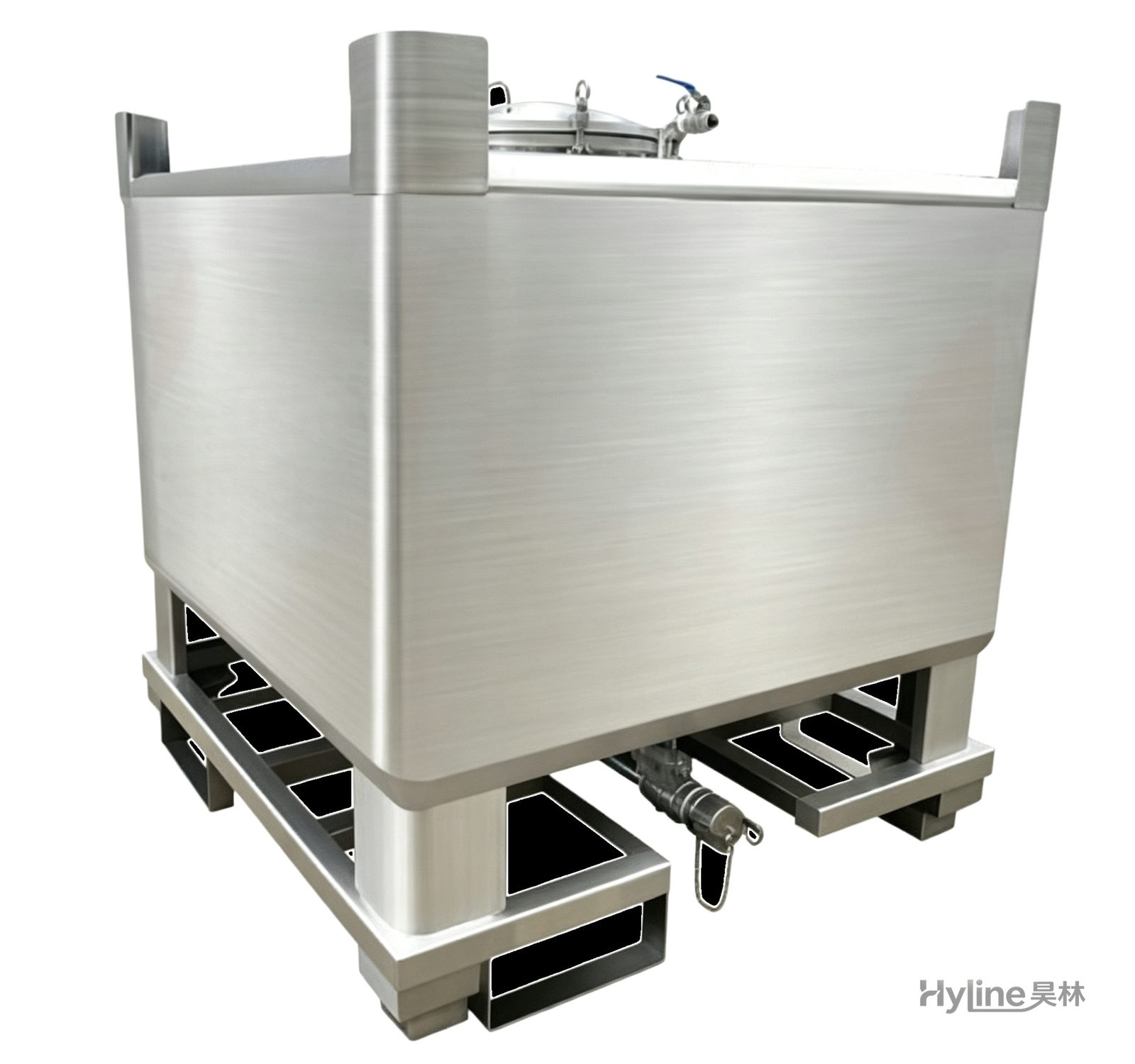
HDPE blow-molded liner with hot-dip galvanized steel frame - UV resistant, anti-aging, easy to clean, non-toxic. Four-way fork base for easy handling and stacking; ideal for liquid storage and transport.
Horizontal Mixer
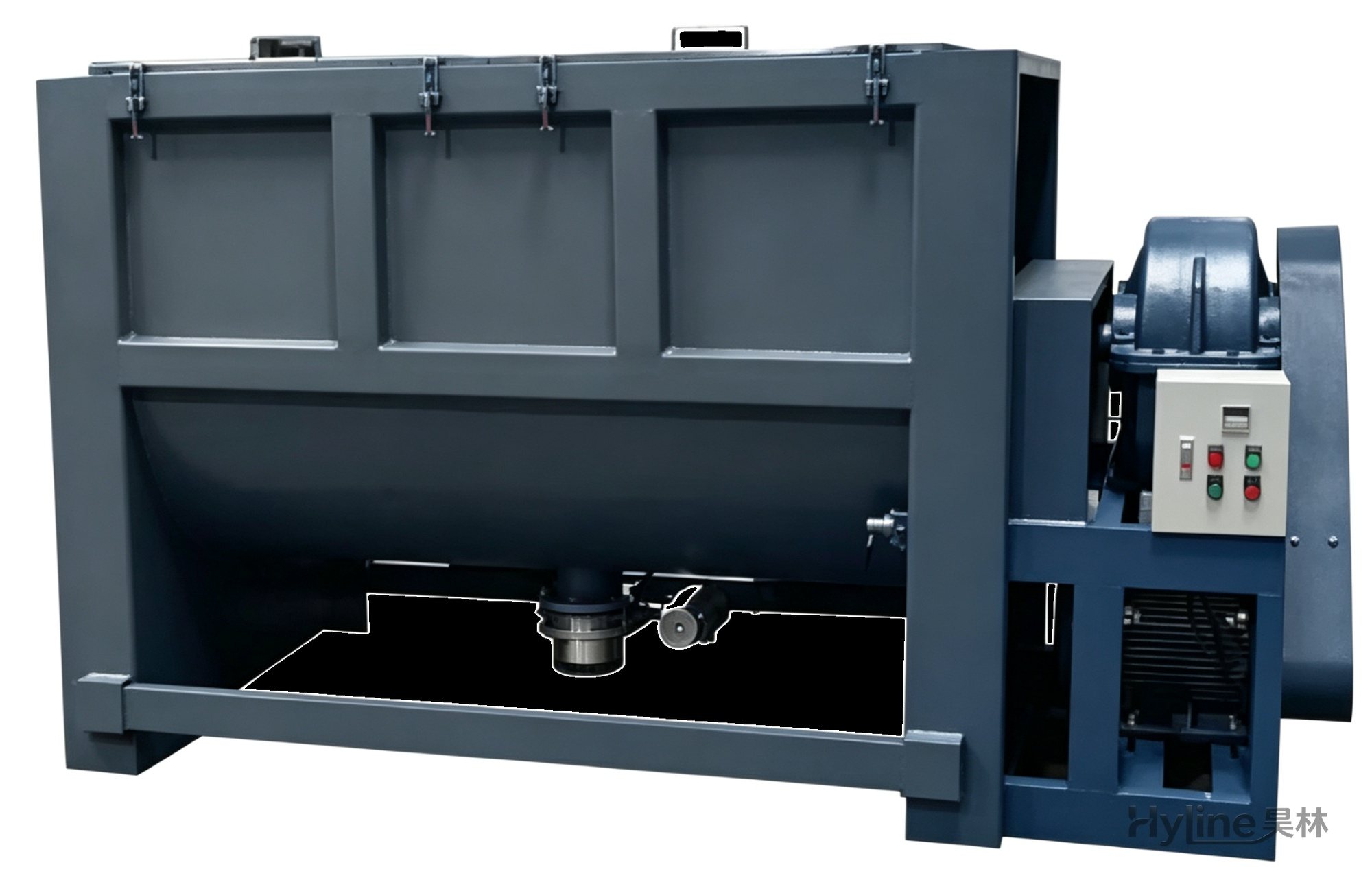
For color blending of plastic pellets, new/old materials and additives. Single-layer for mixing; double-layer with oil heating of 50-150℃ (custom up to 300℃). Ideal for PVC/PP/PE pellets and chemical powders such as calcium carbonate and titanium dioxide.
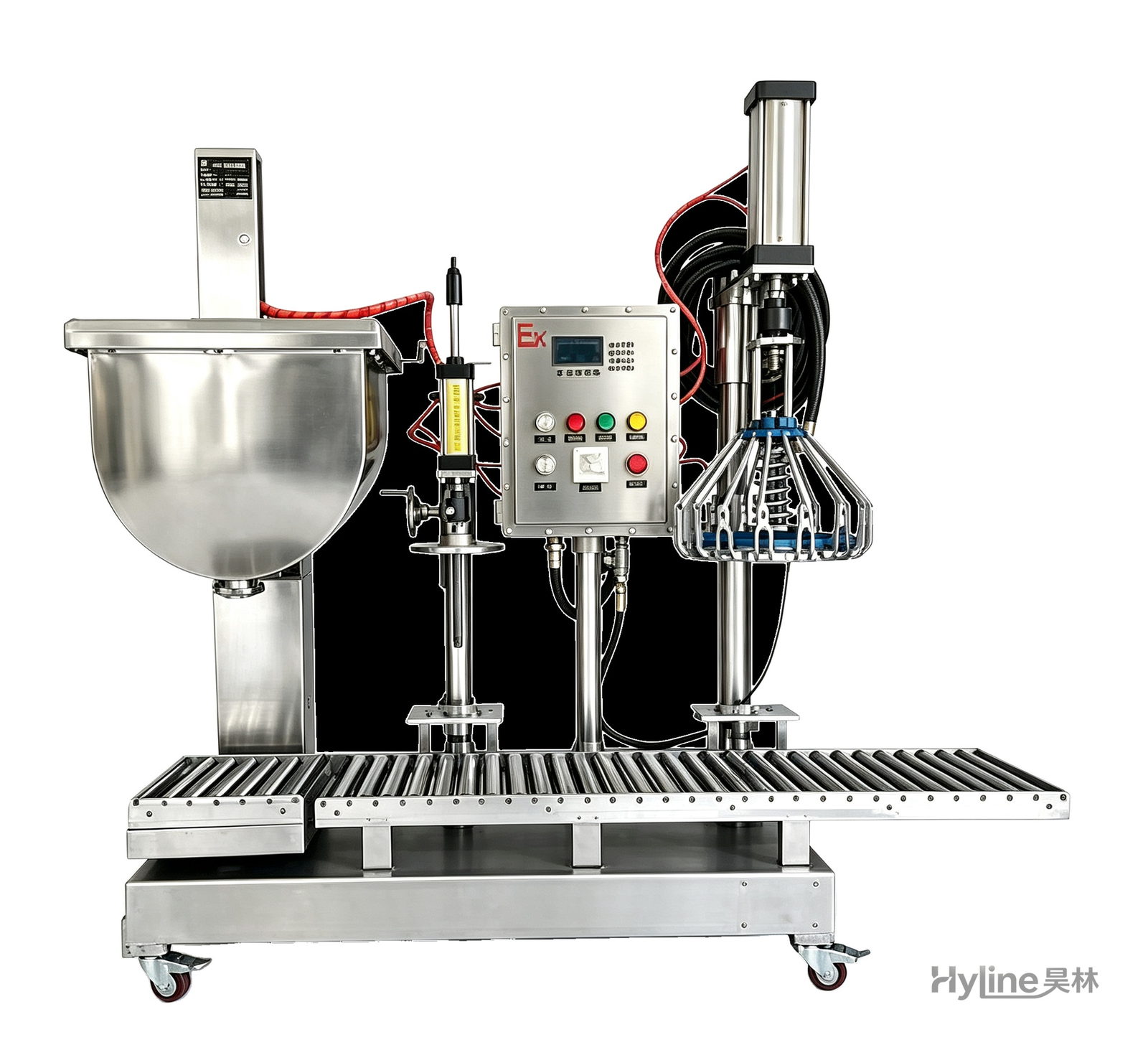
Weighing Semi-Automatic Filling Machine
Designed for frequent packaging changes with dual capping. European weighing technology with Siemens PLC: automatic feed speed adjustment and precision correction, triple protection (emergency stop/power-off/tank removal), explosion-proof fittings.
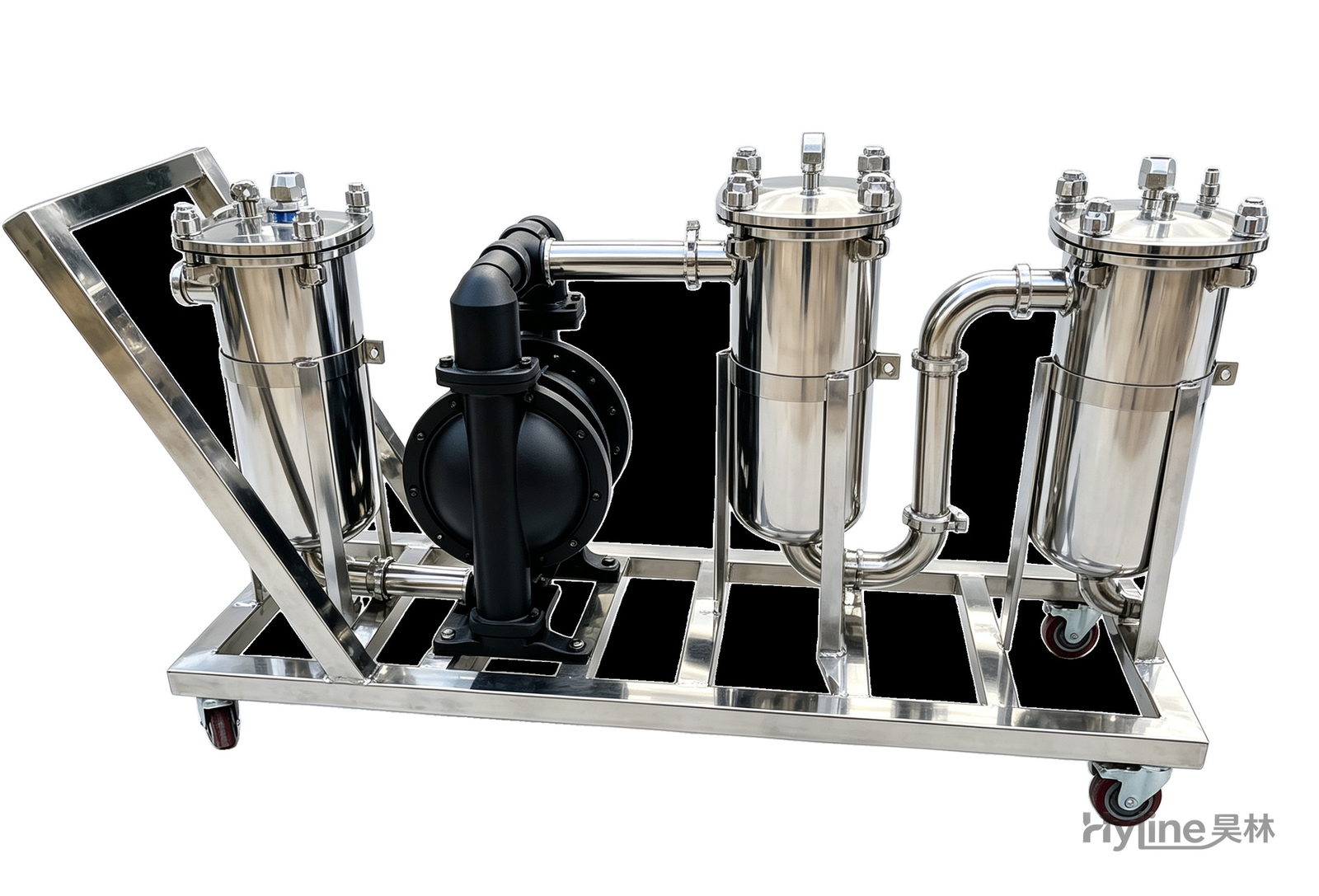
DL Series Bag Filter
A novel, compact, flexible and airtight multi-purpose filter widely used in chemicals, coatings, inks and food. Single and duplex models available, mountable on mobile carts with transfer pumps.