
Should stainless steel storage tanks be mixed? The selection boundary between blending tanks and storage tanks
10/26/2026
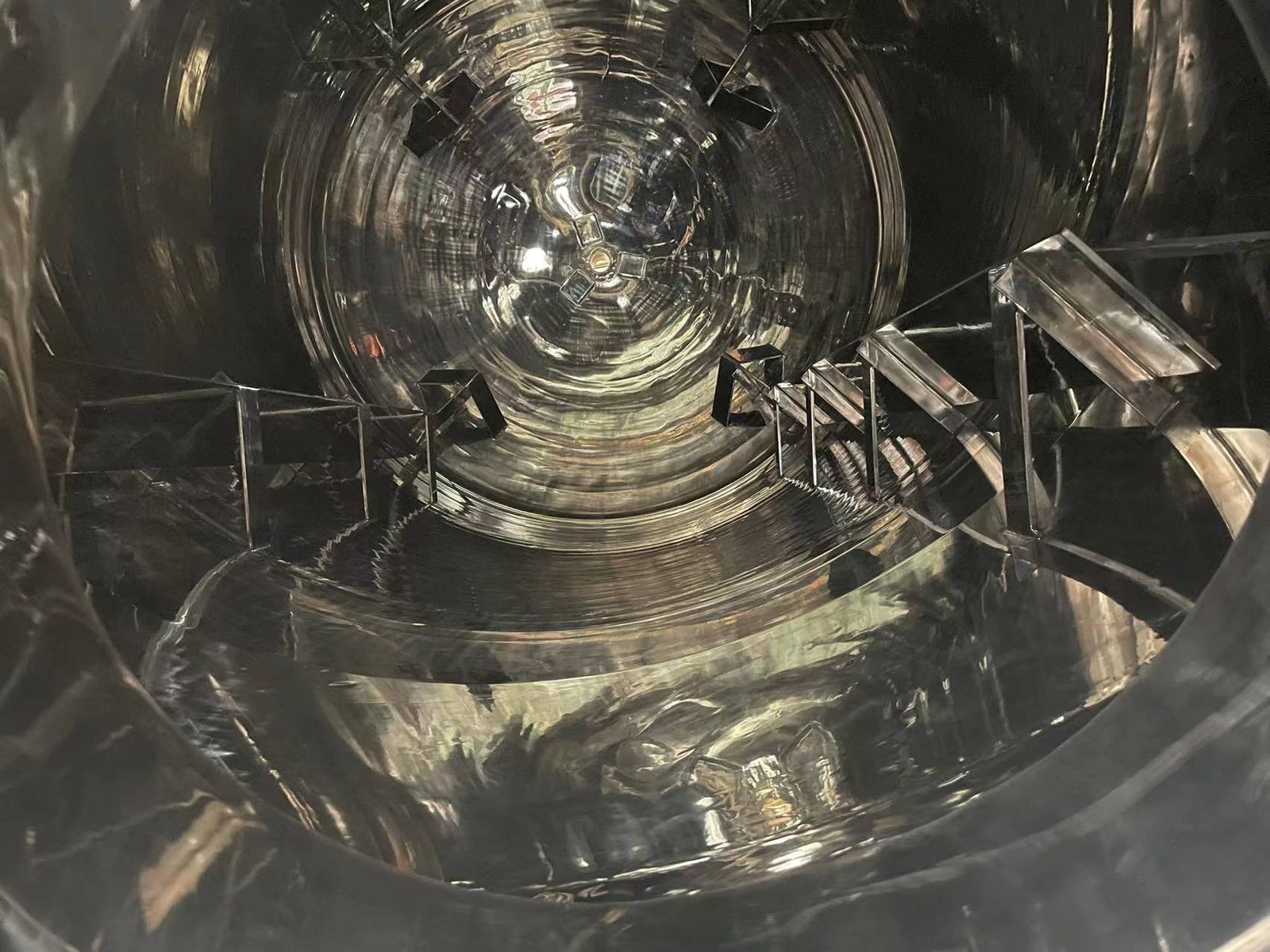
First answer: What situations require mixing for storage tanks?
One sentence conclusion: Long term storage of materials can cause layering, settling, or uneven temperature. As long as downstream materials with stable composition are needed, mixing should be considered for storage tanks.
[Stainless steel storage tank]( https://hyline.cn/zh/products#cat -The use of aux in industries such as chemical, food, and coatings can be divided into two categories: one is pure storage, where materials can be used immediately upon entry and exit, without processing inside the tank; The second is mixing and temporary storage, which requires mixing, homogenization or insulation inside the tank. To determine whether to mix or not, three factors should be considered: whether the material will stratify (emulsion, suspension, multi-component liquid), the length of storage time (hours or days), and downstream requirements for batch consistency. The common practice in the industry is that pure storage tanks do not require mixing, and are responsible for mixing, blending, or mixing tanks that require uniform temperature, known as "mixing tanks".
The blending tank and the mixing tank are structurally similar, but the core difference is the task: the blending tank focuses on uniformity and discharge, while the mixing tank may also have to undertake more functions such as reaction and heat exchange.
##How to choose between blending tanks and pure storage tanks?
One sentence conclusion: Based on functional positioning and selection, tanks equipped with mixing have additional requirements for motors, shaft seals, baffles, and tank bottom grooves, resulting in higher costs and maintenance.
|Comparison item | Pure storage tank | Mixing tank (with mixing)|| --- | --- | --- ||Main tasks | Storage, turnover | Mixing, homogenization, insulation and temporary storage||Mixing configuration | None | Top entry or side entry||Bottom of the tank | Flat or conical bottom discharge | Bottom slope towards the discharge port, priority given to discharge completely||Shaft seal | None (no opening on the top of the tank) | Mechanical seal or packing seal||Cleaning | Regular rinsing | Regular cleaning ball, designed according to CIP||Cost and maintenance | Low | High, motor and seal require maintenance|
If the same tank needs to be stored and temporarily allocated, selecting and allocating tanks in one step is more convenient; It is more economical to only do transit in the long term and store pure tanks. Here's a reminder: retrofitting with post mixing is much more expensive than new construction, as the top opening, reinforcement, and sealing of the tank need to be reworked. The selection stage is the most cost-effective.
How to choose the mixing method: top in or side in?
One sentence conclusion: The top entry type is mainly used for small tanks, while the side entry type is used for large tanks or when installation is restricted; Horizontal tanks with a large aspect ratio generally do not require top mixing.
Top in mixing structure is simple and easy to maintain, generally suitable for vertical storage tanks of 1-50 cubic meters, and is also the mainstream configuration of mixing tanks. Side entry mixing device is installed on the lower side wall of the tank, with the motor and reducer close to the tank body. It is generally used for large tanks with a capacity of more than 30 cubic meters or in situations where equipment cannot be installed on the top of the tank; The side entry type has requirements for the liquid level inside the tank. When the liquid level is low, the stirring effect will decrease, and it needs to be evaluated according to the liquid level range.
For storage tanks with a large aspect ratio (slender tanks), the top mixing shaft is too long and there is a high risk of swinging. In the industry, side entry or alternative tank types are generally considered. When the medium is highly corrosive or requires sterile conditions, top in mechanical seals are more mature and should be given priority consideration.
How to match the paddle type?
One sentence conclusion: For low viscosity, use propeller or blade impellers, while for medium to high viscosity, use anchor or ribbon impellers. The purpose of mixing is "uniformity" rather than "shearing".
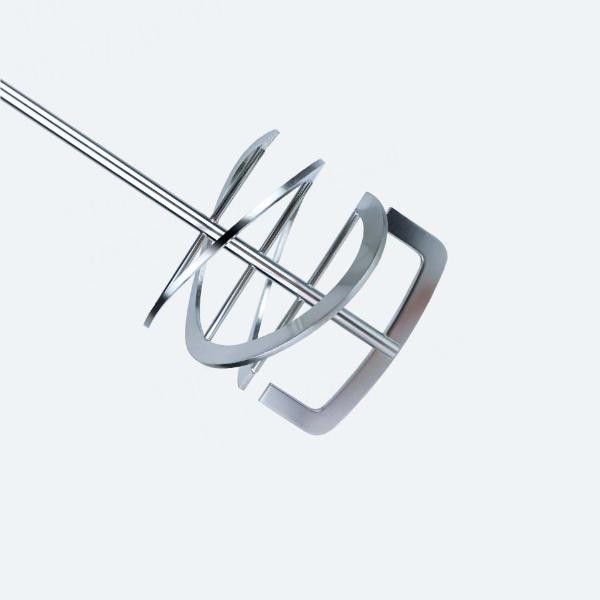
The goal of tank mixing is to mix the materials evenly, and generally does not require high shear. Low viscosity aqueous materials (several to several hundred mPa · s) can be propelled or bladed with propellers, which have large circulation and fast mixing; Medium viscosity (several hundred to several thousand mPa · s) using turbine or helical propellers; For high viscosity materials (generally exceeding 5000 mPa · s), anchor paddles or helical paddles are used, combined with a scraping structure to reduce wall hanging. The anchor propeller is close to the tank wall and can also improve the temperature uniformity near the heat transfer surface.
The ratio of stirring blade diameter to tank diameter also affects the effect. In the industry, the blade diameter is generally selected to be about 0.5-0.7 of the tank diameter, with specific adjustments made according to the material and tank type. The number of blade layers depends on the liquid level height, and high-level tanks are generally equipped with multiple layers of blades.
How to estimate power and speed?
One sentence conclusion: Low viscosity mixing has low power demand, and industry experience values are generally in the range of 0.3 to 1 kilowatt per cubic meter; High viscosity is calculated separately based on propeller type and viscosity.
The speed is adjusted inversely proportional to viscosity: low viscosity materials generally have a speed of 50-300 revolutions per minute, while high viscosity anchor or screw belts generally have a speed of 10-60 revolutions per minute. There is no unified formula for power estimation. In the industry, low viscosity homogeneous mixing is often initially selected based on an empirical range of 0.3-1 kW/m3 per unit volume power, and then calculated based on actual material viscosity, tank diameter, and blade type; It is recommended to calculate the mixing power for high viscosity materials or refer to similar equipment to avoid selecting a small motor that leads to insufficient speed and a large one that wastes energy consumption.
Variable frequency speed regulation is generally recommended to be equipped, and the speed can be adjusted on site when the material level and viscosity change, which also facilitates the switching of processes between different batches.
 ##How to match sealing, cleaning, and accessories?
One sentence conclusion: The sealing is selected according to the medium, the cleaning is determined according to the batch replacement frequency, and the liquid level and anti overflow accessories are matched according to the storage and mixing requirements.
The top in mixing shaft passes through the top of the tank and needs to be sealed: mechanical seals or skeleton oil seals are generally used for aqueous media, and mechanical seals are used for solvent, corrosive, or sanitary grade fields. If necessary, both end faces should be flushed. The top of the tank should also be equipped with a manhole or handhole for easy maintenance, mixing, and cleaning. Cleaning is designed according to the frequency of material replacement, and for small batch production of multiple varieties, cleaning balls are generally used for CIP. Long term storage of a single variety can be simplified. In terms of accessories, the mixing tank is generally equipped with a liquid level gauge and a thermometer. The inlet and outlet ports are selected according to the flow rate, and the bottom discharge pipe is kept as short and straight as possible.
How to mix the tank structure with the tank bottom?
One sentence conclusion: The selection of mixing type should be determined together with the tank structure, and the form of the tank bottom, the position of the baffle and the discharge valve are mutually influenced. Separating them can easily lead to problems.
There are three common types of tank bottoms: flat bottom, conical bottom, and disc-shaped bottom. Flat bottom structure is simple and cost-effective, but it has poor drainage and many mixing dead corners. It is generally used for storage tanks with low requirements; The conical bottom is conducive to clearing and stirring the flow field, and is commonly used in mixing tanks; The disc-shaped bottom is well stressed and suitable for pressure bearing or large-diameter applications. The distance between the stirring blade and the bottom of the tank affects the bottom flow velocity. If the distance is too large, the bottom of the tank is prone to material accumulation, while if it is too small, the blade interferes with the discharge valve. The function of baffles is to convert tangential flow into axial flow, and low viscosity tanks are generally equipped with 2-4 baffles; When anchor or screw propeller is used for high viscosity materials, the baffle effect is weakened and can be omitted.
The guide tube is used in some large tanks to enhance axial circulation, suitable for situations that require up and down circulation, but it will increase the difficulty of cleaning. Do we need to weigh the material and tank type. The discharge outlet at the bottom of the tank should avoid the flushing area directly below the mixing, while ensuring a clear discharge slope. These two points should be determined on the structural diagram.
Common selection misconceptions
One sentence conclusion: The larger the mixing, the better; the higher the power, the better; ignoring sealing and low liquid levels; and leaving blind spots for cleaning are the four most common misconceptions in tank mixing.
The first misconception is that the larger the mixing, the better: the motor and blades exceed the requirements, resulting in high energy consumption and shear, and some materials may be "damaged". Therefore, it is appropriate to select according to the tank diameter, viscosity, and target. The second type is power brainstorming: not estimating based on empirical values of power per unit volume, nor distinguishing between low viscosity and high viscosity, choosing low speed is insufficient, and choosing high speed is wasteful. The third type is to ignore sealing and low liquid level: the shaft seal of top entry mixing is selected according to the medium, while the effect of side entry mixing decreases at low liquid level, and these two points are often exposed after operation. The fourth category is cleaning with dead corners: mixing shafts, baffles, and guide vanes increase the difficulty of cleaning, and CIP coverage is particularly important for small batch production of multiple varieties.
By comparing these four types of misconceptions one by one during the selection stage, most of the problems can be digested in advance on the drawings. Our factory can provide mixing configuration suggestions based on material viscosity, tank diameter, and batch requirements. We welcome technical communication.
Summary of Selection Process
One sentence conclusion: First, determine the function (storage or mixing), then determine the mixing (form, blade type, power), and finally supplement the seal and accessories. The three-step process will not be wrong.
1. Clarify the material type, viscosity, storage time, and downstream uniformity requirements;2. Determine the tank capacity and loading coefficient (usually 0.7-0.9) to determine whether mixing is required;3. When mixing, choose top entry or side entry, and adjust the propeller type and speed according to viscosity;4. Estimate power and reserve frequency conversion;5. Equipped with sealing, manhole, liquid level and cleaning accessories, the discharge port is designed according to the requirements for discharge.
What should be asked during the communication of the plan?
One sentence conclusion: Material viscosity, tank capacity and liquid level range, batch change frequency, downstream uniformity requirements, these four questions can quickly determine whether to stir and how much to mix.
When communicating the tank plan, first clarify the material name and viscosity range, then provide the tank capacity and normal liquid level range, explain the batch change frequency (determining the cleaning configuration), and finally discuss the downstream requirements for uniformity (determining the necessity of mixing). The supplier checks the tank type, mixing, and accessory configuration based on this to avoid missing or overfitting. Our factory can provide tank and mixing configuration suggestions based on these four pieces of information. We welcome technical communication.
The essence of tank mixing is to match the "mixing capacity", and the capacity and power should match the material and batch targets, rather than the larger the better; Talking about solutions with data and working conditions is more effective than asking prices in a vague manner.
Summary
Whether the storage tank is mixed or not is essentially a matter of whether the materials are evenly distributed. Pure storage is not suitable, and mixing and homogenization must be matched. The mixing form, blade type, and power are determined according to the tank capacity and viscosity, and accessories are supplemented according to process requirements. Selecting based on functional positioning can avoid additional costs or missing key configurations. Our stainless steel storage tanks and mixing tanks can be customized according to materials and working conditions. We welcome technical communication.
Extended reading:-How to configure liquid level measurement for stainless steel storage tanks( https://hyline.cn/zh/technology/storage-tank-level-measurement-guide )-How to choose stainless steel storage tanks according to their usage scenarios( https://hyline.cn/zh/technology/stainless-storage-tank-selection-by-scenario )
This article is compiled by Haolin Shengda Equipment Manufacturing Co., Ltd. (HYLINE. cn), which specializes in stainless steel reaction vessels, mixing tanks, storage tanks, dispersers, concentration tanks, and chemical production line accessories, and supports non-standard customization.
Q&A from this article
Frequently asked questions and answers from this article
One sentence conclusion: For low viscosity, use propeller or blade impellers, while for me…
Related Products
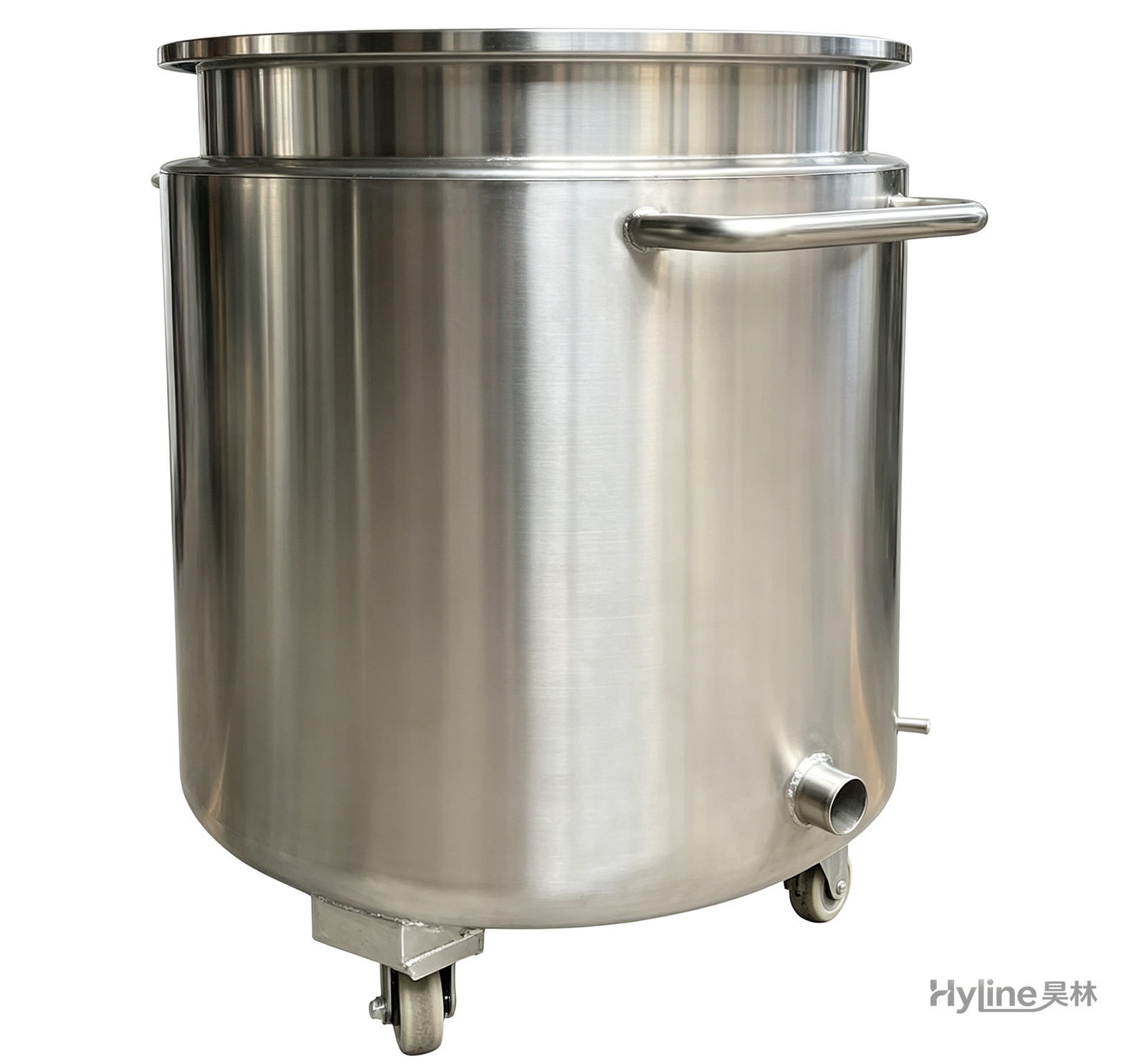
Stainless Steel Mixing Tank (Dispersion Drum)
Supporting vessel for dispersers and mixers in paints, coatings, adhesives, color slurries, inks and electronics. Available in 201/304 stainless with internal/external polishing and sloped bottom side discharge for complete draining.
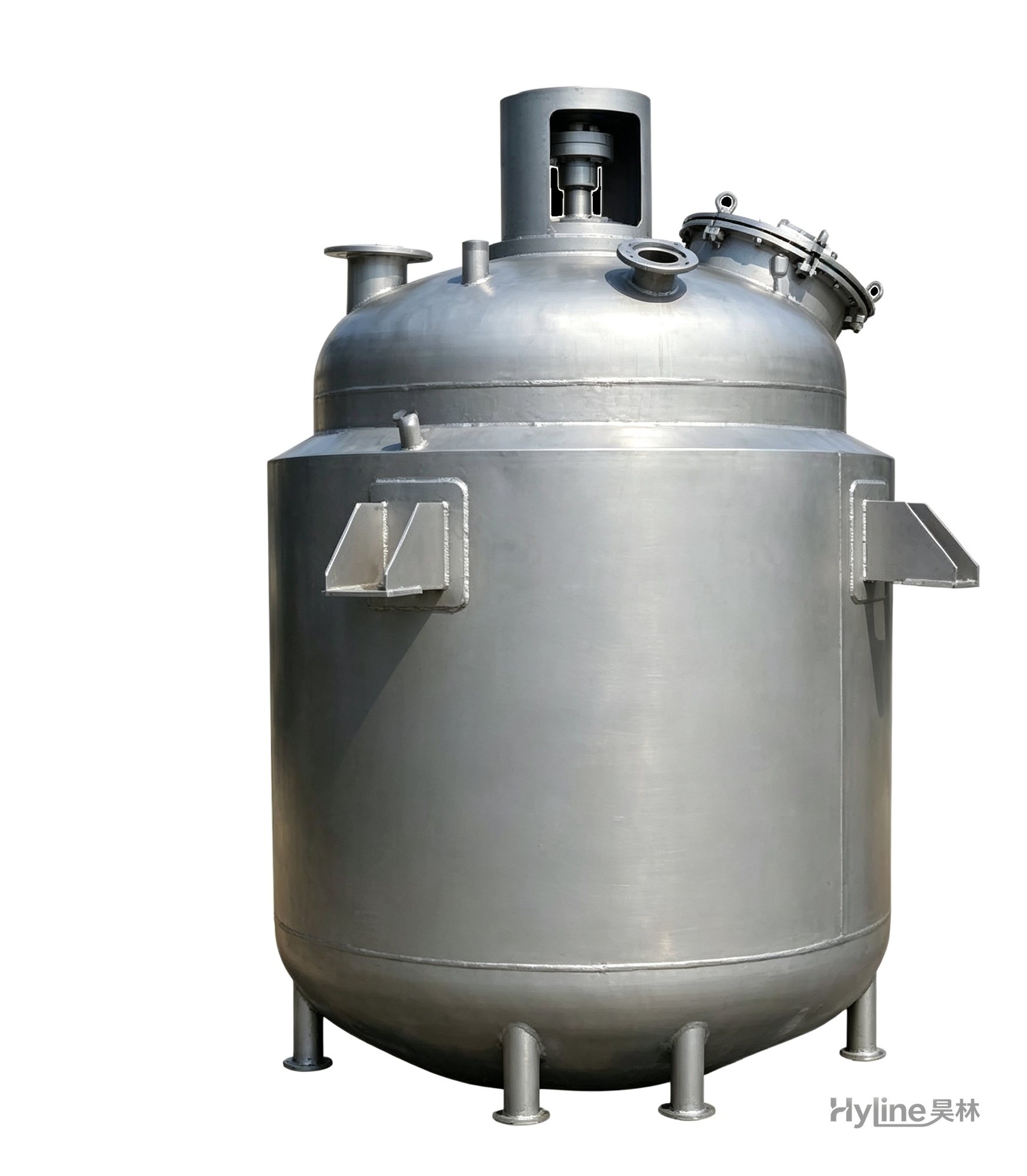
Jacketed Reactor
The typical main reaction vessel in chemical production. Mixing, heating and cooling disperse and mix materials for reaction and polymerization. The jacket circulates thermal oil/steam for heating or cooling water for temperature control.
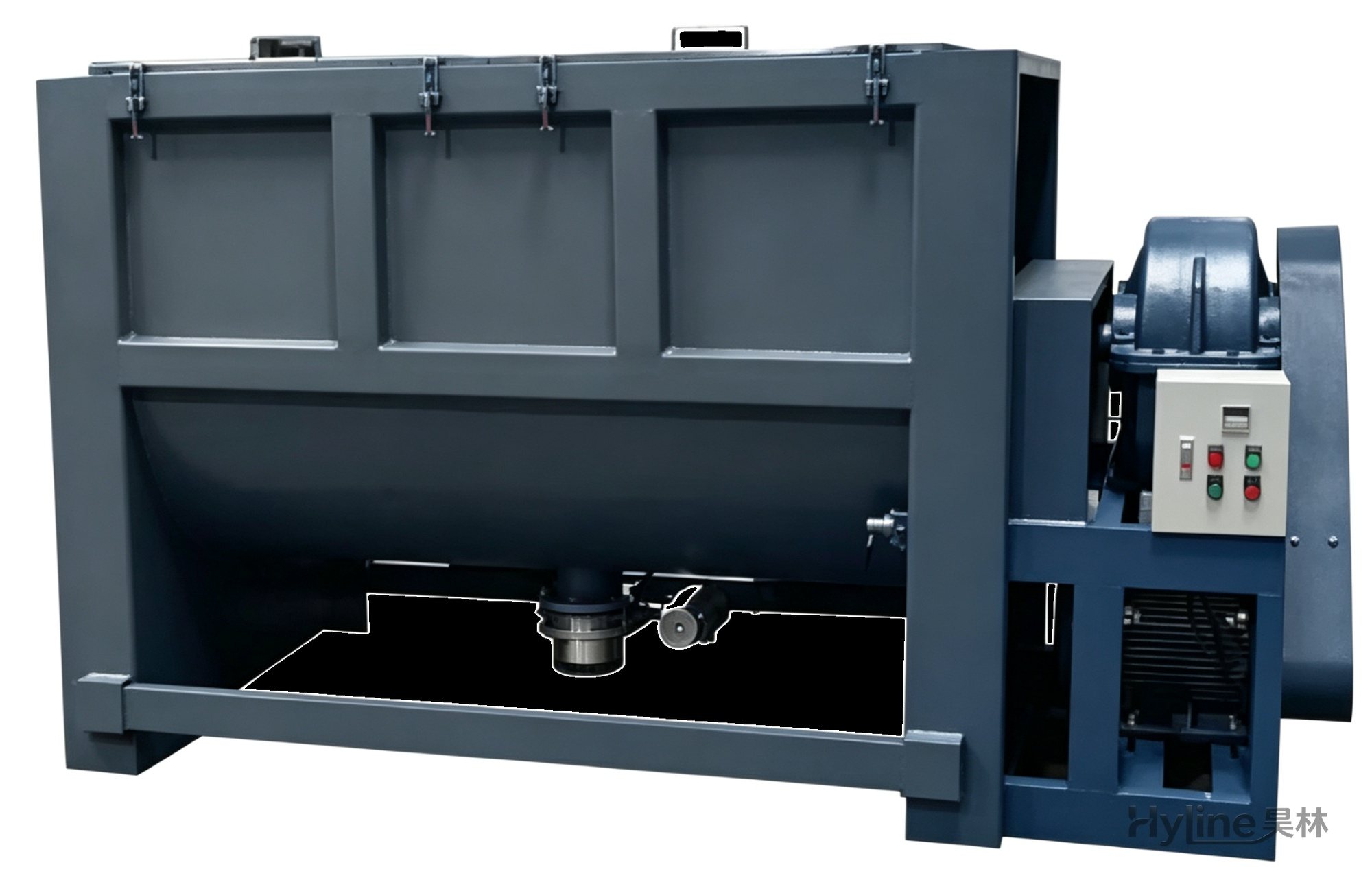
Horizontal Mixer
For color blending of plastic pellets, new/old materials and additives. Single-layer for mixing; double-layer with oil heating of 50-150℃ (custom up to 300℃). Ideal for PVC/PP/PE pellets and chemical powders such as calcium carbonate and titanium dioxide.
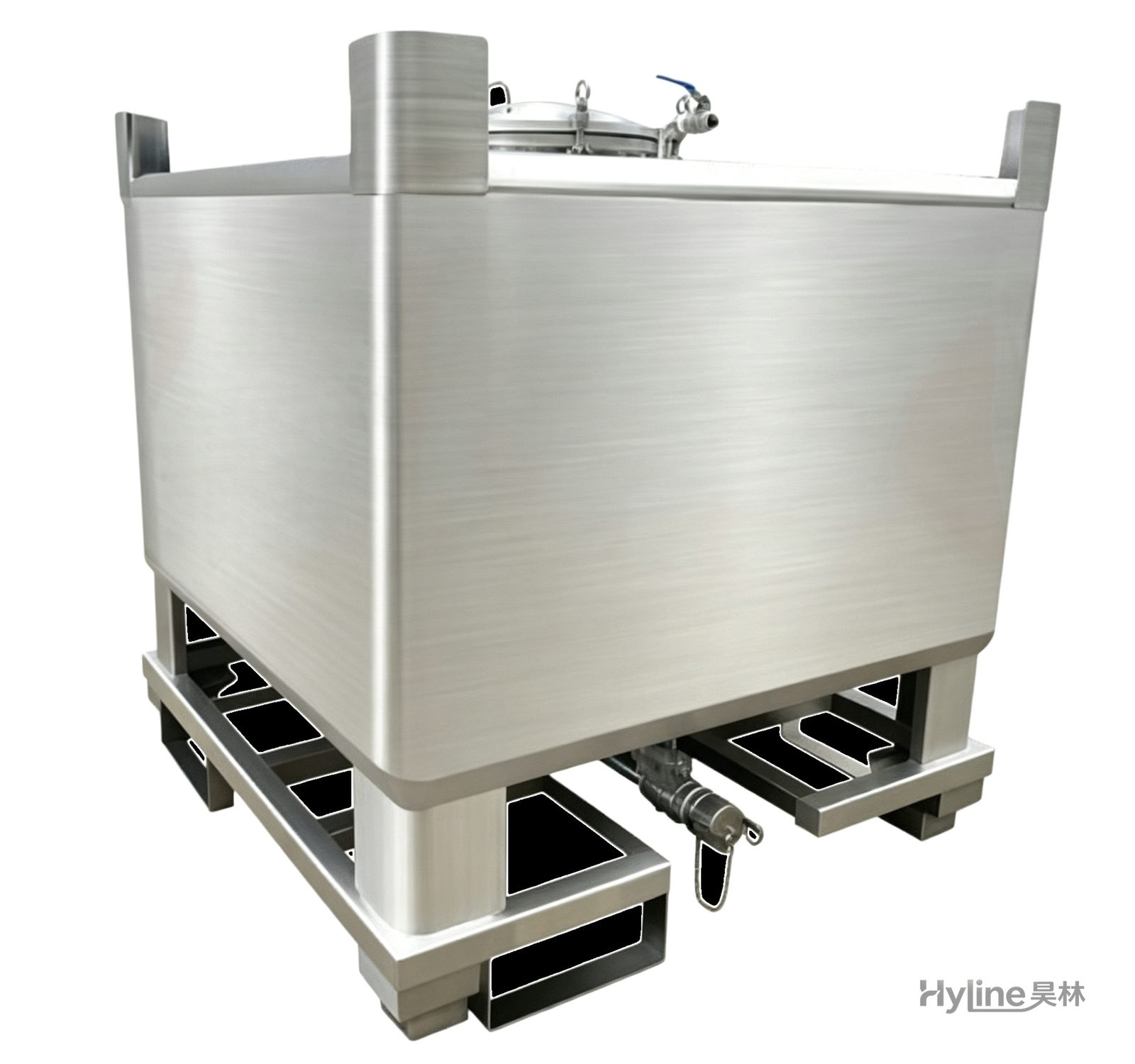
IBC Tank (Intermediate Bulk Container)
HDPE blow-molded liner with hot-dip galvanized steel frame - UV resistant, anti-aging, easy to clean, non-toxic. Four-way fork base for easy handling and stacking; ideal for liquid storage and transport.