
How to measure the level of a stainless steel storage tank? Radar, magnetic flap gauge and weighing module selected by medium and cleanliness
10/25/2026
# How to measure the level of a stainless steel storage tank? Radar, magnetic flap gauge and weighing module selected by medium and cleanliness
When the level reading of a stainless steel storage tank is inaccurate, it causes more trouble in a batching line than a leak: a falsely high level pushes open the overflow outlet and the liquid flows into the drain along the vent pipe on the tank top; a falsely low level makes the transfer pump run dry at a low liquid level, the mechanical seal wears and the pump cavity pulls vacuum, stopping the material flow at best and burning the pump at worst; an error in the middle level directly affects the recipe ratio, and only after a whole batch is finished does it become clear that the ratio is wrong, with rework cost far beyond the price of one level gauge. Many workshops respond by buying a more expensive instrument, but most inaccuracy is not an instrument accuracy problem; it is a mismatch between the measurement scheme and the medium condition. This article explains three mainstream schemes - radar level gauge, magnetic flap level gauge and weighing module - which conditions each suits, and how to select them by medium and cleanliness.
Why is the level measurement inaccurate? First distinguish contact and non-contact types
One-sentence conclusion: contact instruments are afraid of fouling and adhesion, while non-contact instruments are affected by foam, vapour and changes in dielectric constant; the first step in selection is to rule out forbidden schemes according to the medium characteristics.
There are three common types of medium in stainless steel storage tanks: clear liquid, solid-containing suspension and viscous paste. Clear liquid is not a problem with any scheme; the trouble comes from the latter two. Solid-containing liquid easily fouls the probe surface, and viscous material sticks to the float or probe rod; if these two types use contact measurement, reading drift is only a matter of time. Conversely, a foam layer, boiling vapour and low-dielectric-constant media (generally solvents with a dielectric constant below 1.5) interfere with the echo judgement of non-contact radar. So the selection order is not to choose a brand first, but to classify the medium, cross out forbidden schemes, and then compare the accuracy and cost of the rest.
What conditions suit a radar level gauge?
One-sentence conclusion: radar is non-contact measurement, suitable for viscous, easily fouling, solid-particle media, with typical accuracy within ±2mm, but thick foam, strong vapour and low-dielectric-constant conditions need frequency-band selection.
A radar level gauge measures distance by transmitting electromagnetic waves and receiving the echo from the liquid surface; the probe does not touch the liquid, so the influence of fouling and adhesion is small. For chemical storage tanks at normal temperature and pressure, the measurement accuracy of frequency-modulated continuous-wave radar is generally up to ±2mm, and the range is configured according to the tank height, normally 0-30m. When the dielectric constant of the medium is low, the liquid surface has thick foam or there is obvious vapour inside the tank, the echo attenuates noticeably; generally it is recommended to switch to guided-wave radar or a low-frequency model. Guided-wave radar conducts along the probe rod and has stronger resistance to foam and vapour interference. Note that radar measures the distance to the liquid surface; if there is long-term wall hang-up or bottom sediment in the tank, keep a calibration margin when converting to level.
When should a magnetic flap level gauge be used?
One-sentence conclusion: the magnetic flap gauge is a local visual measurement - intuitive, powerless and not afraid of power failure - suitable for atmospheric, high-transmittance, non-fouling media and storage tank inspection, with typical accuracy of ±5-10mm.
A magnetic flap level gauge consists of a measuring tube and a float. The float rises and falls with the liquid surface, and magnetic coupling drives the flap columns to change colour, so the level can be seen at a glance beside the tank. It needs no power supply and has a low failure rate; it suits use as a local reference in addition to the main instrument, and also for tanks that need inspection confirmation. The typical range accuracy is at the ±5-10mm level, which meets the local observation needs of storage tanks and batching tanks. The limitations are also clear: when the medium is viscous or solid-containing, the float and flap columns easily stick; when the tank pressure is too high, the glass tube or flap columns have a leakage risk; such conditions should not rely on a magnetic flap gauge alone.
How does a weighing module solve the foam and fouling problem?
One-sentence conclusion: a weighing module measures mass rather than level, and is naturally immune to foam, fouling and dielectric constant changes; batching accuracy is generally up to 0.1%-0.2% of full scale, suitable for batch processes that batch by mass.
A weighing module treats the whole storage tank as the weighing object, measures the material mass through leg sensors, and then converts it to level by density or uses it directly as the batching basis. Foam, fouling, vapour and dielectric constant have no influence on it, which is why the weighing scheme is irreplaceable in batching lines. According to common industry experience, the repeatability accuracy of static weighing is generally up to 0.1%-0.2% of full scale, which usually meets the batch accuracy requirements of batching. The prerequisites are that the tank support must be designed for weighing, the inlet and outlet pipes must use flexible connections, and stirring, vibration and pipe stress all enter the weighing reading, so dynamic-load conditions need filtering.
How to compare and select the three schemes?
One-sentence conclusion: clean low-viscosity media prefer radar; atmospheric transparent media add a magnetic flap gauge as a local reference; batch batching and foam/fouling conditions choose weighing; key occasions use dual-instrument redundancy.
| Comparison item | Radar level gauge | Magnetic flap level gauge | Weighing module |
|---|---|---|---|
| Measuring principle | Electromagnetic wave echo ranging | Float magnetic coupling flip | Leg weighing conversion |
| Typical accuracy | ±2mm level | ±5-10mm level | 0.1%-0.2% of full scale |
| Contact with medium | Non-contact | Contact | Non-contact |
| Resistance to foam/vapour | By band; guided wave for weak media | Poor | Fully immune |
| Resistance to fouling/adhesion | Good | Poor, easily stuck | Fully immune |
| Local visual display | Needs display meter | Directly visible | Needs display meter |
| Power dependency | Powered | Powerless | Powered |
| Typical application | Chemical storage tank level monitoring | Atmospheric tank inspection | Batch batching and metering |
How to configure high/low alarms and anti-overflow, anti-dry-run?
One-sentence conclusion: normal storage tanks set a high-level alarm and keep the overflow outlet; batching tanks add a low-level interlock to stop the pump; after matching the alarm points with the tank structure, commission them one by one.
Level measurement must finally land on safety interlocks. According to common industry practice, the high-level alarm point is generally set at 90%-95% of full scale, leaving buffer for the level rise; the low-level interlock is generally set 50-100mm above the tank bottom outlet height to avoid pump dry running and vortex air entrainment. The configuration order is: first set the alarm points, then select the instrument range according to the alarm points, and finally do on-site calibration: radar and magnetic flap gauges are compared with the actual level, and the weighing module is calibrated with standard weights or known masses. For batching tanks, three-stage interlocks of high, low and middle levels are recommended, with the feed pump and discharge pump controlled by the high and low signals respectively, eliminating overflow and dry running.
What to do when the on-site reading does not match?
One-sentence conclusion: first rule out zero point and installation conditions, then check medium effects, and finally do multi-point calibration; most inaccuracy can be located on site within 30 minutes.
The troubleshooting order of mismatched readings should follow the probability of influence. The first step is to check the zero point and installation: confirm that the radar installation height and tank bottom reference are correctly entered, the float initial position of the magnetic flap gauge is correct, and the weighing module tare is completed; zero-point error is the most common of all errors. The second step is to check installation conditions: if the radar probe is too close to the tank wall or the inlet, false echoes appear; generally the probe should be no less than 300mm from the tank wall and away from directly below the inlet. If the weighing structure has rigid pipe connections, the reading jumps when the pump starts and stops. The third step is to check medium effects: foam, vapour and wall hang-up correspond to the weak points of the three instruments respectively; rule them out one by one against the forbidden areas above. If it still deviates after these three steps, do multi-point calibration, generally calibrating at empty, half and full levels; this is much more reliable than single-point compensation.
Which four questions should selection answer?
One-sentence conclusion: once the four items of medium characteristics, cleanliness requirements, tank structure and interlock needs are settled, the level scheme is basically determined.
The first question is what the medium is: clear, solid-containing or viscous, and what the dielectric constant and vapour situation are, to cross out forbidden schemes accordingly. The second is the cleanliness requirement: food and pharmaceutical conditions have requirements for probe material and sanitary connections, generally requiring 316L contact material and clamp connections. The third is the tank structure: whether weighing support conditions exist, and whether the tank top has enough instrument openings and maintenance space. The fourth is the interlock need: whether only alarms are needed or pump-stopping linkage is needed; the number of alarm points determines the instrument configuration. After answering these four questions, it is hard to go wrong when discussing brand and budget. If the site frequently switches media, it is recommended to keep room for two independent schemes, for example radar and weighing coexisting, one as the main measurement and one for mutual verification; the cost of tank modification in the early stage is much lower than retrofitting later.
Hyline Shengda produces stainless steel storage tanks and stainless steel mixing tanks, IBC totes, filling machines and other storage, transfer and batching supporting equipment, and supports configuring level measurement and interlock schemes according to medium characteristics. Before making a storage tank scheme, it is suggested to settle the three parameters of storage medium, cleanliness requirement and batching accuracy first, and then discuss the level instrument configuration.
Related reading: - How to drain a stainless steel storage tank completely? Tank bottom slope, discharge outlet and cleaning design essentials - How to configure the safety accessories of a stainless steel storage tank? Breather valve, flame arrester and nitrogen seal by medium
This article is compiled by Hyline Shengda Equipment Manufacturing Co., Ltd. (hyline.cn), mainly producing stainless steel reactors, mixing tanks, storage tanks, dispersers, concentrators and complete chemical lines, supporting non-standard customization.
Q&A from this article
Frequently asked questions and answers from this article
What if an inaccurate level reading of a stainless steel storage tank causes overflow, dry running or batching errors? This article explains the applicable conditions and selection essentials of radar, magnetic flap gauge and weighing module.
Related Products
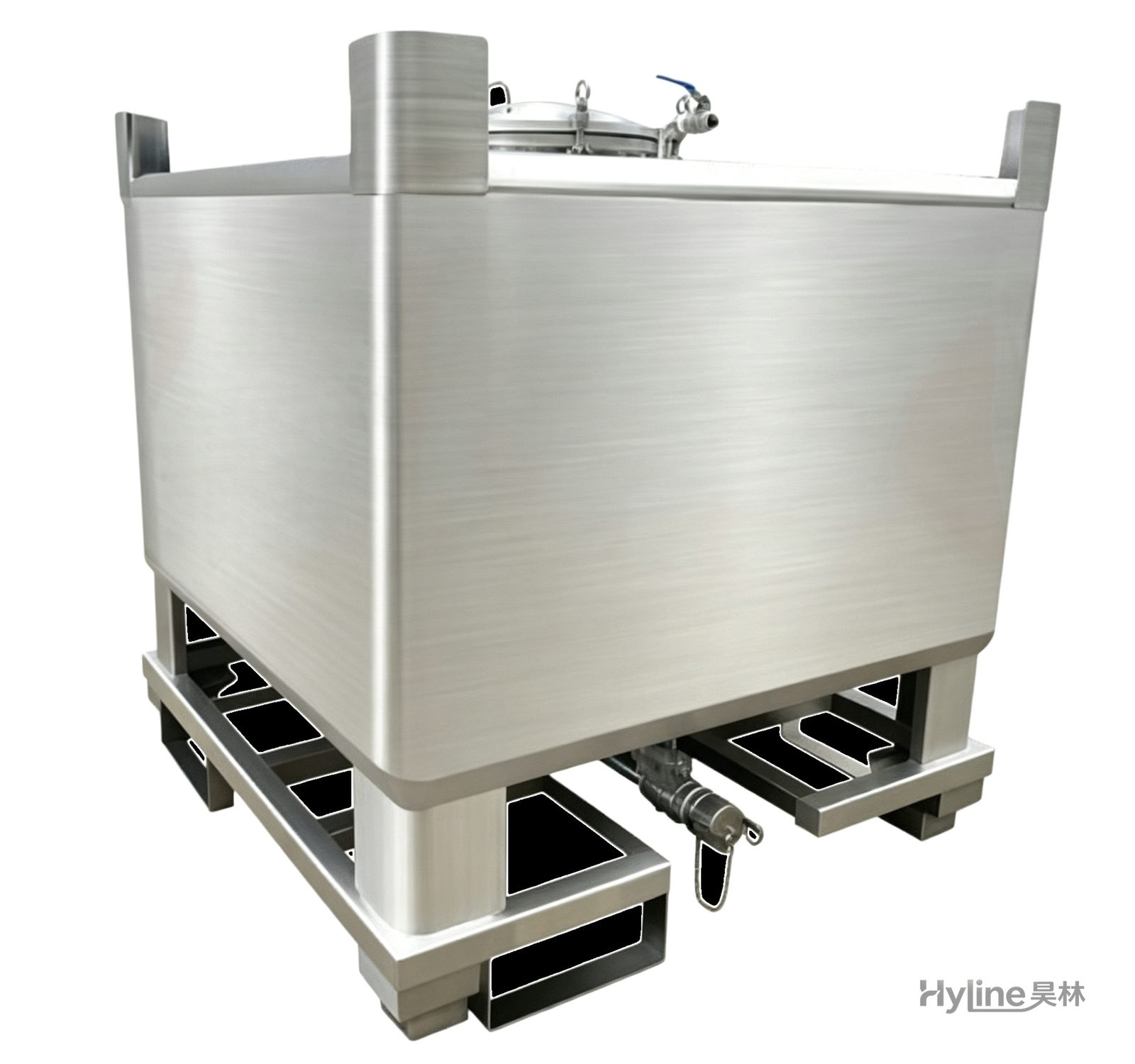
IBC Tank (Intermediate Bulk Container)
HDPE blow-molded liner with hot-dip galvanized steel frame - UV resistant, anti-aging, easy to clean, non-toxic. Four-way fork base for easy handling and stacking; ideal for liquid storage and transport.
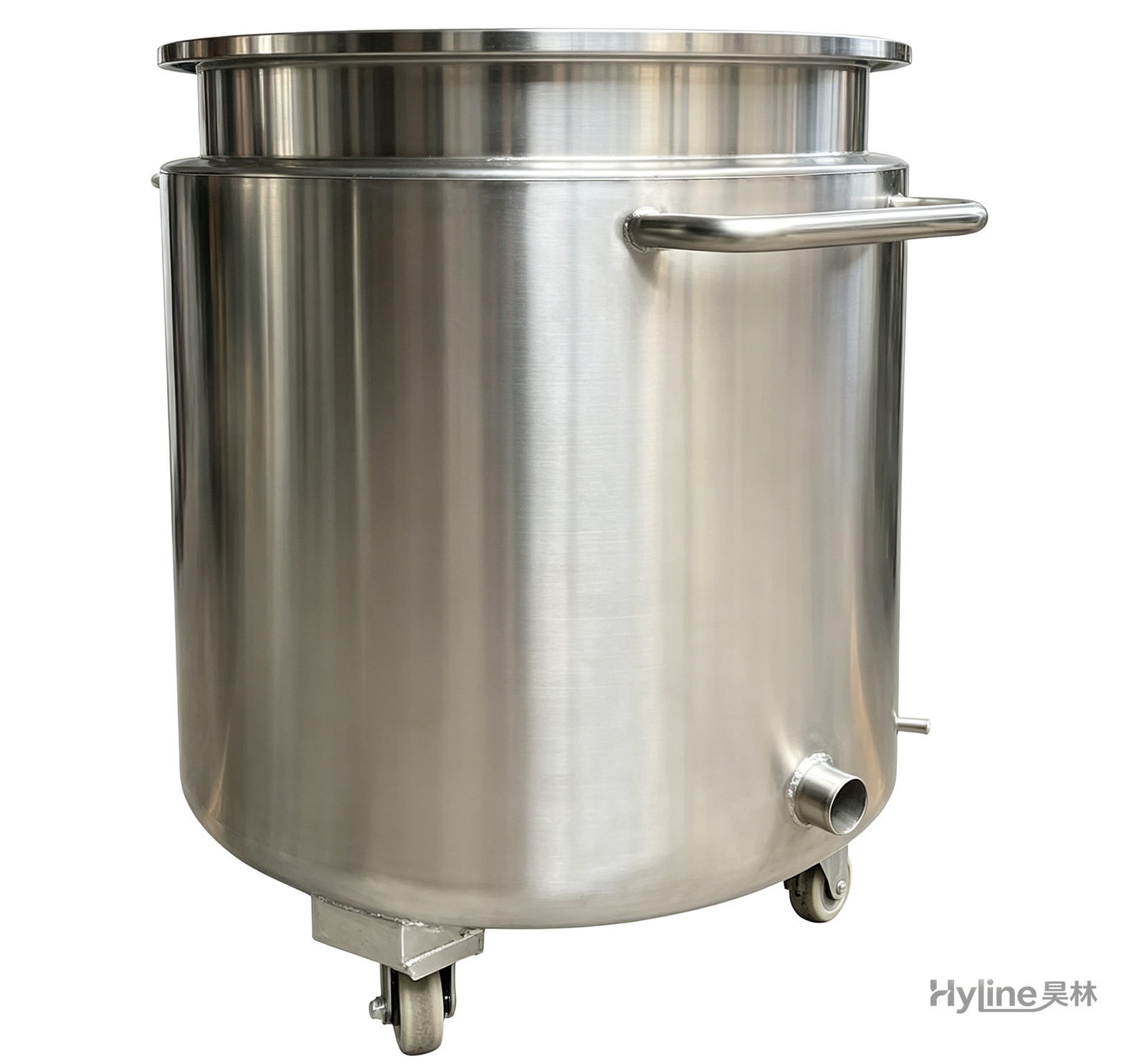
Stainless Steel Mixing Tank (Dispersion Drum)
Supporting vessel for dispersers and mixers in paints, coatings, adhesives, color slurries, inks and electronics. Available in 201/304 stainless with internal/external polishing and sloped bottom side discharge for complete draining.
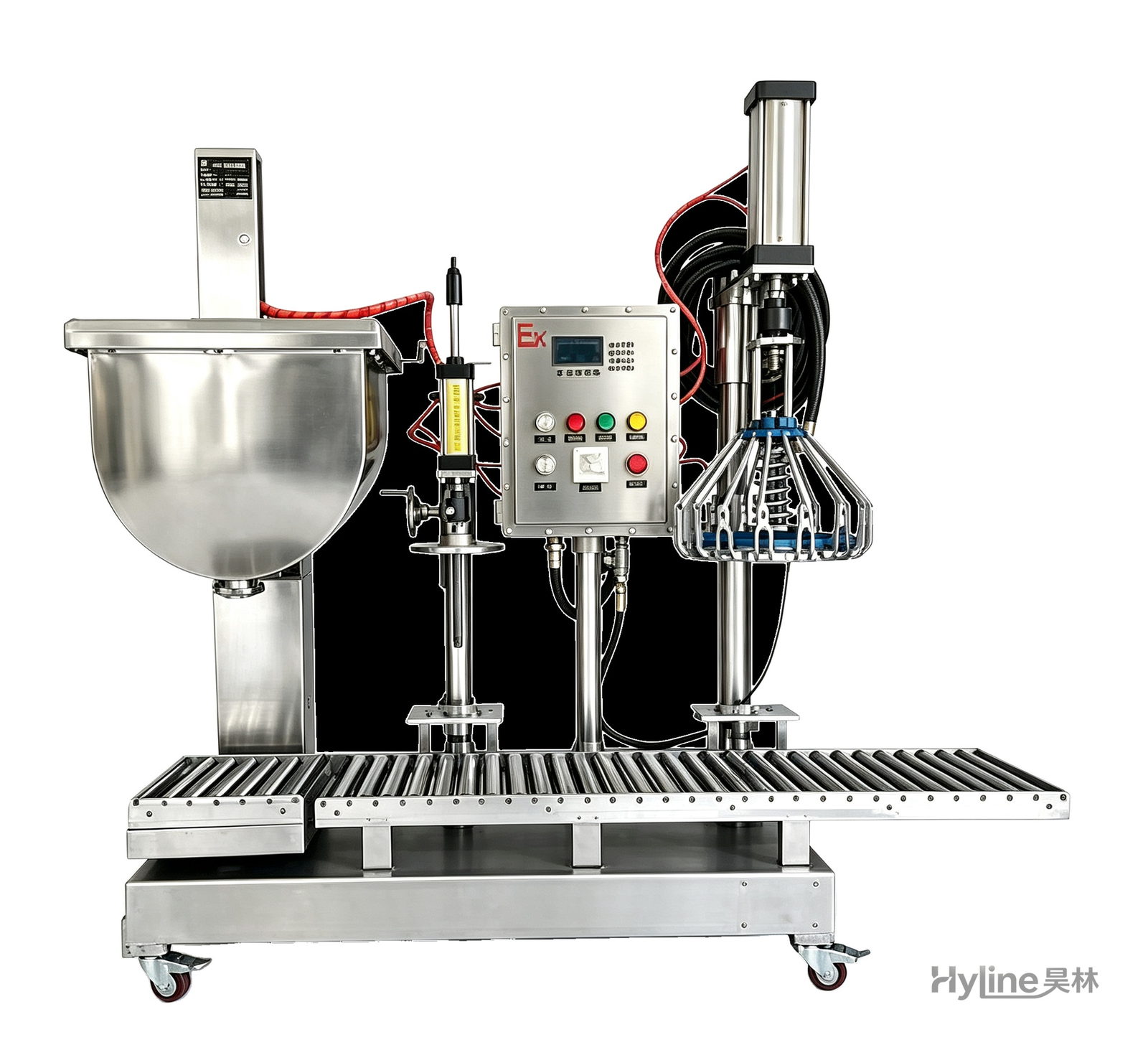
Weighing Semi-Automatic Filling Machine
Designed for frequent packaging changes with dual capping. European weighing technology with Siemens PLC: automatic feed speed adjustment and precision correction, triple protection (emergency stop/power-off/tank removal), explosion-proof fittings.
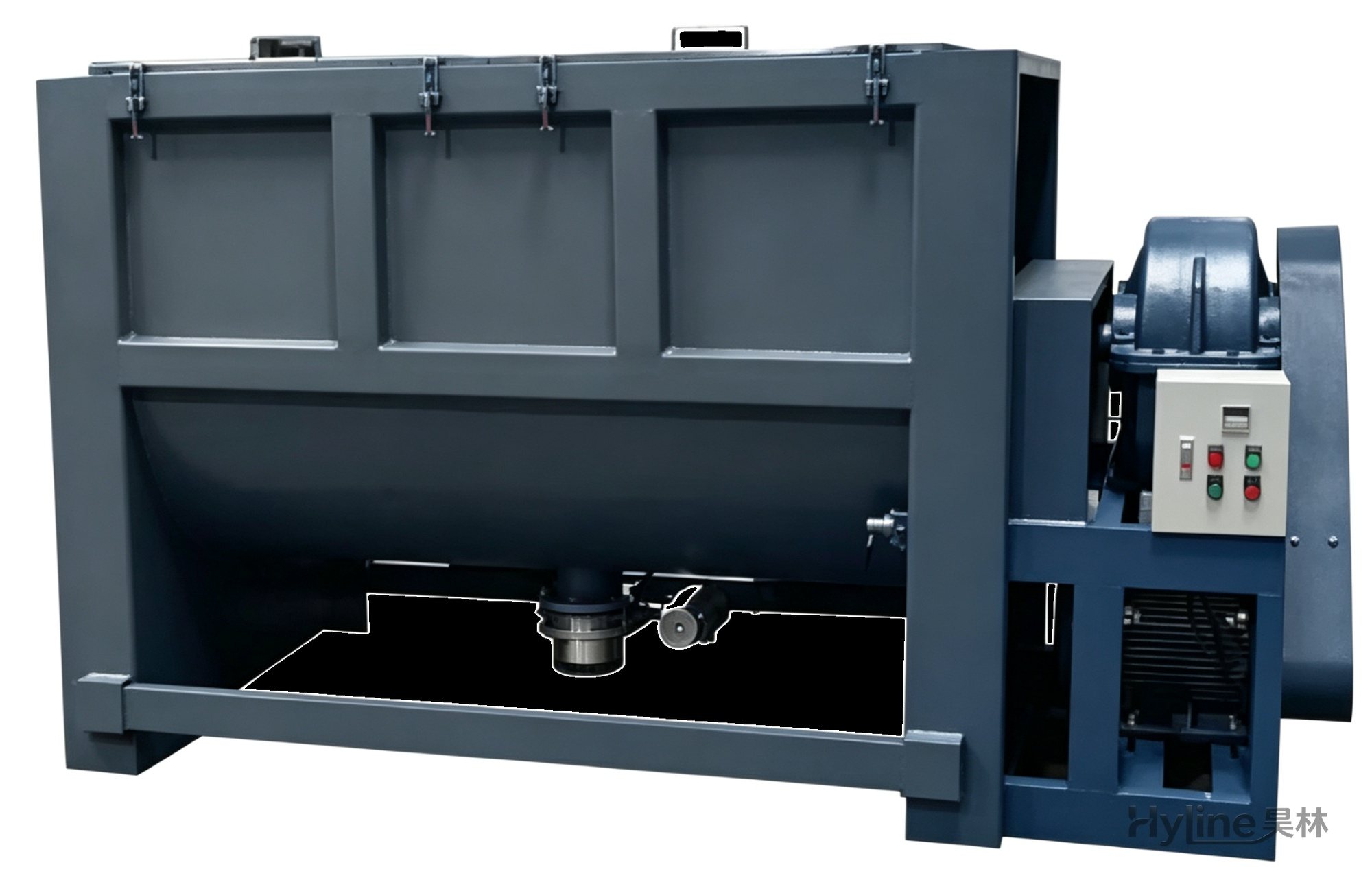
Horizontal Mixer
For color blending of plastic pellets, new/old materials and additives. Single-layer for mixing; double-layer with oil heating of 50-150℃ (custom up to 300℃). Ideal for PVC/PP/PE pellets and chemical powders such as calcium carbonate and titanium dioxide.