
How to Select a Stainless Steel Storage Tank by Medium? Tank Type and Accessories for Corrosive, Flammable and Food-Grade Media
10/10/2026
How to select a stainless steel storage tank by stored medium? Tank type and accessories for corrosive, flammable and food-grade media
The most common mistake in storage tank procurement is fixing the capacity first and only then thinking about the medium, so the tank material, accessory configuration and medium end up mismatched — soon corrosion, leakage or failed cleaning appears. Conclusion first: tank selection ranks the medium first, capacity second — the medium determines material, tank type, sealing method and safety accessories, while capacity only decides size. This article classifies three typical working conditions — corrosive media, flammable/explosive media and food-grade media — and explains the selection basis for a stainless steel storage tank.
### Why does tank selection look at the medium first?
Because the medium directly decides what the storage tank "has to withstand" during service. Corrosive media decide what material the shell and welds use and whether a liner or passivation is needed; flammable and explosive media decide whether the tank roof needs a breather valve, nitrogen seal and static grounding; food-grade media decide the internal wall polishing grade, cleaning method and whether sealing materials are compliant. The same tank body, used for water versus 30% hydrochloric acid, can differ in service life by several times — the reason lies not in capacity but in material and surface treatment. Writing the medium parameters (composition, concentration, temperature, whether chloride ions are present) clearly and handing them to the manufacturer is the first ticket to correct selection.
### What material and tank type for corrosive media?
Corrosive media are handled in three grades by strength. For generally weak or neutral media, such as tap water and common chemical intermediates, a 304 stainless steel tank with normal acid pickling and passivation is sufficient; for chloride-containing or moderately corrosive media, such as brine, bleach liquor and some acid solutions, 316L is recommended — its higher molybdenum content gives clearly better pitting resistance; for strongly corrosive media, such as concentrated hydrochloric acid, concentrated sulfuric acid and fluorine-containing materials, stainless steel is no longer applicable — lined plastic, PTFE-lined or other corrosion-resistant tank types should be considered, and the "stainless steel storage tank" premise itself needs reassessment. Concentration and temperature are the key factors in judging the corrosion grade: the same 10% sulfuric acid is barely usable at room temperature with stainless steel, but the corrosion rate multiplies above 60 °C.
### How to configure safety accessories for flammable and explosive media?
The core of safety accessory configuration for flammable medium tanks is three things: "prevent volatilization, prevent static, prevent overpressure". Prevent volatilization with a breather valve and nitrogen seal — as the liquid level rises and falls, the breather valve lets gas enter and exit at the set pressure, while the nitrogen seal maintains a positive pressure inside with nitrogen so the vapor space at the tank roof stays in the non-flammable range; prevent static with reliable tank grounding and an inlet pipe extended to the bottom — liquid is fed from the bottom to avoid static accumulation from high-level spraying; prevent overpressure with a safety valve or rupture disc, configured separately from the breather valve, releasing first to protect the tank on overpressure. A common misconception in the industry: the breather valve cannot replace the safety valve — their set pressures differ and their functions differ; do not install only one to save effort.
### How do food-grade media meet cleanliness requirements?
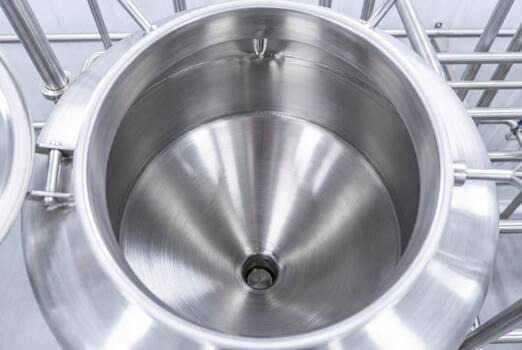
Requirements for storage tanks for food, beverage and dairy media concentrate on three points: material, internal wall surface and cleaning design. Material is generally 304 or 316L; the internal wall in contact with the product is polished to Ra0.4–0.8 μm, weld seams are ground smooth to avoid material accumulation; the tank roof manhole and inlet/outlet ports use quick-clamp sanitary connections, and sealing rings use food-grade silicone or EPDM; the tank is fitted with CIP spray balls and spray piping so hot water and alkali solution cover the entire internal wall during cleaning. One often-overlooked point: food-grade tank design should avoid hygiene dead corners — such as weld seams turned inward at pipe ports and dead corners at the tank bottom that trap material — microorganisms breed easily in these positions, and polishing alone cannot solve it; it must be avoided structurally.
### What should be noted for high-purity and low-viscosity media?
Storage tanks for high-purity materials (e.g. electronic chemicals, ultrapure water) and low-viscosity media (e.g. solvents, alcohol) focus on "no impurity introduction" and "no volatilization loss". For high-purity media, electrolytic polishing plus passivation on the internal wall is recommended to reduce surface roughness and metal ion release, with sanitary diaphragm valves or ball valves for piping to avoid dead-zone residue; for low-viscosity easily volatile media, a breather valve on the tank roof controls volatilization, and a nitrogen seal is used where conditions allow, reducing loss from "breathing" during feeding and discharging. If the medium is oxygen-sensitive, nitrogen protection is also needed in the feeding and displacement stages, and the oxygen content inside the tank is controlled in a safe range per process requirements.
### How does medium temperature affect tank selection?
Temperature is the second variable in medium properties after corrosiveness. For materials generally stored at room temperature, a tank designed with normal wall thickness is enough; for materials needing insulated or heated storage, such as resin, asphalt and some oils, the tank needs a jacket, coil or external insulation layer, and the material must also consider strength reduction at high temperature; for materials whose temperature approaches or exceeds the boiling point, the tank roof should be designed on the pressure-vessel approach, with a safety valve and pressure gauge — it cannot be handled simply as an atmospheric storage tank. A special reminder: high temperature amplifies medium corrosiveness — at the same concentration, a 20 °C rise in temperature often doubles the corrosion rate, so for the "high temperature + corrosive" combination, material and wall thickness must be calculated separately and must not copy room-temperature parameters.
### How do tank configurations compare across different media?
Putting the configurations of the three typical media side by side makes the difference clearer:
| Medium type | Common material | Internal wall treatment | Roof accessories | Cleaning method |
|---|---|---|---|---|
| General chemical media | 304 | Acid pickling and passivation | Breather valve/manhole | Routine cleaning |
| Corrosive media | 316L/liner | Passivation/liner layer | Breather valve + drainage | Corrosion-resistant cleaning |
| Flammable and explosive media | 304/316L | Acid pickling and passivation | Breather valve + nitrogen seal + safety valve + static grounding | Explosion-proof requirements |
| Food-grade media | 304/316L | Polishing Ra0.4–0.8 | Sanitary manhole + quick-clamp connection | CIP cleaning |
| High-purity media | 316L | Electrolytic polishing | Nitrogen seal + sanitary valves | CIP + purified water |
### What are the common misconceptions in tank selection?
Three common misconceptions in storage tank procurement deserve separate mention. The first is "capacity first": make the tank big first and talk later — the result is that the medium requirements do not match, the big tank is hard to clean and ties up capital, and later retrofitting costs more; the second is "the higher the material grade the better": 316L for every condition regardless of duty — in fact 304 with acid pickling and passivation is enough for ordinary media, and the extra money buys no real benefit — the key to corrosion protection is medium matching, not material stacking; the third is "accessories can be omitted": breather valves, level gauges and safety valves are treated as "options" — but a flammable medium tank roof without a breather valve will quickly expose pressure fluctuation and loss problems in the vapor space during long-term operation. Write the medium parameters and operating conditions fully and let the manufacturer configure by duty — this saves more effort than adding accessories afterward.
### How do capacity and accessories follow the medium?
After the medium fixes the material and accessory direction, capacity and structure are then detailed: vertical tanks occupy less floor area and suit large capacity; horizontal tanks have a lower center of gravity and suit outdoor and transport scenarios; insulated tanks are for materials needing temperature control, such as resin or emulsion stored at constant temperature. Capacity is calculated by turnover cycle, generally "daily usage × storage days" plus a 10%–20% margin — avoid simply seeking the largest size; the bigger the tank, the harder the cleaning and the more capital it ties up; for small and medium batch turnover media, an IBC tank with a mobile pump can also be used for turnover instead of a fixed storage tank, flexible in footprint. Inlet/outlet mode also follows the medium: corrosive media prefer bottom discharge to reduce residue, high-viscosity media are fitted with a jacket for heating to ease discharge, and food-grade media discharge ports are placed as close to the tank bottom as possible to reduce dead corners.
### What should be noted in tank farm retrofitting and expansion?
For old tank farm retrofitting or capacity expansion, tank selection involves more considerations than greenfield. Generally first check whether the original tank farm foundation and spacing comply with codes — for expansion of flammable and explosive medium tank farms, fire separation distances and dikes must be recalculated per current requirements; new tanks should share utilities with the original system as much as possible, but for media with greatly different properties, inlet/outlet piping should be arranged separately to avoid cross-contamination risk; in capacity planning, the common practice for old tank farm expansion is "replace with a larger tank in the same position" — here pay attention to foundation bearing capacity and the impact of tank height on surrounding pipe racks and fire lanes. It is recommended to sort out the medium list, existing tank capacity and utility capability before deciding the tank type, material and position of new tanks — more reliable than casually adding a tank.
### How are level gauges and safety accessories selected by medium?
Instrument configuration for storage tanks likewise follows the medium. Generally the level gauge is selected by medium transparency and corrosiveness: transparent liquids use magnetic flap or radar level gauges; viscous or wall-coating-prone media prefer radar or weighing type; strongly corrosive media use diaphragm-sealed types, with the instrument wetted material consistent with the tank body; for the flame-arrester breather valve on flammable medium tank roofs, the flame-arrester layer must be checked and cleaned regularly — once clogged, the breather valve loses its pressure-relief function. A reminder here: the level gauge range should reserve headroom based on actual tank height, and high-level and low-level alarms should interlock with the feed pump — auto-stop the pump on high level to avoid tank overflow accidents.
### Summary
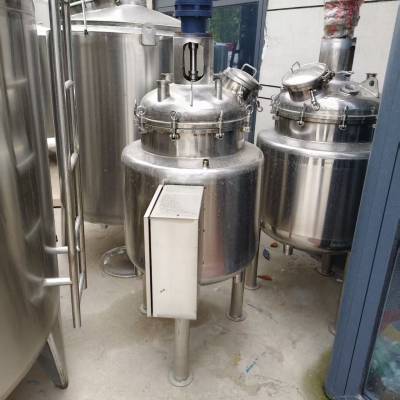
The order of storage tank selection is: fix the medium first (composition, concentration, temperature, cleanliness grade), then the material and surface treatment, then safety accessories and cleaning method, and finally calculate capacity and tank type. Write the medium parameters fully and describe the usage scenario clearly, so the manufacturer can deliver a matching configuration and avoid the rework of "the tank arrives and only then you find the material is wrong and accessories are missing". Stainless steel storage tanks, mixing tanks and reactors with material, polishing grade and safety accessories customized by medium can be made to duty requirements. Below are real shots of a tank farm — the outdoor tank group and the actual state of tank surfaces can be compared as reference.

Further reading: - How to select a stainless steel storage tank? Vertical, horizontal and insulated tanks by working condition for capacity and accessories - How to select stainless steel storage tanks for the food and pharmaceutical industry? Tank type set by CIP cleaning and sanitary requirements
---
This article is compiled by Shenzhen Hyline Equipment Manufacturing Co., Ltd. (hyline.cn); all information rights belong to the original authors. Main products: stainless steel reactors, mixing tanks, storage tanks, dispersers, concentration tanks and complete chemical process lines; custom (non-standard) manufacturing supported.
Q&A from this article
Frequently asked questions and answers from this article
How to select a stainless steel storage tank by stored medium? This article classifies corrosive, flammable and food-grade media, and explains tank type, material and safety accessory configuration.
Related Products
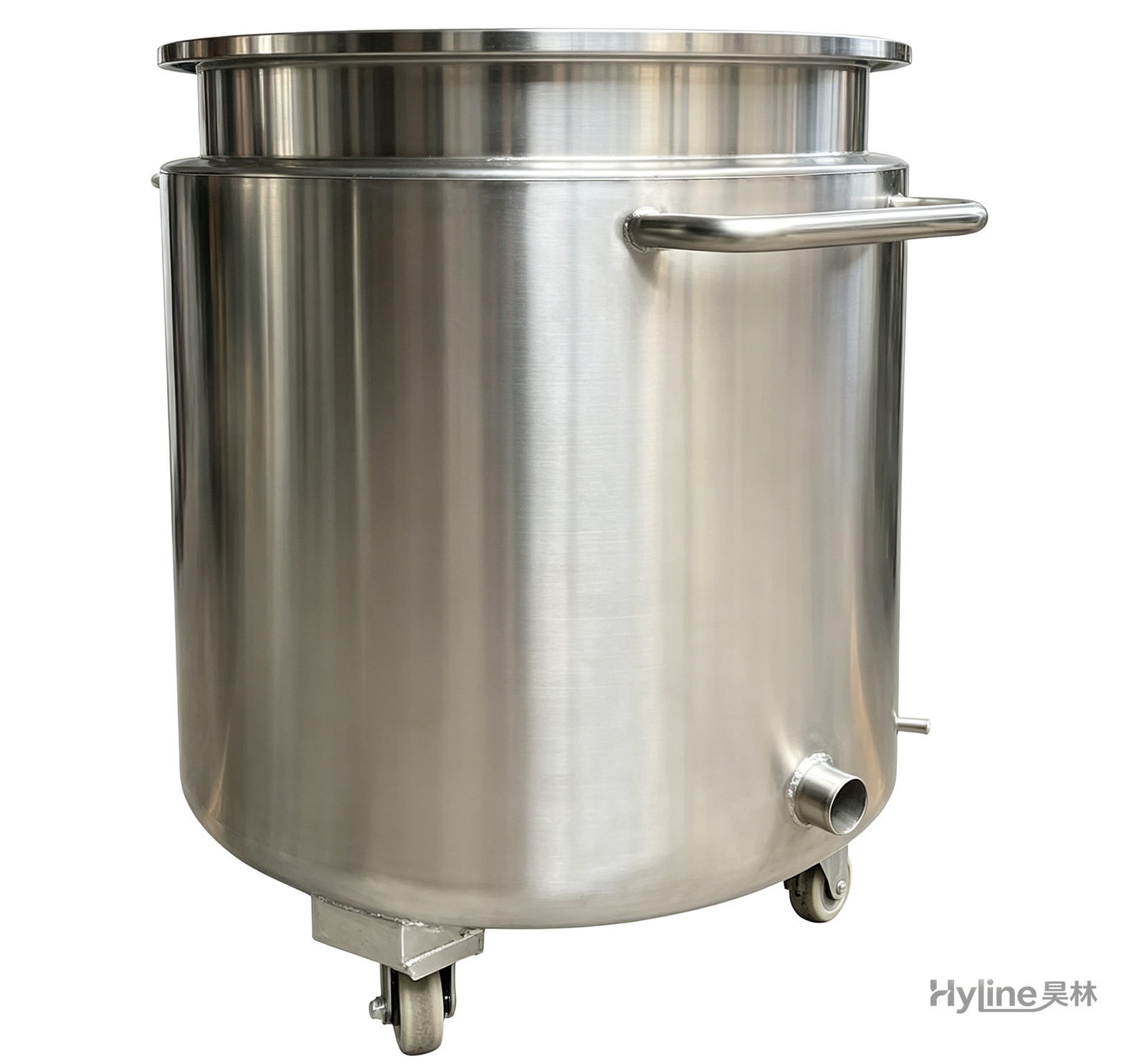
Stainless Steel Mixing Tank (Dispersion Drum)
Supporting vessel for dispersers and mixers in paints, coatings, adhesives, color slurries, inks and electronics. Available in 201/304 stainless with internal/external polishing and sloped bottom side discharge for complete draining.
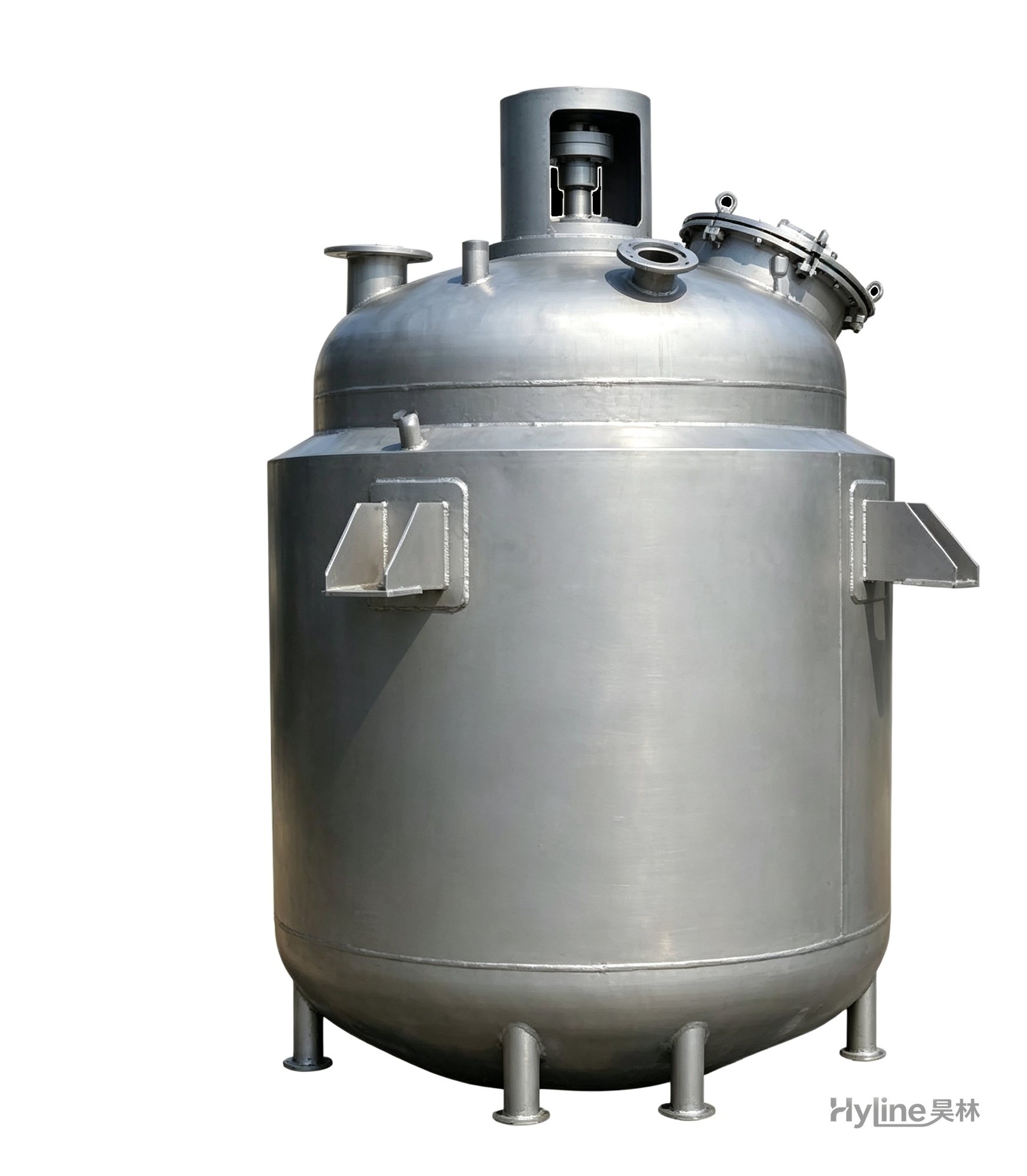
Jacketed Reactor
The typical main reaction vessel in chemical production. Mixing, heating and cooling disperse and mix materials for reaction and polymerization. The jacket circulates thermal oil/steam for heating or cooling water for temperature control.
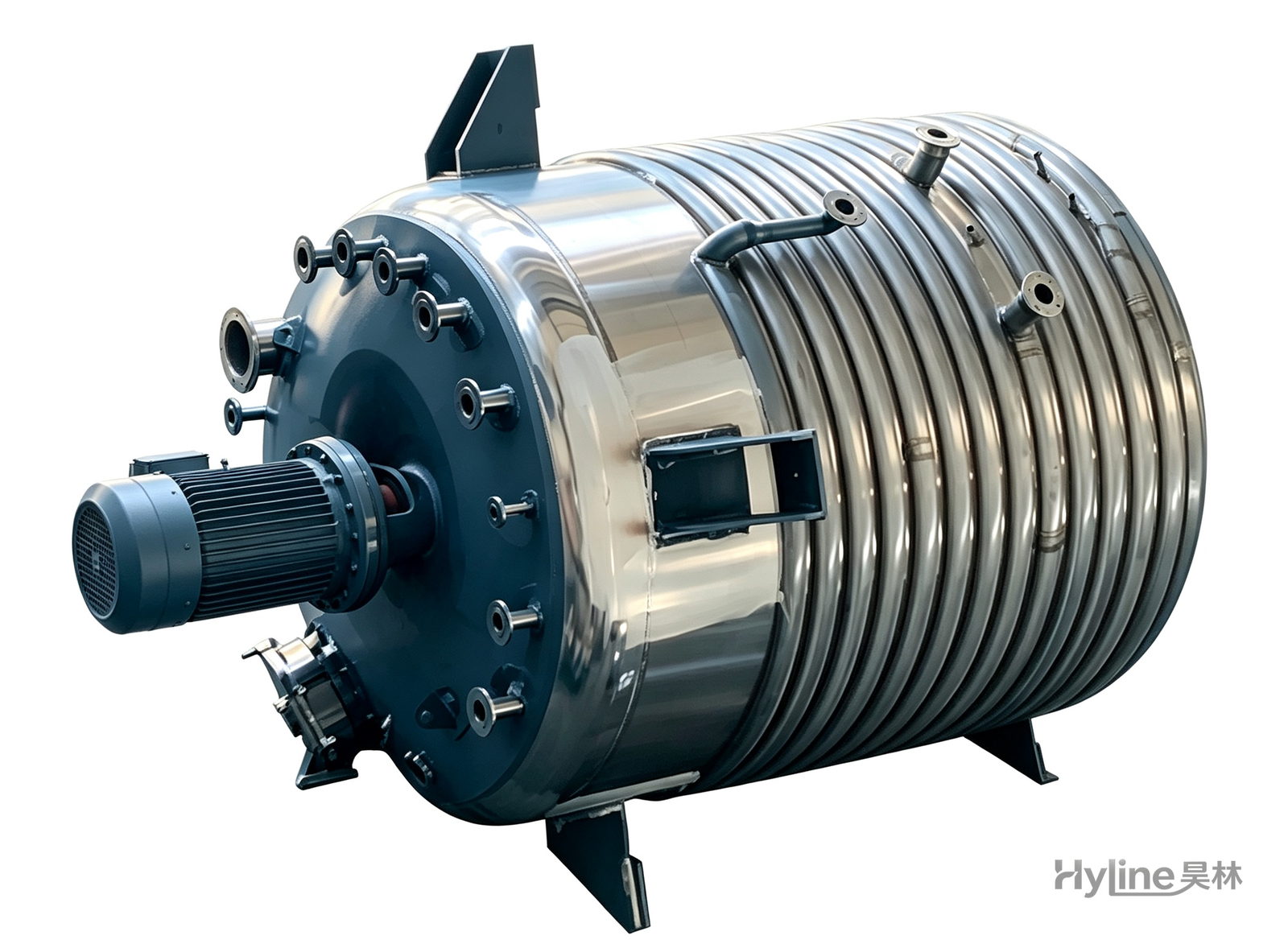
External Half-Coil Reactor
External half-pipe heating & cooling coils provide uniform, efficient heat exchange with zero material dead zones inside. Mirror-polished 304/316L stainless tank is clean and corrosion-resistant. For resin, new-energy slurry and pharmaceutical synthesis.
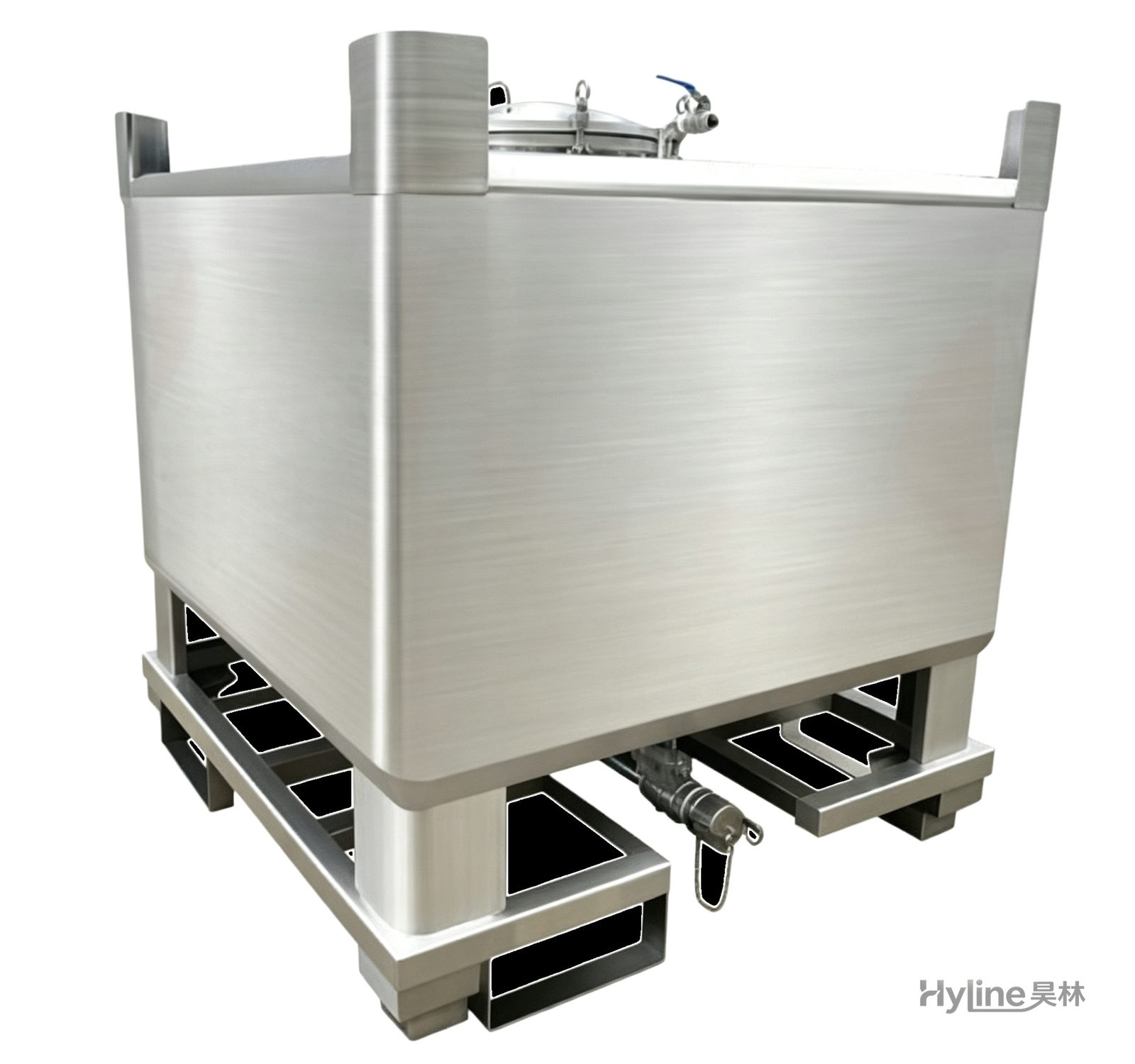
IBC Tank (Intermediate Bulk Container)
HDPE blow-molded liner with hot-dip galvanized steel frame - UV resistant, anti-aging, easy to clean, non-toxic. Four-way fork base for easy handling and stacking; ideal for liquid storage and transport.
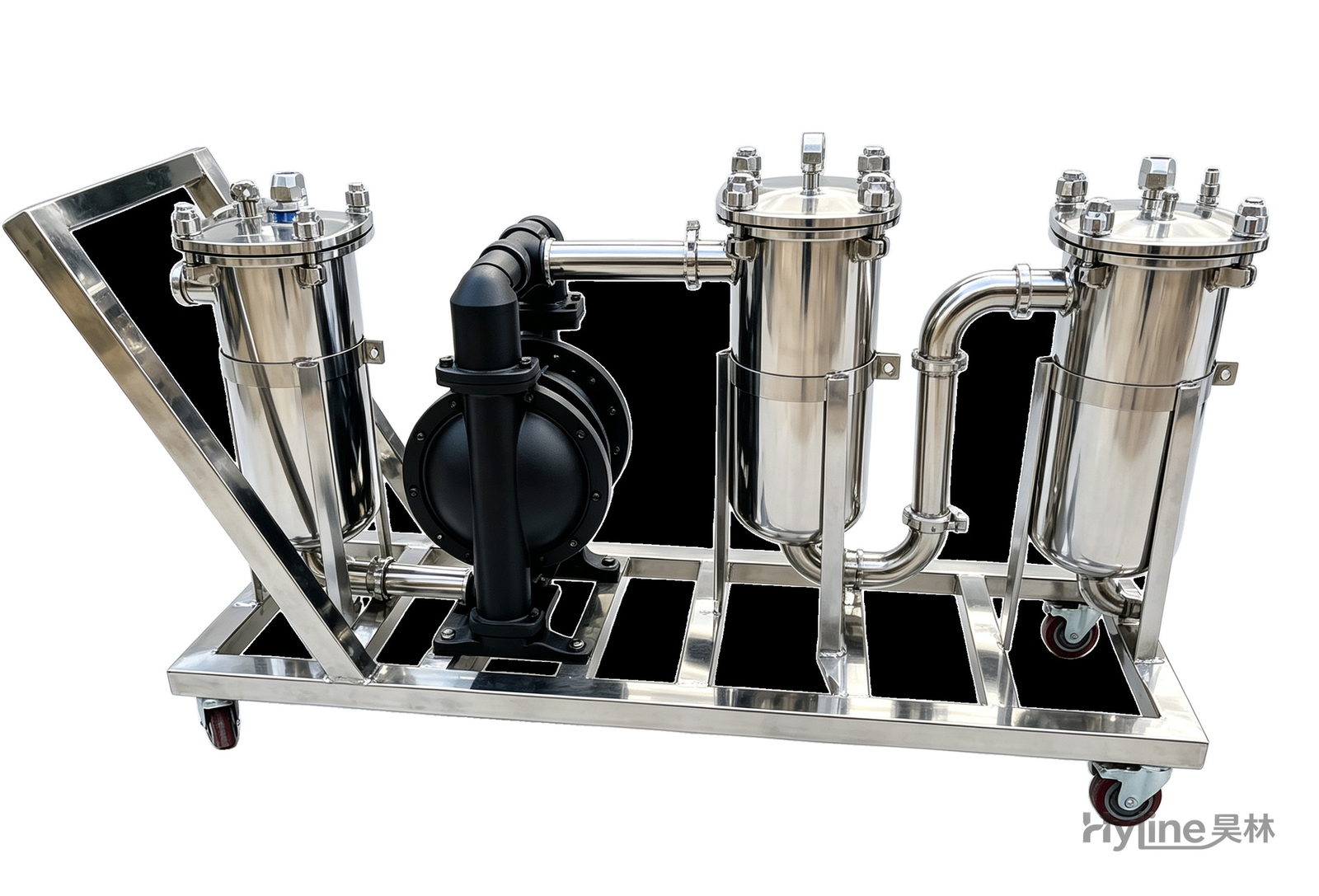
DL Series Bag Filter
A novel, compact, flexible and airtight multi-purpose filter widely used in chemicals, coatings, inks and food. Single and duplex models available, mountable on mobile carts with transfer pumps.