
How to set legs and foundation of a vertical stainless steel tank: support structure, anchor bolts and installation leveling
11/8/2026
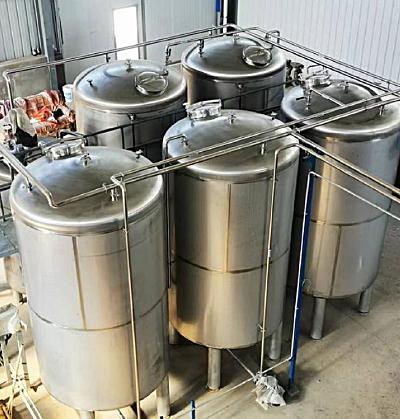
Standing a vertical stainless steel tank firmly on the ground is the first practical task after it arrives — before any trial material is loaded. Many users learn this the hard way on site: the tank is installed, but the bottom outlet valve sits too close to the floor to open; no bolt pockets were reserved, so expansion anchors are used as a makeshift fix, and the tank bottom starts rattling as soon as material is loaded; an outdoor tank foundation was never checked for settlement, and after half a year the tank leans and the pipework is pulled. None of these problems come from the tank body itself — they all come from the layer of "invisible configuration": legs, skirts and foundations. This article explains how to choose the support structure, set the anchor bolts and build the foundation, so the tank lands right the first time.
When buying a tank, most people focus on volume, material and wall thickness, while support and foundation occupy only a small line in the quotation. Yet the way the tank lands directly determines discharge height, cleaning space, seismic behavior and service life; getting it wrong costs far more in rework than the price difference. Treating the support structure as part of the equipment configuration is time well spent before ordering.
Legs, skirt or lugs: which support to choose?
In one sentence: small and medium vertical tanks prefer legs, large tanks or those with high stability requirements use a skirt, and tanks hung from floors or steel frames use lug supports.
Each support has its boundary. Leg support is the most common: three or four legs welded directly to the lower shell — simple, inexpensive, leaving space under the tank for the outlet valve; most storage tanks arranged in workshop rows take this form. A skirt seats the tank bottom directly on the foundation through a cylindrical skirt plate: even load transfer, good wind and seismic resistance, but the bottom sits on the ground and discharge relies on a pump or a bottom valve — typical for outdoor tanks above 10 cubic meters. Lug supports do not touch the ground: lugs welded on both sides of the shell rest on steel beams or floor slabs, suitable when the process layout requires an elevated tank with operating passage below, but the floor load must be verified and tank volume is usually limited to about 3 cubic meters.
One more factor is often overlooked: the maintenance method. Leg and skirt tanks allow manway access for internal cleaning and inspection; an elevated lug-supported tank needs an additional platform for entry work. If the process requires frequent opening for inspection, prefer a ground-supported arrangement.
Why must leg height be adequate?
In one sentence: leg height is not about being as low and stable as possible — it is worked backward from the actual space needed for the outlet valve, sampling point and cleaning operation; 300 to 500 mm of bottom clearance is typical.
The bottom clearance must at least fit the bottom discharge valve plus a short spool piece, with the valve able to open fully and be removed for maintenance. If the outlet feeds a pump, space for the suction line and strainer must also be reserved. Many sites lower the total height by shortening the legs, only to end up with an angled discharge valve and a handwheel against the floor — awkward to operate and impossible to clean around. Conversely, legs that are too tall raise the center of gravity, increase sway, and burden both bolts and foundation. The practical approach: first lay out the three-dimensional space of bottom piping and valves, add 50 to 100 mm of maintenance margin, and only then fix the leg height — never the other way around.
The legs themselves deserve attention too. Where legs are carbon steel sections, isolation treatment is required at the joint with the stainless shell, and welds near the connection follow stainless procedures — otherwise iron contamination will show rust spots near the shell welds first, a serious concern in food and pharma service. Rigidity matters more than bulk: short wide legs are more stable than tall slender ones, and diagonal bracing between legs transfers horizontal forces down to the base plates. Each leg needs a base plate of adequate area to spread the load; a plate that is too thin will distort when the bolts are tightened, undoing the leveling work. One more often-missed detail: floor water from washdown should drain away from the leg roots — a small slope around the base plates keeps the wettest, dirtiest zone away from the legs. For agitated vessels such as a mixing tank working alongside in the same workshop, the legs must also carry the agitation load: vibration from the running agitator transmits through the shell into the legs, so leg sections and bracing must be checked for the agitated case, not just the static liquid weight.
How to set the anchor bolts?
In one sentence: a standard vertical tank uses 4 to 6 anchor bolts of M16 to M24, embedded or set in pockets with secondary grouting; chemical anchors alone are not a proper substitute.
Anchor bolts do not "glue" the tank to the ground; they transfer the overturning moment from wind, seismic and agitation loads into the foundation. Bolt diameter follows volume and windage: M16 to M20 usually suffices for indoor tanks below 5 cubic meters, while outdoor or agitated tanks prefer M20 to M24; quantity follows the holes in the leg base plates, typically one or two per leg. Embedding is the most secure but demands close civil coordination; the more common route is bolt pockets in the foundation with secondary grouting after positioning, which allows small adjustments during installation — a valuable field tolerance.
One detail worth emphasizing: shim plates between the leg base and the foundation for leveling, then tighten the bolts and grout. Skipping leveling and tightening directly concentrates assembly stress on one leg; over time the weld area fatigues, and leaks usually start right there.
How to build the foundation?
In one sentence: indoor small and medium tanks take an independent or strip reinforced-concrete foundation, large outdoor tanks take a mat foundation per the soil report, the top surface is leveled with a slight fall, and concrete strength C25 or above is standard.
The foundation must carry "tank dead weight plus full medium weight" with margin — civil engineers will compute this, but the equipment side must proactively provide the data: tank weight, full-load weight, base plate dimensions with anchor bolt layout drawing, and center-of-gravity height. Without these, civil design can only over-assume from experience, producing either an oversized foundation or bolt positions that miss the field. The top surface must be leveled with a survey instrument to within a few millimeters, and outdoor foundations should stand slightly above grade so standing water never soaks the legs.
On poor ground (fill, soft soil), settlement must be considered. For tanks arranged in rows, differential settlement stretches the connecting pipework — a classic lesson in turnkey projects: each tank is fine on its own, but once connected the joints weep year after year. Row foundations are best poured in one operation and leveled together, with pipework given compensation allowance.
What two tasks remain after installation?
In one sentence: a full-water test and a settlement check — complete both before handover.
After positioning, leveling and bolt tightening, fill the tank with water and observe: no foundation settlement, no leaks at leg welds, no abnormal deformation. This step jointly accepts the shell welds and the foundation at almost zero cost, catching most landing-stage problems. Re-measure top elevation and leg levelness within 24 to 48 hours of filling, record the values as the baseline datum, then recheck every six months and correct any tilt or settlement beyond limits. The test water should be at ambient temperature — no need for hot water — and the tank must be filled to the maximum working level, not half-filled for a rough look.
For outdoor tanks, include bolt pre-tightening under wind load in the annual inspection: loosening is gradual, and re-tightening takes half a day — far cheaper than a cracked weld and unplanned shutdown. Temperature duty belongs on the checklist too. Insulated outdoor tanks leave the legs exposed outside the insulation; summer-to-winter expansion and contraction need room, so bolt holes should be oversized with shims. If the connection is welded or the holes seized, thermal stress slowly pulls fine cracks out of the leg welds. During inspection, glance at the leg-to-shell weld appearance — much easier than post-failure inspection.
Are the principles the same for other equipment?
The principles are universal; the parameters differ. Small leg-supported reactors carry jackets and heavier self-weight, so leg sections and foundation loads are one grade above a storage tank of the same volume; heated vessels also need thermal-growth allowance between leg and base plate to avoid locking expansion stress into the legs. State these conditions clearly when buying, and the manufacturer will configure the support accordingly instead of shipping "generic legs".
How do we help customers set the support?
As the company behind hyline.cn, Hyline Shengda Equipment Manufacturing Co., Ltd. provides base plate dimensions, anchor bolt layout drawings, equipment weights and center-of-gravity data with every delivery. Leg height is confirmed together with the customer against workshop headroom, discharge method and valve layout — never set from a rule of thumb. For turnkey projects we advise exchanging the civil foundation drawings with the equipment layout to confirm bolt positions and loads before concreting, avoiding second rework.
Support and foundation are the base of a thirty-year service life and deserve half a day of confirmation before ordering. If you are unsure about a tank landing scheme, send us the site conditions and process layout, and we will help you stand it firm.
Further reading: - How to choose the roof of a stainless steel storage tank: self-supporting cone, dome and ribbed cone - Large stainless steel storage tank: field fabrication or shop-built? Transport limits, site welding and acceptance
This article is compiled by Hyline Shengda Equipment Manufacturing Co., Ltd.
Q&A from this article
Frequently asked questions and answers from this article
In one sentence: leg height is not about being as low and stable as possible — it is worke…
Related Products
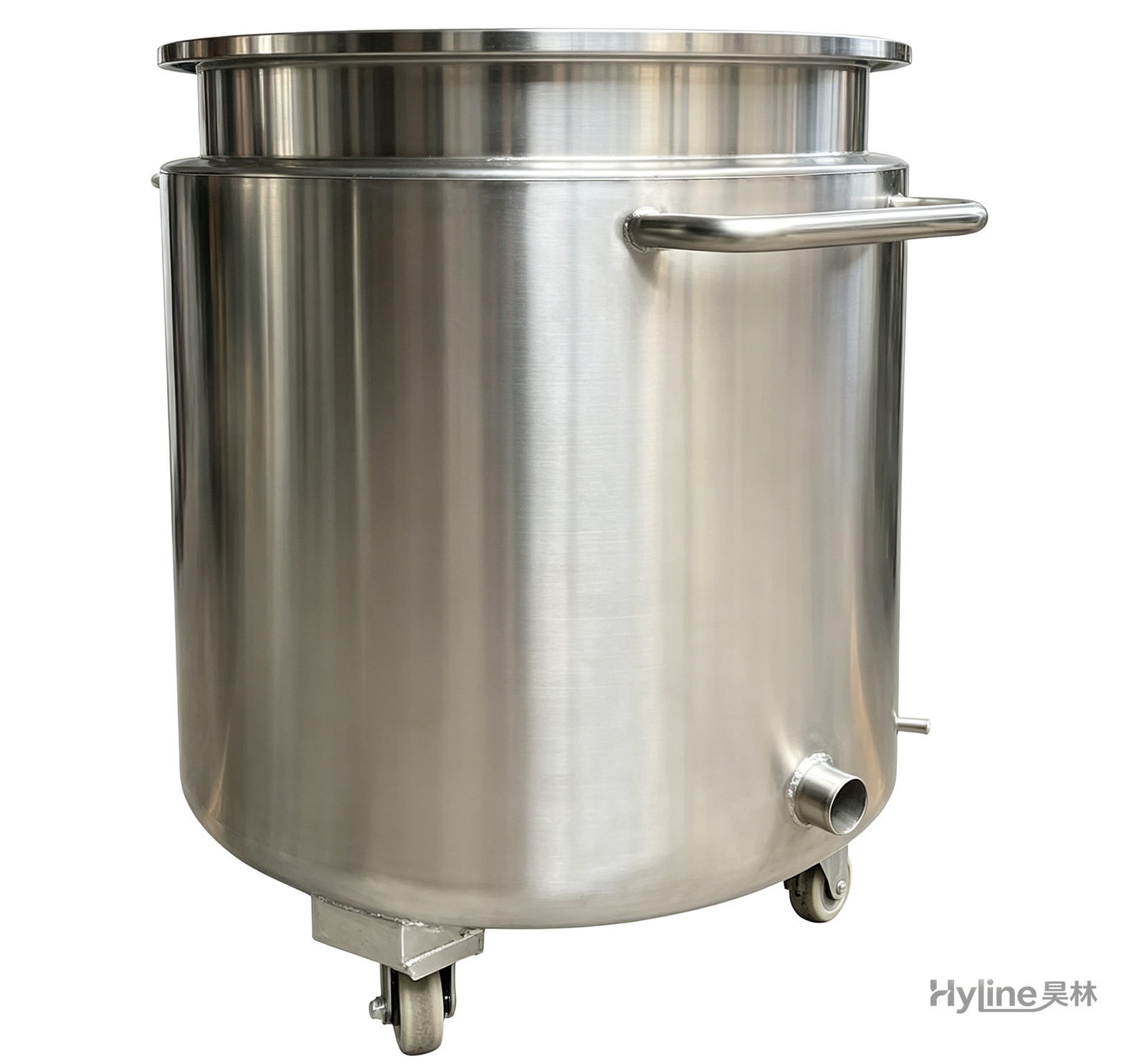
Stainless Steel Mixing Tank (Dispersion Drum)
Supporting vessel for dispersers and mixers in paints, coatings, adhesives, color slurries, inks and electronics. Available in 201/304 stainless with internal/external polishing and sloped bottom side discharge for complete draining.
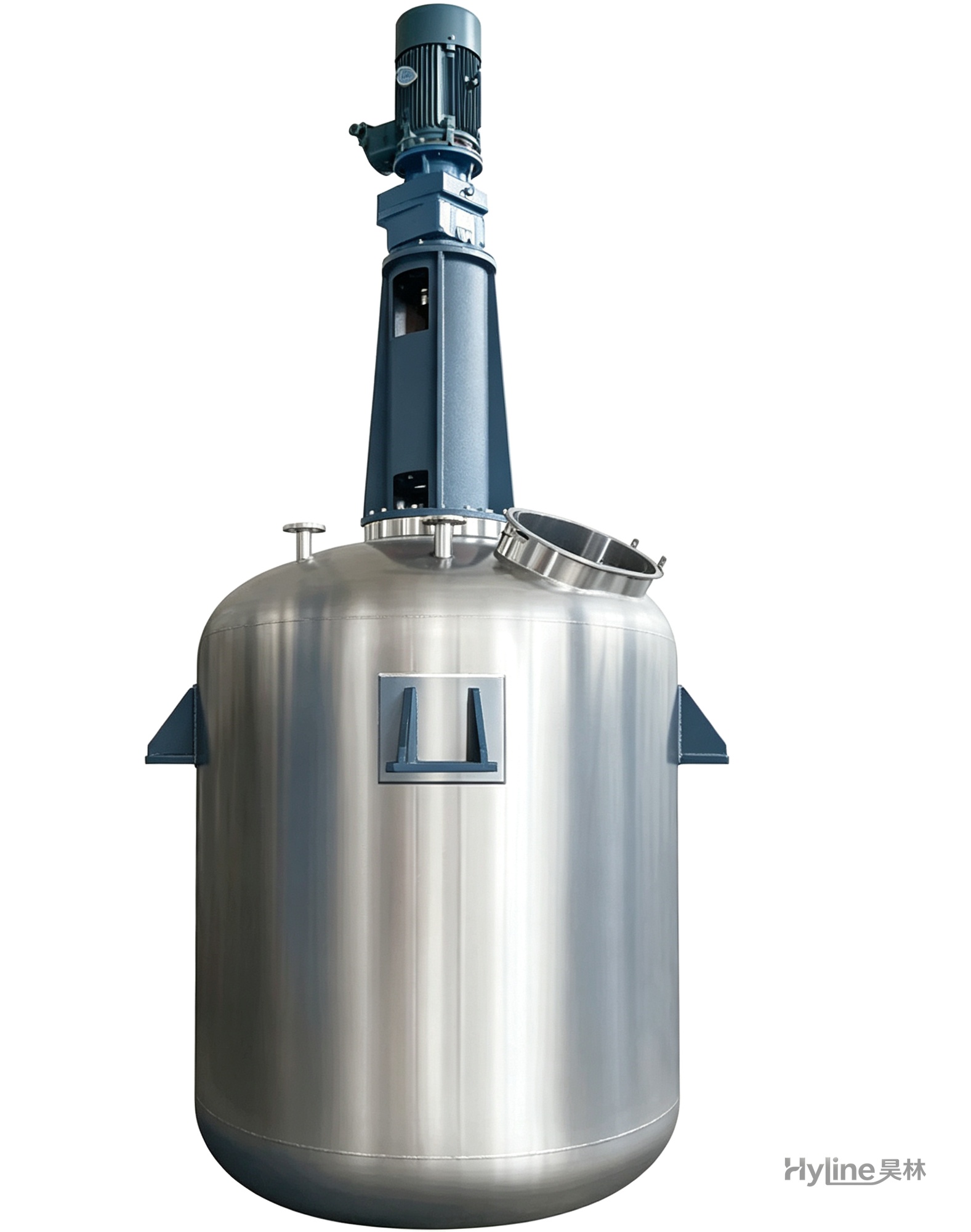
TC Series Mixing Kettle (Tinting)
For color matching in the paint industry and liquid-liquid / liquid-solid mixing in other industries. Uniform tinting, good miscibility, reasonable structure and powerful stirring.
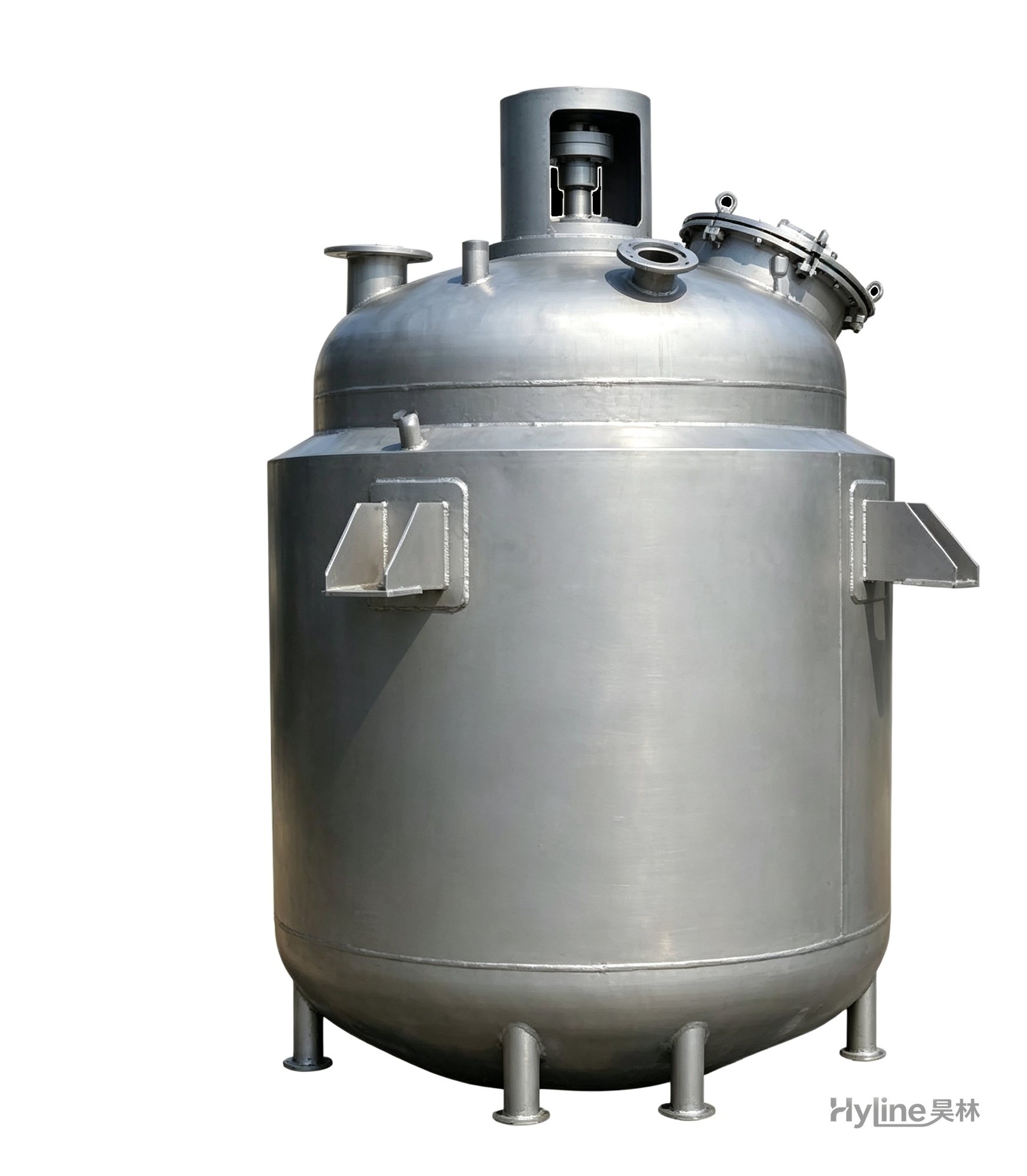
Jacketed Reactor
The typical main reaction vessel in chemical production. Mixing, heating and cooling disperse and mix materials for reaction and polymerization. The jacket circulates thermal oil/steam for heating or cooling water for temperature control.
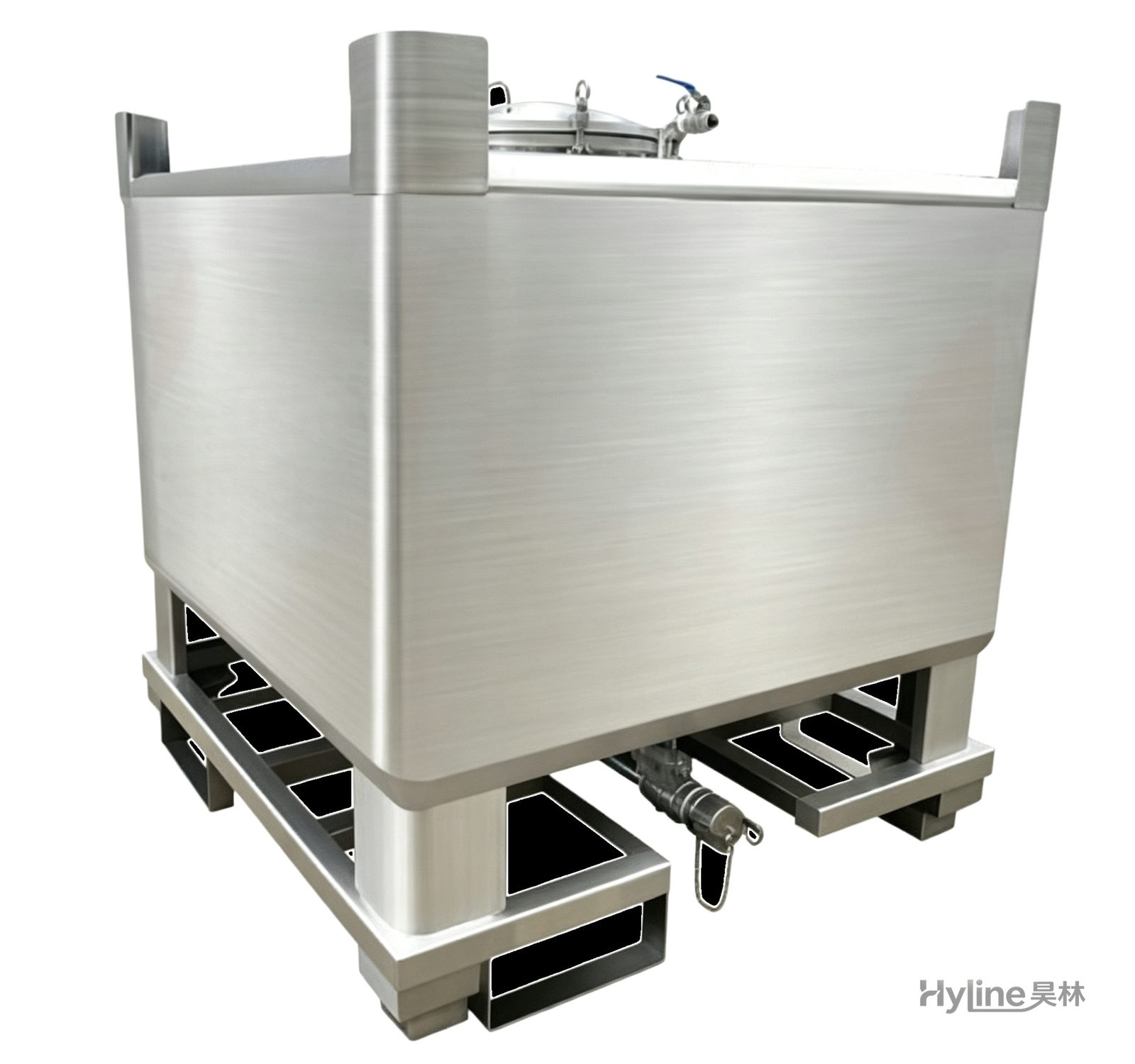
IBC Tank (Intermediate Bulk Container)
HDPE blow-molded liner with hot-dip galvanized steel frame - UV resistant, anti-aging, easy to clean, non-toxic. Four-way fork base for easy handling and stacking; ideal for liquid storage and transport.