
How does a vacuum disperser work? Closed-vessel dispersion, vacuum deaeration and solvent recovery, with maintenance points
11/2/2026
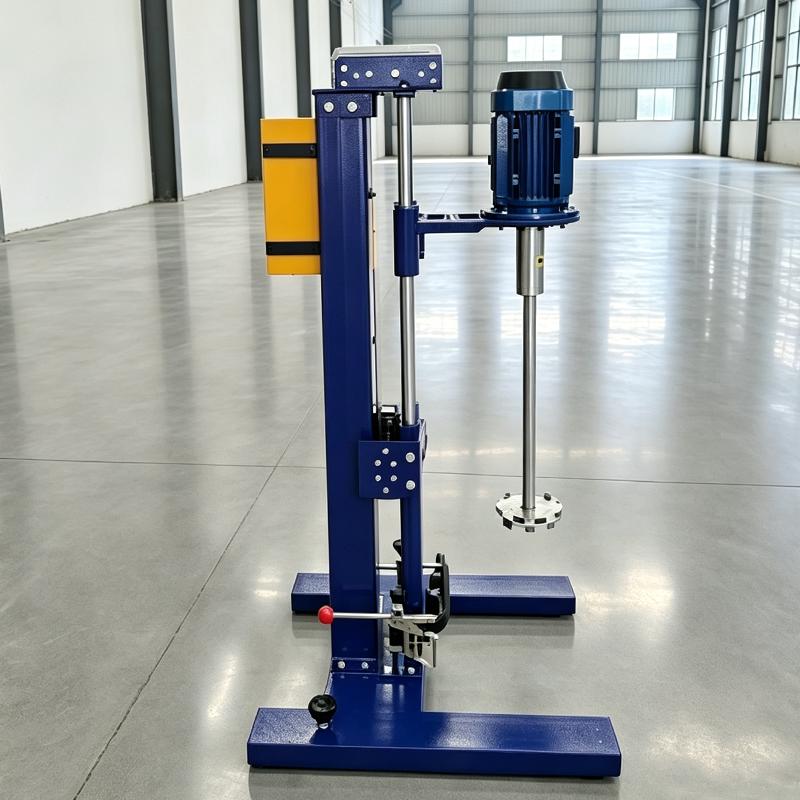
A vacuum disperser is a dispersing machine that performs high-speed dispersion inside a closed vessel while using vacuum to remove air bubbles and volatile components from the material. It is commonly used for coatings, inks, adhesives and electronic pastes - products that are sensitive to entrained air and residual solvent. Compared with a standard high-speed disperser it adds three things: a pressure-rated closed vessel, a vacuum system and a dedicated shaft seal. Vessel volume, vacuum level, heating and cooling method, dispersing disc diameter, speed and lift stroke can all be customized to the process. Hyline Shengda Equipment Manufacturing Co., Ltd. (hyline.cn) builds custom vacuum dispersers, dispersers and mixing tanks. This article explains how a vacuum disperser works and why it can deaerate the product while dispersing.
How is a vacuum disperser different from a standard disperser?
One-line answer: the difference is whether the machine can be sealed and evacuated. A standard disperser is an open tub with a high-speed disc; a vacuum disperser replaces the tub with a pressure-rated closed vessel and adds a vacuum system and a dedicated shaft seal.
A standard high-speed disperser works in an open tub. The disc spins fast and drives powder into the liquid phase, but the process also whips large amounts of air into the batch: the product ends up full of bubbles, a skin forms on the surface, and solvent evaporates straight into the workshop. A vacuum disperser replaces the open tub with a flanged closed vessel. The lid is pressed against the shell with a gasket and locked with clamps or bolts; where the shaft passes through the lid, a mechanical seal or magnetic drive keeps air out; the top of the vessel carries the vacuum line, the condenser and a sight glass. Take two machines with the same 22 kW motor and a 300 mm disc: the open type suits pre-dispersion and slurry make-down, while the vacuum type removes bubbles at the same time, so the batch can go straight to filling or grinding without a long deaeration hold.
How does vacuum deaeration actually work?
One-line answer: vacuum deaeration relies on reducing pressure so bubbles expand, rise and burst. The lower the absolute pressure in the vessel, the larger the bubble, the greater the buoyancy, and once the bubble reaches the surface and bursts the gas is pulled away by the vacuum pump.
Bubble volume is roughly inversely proportional to absolute pressure. A bubble 1 mm in diameter at atmospheric pressure will expand to about ten times its original volume when the vessel is evacuated to 10 kPa absolute (roughly -0.09 MPa gauge); its diameter grows to about 2.15 mm, buoyancy multiplies and the rise velocity increases noticeably. At the same time the liquid film of the bubble wall is stretched thin and ruptures, releasing the trapped air into the vapour space where the vacuum line carries it away. The lower the viscosity, the faster the bubble rises, so vacuum deaeration works best on low and medium viscosity systems such as coating bases of 1000-5000 mPa·s. At viscosities of tens of thousands of mPa·s, vacuum alone is not enough: it has to be combined with slow wall-scraping agitation that carries bubbles towards the surface.
How do the closed vessel and shaft seal hold the vacuum?
One-line answer: when vacuum cannot be held, nine times out of ten the problem is the shaft seal or the flange sealing face, so the seal type and the clamping method have to be settled at the specification stage.
The vessel itself must be designed for vacuum service: a vessel built for atmospheric pressure will buckle under external pressure. Shell thickness has to be checked against external pressure and is typically 2-4 mm thicker than an atmospheric vessel of the same volume; the lid is made as an elliptical or dished head to resist external pressure, and stiffening rings are added where needed. The shaft seal is the other critical point, with three common options:
| Seal type | Suitable vacuum level | Features and notes |
|---|---|---|
| Single mechanical seal | -0.06 to -0.08 MPa | Simple and low cost; dry running wears it out, so product lubrication is needed |
| Double mechanical seal | Below -0.09 MPa | With barrier fluid reservoir and circulation, highly reliable; barrier fluid level and pressure need regular checks |
| Magnetic drive seal | Below -0.095 MPa | Zero leakage, suits solvent-based products and high vacuum; limited torque transmission, higher price |
Flange faces use food-grade silicone or fluoroelastomer O-rings. The sealing faces must be flat and free of scratches, clamps evenly spaced, and bolts tightened in a diagonal sequence in two or three passes so the gasket is not pinched on one side. Sight glasses and nozzles should use clamp or flange connections; threaded joints are the most likely leak point under high vacuum.
How should the vacuum pump and piping be sized?
One-line answer: select the pump by the volume of gas to be evacuated and the time allowed, run the piping short, wide and with few bends, and always place the buffer vessel and condenser between the vessel and the pump.
A simplified calculation works like this: first estimate the volume of gas to be removed (the vapour space in the vessel plus gas released from the product), then divide it by the target evacuation time - typically 5-10 minutes to reach working vacuum - and finally add a 30%-50% margin. For a 2 m³ vacuum dispersing vessel that must be evacuated from atmospheric pressure to 10 kPa absolute within 8 minutes, allowing for line resistance and leakage, a liquid-ring or rotary-vane vacuum pump of 100-150 m³/h is a safe choice. For solvent-based products use a liquid-ring pump with a buffer vessel so solvent vapour does not get into the pump oil; for dry, fine products a rotary-vane pump gives a lower ultimate pressure. Pipe diameter should not be smaller than the pump inlet, keep bends to three or fewer, and connect the vessel top to the buffer vessel, then the condenser, then the pump.
How should solvent recovery and condensation be configured?
One-line answer: solvent-based products must have a condenser, the cooling medium must be colder than the solvent condensing temperature under vacuum, and the receiver must be sized for the solvent quantity per batch.
Under vacuum the boiling point of a solvent drops: ethyl acetate boils at 77 °C at atmospheric pressure but only about 45 °C at 20 kPa absolute. If the vapour goes straight into the vacuum pump it contaminates the pump oil, reduces the vacuum level and creates product loss and safety problems. The correct arrangement is to install a shell-and-tube or plate condenser after the vapour outlet on the vessel top, with cooling water at 5-15 °C (chilled brine for low-boiling solvents), and to collect the condensed solvent in a receiver. Estimate the condenser area from the evaporation rate: roughly 0.1-0.2 m² per kg/h of solvent evaporated, depending on latent heat and the cooling water temperature difference. The receiver needs a level indicator and a drain valve; recovered solvent should be logged per batch and tested for water content and purity before reuse.
What is the correct operating sequence for vacuum dispersion?
One-line answer: the order is charge first, then seal, then evacuate in stages, start dispersion at low speed and only then raise speed. Reverse any one step and the vessel overflows or product is pulled out.
The practical sequence is this: at atmospheric pressure charge the liquid base and the powder, adding the powder in two or three portions and waiting for wetting before the next one, so no lumps form at the bottom. Close and clamp the lid, confirm the sight glass and charging valve are shut, then start the pump and evacuate in stages - first to about -0.04 MPa and hold for 2-3 minutes to watch the surface, and only continue to working vacuum if it is not boiling violently. Start the disc at low speed (about 300-500 rpm) for 1-2 minutes to let the product settle, then raise it to process speed, where the disc tip speed is normally 20-30 m/s. If the surface keeps rising towards the sight glass during dispersion, slow down immediately and crack the vent valve to relieve pressure. At the end stop the disc, break vacuum slowly (0.005-0.01 MPa/s), and open the lid for sampling or discharge only once the vessel is back at atmospheric pressure. The whole point is to keep evacuation and speed increase as separate steps - doing both at once is the most common cause of overflow.
What maintenance has to be done?
One-line answer: maintenance concentrates on three lines - sealing, vacuum and drive. Do a short check every shift and a full check every month and the failure rate drops sharply.
Every shift: before start-up check that the vacuum gauge reads zero, that the gasket is not pinched or damaged, that the disc is secure and not visibly worn (replace when a tooth is chipped by more than 3 mm), and that the lift guides are lubricated. During operation listen for noise at the mechanical seal and watch whether the vacuum level holds steady. Every month: inspect the mechanical seal for wear and check the barrier fluid level, change the vacuum pump oil and clean the inlet filter, calibrate the vacuum gauge and thermometer, and retighten the lid clamps and pipe joint bolts. For long shutdowns dry out the vessel and piping, and remove gaskets for separate storage so they are not crushed. If vacuum suddenly cannot be reached, troubleshoot in the order pipe joints, then mechanical seal, then pump - most leaks are at joints and sealing faces, not in the pump itself.
When is a vacuum disperser worth the money?
One-line answer: only three situations justify it - when bubbles damage the finished product, when solvent has to be recovered, or when the product oxidises easily. For ordinary pre-dispersion an open machine is enough.
Cases that need vacuum: coatings and inks where bubbles cause craters and pinholes and spoil the film appearance; adhesives and sealants where bubbles make filling inaccurate; solvent-based systems where solvent must be recovered and workshop VOC reduced; and oxidation-sensitive products such as certain electronic pastes that must be dispersed without air. Cases that do not: large-volume pre-dispersion of low-viscosity water-based products, and intermediate slurries that are not bubble-sensitive, where an open high-speed disperser with a tub is faster and cheaper. If you are unsure, run a trial: disperse the same formulation at atmospheric pressure and under vacuum, compare fineness (with a fineness gauge) and the bubble condition after 24 hours standing, and then decide.
Further reading: - How to determine the disc tip speed of a disperser: matching speed, disc diameter and fineness - Selecting mixing equipment for high-viscosity materials: from high-speed dispersers to planetary mixers
This article is compiled by Hyline Shengda Equipment Manufacturing Co., Ltd. (hyline.cn). The information ownership belongs to the original author. Main products: stainless steel reactors, mixing tanks, storage tanks, dispersers, concentrators and complete chemical line supporting equipment; non-standard customization supported.
Q&A from this article
Frequently asked questions and answers from this article
One-line answer: maintenance concentrates on three lines - sealing, vacuum and drive. Do a…
Related Products
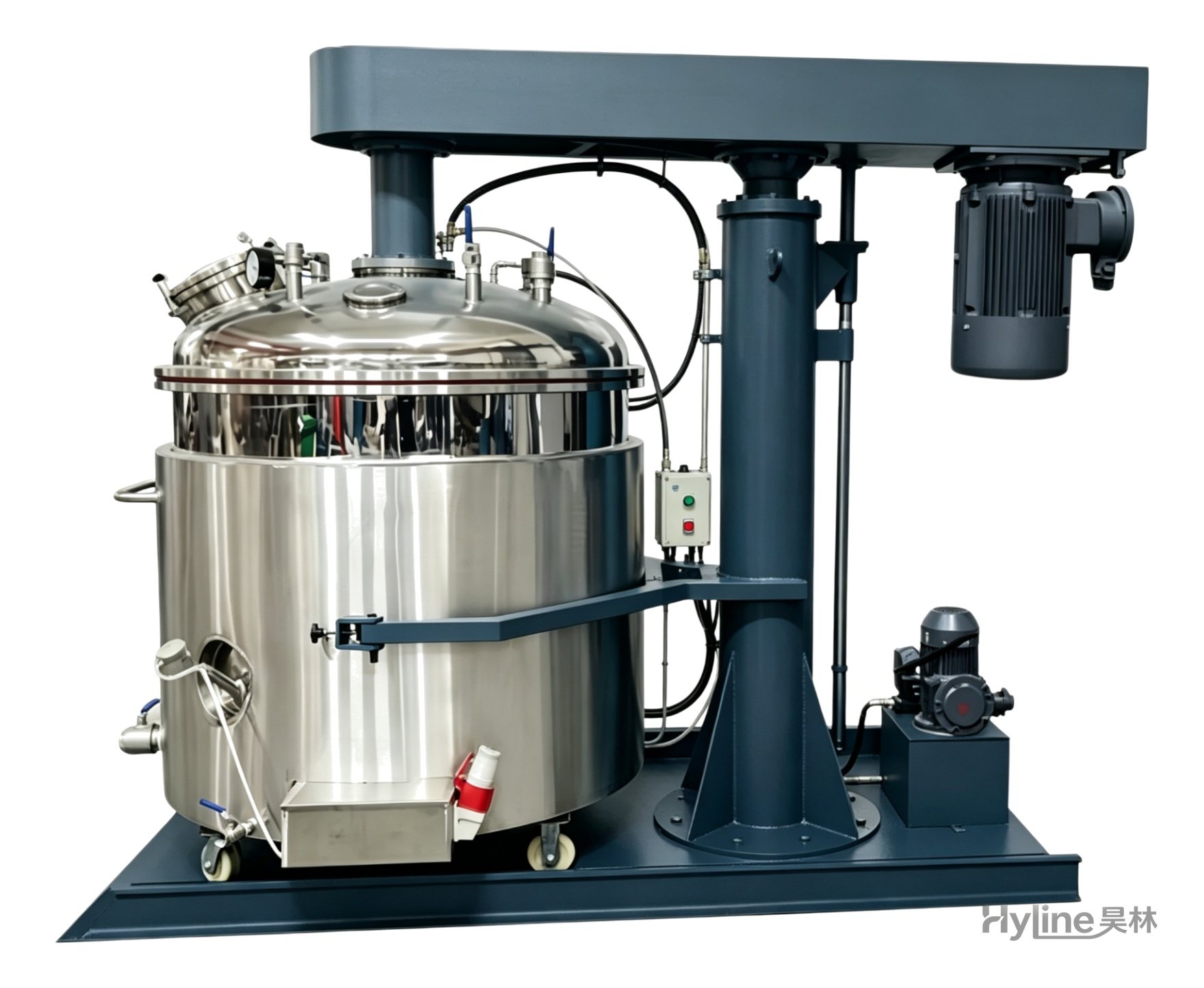
FL Series Vacuum Disperser
Designed for bubble-rich materials and volatile solvents. Vacuum dispersion reduces bubbles and solvent evaporation, accelerates fineness and rapidly defoams. Simple structure, high vacuum, easy operation.
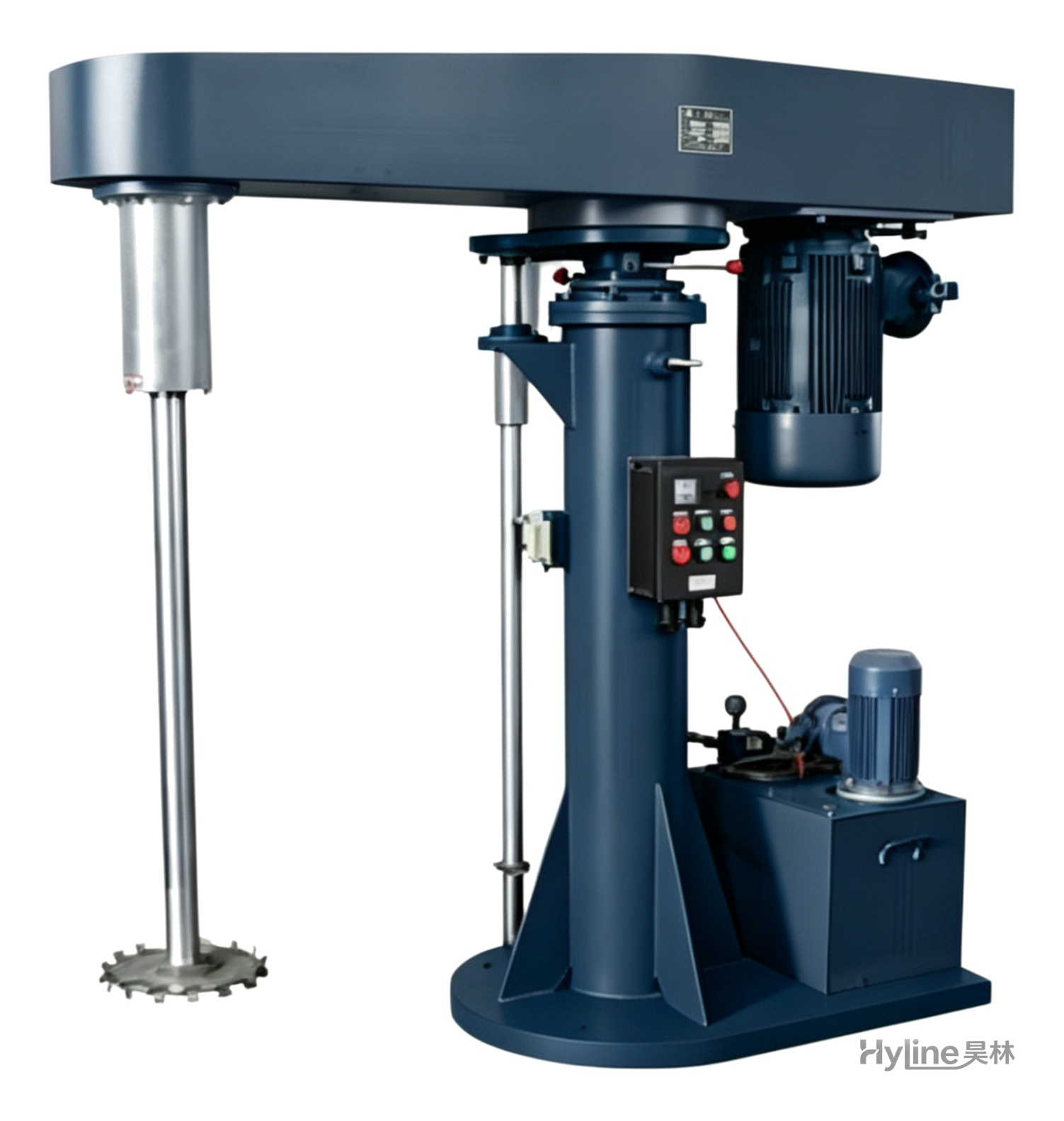
FL Series High-Speed Disperser
Stirs, dissolves and disperses liquids and powders, working alone or matched with sand mills. Variable-frequency drive with hydraulic lift, widely used in paints, inks, coatings, dyestuffs and papermaking.
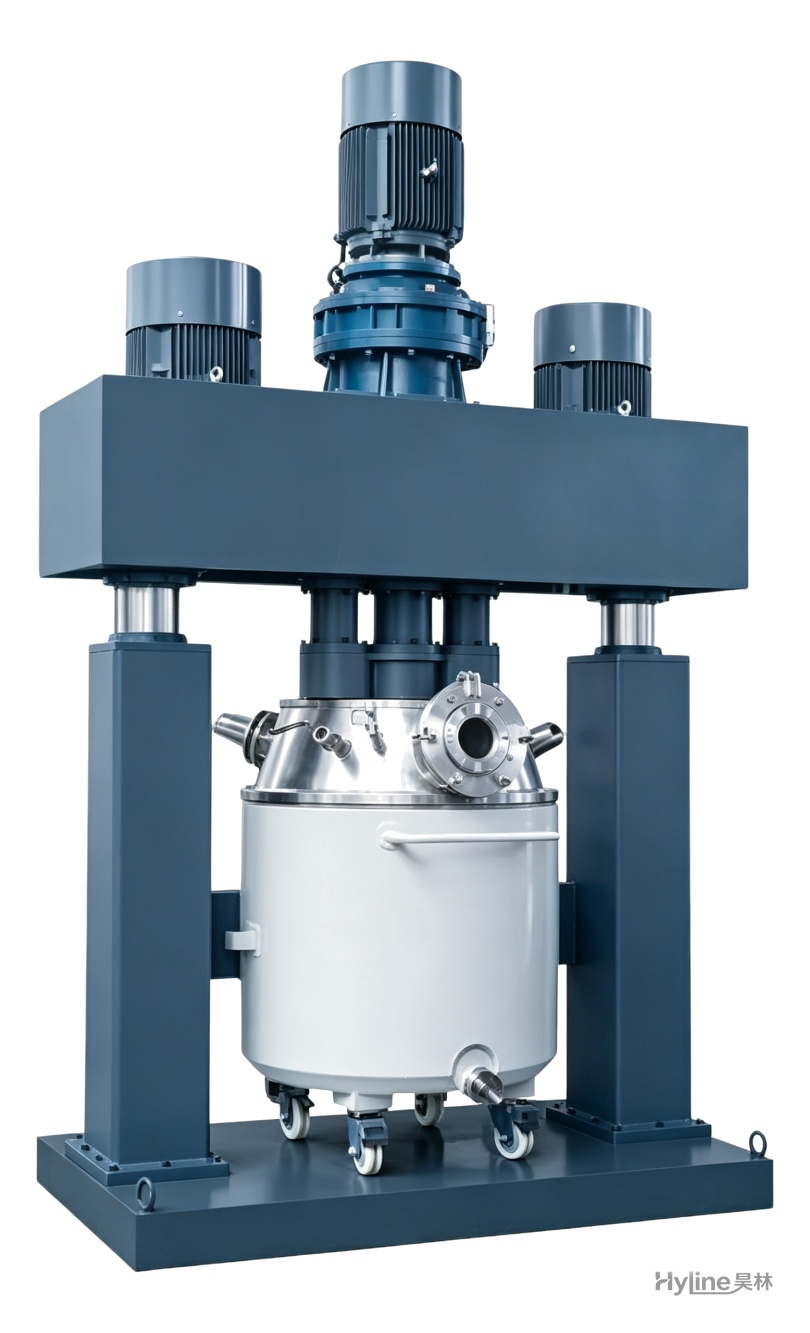
QLF Series Powerful Triple-Shaft Disperser
Two high-speed dispersers plus wall/bottom scraping create complex material flow for rapid dispersion and grinding. Handles high-viscosity pastes of 10,000-2,000,000 cps - widely used for silicone sealants, PU sealants, liquid silicone and electronic adhesives.
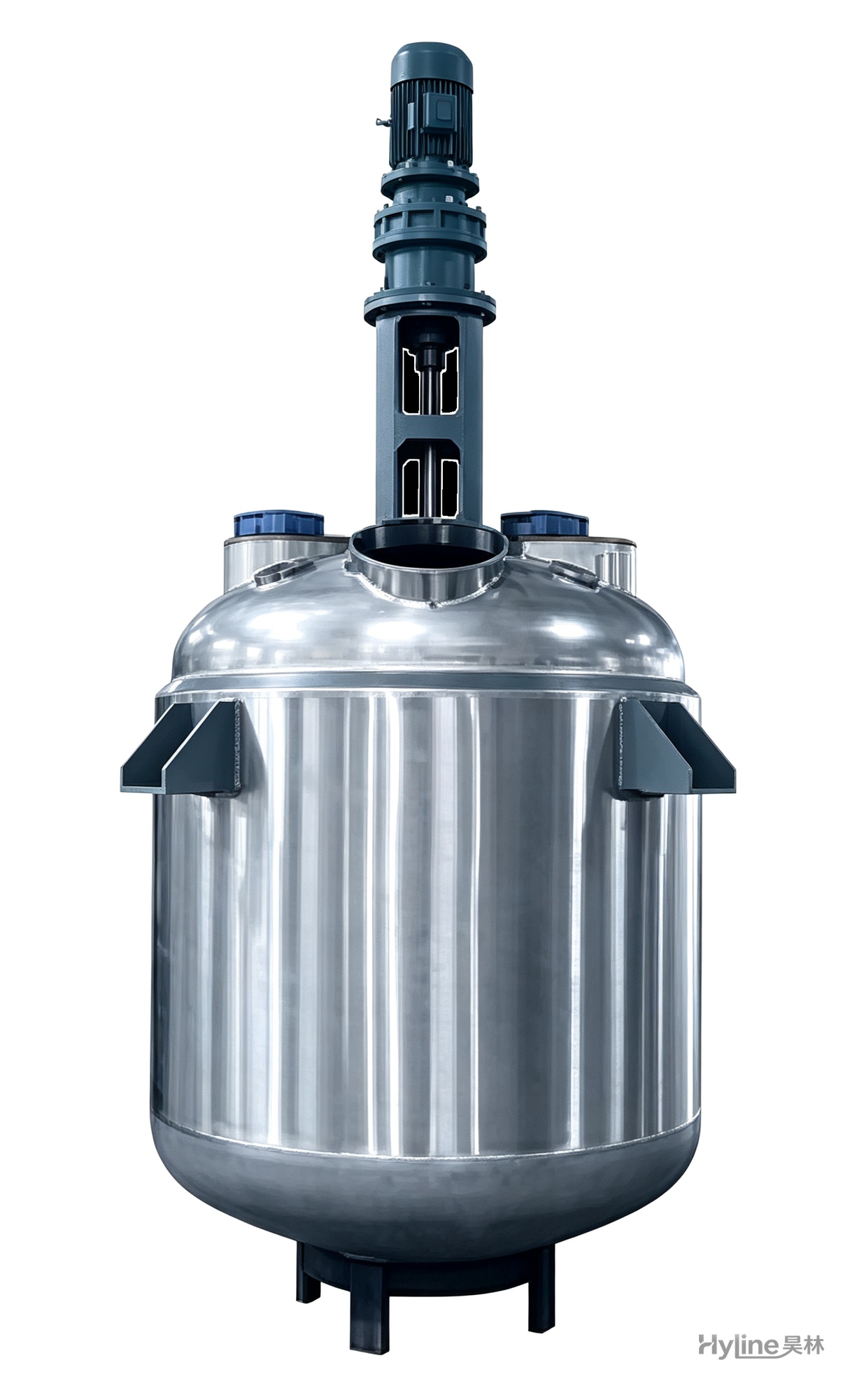
HS Series High-Speed Dispersing Vessel
Specially for dissolving, mixing and dispersing coating materials. The shear force and high speed of the dispersion disc deliver excellent solid-liquid dispersion and homogenization.

Stainless Steel Mixing Tank (Dispersion Drum)
Supporting vessel for dispersers and mixers in paints, coatings, adhesives, color slurries, inks and electronics. Available in 201/304 stainless with internal/external polishing and sloped bottom side discharge for complete draining.