
How Does Evaporation Temperature Correspond to Vacuum in a Concentrator? The Boiling-Point Curve Determines Evaporation Efficiency
10/13/2026
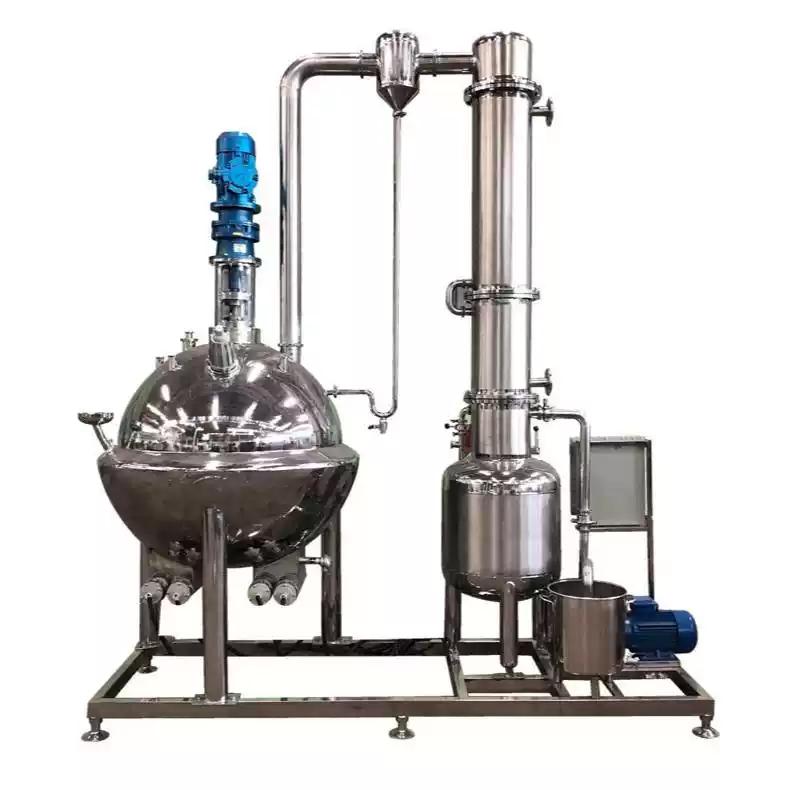
What Determines the Evaporation Temperature of a Concentrator?
One-sentence conclusion: the evaporation temperature is determined by the vacuum level in the evaporator chamber; the higher the vacuum, the lower the boiling point; when the absolute pressure is normally controlled at 10–30 kPa, the evaporation temperature is about 40–70°C, and the exact value is determined by the material boiling-point curve.
Vacuum concentration works by lowering the pressure in the evaporator chamber to lower the boiling point. The same material has a fixed boiling point at atmospheric pressure: for example, water boils at about 100°C at normal pressure; after the chamber is evacuated, the pressure above the liquid surface drops and the boiling point drops accordingly. The common industry practice is to control the evaporation temperature within the range allowed by the material's heat sensitivity, usually 40–70°C.
Lower temperature is better for heat-sensitive materials. Materials containing heat-sensitive components, such as flavors and fragrances, Chinese herbal extracts and food concentrates, tend to change color, lose aroma or lose active ingredients at high temperature. Therefore the vacuum of a concentrator is not simply "the higher the better": the required vacuum is derived backwards from the maximum evaporation temperature allowed for the material.
How Do You Find the Correspondence Between Vacuum and Boiling Point?
One-sentence conclusion: use the boiling-point data of the material at the corresponding pressure; for water, the boiling point is about 60°C at an absolute pressure of 20 kPa, about 45°C at 10 kPa and about 33°C at 5 kPa (typical data, varying with purity and solutes).
The relationship between boiling point and pressure is a fixed physical law. For pure components, the boiling point at different pressures can be obtained from vapor-liquid equilibrium data; for mixed solutions, the boiling point is also affected by the type and concentration of solutes and needs correction according to the boiling-point rise of the actual material.
Typical working-condition comparison (with water as reference, general/typical ranges): at an absolute pressure of 20 kPa the boiling point is about 60°C; at 10 kPa about 45°C; at 5 kPa about 33°C. A gauge vacuum of about -0.08 MPa corresponds to about 20 kPa absolute, and about -0.09 MPa corresponds to about 10 kPa absolute.
| Absolute pressure in evaporator | Gauge vacuum (approx.) | Boiling point of water (typical) |
|---|---|---|
| 20 kPa | -0.08 MPa | about 60°C |
| 10 kPa | -0.09 MPa | about 45°C |
| 5 kPa | -0.095 MPa | about 33°C |
| 101.3 kPa | 0 (atmospheric) | about 100°C |
How Do You Decide an Appropriate Vacuum Level?
One-sentence conclusion: the vacuum is set by balancing the heat-sensitive temperature of the material and evaporation efficiency; first fix the maximum allowed evaporation temperature, then find the corresponding boiling-point pressure and select the vacuum pump capacity with 10–20% margin.
First set the temperature red line. The process card or technical agreement usually gives the maximum allowed evaporation temperature, for example some fragrances must not exceed 60°C. Substituting this temperature into the boiling-point curve gives the corresponding evaporator pressure, which is the basis of the operating vacuum.
Then size the vacuum pump. The pumping capacity must cover all non-condensable gas and leakage during concentration; the common industry practice is to allow 1.2–1.5 times the calculated load. Common configurations include water-ring pumps and rotary vane pumps: a water-ring pump is simple in structure and suitable for solvent-vapor service, with an ultimate vacuum generally on the order of 10–20 kPa absolute; a rotary vane pump reaches a higher ultimate vacuum and suits materials requiring lower evaporation temperature, but gas-liquid separation and solvent recovery are needed for solvent-vapor service.
What Factors Affect Evaporation Efficiency?
One-sentence conclusion: evaporation efficiency mainly depends on the heat-transfer temperature difference, heat-transfer area, vacuum stability and smooth discharge of secondary vapor; all four factors must be satisfied at the same time.
The heat-transfer temperature difference is the primary factor. The difference between the heating medium temperature and the evaporation temperature determines the heat transferred per unit area; the larger the difference, the faster the evaporation, but too large a difference causes local overheating and fouling. The common industry practice is to keep a reasonable difference between the jacket steam or hot water and the evaporation temperature, generally 20–40°C.
The heat-transfer area determines the total heat transferred. The heat-transfer area of a concentrator is calculated according to the throughput and evaporation rate; the larger the throughput and the faster the required evaporation, the larger the area, and an external circulation heater can be added to enlarge the heat-transfer surface when necessary. The vacuum must remain stable, since fluctuation causes bumping and entrainment; the secondary vapor discharge line must be unobstructed, because an undersized pipe or an overloaded condenser creates back pressure and raises the evaporator pressure.
What Are Common Problems During Operation and How Are They Adjusted?
One-sentence conclusion: common problems are bumping, entrainment, slow evaporation and unstable vacuum, which are traced respectively from heating difference, liquid level, condenser load and leakage.
Bumping often occurs when the vacuum rises too fast or the heating difference is too large. The adjustment is to raise the vacuum slowly, heat up step by step and keep the liquid level moderate. Entrainment is usually caused by excessive evaporation or insufficient separation space; the evaporation intensity can be reduced, a demister can be added, or a catch-all can be fitted before the condenser.
Slow evaporation requires checking the heat-transfer surface and the condensing system. Fouling on the jacket or heater noticeably reduces heat transfer and requires periodic cleaning; if the condenser has insufficient capacity and secondary vapor cannot be discharged, check the cooling-water temperature and flow. For unstable vacuum, first check system leakage; valves, flanges and sight-glass seals are common leak points, which can be checked section by section with soap solution or a leak detector.

What Should Be Noted as the Material Concentration Changes During Evaporation?
One-sentence conclusion: as water is evaporated, the material becomes more concentrated, its boiling point rises and viscosity increases, so the vacuum or heating difference must be adjusted in time to avoid slower evaporation and local overheating in the later stage.
The boiling-point rise increases with concentration. The more concentrated the material, the higher its boiling point at the same pressure; if the same vacuum is kept in the later evaporation stage, the actual evaporation temperature will be higher than the initial setting. The common industry practice is to check the temperature and vacuum readings regularly and, after the concentration rises, increase the vacuum or lower the heating temperature appropriately to maintain an effective heat-transfer difference.
Higher viscosity affects circulation and heat transfer. The flowability of highly concentrated material deteriorates and the jacket heat-transfer coefficient drops; external circulation or scraping may be needed. In addition, keep the discharge line insulated to prevent the material from cooling, crystallizing and blocking the line.
What Parameters Should Be Checked When Purchasing?
One-sentence conclusion: when purchasing a concentrator, check four parameters: evaporator vacuum range, heating area, evaporation capacity and condensation recovery configuration, and confirm they match the required evaporation temperature.
First check evaporation capacity. The evaporation capacity in the technical agreement is generally based on water; the actual material evaporation capacity is affected by viscosity, boiling-point rise and heat sensitivity, and the common industry practice is to convert it at 60–80% of the benchmark value. Then check the vacuum range: confirm that the designed ultimate vacuum of the equipment is higher than the required operating vacuum, and confirm the vacuum pump model and motor power.
Then check structure and materials. Material-contact parts are generally made of stainless steel with polished inner walls for easy cleaning and reduced sticking; a gas-liquid separator is fitted between the evaporator chamber and the condenser to prevent droplets from entering the vacuum line. Finally confirm the control method: whether temperature, vacuum and liquid level are provided with local and remote instruments and can be connected to the existing control system.
A concentrator is usually supplied as a complete set with the vacuum pump and condenser, and can also be configured separately according to the site process. When reactors, storage tanks and concentrators are in the same workshop, the vacuum system, cooling water and drainage lines can be arranged together to reduce duplicated investment.
Related reading: - How is the vacuum of a concentrator controlled? Vacuum pump selection and operation points
This article is compiled by Hyline Shengda Equipment Manufacturing Co., Ltd. (hyline.cn); the information belongs to the original authors. We specialize in stainless steel reactors, mixing tanks, storage tanks, dispersers, concentrators and complete chemical line support, with non-standard customization available.
Q&A from this article
Frequently asked questions and answers from this article
The evaporation temperature of a concentrator is set by vacuum: this article covers the vacuum-boiling point table, how to set vacuum, factors affecting efficiency and purchase parameters.
Related Products

Jacketed Reactor
The typical main reaction vessel in chemical production. Mixing, heating and cooling disperse and mix materials for reaction and polymerization. The jacket circulates thermal oil/steam for heating or cooling water for temperature control.
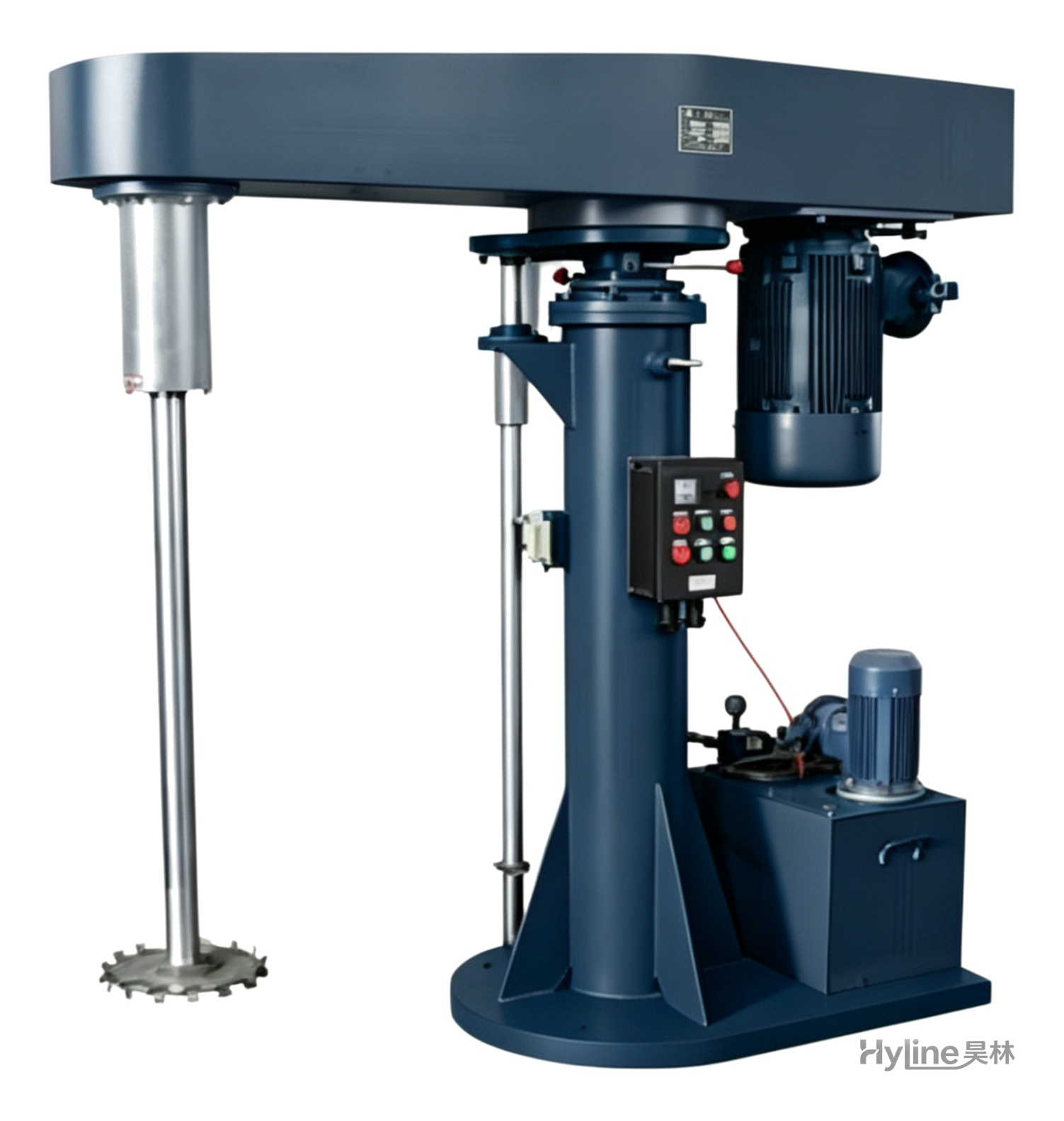
FL Series High-Speed Disperser
Stirs, dissolves and disperses liquids and powders, working alone or matched with sand mills. Variable-frequency drive with hydraulic lift, widely used in paints, inks, coatings, dyestuffs and papermaking.

Stainless Steel Mixing Tank (Dispersion Drum)
Supporting vessel for dispersers and mixers in paints, coatings, adhesives, color slurries, inks and electronics. Available in 201/304 stainless with internal/external polishing and sloped bottom side discharge for complete draining.
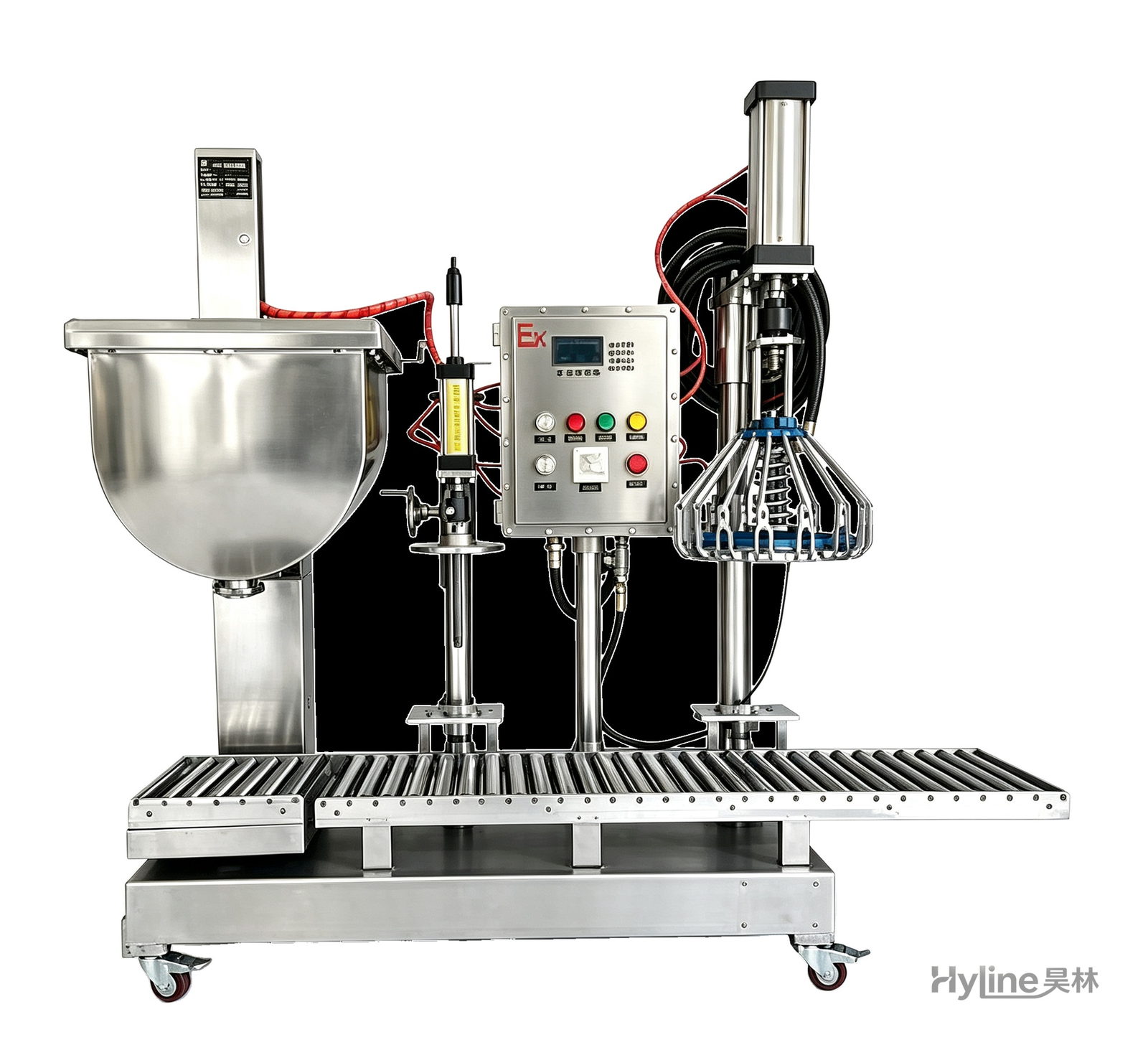
Weighing Semi-Automatic Filling Machine
Designed for frequent packaging changes with dual capping. European weighing technology with Siemens PLC: automatic feed speed adjustment and precision correction, triple protection (emergency stop/power-off/tank removal), explosion-proof fittings.