
How to Control the Vacuum Degree of a Concentration Tank: Vacuum Regulating Valve and System Configuration Points
10/5/2026
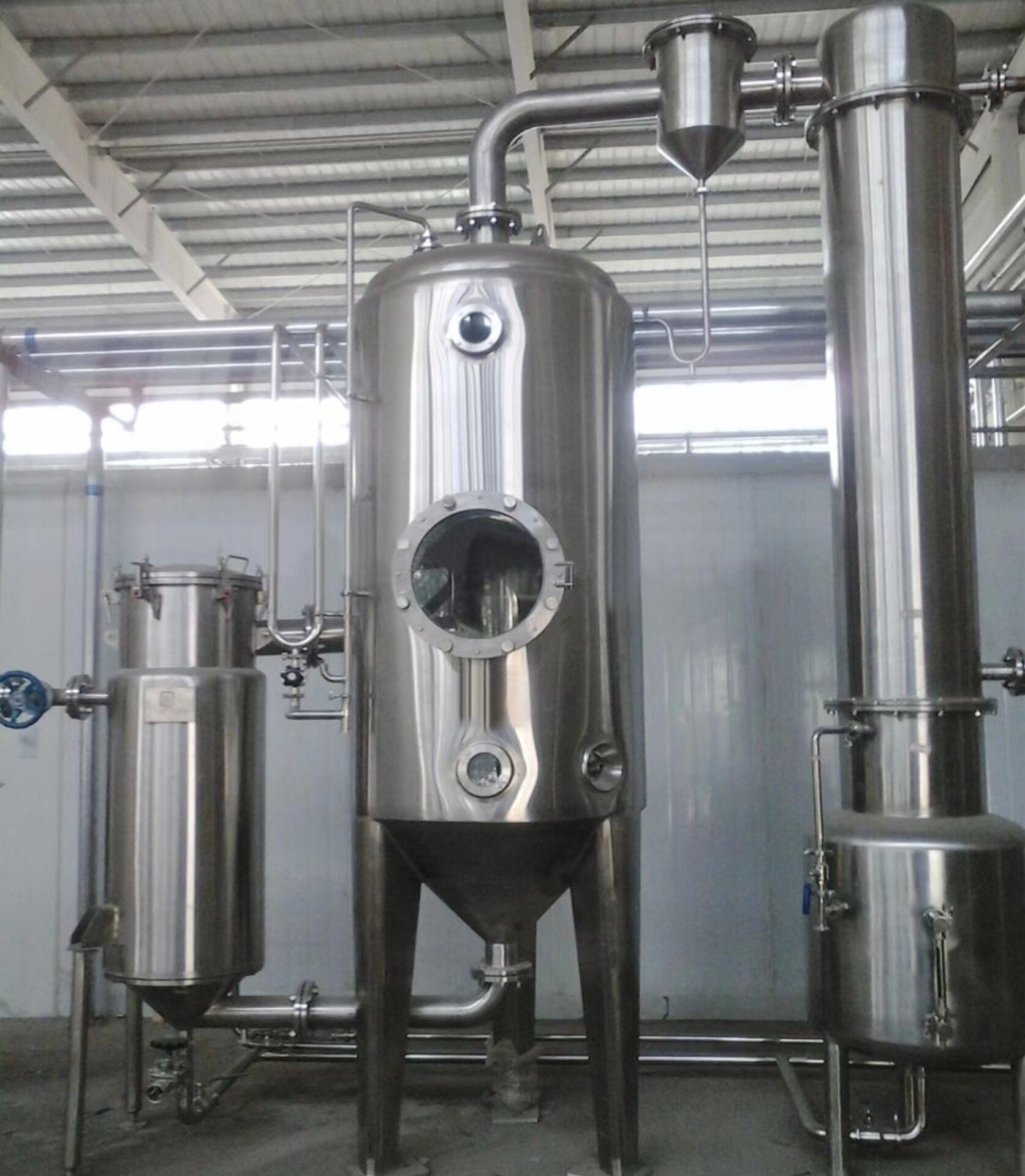
Concentration tanks are widely used in the pharmaceutical, food and fine chemical industries for low-temperature concentration of liquids. The core principle is to lower the boiling point of the liquid under vacuum so that water or solvents can be evaporated at a lower temperature. The vacuum degree directly affects evaporation temperature, evaporation speed and product quality: if the vacuum is insufficient, the boiling point rises, heat-sensitive components are easily damaged and concentration time lengthens; if the vacuum is too high, evaporation becomes violent, causing bumping, material carryover and entrainment. The vacuum degree is not "the higher the better" - it should be kept in a suitable range according to the properties of the liquid.
Relationship between vacuum degree and boiling point
The correspondence between vacuum degree and boiling point is the basis of concentration process design. The higher the system vacuum, the lower the absolute pressure in the tank, the lower the boiling point of the liquid and the lower the evaporation temperature. For heat-sensitive liquids, choosing the right working vacuum means choosing a safe evaporation temperature. In actual operation, vacuum and heating temperature must be controlled together: vacuum determines the boiling point, heating input determines the evaporation rate, and only when the two match can evaporation proceed smoothly. If the vacuum is set too high while heating is insufficient, evaporation slows down and energy consumption rises; if the vacuum is too low while heating is too strong, local overheating easily occurs and heat-sensitive components are damaged.
| Vacuum state | Performance | Consequence |
|---|---|---|
| Insufficient vacuum | Boiling point rises, evaporation slows | Heat-sensitive components damaged, capacity drops |
| Excessive vacuum | Violent evaporation, bumping and carryover | Lower yield, entrainment, quality fluctuation |
| Fluctuating vacuum | Inconsistent concentration between batches | Poor product consistency |
Matching the concentration process with vacuum and heating temperature is the key at the operation level: keep the vacuum stable during the heating-up stage so the liquid evaporates evenly at the set boiling point; in the later stage, as concentration increases and viscosity rises, the evaporation rate drops and the vacuum can be raised appropriately to compensate; near the end point, reduce heating intensity in advance to prevent over-concentration. After each adjustment of the concentration process, record the vacuum, temperature, time and product quality together, and gradually form the plant's own standard concentration curve.
Composition of the vacuum system
A complete concentration vacuum system consists of a vacuum pump, condenser, vacuum buffer tank, vacuum regulating valve, vacuum piping and vacuum instruments.

Working flow: secondary steam in the tank enters the condenser and is condensed into liquid by cooling water for recovery; uncondensed gas passes through the vacuum piping into the vacuum pump and is discharged from the system, thereby maintaining the vacuum in the tank. The vacuum level depends on the balance between evaporation rate and pumping rate: more gas generated by evaporation lowers the vacuum, and stronger pumping raises it. Configuration should be derived backwards from the evaporation load: first calculate the steam generation per unit time, then determine the condenser and vacuum pump specifications.
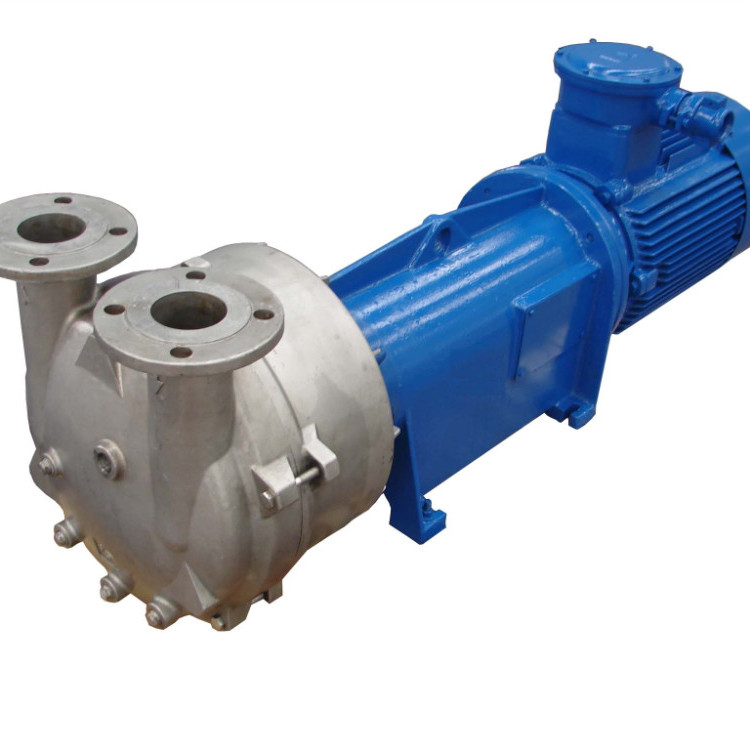
Vacuum pump selection
Vacuum pump selection is based on the required vacuum range and total pumping capacity of the system.
| Pump type | Features | Suitable application |
|---|---|---|
| Liquid ring pump | Simple structure, corrosion resistant, limited ultimate vacuum | Concentration with solvent vapor |
| Rotary vane pump | High vacuum, requires clean gas | Low absolute pressure applications |
| Roots pump | Large pumping speed, often used as a booster after the backing pump | Large evaporation systems |
Selection points: estimate the total pumping capacity from the evaporation load and condensation load, then select the pump type according to the vacuum requirement, leaving a proper margin but not over-sizing; configure explosion-proof options when flammable and explosive solvent vapor is present, and add solvent recovery and waste gas treatment devices when necessary. When multiple concentration tanks share one vacuum system, consider the impact of alternate switching on the vacuum level and set independent regulating branches for each tank.
Condenser configuration
The condenser condenses secondary steam into liquid, recovering solvent and reducing the load on the vacuum pump. The heat exchange area is calculated according to the maximum evaporation rate, taking the condensation load and heat transfer temperature difference into account and leaving a proper margin; shell-and-tube condensers are the common structure, with cooling water in the tubes and secondary steam in the shell. The stability of the cooling water directly affects condensation: rising temperature or fluctuating flow reduces condensing capacity, part of the steam enters the vacuum piping without condensing, and the vacuum drops accordingly. Large systems are advised to be equipped with a cooling tower and circulating water pump; a liquid seal or recovery line should be provided at the condensate outlet to prevent condensate backflow and air ingress.
Vacuum regulating valve and automatic control
The vacuum regulating valve is the core component for fine vacuum control. The principle is to install an adjustable valve in the suction line and change the suction resistance by adjusting the opening, finding a balance between evaporation and pumping so as to stabilize the vacuum near the set value.
- Manual regulating valves suit stable working conditions
- Systems with high automation requirements use pneumatic or electric regulating valves with PID control
- The valve body material must resist medium corrosion; stainless steel bodies with corrosion-resistant seals are common
- The valve installation position should be easy to operate and maintain, and the piping should avoid right-angle sharp bends to reduce suction resistance
Buffer tank and piping design
The vacuum buffer tank is installed between the condenser and the vacuum pump. Its functions are to stabilize system pressure, absorb evaporation fluctuation and separate entrained liquid droplets from the gas. When the liquid boils, instantaneous gas generation fluctuates; the buffer tank absorbs this fluctuation, prevents sharp changes in vacuum and protects the pump body. The piping should be short and straight with a minimum number of elbows; the pipe diameter is selected according to gas velocity. Connections must be gas-tight, and flanges should use vacuum-resistant gasket materials. Minor leakage has little effect at low vacuum but significantly lowers the vacuum under high-vacuum conditions; after piping installation, an air-tightness test is recommended.
Vacuum measurement and closed-loop control
Vacuum instruments include pointer vacuum gauges, digital vacuum gauges and pressure transmitters. Instruments are installed on the tank top or on the main vacuum line, away from positions directly impacted by steam. The automatic control loop consists of a vacuum transmitter, controller and regulating valve: the transmitter measures in real time, the controller compares with the set value and outputs a regulating signal that drives the valve to change its opening, achieving closed-loop control. Control parameters should be tuned according to the evaporation process; unsuitable proportional and integral parameters cause oscillation or a slow response. Highly automated systems can link vacuum with heating and feeding to achieve overall stable control of the concentration process.
Common fault troubleshooting
| Fault symptom | Common cause | Troubleshooting direction |
|---|---|---|
| Vacuum cannot be reached | Insufficient pump capacity, system leakage, insufficient condensation | Isolate pump and system and test pumping separately, check leakage point by point |
| Large vacuum fluctuation | Unstable evaporation, cooling water fluctuation, valve fault | Record the correspondence between vacuum and heating/cooling parameters |
| Poor condensation | High cooling water temperature, fouled heat exchange tubes | Check cooling water, clean heat exchange tubes |
| Low solvent recovery | Insufficient condensation, blocked recovery line | Verify condenser area, check liquid seal line |
| Liquid carryover in suction | Insufficient buffer tank capacity, overly violent evaporation | Enlarge buffer tank, reduce heating intensity |
When troubleshooting, first check whether the vacuum pump can reach its ultimate vacuum by isolating the pump from the system and testing pumping separately, so as to judge whether the problem lies in the pump or the system; for system leakage, focus on flanges, valve packing, manholes and instrument interfaces; recording the vacuum curve and its correspondence with heating and cooling parameters often locates the problem quickly.
Operation, maintenance and energy saving
Record vacuum, cooling water temperature, condensate recovery and energy consumption data regularly, build an operation ledger, and give early warning when parameters deviate from the baseline. On energy saving: vacuum pump energy consumption accounts for a large share of the concentration system; reasonably controlling the upper limit of the vacuum and avoiding over-pumping reduces energy consumption; adjust cooling water flow on demand; when the vacuum is stable, lower the pump speed or run intermittently to reduce ineffective pumping. Recommended maintenance intervals: check the vacuum pump quarterly, thoroughly clean the condenser once a year, calibrate vacuum instruments once a year, and replace pipe seals according to aging conditions. A concentration system maintained to standard keeps the vacuum stable, achieves high solvent recovery and consistent batch quality.
Commissioning and acceptance: for a new system or after major repair, first do an air-tightness test, then test the pump and instruments under no-load vacuum, and finally run a water trial concentration; before formal production, confirm the vacuum set point, control parameters and cooling water conditions, and record the initial baseline data in the ledger for later comparison of system state changes.
Selection checklist
- Define the process target: liquid properties, target concentration, throughput, heat-sensitive temperature
- Calculate the evaporation load: gas generation per unit time, derive condenser area and pumping capacity
- Select the vacuum pump type: according to vacuum range and gas characteristics, with explosion-proof and recovery devices
- Configure the condenser and cooling water: leave margin based on maximum evaporation, keep cooling water stable
- Choose the control mode: manual or automatic, with transmitter and regulating valve closed loop
- Design the buffer tank and piping: short and straight layout, air-tightness test, reduce resistance
- Make a maintenance plan: inspection cycles for pump, condenser, instruments and seals
Appendix: equipment file suggestion
It is recommended to build an operation file for the vacuum concentration equipment, recording vacuum, temperature and feed volume data, to provide a basis for batch traceability and process optimization.
Summary
Vacuum control of a concentration tank is a system-level issue: the vacuum pump, condenser, buffer tank, regulating valve and line instruments must all be matched backwards from the evaporation load, supported by measurement and closed-loop control, so that the vacuum can be stabilized within the range required by the process. With an operation ledger and standard maintenance, the concentration system will maintain stable vacuum, high solvent recovery and good batch consistency over the long term.
Further reading:
- Comparison of Heating and Cooling Methods for Reactors: Jacket, Half-Coil and Internal Coil
- How to Maintain the Stirring System of a Reactor: Key Points for Shaft, Mechanical Seal and Blade Assembly
---
This briefing is compiled by Shenzhen Hyline Equipment Manufacturing Co., Ltd. (hyline.cn); all information rights belong to the original authors. Main products: stainless steel reactors, mixing tanks, storage tanks, dispersers, concentration tanks and complete chemical process lines; custom (non-standard) manufacturing supported.
Q&A from this article
Frequently asked questions and answers from this article
Controlling the vacuum degree of a concentration tank is a system-level task. This article provides a complete configuration guide from vacuum pump selection, condenser, vacuum regulating valve and buffer tank to piping design.
Related Products
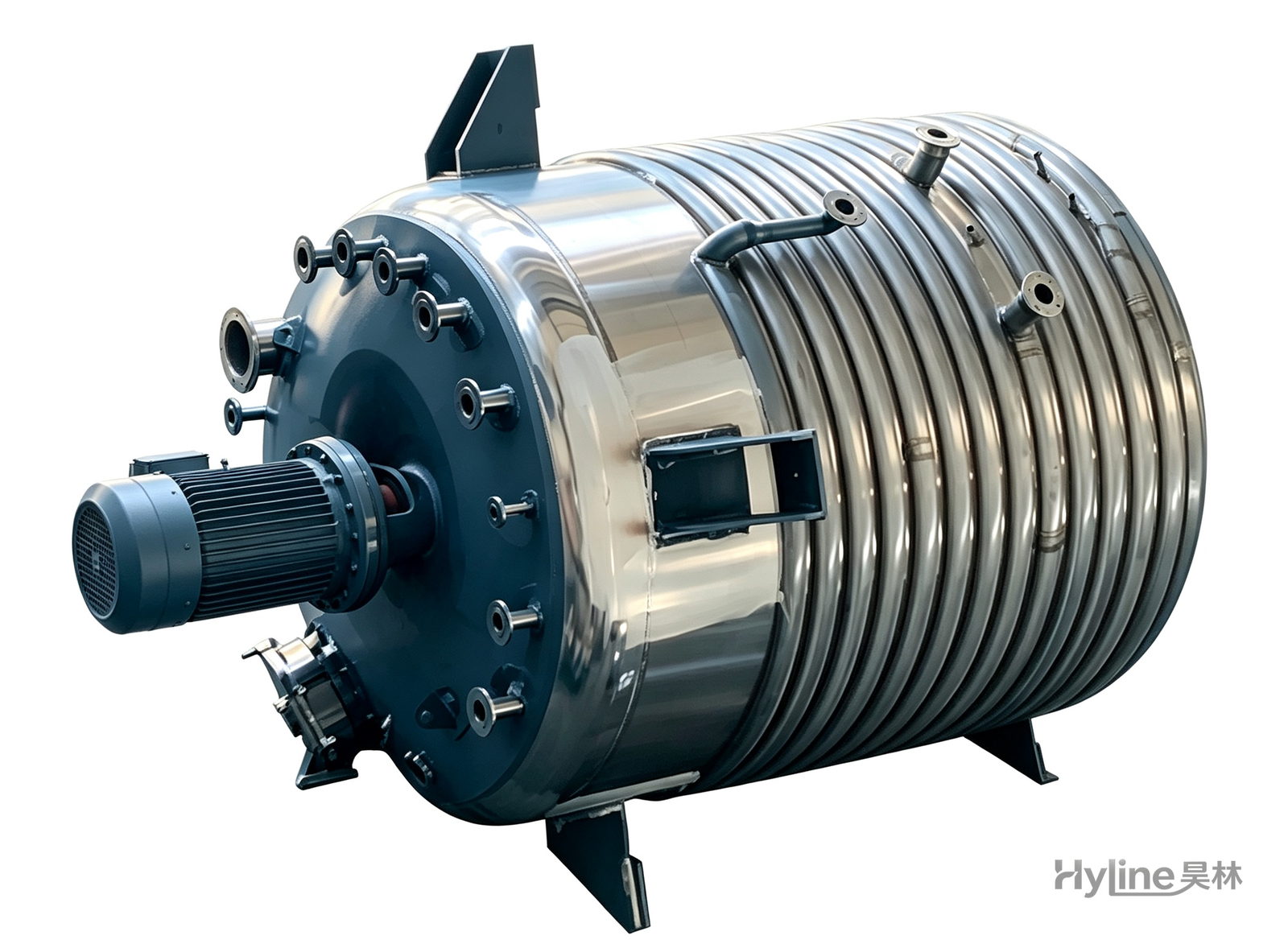
External Half-Coil Reactor
External half-pipe heating & cooling coils provide uniform, efficient heat exchange with zero material dead zones inside. Mirror-polished 304/316L stainless tank is clean and corrosion-resistant. For resin, new-energy slurry and pharmaceutical synthesis.
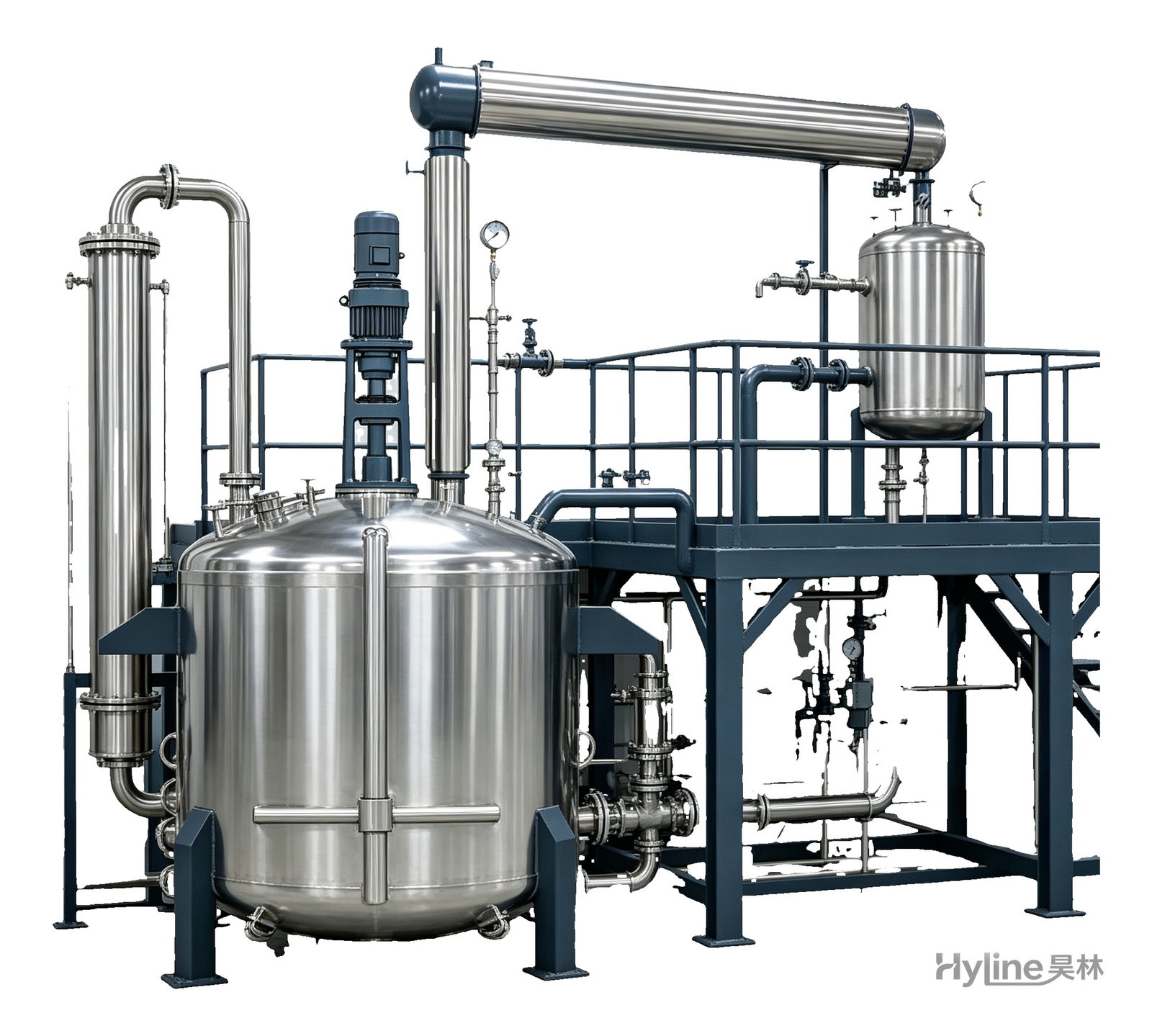
Complete Resin Production Equipment
Resin production packages built around the reactor, with vertical fractionating column, horizontal condenser and water separator for full synthesis, dehydration and reflux processes. Sizes from 300L to 30000L.

Stainless Steel Mixing Tank (Dispersion Drum)
Supporting vessel for dispersers and mixers in paints, coatings, adhesives, color slurries, inks and electronics. Available in 201/304 stainless with internal/external polishing and sloped bottom side discharge for complete draining.
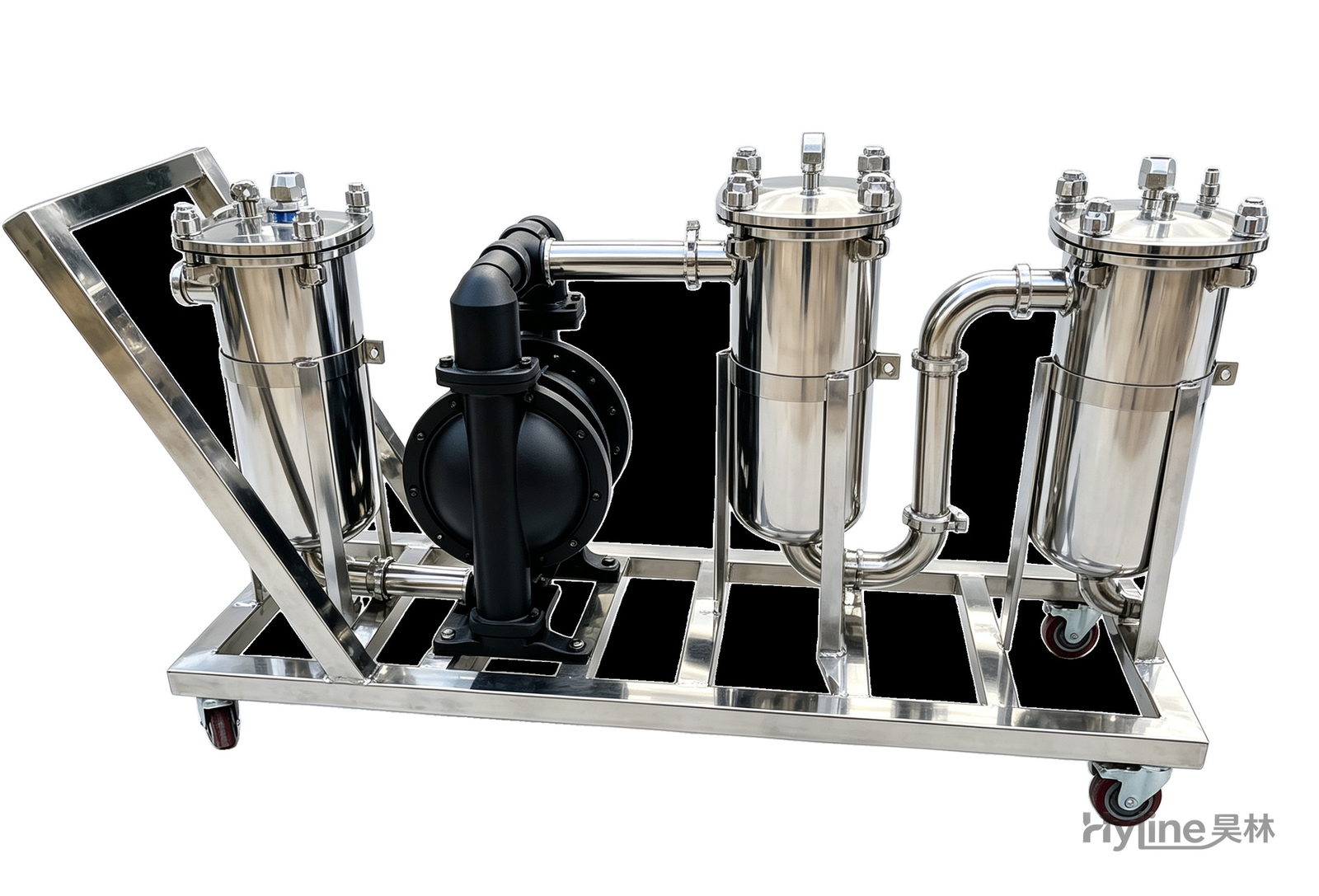
DL Series Bag Filter
A novel, compact, flexible and airtight multi-purpose filter widely used in chemicals, coatings, inks and food. Single and duplex models available, mountable on mobile carts with transfer pumps.
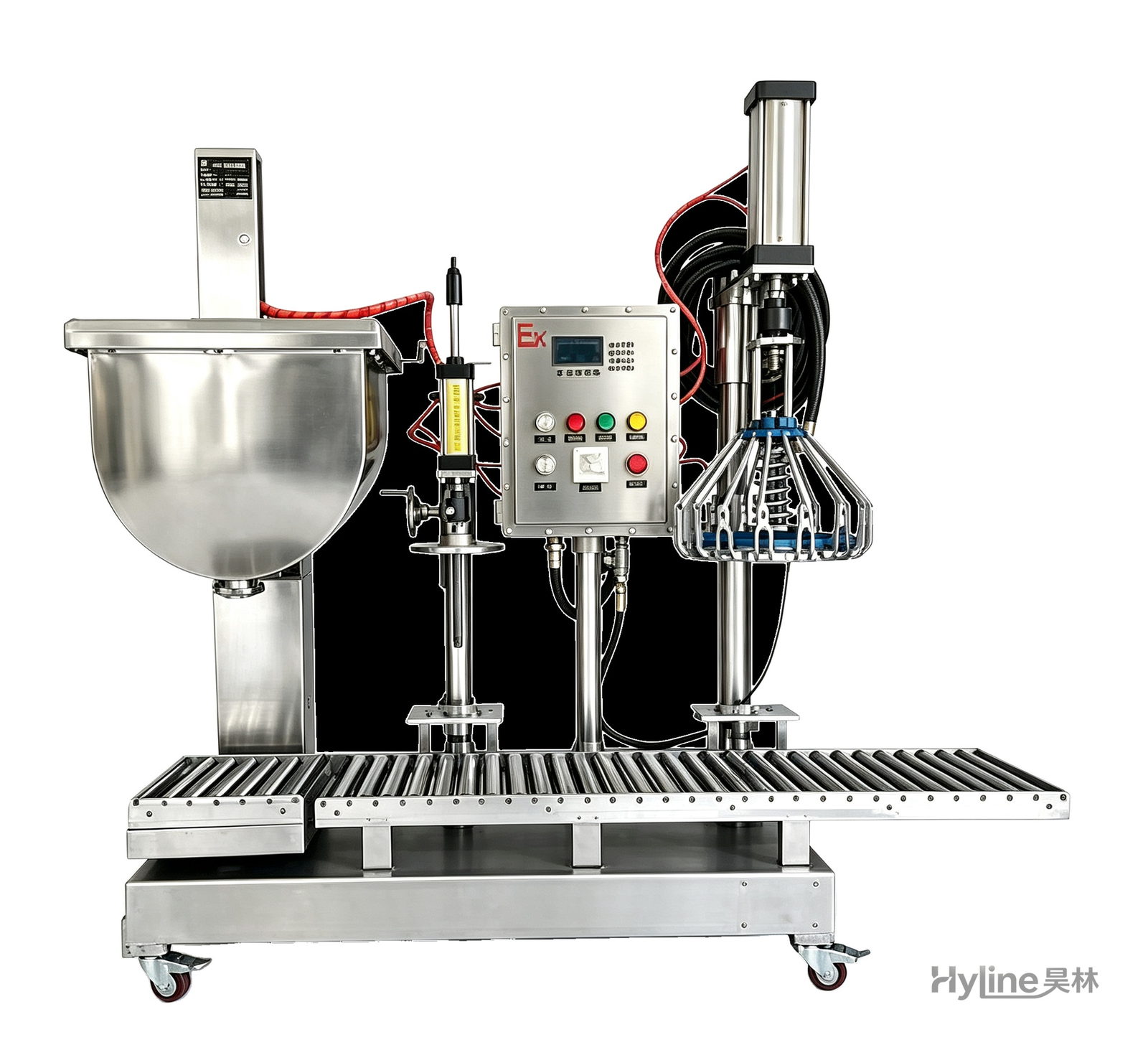
Weighing Semi-Automatic Filling Machine
Designed for frequent packaging changes with dual capping. European weighing technology with Siemens PLC: automatic feed speed adjustment and precision correction, triple protection (emergency stop/power-off/tank removal), explosion-proof fittings.
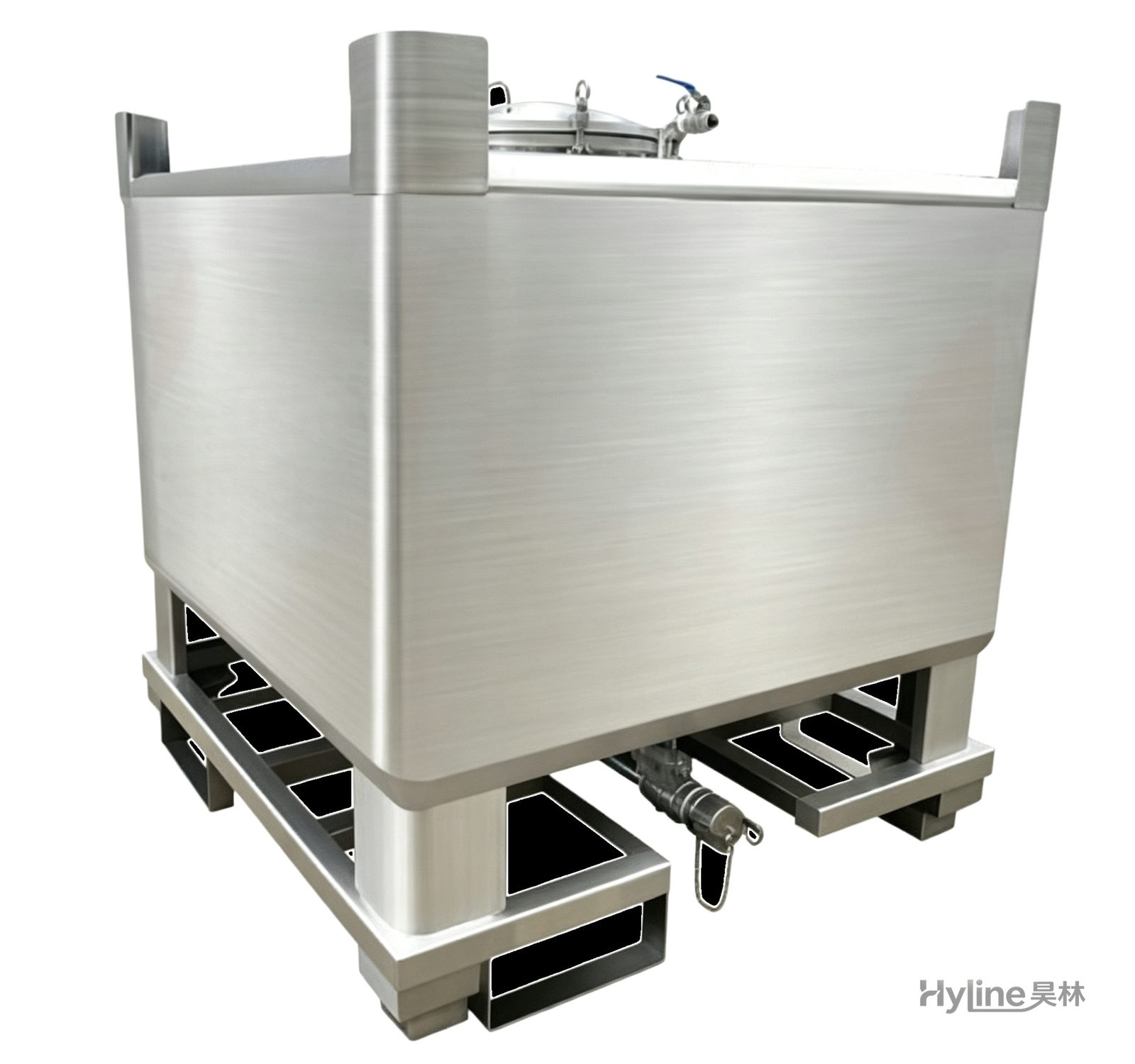
IBC Tank (Intermediate Bulk Container)
HDPE blow-molded liner with hot-dip galvanized steel frame - UV resistant, anti-aging, easy to clean, non-toxic. Four-way fork base for easy handling and stacking; ideal for liquid storage and transport.