
How to Choose a Stainless Steel Emulsifier Tank for Cosmetics Creams? Set Homogenizing Tip Speed and Scraper Configuration by Cream Viscosity
10/29/2026
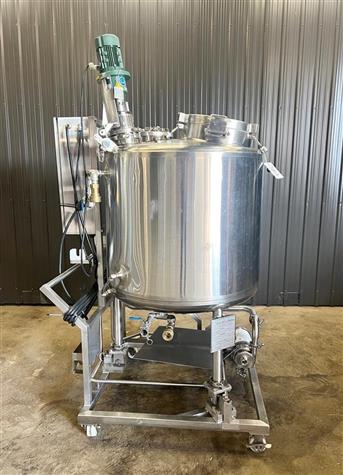
What Are the Emulsification Duty Characteristics of Cosmetic Creams?
Bottom line: cream emulsification must solve two problems at once — fine droplet size and no burnt-on buildup on the wall. The first is handled by the homogenizer, the second by main agitation and scrapers, so emulsifier tank selection should be matched by viscosity tier.
Water-in-oil and oil-in-water systems, lotion and cream dosage forms, span viscosities from hundreds to tens of thousands of mPa·s. For low-viscosity products such as facial creams and body lotions, homogenizing emulsification is the main process; for high-viscosity pastes such as eye creams, lip balms and hair clay, main agitation and scrapers often matter more than the homogenizer. The cosmetics industry demands fine emulsion and batch consistency; formulations often contain thickeners, powders and actives, and if mixing dead zones exist, local under-emulsification shows up as grittiness or batch fluctuation. So emulsifier tank selection is not just about homogenizer power — it is an overall match of homogenizer, main agitation, scrapers, vacuum and temperature control.
How to Set the Homogenizing Tip Speed?
Bottom line: homogenizing tip speed is generally 10–25 m/s, taking the lower bound for low-viscosity lotions and the upper bound for high-viscosity pastes; tip speed reflects emulsification effect better than motor power.
The homogenizer head shears material between a high-speed rotor and a stator; the indicator of shear intensity is the tip speed at the rotor periphery. For low-viscosity systems such as facial creams and lotions, a tip speed of 10–15 m/s is generally enough to break the oil phase down; for high-viscosity pastes and powder-containing formulations, 18–25 m/s is needed. Homogenizing time is generally 10–30 minutes per batch, slow first then fast, to avoid beating air into the liquid. Give the supplier your formulation viscosity and target particle size (generally 1–5 μm; use microfluidics or high-pressure homogenization as post-treatment when a finer size is required) to size the rotor diameter and motor power correctly.
| Product type | General viscosity range | Homogenizing tip speed | Homogenizing time |
|---|---|---|---|
| Lotion, toner | hundreds to thousands of mPa·s | 10–15 m/s | 10–20 min |
| Facial cream, cream | thousands to tens of thousands of mPa·s | 12–18 m/s | 15–25 min |
| High-viscosity paste, hair clay | above tens of thousands of mPa·s | 18–25 m/s | 20–30 min |
How to Configure Main Agitation and Scrapers?
Bottom line: main agitation generally runs at 10–60 rpm for low-speed turnover; scraper blades rotate differentially against the wall with a small clearance, and high-viscosity pastes must have scrapers or the wall material burns yellow.
Main agitation turns the whole batch and pushes wall material toward the homogenizer. Low-viscosity products need only a single paddle or anchor agitator; high-viscosity pastes need planetary mixers, ribbon or anchor agitators with scrapers, with a wall clearance of generally 3–10 mm, rotating differentially from the main agitator to continuously scrape wall material back to the center. Scraper material wear resistance and wall fit must be tuned to viscosity — too tight wears out, too loose hangs material. Confirm whether the main agitator and homogenizer share one motor or use two motors: with two motors each can be speed-controlled independently, so emulsifying and turnover do not interfere, and high-viscosity pastes generally use the two-motor configuration.
Do We Need Vacuum Deaeration and Temperature Control?
Bottom line: vacuum deaeration generally draws down to about -0.08 MPa to remove air entrained by agitation; temperature control keeps the emulsifying temperature stable per the formulation; cream lines usually fit both.
Agitation entrains air into the liquid. A vacuum emulsifier tank operates closed and draws vacuum for deaeration; bubbles are removed more thoroughly as the cream cools, giving a more transparent product and more uniform density. Temperature control uses the jacket for heating and cooling, generally 70–85°C for oil/water phase mixing and emulsification, then cooling below 40°C before adding actives and fragrance. Jacket heat-transfer area, ramp rates and heat-transfer uniformity during agitation together determine batch time; high-viscosity material transfers heat slowly, so jacket design needs margin. Vacuum and temperature control can be linked: the liquid level rises under vacuum, so leave enough vapor space to prevent overboiling.
How to Choose Material and Sanitary Configuration?
Bottom line: parts in contact with the cream are generally 316L stainless steel, with internal polish Ra ≤ 0.4 μm, sanitary quick-couplings, and no dead corners at the outlet.
Cosmetics tolerates zero metallic foreign matter and sanitary dead corners. The tank body, homogenizer head, scraper blades and pipe fittings in contact with the product are generally 316L, with electrolytic internal polishing below Ra 0.4 μm and pit-free polished welds; manway, sight glass, thermometer ports and the outlet use sanitary quick-couplings, and valves are sanitary diaphragm or ball valves. Rotor-stator clearance and material directly affect wear particles, so high-hardness pastes need wear-resistant materials. For cleaning, fit CIP spray balls with 60–80°C hot-water circulation, and keep feed and discharge lines short to avoid residue. Insulate the tank body and cover with stainless steel cladding for a clean workshop appearance.
How to Build the Selection Checklist?
Bottom line: four steps by formulation viscosity, batch size, particle-size requirement and production schedule: set volume and homogenizing tip speed first, then main agitation and scrapers, then vacuum, temperature control and sanitary interfaces.
Step 1: batch size and daily output decide tank volume, generally with a 10–20% margin over batch size. Step 2: look up homogenizing tip speed and main agitation configuration by formulation viscosity; add scrapers and two motors for high viscosity. Step 3: add vacuum deaeration, temperature control and feed method as needed (top charging, bottom discharge, jacket medium and pressure). Step 4: confirm sanitary material, polish grade and CIP cleaning interfaces, item by item in the technical agreement. Give the supplier your viscosity range, per-batch output and target particle size; the supplier makes a configuration sheet to the same duty, and acceptance then has a basis.
| Selection step | Key parameters | General value/practice |
|---|---|---|
| Volume | batch size, daily output | batch × 1.1–1.2 |
| Homogenizing | tip speed, time | 10–25 m/s, 10–30 min |
| Agitation | speed, blade type | 10–60 rpm, scrapers for high viscosity |
| Auxiliaries | vacuum, temperature | -0.08 MPa, emulsify at 70–85°C |
| Sanitary | material, polish | 316L, Ra ≤ 0.4 μm, CIP |
How to Accept the Emulsion Particle Size?
Bottom line: particle size is spot-checked with a fineness gauge and microscope; after emulsification the size is generally 1–5 μm, uniform and free of coarse particles; acceptance samples each batch and compares before and after homogenizing.
A fineness gauge (grindometer) quickly reveals coarse particles: an emulsion sample is drawn across the gauge and the reading corresponds to the largest particle size; a microscope at 100–400× shows the size distribution and any unbroken oil droplets. Cosmetics creams generally require a fineness of 1–5 μm after emulsification — low-viscosity lotions toward the fine end, high-viscosity pastes slightly wider. Batch acceptance samples before cooling at the end of homogenizing and checks multiple points for consistency; when size fluctuates, first check whether tip speed and homogenizing time are sufficient, then the emulsifier dosage in the formulation. Write the target particle size into the technical agreement so acceptance shares one criterion.
What to Note When Scaling Up from a Lab Tank to a Production Tank?
Bottom line: scale-up is not proportional motor power increase — keep the homogenizing tip speed and agitator blade tip speed constant and scale by volume; lab parameters are reference only.
In geometrically similar scale-up from lab to production tank, keep the same homogenizing tip speed, enlarge rotor diameter with tank size and lower the speed accordingly; keep the main agitator blade tip speed similar and recalculate blade type and scrapers for the large tank. Agitation power is estimated by volume and viscosity rather than simply multiplied by the volume ratio from the lab power. Batch time generally changes after scale-up; run small pilot batches to confirm particle size and consistency before fixing line parameters. Give the supplier the lab formulation, lab parameters and target particle size; the supplier calculates by scale-up rules — this saves many batches compared with on-site trial and error.
How to Do Cleaning and Routine Maintenance?
Bottom line: hot-water rinse after each batch plus CIP spray-ball circulation; disassemble the homogenizer head periodically to check the rotor-stator clearance; replace scraper blades on schedule; record cleaning and maintenance in batch records.
After each discharge, first circulate 60–80°C hot water through piping and the tank, then CIP spray balls with cleaning agent in circulation, and finally rinse with purified water; dead corners and the homogenizing chamber get extra attention. Rotor-stator clearance affects fineness and wear; generally inspect every 500–1000 hours and replace the stator or rotor when clearance exceeds tolerance. Check scraper-to-wall fit quarterly; worn scrapers fail to clean the wall and leave yellow residue — replace in time. Check the vacuum system and jacket seals monthly and heat transfer; replace clamps and gaskets per sanitary rules. Record cleaning and maintenance in batch records for both batch consistency and equipment life.
How to Troubleshoot Common Quality Fluctuations in an Emulsifier Tank?
Bottom line: rough cream points to homogenizing and emulsifying temperature, separation points to agitation speed and cooling rate, rancid odor points to hygiene and vacuum — troubleshoot in the "fineness — separation — odor" order.
Rough cream: insufficient homogenizing tip speed, short homogenizing time or low emulsifier dosage — raise tip speed and time first, then check the formulation. Separation and breaking: low main agitation speed, excessive emulsifying temperature or over-fast cooling; the emulsifier/thickener ratio in the formulation also matters — compare against batch records item by item. Rancid odor: incomplete cleaning leaves residue, or insufficient vacuum causes oxidation — check CIP effectiveness and vacuum seals. Keep records of speed, temperature and time per batch; when fluctuation appears, compare records and most problems are located within one or two batches.
Summary
Selection of a cosmetics cream emulsifier tank can follow four steps: set the homogenizing tip speed by formulation viscosity first, then main agitation and scrapers by viscosity, then vacuum deaeration and temperature control, and finally confirm sanitary material and CIP interfaces. Give the supplier three parameters — formulation viscosity, per-batch output and target particle size — so that homogenizer, agitation and auxiliary systems are matched to the same duty and post-commissioning adjustments are unlikely. Our stainless steel emulsifier tanks and cream emulsifying lines support non-standard customization of tip speed, scrapers and vacuum systems; selection for cosmetics and daily chemicals is welcome for discussion.
Related articles: - How to configure the structure of a stainless steel emulsifier tank? - How to choose a vacuum emulsifying unit?
This article is prepared by Hyline Stenda Equipment Manufacturing Co., Ltd. (hyline.cn). Main products include stainless steel reactors, mixing tanks, storage tanks, dispersers, concentrators and complete chemical lines; non-standard customization is supported.
Q&A from this article
Frequently asked questions and answers from this article
Bottom line: homogenizing tip speed is generally 10–25 m/s, taking the lower bound for low…
Related Products
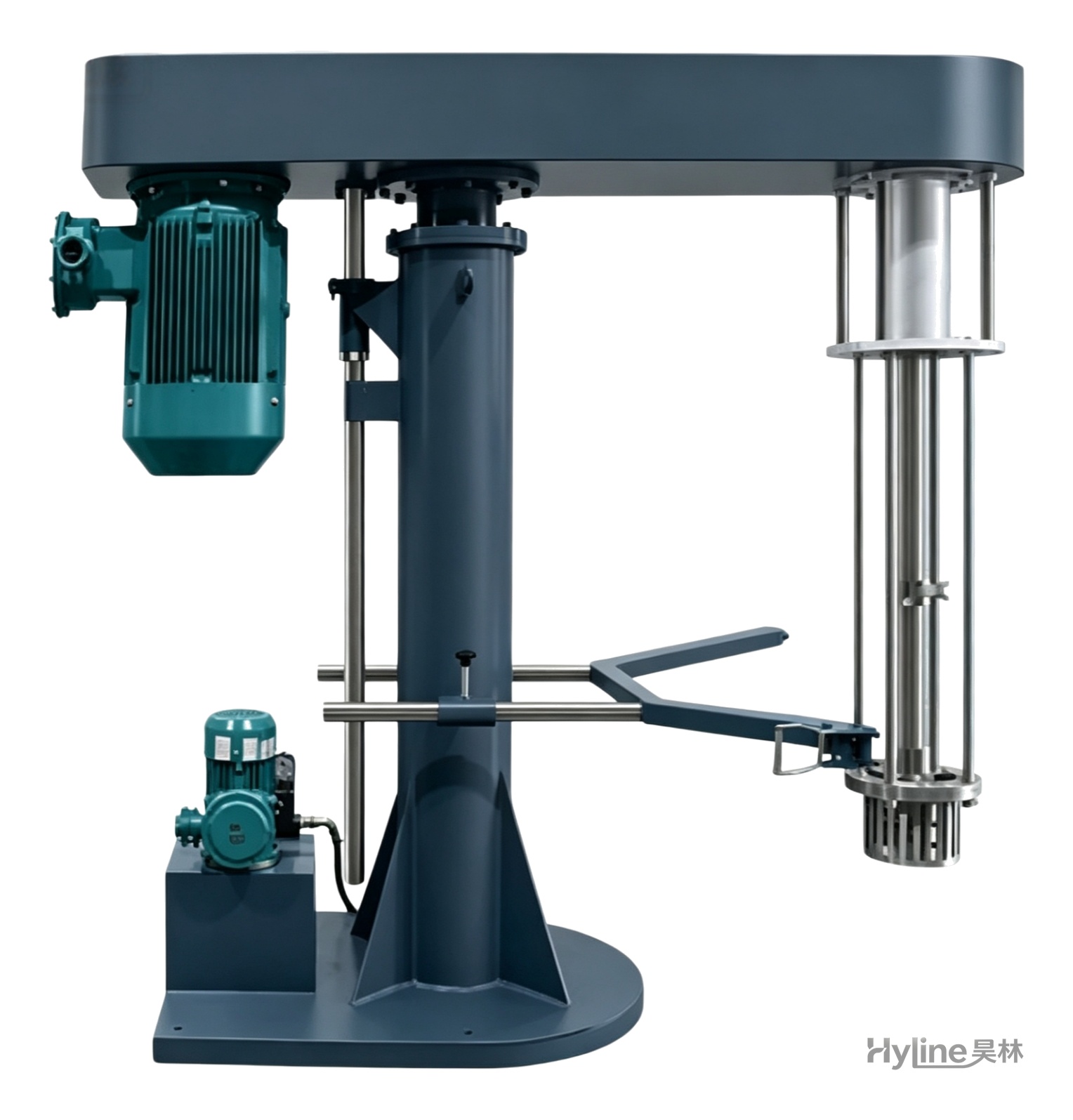
GJD Series Emulsifying Disperser
For emulsification, mixing and dispersion in coatings, inks, pesticides and papermaking. Powerful high-speed shear achieves required fineness and uniformity in a short time.
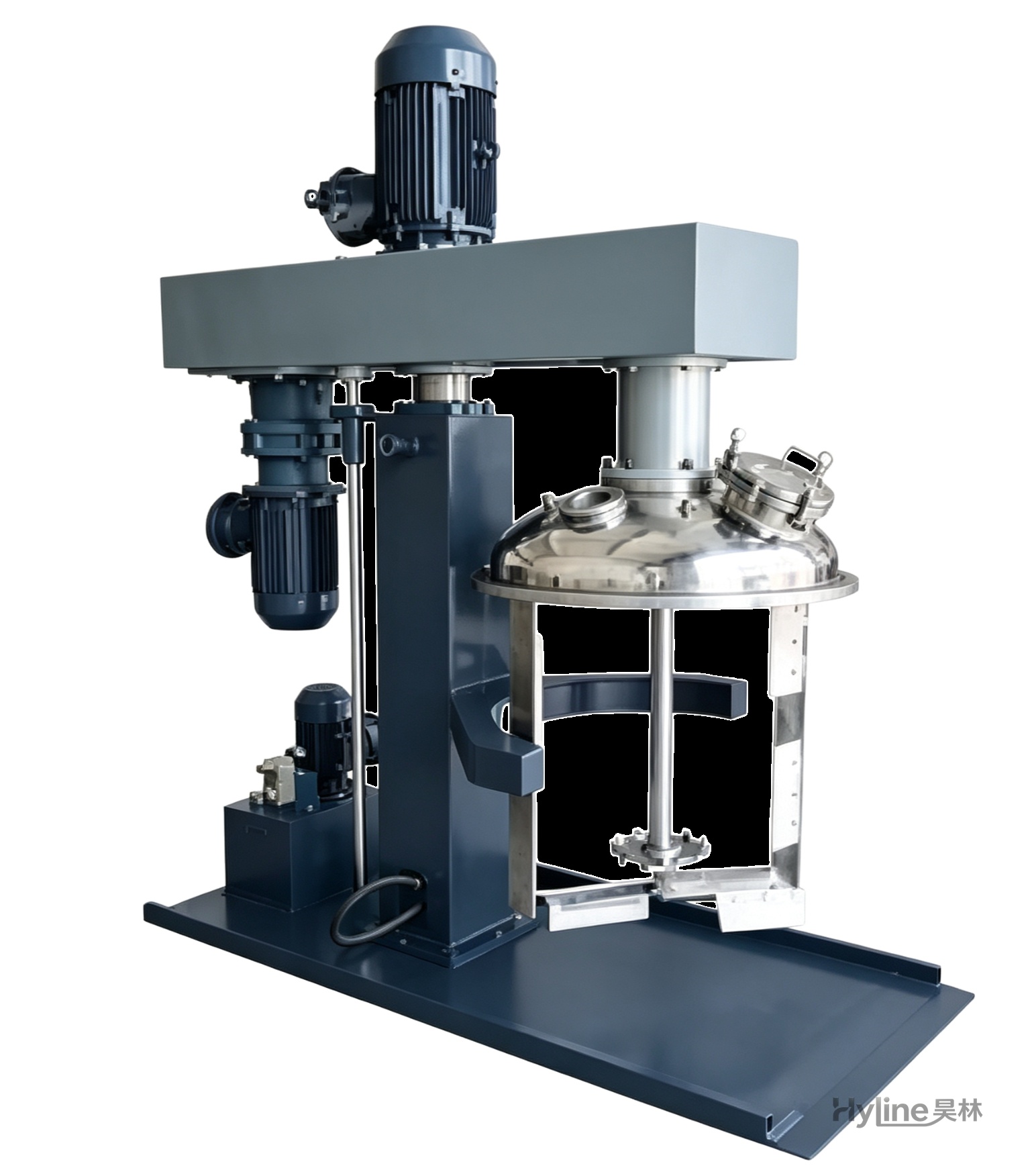
TSJ Series Concentric Twin-Shaft Mixer
Mixes materials of 3000-20000 cps. Low-speed blades with Teflon scrapers sweep the tank wall and push material to the center; high-speed toothed impellers disperse powerfully. High and low speeds run independently.

Stainless Steel Mixing Tank (Dispersion Drum)
Supporting vessel for dispersers and mixers in paints, coatings, adhesives, color slurries, inks and electronics. Available in 201/304 stainless with internal/external polishing and sloped bottom side discharge for complete draining.
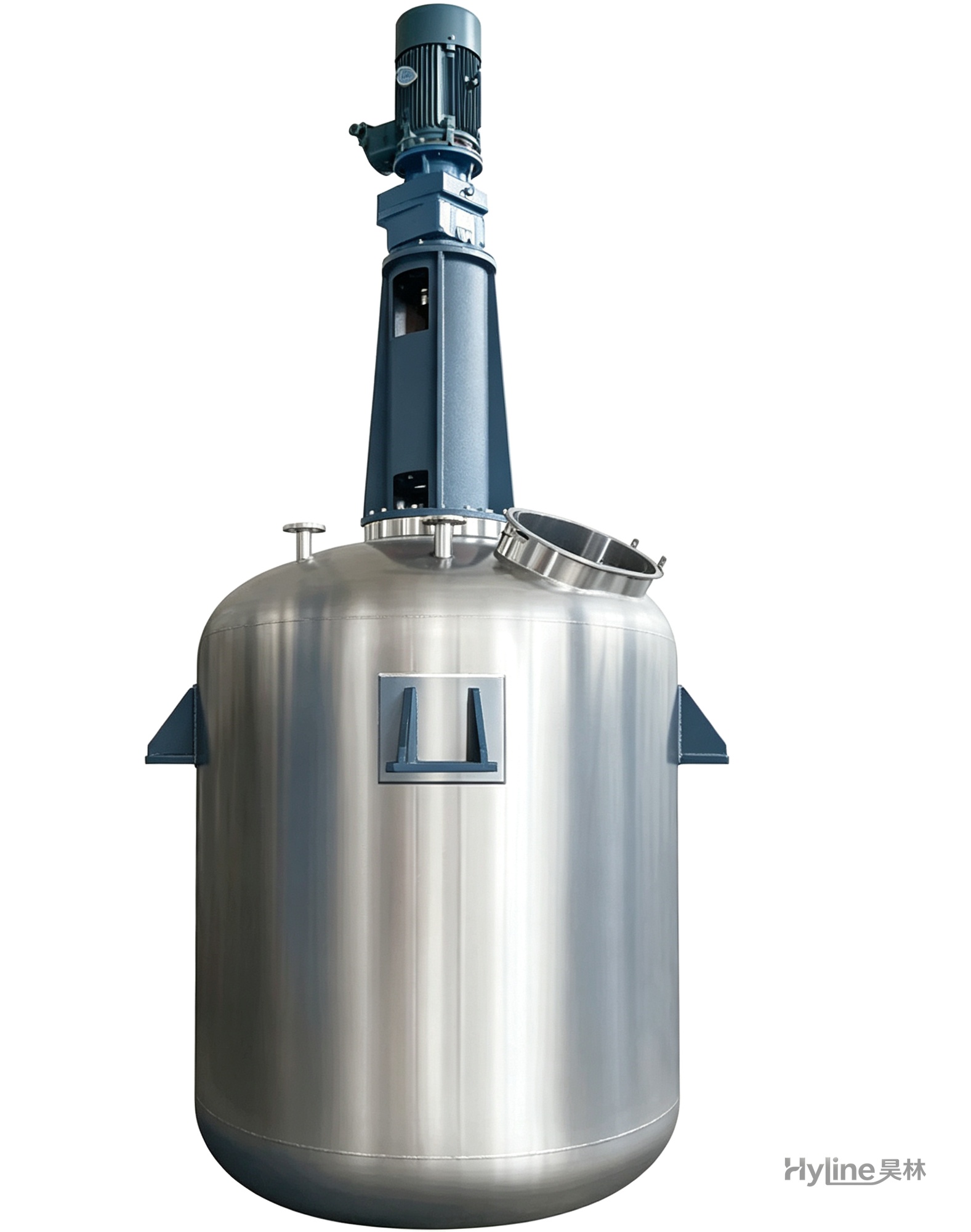
TC Series Mixing Kettle (Tinting)
For color matching in the paint industry and liquid-liquid / liquid-solid mixing in other industries. Uniform tinting, good miscibility, reasonable structure and powerful stirring.
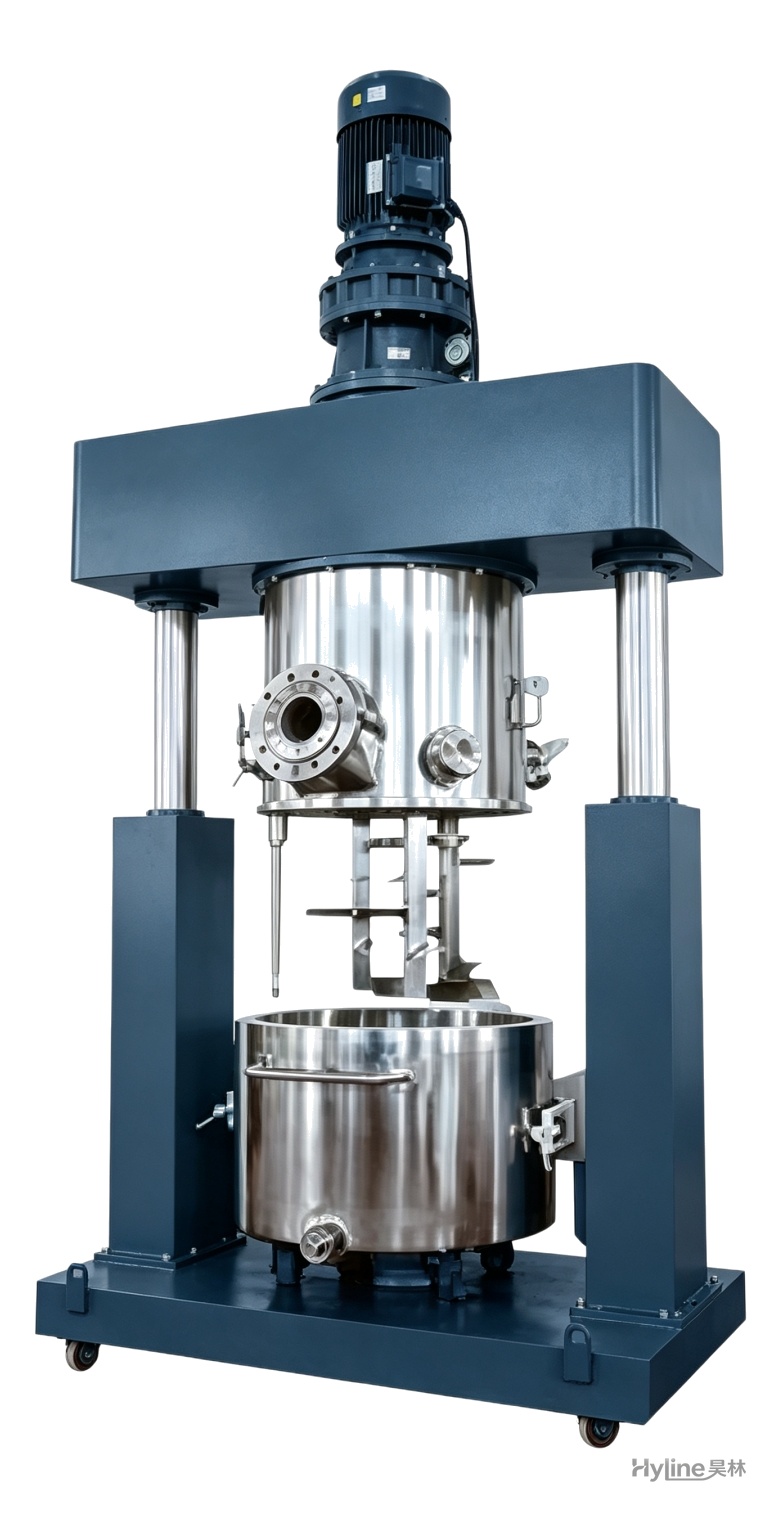
XJB Series Planetary Mixer
Planetary blades rotate and revolve simultaneously, creating complex material flow with no dead corners and easy discharge. Handles ultra-high-viscosity pastes of 10,000-8,000,000 cps for silicone, PU sealants, liquid silicone and electronic adhesives.