
How to choose an emulsifying tank for personal care products: foam control and configuration for low-viscosity shampoo and shower gel systems
11/3/2026
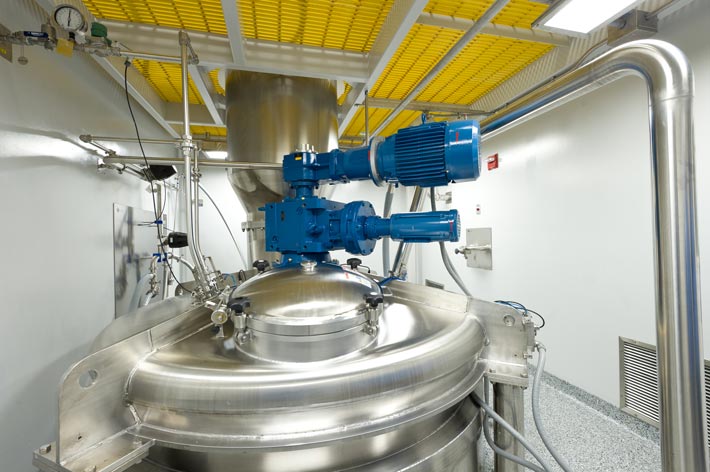
Shampoo, shower gel and hand wash are all made in emulsifying tanks, but their selection logic is completely different from that of creams: with creams the question is who can break the oil down finest, with daily chemical and personal wash products it is who can keep air out. These formulations are low in viscosity and high in surfactant, and a moment of carelessness produces a vessel full of foam. At best you lose half a day of capacity waiting for the foam to settle, at worst filling accuracy suffers and the finished pack carries visible bubbles. Hyline Shengda (hyline.cn) supplies non-standard stainless steel emulsifying tanks, mixing tanks and complete line packages. What can be customized: vessel volume and aspect ratio, the combination of main agitator and homogenizing head, vacuum system and vent valve, heat transfer area of jacket and internal coil, internal polish grade, inlet, outlet and CIP connections. This article works through emulsifier selection for typical daily chemical duties so that the parameters are right before you place the order.
How do daily chemical formulations differ from creams?
One-line conclusion: the difference is viscosity and foam. Creams are high viscosity and hard to disperse; shampoo and shower gel are low viscosity and foam easily. The equipment therefore has to solve two opposite problems.
Cream products reach tens or even hundreds of thousands of mPa·s, and the core task of agitation is enough shear to break the oil phase down, so the machine has to be aggressive. Shampoo and shower gel spend most of the batch at only tens to a few hundred mPa·s; thickening is done later by adding salt (sodium chloride) or polymeric conditioning agents, so the mixing itself needs almost no shear and the machine has to be gentle. Selecting the vessel on cream logic, with high speed and a hard impeller, delivers a tank full of foam.
These formulations share three further features. First, high surfactant content means the system foams by nature and any entrained air is amplified. Second, many heat-sensitive components: fragrance, preservatives and certain conditioning agents decompose or discolour at high temperature, so the temperature window is narrow. Third, formulation changes are frequent, with one line often running a dozen products in rotation, so cleaning frequency is far higher than on a cream line. Together these three points fix the design targets: minimum air entrainment, accurate temperature control and easy cleaning.
How is foaming solved on the equipment side?
One-line conclusion: foam comes from entrained air, and the equipment side can do three things: keep the impeller away from the surface, keep the feed nozzle below the liquid level, and pull out the air that has already gone in with vacuum.
The first is impeller position and type. The impeller must run at adequate depth, with at least one impeller diameter of liquid above the upper edge of the blades; this matters especially with up-pumping pitched blades, which drag air down from above the surface. Foam-prone systems generally use an anchor or gate agitator combined with a mid-level pitched blade, mixing by bulk circulation rather than local high shear, with tip speed held between 3 and 6 m/s. Above 8 m/s air entrainment increases sharply.
The second is feed position. Every nozzle entering the vessel must discharge below the liquid level, preferably directed down the wall so that the stream runs down the wall instead of falling freely into the surface. Powder addition, such as sodium chloride or citric acid, should go through a submerged feed pipe or be drawn in by vacuum; tipping powder through the manhole is the operation most likely to drag in air. The third is vacuum deaeration: build the vessel as a pressure vessel, fit a vacuum pump and vent valve, and evacuate for 10 to 20 minutes at the end of the batch. At an absolute pressure of 20 to 40 kPa the bubbles expand, rise and burst, and this single step saves most of a day of settling.
How to choose agitation type and speed?
One-line conclusion: daily chemical work uses a low-speed, high-circulation combined impeller. A homogenizing head is fitted only when a small amount of oil phase must be finely dispersed, and it must be capable of intermittent running.
For the main agitator we recommend a gate or anchor combined with one set of pitched blades: the gate handles bulk circulation and wall heat transfer while the pitched blades give moderate vertical turnover, and together they blend small-dose ingredients such as salt and fragrance at low tip speed. Where a small oil phase must be broken down, for example silicone oil or ester conditioning agents, a high-shear homogenizing head can be added, but it must be switchable independently and run only for 10 to 20 minutes after the oil phase is charged. Running the homogenizer through the whole batch is the most common cause of foaming.
| Configuration | Stage used | Tip speed range | Air entrainment risk | Note |
|---|---|---|---|---|
| Gate or anchor agitator | circulation and heat transfer throughout | 1.5-3 m/s | low | main agitator, temperature and composition uniformity |
| Pitched blade, mid level | vertical turnover and small-dose dispersion | 3-6 m/s | medium | keep one impeller diameter below surface |
| High-shear homogenizing head | dispersing small oil phase | 15-25 m/s | high | run intermittently, stop when done |
| Propeller | plain circulation | 3-5 m/s | low | only for large-volume low-viscosity blending |
| Dispersion disc | not recommended | 20-30 m/s | very high | should be avoided on foam-prone systems |
Always specify a variable frequency drive and place the normal operating speed at 40% to 70% of rated: early in the batch, while viscosity is low, run slower; after salt thickening raises viscosity, increase speed to maintain circulation. This also means that switching formulations only requires a new process curve, not a different machine.
How to arrange heating and cooling?
One-line conclusion: the temperature control difficulty lies in two stages, dissolving on heat-up and adding fragrance on cool-down. A jacket plus internal coil is the safest combination, with control accuracy specified at ±2 °C.
A typical batch dissolves solid ingredients such as pearlescent agents and some thickeners at 60 to 75 °C, then cools to 40 to 45 °C before fragrance and heat-sensitive additives go in, and finally discharges below 35 °C. Heating is handled by hot water or steam in the jacket, sized at roughly 1.5 to 2.5 m² of heat transfer area per cubic metre of product. Cooling is the real bottleneck: water has a large heat capacity and jacket cooling alone often takes several hours, while an internal coil on cooling water brings the cool-down inside one hour.
Two points matter with an internal coil. First, leave a cleaning path between coil and wall of not less than 80 mm, otherwise spray ball water cannot reach the back of the coil. Second, the coil obstructs overall circulation, and with low-viscosity liquids the flow field is easily blocked by it, so one or two coil layers are normal and three or more are not. On the service side, specify a chiller rather than direct mains water: mains temperature swings widely in summer and batch consistency suffers when cooling depends on it.
How to set volume and fill coefficient?
One-line conclusion: take nominal volume as batch size times 1.2 to 1.3, and on foam-prone systems take the fill coefficient at only 0.6 to 0.7, not the usual 0.8.
The fill coefficient is the easiest trap in this industry. A conventional mixing tank runs at 0.7 to 0.8, but a foaming system rises visibly during agitation and even more during evacuation, and charging to 0.8 regularly causes product to reach the sight glass or enter the vacuum line. The working rule is to hold the charge at 0.6 to 0.7 of effective volume and to keep the aspect ratio at 1.2 to 1.5, leaving ample head space.
| Batch output | Recommended nominal volume | Recommended charge | Matching configuration |
|---|---|---|---|
| 500 kg | 1000 L | 600-700 L | gate plus pitched blade, single-layer jacket |
| 1000 kg | 2000 L | 1200-1400 L | gate plus pitched blade, jacket and coil |
| 2000 kg | 3000 L | 1800-2100 L | add homogenizing head, vacuum deaeration |
| 3000 kg | 5000 L | 3000-3500 L | homogenizing head, vacuum, weighing modules |
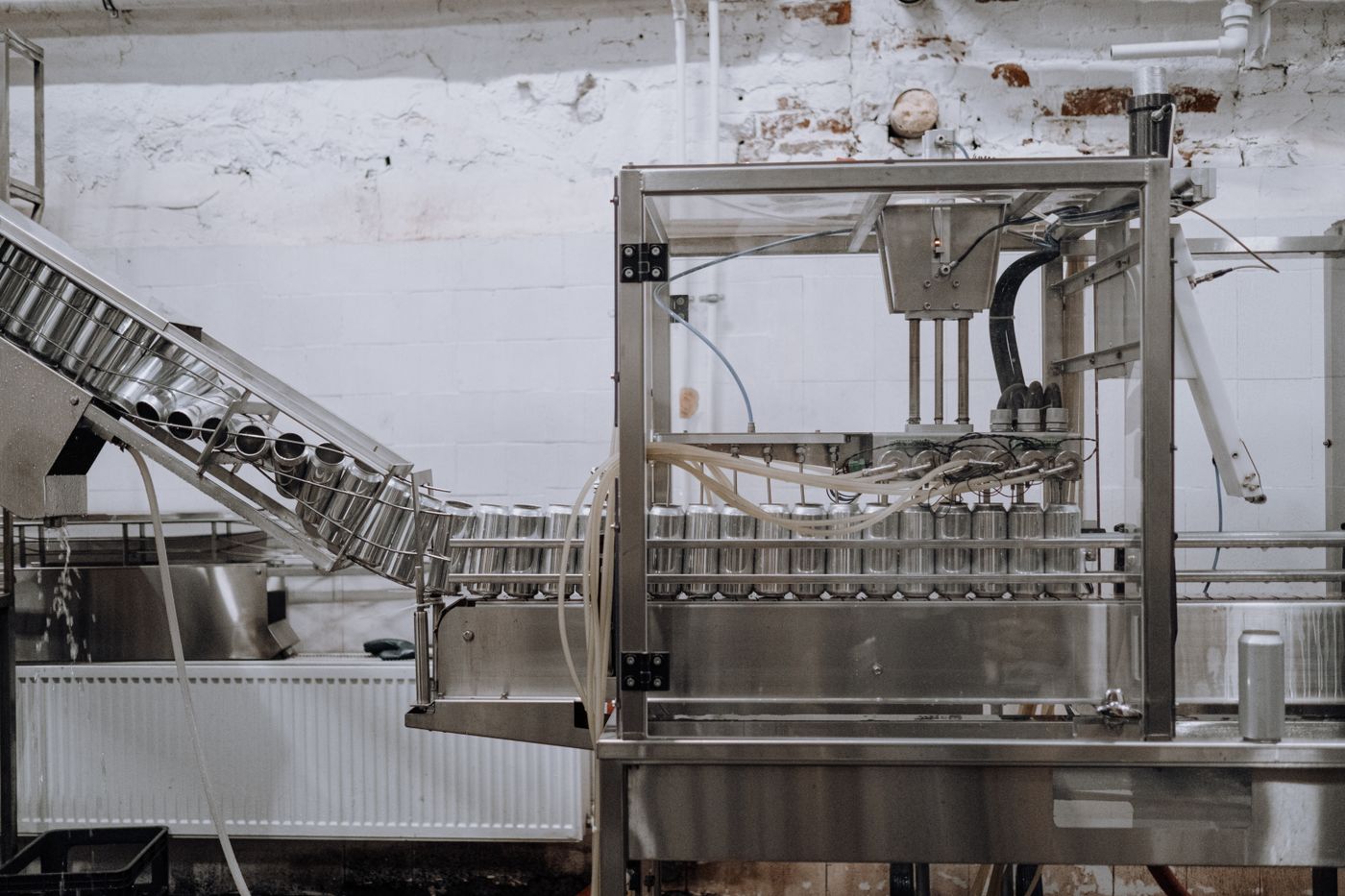
Batch size also depends on downstream filling capacity. Personal care products usually run multi-head filling machines capable of several hundred to several thousand bottles per hour, and the emulsifier cycle of charging, heating, cooling and discharge must fit into 4 to 6 hours to match that rhythm. When filling is fast and preparation slow, the answer is normally two vessels working alternately rather than one very large vessel.
How to choose material and surface finish?
One-line conclusion: specify 316L for daily chemical work. The reason is that salt thickening is standard practice, and chloride ions carry a clear pitting risk for 304.
This is the biggest material difference between a personal care line and a food line. 304 is adequate in ordinary aqueous systems, but adding salt to thicken shampoo and shower gel is routine, chloride concentration in the liquid is not low, and with 60 to 75 °C temperature plus the weld heat-affected zone, the probability of pitting and rust staining at welds rises noticeably. 316L contains molybdenum and is a grade better against chloride pitting; the extra material cost is usually recovered within a year through less rework and fewer stoppages.
For surface finish, specify internal roughness Ra no greater than 0.8 μm, with welds ground flush and the vessel pickled and passivated, and keep dead spaces to a minimum: quick-opening manway, sanitary clamp fittings on inlet and outlet, and a bottom valve rather than a side outlet so nothing is left behind. Design for CIP with a rotating spray ball covering the roof, the wall and the inside of the manway, and run the sequence as alkali wash, water rinse, acid wash and purified water rinse, so that product changeover needs no manual scrubbing with the lid open.
Which parameters to confirm before ordering?
One-line conclusion: confirm liquid characteristics, batch size, temperature profile, foam sensitivity and cleaning method, and the configuration will not go wrong.
The checklist is: first, liquid characteristics, meaning component proportions, viscosity range during the batch, whether salt is added, chloride concentration and pH range. Second, batch size and cycle: output per batch, batches per day, maximum allowed batch time. Third, temperature profile: heat-up target, cool-down end point, permitted heating and cooling times. Fourth, foam sensitivity: whether bubbles are acceptable in the finished product, whether the filling method is sensitive to bubbles, whether vacuum deaeration is needed. Fifth, cleaning method: whether CIP is required, how often changeovers occur, whether a sterile water rinse is required.
Once these five are settled, volume, agitation type, tip speed band, heat transfer area, material and polish grade can all be calculated. Remaining details such as sight glass size, sampling valve, weighing modules and control mode follow site practice. If the configuration is still uncertain, run a trial first: take the same formulation into a test vessel at the proposed impeller and tip speed, record foaming, heating and cooling times and the finished condition, then fix the design.
Further reading: - How to set emulsification temperature and addition order in an emulsifying tank: oil and water phase process points - How to configure the vessel structure of an emulsifying tank: main agitator, homogenizing head and wall scraping for cream and emulsion processes
This article is compiled by Hyline Shengda Equipment Manufacturing Co., Ltd. (hyline.cn). The information ownership belongs to the original author. Main products: stainless steel reactors, mixing tanks, storage tanks, dispersers, concentrators and complete chemical line supporting equipment; non-standard customization supported.
Q&A from this article
Frequently asked questions and answers from this article
One-line conclusion: daily chemical work uses a low-speed, high-circulation combined impel…
Related Products
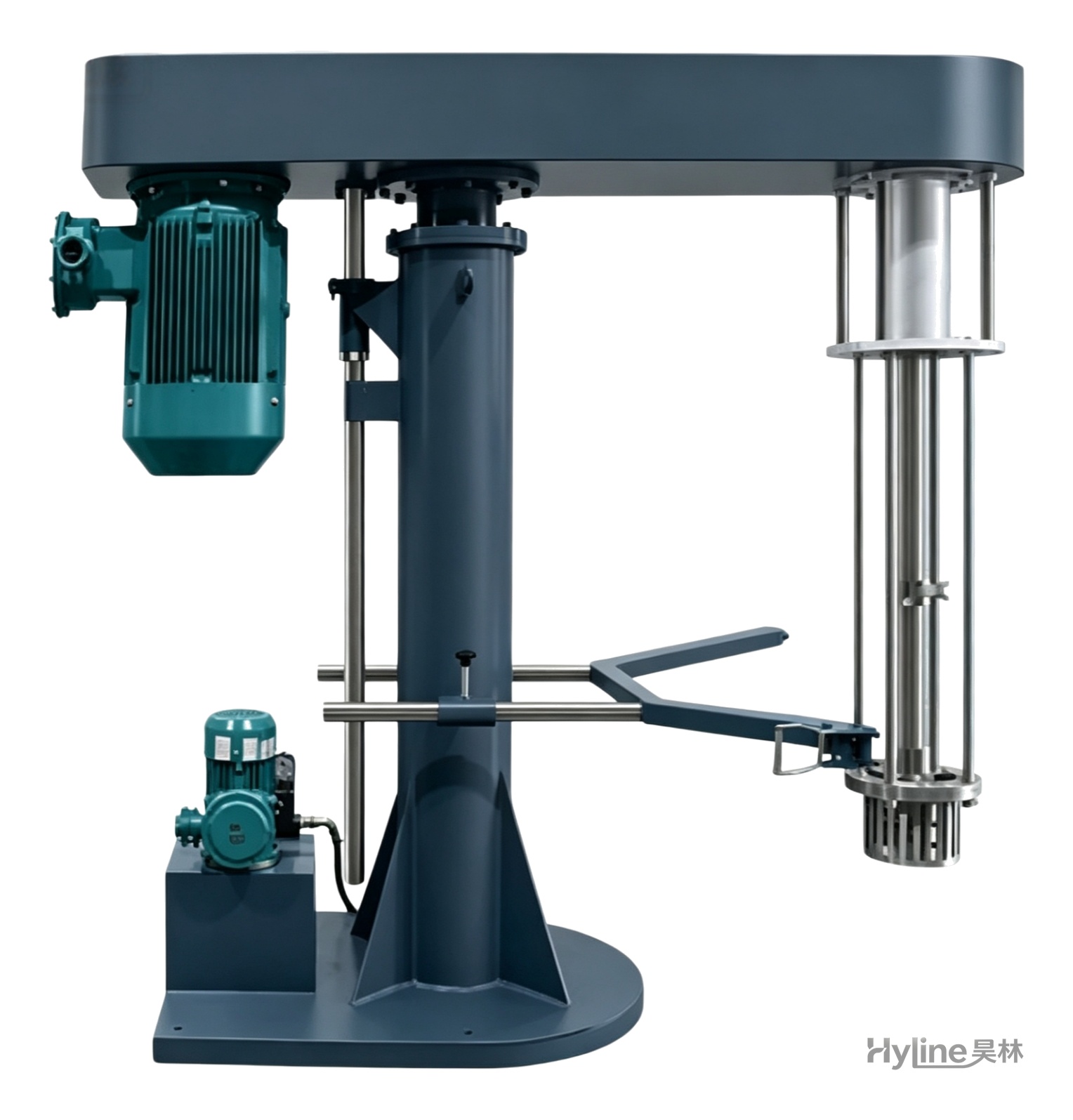
GJD Series Emulsifying Disperser
For emulsification, mixing and dispersion in coatings, inks, pesticides and papermaking. Powerful high-speed shear achieves required fineness and uniformity in a short time.

Stainless Steel Mixing Tank (Dispersion Drum)
Supporting vessel for dispersers and mixers in paints, coatings, adhesives, color slurries, inks and electronics. Available in 201/304 stainless with internal/external polishing and sloped bottom side discharge for complete draining.
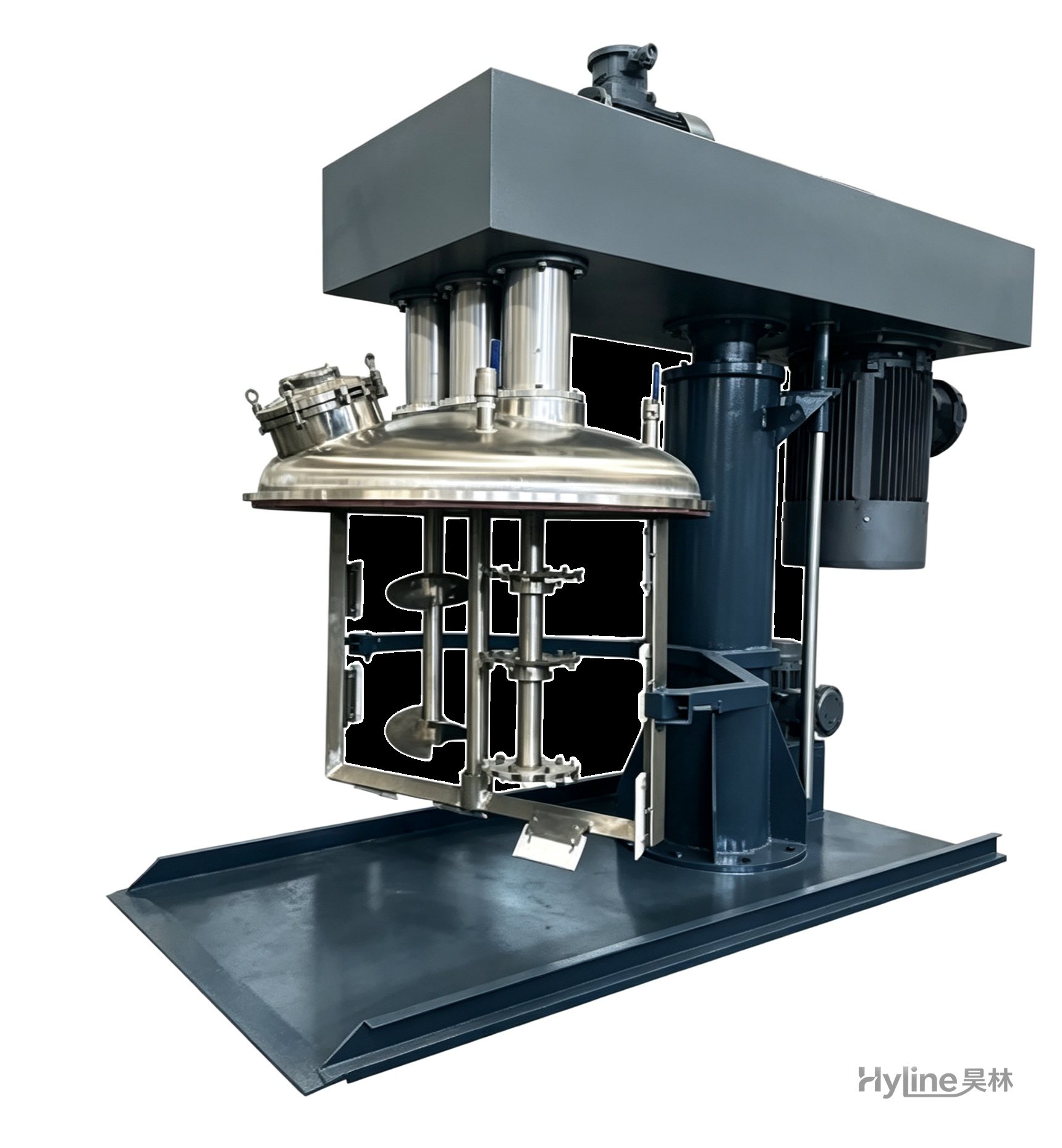
SJ Series Multi-Function Mixer
A new high-efficiency mixer for high-viscosity materials, rapidly dispersing, dissolving and homogenizing. Widely used in offset printing inks, putties and adhesives. Vacuum type customizable.
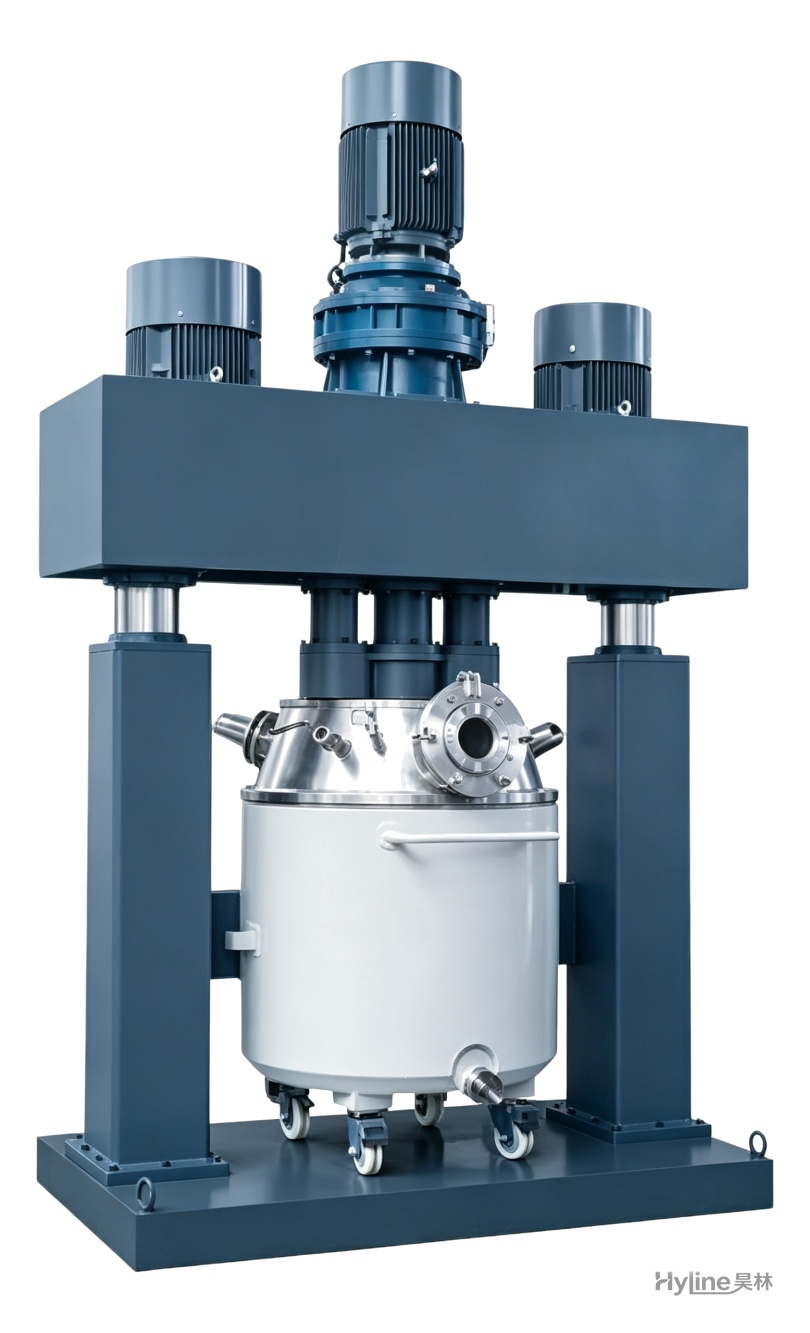
QLF Series Powerful Triple-Shaft Disperser
Two high-speed dispersers plus wall/bottom scraping create complex material flow for rapid dispersion and grinding. Handles high-viscosity pastes of 10,000-2,000,000 cps - widely used for silicone sealants, PU sealants, liquid silicone and electronic adhesives.
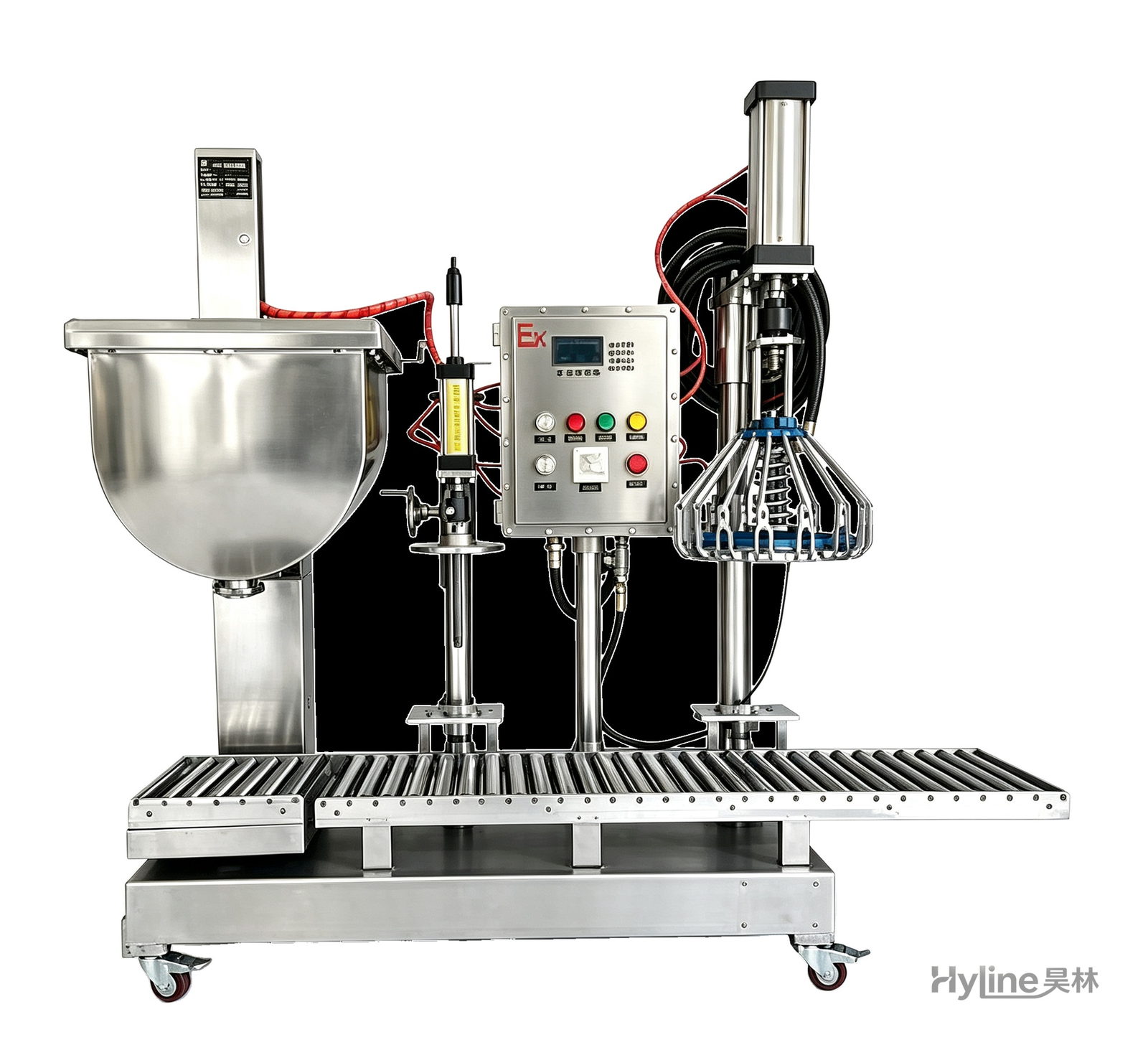
Weighing Semi-Automatic Filling Machine
Designed for frequent packaging changes with dual capping. European weighing technology with Siemens PLC: automatic feed speed adjustment and precision correction, triple protection (emergency stop/power-off/tank removal), explosion-proof fittings.