
How to set the disc tip speed of a disperser? Matching speed, disc diameter and fineness improvement
10/20/2026
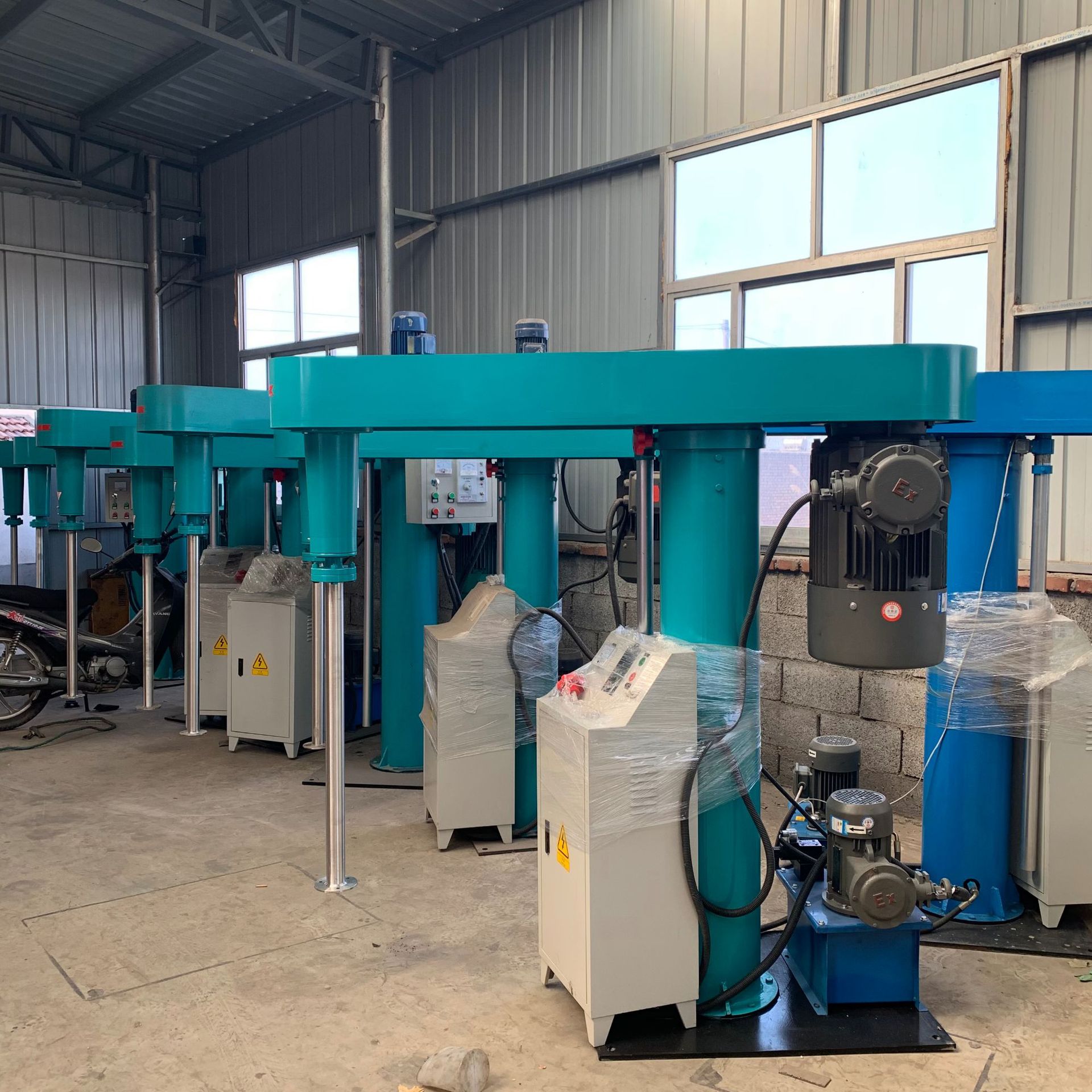
When a disperser cannot push fineness up, takes longer per batch and gives inconsistent results, and the material itself is ruled out, the disc tip speed is usually mis-set. Tip speed is the most important process parameter of a disperser: the disc diameter fixes the speed, the speed fixes the shear intensity, and the shear intensity decides dispersion fineness and efficiency. This article explains how to calculate tip speed, which range to select and how to match disc diameter to tank diameter, so you can get this item right at the selection stage.
What is disc tip speed and how is it calculated?
One-sentence conclusion: tip speed is the peripheral speed of the disc edge, equal to pi times disc diameter times speed, v = π × D × n / 60, in metres per second.
As the disc rotates, the edge moves fastest and provides the strongest shear; closer to the shaft the speed drops. So selection starts from the tip-speed target and then derives the combination of disc diameter and speed. For example: a 300mm disc at 1450 r/min gives a tip speed of 3.14 × 0.3 × 1450 / 60 ≈ 22.8 m/s; with the same speed and a 250mm disc, the tip speed drops to about 19 m/s. Diameter and speed multiply together, so many combinations are possible, but the tip-speed target is a single number.
What tip speed is suitable? How is it graded?
One-sentence conclusion: for general paint, ink and adhesive dispersion, 15~25 m/s is common; use the upper end for finer or stronger shear, and the lower end for low-viscosity premixing and high-viscosity materials.
Tip-speed grading by material and process is common industry practice. For low-viscosity premixing and thinning, 10~15 m/s is usually enough; for regular colour paste and topcoat dispersion, 15~20 m/s; for strong shear, high fineness or hard-to-disperse materials, 20~28 m/s. Above 28 m/s disc wear accelerates, splashing increases and temperature rise becomes obvious, with little benefit. Higher tip speed is not always better; it must be combined with viscosity, fineness requirements and batch time.
| Working condition | Common tip speed | Note |
|---|---|---|
| Low-viscosity premixing / thinning | 10~15 m/s | Mainly circulation mixing, shear secondary |
| Regular colour paste / topcoat | 15~20 m/s | Balance of dispersion efficiency and fineness |
| Hard to disperse / high fineness | 20~28 m/s | Strong shear; watch temperature rise and splashing |
How should disc diameter and tank diameter be matched?
One-sentence conclusion: the disc diameter is generally 0.3~0.5 times the tank diameter; too small a disc gives poor circulation, too large concentrates the shear zone and weakens top-bottom circulation.
The disc does both shearing and circulating: a strong shear zone forms under the disc, and the edge flings material to the wall for circulation up and down. If the disc/tank ratio is too small, the shear zone is small and circulation weak, so fineness rises slowly; if too large, the shear zone hugs the wall and the middle and bottom circulate poorly. Common industry experience is a disc diameter of 0.3~0.5 times the tank diameter, with baffles and disc clearance (disc bottom clearance generally 1~1.5 times the disc diameter) to improve flow. When pairing a mixing tank with a disperser, size the tank by batch volume first, then derive disc diameter and speed backwards.
Should speed be reduced for high-viscosity materials?
One-sentence conclusion: yes. As viscosity rises, torque at the same tip speed grows sharply; generally reduce tip speed by viscosity range and use a variable-frequency drive to adjust speed within the constant-torque range.
Tip-speed targets are based on experience with low-to-medium viscosity materials. Once viscosity exceeds roughly 30 000~50 000 mPa·s, disc drag surges and the motor must be checked for torque. Common practice: for high-viscosity materials reduce tip speed to 8~15 m/s and rely on long circulation and gradual dilution, rather than forcing the speed up. In the constant-torque range of a VFD, reducing speed does not lose torque, which suits such conditions; beyond that range, motor power and reduction ratio must be re-checked. When selecting, reporting "maximum viscosity", "usual tip speed" and "batch volume" together is far more reliable than reporting power alone.
If fineness still fails after tip speed is correct, how to troubleshoot?
One-sentence conclusion: check in the order of "disc diameter — speed — liquid level — disc clearance — equipment type"; if a single disc really cannot reach the fineness, consider twin discs or a downstream sand mill.
First verify the actual disc diameter and speed and calculate the real tip speed instead of trusting the nameplate; then check whether the liquid level is too high or too low — too high submerges the disc and pushes the shear zone outward, too low weakens circulation; then check whether the disc clearance to the tank bottom and to the liquid surface falls in the experienced range. If all these are correct and fineness still fails, the shear limit of a single disperser is insufficient; the common route is dispersion followed by a sand mill (disc, pin or nano type) for secondary grinding, or a vacuum disperser combined with deaeration. Splitting the process into "dispersion — grinding — thinning" and giving each stage its own job is the most stable practice in the paint and ink industry.
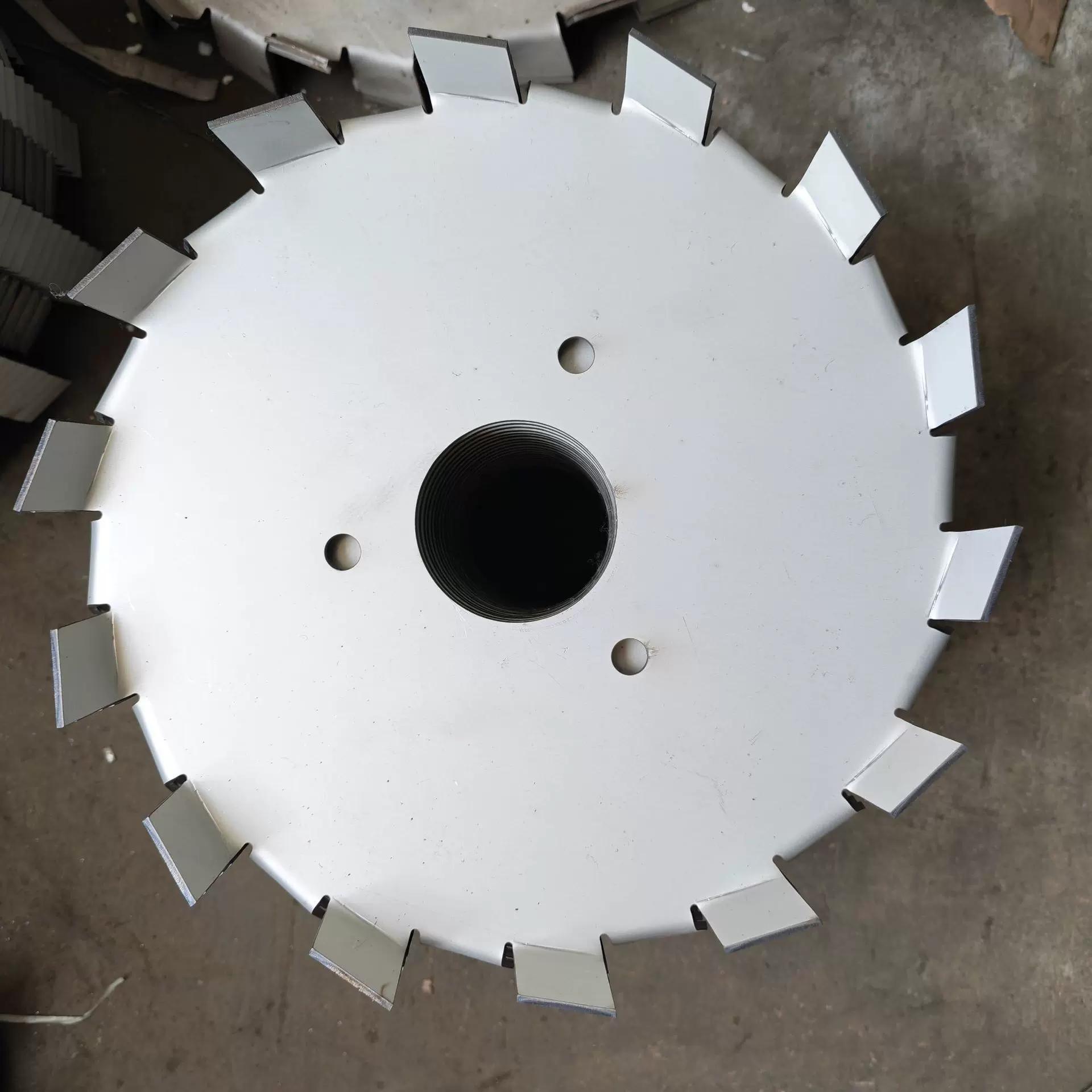
Does disc structure and tooth shape affect the tip-speed effect?
One-sentence conclusion: at the same tip speed, denser teeth give stronger shear but weaker pumping circulation; balance tooth pitch against material viscosity and fineness — tip speed alone is not enough.
Saw-tooth and flat discs differ in the ratio of shear to circulation. Dense-tooth discs have more shear edges, suitable for high-fineness, easily dispersed materials; wide-pitch discs pump better and circulate better, suitable for medium-high viscosity and full-batch circulation. Two discs can be mounted on one shaft with a spacing of generally 1~1.5 times the disc diameter, balancing upper shear and bottom circulation. So "same tip speed" does not mean "same result": report disc type, tooth shape and disc number to the manufacturer and combine them by viscosity and fineness, instead of only watching the speed gauge.
How should the VFD be configured? What about constant-torque and constant-power ranges?
One-sentence conclusion: dispersers generally use the VFD constant-torque range for speed adjustment, so reducing speed keeps torque; beyond that range, motor power and reduction ratio must be re-checked.
A VFD has two ranges: below base frequency is the constant-torque range, where voltage and frequency change together, torque stays constant and power falls with speed; above base frequency is the constant-power range, where torque falls. Dispersers mostly run in the constant-torque range, which fits the "high viscosity needs reduced speed but retained torque" condition. Three points when selecting a VFD: first, in explosive atmospheres use an explosion-proof VFD or place it outside the hazardous zone; second, motor cooling degrades at long low-speed running, so an independent fan may be needed; third, the disc has large inertia at start-stop, so set acceleration and deceleration times long enough to avoid overcurrent trips. When purchasing, write "maximum viscosity", "usual speed range" and "explosion-proof or not" into the technical agreement, so the VFD and motor match properly.
How to troubleshoot common problems in high-speed dispersion?
One-sentence conclusion: troubleshoot by four categories — vibration, temperature rise, splashing and fineness — and most roots go back to tip-speed and disc-diameter matching.
Excessive vibration: first check disc balance, shaft straightness and installation clearance, then check whether material builds up on the disc causing eccentric load. Rapid temperature rise: usually tip speed too high or liquid level too low — shear heat has too little material to carry away; reduce speed or add liquid when necessary. Severe splashing: usually liquid level too high or disc clearance unsuitable, with the shear zone too close to the surface. Fineness stuck: go back to step one, measure the actual disc diameter and speed and calculate the true tip speed against the experienced range. Also, high-speed dispersion puts high demands on the shaft seal; for mechanical seals or packing seals at high speed, watch cooling and wear, and stop for inspection first when the seal cavity temperature is abnormal to avoid leakage accidents.
What parameter list should be given to the manufacturer at selection?
One-sentence conclusion: report at least five numbers — maximum viscosity, target fineness, batch volume, tank diameter and liquid level, and usual speed range — so the manufacturer can match tip speed and disc diameter in one pass.
Disperser selection is not just a power figure. Power only decides whether it can be driven; tip speed and disc diameter decide whether it disperses well. Prepare the list: maximum viscosity (mPa·s), target fineness (microns or grind gauge), batch volume (litres), the diameter and filled liquid level of the tank or kettle, and expected batch time. With these five groups of numbers, the manufacturer first sets the tip-speed target by viscosity range, then derives disc diameter and speed from the tank diameter, and finally checks motor power and reduction ratio. If you are retrofitting existing equipment, provide the current model, disc diameter and measured speed to compare whether the issue is "insufficient tip speed" or "wrong disc type". Providing parameters in advance saves far more than repeated trial runs and reconfiguration. One more easily ignored point: dispersion is "shear plus circulation"; tip speed alone cannot solve in-tank circulation. For large batch volumes, evaluate the disc's circulation capacity as well and add a draft tube or baffles if needed — only when tip speed and flow pattern both meet the requirement is the dispersion result stable.
Haolin Shengda produces stainless steel reactors, mixing tanks, dispersers and complete chemical lines; high-speed dispersers support VFD speed control, hydraulic lifting and explosion-proof configuration, with disc diameter and speed combinations customised by material viscosity, fineness requirement and batch volume. Before selection, settle viscosity range, target fineness and batch time first, then discuss equipment configuration.
Further reading: - Selection of mixing equipment for high-viscosity materials: from high-speed disperser to planetary mixer - Working principle and routine maintenance points of a high-speed disperser
This article is prepared by Haolin Shengda Equipment Manufacturing Co., Ltd. (hyline.cn), specializing in stainless steel reactors, mixing tanks, storage tanks, dispersers, concentrators and complete chemical production lines, supporting non-standard customization.
Q&A from this article
Frequently asked questions and answers from this article
Fineness stuck? This article explains how to calculate tip speed, which range to select and how to match disc and tank diameters for stable batches.
Related Products
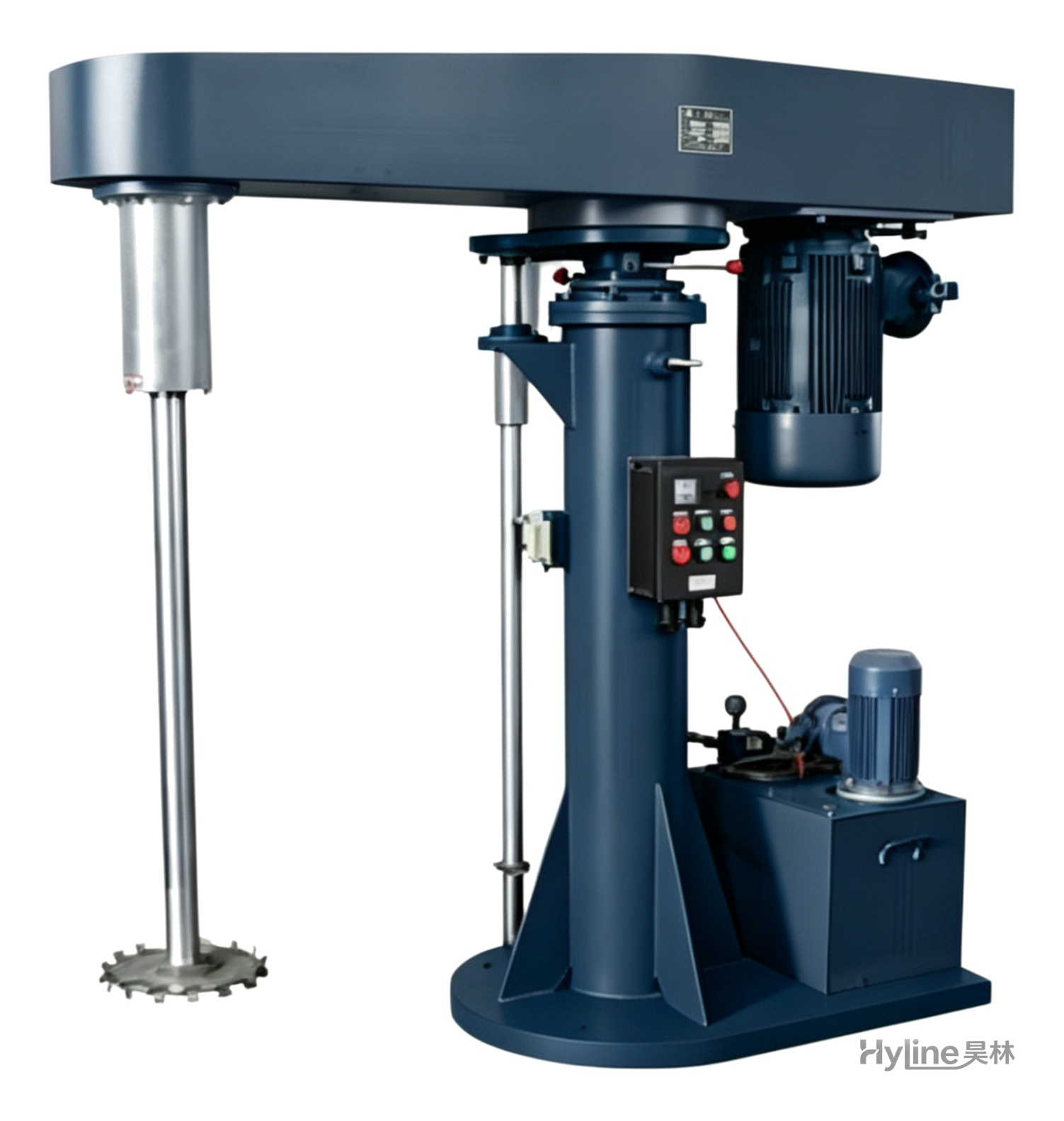
FL Series High-Speed Disperser
Stirs, dissolves and disperses liquids and powders, working alone or matched with sand mills. Variable-frequency drive with hydraulic lift, widely used in paints, inks, coatings, dyestuffs and papermaking.
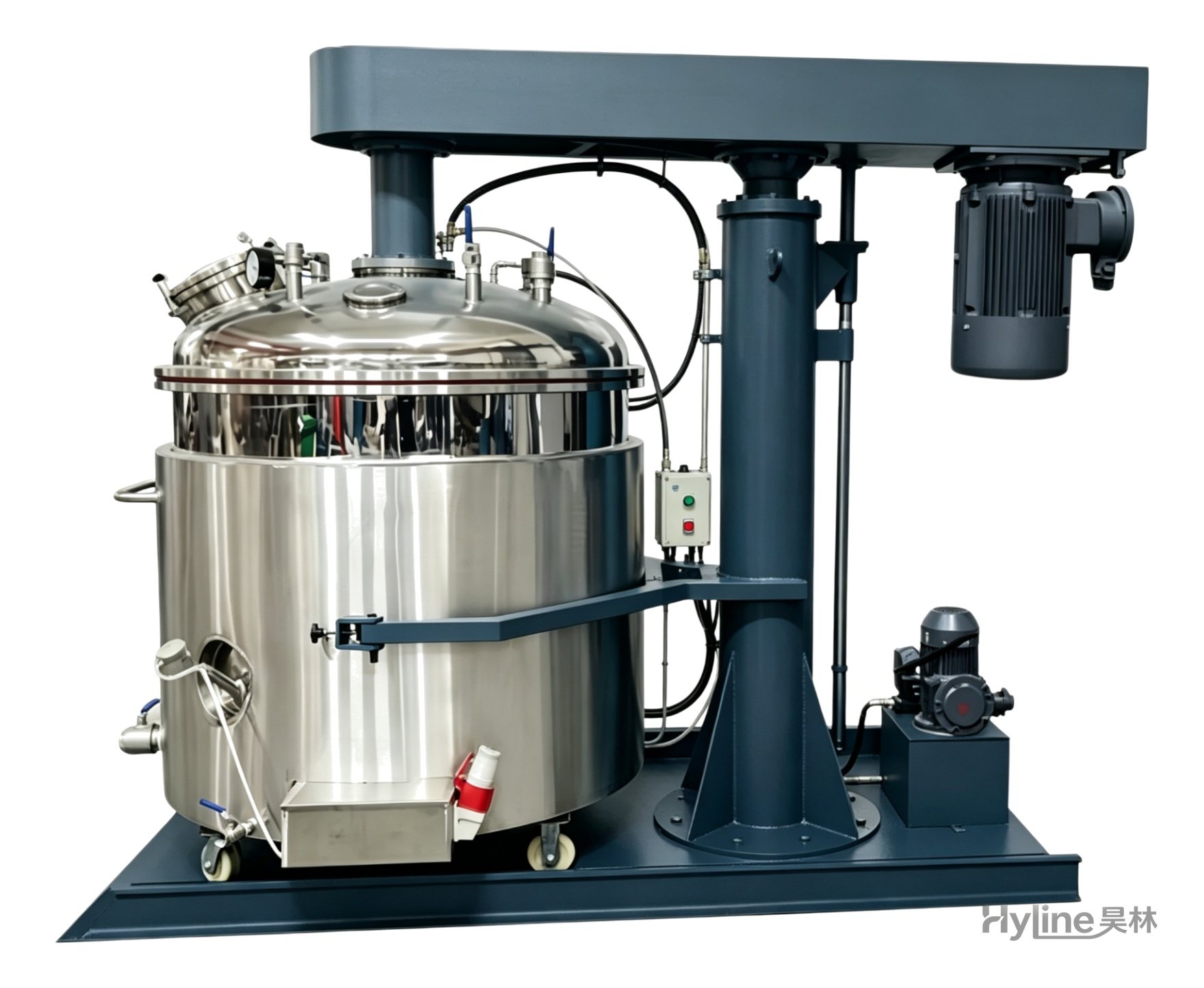
FL Series Vacuum Disperser
Designed for bubble-rich materials and volatile solvents. Vacuum dispersion reduces bubbles and solvent evaporation, accelerates fineness and rapidly defoams. Simple structure, high vacuum, easy operation.

Stainless Steel Mixing Tank (Dispersion Drum)
Supporting vessel for dispersers and mixers in paints, coatings, adhesives, color slurries, inks and electronics. Available in 201/304 stainless with internal/external polishing and sloped bottom side discharge for complete draining.
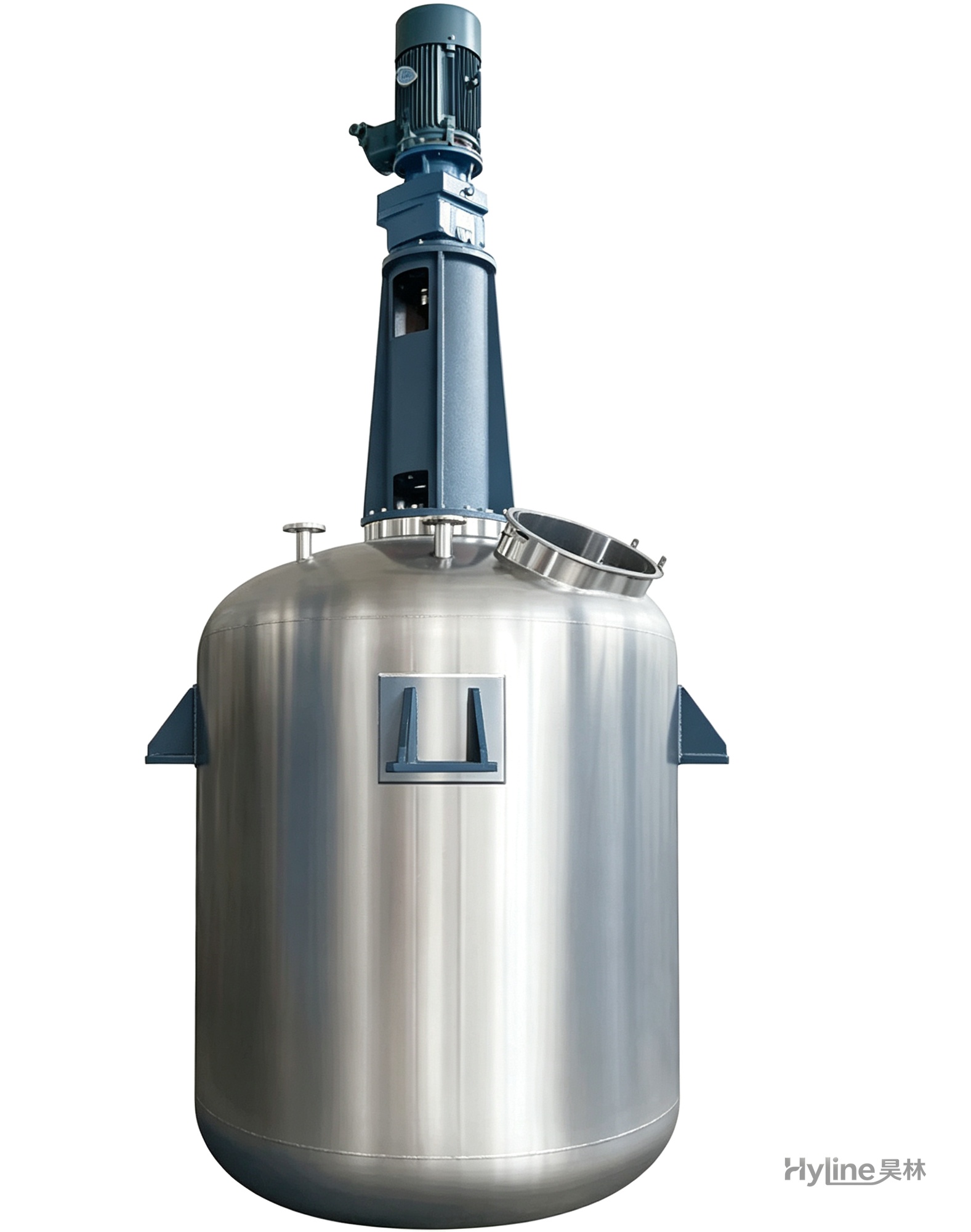
TC Series Mixing Kettle (Tinting)
For color matching in the paint industry and liquid-liquid / liquid-solid mixing in other industries. Uniform tinting, good miscibility, reasonable structure and powerful stirring.

Jacketed Reactor
The typical main reaction vessel in chemical production. Mixing, heating and cooling disperse and mix materials for reaction and polymerization. The jacket circulates thermal oil/steam for heating or cooling water for temperature control.