
How to Select an Emulsifying Tank When Scaling Up from Laboratory to Production? Homogenizing Time, Tip Speed and Volume Scale-Up Rules
10/12/2026
How to Select an Emulsifying Tank When Scaling Up from Laboratory to Production? Homogenizing Time, Tip Speed and Volume Scale-Up Rules
People making creams, emulsions, coating pastes and food sauces mostly test formulations on a pilot emulsifying tank; when satisfied, they scale up directly by volume ratio: 5 liters in the lab with 30 minutes discharge, and they feel 500 liters should also take 30 minutes, with power increased proportionally — only to find on the production tank that either the fineness cannot be reached or the emulsifying time drags on to two hours. Conclusion first: scaling up an emulsifying tank is not proportional scaling of time and power by volume; the core is to keep the rotor-stator tip speed and energy input per unit volume, then check the emulsifying time by circulation count. Concretely, three rules should be observed from lab to production — the rotor-stator tip speed stays basically unchanged (generally 15–30 m/s), the input power per unit volume is similar, and the emulsifying time is calculated by the circulation count in the tank rather than copied directly. This article explains the scale-up rules and configuration priority from a purchasing point of view.
### First understand what emulsification relies on: rotor-stator tip speed
The core part of an emulsifying tank is the rotor-stator homogenizing head: the rotor rotates at high speed, material is drawn into the rotor-stator gap, and under combined high-speed shear, turbulence and cavitation it is broken into fine droplets. The key parameter determining emulsification fineness is the rotor tip speed; tip speed = π × rotor diameter × speed, generally 15–30 m/s for emulsification processes. If the tip speed is too low, shear is insufficient and fineness cannot be achieved; if too high, much energy turns into heat, cream-type materials are prone to temperature rise and deterioration, and the motor load is high. So when selecting an emulsifying tank, first derive the needed tip speed range from the target fineness (for example cosmetic creams generally require 20–50 μm, pharmaceutical creams require finer), then check whether the homogenizing head diameter and speed can cover that range. Looking only at motor power without tip speed is the most common mistake in emulsifying equipment purchasing: the same 11 kW motor with a large-diameter low-speed rotor and a small-diameter high-speed rotor gives completely different emulsification results.
### Three rules for scaling up from laboratory to production
First, keep the tip speed: the rotor-stator tip speed from pilot to production should be as consistent as possible, generally controlled in the 15–30 m/s range; the production homogenizing head has a larger diameter and therefore lower speed, but the tip speed stays the same so the shear effect can be matched. Second, keep the input power per unit volume similar: when scaling up, the power per unit volume (W/L) should fall in the same order of magnitude; high-shear emulsification generally falls in the 20–80 W/L range, taken specifically by material and target fineness; if the production tank's power per unit volume is clearly lower than the pilot, fineness will inevitably drop. Third, check the emulsifying time by circulation count: emulsification is not "done when time is up" but "done when the material has passed through the homogenizing head enough times"; circulation count = homogenizing head flow × emulsifying time ÷ material volume in the tank, generally requiring 3–8 circulations to reach the target fineness, so after scaling up the emulsifying time is recalculated by flow and volume, not copied from the pilot. These three rules are the three lines of parameters most worth writing into the emulsifying equipment technical agreement.
### How to set the emulsifying time: bigger does not mean longer
It is normal for emulsifying time to lengthen after scale-up: the tank is bigger, one circulation of the material takes longer, and the same circulation count needs more time. Example: pilot tank 5 L, homogenizing head flow 2 L/min, one circulation about 2.5 minutes, 15 minutes of emulsifying equals 6 circulations; scaled to 500 L with a homogenizing head flow of 100 L/min, one circulation is about 5 minutes, and reaching the same 6 circulations takes about 30 minutes — note the time doubled not because the effect is worse but because the tank is bigger. Conversely, if the production tank's emulsifying time and power are both scaled proportionally from the pilot, the actual circulation count may multiply several times, the material is sheared for a long time and heats up, and emulsification may fail instead. So to judge emulsifying time, first calculate the circulation count, then derive the time, and control the material temperature within the process limit, adding jacket cooling if necessary. When purchasing, ask the manufacturer for the homogenizing head flow and tip speed; with these two parameters you can estimate the scale-up emulsifying time yourself.
### Select the homogenizing head by material viscosity and fineness requirement
Scaling up an emulsifying tank is not just replacing with a larger homogenizing head; the head structure must match the material. Low-viscosity liquids (oil-in-water emulsions, beverages) use a standard rotor-stator homogenizing head, with fineness mainly from tip speed and circulation count; medium-viscosity pastes (coatings, printing inks, some cosmetic creams) need a larger shear gap or an extra serrated structure to raise shear; high-viscosity creams (toothpaste, pharmaceutical ointments, adhesives) cannot be circulated by the homogenizing head alone — the tank's main agitator must first push material to the head, then the head refines it, so the coordination of the main agitator type (anchor, wall-scraping) with the head matters a lot. In addition, cream-type processes needing vacuum deaeration generally use a vacuum emulsifying tank (sealed tank + vacuum system), evacuating air before emulsification so the product is denser and free of air pinholes; food sauce types have high sanitary requirements — the parts contacting the material need mirror polishing and CIP cleaning, and the material and surface treatment of tank and head should be checked to food-grade standards. Empirical values for head selection: the finer the target fineness, the higher the tip speed and the more shear passes, but the more obvious the temperature rise, so balance fineness and temperature control.
### Volume and tank type: vacuum emulsifying unit vs single tank
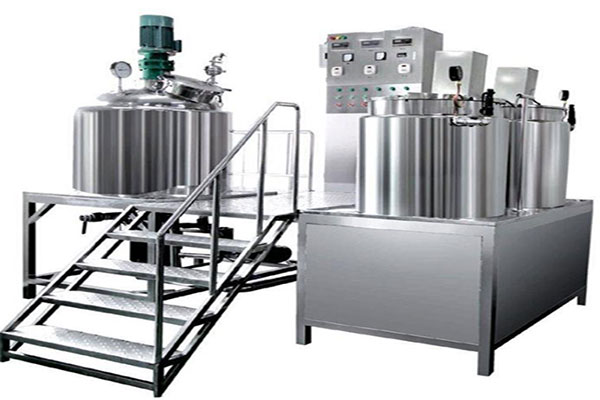
Once the production scale is set, the tank type choice is mainly single tank versus unit. A single emulsifying tank is simple and low-investment, suitable for many product varieties, small batches, and duties without high demands on vacuum and temperature control; it is equipped with a homogenizing head and main agitator in the tank. A vacuum emulsifying unit usually consists of a main emulsifying tank, water-phase tank, oil-phase tank and vacuum system; water and oil phases are separately heated and dissolved, then transferred to the main tank for emulsification, suitable for creams and emulsions with high requirements on process sequence and vacuum — most used in cosmetics and pharmaceuticals; the unit occupies more space and costs more, but batch stability and product consistency are better. In selection, calculate how many batches per day are needed by capacity and shifts, then set the single-tank volume; generally the single-batch volume takes 60%–80% of the tank's effective volume (emulsifying tank filling coefficient), for example a 500 L tank loads 300–400 L per batch; derive the tank volume this way and do not fill the tank full — space must be left for turnover and vacuum evacuation.
### Matching heating/cooling and vacuum systems
After scaling up, temperature control is far more prominent than in the pilot: the larger the tank, the smaller the heat-transfer area per unit volume, and the same heating/cooling demand needs a larger jacket area or a higher medium temperature difference. Common practice: the jacket is matched to the tank shell area, heating by steam or hot water, cooling by cooling water, and cream types needing fast cooling are matched with a chiller; high-viscosity materials transfer heat poorly, so the jacket plus anchor wall-scraping agitator improves heat-transfer efficiency. For vacuum, vacuum emulsification is generally controlled at about -0.06 to -0.095 MPa (below about 600–950 mbar absolute); the purpose of vacuum is deaeration, lowering the boiling point and assisting homogenization; the specific vacuum level is set by material and process; the vacuum system should be equipped with a condenser and buffer tank to prevent material from being drawn into the vacuum pump. These supports must all be recalculated at scale-up, not proportionally enlarged from pilot equipment.
### Budget and configuration priority
When the budget for an emulsifying tank purchase is limited, the suggested configuration priority is: first, the homogenizing head (rotor-stator) tip speed and material — the core of emulsification results; second, the main agitator, which decides whether the material in the tank can circulate effectively to the head; third, the vacuum and temperature-control systems, affecting product consistency and batch stability; fourth, automation and recording (temperature, vacuum, speed, time curves) for process reproducibility and quality traceability. Conversely, the last place to save money is replacing the homogenizing head with a low-cost part — the head is the most core wearing part of an emulsifying tank; material, gap and dynamic balance directly decide fineness stability and life. In the technical agreement, write down seven items: target fineness, tip speed range, power per unit volume, circulation count, material temperature limit, vacuum level and material requirements; the manufacturer configures the tank by these parameters, and acceptance can be checked item by item.
### Summary
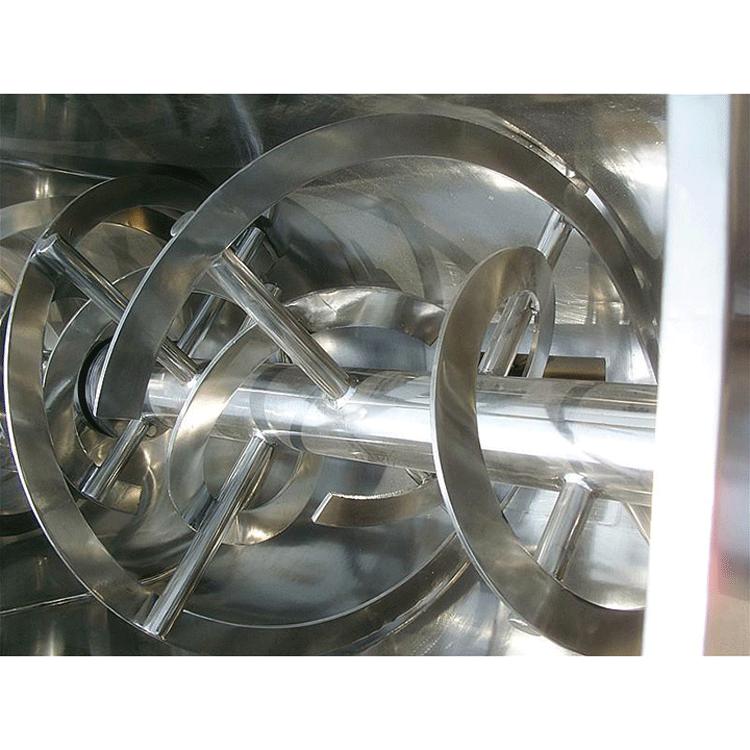
Scaling an emulsifying tank from laboratory to production: the core is keeping the rotor-stator tip speed and energy input per unit volume, recalculating the emulsifying time by circulation count rather than copying the pilot; select the homogenizing head structure by material viscosity and fineness, decide the tank type by process and capacity (single tank or vacuum unit), and recalculate temperature control and vacuum supports by tank volume. When purchasing, configure by the priority of "head tip speed → main agitator → vacuum/temperature control → automation recording" and write the seven key parameters into the technical agreement; only then are fineness and batch stability guaranteed. Below are real photos of an emulsifying unit and agitation structure for reference of the tank, homogenizing head and matching layout.

Further reading: - How to select the homogenizing head of an emulsifying tank? Matching rotor-stator structure with process - How to select a vacuum emulsifying unit? Configuration points for creams, emulsions and pharmaceutical duty
This article is compiled by Shenzhen Hyline Equipment Manufacturing Co., Ltd. (hyline.cn); all information rights belong to the original authors. Main products: stainless steel reactors, mixing tanks, storage tanks, dispersers, concentration tanks and complete chemical process lines; custom (non-standard) manufacturing supported.
Q&A from this article
Frequently asked questions and answers from this article
How to select an emulsifying tank for scale-up? This article explains the scale-up rules from pilot to production by rotor-stator tip speed, energy input per unit volume and circulation count, with common empirical values.
Related Products
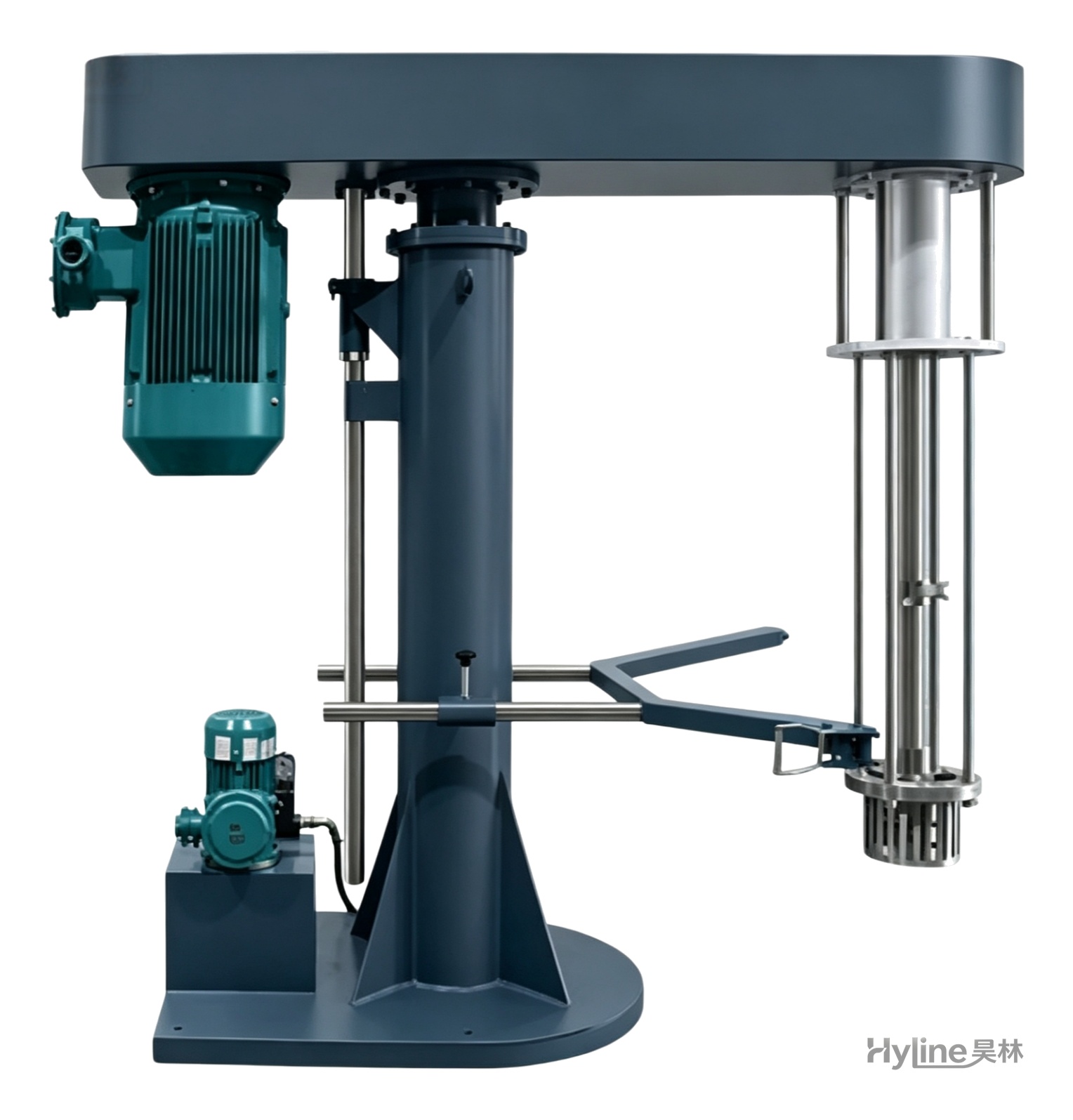
GJD Series Emulsifying Disperser
For emulsification, mixing and dispersion in coatings, inks, pesticides and papermaking. Powerful high-speed shear achieves required fineness and uniformity in a short time.
FS Series Multifunctional Dispersing Kettle
Integrates low-speed heavy-duty stirring with high-speed dispersion for medium/high-viscosity and thixotropic materials. Stirring and dispersion proceed simultaneously for ideal results in mixing, dissolving, dispersing and tinting.
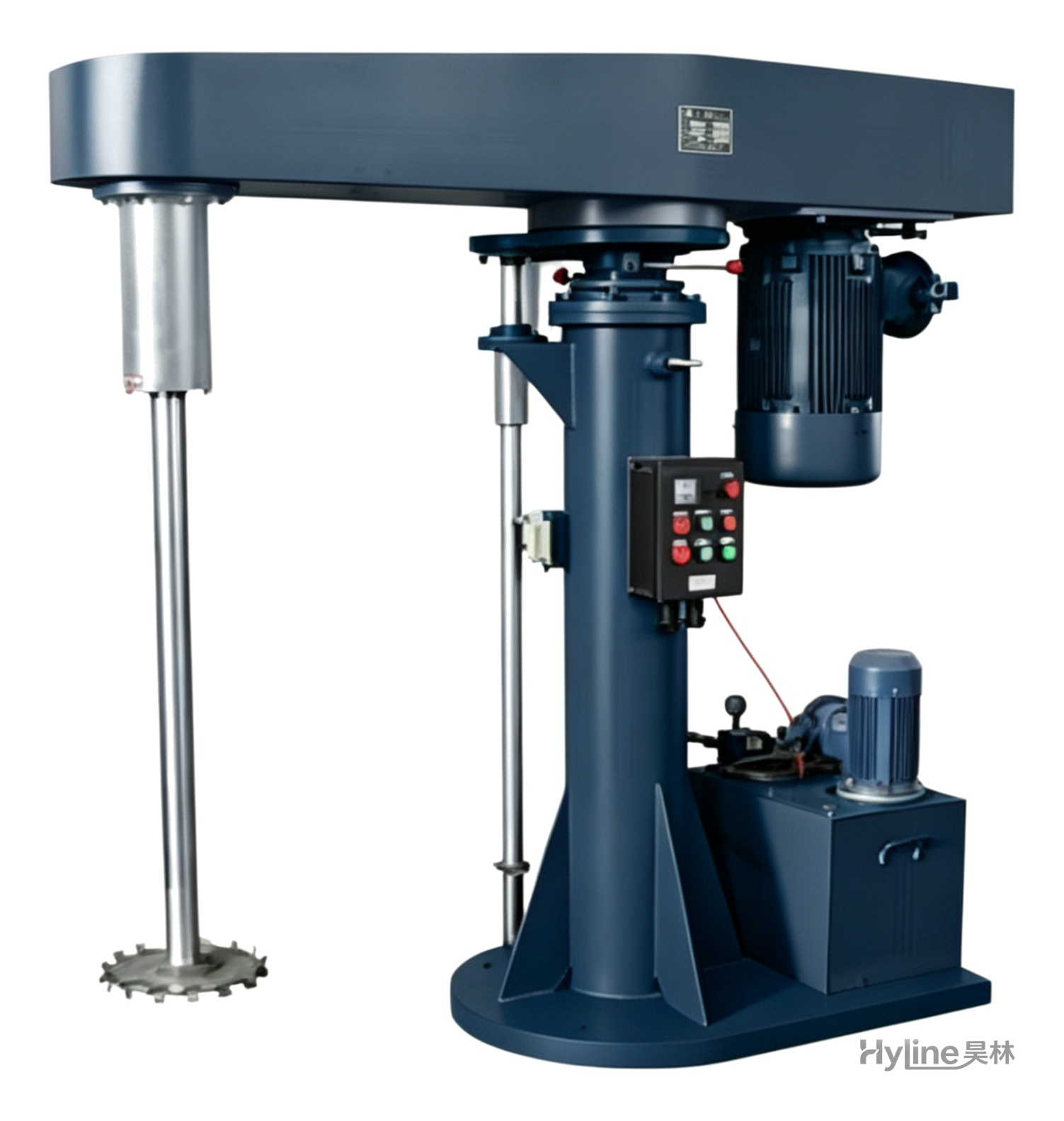
FL Series High-Speed Disperser
Stirs, dissolves and disperses liquids and powders, working alone or matched with sand mills. Variable-frequency drive with hydraulic lift, widely used in paints, inks, coatings, dyestuffs and papermaking.
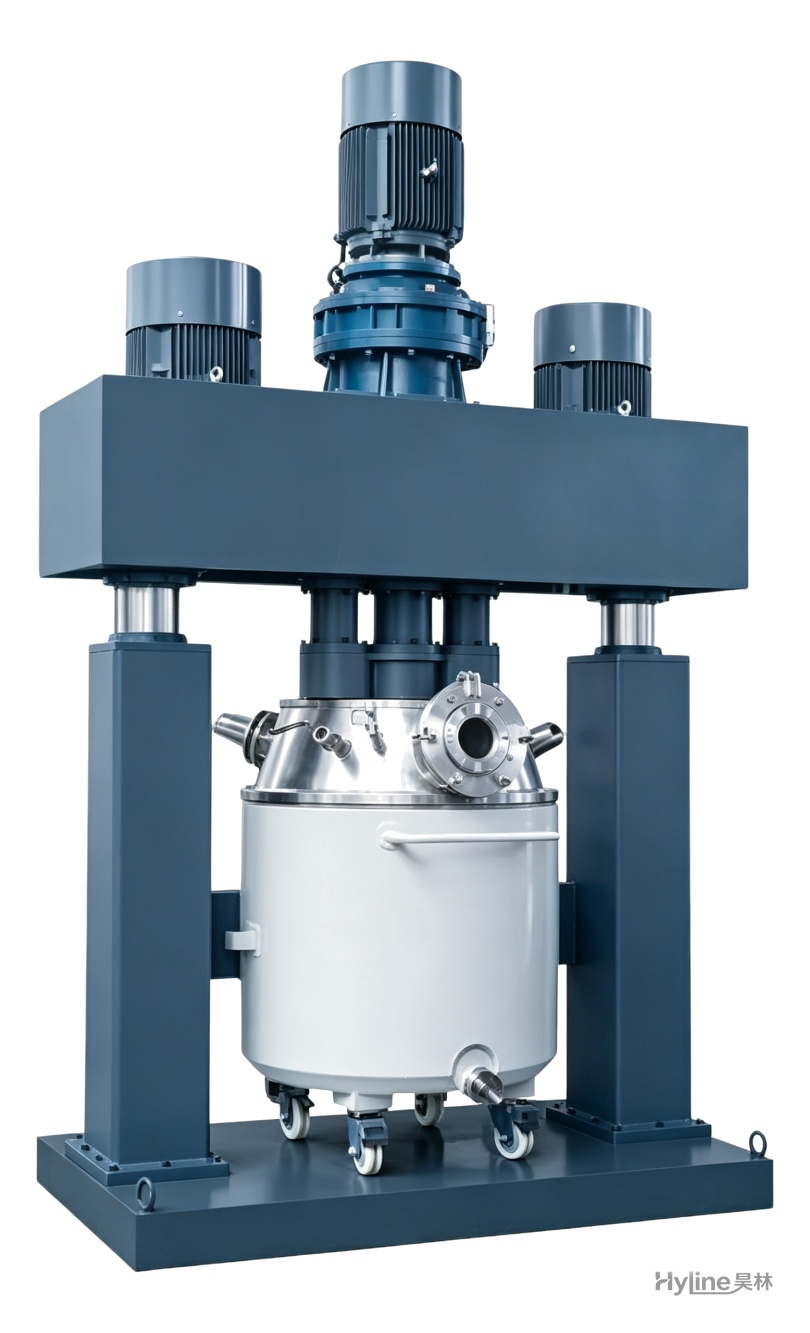
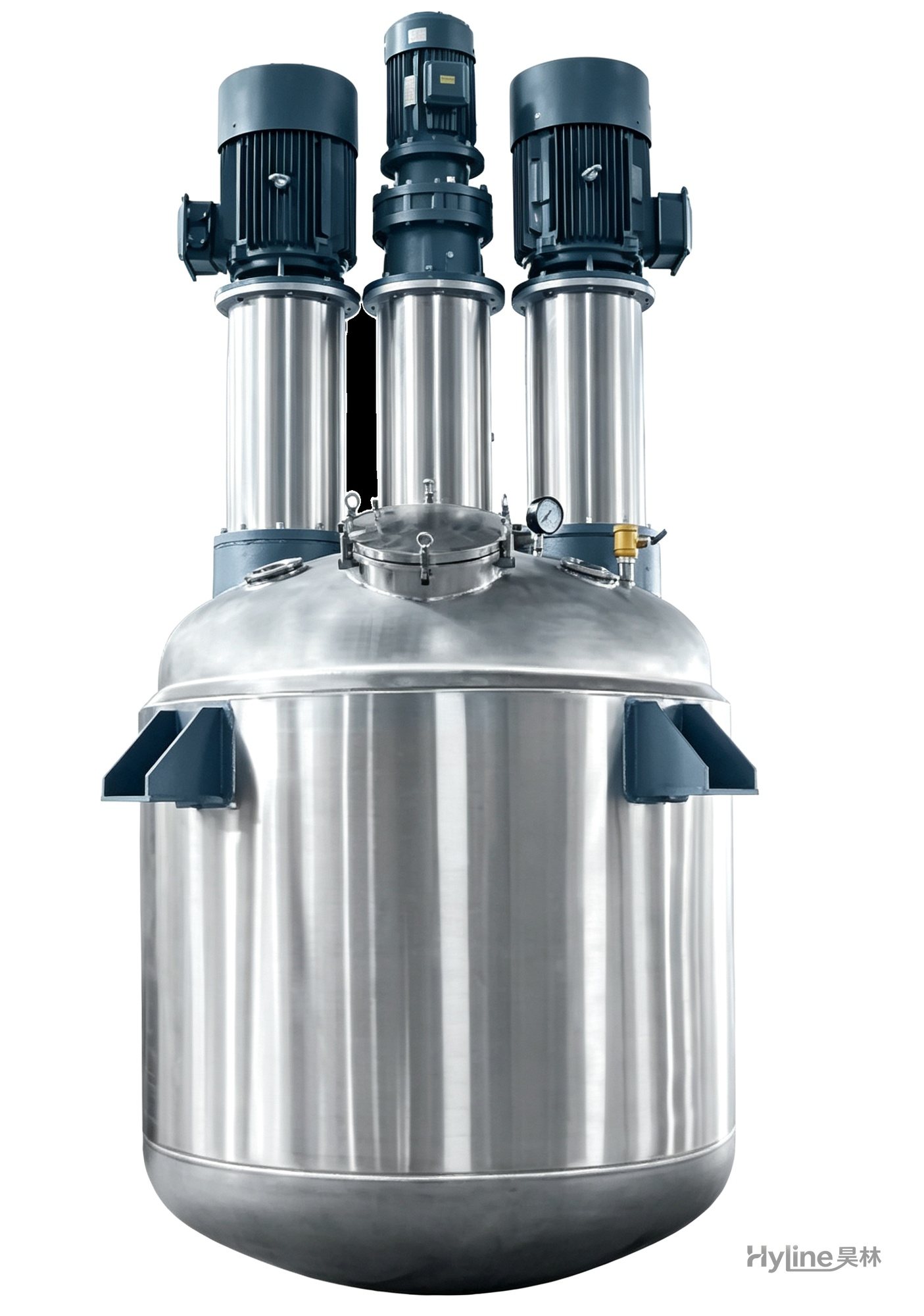
QLF Series Powerful Triple-Shaft Disperser
Two high-speed dispersers plus wall/bottom scraping create complex material flow for rapid dispersion and grinding. Handles high-viscosity pastes of 10,000-2,000,000 cps - widely used for silicone sealants, PU sealants, liquid silicone and electronic adhesives.
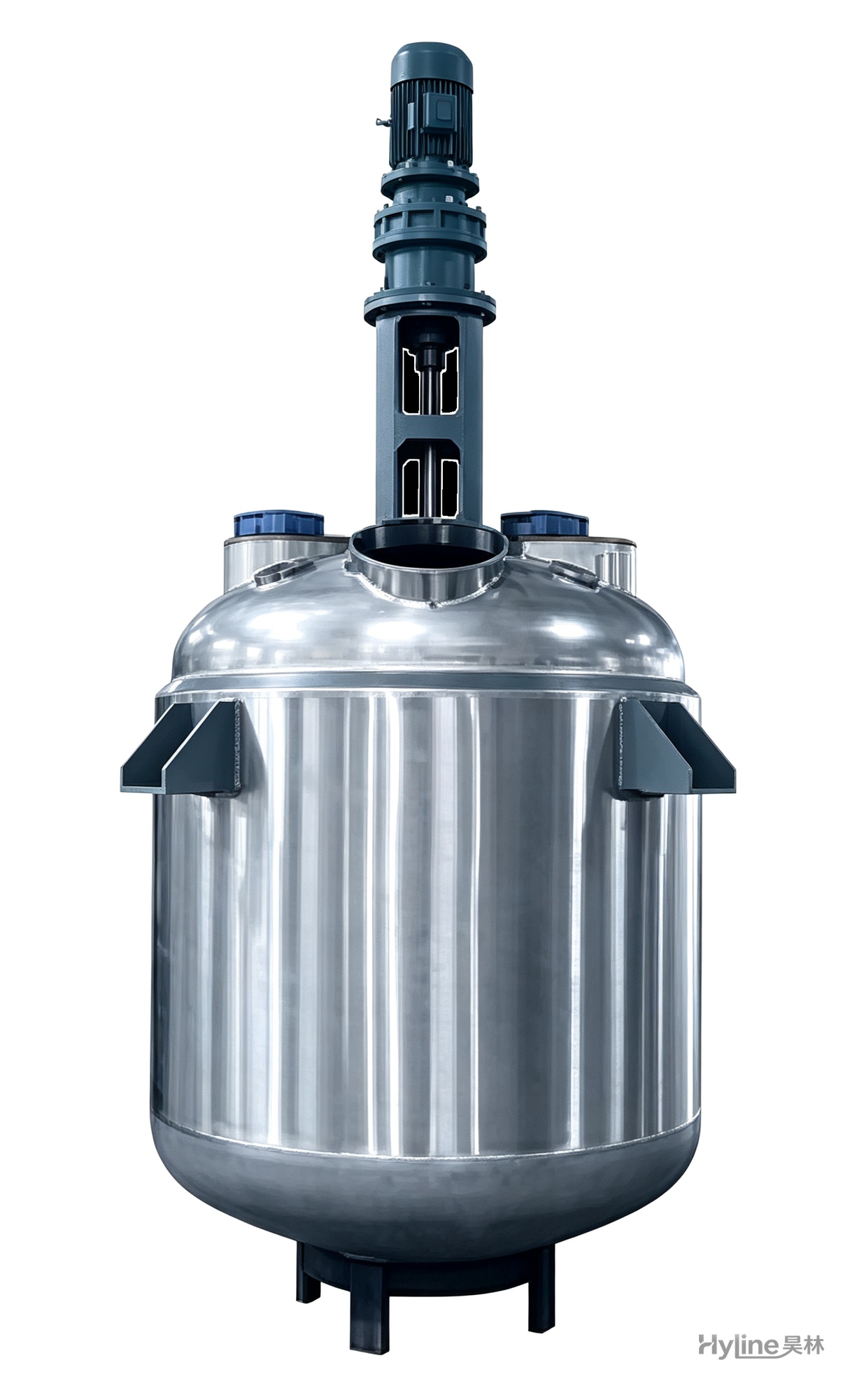
HS Series High-Speed Dispersing Vessel
Specially for dissolving, mixing and dispersing coating materials. The shear force and high speed of the dispersion disc deliver excellent solid-liquid dispersion and homogenization.

Stainless Steel Mixing Tank (Dispersion Drum)
Supporting vessel for dispersers and mixers in paints, coatings, adhesives, color slurries, inks and electronics. Available in 201/304 stainless with internal/external polishing and sloped bottom side discharge for complete draining.