
How to Configure the Tank Structure of an Emulsifier? Main Agitator, Homogenizing Head and Scraper by Paste and Emulsion Process
10/16/2026
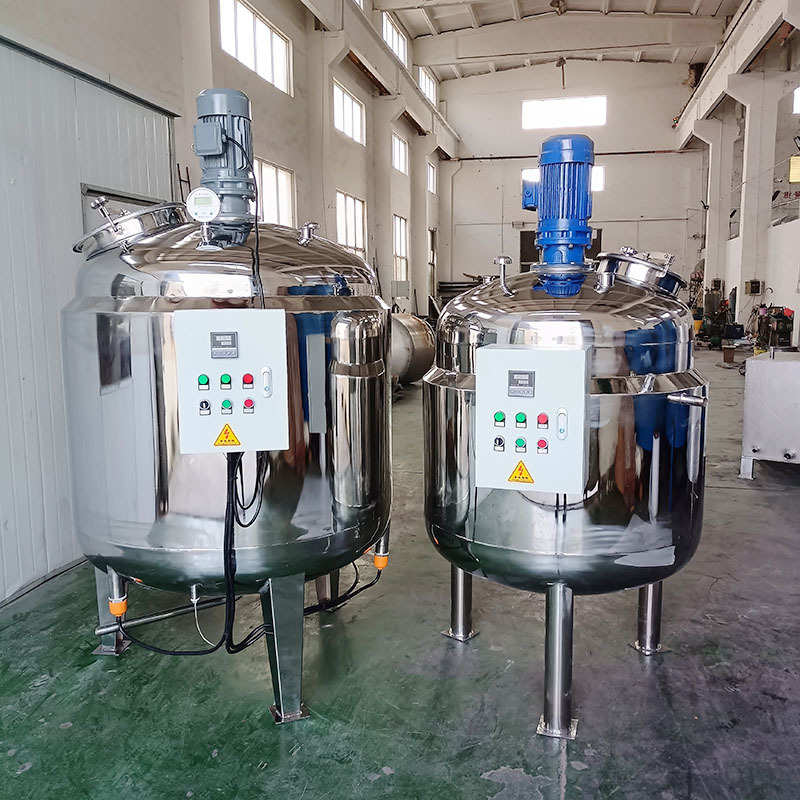
An emulsifier tank (vacuum emulsifier) is the core equipment for producing creams, lotions and suspensions in cosmetics, pharmaceutical, food and fine chemical production. It mixes and homogenizes the water phase, oil phase and emulsifier under controlled temperature and vacuum to obtain a stable and fine emulsion. The tank structure decides what materials a machine can handle and what particle size and stability it delivers. In procurement, the tank structure is usually decided by fixing the agitation and homogenizing combination first, then the sight glasses, manhole and inlet/outlet nozzles. This article explains how to configure the tank structure for three typical conditions: paste, emulsion and low-viscosity liquid.
What Does the Tank Structure of an Emulsifier Include?
Short answer: the tank structure consists of four parts — the shell and heads, the jacket, the agitation system (main agitator + homogenizing head + scraper) and accessories (sight glass / manhole / inlet-outlet); agitation and homogenizing are the core.
The shell and heads determine volume and pressure rating; typical volume ranges from 50 L to 5000 L, decided by batch size. The jacket provides heating and cooling, and the heat exchange area is selected by the process temperature range. The agitation system completes mixing and emulsification and is the focus of configuration. Accessories serve observation, maintenance and loading/unloading. In procurement, first clarify liquid viscosity, batch size, target particle size and cleanliness requirements, then derive the structure of each part.
How to Configure the Main Agitator by Condition?
Short answer: low-viscosity emulsions use a top-entry or medium/high-speed impeller; cream-like products use an anchor/frame main agitator with a scraper; only high-viscosity materials consider a planetary mixer.
The main agitator handles macro mixing and heat transfer in the tank. Typical speed ranges: anchor/frame agitator 10-60 rpm, impeller 30-120 rpm, matched with material viscosity and tank diameter; the higher the viscosity, the lower the speed and the larger the impeller. The core role of the main agitator in an emulsifier is to push material toward the homogenizing head and keep the tank temperature uniform, so the impeller diameter is generally 0.85-0.95 of the tank diameter with a 5-15 mm clearance to the wall.
Example: cream-like materials (viscosity typically 2000-50000 mPa·s) choose an anchor main agitator plus scraper; emulsion-like materials (typically 100-2000 mPa·s) choose a top-entry or impeller main agitator with the homogenizing head as the main emulsification force; low-viscosity aqueous materials can be mixed by an ordinary impeller.
How to Select the Homogenizing Head (Rotor-Stator)?
Short answer: select the homogenizing head by target particle size and fineness; single-layer or multi-layer rotor-stators for regular emulsification, and higher linear-speed structures for finer particle requirements.
The homogenizing head consists of a stator and a rotor; high-speed shear breaks the oil phase into fine droplets. Linear speed is generally 10-25 m/s, speed 1500-3000 rpm, related to the head diameter. For regular emulsification with a target particle size of 1-5 microns, a single-layer rotor-stator is enough; for sub-micron or finer requirements, consider multi-layer rotor-stators and higher linear speed. Homogenizing time is generally 10-30 minutes; too long causes temperature rise and emulsion breaking.
Example: pharmaceutical creams and high-end skincare generally use multi-layer rotor-stator homogenizing heads for more stable particle size; ordinary daily-chemical emulsions can be satisfied by a single-layer rotor-stator at lower cost.
When Is a Scraper Needed?
Short answer: high-viscosity pastes and high-solids liquids need a scraper; low-viscosity emulsions generally do not.
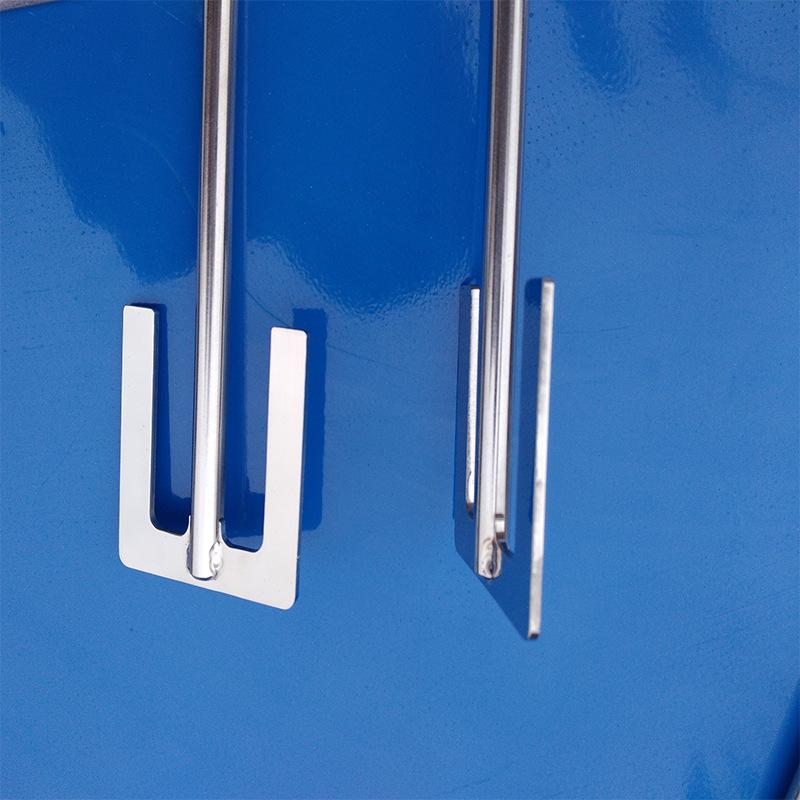
The scraper is a PTFE or metal blade close to the tank wall, rotating with the anchor agitator to scrape the wall and bottom material toward the homogenizing head and prevent over-heating, coking and color change of the wall-contacting material. Whether a scraper is needed depends on viscosity and wall-sticking tendency: pastes, ointments and powder-containing slurries generally need one; free-flowing emulsions and aqueous materials generally do not.
Configuration note: check scraper wear regularly; PTFE scrapers usually keep a 1-3 mm clearance to the wall, and excessive wear affects the scraping effect.
How to Determine Sight Glasses, Manhole and Inlet/Outlet?
Short answer: decide the number and lighting of sight glasses by observation needs, the manhole by volume and maintenance needs, and the inlet/outlet size and form by material characteristics.
Sight glasses are generally mounted on the side of the shell, with a lamp sight glass for observing the emulsification state; add a second sight glass for larger volumes or staged observation. The manhole is decided by volume: generally above 500 L, a manhole with a diameter of 300-500 mm for cleaning and maintenance. Inlets: set separate water-phase, oil-phase and powder inlets; the powder inlet is often equipped with a charging hopper and dust connection. The outlet is decided by viscosity: high-viscosity pastes commonly use bottom discharge with a pneumatic valve or inclined discharge; low-viscosity materials can discharge directly through a bottom valve.
Example: emulsifiers with high pharmaceutical cleanliness requirements use quick-open manholes and sight glasses with sanitary connections for CIP/SIP cleaning.
How to Determine the Jacket and Heat Exchange Area?
Short answer: determine the jacket heat exchange area by heating time, temperature difference and liquid viscosity; generally configure 0.5-1.5 m² per m³ of liquid, taking the larger value for high-viscosity materials.
Emulsification needs heating, holding and cooling, and the jacket is the main heat exchange path. The heat exchange area is related to heating rate and jacket heat transfer coefficient: the jacket heat transfer coefficient is generally 200-600 W/(m²·K) (by medium and agitation intensity; high-viscosity materials transfer heat poorly and take the lower value); the shorter the target heating time and the higher the viscosity, the larger the area needed. General experience: configure 0.5-1.5 m² of jacket area per m³ of liquid; take the upper limit for high-viscosity creams and processes requiring fast heating. When the heat exchange area is insufficient, consider strengthening agitation and adding an internal coil, but the coil occupies volume and adds cleaning points.
When Should Vacuum Deaeration Be Configured?
Short answer: configure vacuum deaeration for creams, high-viscosity materials and bubble-sensitive emulsions; vacuum is generally -0.06 to -0.09 MPa, and deaeration is done in the later stage of emulsification.
Vacuum deaeration removes bubbles entrained by agitation and homogenizing, preventing surface bubbles and loose cream texture. Conditions needing vacuum deaeration: high-viscosity creams entrain air after homogenizing, high-end emulsions are sensitive to bubbles, and pharmaceutical and food emulsification has cleanliness and appearance requirements; ordinary low-viscosity aqueous materials let bubbles rise and dissipate and may not need it. Vacuum is generally -0.06 to -0.09 MPa, deaeration time 5-15 minutes, done in the later stage of emulsification before breaking vacuum; reduce agitation speed during deaeration to avoid re-entrainment.
How to Implement Cleanliness Requirements in Structure?
Short answer: cleanliness is implemented in four points — inner wall polishing, rounded transitions, CIP spraying and quick-open connections; pharmaceutical and food emulsification is designed to sanitary grade.
Polish the contact surfaces of the inner wall and agitator blades, roughness generally Ra≤0.4 μm (Ra≤0.2 μm for higher sanitary requirements); change dead corners and sharp angles in the tank to rounded transitions to reduce residue; fit CIP spray balls and a cleaning solution return port, use quick-open structures for the manhole and sight glasses for easy disassembly and cleaning; select food-grade materials for seals contacting the liquid. Write the cleanliness requirements item by item into the technical agreement and verify against drawings and surface roughness test results at acceptance.
How to Select the Tank Material?
Short answer: 316L stainless steel for regular creams and lotions; upgrade the material by medium for strong acids, strong alkalis or high temperature and high pressure; choose 316L electropolished for sanitary applications.
316L stainless steel balances corrosion resistance and hygiene and is the regular choice for emulsifier tanks; for strong acids, chlorine-containing media or high-temperature/high-pressure conditions, select 316L with surface treatment or a higher grade by medium; for food and pharmaceutical sanitary applications, choose 316L electropolished for a dense inner wall that resists sticking. Select EPDM, FKM or food-grade silicone for seals, gaskets and hoses by medium and temperature. Consider both liquid corrosiveness and cleaning-agent compatibility in material selection to avoid accelerated corrosion during cleaning.
How to Connect Capacity Sizing with Batch Size?
Short answer: determine tank volume by dividing the batch size by the filling coefficient; the filling coefficient is generally 0.6-0.8, leaving space for foam, homogenizing and vacuum fluctuation.
The filling coefficient is the ratio of batch size to tank volume; for emulsifiers it is generally 0.6-0.8: high-viscosity creams with little foam take 0.75-0.8, easy-foaming materials take 0.6-0.7. After the batch size is determined, tank volume equals batch size divided by the filling coefficient; for example, batch size 1000 L with coefficient 0.7 gives about 1430 L, rounded up to the standard volume of 1500 L. When sizing, check at the same time whether motor power, homogenizing head capacity and jacket area scale up with volume; do not copy small-tank parameters to a large tank.
How to Configure for Paste, Emulsion and Low-Viscosity Conditions?
Short answer: paste = anchor main agitator + scraper + multi-layer homogenizing head; emulsion = impeller main agitator + single-layer homogenizing head; low-viscosity = impeller agitation is enough, vacuum as needed.
The differences concentrate on agitation and homogenizing: creams have high shear and scraping requirements, and the homogenizing head linear speed and time must be finely controlled; emulsions rely mainly on homogenizing with the main agitator assisting circulation; low-viscosity materials are mainly mixed and the scraper can be omitted. The vacuum system is selected by deaeration requirements: creams and high-end emulsions often have vacuum deaeration; low-viscosity aqueous materials depend on the process. There is no single answer to tank structure configuration; derive it from material parameters, check the configuration table item by item, and the result will survive scale-up validation.
Configuring the tank structure of an emulsifier is essentially matching the agitation and homogenizing combination to material viscosity and target particle size. Once these three items are right and the sight glasses, manhole and inlets/outlets are completed by process, one emulsifier can stably support paste and emulsion production, and can be integrated into complete lines for turnkey delivery.
Further Reading
- How to Select the Homogenizing Head of an Emulsifier? Rotor-Stator Structure and Process Matching
- How Is Deaeration Achieved in a Vacuum Emulsifier? Sequence of Vacuum, Homogenizing and Agitation
This article is provided by Haolin Shengda Equipment Manufacturing Co., Ltd. (hyline.cn). Main products: stainless steel reactors, mixing tanks, storage tanks, dispersers, concentrators and complete chemical line supporting equipment; non-standard customization supported.
Q&A from this article
Frequently asked questions and answers from this article
Short answer: high-viscosity pastes and high-solids liquids need a scraper; low-viscosity …
Related Products
GJD Series Emulsifying Disperser
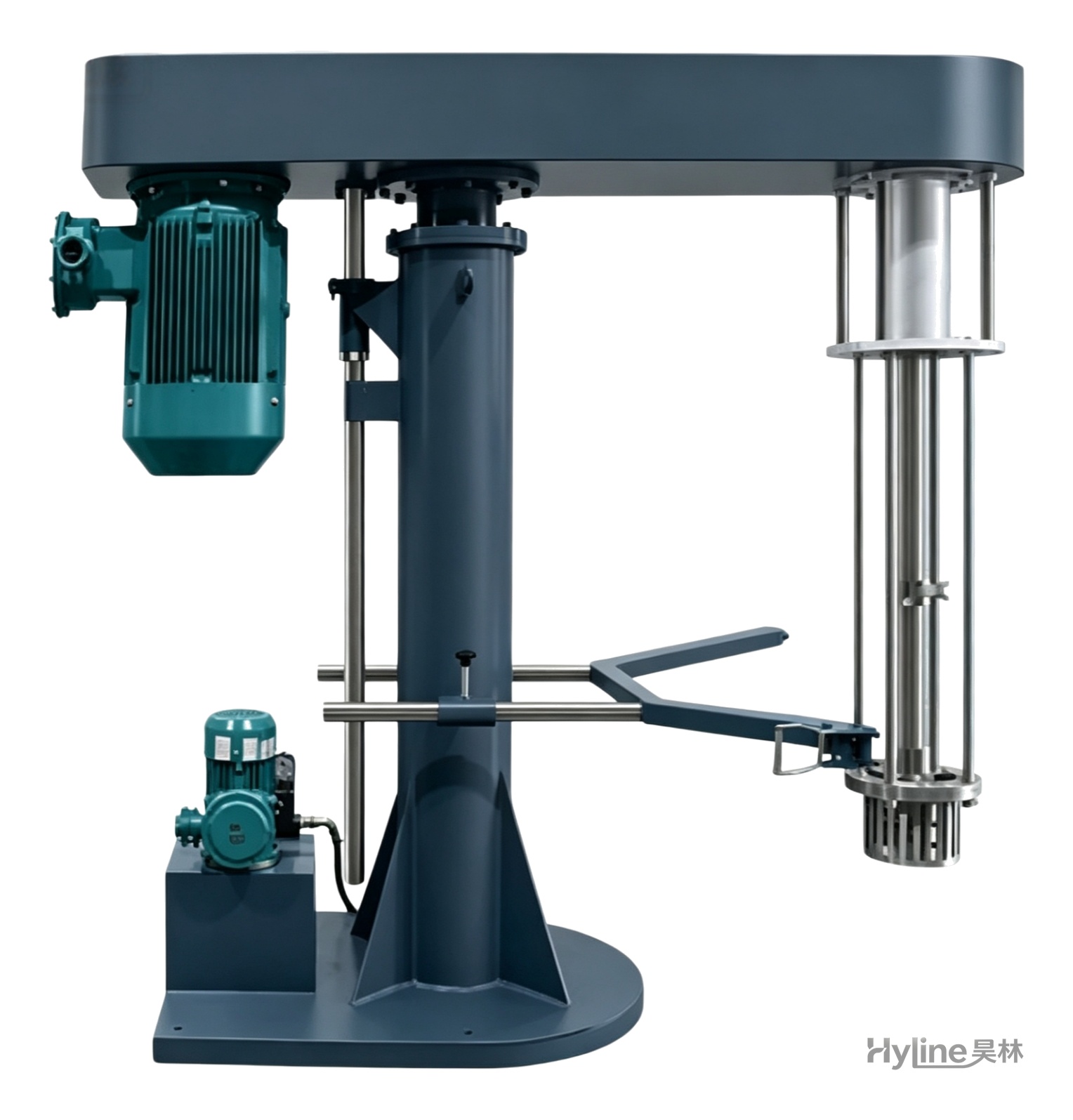
For emulsification, mixing and dispersion in coatings, inks, pesticides and papermaking. Powerful high-speed shear achieves required fineness and uniformity in a short time.
TSJ Series Concentric Twin-Shaft Mixer
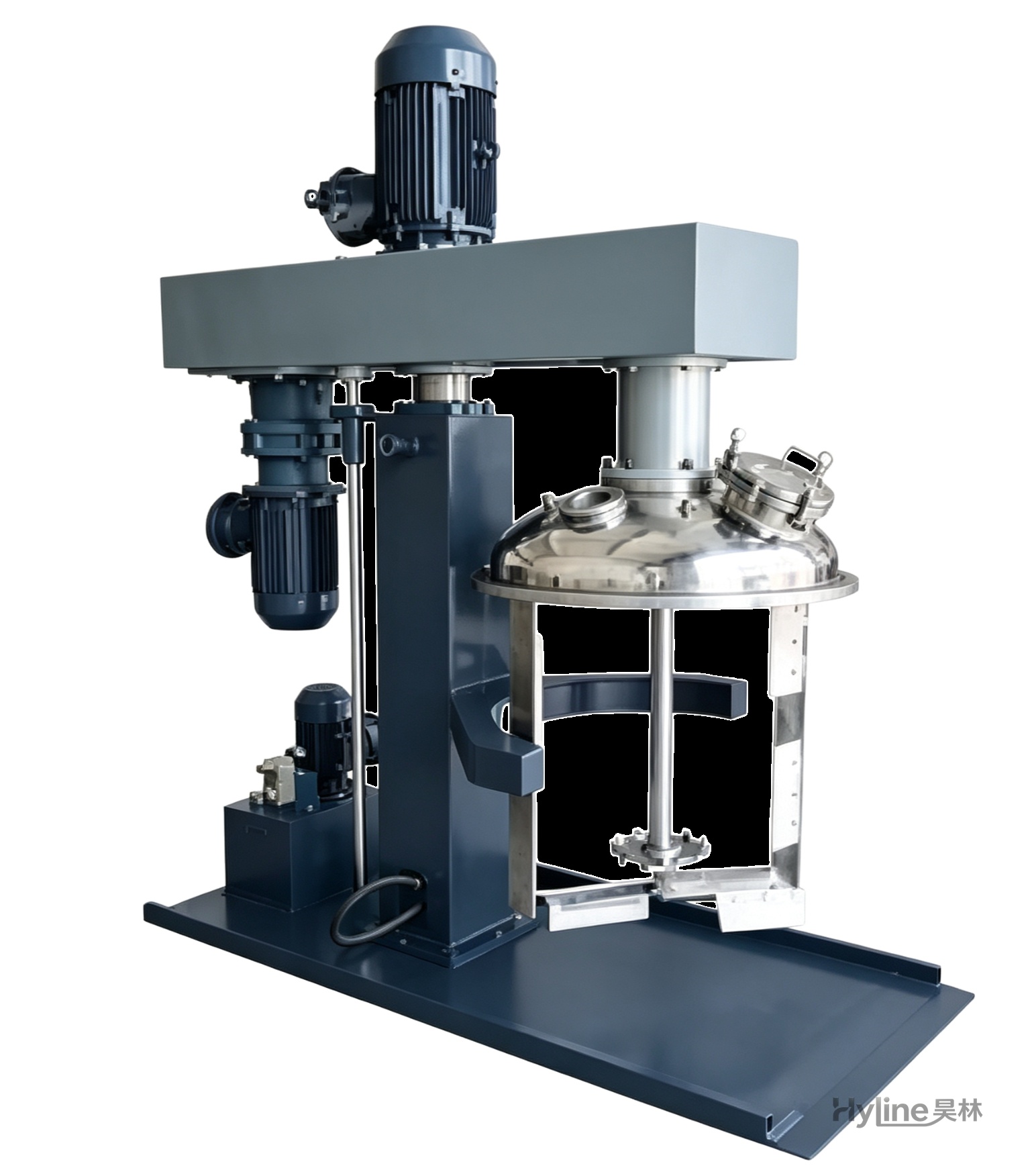
Mixes materials of 3000-20000 cps. Low-speed blades with Teflon scrapers sweep the tank wall and push material to the center; high-speed toothed impellers disperse powerfully. High and low speeds run independently.
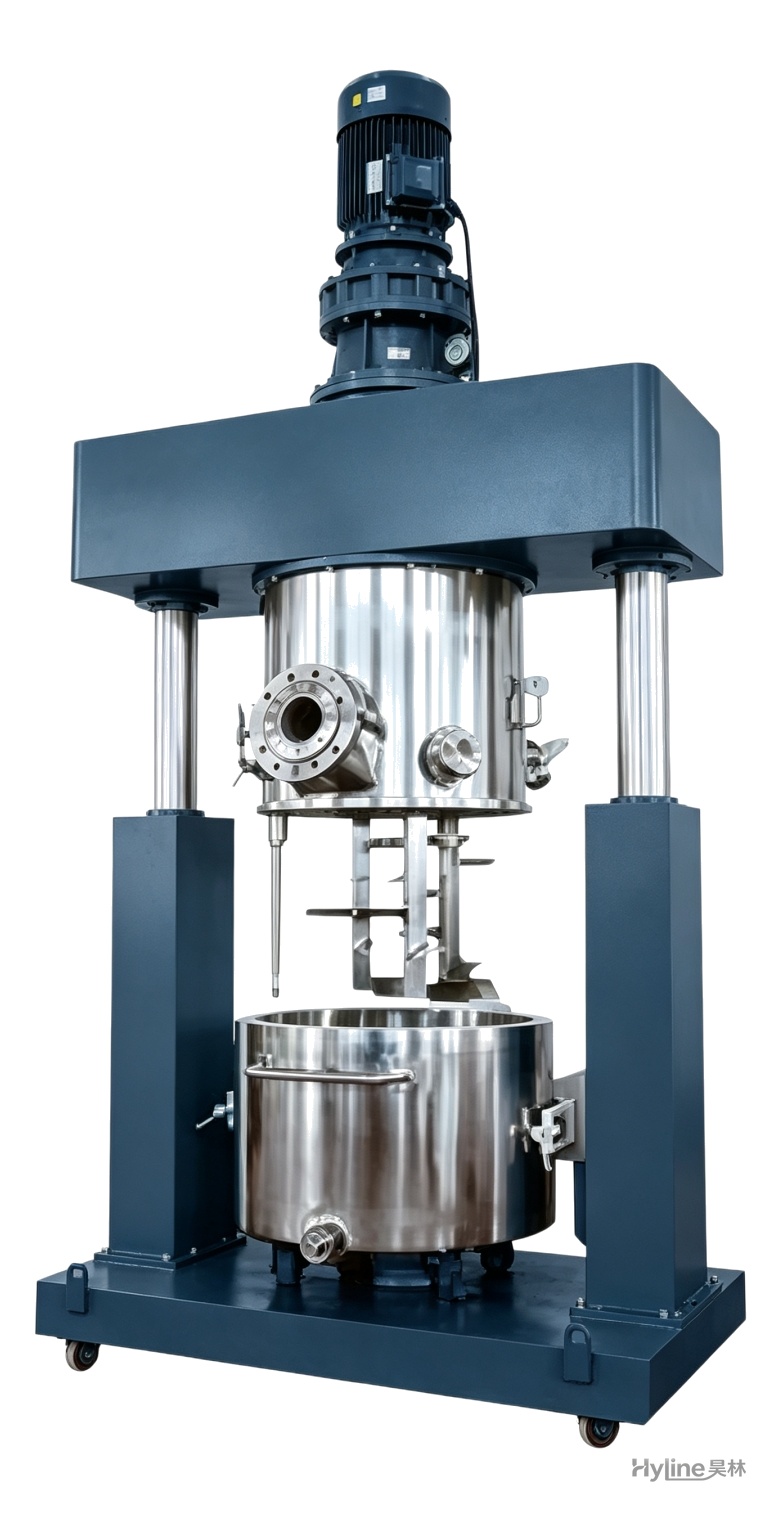
XJB Series Planetary Mixer
Planetary blades rotate and revolve simultaneously, creating complex material flow with no dead corners and easy discharge. Handles ultra-high-viscosity pastes of 10,000-8,000,000 cps for silicone, PU sealants, liquid silicone and electronic adhesives.

Stainless Steel Mixing Tank (Dispersion Drum)
Supporting vessel for dispersers and mixers in paints, coatings, adhesives, color slurries, inks and electronics. Available in 201/304 stainless with internal/external polishing and sloped bottom side discharge for complete draining.

Jacketed Reactor
The typical main reaction vessel in chemical production. Mixing, heating and cooling disperse and mix materials for reaction and polymerization. The jacket circulates thermal oil/steam for heating or cooling water for temperature control.