
How to Set Emulsification Temperature and Feeding Order for an Emulsifier Tank? Key Points of Oil-in-Water and Water-in-Oil Emulsification
10/17/2026
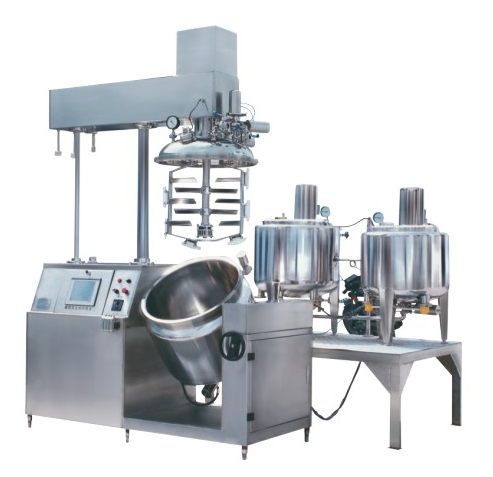
The emulsifier tank is the key equipment in the daily chemical, food and pharmaceutical industries for making creams, lotions, sauces and pastes. Its core job is to disperse mutually immiscible oil phase and water phase into a uniform, stable emulsion under high-speed shearing and vacuum. For a batch to emulsify stably, temperature and feeding order often decide the result before the equipment speed does: if the temperature is too low, the oil phase solidifies and the emulsifier activity is insufficient, and the system tends to separate; if the temperature is too high, heat-sensitive components degrade and fragrance volatilizes; if the feeding order is reversed, an O/W system may turn into a W/O one, or the consistency may fluctuate from batch to batch. This article explains how to set the emulsification temperature, how to arrange the feeding order, and how to coordinate vacuum and holding stirring, as a reference for formulators and production staff.
Why does emulsification temperature affect the result?
One-sentence conclusion: temperature determines the fluidity of the oil phase and the activity of the emulsifier; if the temperature is wrong, even strong shearing cannot produce a stable emulsion.
Three points support this. First, wax and fat raw materials in the oil phase are semi-solid or solid at low temperature, and high-speed shearing cannot break them into fine droplets, so the emulsion tends to be coarse and separate. Second, the HLB value and activity of emulsifiers change with temperature; at too low a temperature the adsorption speed of the emulsifier at the interface slows down, and droplet coalescence increases. Third, too high a temperature accelerates Brownian motion and collision coalescence of droplets, while heat-sensitive components (fragrance, some functional ingredients) degrade faster, so color and odor of the product deteriorate.
Therefore the temperature should fall into the range where "the oil phase is fully melted, the emulsifier activity is sufficient, and heat-sensitive components are acceptable" — higher is not always better.
How is the emulsification temperature generally set?
One-sentence conclusion: for common oil-in-water (O/W) systems, 70-85°C is generally used; for water-in-oil (W/O) systems, it is usually 5-10°C higher, and the specific value follows the raw material with the highest melting point in the formula.
The common practice is to first check the raw material with the highest melting point in the formula: if the oil phase contains high-melting wax or stearic acid, the emulsification temperature is usually set at "highest melting point + 10-15°C" to keep the oil phase fully fluid during emulsification; for most daily chemical O/W creams, the common range is 70-85°C; for W/O systems, because the external phase is oil and heat dissipation is slower, the emulsification temperature can generally be slightly higher, commonly 80-90°C. During the heating stage, the heating rate is usually controlled at 1-3°C per minute to avoid local overheating and scorching.
Note that temperature is only one process parameter: the same formula should keep the temperature consistent between batches, and the fluctuation between batches is generally controlled within ±3°C, otherwise consistency and particle size will drift.
How important is the feeding order for oil-water emulsification?
One-sentence conclusion: the feeding order determines the type and particle size of the emulsion; the general practice is to preheat the oil phase and water phase separately to the set temperature, then slowly add the water phase into the oil phase (or follow the order specified by the formula) while shearing.
The type of emulsion (O/W or W/O) mainly depends on the emulsifier type and the volume ratio of the two phases, but the feeding order affects the droplet distribution in the early stage: when the water phase is slowly added into the oil phase, the oil phase is the continuous phase in the preliminary emulsion stage, and with the emulsifier properties the target system can be obtained; the reverse order tends to form the opposite structure first, and the later phase inversion is often accompanied by coarser droplets. The common plant practice is: preheat both phases to the target temperature separately, then add the oil phase into the emulsifier tank first, and under stirring and shearing add the water phase slowly in 2-3 portions, keeping shearing for a period after each portion before adding more, to avoid local overload and uneven emulsification caused by one-shot pouring.
The feeding speed also needs control: if the water phase is added too fast, the local concentration changes abruptly, and "agglomeration" or "tofu-like" coarse emulsion easily appears; generally, based on the batch total, the water phase addition time is controlled within 5-15 minutes, and can be extended appropriately for larger batches.
How are the water phase and oil phase pretreated?
One-sentence conclusion: preheating, dissolving and homogenizing the oil phase and water phase separately in batching tanks before they enter the emulsifier tank is more stable than feeding directly into the emulsifier tank.
The common process is: for the oil phase, melt all wax and fat materials under water bath or jacket heating and stir until fully clear; for the water phase, dissolve water-soluble raw materials (humectants, salts, preservatives, etc.) completely in hot water at 70-90°C, and filter out undissolved particles when necessary. After both phases reach the set temperature, feed them into the emulsifier tank in order. The practice of cold feeding and then overall heating tends to cause incomplete local melting of the oil phase and residual undissolved materials in the water phase, and the product after emulsification shows obvious graininess.
In the pretreatment stage, a mixing tank is often used for premixing the water phase or oil phase, dispersing difficult-to-dissolve materials evenly before high-speed shearing in the emulsifier tank, which makes the emulsification result more stable.
How do holding stirring and cooling cooperate?
One-sentence conclusion: after emulsification, hold and stir at temperature for a period to stabilize the system, then cool slowly; the cooling rate affects consistency and particle size.
The common practice is: after 3-5 minutes of high-speed emulsification shearing, reduce the speed to medium-low and keep stirring at 70-80°C for 10-20 minutes so that the emulsifier spreads fully at the interface and the droplet distribution becomes uniform; then enter the cooling stage, pass cooling water through the jacket, and generally control the cooling rate at 1-2°C per minute while stirring slowly to prevent surface skinning and local overcooling. After cooling to the set temperature (such as 40-45°C), add heat-sensitive materials such as fragrance and functional ingredients, keep stirring until uniform, and then discharge.
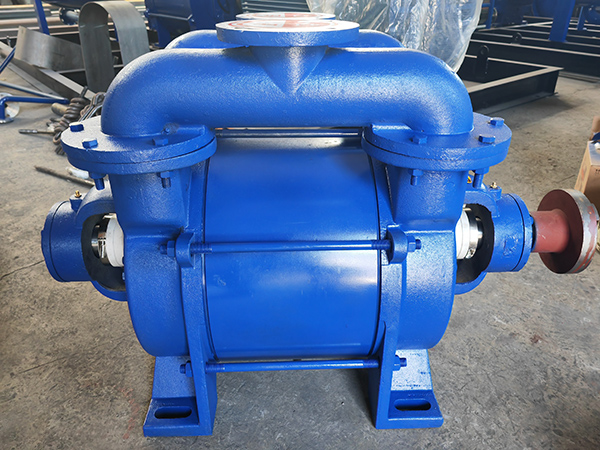
Vacuum plays a supporting role during emulsification: evacuate before emulsification to remove air bubbles in the liquid, and vacuum deaeration after emulsification reduces micro-bubbles in the finished product and improves appearance and consistency stability. When a vacuum disperser or a vacuum emulsifying unit is equipped, the vacuum is generally controlled at -0.04 to -0.08 MPa, adjusted according to the foaming characteristics of the liquid.
How to set rotation speed and shearing time?
One-sentence conclusion: use high speed for the emulsification stage to provide shearing, then reduce to medium-low speed for holding and cooling; the shearing time is controlled by the particle size requirement, generally 3-5 minutes of emulsification shearing and 20-40 minutes of total stirring.
The common practice is: at the initial stage (just after the two phases are mixed), use a lower speed to mix the liquid roughly, then raise to high speed for high-speed shearing; the linear speed of the homogenizing head or high-speed dispersion disc is commonly 10-20 m/s. After 3-5 minutes of shearing, sample and check the particle size and consistency; if the requirement is not met, extend the shearing time, generally 1-2 minutes each time, to avoid over-shearing that thins the system. After shearing, switch to holding stirring at medium-low speed (generally 20-50 rpm anchor stirring is sufficient) to keep the liquid circulating slowly.
Speed and time should match the batch size: for small batches (tens of kilograms), the shearing time can be shorter; for large batches (several hundred kilograms and above), because the circulation path of the liquid is longer, the shearing time generally needs to be extended appropriately, with scraping-wall stirring to ensure the material near the wall also participates in circulation. After the speed is set, it is recommended to record it in the process sheet and not adjust it by feel at any time, so batches can be compared.
How to match emulsifier tank capacity with batches?
One-sentence conclusion: the filling coefficient of the emulsifier tank is generally controlled at 60%-80%; derive the equipment volume from the net output per batch, and reserve space for heating, cooling and vacuum.
The common practice is: first determine the net output per batch and the density of the finished product, then derive the tank volume by the filling coefficient. For example, for a net output of 500 kg per batch and a filling coefficient of 70%, a 700-800 L emulsifier tank is generally selected; too high a filling causes splashing during emulsification and insufficient space for vacuum deaeration; too low a filling means the stirring blade and homogenizing head cannot be fully immersed, and the emulsification effect is poor. After the volume is determined, check the heating and cooling capability: the heat exchange area of the jacket and coils is generally configured so that heating to 85°C takes no more than 30-40 minutes, and cooling capability is checked so that cooling from 85°C to 45°C takes no more than 40-60 minutes; if the heat exchange area is insufficient, the batch temperature is hard to control and the emulsification quality fluctuates.
Capacity matching also needs to consider the upstream and downstream processes: the pretreatment time of the water phase and oil phase in the mixing tank should be linked with the batch cycle of the emulsifier tank, to avoid waiting for raw materials that have already cooled while the previous tank is unfinished. A single emulsification line is generally scheduled by the rhythm of "batching - emulsifying - cooling - discharging - cleaning"; after the tank capacity matches the number of batches, the line can run continuously. When developing a new formula, it is recommended to verify the temperature and feeding order at the same ratio on a laboratory emulsifier or pilot emulsifier tank first, and then scale up to production batches after confirmation, to avoid wasting raw materials due to rework in large tanks.
How to troubleshoot common problems?
| Phenomenon | Common cause | General treatment direction |
|---|---|---|
| Emulsion separates, oil floats | Emulsification temperature too low or emulsifier activity insufficient | Check the highest-melting-point raw material in the formula, raise the emulsification temperature and extend shearing time |
| Consistency fluctuates | Batch-to-batch temperature or feeding speed inconsistent | Fix the emulsification temperature and feeding time, record parameters of each batch |
| Obvious graininess | Oil phase not fully melted or water phase residual undissolved | Pretreat both phases completely, filter before emulsification when necessary |
| Surface skinning | Cooling too fast or holding stirring too slow | Control the cooling rate, keep slow stirring during cooling |
| Micro-bubbles in the finished product | Vacuum deaeration insufficient | Increase the vacuum or extend the deaeration time |
One-sentence conclusion: the stability of the emulsification process comes from fixing the parameters of the four links of "temperature, phase order, shearing and cooling"; after the formula is set, write the parameters of each link into the process sheet, and batch quality can be reproduced.
Further Reading
- How Is Vacuum Deaeration of an Emulsifier Tank Achieved? Vacuum, Stirring and Foam-Breaking Points
- How to Select the Homogenizing Head of an Emulsifier Tank? Rotor-Stator Structure, Linear Speed and Emulsion Particle Size
This article is provided by Haolin Shengda Equipment Manufacturing Co., Ltd. (hyline.cn). Main products: stainless steel reactors, mixing tanks, storage tanks, dispersers, concentrators and complete chemical line supporting equipment; non-standard customization supported.
Q&A from this article
Frequently asked questions and answers from this article
One-sentence conclusion: the stability of the emulsification process comes from fixing the…
Related Products
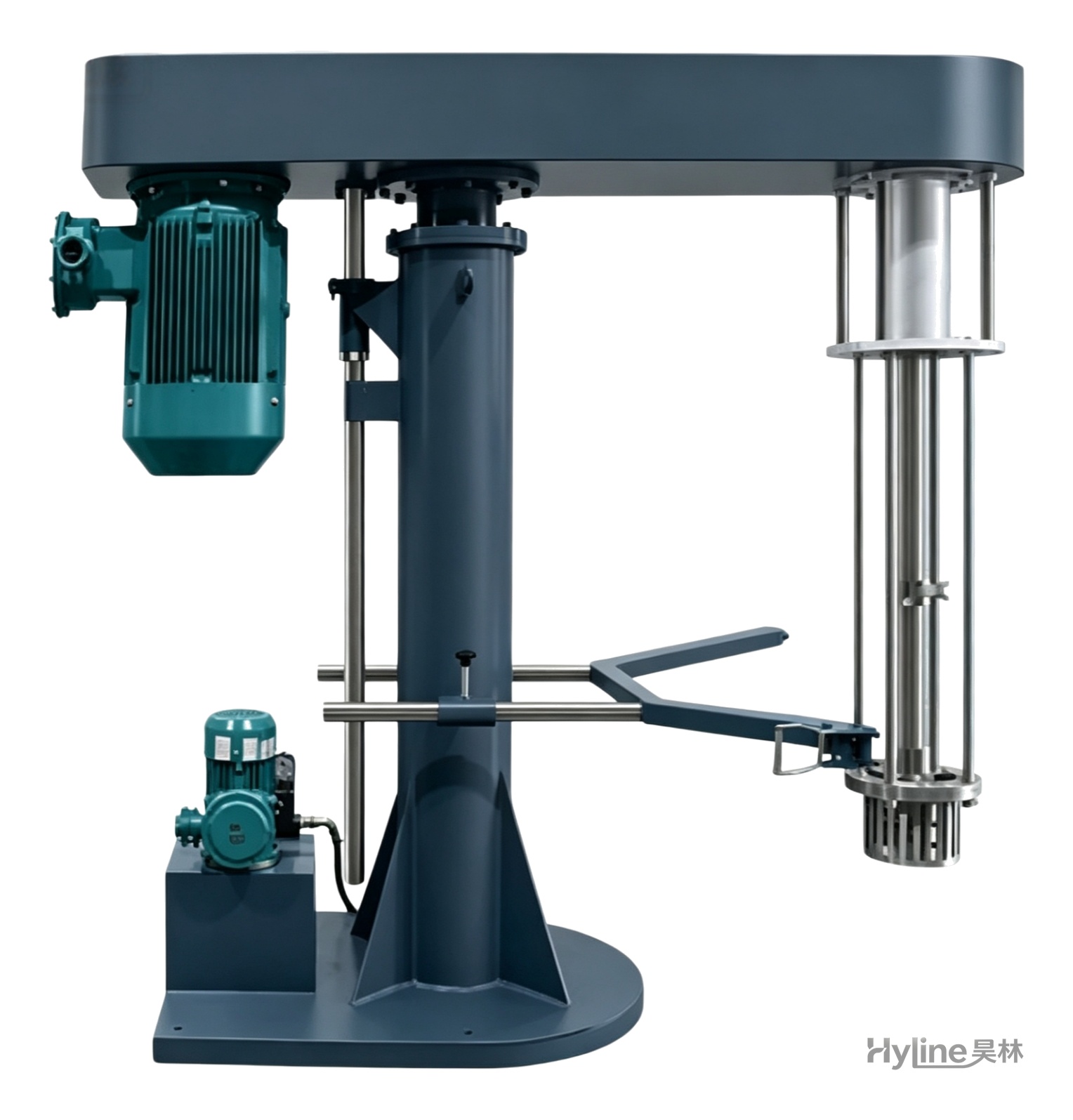
GJD Series Emulsifying Disperser
For emulsification, mixing and dispersion in coatings, inks, pesticides and papermaking. Powerful high-speed shear achieves required fineness and uniformity in a short time.
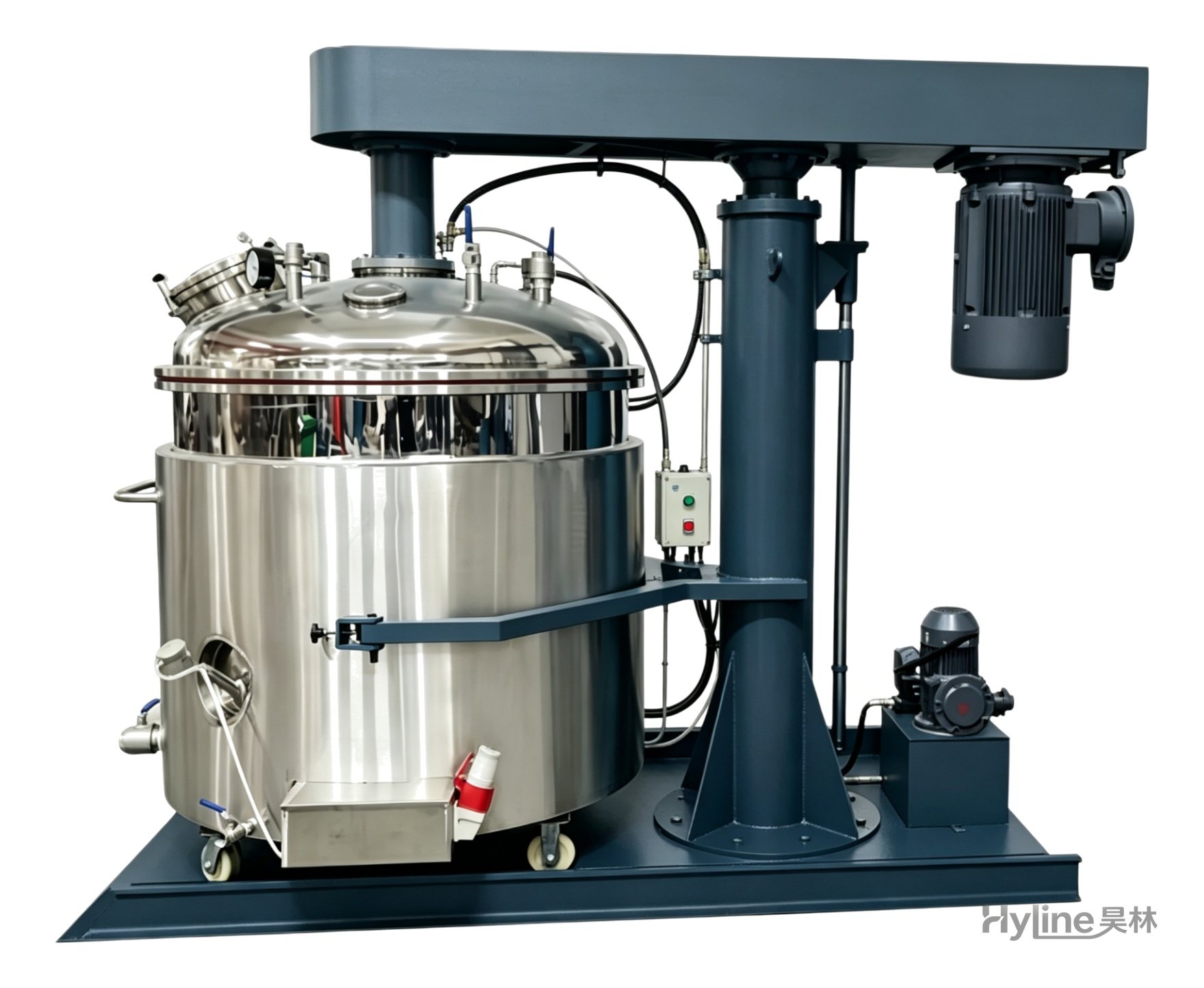
FL Series Vacuum Disperser
Designed for bubble-rich materials and volatile solvents. Vacuum dispersion reduces bubbles and solvent evaporation, accelerates fineness and rapidly defoams. Simple structure, high vacuum, easy operation.
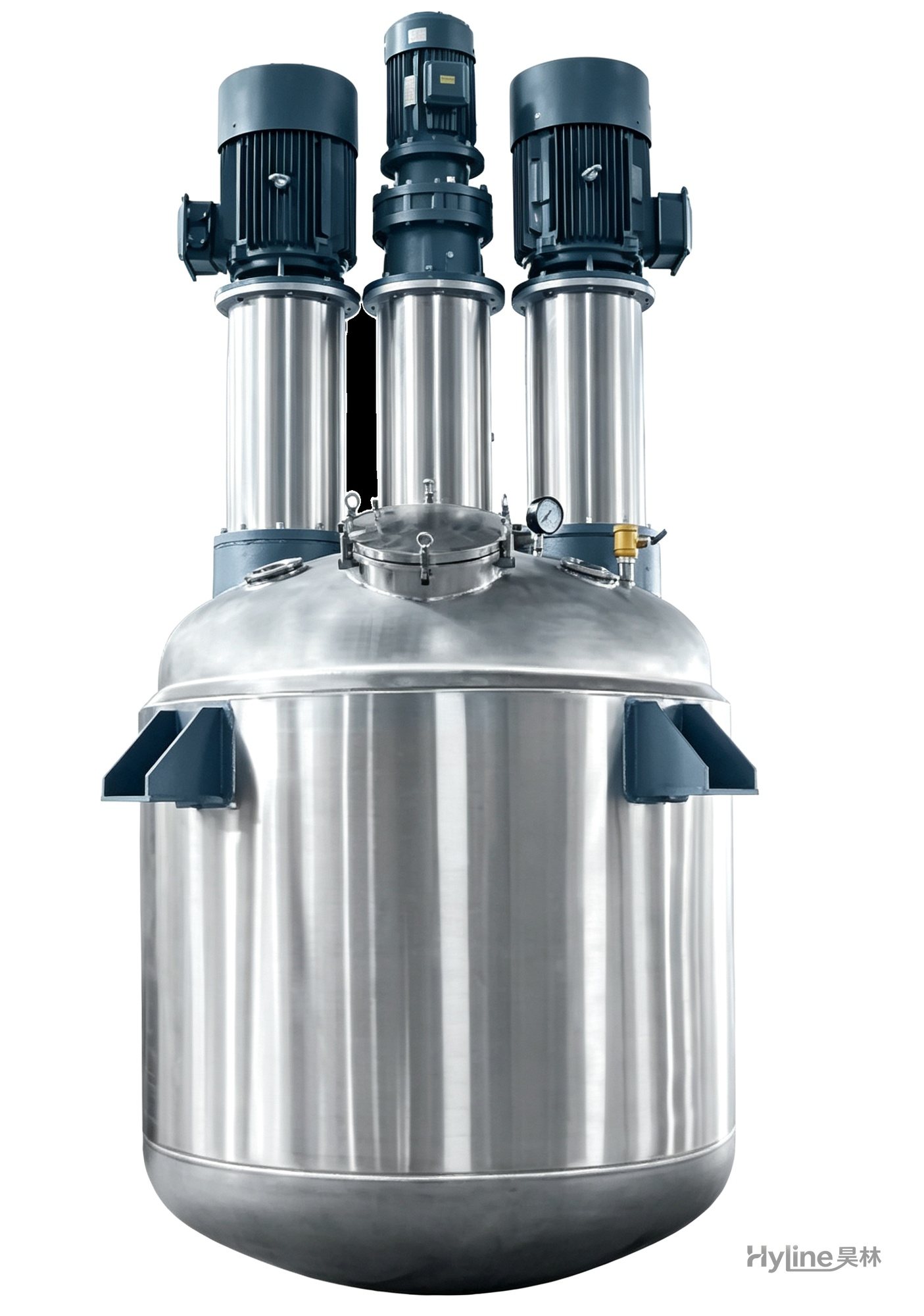
FS Series Multifunctional Dispersing Kettle
Integrates low-speed heavy-duty stirring with high-speed dispersion for medium/high-viscosity and thixotropic materials. Stirring and dispersion proceed simultaneously for ideal results in mixing, dissolving, dispersing and tinting.

Stainless Steel Mixing Tank (Dispersion Drum)
Supporting vessel for dispersers and mixers in paints, coatings, adhesives, color slurries, inks and electronics. Available in 201/304 stainless with internal/external polishing and sloped bottom side discharge for complete draining.

Jacketed Reactor
The typical main reaction vessel in chemical production. Mixing, heating and cooling disperse and mix materials for reaction and polymerization. The jacket circulates thermal oil/steam for heating or cooling water for temperature control.