How to choose an emulsifying tank for pharmaceutical ointments? Vacuum emulsification and sanitary configuration for creams and gels
11/10/2026
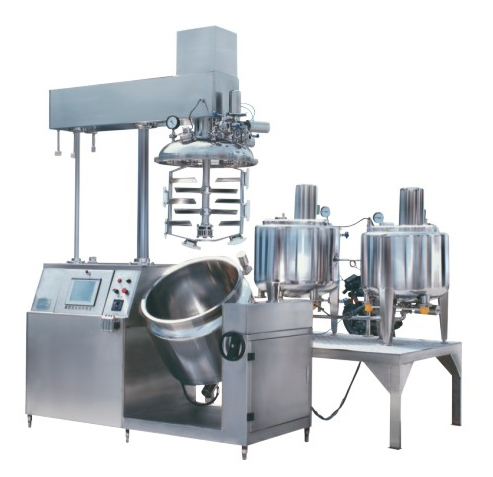
In workshops producing topical ointments and gels, once the formula and process are fixed, batch-to-batch variation in particle fineness or fill weight usually traces back to the emulsification equipment. Ointments are more demanding than ordinary creams: the active ingredient must be evenly dispersed, the cream must be bubble-free, batches must be traceable, and the equipment has to survive repeated cleaning and disinfection. This article walks through the selection of an emulsifying tank for ointment and gel production across five aspects: vacuum configuration, main-vessel structure, material and polish, grinding support, and temperature control with records — so the key items are verified one by one before the contract is signed.
Why does ointment emulsification need vacuum?
One-line conclusion: vacuum is not an option, it is a baseline requirement for ointment quality.
Air in the cream comes from three sources: entrained during feeding, pulled in by the high-shear homogenizer, and micro-bubbles that can no longer escape once the cream thickens. Cream emulsified at atmospheric pressure shows bubble streaks in the tube after filling and fails visual inspection; for volatile or oxidation-sensitive actives, bubbles also mean the ingredient keeps meeting air during storage. Vacuum emulsification holds the vessel below -0.09 MPa while homogenizing, continuously drawing bubbles out, so the cream is denser and fill-weight variation narrows.
Do not check only for a "vacuum port": pump capacity must match vessel volume — one water-ring pump is generally enough for a 500 L vessel, and over-fast pumping just drags cream into the pump. The lid seal must be designed for vacuum, the agitator shaft needs a double mechanical seal to stop air leaking along the shaft, and slow-opening vacuum and air-break valves are required: stop homogenizing first, then break vacuum slowly so the cream is not splashed onto the lid and shaft. Verify each of these details during acceptance.
How should the main vessel be configured? What do the homogenizer and wall scraper each do?
One-line conclusion: the main agitator handles bulk mixing and heat transfer, the homogenizer handles size reduction, the wall scraper returns cream clinging to the wall — all three are needed.
Ointment viscosities run from tens of thousands to over one hundred thousand millipascal-seconds; a simple paddle cannot move or blend that. The main vessel typically combines a frame or wall-scraping agitator with a bottom homogenizer: the slow, high-torque main agitator rolls the whole batch so every part passes through the homogenizing zone; the high-tip-speed homogenizer breaks the oil and water phases down to a few micrometers; the scraper strips cream off the wall and returns it to the flow, preventing local overheating and skin formation. The three roles cannot substitute for each other.
| Nominal volume | Typical homogenizer motor | Main agitator motor | Batch reference |
|---|---|---|---|
| 50-100 L | 2.2-4 kW | 0.75-1.5 kW | 40-80 kg |
| 200-350 L | 5.5-11 kW | 2.2-4 kW | 160-280 kg |
| 500 L | 11-15 kW | 4-5.5 kW | 400-450 kg |
Size by batch output and add 10 to 20 percent headroom for future products. Choose a homogenizer head with interchangeable rotors or adjustable clearance: thin gels take a small clearance at high tip speed, powder-rich ointments a wider one — one machine serves several products by parameter change, not by equipment change.
How to pass the hygiene bar with material and polish?
One-line conclusion: all product-contact parts in 316L, electropolished interior, roughness controlled around 0.4 micrometers.
Ointments are semi-solid preparations, and equipment cleanliness normally follows pharmaceutical practice: product-contact surfaces in 316L, welds ground smooth and passivated; interior electropolished to roughly 0.4 micrometers to reduce residue and microbial attachment. Sight glasses, manholes and cleaning ports are designed without dead corners; piping uses clamp fittings that can be dismantled and inspected; thermometer wells, spray-ball brackets and other "small parts" get the same treatment — cross-contamination often hides in exactly these spots.
The oil and water phase vessels deserve the same hygiene level; do not cut corners on the pre-mix kettles to save budget — waxes and powders in the oil phase cling hardest, and residue carries straight into the next batch. Insulation cladding should also be smooth and cleanable for daily wiping and disinfection; write these items into the quotation and check them one by one at acceptance.
Do fine or powder-rich ointments need grinding?
One-line conclusion: for actives with tight particle-size limits and high loading, disperse and grind before emulsification instead of loading everything onto the homogenizer.
The active must first be wetted and dispersed in the oil or water phase; at high loading the powder agglomerates, and pushing it straight into the vessel forces long homogenizing times and rising temperatures that hit heat-sensitive ingredients first. Add a pre-dispersion step with a high-speed disperser: the disc breaks and wets the powder into a uniform slurry before it enters the main vessel, shortening homogenization and steadying uniformity. For products with strict size limits — suspension ointments requiring most of the active below a few micrometers — grinding follows dispersion: a three-roll mill handles lab and small batches with progressively tighter gaps, scaling up to sand-milling for pilot production. Equipment follows the particle-size specification and batch size; not every line needs everything, but for any product whose size limit is written into the quality standard, grinding cannot be skipped.
How to configure temperature control, cleaning and records?
One-line conclusion: water-bath heating, CIP-ready piping, and recorded outputs for temperature and agitation parameters.
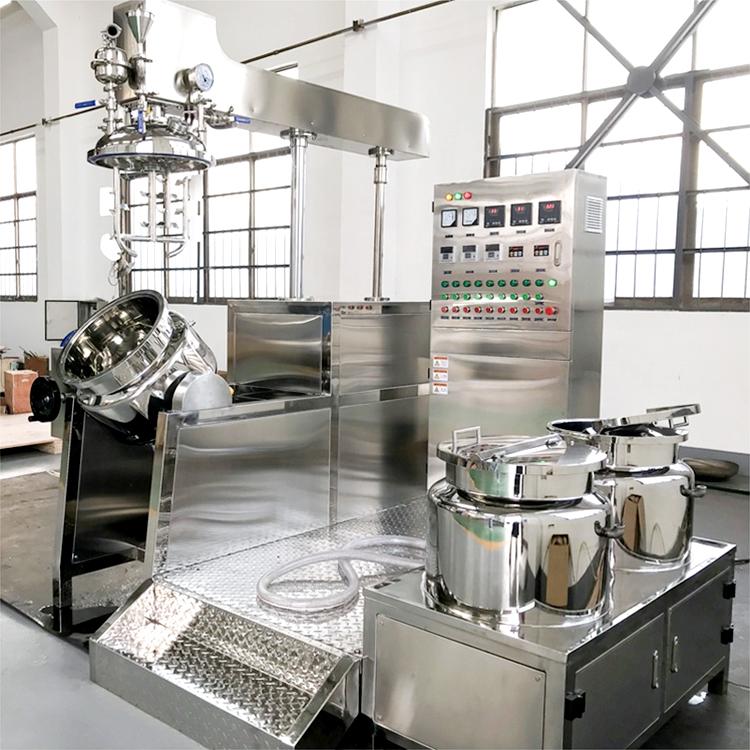
Emulsifying temperature follows the formula, commonly 70 to 85 degrees, higher for high-melting oil phases. A water-bath electric or steam jacket is recommended: water-bath heat is gentle and wall temperature uniform, limiting the risk of local overheating of heat-sensitive actives; steam heats faster and suits plants with a boiler. Cooling water in the jacket controls the cool-down rate, and discharging within the specified temperature band keeps cream consistency stable.
For cleaning, fit a rotary spray ball at the top, route piping for CIP, and drain wash water from the lowest point; for products requiring sterilization, reserve SIP steam connections on the lid. On controls, temperature, agitator speed, homogenizing time and vacuum need display and recording outputs tied to batch records — a frequent checkpoint in routine quality audits, far easier to configure at build time than to retrofit later.
How to finalize the whole line?
An ointment or gel line is typically arranged as pre-dispersion plus oil and water phase kettles plus the vacuum main vessel plus discharge. Volume ratios, piping runs and cleaning coverage must be calculated from the product and batch size: the oil and water kettles are usually sized at 60 to 80 percent of the main vessel so each main batch is pre-mixed in one go, with neither the main vessel waiting for feed nor pre-mixed material waiting for the vessel. Hyline Shengda Equipment Manufacturing Co., Ltd. (hyline.cn) has customized vacuum emulsifying systems from 50-liter lab units to 500-liter production machines for pharmaceutical and cosmetic workshops: send us your products, batch size and cleanliness requirements, and we will return a configuration list and quotation based on your process.
Further reading: - How to configure the vessel structure of an emulsifying tank? Main agitation, homogenizer and wall scraping by cream process - How to choose material and polish grade for an emulsifying tank? Food, pharma and cosmetic hygiene requirements differ
This article is compiled by Hyline Shengda Equipment Manufacturing Co., Ltd.
Q&A from this article
Frequently asked questions and answers from this article
An ointment or gel line is typically arranged as pre-dispersion plus oil and water phase k…
Related Products
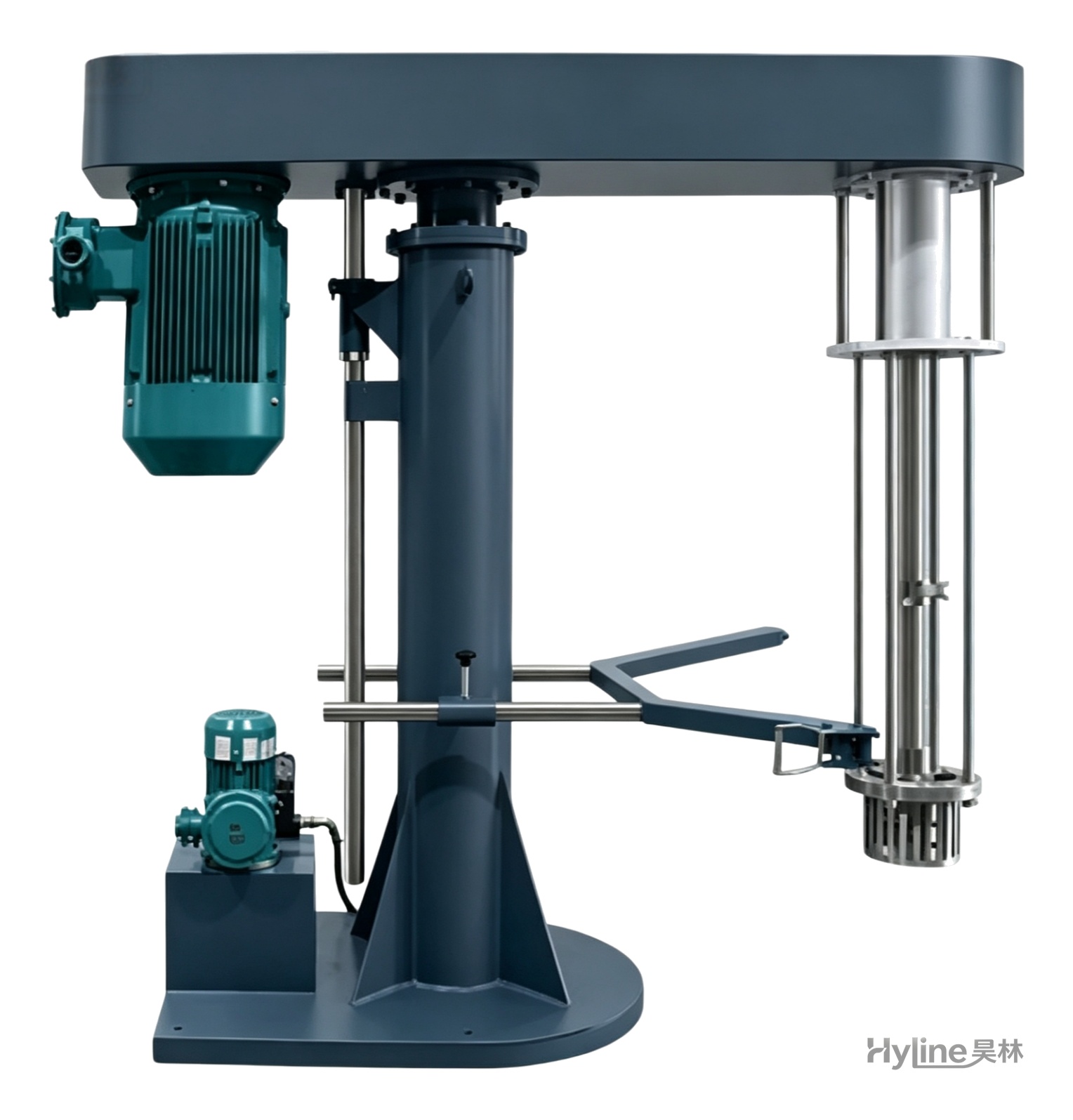
GJD Series Emulsifying Disperser
For emulsification, mixing and dispersion in coatings, inks, pesticides and papermaking. Powerful high-speed shear achieves required fineness and uniformity in a short time.
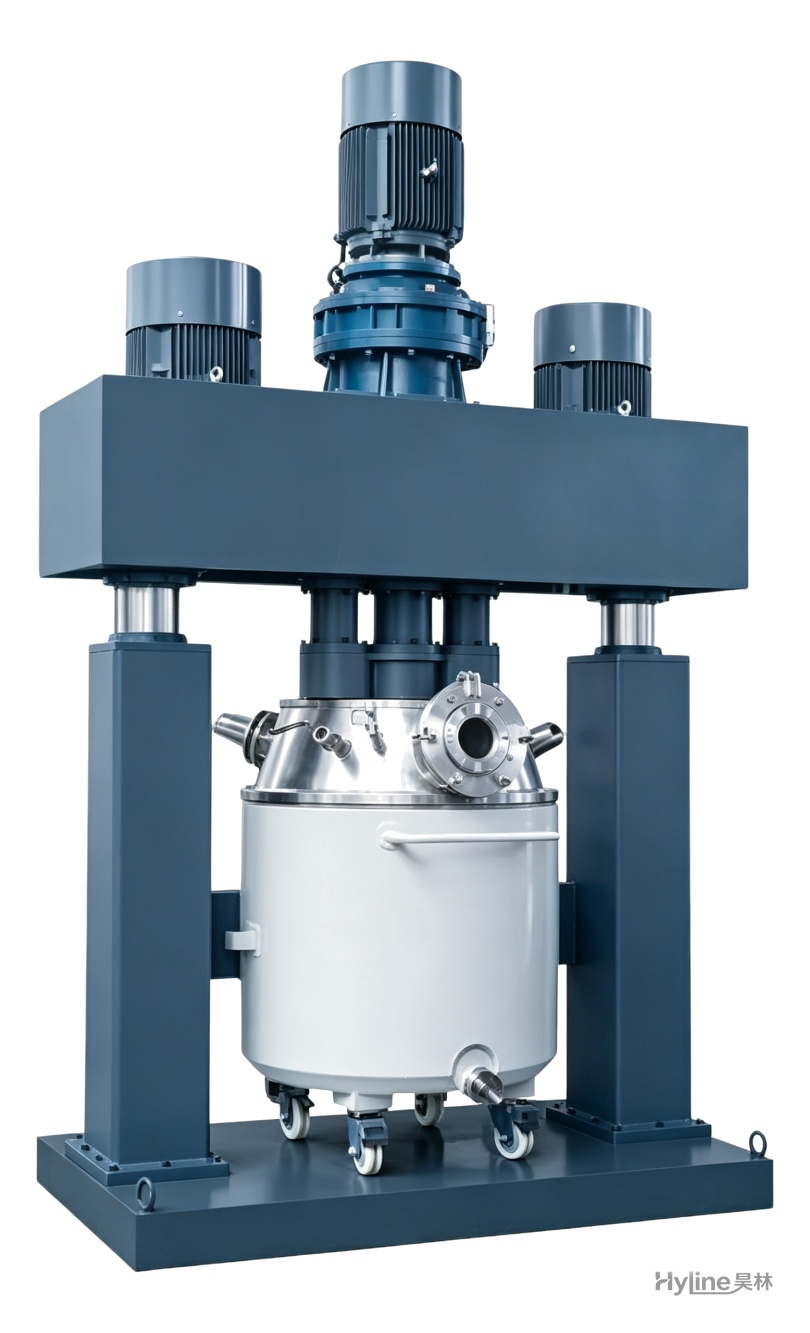
QLF Series Powerful Triple-Shaft Disperser
Two high-speed dispersers plus wall/bottom scraping create complex material flow for rapid dispersion and grinding. Handles high-viscosity pastes of 10,000-2,000,000 cps - widely used for silicone sealants, PU sealants, liquid silicone and electronic adhesives.
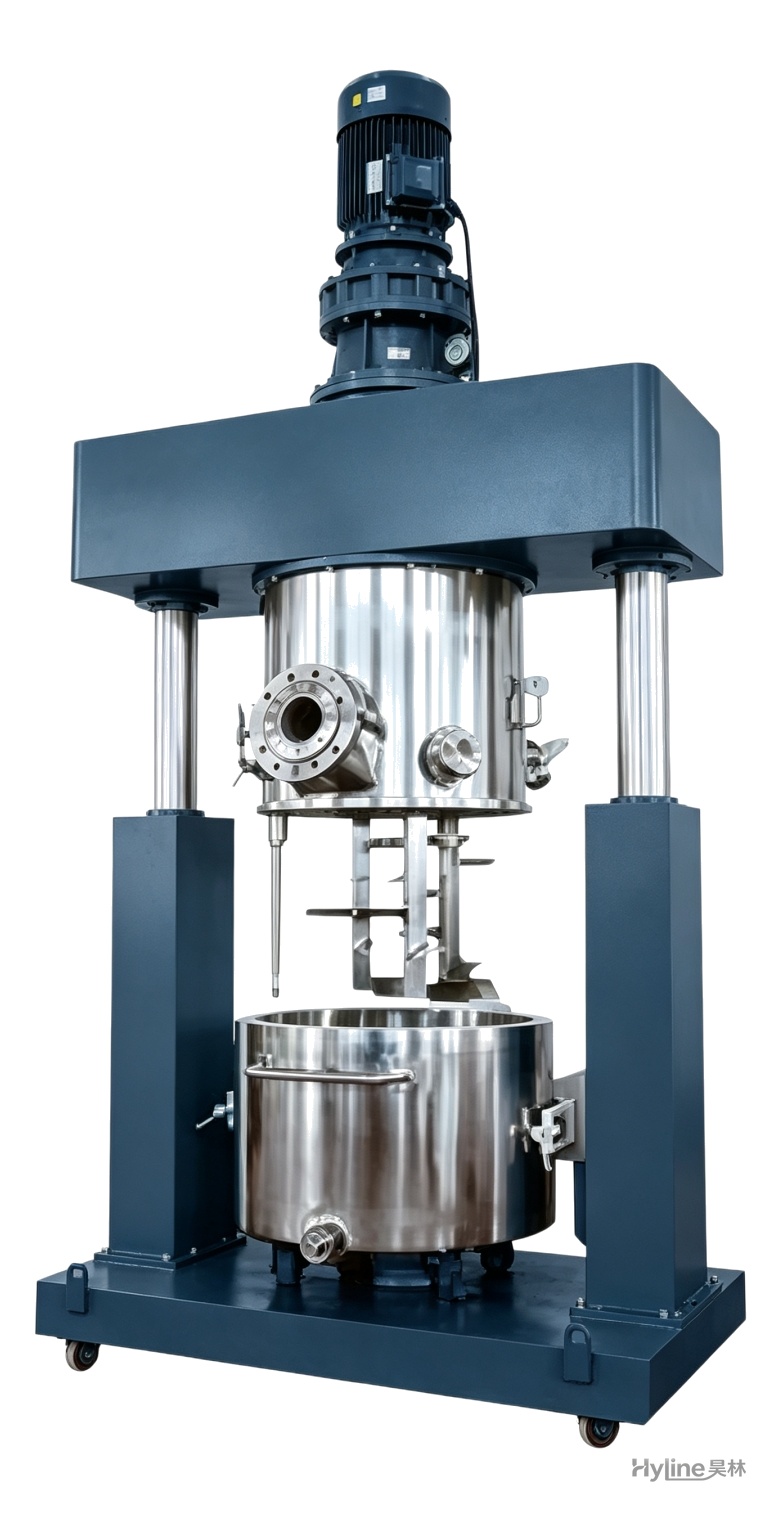
XJB Series Planetary Mixer
Planetary blades rotate and revolve simultaneously, creating complex material flow with no dead corners and easy discharge. Handles ultra-high-viscosity pastes of 10,000-8,000,000 cps for silicone, PU sealants, liquid silicone and electronic adhesives.
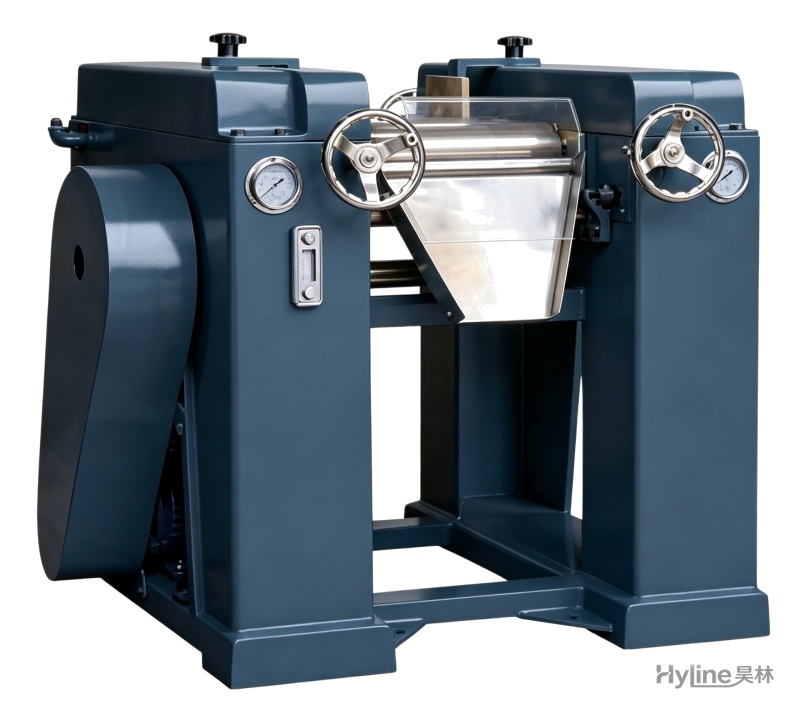
S Series Three-Roll Mill
Welded high-quality steel plate body with oil-immersed gear drive and gear handwheel. Attractive, easy to operate, long service life - especially for grinding high-viscosity products requiring fine particle size.
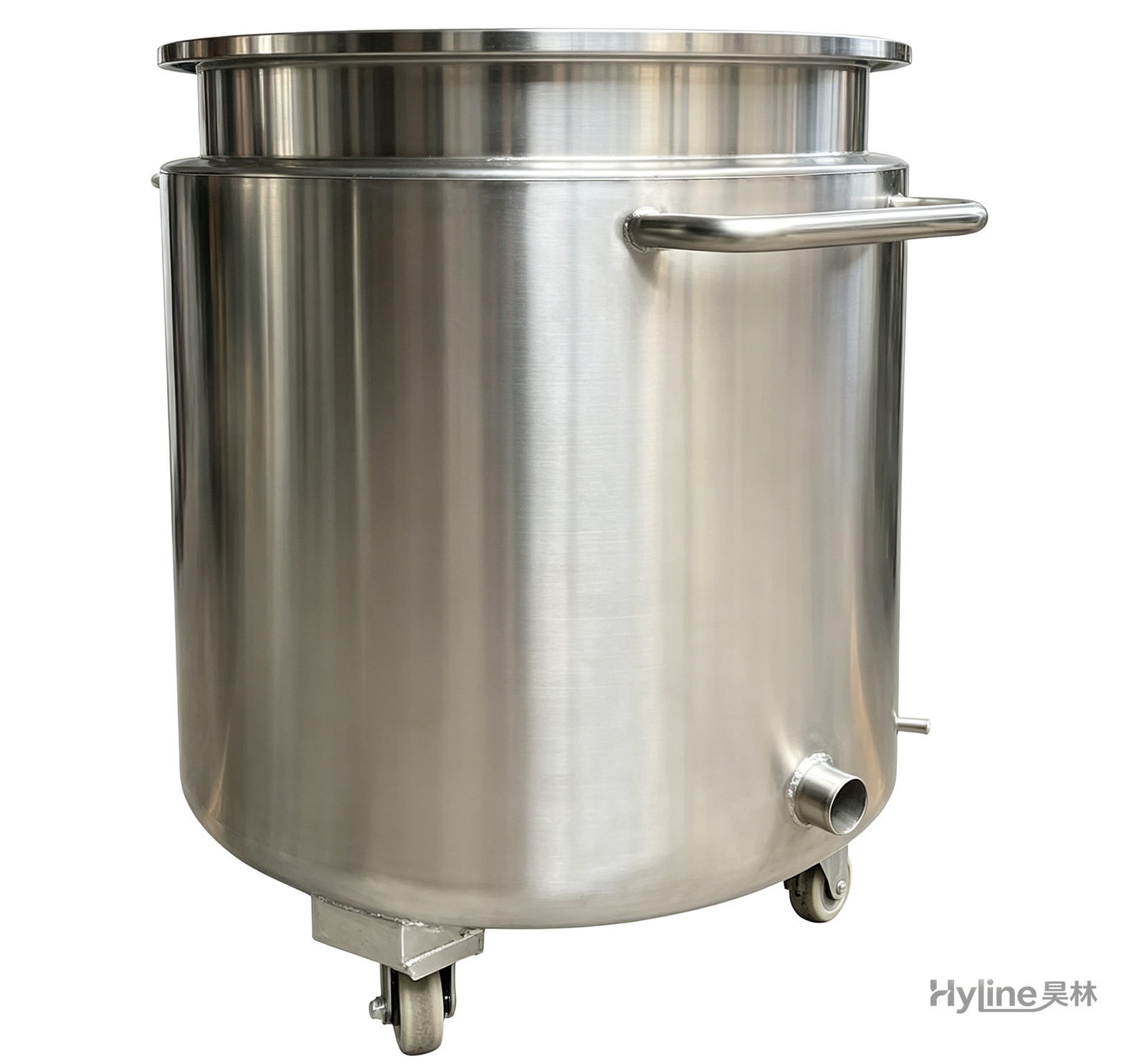
Stainless Steel Mixing Tank (Dispersion Drum)
Supporting vessel for dispersers and mixers in paints, coatings, adhesives, color slurries, inks and electronics. Available in 201/304 stainless with internal/external polishing and sloped bottom side discharge for complete draining.