
How to Set Reactor Agitator Speed? Matching Viscosity, Impeller Type and Linear Velocity
10/6/2026
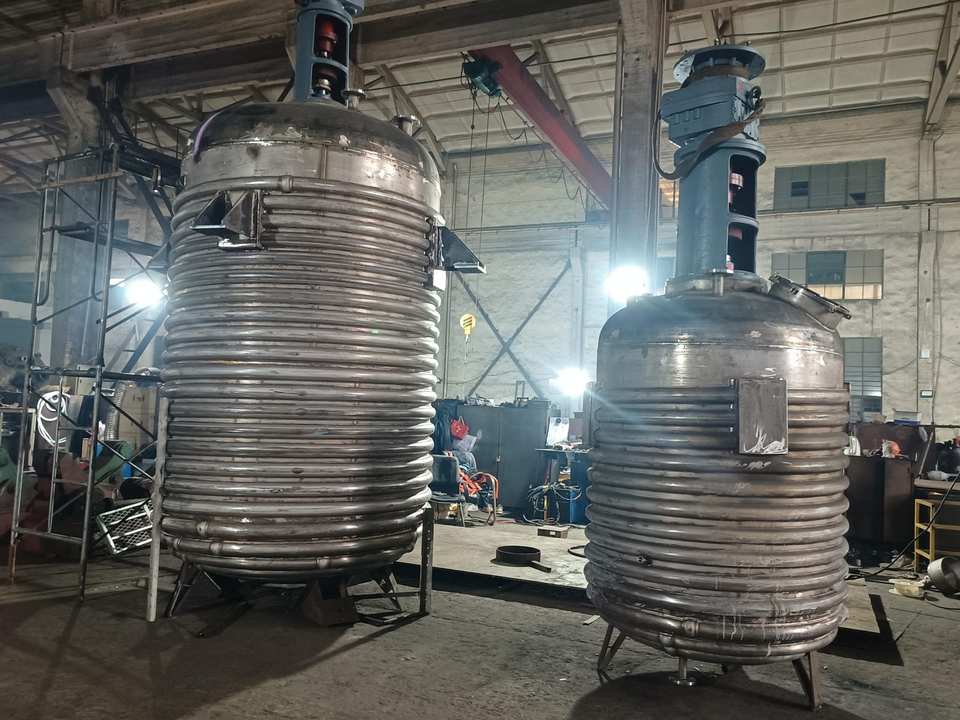
Agitator speed for a reactor is not "the faster the better". Excessively high speed increases shear heating and motor power draw, while too-low speed can cause uneven mixing and material sticking to the vessel wall. In practical selection, the agitator speed must consider material viscosity, impeller type and the target process effect together — only when the three match can you get uniform, stable agitation. This article gives a viscosity-based method for matching reactor agitator speed with impeller type.

What really determines agitator speed?
Agitator speed is set based on three levels: material viscosity determines agitation resistance and the torque required; impeller type determines the effective speed range; and the process target (mixing, suspension, emulsification, heat transfer) determines the flow field state needed. On the same reactor, the speed for low-viscosity liquid and high-viscosity paste differs completely — one set of parameters cannot cover everything.
- Material viscosity: the higher the viscosity, the greater the agitation resistance; speed should drop and torque should rise
- Impeller type: each impeller has an economical speed range, beyond which efficiency drops sharply
- Process target: uniform mixing, particle suspension and enhanced heat transfer have different speed requirements
- Vessel geometry: baffles, height-to-diameter ratio, and impeller-to-vessel diameter ratio jointly affect the flow field
Speed ranges for different viscosity materials
By material viscosity, reactor agitator speed generally follows "the higher the viscosity, the lower the speed". Low-viscosity liquids (water, solvents, thin materials) can run at higher speed; high-viscosity pastes must run slow with high torque, otherwise the impeller spins without turning the material.
| Viscosity range | Typical material | Impeller type | Speed range (typical) | Main purpose |
|---|---|---|---|---|
| Low (<1 Pa·s) | aqueous solution, solvent, thin material | paddle, turbine | 80–200 r/min | mixing, heat transfer |
| Medium (1–50 Pa·s) | resin liquid, glue, slurry | anchor, frame | 30–80 r/min | turnover, wall scraping |
| High (50–500 Pa·s) | paste, silicone, coating | ribbon, planetary | 10–30 r/min | bulk circulation |
| Ultra-high (>500 Pa·s) | sealant, kneading mass | planetary + scraper | 5–20 r/min | shaping and mixing |
The above speeds are general industry experience ranges; actual values must be re-checked against vessel diameter, impeller diameter and power.
How to match impeller type with speed?
Impeller type determines the flow pattern; speed determines the strength of that flow. Low-viscosity materials commonly use paddle or turbine impellers, with radial and axial flow alternating, suitable for fast mixing and heat transfer. Medium-viscosity materials use anchor or frame impellers, which stay close to the wall for both agitation and scraping. High-viscosity materials use ribbon impellers that push the material into bulk circulation to avoid dead zones. Ultra-high-viscosity materials usually require planetary agitation, where revolution plus self-rotation keeps the whole vessel dead-zone-free.
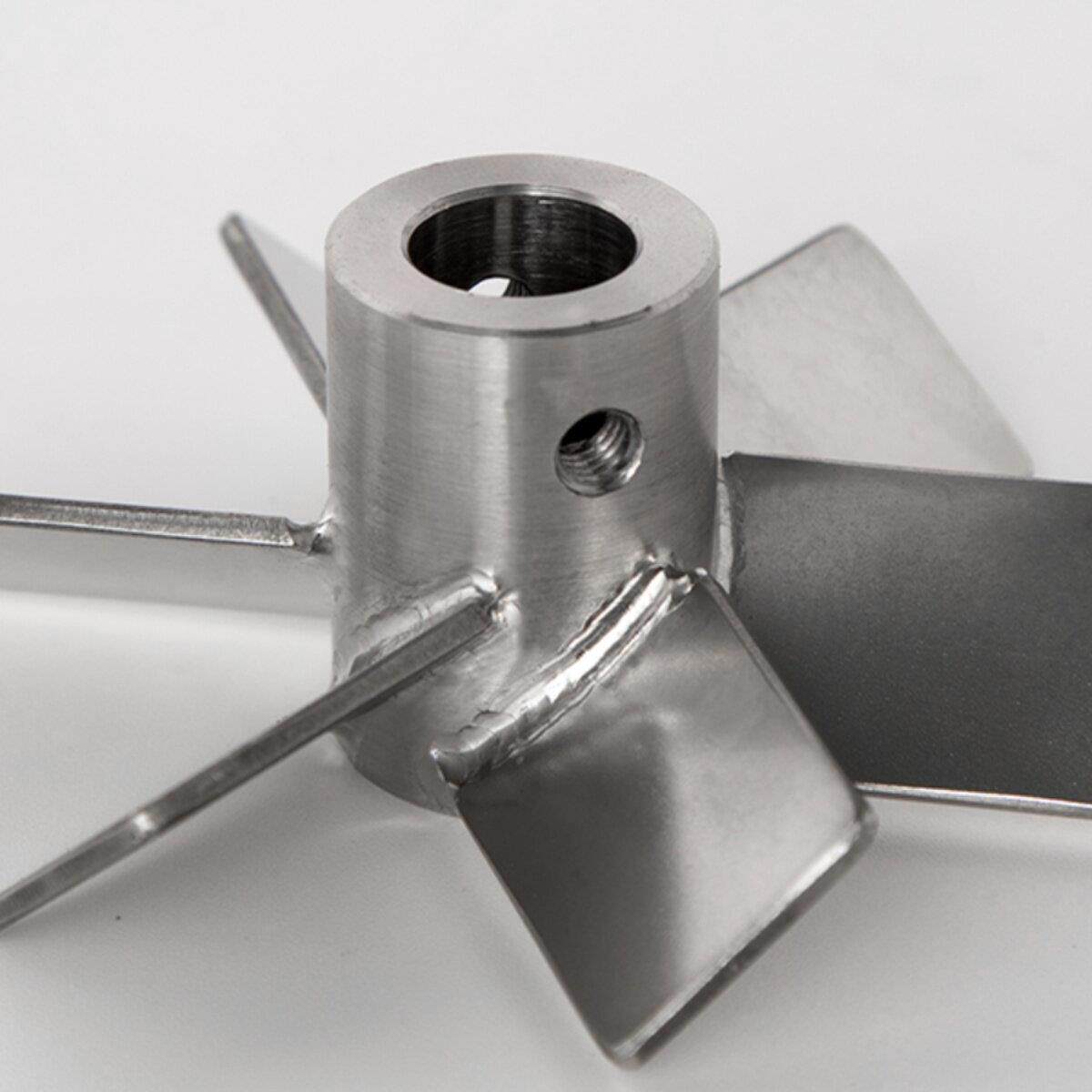
The impeller-to-vessel diameter ratio also affects speed selection. Generally the impeller diameter is 1/3 to 1/2 of the vessel diameter; a smaller ratio needs higher speed to compensate mixing capacity, while a larger ratio allows a somewhat lower speed. After fixing the impeller diameter, derive motor speed and reduction ratio from linear velocity or process speed.
How to calculate and use linear velocity?
Linear velocity is the speed at the impeller tip, calculated as linear velocity = π × impeller diameter × speed; it is a common indicator of shear intensity. Low-viscosity mixing generally uses 3–8 m/s; shear emulsification needs higher linear velocity (dispersion and emulsification can exceed 10 m/s); high-viscosity mixing uses lower linear velocity but very high torque. In selection, first determine the linear velocity required by the process target, then calculate speed from impeller diameter — this is more reliable than picking a speed directly.
The value of variable-frequency drive and process curves
Chemical reactions are rarely a single speed from start to end. In polymerization, viscosity is low in the early stage and rises later; in emulsion systems, the emulsification stage needs high shear while the ripening stage only needs gentle agitation. Variable-frequency drive lets one reactor run speed segments per the process curve: slow down in the high-viscosity stage to keep torque, speed up in the low-viscosity stage to improve mixing efficiency, while avoiding frequent start-stop shocks to the motor and reducer. It is generally recommended that the agitation system reserve variable-frequency capability, especially for multi-stage reactions and temperature-sensitive products.
Common mistakes in speed selection
The first mistake is assuming "higher speed means better mixing". Beyond the impeller's effective range, more speed mainly converts into temperature rise and power draw; mixing quality drops, and heat-sensitive materials risk degradation. The second mistake is ignoring low-speed high torque: using a high-speed small motor for high-viscosity material gives insufficient starting torque, showing up as "won't start" or "spinning without turning the material". The third mistake is mismatching impeller type and speed: using a ribbon impeller at high speed for low-viscosity material wastes energy with poor circulation efficiency.
How to check motor power and reduction ratio?
After speed is fixed, motor power and reduction ratio must still be checked against torque. Agitation torque relates to material viscosity, impeller diameter and speed — the higher the viscosity and the larger the impeller, the larger the torque. Motor power = torque × speed; high-viscosity low-speed conditions appear as "large torque, low speed", needing a large-ratio reducer with a small motor power, rather than simply a bigger motor. Generally check motor power against the maximum load condition (full charge, highest viscosity, start-up moment) with a 1.2–1.5× safety factor to avoid long-term full-load operation.
| Check item | Method (typical) | Common problem |
|---|---|---|
| Motor power | Calculated from max torque and speed, with safety factor | Insufficient power, hard to start |
| Reduction ratio | Derived from motor speed and target agitator speed | Wrong ratio, speed deviation |
| Shaft and support | Checked by torque and cantilever length | Thin shaft, runout during operation |
| Seal type | Selected by shaft diameter and speed | Mismatched mechanical seal, leakage |
Effects of speed on heat transfer and suspension
Agitator speed affects not only mixing but also heat transfer and suspension. Higher speed renews the wall liquid film faster, raising jacket heat-exchange efficiency; too-low speed leaves material near the wall moving slowly, causing local overheating or coking. For suspended-particle materials, enough speed keeps particles evenly dispersed; too-low speed lets particles settle and batches vary. Speed selection should therefore balance mixing, heat transfer and suspension, using the most demanding requirement as the constraint baseline.
Making a process speed card
Before start-up, it is recommended to make a process speed card for every reactor, recording material name, viscosity range, target process effect, corresponding speed and linear velocity, and speed adjustments for heating/cooling stages. The speed card lets operators follow a standard instead of adjusting speed by experience, reducing batch variation; when the process changes, update the speed card first, then adjust equipment parameters, keeping parameters evidence-based and batches traceable.
Process targets and linear velocity reference
Different process targets differ clearly in linear velocity requirements. In selection, first fix the linear velocity range by process target, then derive speed:
| Process target | Linear velocity range (typical) | Notes |
|---|---|---|
| Uniform mixing | 3–5 m/s | Low-viscosity liquid mixing |
| Particle suspension | 5–8 m/s | Prevent settling, keep uniform |
| Enhanced heat transfer | 3–6 m/s | Faster wall film renewal |
| Shear dispersion | 8–12 m/s | Break agglomerates, refine particles |
| High-speed emulsification | above 10 m/s | High-shear homogenization |
Linear velocity only reflects the impeller tip speed; actual effect also depends on impeller type and vessel diameter ratio, so judge them together.
Speed and batch consistency
Agitator speed directly affects batch consistency. Speed fluctuation creates mixing differences, leading to deviations in fineness, viscosity or reaction conversion between batches of the same formula. By stabilizing speed with variable-frequency drive and recording speed and current curves per batch, operators can spot abnormal batches quickly, and process engineers can optimize parameters accordingly. Speed is not "set once and done" — it is a dynamic parameter to be verified per batch and fine-tuned per process.
Common Q&A
Q: Does agitator speed have to be variable-frequency? A: Not necessarily. Mixing with a single process and stable viscosity can run at fixed speed; multi-stage reactions, materials with widely varying viscosity, or shear-sensitive products are better with variable-frequency drive for stable batch quality.
Q: In speed selection, do we set speed first or impeller first? A: Generally determine impeller type by material viscosity and process target first, then calculate speed from the required linear velocity and impeller diameter, and finally check motor power and reduction ratio.
Q: If speed is low for high-viscosity material, won't it fail to mix? A: The key is whether the impeller type matches. Ribbon and planetary impellers still drive bulk circulation at low speed; anchor impellers mainly rely on wall scraping for heat transfer. Low speed does not mean no mixing — it means proper flow from the correct impeller type.
Q: Is variable-frequency drive standard equipment? A: It depends on process needs. Multi-stage reactions or temperature-rise-sensitive products are recommended to have it, notably improving batch consistency and product quality.
Q: How often should the speed card be updated? A: After process parameter changes, material changes or equipment maintenance, review and update; generally calibrate periodically by batch verification to keep the speed card consistent with actual process.
Summary
Determining reactor agitator speed is essentially matching material viscosity, impeller type, linear velocity and process target: low viscosity high speed, high viscosity low speed with high torque; fix the impeller type first, then calculate speed; run variable-frequency drive along the process curve. Settling these parameters at the selection stage lets the reactor deliver uniform mixing, stable heat transfer and controllable batch quality after start-up, reducing rework and equipment wear.
Further reading: - Selection of mixing equipment for high-viscosity materials: from high-speed dispersers to planetary mixers - How to maintain the reactor agitation system: impeller shaft, mechanical seal and blade assembly
---
This article is compiled by Shenzhen Hyline Equipment Manufacturing Co., Ltd. (hyline.cn); all information rights belong to the original authors. Main products: stainless steel reactors, mixing tanks, storage tanks, dispersers, concentration tanks and complete chemical process lines; custom (non-standard) manufacturing supported.
Q&A from this article
Frequently asked questions and answers from this article
Agitator speed is set based on three levels: material viscosity determines agitation resis…
Related Products

Jacketed Reactor
The typical main reaction vessel in chemical production. Mixing, heating and cooling disperse and mix materials for reaction and polymerization. The jacket circulates thermal oil/steam for heating or cooling water for temperature control.
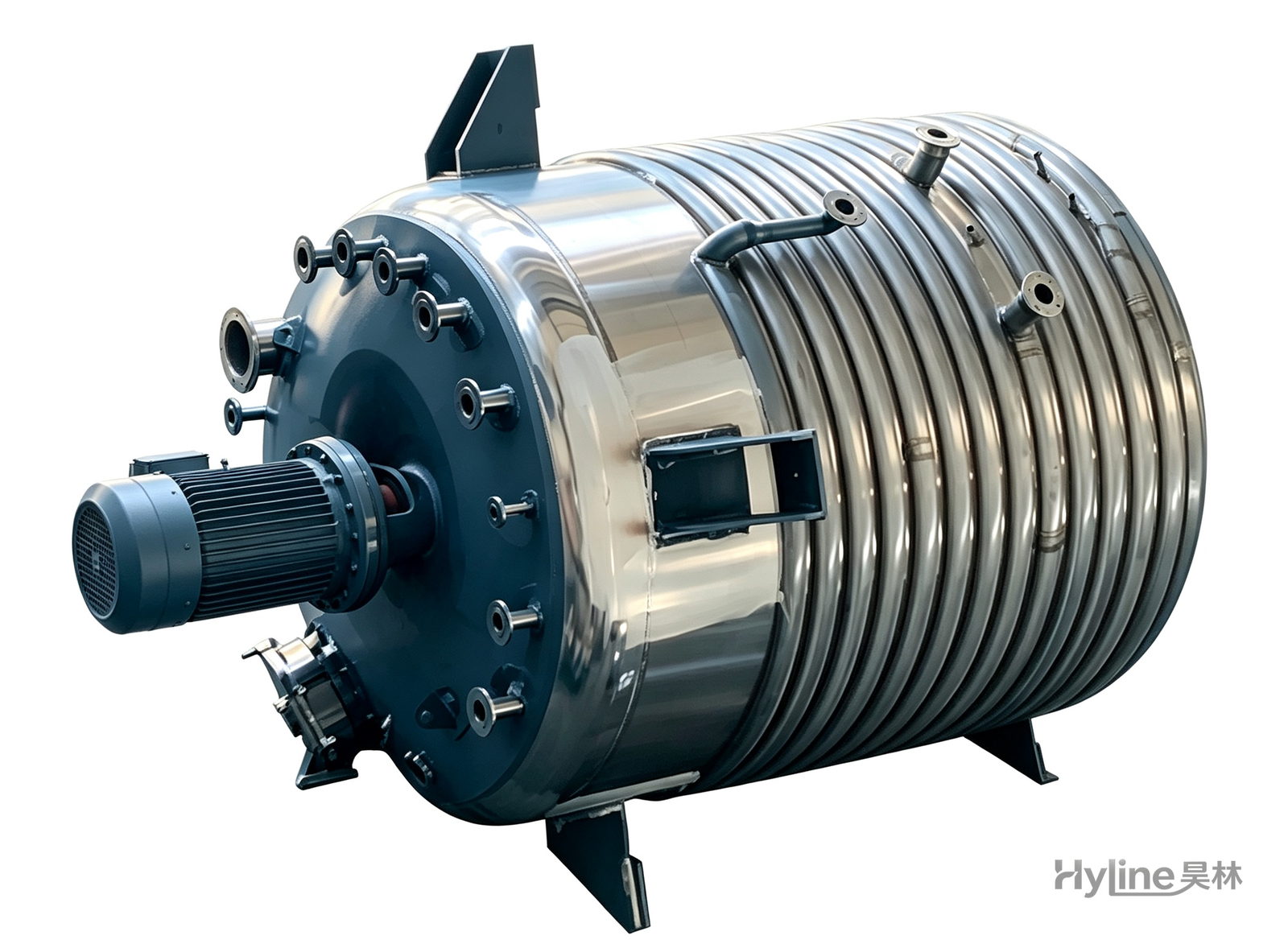
External Half-Coil Reactor
External half-pipe heating & cooling coils provide uniform, efficient heat exchange with zero material dead zones inside. Mirror-polished 304/316L stainless tank is clean and corrosion-resistant. For resin, new-energy slurry and pharmaceutical synthesis.
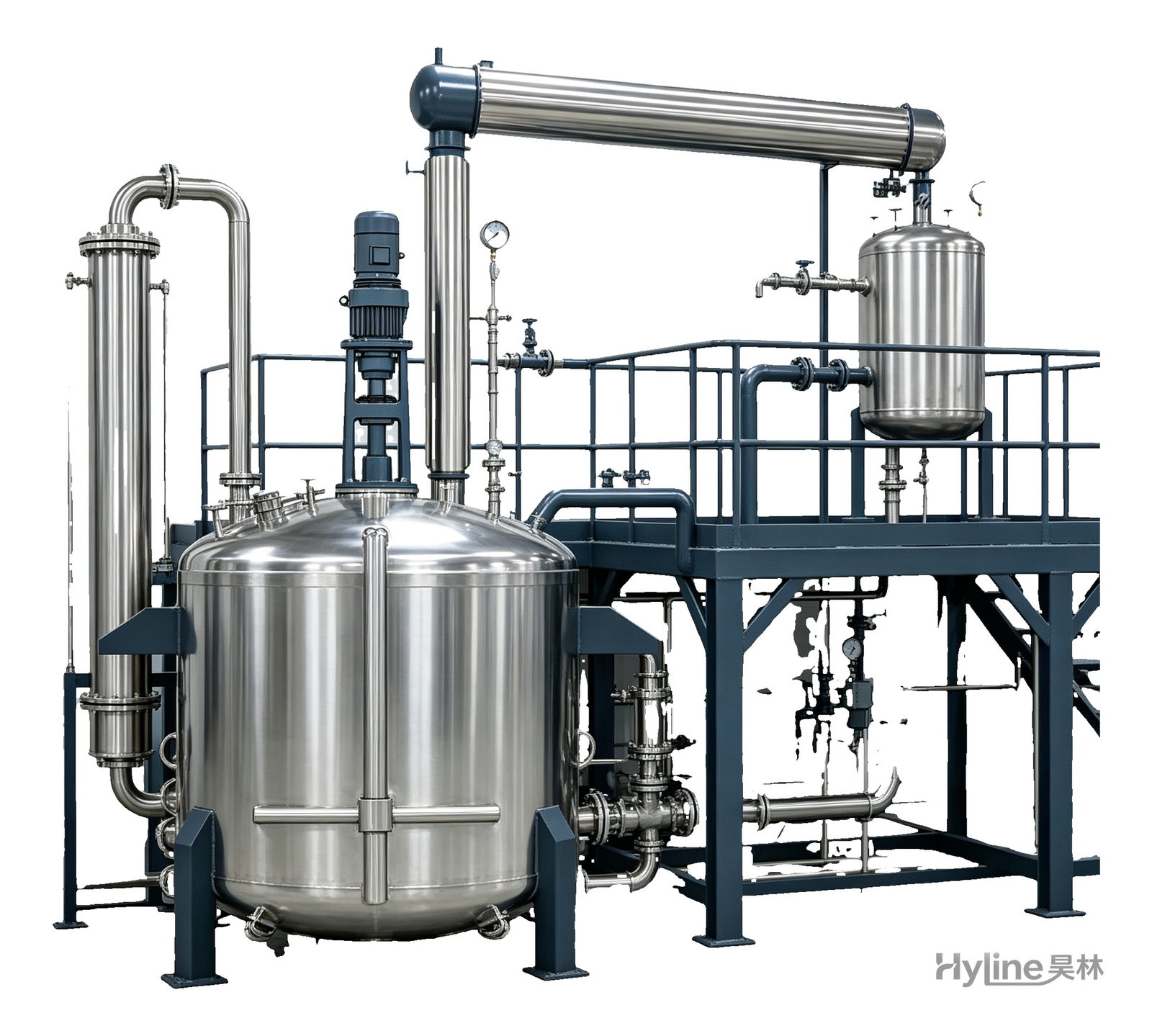
Complete Resin Production Equipment
Resin production packages built around the reactor, with vertical fractionating column, horizontal condenser and water separator for full synthesis, dehydration and reflux processes. Sizes from 300L to 30000L.