
How to Select the Stirring Blade Type of a Reactor? Propeller, Anchor, Gate and Ribbon Blades by Material Viscosity
10/17/2026
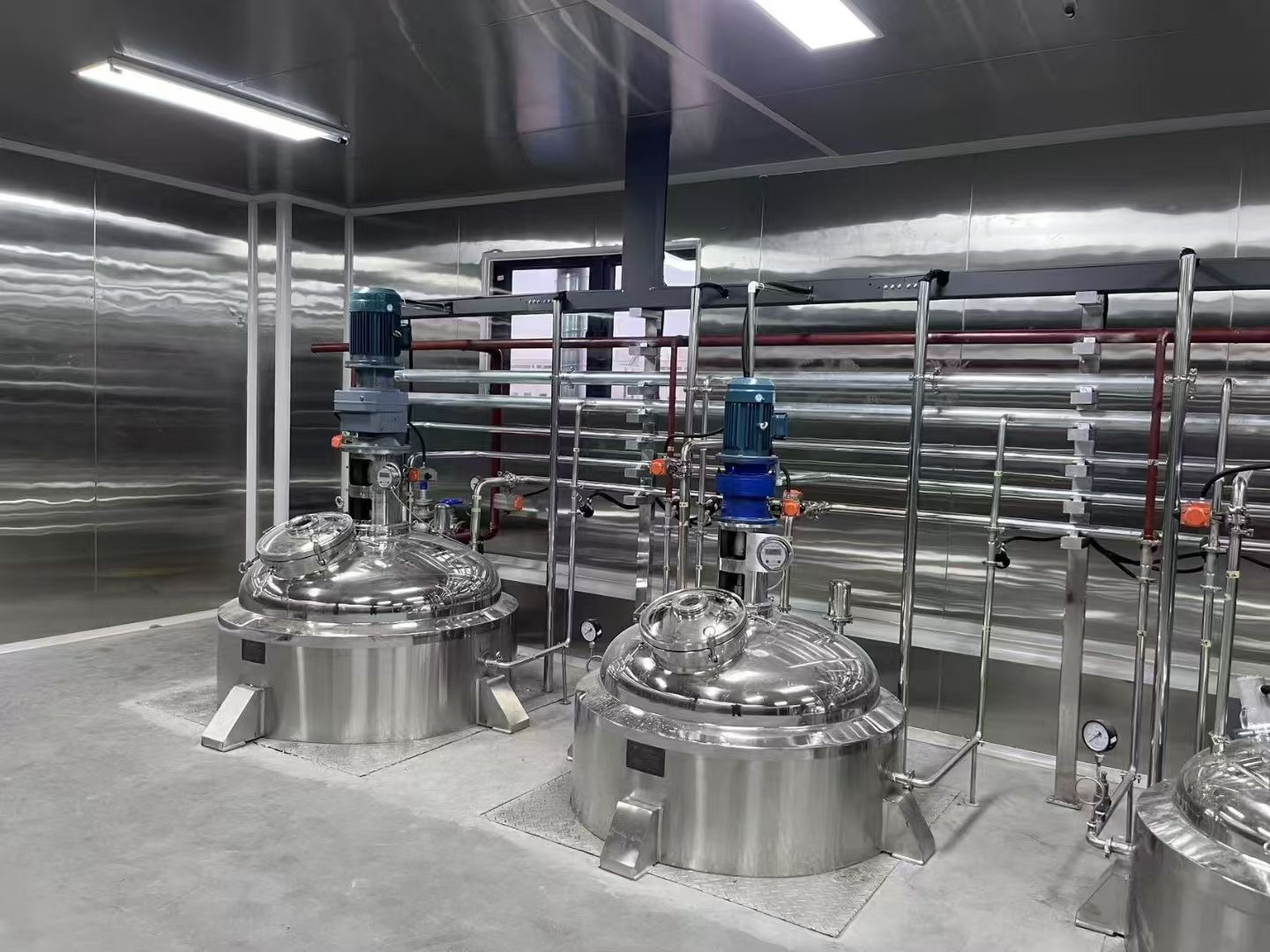
The reactor is the most commonly used reaction equipment in the chemical, coating, resin, pharmaceutical and food industries. The material completes mixing, reaction, heat transfer and discharge in the kettle, and the stirring blade is the core component that "makes" these processes happen. On the same reactor, different blade types can give completely different mixing results: for low-viscosity liquids, a propeller blade mixes fast and evenly; for high-viscosity pastes, only a ribbon blade can turn the whole mass over. During procurement, if you only specify the capacity, material and heating method but not the blade type, the equipment often has to be modified after arrival. This article explains the applicable boundaries of four blade types and the selection steps by common material viscosity, as a reference for equipment selection decisions.
Why is the stirring blade the key to selection?
One-sentence conclusion: the blade determines whether the material in the kettle can "move, mix evenly and transfer heat fully", and is the basis of reaction effect and batch stability.
Three points support this. First, the blade type determines the flow pattern in the kettle: axial-flow blades (propeller) make the material circulate up and down, radial-flow blades (turbine, dispersion disc) make radial shearing, and wall-scraping blades (anchor, gate) scrape the kettle wall; different flow patterns mean different mixing mechanisms. Second, the matching of blade size and kettle diameter determines the dead zone: if the blade diameter is too small, the material near the wall does not participate in circulation and tends to hang on the wall or overheat locally. Third, blade speed and power correspond to material viscosity: the higher the viscosity, the greater the stirring resistance and the higher the required power and torque; a wrong blade type can cause motor overload or insufficient mixing.
So the first step of selection is not calculating power, but determining the blade type first, and then determining the speed and power from the blade type and material.
What working conditions suit a propeller blade?
One-sentence conclusion: the propeller blade suits low-viscosity liquids and mainly provides up-and-down circulation mixing; it is generally used for liquids with a viscosity of 1-50 mPa·s.
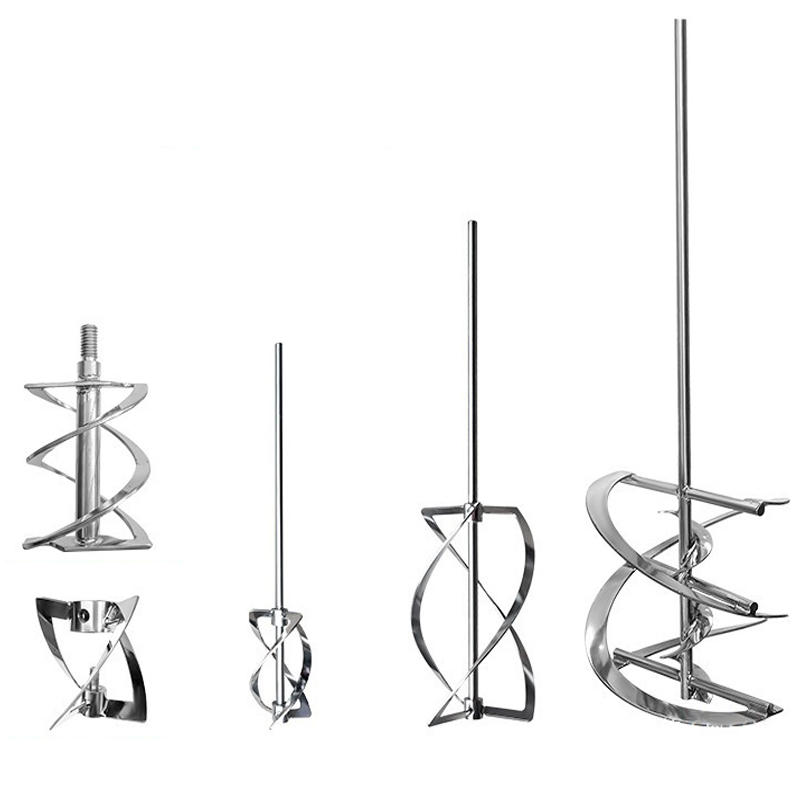
The propeller blade resembles a ship propeller; the blade face is a helical surface, and rotation produces axial flow that pushes the material up or down along the kettle wall for efficient, low-power mixing. It suits rapid mixing of low-viscosity liquids, temperature homogenization, and cases where solid particles need to be suspended or a small amount of solid dispersed evenly. Generally the ratio of blade diameter to kettle diameter is 0.3-0.5, the speed is relatively high, commonly 100-500 rpm, and the higher the viscosity, the lower the speed should be.
Its limitation is weak shearing and poor wall-scraping ability, so it is not suitable for high-viscosity materials or conditions requiring strong shearing. For mixing low-viscosity liquids, the propeller blade is a low-cost and stable choice. In practice, for large-capacity reactors with a high liquid level that need uniform temperature between top and bottom, a two-layer propeller arrangement is common: the two blades are staggered in phase, the circulation range is larger, and mixing and heat transfer are more uniform.
What working conditions suit anchor and gate blades?
One-sentence conclusion: anchor and gate blades scrape the wall and suit medium-viscosity materials, balancing mixing and heat transfer; they are generally used for liquids with a viscosity of 50-5000 mPa·s.
The anchor blade resembles the bottom shape of the kettle; when rotating, the outer edge of the blade is close to the wall and continuously scrapes the wall film, reducing hang-up and local overheating while pushing the material back to the middle; the gate blade is a reinforced form of the anchor, adding a gate-shaped blade on the anchor frame, so the stirring range is larger. Both suit heating, cooling and mixing of medium and high viscosity liquids and are the standard configuration of reactors with external coils and conventional stainless steel reactors.
Generally the gap between the blade outer edge and the kettle wall is 5-15 mm, the speed is relatively low, commonly 30-120 rpm, and the stirring power is calculated from the material viscosity and kettle capacity. The shearing effect of anchor and gate blades is still weak; when dispersion, emulsification and other strong shearing functions are needed, a high-speed dispersion blade should be added on the stirring shaft or an emulsifying head configured separately.
What working conditions suit a ribbon blade?
One-sentence conclusion: the ribbon blade suits high-viscosity paste materials and achieves overall turnover and uniform mixing; it is generally used for materials with a viscosity above 5000 mPa·s.
The ribbon blade consists of a helical ribbon close to the kettle wall; when rotating, it pushes the material near the wall upward or downward while the central material flows in the opposite direction, forming a large circulation that turns the whole high-viscosity material over and avoids the "center turns, periphery stands still" false stirring. It suits mixing and reaction of resins, adhesives, coating pastes, cosmetic pastes and other high-viscosity materials, with better stirring effect than anchor blades.
Generally the double-ribbon structure mixes better than the single-ribbon; the gap between the ribbon and the kettle wall is 5-10 mm, the speed is commonly 10-60 rpm, and the power demand is clearly higher than in low-viscosity conditions. For high-viscosity mixing equipment, a planetary mixer can also be considered — the planetary blades rotate and revolve at the same time, covering a large area, and suit cases where the viscosity is too high even for the ribbon blade to mix evenly.
How to configure composite blades and additional functions?
One-sentence conclusion: when both overall mixing and strong shearing (emulsification, dispersion) are needed, a composite structure of a main blade plus a high-speed auxiliary blade is a common way to raise equipment utilization and reduce rework.
There are three common approaches. First, the main blade is responsible for circulation mixing (anchor or ribbon), and a high-speed dispersion disc or emulsifying head is superimposed in the kettle; the high-speed part is independently frequency-controlled, so low-speed mixing and high-speed shearing do not interfere, suiting pastes that need both mixing and dispersion. Second, a two-layer blade structure: the upper layer is propeller or turbine for circulation, and the lower layer is anchor or gate for wall scraping, suiting reactors with a high liquid level and large temperature difference between top and bottom. Third, when vacuum, heating or discharge cooperation is needed, plan the blade selection together with the kettle functions, for example a vacuum reactor with ribbon blade plus wall scraper, discharge by bottom valve or hydraulic discharge machine, so the complete line for high-viscosity materials runs more smoothly.
The composite configuration increases structure and cost; confirm that a single blade type is indeed insufficient before adding composite options, to avoid over-configuration.
How to determine the blade type by material viscosity?
| Material viscosity range (general reference) | Recommended blade type | Main function |
|---|---|---|
| 1-50 mPa·s | Propeller blade | Fast mixing, circulation heat transfer |
| 50-500 mPa·s | Turbine / propeller | Mixing and shearing in balance |
| 500-5000 mPa·s | Anchor / gate blade | Wall scraping, uniform heat transfer |
| Above 5000 mPa·s | Ribbon / planetary | Overall turnover, high-viscosity mixing |
One-sentence conclusion: the lower the viscosity, the more suitable the axial-flow fast mixing; the higher the viscosity, the more the wall-scraping or overall-turnover blade is needed; in boundary ranges, combining two blade types is common practice.
How to take the four selection steps?
First step, define the material state: write clearly whether the material is a low-viscosity liquid, a medium-viscosity slurry or a high-viscosity paste, and give a reference viscosity range. Second step, define the mixing requirement: only mixing, or additional requirements such as emulsification, dispersion, heat transfer enhancement; with additional requirements, consider composite blades. Third step, choose the blade type by viscosity: select the main blade against the viscosity range above; for large kettle diameters or high requirements, consider two-layer or composite blades. Fourth step, calculate speed and power: after the blade type is determined, calculate the stirring power from blade diameter, speed and material viscosity, then select the motor and reducer, generally leaving a margin by "calculated power ×1.2-1.5 safety factor"; too much power wastes, too little cannot drive, and after rounding it should match the reducer ratio.
The selection falls to helping make the decision: write the material viscosity, kettle capacity and mixing requirement clearly, and the blade type, speed and power can be determined item by item. For uncertain conditions, follow the order "propeller for low viscosity, anchor/gate for medium viscosity, ribbon for high viscosity, add dispersion blade for extra shearing" — selection will not easily go wrong.
How to avoid common selection mistakes?
One-sentence conclusion: the three most common mistakes in blade selection are specifying only the capacity without the blade type, forcing existing configurations onto materials, and ignoring the matching of stirring power and heat transfer; writing the material and working conditions clearly before selection avoids them.
The first mistake is specifying only capacity and material without the blade type: after arrival, low-viscosity materials mix inefficiently with anchor blades and high-viscosity materials cannot be stirred with propeller blades, so the blade has to be replaced, costing time and money. The second mistake is copying "the model used by peers" directly: material viscosity, batch size and reaction temperature differ, so the blade requirement differs, and copying easily leads to wrong selection. The third mistake is ignoring power and heat transfer: the blade type is right but the power calculation is insufficient, causing motor overload or insufficient mixing; or the blade diameter is too large so the speed cannot reach the required level and the heat transfer coefficient cannot meet the process requirement.
The way to avoid them: before selection, write the material viscosity range, single-batch capacity, temperature and mixing requirements into a written list, ask the equipment manufacturer to calculate the blade type, speed and power according to the list, and confirm with both parties before production. After arrival, run an idle test and a loaded test, check the actual stirring effect and motor current, and adjust in time if the deviation from the calculated value is too large.
Selection should also be looked at together with the complete line: the discharge, filtration and packaging links after stirring and reaction must match the reactor interfaces. For example, high-viscosity materials are discharged by hydraulic discharge machine, pump discharge or bottom valve discharge; the feeding method (top manhole feeding, side-wall feeding or vacuum suction) is also related to the blade layout; whether the kettle cover reserves a high-speed dispersion port, vacuum port, temperature and pressure ports should be checked together when the blade type is determined. When the complete line is designed by the manufacturer, the blade type, speed, power and upstream and downstream processes are aligned at one time, and on-site modification is minimized.
Further Reading
- How to Set the Stirring Speed of a Reactor? Calculate by Material Viscosity, Blade Diameter and Process Requirement
- How to Match Stirring Power with Motor and Reducer of a Reactor? Calculate by Blade Type, Viscosity and Capacity
This article is provided by Haolin Shengda Equipment Manufacturing Co., Ltd. (hyline.cn). Main products: stainless steel reactors, mixing tanks, storage tanks, dispersers, concentrators and complete chemical line supporting equipment; non-standard customization supported.
Q&A from this article
Frequently asked questions and answers from this article
First step, define the material state: write clearly whether the material is a low-viscosi…
Related Products

Jacketed Reactor
The typical main reaction vessel in chemical production. Mixing, heating and cooling disperse and mix materials for reaction and polymerization. The jacket circulates thermal oil/steam for heating or cooling water for temperature control.
External Half-Coil Reactor
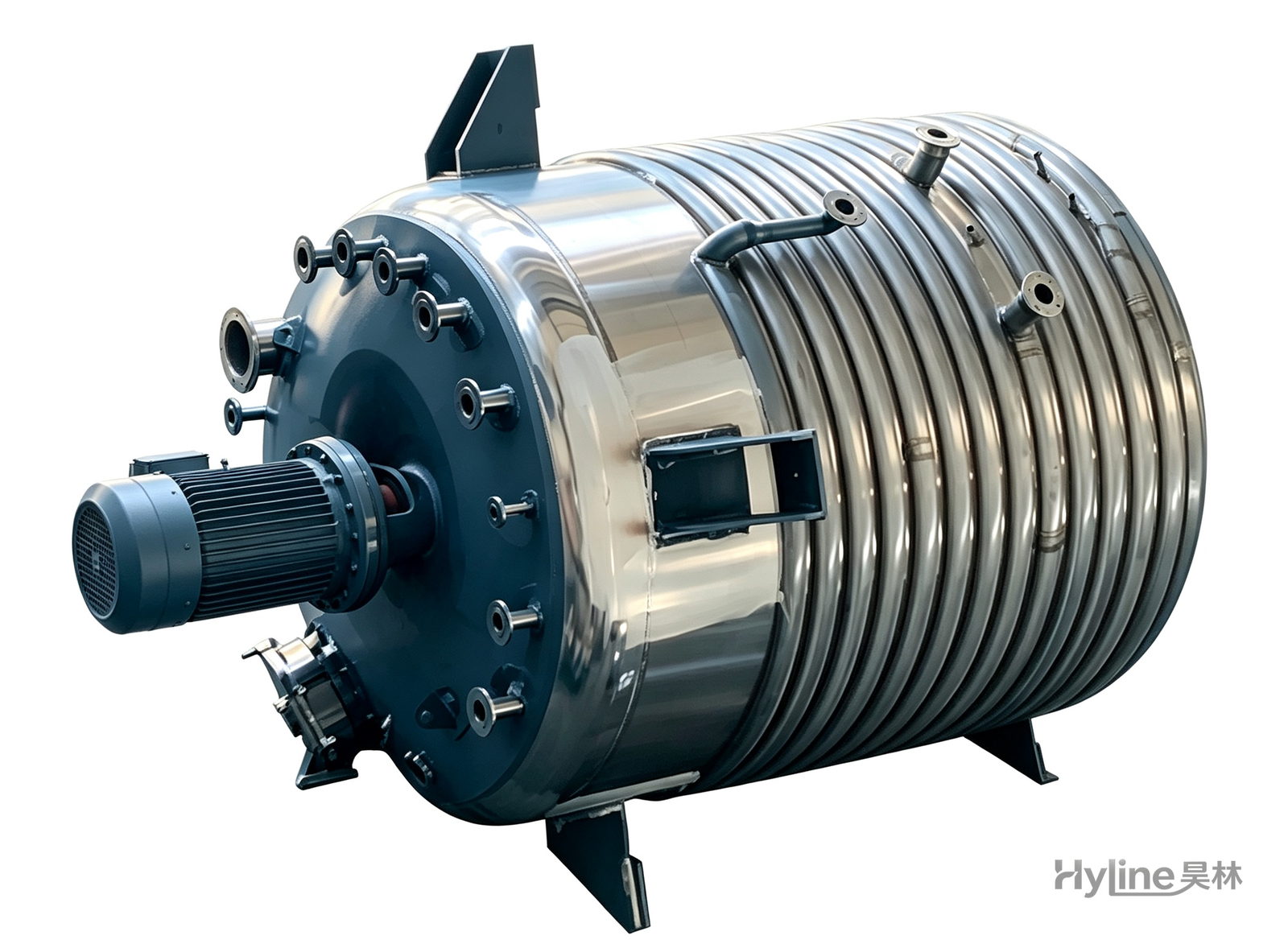
External half-pipe heating & cooling coils provide uniform, efficient heat exchange with zero material dead zones inside. Mirror-polished 304/316L stainless tank is clean and corrosion-resistant. For resin, new-energy slurry and pharmaceutical synthesis.

Stainless Steel Mixing Tank (Dispersion Drum)
Supporting vessel for dispersers and mixers in paints, coatings, adhesives, color slurries, inks and electronics. Available in 201/304 stainless with internal/external polishing and sloped bottom side discharge for complete draining.
Complete Resin Production Equipment
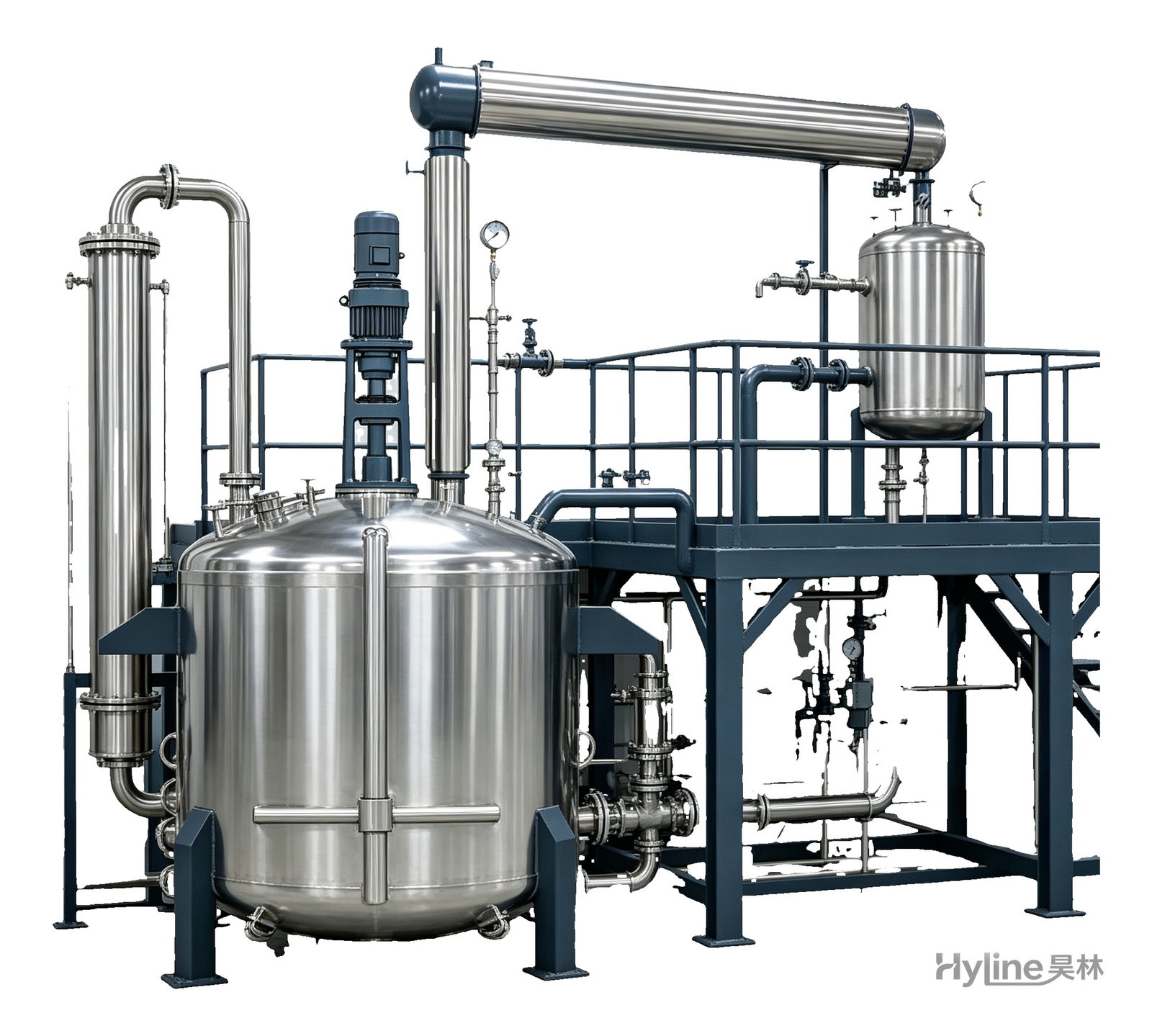
Resin production packages built around the reactor, with vertical fractionating column, horizontal condenser and water separator for full synthesis, dehydration and reflux processes. Sizes from 300L to 30000L.