
How to Choose Stainless Steel Storage Tank Heads? Elliptical, Dished, Conical and Flat Bottoms by Medium and Pressure
10/11/2026
How to Choose Stainless Steel Storage Tank Heads? Elliptical, Dished, Conical and Flat Bottoms by Medium and Pressure
On a storage tank purchase order, many people only write volume and material, leaving the head type blank or casually writing "elliptical head". But choosing the head correctly directly affects pressure capacity, discharge smoothness and cleaning difficulty. Conclusion first: the head is decided by pressure and structure — use elliptical heads for pressurized or large atmospheric tank tops, dished heads for higher pressure with tight space, conical bottoms for concentrated bottom discharge and residue removal, and flat bottoms for small-volume, atmospheric, easy-manufacturing cases; the bottom is also decided together with discharge method and medium viscosity. This article explains the applicable boundaries and configuration points of each head type.
### Why is the head worth separate selection?
The head is not just a "lid" of the tank; it does three jobs: withstand the stress caused by internal pressure and temperature, provide enough rigidity and deformation resistance, and work with the bottom structure to determine whether discharge is clean. For the same tank volume, the material, processing and cost differ visibly between an elliptical head and a conical bottom, and pressure capacity is not in the same order of magnitude. For stainless steel storage tanks, the head type also affects internal wall cleaning: fewer dead corners is better, and the weld position and fillet radius between head and shell are related to cleanliness. The selection order is generally: decide working pressure and medium first, then the top head and bottom structure, and finally calculate wall thickness and dimensions.
### What duty suits elliptical heads?
The elliptical head is the most common head type for pressure vessels and storage tanks, featuring uniform stress, strong pressure capacity and mature processing. It is generally suitable for pressurized tanks, vacuum tanks and tanks designed to pressure vessel standards, such as tanks with working pressure above 0.1 MPa or requiring vacuum operation. The standard elliptical head has a 2:1 major-to-minor axis ratio, with good pressure capacity, high material utilization and relatively controllable cost, so most industrial storage tank tops default to it. One point to be clear: choosing an elliptical head for an atmospheric tank is not waste — during vacuum operation, suction cleaning, the tank interior forms negative pressure, and the elliptical head resists negative pressure far better than a flat bottom and flat cover, which is also why many atmospheric tanks choose elliptical heads.
### How do dished and elliptical heads differ?
Dished heads (dished with a knuckle) are simpler to process and cheaper, but their stress distribution is not as uniform as elliptical heads. They are generally used for medium-low pressure, smaller volumes, or cost-sensitive scenarios, such as tops of small dosing tanks and buffer tanks. The judging method is simple: at the same pressure and diameter, the transition zone and knuckle of a dished head have stress concentration, requiring thicker plate to reach the same pressure capacity as an elliptical head; so at high pressure, a dished head often turns out not to save money — it only saves processing effort. Industry practice: for low-pressure small tanks below 0.1 MPa, dished heads are acceptable; above this pressure or for larger diameters, going straight to elliptical heads is more reliable, avoiding repeated rework of thick plate and transition zones.
### What duty suits conical bottoms?
A conical bottom (conical head) is a structure "born for discharge": the cone lets material concentrate to the bottom outlet by gravity, with thorough discharge and little residue. It is generally suitable for cases requiring complete emptying: viscous materials, slurries with solid particles, and processes that must be fully emptied between batches. The cone angle matters: generally take 60 to 90 degrees; the more viscous the material and the more it relies on gravity flow, the smaller (steeper) the cone angle should be; viscous materials can also be fitted with a jacketed cone bottom for heating, lowering viscosity and accelerating flow. The cost of a conical bottom is height space and higher fabrication than a flat bottom, so in tank selection it is the "discharge-first" choice, preferred when cleanliness and complete emptying are required.
### When to use flat-bottom tanks?
Flat-bottom tanks are the simplest structure and lowest cost, generally used for atmospheric, small-volume, discharge-insensitive cases, such as small dosing tanks, transfer tanks and water treatment tanks. Flat-bottom tanks have two shortcomings to note: first, the bottom corner is prone to material accumulation and incomplete discharge, unsuitable for viscous materials and processes requiring complete emptying; second, weak pressure capacity — only for atmospheric or low negative pressure, not for obvious positive pressure. If site space is tight, budget limited, and the material is low-viscosity water or solvent, a flat-bottom tank is a reasonable choice; but once high viscosity, cleanliness, complete emptying or vacuum is involved, switch to a conical bottom or an elliptical head plus conical bottom combination rather than leaving cleaning and emptying hazards to save cost.
| Head type | Pressure capacity | Discharge completeness | Fabrication cost | Typical use |
|---|---|---|---|---|
| Elliptical head | Good (pressure/vacuum) | Fair | Medium | Pressurized/vacuum tank tops |
| Dished head | Medium (low pressure) | Fair | Medium-low | Small dosing/buffer tanks |
| Conical bottom | Medium | Good (thorough) | Medium-high | Viscous materials, slurry tanks |
| Flat bottom | Weak (atmospheric only) | Poor (accumulation) | Low | Low-viscosity transfer/water tanks |
### How to design the bottom outlet and emptying?
After the head is decided, the bottom outlet design follows. Generally the outlet of a conical-bottom tank opens at the lowest point of the cone, facing down, with a ball or butterfly valve; for cases requiring complete emptying, keep the outlet pipe short and straight, avoiding elbows that hold material; for viscous materials, fit a jacketed cone bottom or add insulation to prevent the material near the outlet from cooling and solidifying. If a flat-bottom tank outlet opens on the side, a residue layer remains at the bottom, and mixing or cleaning must account for it; high-cleanliness duty (food, pharma) generally requires the bottom outlet to be as close as possible to the lowest point of the tank bottom, with rounded internal transitions and no dead corners. The sealing material of the outlet valve must match the medium: PTFE-lined ball valves for corrosive media, hygienic quick-install butterfly valves for food-grade media, and fire-rated valves for flammable media.
### What do vacuum and negative-pressure duty require of the head?
Head selection for vacuum tanks is stricter than for atmospheric tanks, because under negative pressure the shell is under external pressure, and buckling risk deserves more attention than internal pressure. Generally both the top and bottom of vacuum tanks should use elliptical heads, whose external-pressure stability and rigidity are much better than flat bottoms and flat covers; large-diameter vacuum tanks must also verify wall thickness and stiffening rings by external-pressure calculation, not simply follow atmospheric tank wall thickness. In vacuum pumping, material concentration, and vacuum drying, the internal pressure may reach -0.09 MPa; head-to-shell welds must be full penetration with NDT, and openings such as manholes, sight glasses and nozzles need individual reinforcement. One reminder: head selection for vacuum tanks is recommended to follow pressure vessel codes with a manufacturer holding the corresponding fabrication qualification — do not make do with atmospheric tank standards.
### How is the head interior made for clean duty?
For food, pharma and fine chemical clean storage tanks, the interior treatment and structure of the head are equally important. Generally polish the interior to Ra0.4–0.8 μm, grind head-to-shell welds smooth with fillet transitions, leaving no weld slag and oxides; minimize dead corners at the head-to-shell joint, and stagger openings such as manholes, cleaning balls and level gauges so CIP cleaning covers them. A practical experience: the internal surface after head forming may retain stretching marks and micro-cracks; pickling and passivation removes surface oxides and forms a passive film, helping both corrosion resistance and cleanliness; for clean-duty tanks, specify pickling and passivation when purchasing the head and check surface condition at acceptance.
### How do material and wall thickness follow the head?
Head material is generally the same as the shell: 304 or 316L stainless steel; for chloride-containing or strongly corrosive media use 316L, decided by medium parameters; wall thickness is calculated by working pressure, tank diameter and head type — the elliptical head can be the same or slightly thinner than the shell, while a conical bottom may be slightly thicker due to its stress characteristics. Calculation generally uses design pressure (1.05–1.1 times working pressure) and design temperature; opening reinforcement and nozzle wall thickness are also calculated. A practical note: heads are formed parts, and material properties relate to plate rolling direction; confirming the material certificate and thickness negative tolerance at purchase, plus spot thickness checks after fabrication, are two practical gates at acceptance.
### Summary
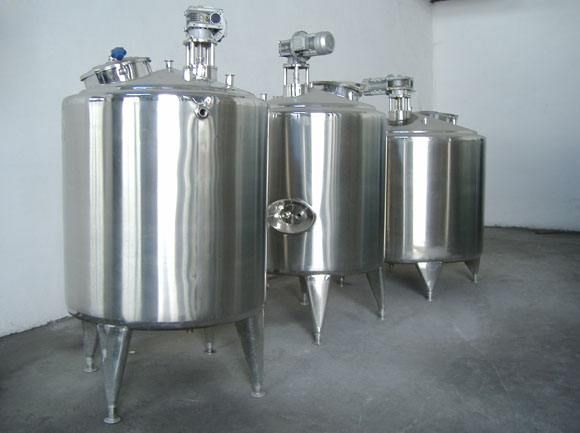
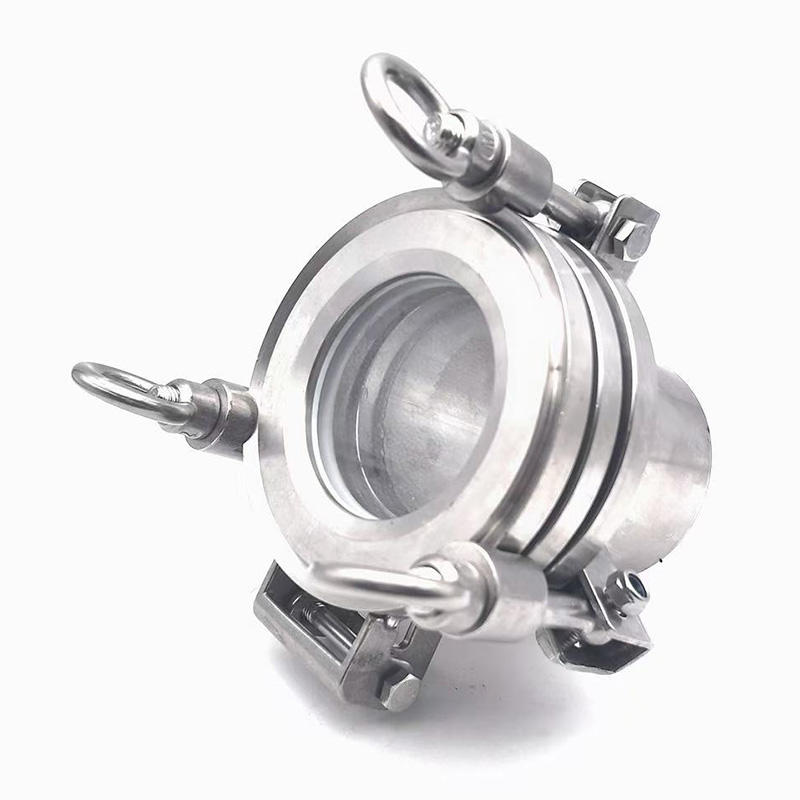
The head selection order is: decide working pressure and medium first, then the top head and bottom structure, calculate material and wall thickness, and finally fit outlet and cleaning design. Pressurized and vacuum duty prefer elliptical heads, low-pressure small tanks can use dished heads, viscous materials needing complete discharge use conical bottoms, and only atmospheric low-viscosity small tanks use flat bottoms; clean and corrosive duty needs separate control of interior treatment and material. When purchasing a storage tank, specify working pressure, medium, discharge method and clean grade clearly, and let the manufacturer verify wall thickness and fabrication by head type, so the equipment passes acceptance on first arrival. Below are real photos of a storage tank group and manhole/sight glass; the actual state of tank-top heads and bottom structures can be referenced.

Further reading: - How to choose stainless steel storage tanks? Vertical, horizontal and insulated tanks by duty for volume and accessories - How to choose stainless steel storage tanks by stored medium? Tank type and accessories for corrosive, flammable and food-grade media
This article is compiled by Shenzhen Hyline Equipment Manufacturing Co., Ltd. (hyline.cn); all information rights belong to the original authors. Main products: stainless steel reactors, mixing tanks, storage tanks, dispersers, concentration tanks and complete chemical process lines; custom (non-standard) manufacturing supported.
Q&A from this article
Frequently asked questions and answers from this article
The elliptical head is the most common head type for pressure vessels and storage tanks, f…
Related Products
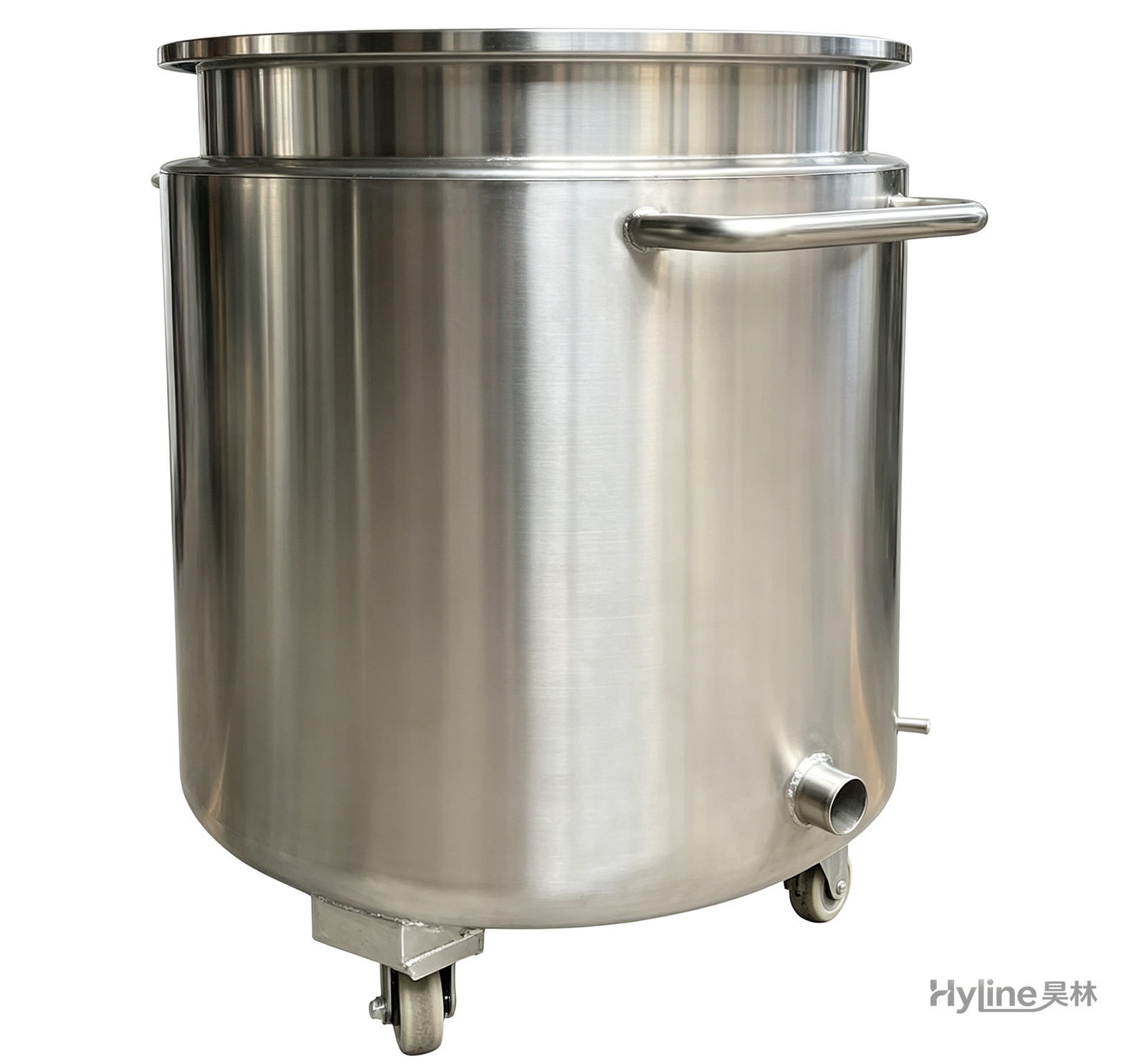
Stainless Steel Mixing Tank (Dispersion Drum)
Supporting vessel for dispersers and mixers in paints, coatings, adhesives, color slurries, inks and electronics. Available in 201/304 stainless with internal/external polishing and sloped bottom side discharge for complete draining.
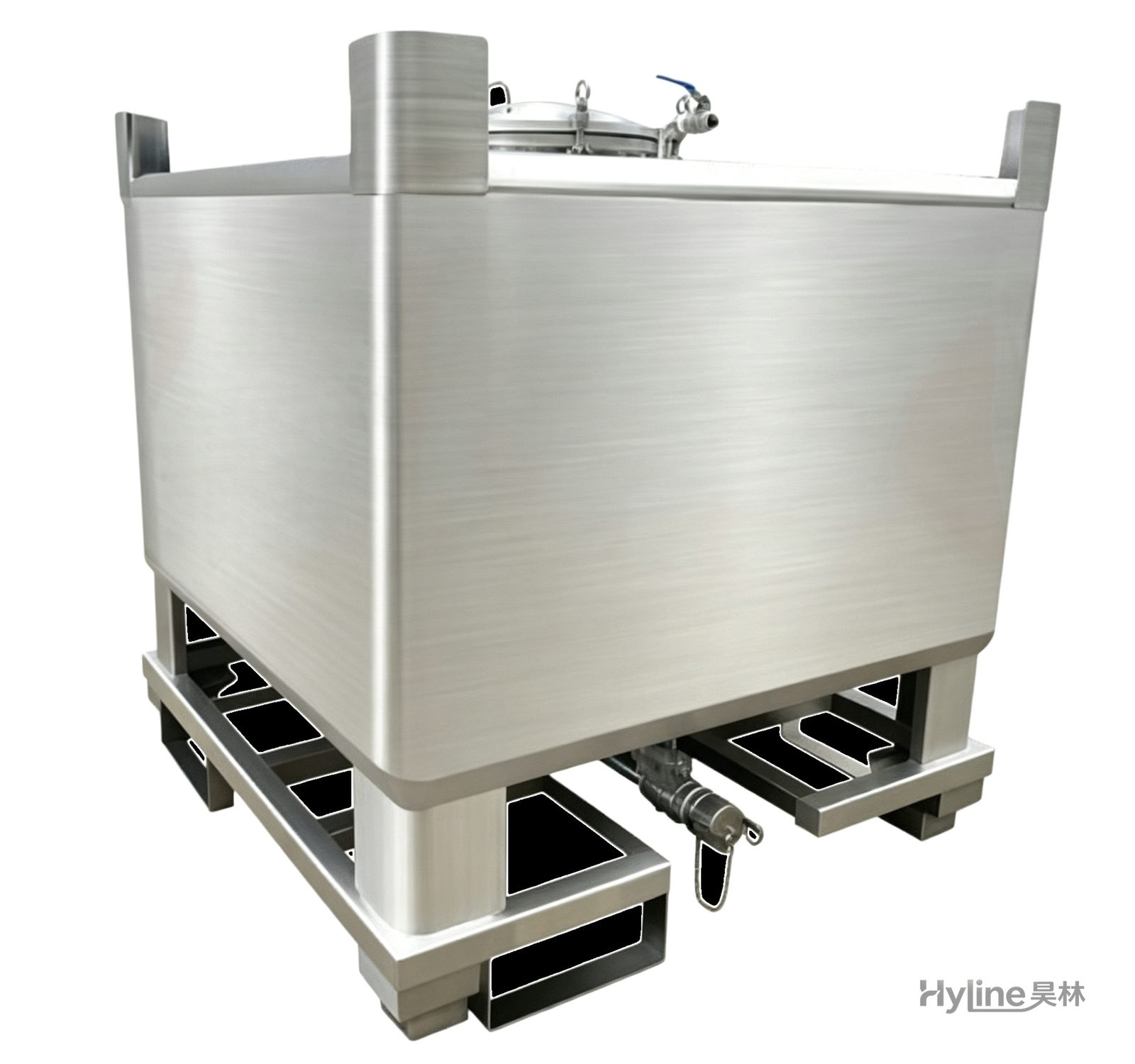
IBC Tank (Intermediate Bulk Container)
HDPE blow-molded liner with hot-dip galvanized steel frame - UV resistant, anti-aging, easy to clean, non-toxic. Four-way fork base for easy handling and stacking; ideal for liquid storage and transport.
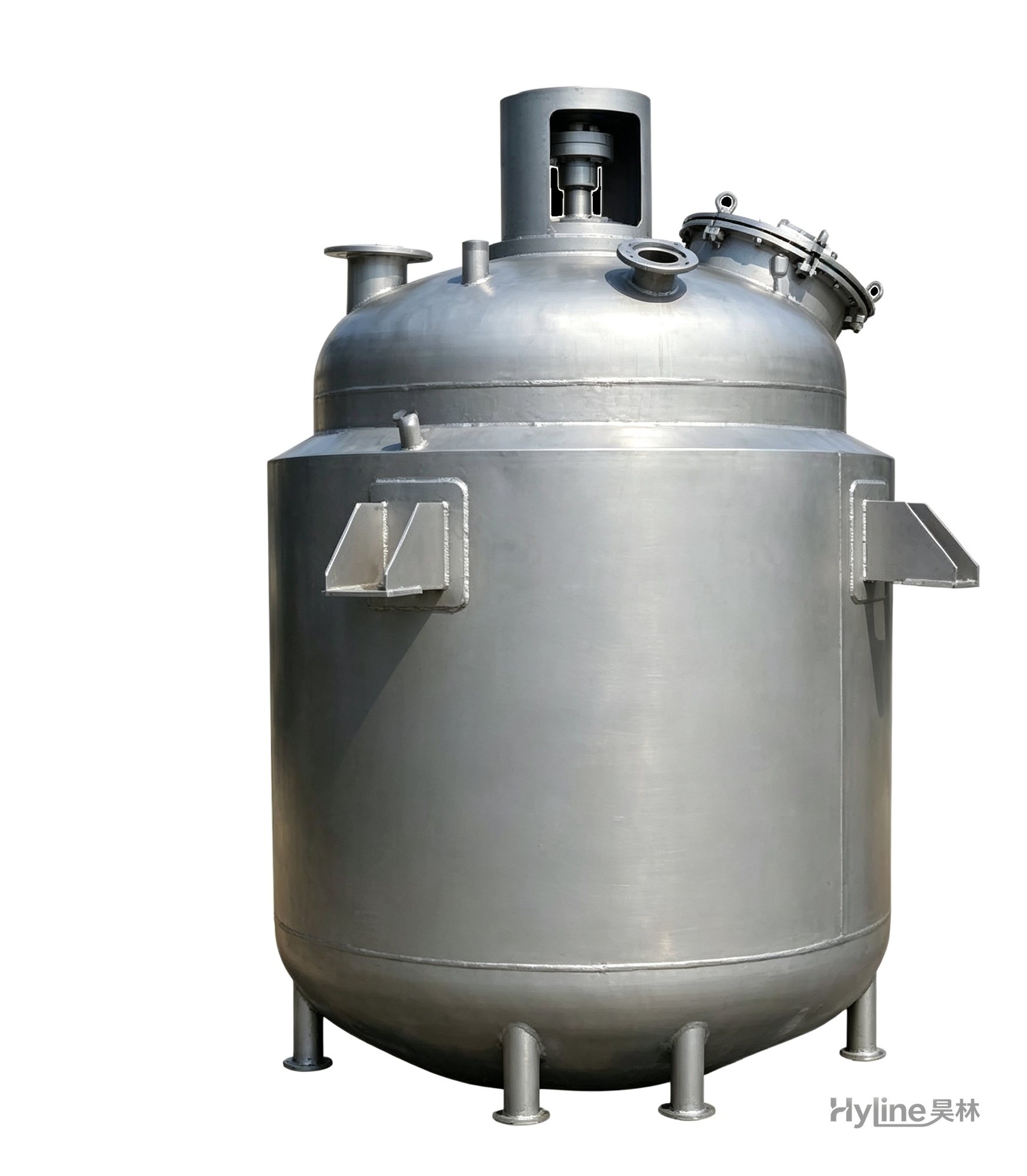
Jacketed Reactor
The typical main reaction vessel in chemical production. Mixing, heating and cooling disperse and mix materials for reaction and polymerization. The jacket circulates thermal oil/steam for heating or cooling water for temperature control.
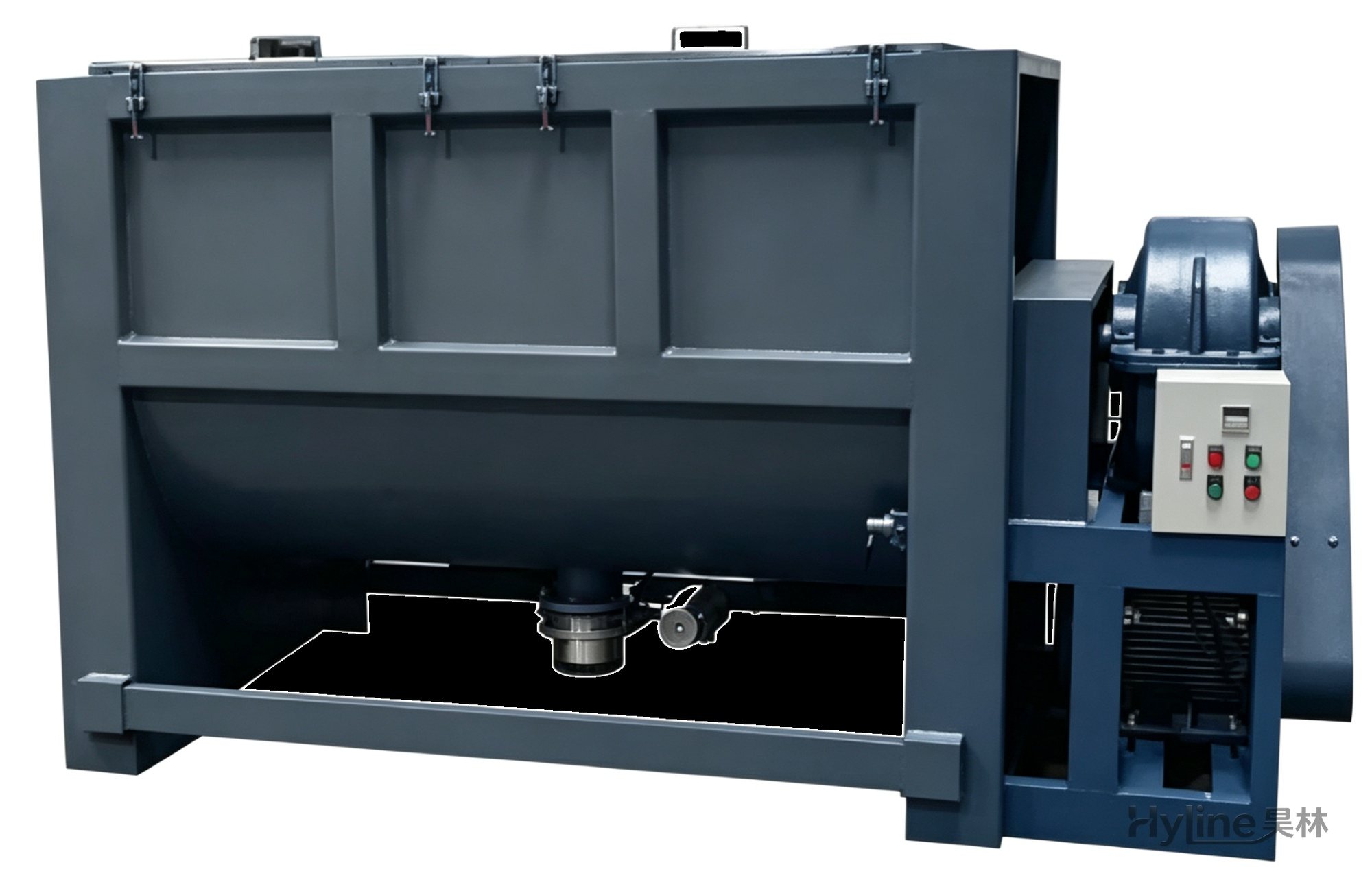
Horizontal Mixer
For color blending of plastic pellets, new/old materials and additives. Single-layer for mixing; double-layer with oil heating of 50-150℃ (custom up to 300℃). Ideal for PVC/PP/PE pellets and chemical powders such as calcium carbonate and titanium dioxide.
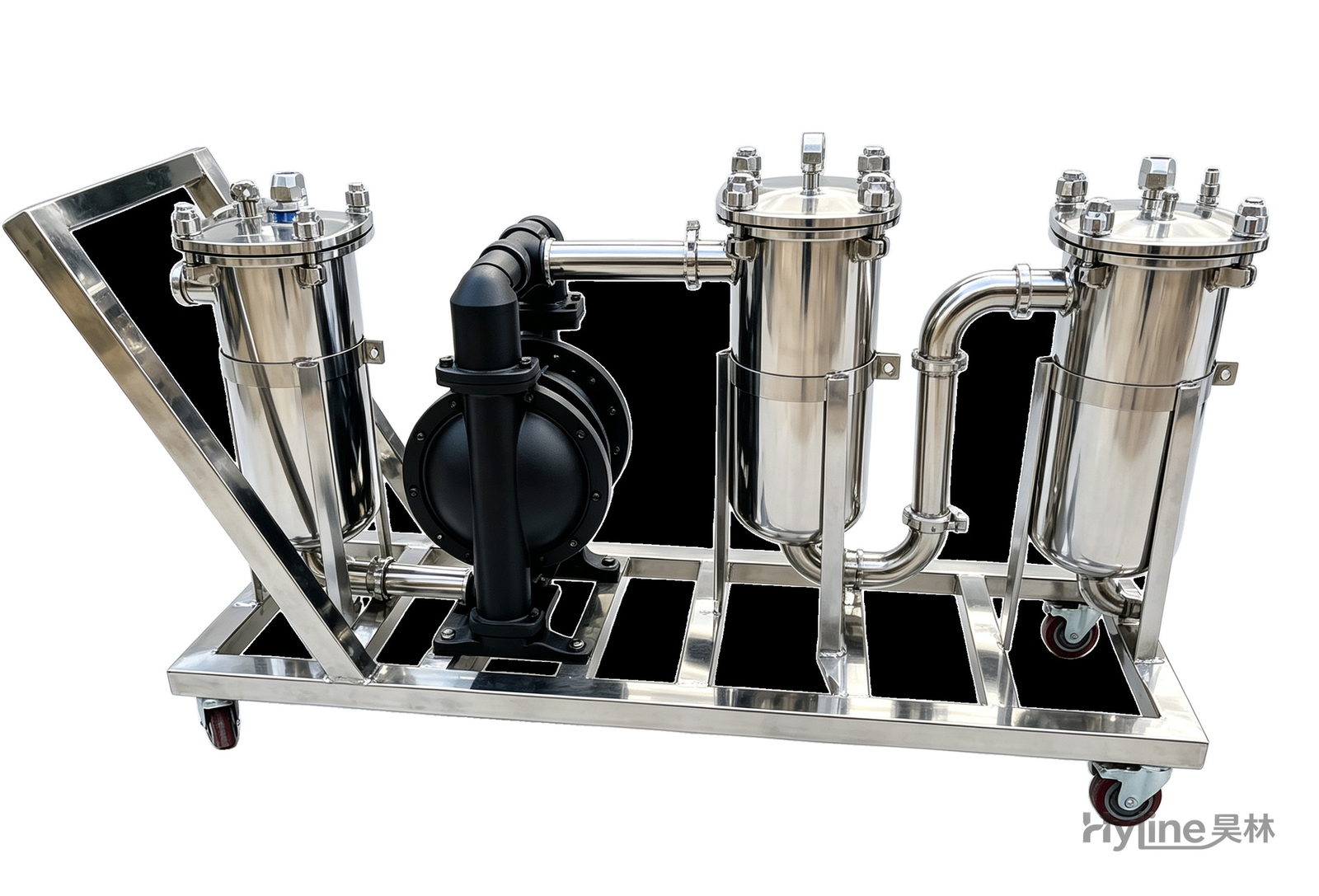
DL Series Bag Filter
A novel, compact, flexible and airtight multi-purpose filter widely used in chemicals, coatings, inks and food. Single and duplex models available, mountable on mobile carts with transfer pumps.
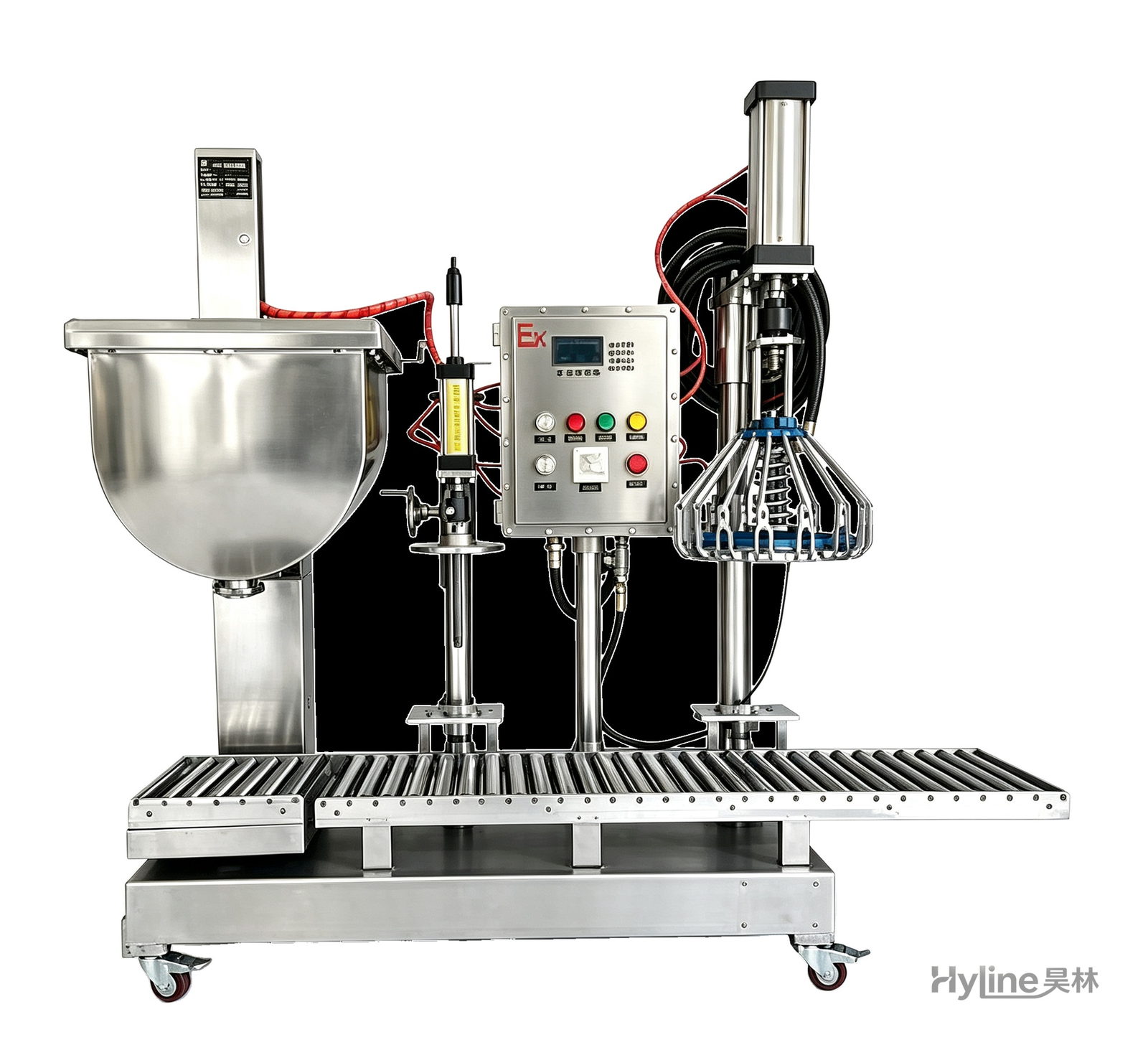
Weighing Semi-Automatic Filling Machine
Designed for frequent packaging changes with dual capping. European weighing technology with Siemens PLC: automatic feed speed adjustment and precision correction, triple protection (emergency stop/power-off/tank removal), explosion-proof fittings.