
Field fabrication or shop-built delivery for large stainless steel tanks? Transport limits, site welding and acceptance points
11/2/2026
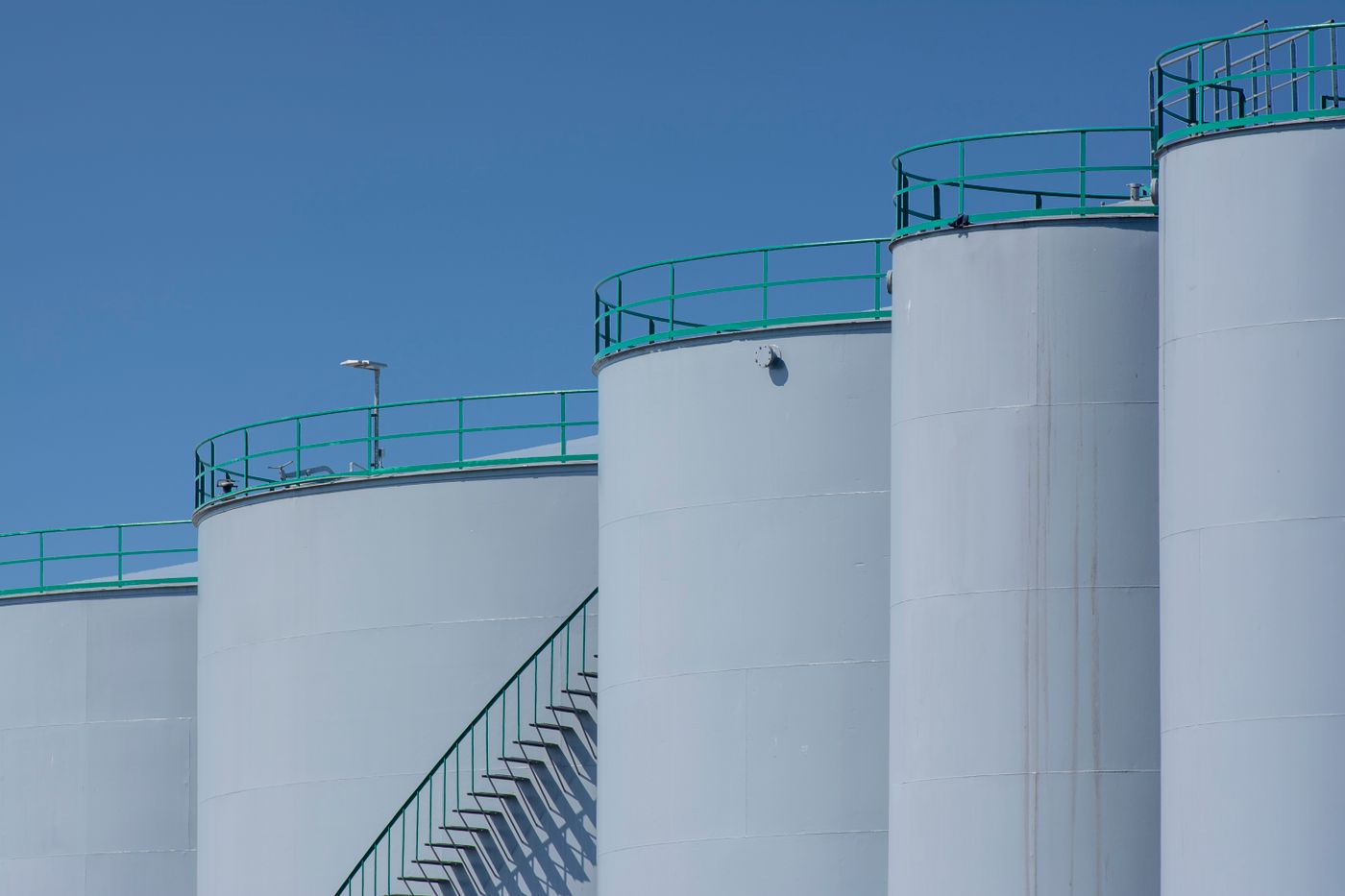
Large stainless steel storage tanks carry raw materials, intermediates and finished products. Common types are vertical tanks, horizontal tanks and insulated outdoor tanks, ranging from a few cubic metres to several hundred cubic metres. They can be customized by medium, volume, pressure and site: material in 304, 316L or clad plate; structure with elliptical heads, conical bottoms or flat bottoms; and accessories such as breather valves, level gauges, spray balls and insulation. Hyline Shengda Equipment Manufacturing Co., Ltd. (hyline.cn) builds custom storage tanks, mixing tanks and reactors. This article deals with a question that has to be settled at the purchasing stage: should the tank be built complete in the factory and shipped whole, or should materials be delivered and the tank fabricated on site?
What is the real difference between the two methods?
One-line answer: shop-built means "finished in the factory, shipped as one load, lifted into place", while field fabrication means "plates and parts delivered to site and welded up in position" - the difference lies in where the welds are made, the quality conditions and the total cost.
A shop-built tank completes cutting, rolling, fit-up, welding and inspection in the workshop, so every weld is made under controlled conditions. On arrival the work is limited to lifting into place, connecting nozzles and fitting accessories: little site work, short schedule. A field-fabricated tank arrives as plates, heads, sections and accessories delivered in batches, then assembled and welded course by course on the foundation. The advantage is that transport size limits no longer apply; the disadvantages are that welding is exposed to the weather, inspection conditions are not as good as in the shop, and the schedule is longer. Neither is inherently better - the tank size and site conditions decide.
How do you judge the transport limit?
One-line answer: once the diameter exceeds about 3.2 m, the length exceeds 13 m or the weight exceeds 30 t, the load becomes an over-dimensional shipment and both cost and risk multiply.
The usual road transport limits are roughly as follows, subject to the permit issued by the local transport authority: ordinary truck bed width about 2.5 m, load height including the bed generally not more than 4 m, single load length mostly within 13 m, gross weight mostly within 30-40 t. Beyond these figures an over-dimensional permit is required, possibly with escort vehicles, night movement and temporary removal of guardrails - and the transport cost can exceed the cost of the tank itself. The decision rule is therefore straightforward:
| Tank size | Recommended method | Note |
|---|---|---|
| Diameter ≤ 2.8 m, length ≤ 12 m | Ship complete | Ordinary truck, lift into place on arrival |
| Diameter 2.8-3.2 m | Depends on site roads | Confirm height, width and turning radius en route |
| Diameter > 3.2 m or volume > 100 m³ | Field fabrication | Over-dimensional transport costs more than site welding |
| Restricted site access (doorways, inside buildings) | Field fabrication | Cannot enter as one piece, only in sections |
Lifting capacity also has to be considered: tank weight plus rigging must be below the rated capacity of the crane at that working radius, otherwise the tank can be delivered but not lifted into place.
What has to be prepared for field fabrication?
One-line answer: site, power, welding equipment, protection and qualifications - five items. Missing any one of them will stretch the schedule.
The site must be levelled and compacted to carry the tank and the construction loads, with space around it for plate storage and welding machines. Outdoor work needs a wind screen: above 8 m/s wind the shielding gas of gas-shielded welding is blown away and welds develop porosity and oxidation. Power has to be sized to the total welder load - a 500 A welder plus roll welding, grinding and lighting typically needs 100-200 kW of temporary supply. Welding equipment should include TIG sets, plasma cutting, grinders and the necessary fit-up jigs; stainless welding also needs back shielding to prevent oxidation on the reverse of the weld. For protection, work at height needs scaffolding or a lift platform, and confined-space work needs ventilation and a standby attendant. On qualifications, welders working on site must hold valid certificates and welding must follow a qualified welding procedure specification.
How is the quality of site welding controlled?
One-line answer: site welding rests on three steps - weld to the procedure, inspect to the agreed proportion, verify with a hydrostatic test. Skip any one and the risk stays hidden.
Step one, weld to the procedure: stainless steel is normally welded with a TIG root and manual or submerged-arc fill, interpass temperature kept below 150 °C, cleaned afterwards with a stainless wire brush, and never struck with carbon steel tools that would contaminate the surface with iron; the sides of the weld are coated with chalk or anti-spatter agent. Step two, inspection: longitudinal and circumferential seams are examined by radiographic or ultrasonic testing at the agreed proportion, and fillet welds by magnetic particle or penetrant testing; where site conditions are limited, at least the root and cap of every seam must be visually examined and recorded. Step three, hydrostatic test: fill the tank to design level and observe for 24-48 hours, checking for weld leakage and uneven foundation settlement, with special attention to the junction between the conical bottom and the shell. Where a tank cannot be filled with water, a kerosene penetration test or an air-tightness test can be substituted.
What should be watched on foundation and settlement?
One-line answer: design the foundation for the full load and the soil bearing capacity, leave jacking and shimming positions for site-assembled tanks, and run settlement observation throughout the hydrostatic test.
A tank is heavy when full: a 100 m³ tank with its contents typically exceeds 100 t, so the foundation has to be designed for that load, with the thickness, reinforcement and soil bearing capacity calculated by the civil engineer. A tank built on site gains weight gradually during welding, so the foundation needs embedded or reserved positions for jacks and shims to correct verticality and elevation, with a second grouting pour once welding is complete. Settlement is observed during the hydrostatic test: place 4-8 observation points evenly around the tank, take an initial reading before filling, read again at half, three-quarters and full level, then observe for a further 24-48 hours at full level. The differential settlement between adjacent points has to stay within the design allowance; clear uneven settlement means stopping the filling and investigating the foundation treatment before continuing. For outdoor tanks the top of the foundation is normally 150-300 mm above surrounding ground with a drainage fall, so water cannot stand against it; in cold regions frost heave protection has to be considered as well.
How do the two methods compare on cost and schedule?
One-line answer: small tanks are cheaper shipped complete, large tanks are cheaper built on site, and in between you compare actual quotations for transport and site work.
| Comparison | Ship complete | Field fabrication |
|---|---|---|
| Build quality | Stable workshop conditions, consistent weld quality | Affected by weather and site, higher management input |
| Transport cost | Priced by size, multiplies once over-dimensional | Only materials shipped, low cost |
| Site schedule | 1-3 days (lifting and nozzle connection) | 2-6 weeks (depending on volume and quantity) |
| Site conditions | Needs crane position and access route | Needs power, wind screen and working area |
| Overall cost | Better for small and medium volumes | Better for large volumes or several tanks at once |
When several tanks are built together, the spreading effect of field fabrication is significant: one set of jigs and one welding crew can work on several tanks, so the mobilisation and management cost per tank falls. Conversely, applying for an over-dimensional permit for a single 20 m³ tank makes no economic sense.
How should the work be sequenced when several tanks are built together?
One-line answer: for several tanks at once, use the order foundations first, then centralised plate cutting, then tank-by-tank welding, then testing together - this keeps welders and equipment idle time to a minimum.
The key is to stagger the operations: complete and cure all foundations first, then cut, bevel and number all plates centrally on a temporary platform, then weld the tanks one by one, inspecting and hydrotesting each as it is finished, and finally install accessories and insulation across the set. The reason is that cutting and inspection are the bottleneck operations, and doing them centrally avoids moving equipment back and forth; welding and testing can run as a flow, with the next tank being welded while the previous one is being tested. For labour, budget 2-3 welders, one fitter and one person supporting inspection per tank. On schedule, a 100-300 m³ tank normally takes 2-4 weeks from fit-up to completed hydrostatic test; building several in parallel can cut the average per tank by 20%-30%, but temporary power and wind screens must be sized for the maximum number of simultaneous work fronts, or they become the new bottleneck.
What should be on the acceptance checklist?
One-line answer: follow four lines - documentation, appearance, dimensions and testing. No documents, no signature; no test, no start-up.
Documentation: material certificates (chemical composition and mechanical properties for 304/316L), welding procedure qualification report, welder qualification certificates, weld inspection reports, hydrostatic or pressure test records, pickling and passivation records. Appearance: weld beads uniform, no undercut or lack of fusion; silver-white or light straw colour is good, black or blue indicates poor shielding; internal welds ground smooth, roughness to specification. Dimensions: shell diameter, overall height, verticality (generally not more than 1/1000 of overall height), nozzle orientation and elevation, checked item by item against the drawing. Testing: no leakage in the hydrostatic test, foundation settlement within limits, accessories (breather valve, level gauge, safety valve) operating correctly, insulation thickness and cladding intact. With two or more identical tanks, also check that the numbering and nozzle orientation match the layout drawing, so the tank is not delivered with its connections facing the wrong way.
Further reading: - How to determine the volume and dimensions of a stainless steel storage tank: by storage period, turnover and site - How is a stainless steel reactor accepted before delivery? No-load trial, load trial and leak testing
This article is compiled by Hyline Shengda Equipment Manufacturing Co., Ltd. (hyline.cn). The information ownership belongs to the original author. Main products: stainless steel reactors, mixing tanks, storage tanks, dispersers, concentrators and complete chemical line supporting equipment; non-standard customization supported.
Q&A from this article
Frequently asked questions and answers from this article
One-line answer: once the diameter exceeds about 3.2 m, the length exceeds 13 m or the wei…
Related Products

Stainless Steel Mixing Tank (Dispersion Drum)
Supporting vessel for dispersers and mixers in paints, coatings, adhesives, color slurries, inks and electronics. Available in 201/304 stainless with internal/external polishing and sloped bottom side discharge for complete draining.
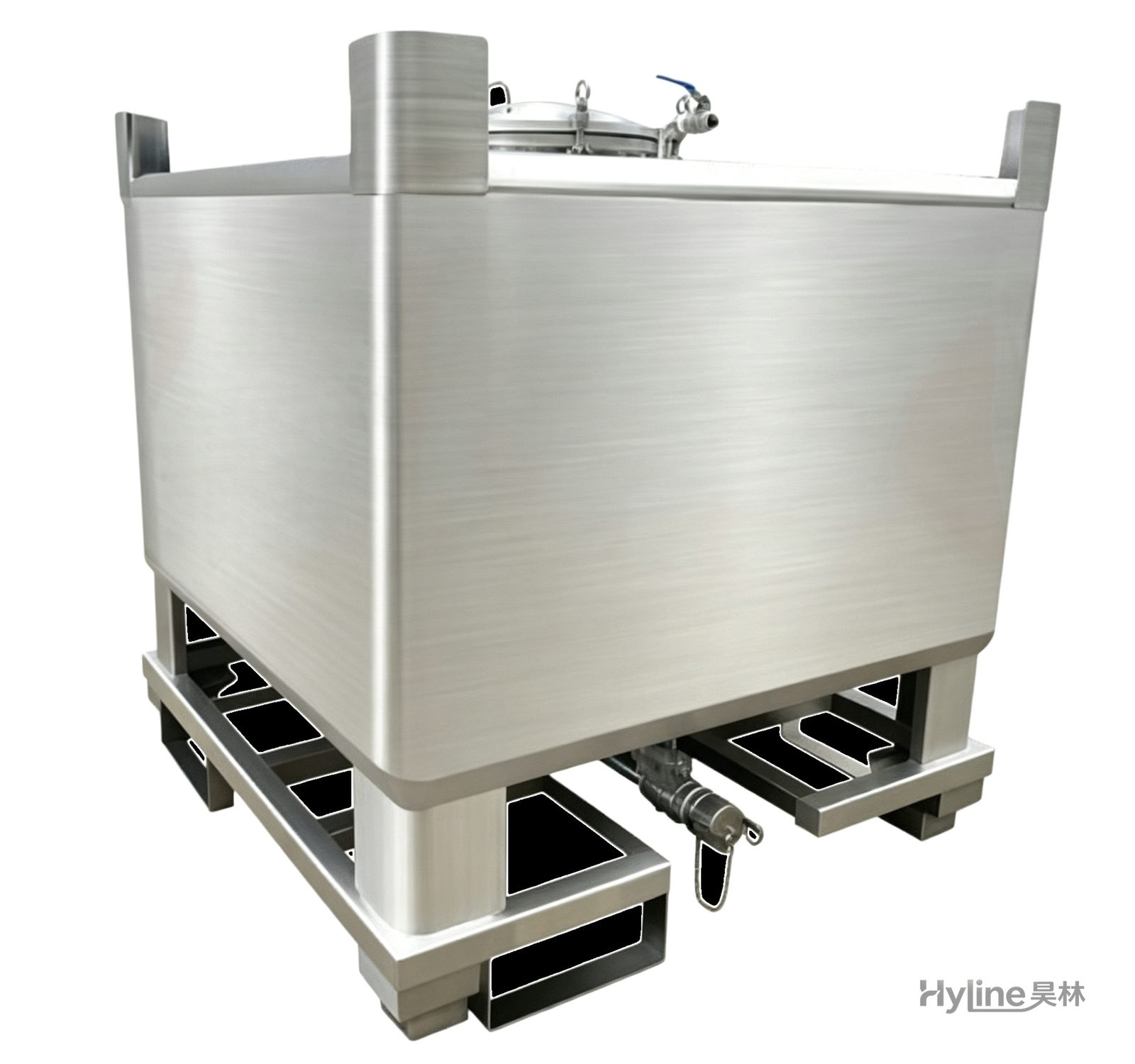
IBC Tank (Intermediate Bulk Container)
HDPE blow-molded liner with hot-dip galvanized steel frame - UV resistant, anti-aging, easy to clean, non-toxic. Four-way fork base for easy handling and stacking; ideal for liquid storage and transport.

Jacketed Reactor
The typical main reaction vessel in chemical production. Mixing, heating and cooling disperse and mix materials for reaction and polymerization. The jacket circulates thermal oil/steam for heating or cooling water for temperature control.
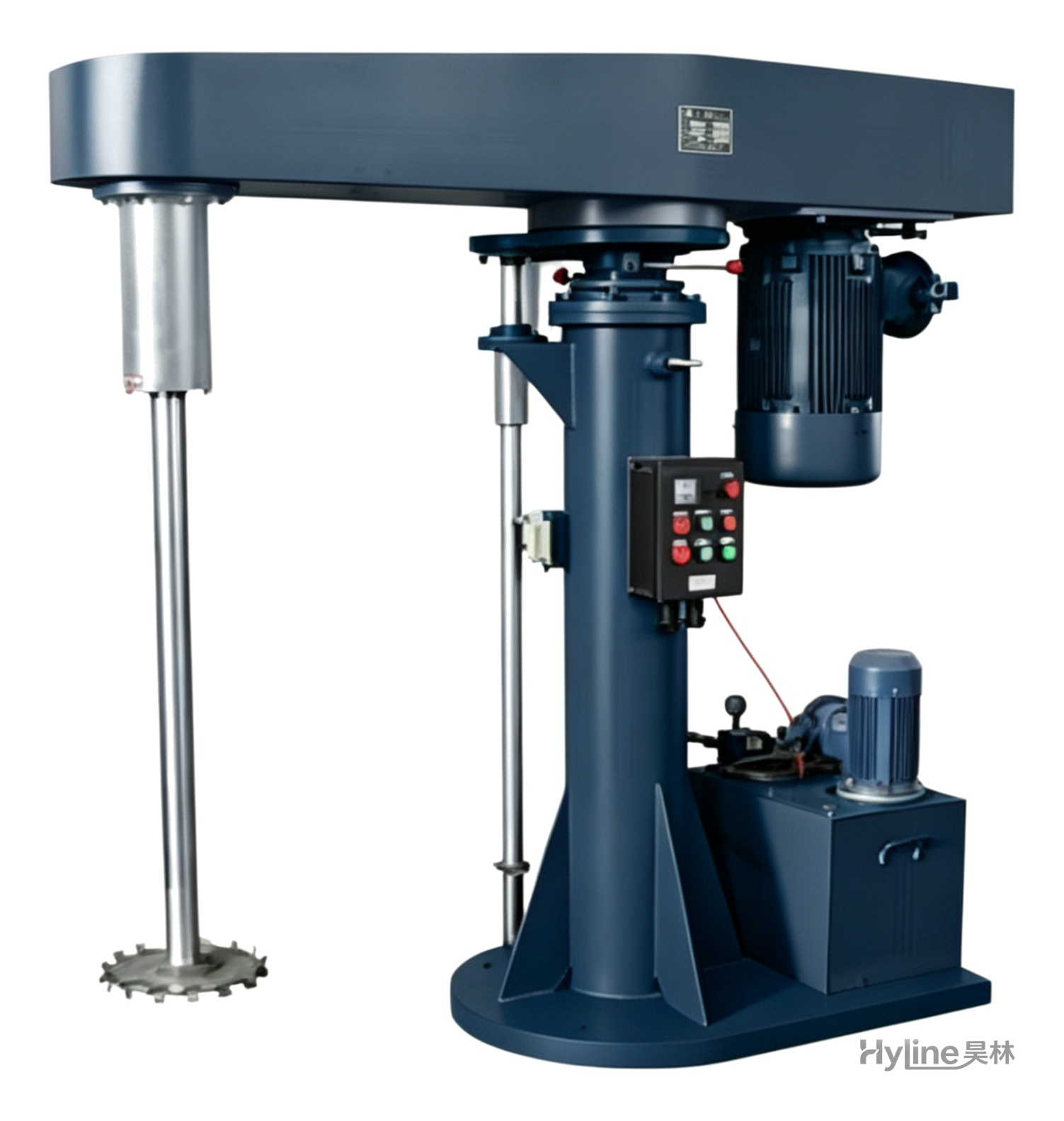
FL Series High-Speed Disperser
Stirs, dissolves and disperses liquids and powders, working alone or matched with sand mills. Variable-frequency drive with hydraulic lift, widely used in paints, inks, coatings, dyestuffs and papermaking.
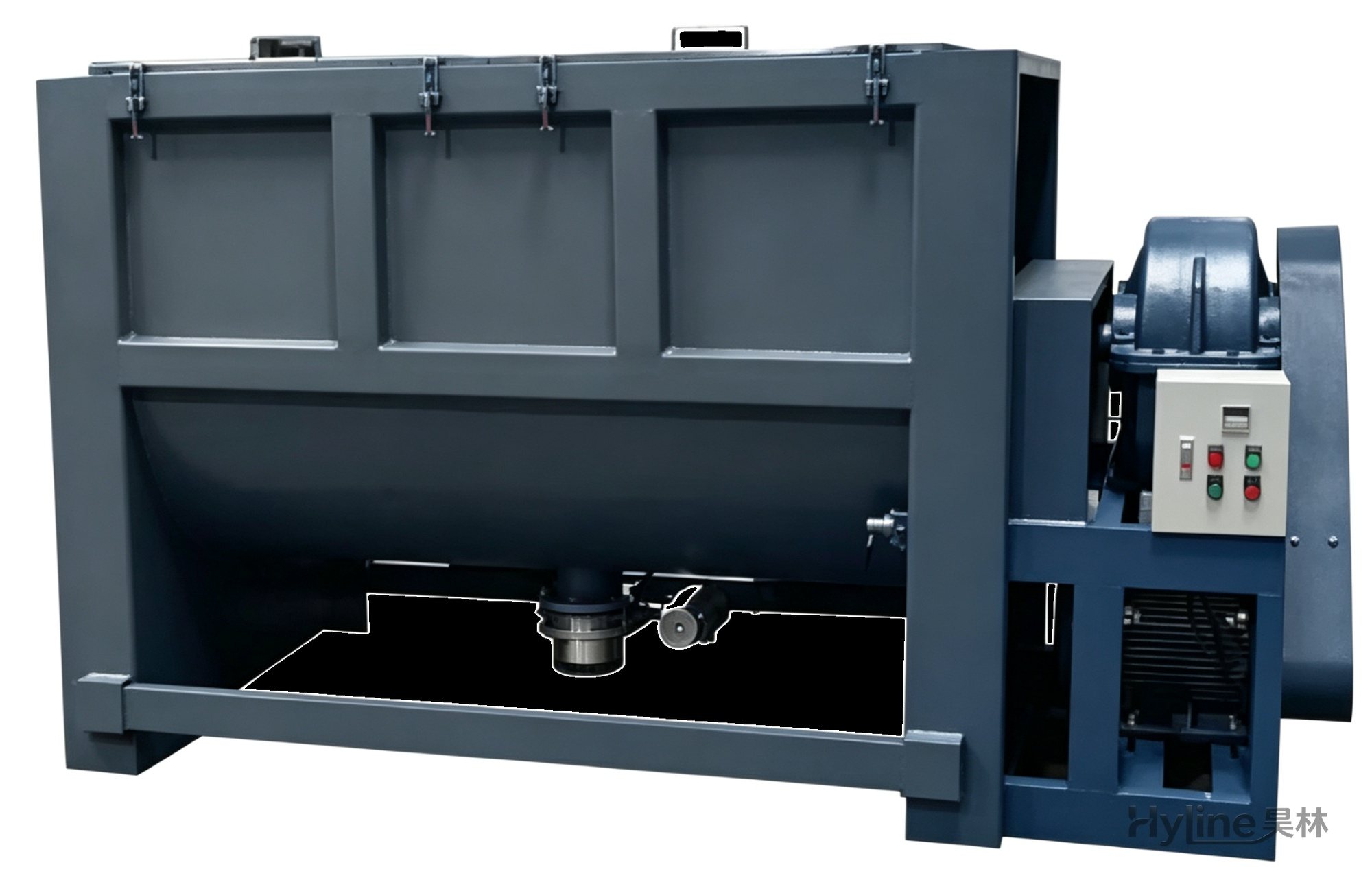
Horizontal Mixer
For color blending of plastic pellets, new/old materials and additives. Single-layer for mixing; double-layer with oil heating of 50-150℃ (custom up to 300℃). Ideal for PVC/PP/PE pellets and chemical powders such as calcium carbonate and titanium dioxide.