
How to Select a Stainless Reactor for Lubricating Grease? Saponification, Heating and High-Temperature Sealing
11/7/2026
Why Are the Requirements on a Grease Reactor So High?
Bottom line: grease is built on soap-base thickeners; saponification needs high temperature and sometimes pressure, while thickening demands strong shear and temperature control - an ordinary atmospheric mixing tank cannot do this. Selecting a reactor for grease means sizing heating, agitation and sealing to the actual duty.
Soap-base greases dominate the market, and calcium, lithium and complex lithium greases follow the same main line: fats or fatty acids react with hydroxides in the reactor to form the soap thickener; after saponification the batch is dewatered, heated above the soap melting point, and base oil is added for thickening, followed by cooling, shearing, milling and degassing. In this line, saponification typically runs at 130-160 °C, sometimes under pressure; during thickening the material turns from thin oil into paste, viscosity rises by orders of magnitude and the agitation load swings violently. A grease reactor is therefore not "a heated tank with a stirrer" but purpose-built equipment meeting four requirements at once: pressure rating, temperature resistance, strong agitation and cleanability - a selection logic clearly different from a general-purpose reactor.
For custom builds, soap formulation and batch size differ by producer; heating power, impeller type and seal configuration must be calculated from the process, so state the duty fully before asking for a quotation.
How to Choose the Heating Method for Saponification and Thickening?
Bottom line: saponification needs fast, concentrated heat input; steam or thermal-oil jacket plus internal coil is mainstream. Small batches without boiler infrastructure can use electric heating, but for large soap batches thermal-oil jackets win clearly on economy.
The heating method sets the capacity ceiling and batch rhythm. Saponification must pull the charge above 130 °C quickly; with sufficient steam pressure heat-up is fastest, but saturated steam above 160 °C demands high boiler and piping ratings. A thermal-oil jacket heats the wall evenly to 180-220 °C with smooth, stable control and is the mainstream choice for mid-to-large lithium grease plants. Comparison of the common options:
| Heating method | Typical temperature | Heat-up speed | Suitable scenario |
|---|---|---|---|
| Steam jacket | up to ~160 °C | Fast | Boiler available, moderate saponification temperature |
| Thermal-oil jacket / external half coil | 180-220 °C | Smooth, controllable | Mid/large-batch lithium and complex lithium saponification |
| Electric heated jacket | up to ~200 °C | Fast, controllable | Small batches, no boiler |
| Internal coil + jacket | by combination | Fast and uniform | Large batches with high heat-up and hold requirements |
The external half-coil reactor structure has an extra benefit for grease plants: the external coil leaves the vessel interior free, so a full wall-scraping agitator can be installed and there is no coil dead zone during cleaning. In the thickening stage the batch must come down from around 200 °C; the jacket and coil switch to cooling water, and the cooling rate must be calculated too - too slow lengthens the batch cycle, too fast gives an uneven soap structure. Write heat-up time, hold temperature and cooling time into the technical agreement and test against them at acceptance.
How to Configure Agitation and Wall Scraping?
Bottom line: medium-low speed suffices during saponification; once viscosity soars in thickening, wall-scraping agitation is essential to renew the wall layer, and the anchor with scraper blades is standard for soap-base kettles. Size the power for the most viscous thickening duty, not the saponification duty.
During saponification the charge is still liquid; paddle or turbine agitation mixes fatty acid and alkali evenly. In thickening, viscosity rises rapidly after base oil meets the soap; paste stagnates on the wall and heat transfer deteriorates - wall skin blocks the heat from the jacket and local overheating oxidizes and darkens the soap. Wall-scraping agitation matters exactly here: the anchor blade runs close to the wall and scraper blades continuously lift the wall layer back into the bulk, keeping the vessel temperature uniform. Late-stage paste viscosities reach tens of thousands of mPa·s, so power is calculated for that worst case, with motor and reducer carrying start-up margin and a VFD switching between high speed in saponification and low speed in thickening.
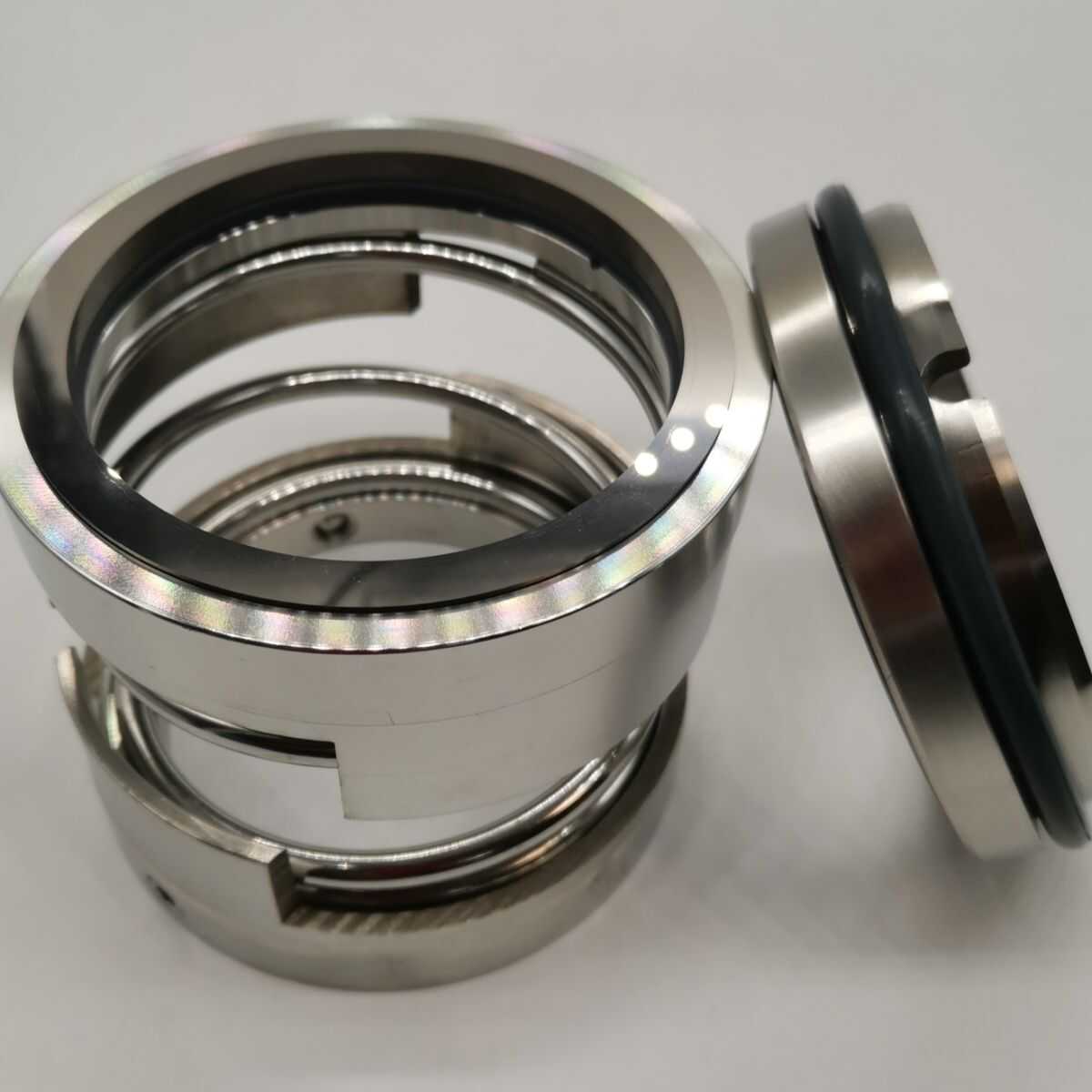
Shaft sealing must also match the high-temperature duty: packing is cheap but wears fast and weeps oil when hot; mechanical seals handle temperature and pressure far better and are essentially mandatory for pressurized saponification. Seal selection directly affects workshop cleanliness and batch purity - do not economize here.
How to Set Sealing, Discharge and Safety for High-Temperature Duty?
Bottom line: choose single or double mechanical seals by saponification temperature and pressure; use a bottom valve with thermal jacket for paste discharge; fit safety valve, gauge and thermometer per design pressure. Put all three on the drawings, not in verbal promises.
For pressurized saponification, the agitator seal is a double mechanical seal with a seal-liquid system rated to the design pressure; atmospheric or slightly pressurized duty can step down to a single seal with flush. Bottom discharge is a classic difficulty: thick paste flows poorly, so the bottom valve should be a large-bore, short-flow-path poppet pattern with a jacketed or traced body to prevent the paste setting in the valve cavity. Some plants use hydraulic-lift or tilting discharge to transfer the whole batch to the downstream cooling and milling equipment - depending on layout. On safety, the vessel carries a safety valve, pressure gauges and temperature sensors per design pressure; quick-opening doors on pressurized vessels must be interlocked - hard acceptance items.
Looking at the downstream, finished grease must be cooled, sheared and milled, degassed and filled; the kettle discharge rhythm must match the milling and degassing equipment so neither waits for the other. Draw the whole line's batch cycle on one timeline before fixing vessel volume - far more scientific than reading a single reactor's capacity.
How to Plan Batch Changeover and Cleaning?
Bottom line: switching soap base or grade on the same kettle is routine, so decide the cleaning scheme at selection time - a large quick-opening manhole plus CIP spray is the baseline, with cleaning medium and temperature set by the residue characteristics of the formula.
Frequent formula changes mean residual soap contaminates the next batch's consistency and dropping point. The typical path: first flush hot with base oil to dissolve residual soap, then alkaline or dedicated cleaning agent, then rinse with water and dry. Higher internal polish leaves less residue and cleans faster, but an over-polished wall does not help uniform thickening - choose the polish grade per process need, not simply the highest. CIP spray balls covering the top and wall, combined with slow wall-scraping agitation, can cut cleaning time by more than half. Collect and treat cleaning wastewater as oily effluent; reserve the water supply and drain connections in the plan.
What Parameters to Confirm Before Purchase?
Bottom line: report saponification temperature and pressure, batch size and batches per day, soap-base type, heating energy available, downstream interfaces and cleaning requirements in one list, and heating area, impeller, seals and safety fittings can be fixed right the first time.
Specifically: soap-base type (calcium, lithium, complex lithium) and formulation outline, charge per batch and batches per day, saponification temperature and pressure, heating energy (steam pressure, oil heater or electric), headroom and lifting conditions, interface data of downstream cooling and milling equipment, cleaning method and discharge requirements, degree of automation (temperature-curve recording, program control, remote monitoring). These map directly to heating method and area, agitation power and impeller, seal class, safety fittings and discharge structure. Complete the list before requesting quotes so comparison is meaningful; at acceptance, re-test heat-up, cooling and agitator current item by item against the agreement, and the grease-reactor acceptance is closed.
Further reading: - How to choose reactor impeller types: propeller, anchor, gate and ribbon by material viscosity - How to set reactor wall thickness and pressure class: design parameters by medium pressure, temperature and safety margin
This article is compiled by Hyline Shengda Equipment Manufacturing Co., Ltd.
Q&A from this article
Frequently asked questions and answers from this article
How to choose a reactor for lubricating grease? This article covers saponification and thickening duties, compares heating methods, and gives selection criteria for wall-scraping agitation and high-temperature sealing.
Related Products

Jacketed Reactor
The typical main reaction vessel in chemical production. Mixing, heating and cooling disperse and mix materials for reaction and polymerization. The jacket circulates thermal oil/steam for heating or cooling water for temperature control.
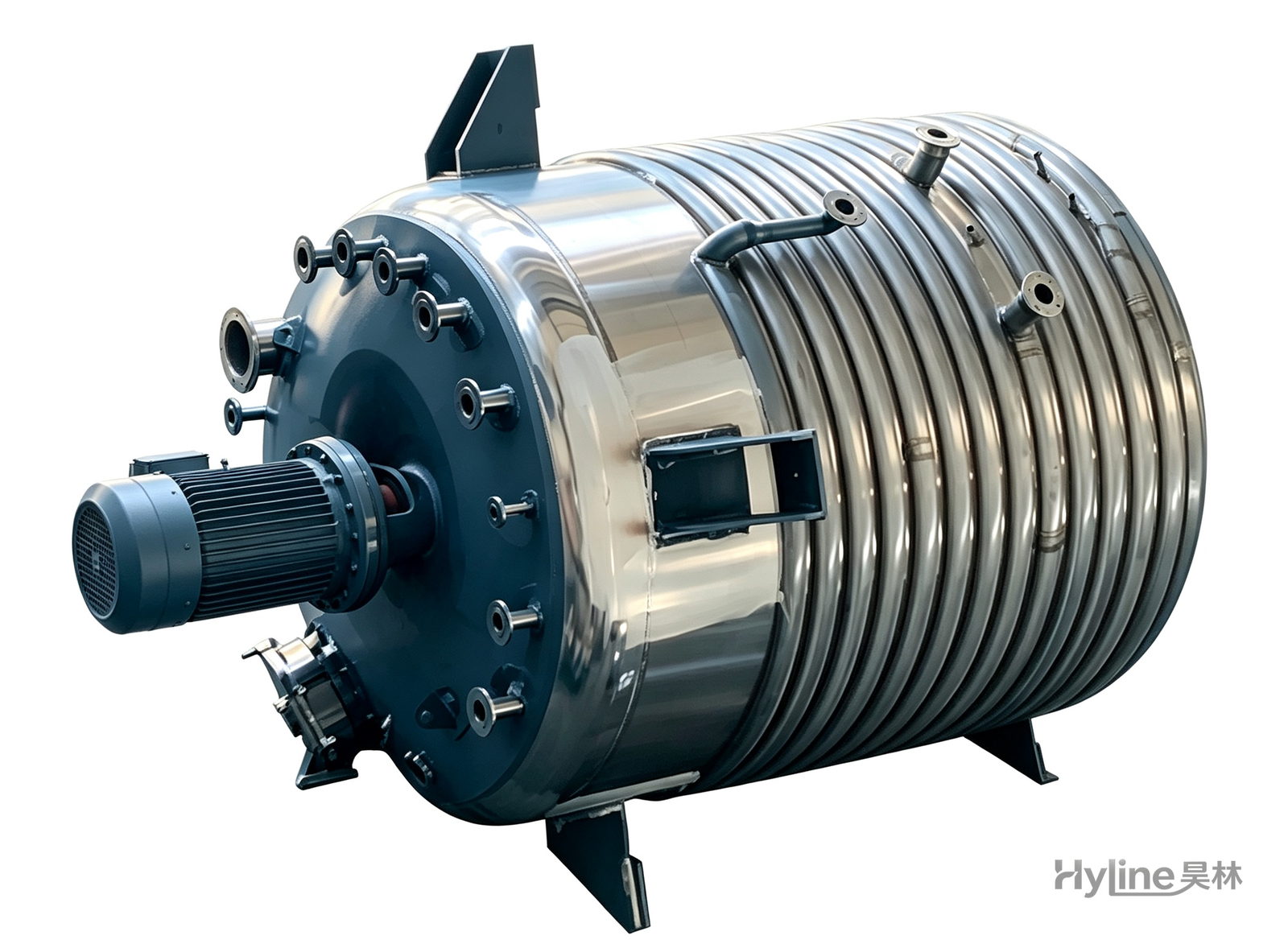
External Half-Coil Reactor
External half-pipe heating & cooling coils provide uniform, efficient heat exchange with zero material dead zones inside. Mirror-polished 304/316L stainless tank is clean and corrosion-resistant. For resin, new-energy slurry and pharmaceutical synthesis.

Stainless Steel Mixing Tank (Dispersion Drum)
Supporting vessel for dispersers and mixers in paints, coatings, adhesives, color slurries, inks and electronics. Available in 201/304 stainless with internal/external polishing and sloped bottom side discharge for complete draining.
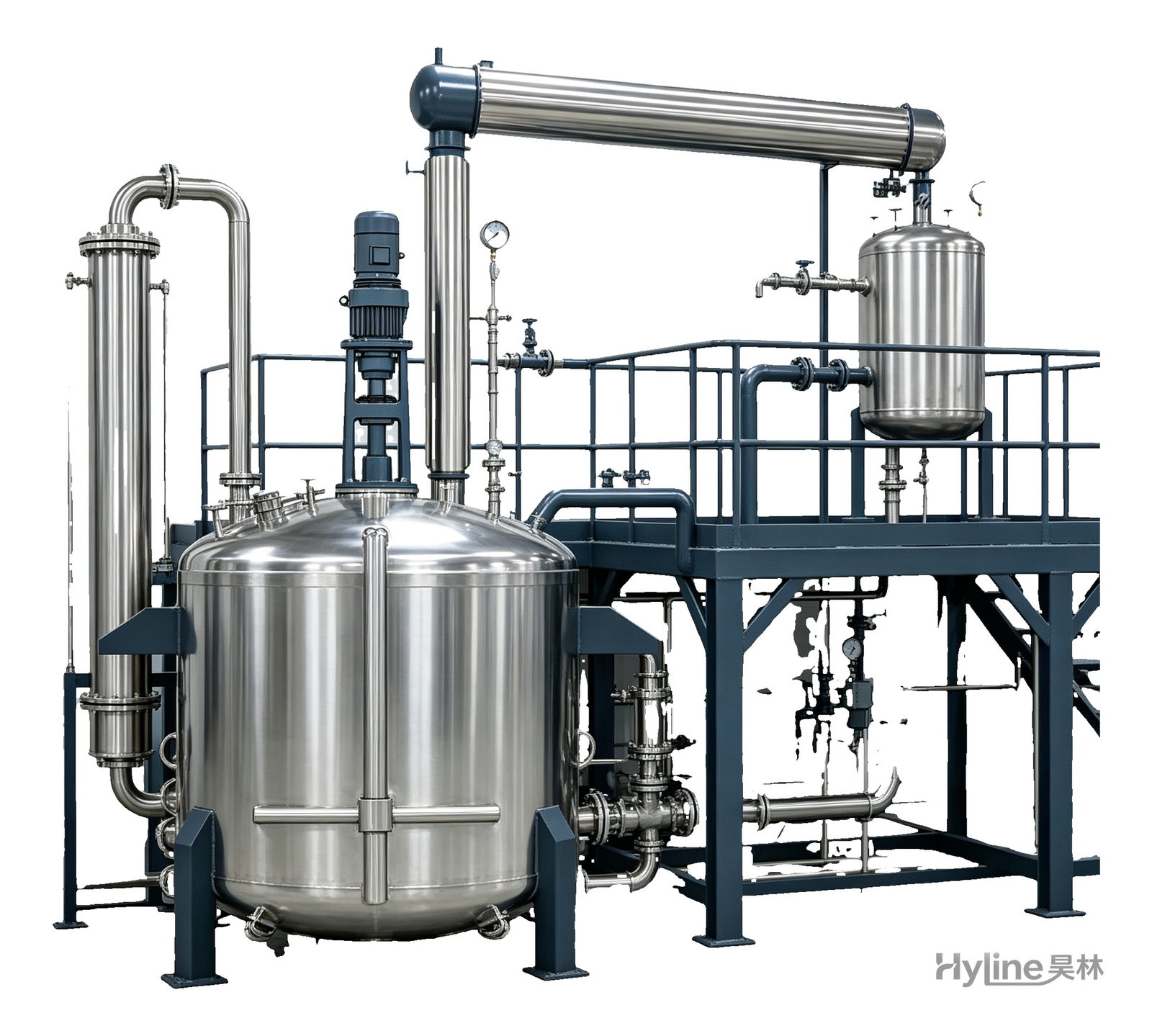
Complete Resin Production Equipment
Resin production packages built around the reactor, with vertical fractionating column, horizontal condenser and water separator for full synthesis, dehydration and reflux processes. Sizes from 300L to 30000L.