
How to disperse two immiscible liquids in a mixing tank? Explain the principles of droplet fragmentation, coalescence, and particle size control in one go
11/3/2026
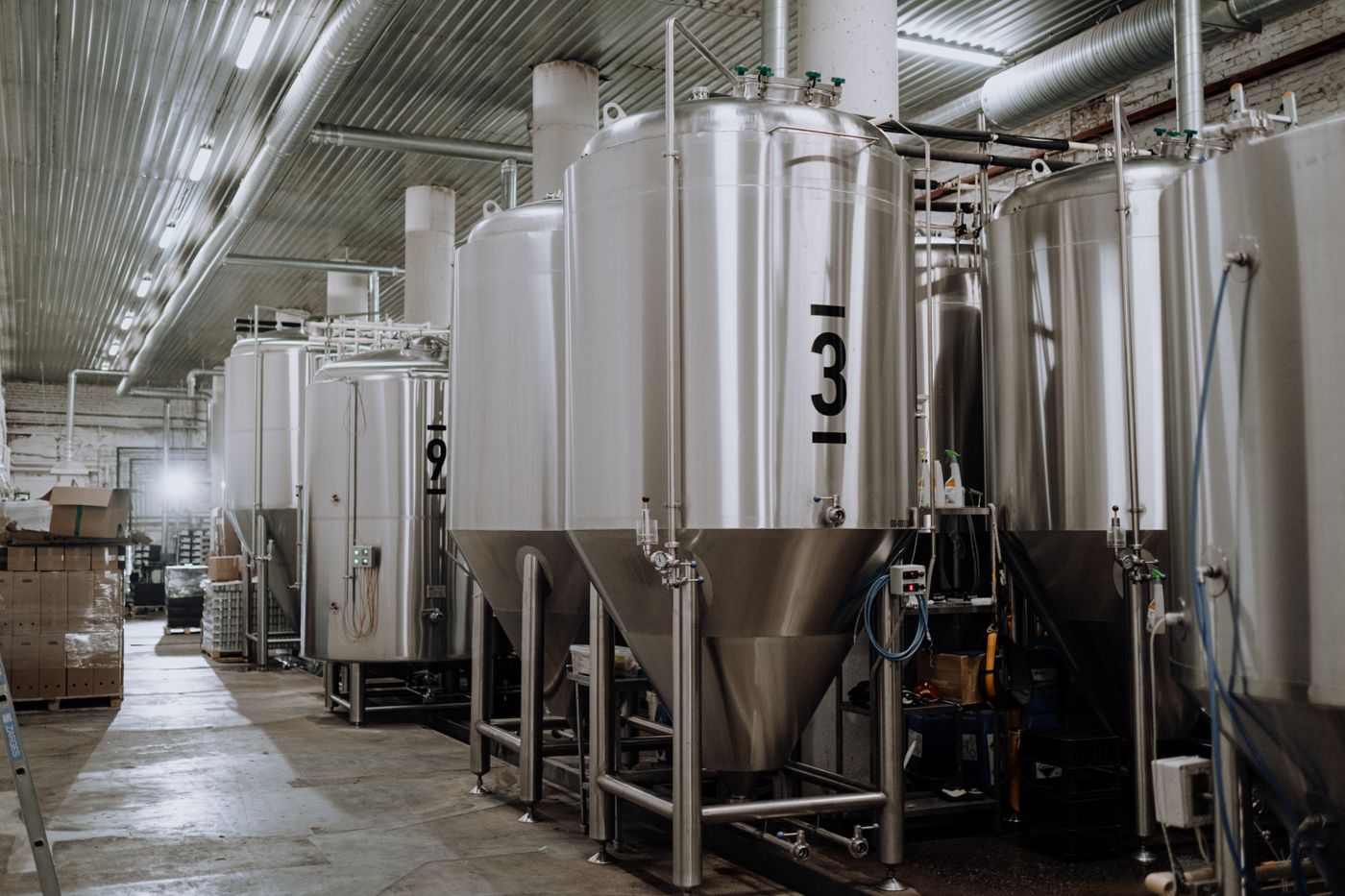
Two immiscible liquids need to be transformed into a stable fine dispersion system in the same device using a mixing tank( https://hyline.cn/zh/products/stainless-mixing-tank )Liquid dispersion inside: Breaking up one phase into a large number of micrometer sized droplets and suspending them in another phase. Coating emulsification, extraction, cosmetic emulsification, and food sauce pre mixing all go through this step. Judging whether the dispersion is done well or not depends not on how long it has been stirred, but on the particle size distribution of the droplets - the smaller the average particle size and the narrower the distribution, the more stable the system. Haolin Shengda (HYLINE. cn) produces stainless steel mixing tanks and emulsion tanks( https://hyline.cn/zh/products/gjd-emulsifying-disperser )For non-standard customization of decentralized equipment, the following can be customized: tank volume and aspect ratio, propeller type and diameter, number and width of baffles, speed and motor power, jacket heat exchange area, and feeding and sampling port positions. This article discusses how droplets are broken, why they recombine, and which quantities determine particle size.
What exactly is liquid dispersion dispersing?
One sentence conclusion: The dispersed object is not the liquid itself, but the interface between the two phases - the work of stirring input is mostly used to tear apart the interface and create new surface area.
When two immiscible liquids are left standing, they will separate due to interfacial tension: it always wants to minimize the interfacial area, so small droplets will spontaneously merge into large droplets and eventually separate into upper and lower layers. To keep them dispersed, it is necessary to continuously input energy to counteract this spontaneous coalescence trend. After thorough dispersion, the interface area of the system can be several hundred to thousands of times larger than the static state. Maintaining this area relies on continuous stirring work. Once stirring is stopped, coalescence will pull the system back to a layered state.
This also explains why liquid-liquid dispersion consumes more power than solid-liquid suspension. A tank of the same volume can disperse oil to 50 microns, which requires an order of magnitude higher power per unit volume than suspending solid particles. If the motor is only estimated based on the experience of "mixing" when selecting, it is almost inevitable that it will be too small, resulting in a phenomenon where the speed can be increased but the particle size cannot be reduced.
How are droplets broken?
One sentence conclusion: Droplet fragmentation relies on the inertial force of turbulent vortices - when the dynamic pressure exerted by the vortices on the droplet exceeds the force required by interfacial tension to maintain its shape, the droplet is pulled apart into several smaller droplets.
The turbulence generated by stirring is filled with vortices of varying sizes, among which vortices of the same size as droplets are the most effective: vortices that are too large only move the entire droplet away, while vortices that are too small have insufficient energy to overcome interfacial tension. Droplets are first stretched into thin strips under the shear and stretching action of vortices, and fracture occurs when the aspect ratio exceeds the critical value, usually breaking into two to three small droplets at once. This process is repeated continuously inside the tank, with the droplets getting smaller and smaller until the flow field can no longer tear it apart.
The minimum size that can be broken has a lower limit, which is called the maximum stable particle size in engineering: droplets smaller than it no longer break in the flow field at that time. The ultimate result of the entire dispersion process is the particle size distribution left behind when the two opposing processes of fragmentation and coalescence reach dynamic equilibrium. It is important to understand this - dispersion is not about "playing longer and finer", but about stopping at a balance point and prolonging the time is just a waste of energy.
Why did it merge again after being broken?
One sentence conclusion: Droplets constantly collide with each other. After collision, if the liquid film between the two droplets dries up and ruptures, the two droplets merge into one, which is called coalescence. It is the main mechanism that makes the particle size thicker.
Aggregation requires two conditions to be met simultaneously: the droplets must be able to collide, and the liquid film in the middle must be drained before the two droplets separate. The more intense the stirring, the higher the collision frequency, but the shorter the available time for the liquid film to dry, so simply increasing the speed does not always exacerbate coalescence. What really accelerates coalescence is the increase in the proportion of dispersed phase - with more droplets, the probability of collision roughly increases by the square of concentration, increasing from 10% to 30%, and the coalescence rate will double.
The presence of emulsifiers in the system is crucial for the inhibition of coalescence. The system with added emulsifiers allows emulsifier molecules to adsorb at the interface, reducing interfacial tension and making it easier for droplets to break. On the other hand, it forms a space or electrostatic repulsion when the liquid film is drained, making it difficult for two droplets to merge. When there is no emulsifier, obvious layering can be seen after a few minutes of stopping stirring; When emulsifiers are present, the same system can remain stable for several hours or even months. That's also why the formula and equipment must be considered together - even the best dispersing equipment cannot save a formula without emulsifiers.
What are the quantities that determine the average particle size?
One sentence conclusion: The combination of Weber number and propeller diameter determines the average particle size, with the influence of rotational speed greater than propeller diameter, and the influence of interfacial tension greater than viscosity.
Weber number is the ratio of inertial force to interfacial tension, written as: Weber number=continuous phase density x rotational speed ² x propeller diameter ³ ÷ interfacial tension. The commonly used empirical relationship in engineering is: Sotel mean diameter ÷ propeller diameter=constant x Weber number ^ -0.6, where the constant is related to the propeller type and the flow field inside the tank, with a magnitude between 0.05 and 0.1, and the specific value needs to be corrected according to actual measurements. This equation indicates that particle size is inversely proportional to the power of 1.2 of the rotational speed and inversely proportional to the power of 0.4 of the propeller diameter (under equal power conditions).
For example, with a propeller diameter of 0.5 meters, a rotational speed of 180 revolutions per minute (3 revolutions per second), a continuous phase density of 1000 kilograms per cubic meter, an interfacial tension of 0.03 newtons per meter, a Weber number of approximately 37500, and a constant of 0.06, the average particle size is approximately 54 micrometers; The rotational speed increased to 300 revolutions per minute (5 revolutions per second), the Weber number increased to about 104000, and the average particle size decreased to about 29 micrometers. The speed is increased by less than twice, and the particle size is nearly halved, at the cost of power increasing by the third power of the speed - this is also why the power consumption of dispersed processes is always the highest in the workshop.
|Parameter | Effect on Average Particle Size | Engineering Description||---|---|---||Rotational speed | Particle size ∝ Rotational speed ^ -1.2 | The quantity with the greatest impact comes at the cost of increasing power by rotational speed ³||Paddle diameter | Particle size ∝ Paddle diameter ^ -0.4 (at equal power) | Large Paddle diameter saves power at low speeds compared to small Paddle diameter at high speeds||Interface tension | Particle size ∝ Tension ^ 0.6 | Adding emulsifiers to reduce tension is the most effortless way||Continuous phase viscosity | As viscosity increases, particle size first becomes coarser and then slows down | Turbulence is weakened under high viscosity, resulting in a significant decrease in fragmentation efficiency||The proportion of dispersed phase | When the proportion exceeds about 20%, the particle size becomes significantly coarser | The probability of collision increases and coalescence accelerates|
How to match the propeller type, baffle and speed?
One sentence conclusion: Liquid dispersion requires high shear and moderate circulation. Radial flow impellers with baffles are standard practice, while axial flow impellers are only used when overall circulation needs to be taken into account.
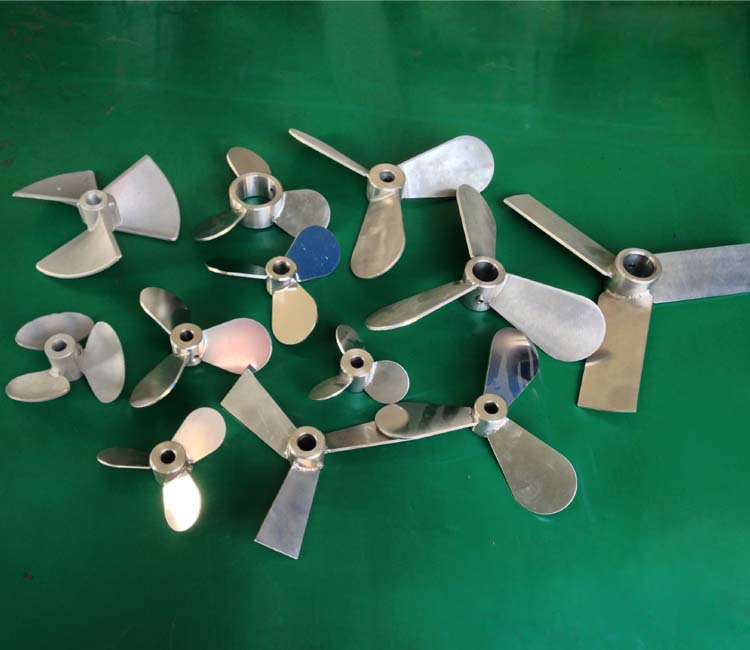
Runoff impellers (such as six straight blade turbines and six curved blade turbines) eject liquid radially, with strong shear and concentrated energy, resulting in the highest efficiency in breaking liquid droplets; Axial flow propellers (such as propeller blades and four blade blades) have a large circulation but weak shear, and when used alone, the average particle size is relatively coarse. High viscosity systems commonly use anchor or screw belts, relying on overall circulation rather than local shear, with limited dispersion ability, and generally require additional high shear emulsifying heads to produce fine droplets.
The baffle is a necessary item for liquid dispersion: without a baffle, the tank will form a complete rotation, and the relative velocity between the blade and the liquid will be small, resulting in weak shear. At the same speed, the power is only about one-third of that when a baffle is installed. The standard configuration is four baffles with a width of one tenth of the can diameter, leaving a gap of about one fiftieth of the can diameter when attached to the wall to avoid dead zone accumulation on the back of the baffles.
|Paddle type | Applicable viscosity | Shear strength | Liquid dispersion performance | Remarks||---|---|---|---|---||Six blade turbine | Low viscosity, within about 1 Pa · s | Strong | Excellent | Equipped with baffles and standard dispersing blades||Six bladed turbine | Low viscosity, within about 1 Pa · s | Medium strength | Good | Power about 20% lower than straight blades||Four diagonal blades | Medium to low viscosity, within about 5 Pa · s | Medium | General | Balancing circulation, commonly used for pre mixing||Push type | Low viscosity, within about 0.5 Pa · s | Weak | Poor | Only performs macroscopic circulation, not dispersion||Anchor or screw belt | High viscosity, above 10 Pa · s | Weak | Poor | Additional high shear emulsifying head required|
How to determine the proportion of dispersed phase and the order of feeding?
One sentence conclusion: It is most economical to control the proportion of dispersed phase between 10% and 30%. When adding materials, the dispersed phase should be slowly added to the continuous phase, and adding them in reverse will result in a coarse and wide particle size distribution.
Adding oil to water and adding water to oil often result in completely different outcomes. Which phase becomes the continuous phase is usually determined by the one with a large quantity, low viscosity, and good solubility in emulsifiers. Once reversed, a completely different product is produced. When making a water in oil system, the oil should be slowly added along the high shear zone of the blade, so that each part of the oil meets the subsequent material after being dispersed; A one-time pouring will result in local high concentration in the short term, aggregation will rapidly intensify, particle size will significantly increase, and this coarse liquid droplet is difficult to remedy by extending the stirring time.
The feeding position also has its own requirements: it should be dispersed and added to the high shear zone near the blade, usually at the nozzle above the blade or near the edge of the disc, rather than above the tank wall or liquid level. The feeding rate can be mastered based on one experience - the time for adding is not less than one-third of the entire dispersion time. In industry, it is usually added within 10 to 30 minutes, calculated based on the total amount of dispersed phase and tank volume.
Why does the particle size become coarser from small-scale testing to production?
One sentence conclusion: The degree of non-uniformity in the flow field between the small test tank and the production tank is different. Only by maintaining geometric similarity and equal power per unit volume can the particle size be close; Zooming in solely based on rotational speed or blade tip linear velocity will result in thickening.
The two commonly used criteria for amplification are: equal power per unit volume (power ÷ volume unchanged) and equal blade tip linear velocity (speed × blade diameter unchanged). The former maintains the overall energy density, while the latter maintains the maximum shear strength. The larger the tank, the greater the difference in energy dissipation rate between different parts of the tank - the area near the blade is the crushing zone, and the area far away from the blade is the circulation zone. The material circulates between the two zones, and the final particle size is determined by both. The circulation zone of a larger tank has a higher proportion, and the average particle size is coarser.
A more prudent approach in practice is to leave a speed control margin for amplification: estimate the motor power based on equal unit volume power, and then equip it with variable frequency speed regulation to make the speed adjustable. After production, fine tune it according to the measured particle size. We are working on a disperser( https://hyline.cn/zh/products/fl-high-speed-disperser )When configuring a complete set of mixing tanks, the working speed range is usually set to 20% above and below the calculated value, which facilitates on-site fine-tuning of particle size and also allows for switching between different formulations.
How to determine whether the dispersion is in place on site?
One sentence conclusion: Look at particle size instead of time. Sampling and standing to observe stratification speed is the fastest on-site criterion. When conditions permit, use a microscope or particle size analyzer for verification.
There are three most practical criteria on site. One is to take a sample and let it stand: take 100 milliliters of the sample and pour it into a measuring cylinder. After letting it stand for 30 minutes, the volume of the chromatography should be observed. If more than 5% of the precipitate appears, it indicates that the particle size is too coarse or the emulsifier is insufficient. The second is microscopic observation: Drop a drop of sample onto a glass slide and magnify it 100 to 400 times to see if the droplet size is uniform. If there are a large number of droplets exceeding 50 microns, it indicates insufficient shear. Thirdly, particle size analyzer: Use a laser particle size analyzer to measure the particle size distribution and observe the ratio of d90 to d10. A ratio less than 3 indicates a narrow distribution and stable system.
When the particle size is found to be too coarse, the troubleshooting sequence is: first check whether the baffle is installed completely, whether the blade is worn or installed upside down; Confirm the proportion of dispersed phase and feeding rate again; Finally adjust the speed and running time. In practice, the vast majority of dispersion is not in place, and the problem lies in feeding too quickly or missing baffles, rather than insufficient motor power. By following this sequence of investigation, the cause can usually be located within half an hour.
Extended reading:-How to match the baffle of the mixing tank? Key points for anti spinning and mixing reinforcement( https://hyline.cn/zh/technology/mixing-tank-baffle-configuration-guide )-How to determine the mixing Reynolds number and flow pattern of a mixing tank? Selection of blade type for laminar, transitional, and turbulent flow( https://hyline.cn/zh/technology/mixing-tank-reynolds-flow-regime-guide )
This article is organized by Haolin Shengda Equipment Manufacturing Co., Ltd. (HYLINE. cn), and the ownership of the information belongs to the original author. Our main products include stainless steel reaction vessels, mixing tanks, storage tanks, dispersers, concentration tanks, and chemical production line accessories, supporting non-standard customization.
Q&A from this article
Frequently asked questions and answers from this article
One sentence conclusion: Droplet fragmentation relies on the inertial force of turbulent v…
Related Products
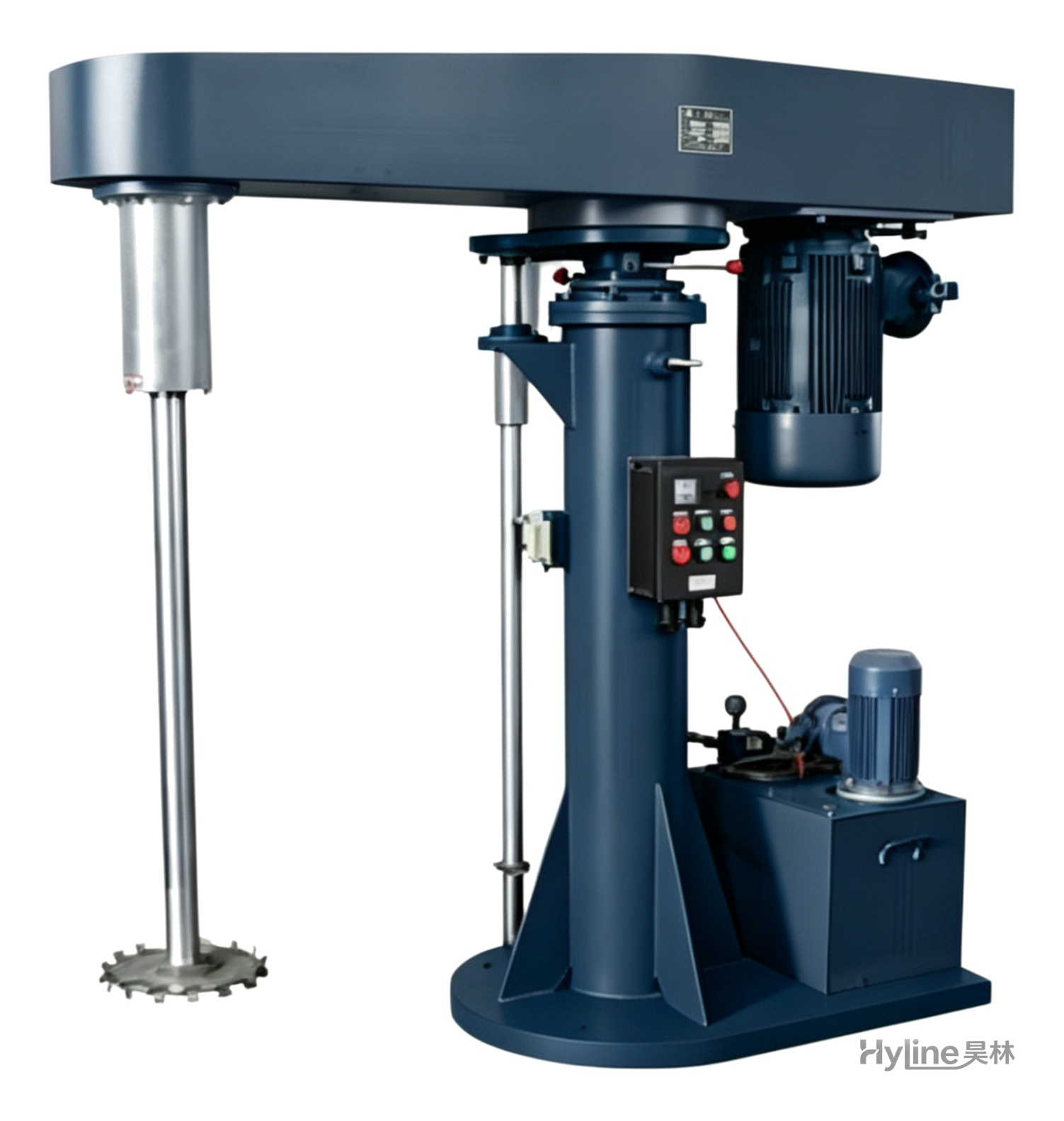
FL Series High-Speed Disperser
Stirs, dissolves and disperses liquids and powders, working alone or matched with sand mills. Variable-frequency drive with hydraulic lift, widely used in paints, inks, coatings, dyestuffs and papermaking.
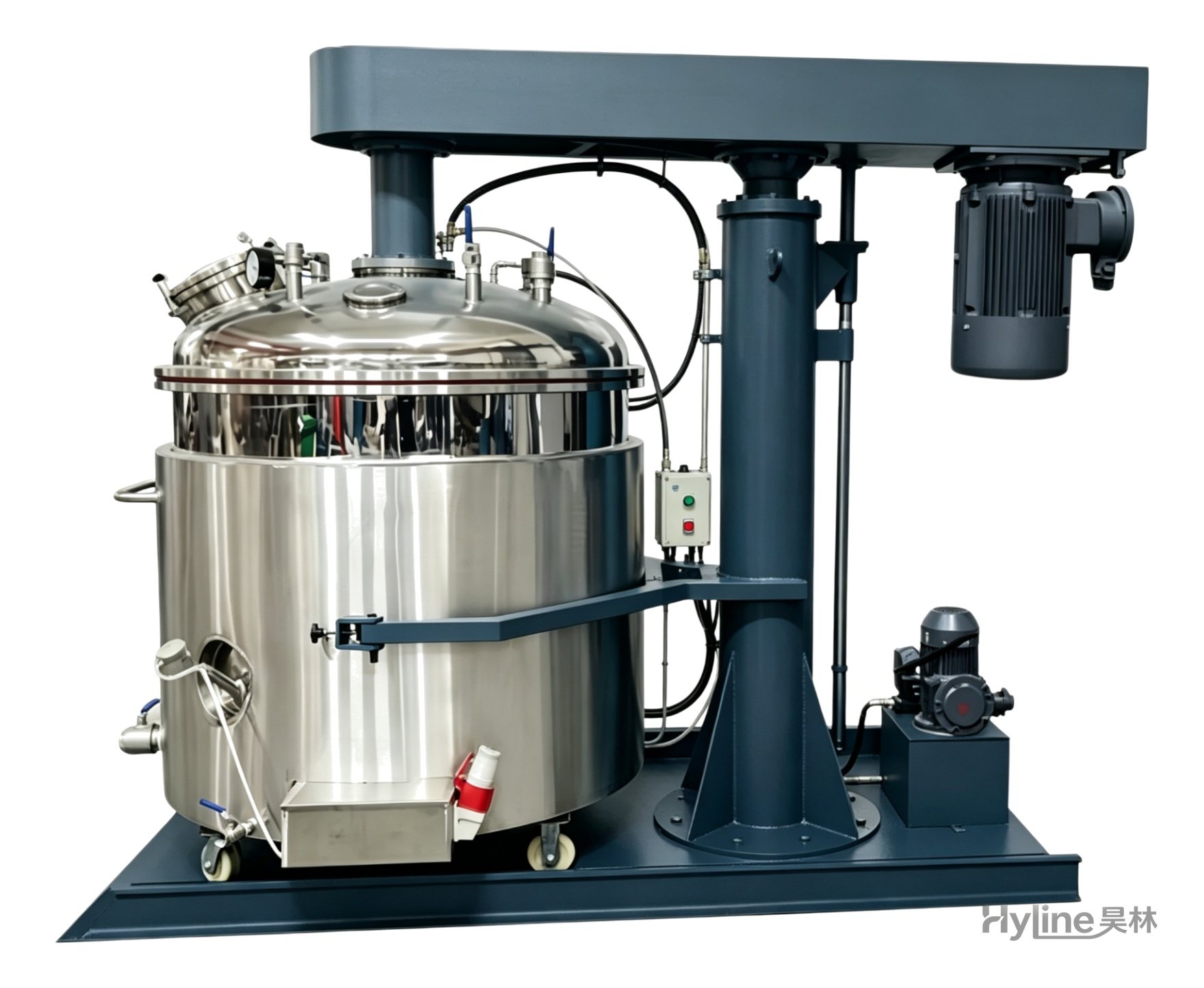
FL Series Vacuum Disperser
Designed for bubble-rich materials and volatile solvents. Vacuum dispersion reduces bubbles and solvent evaporation, accelerates fineness and rapidly defoams. Simple structure, high vacuum, easy operation.
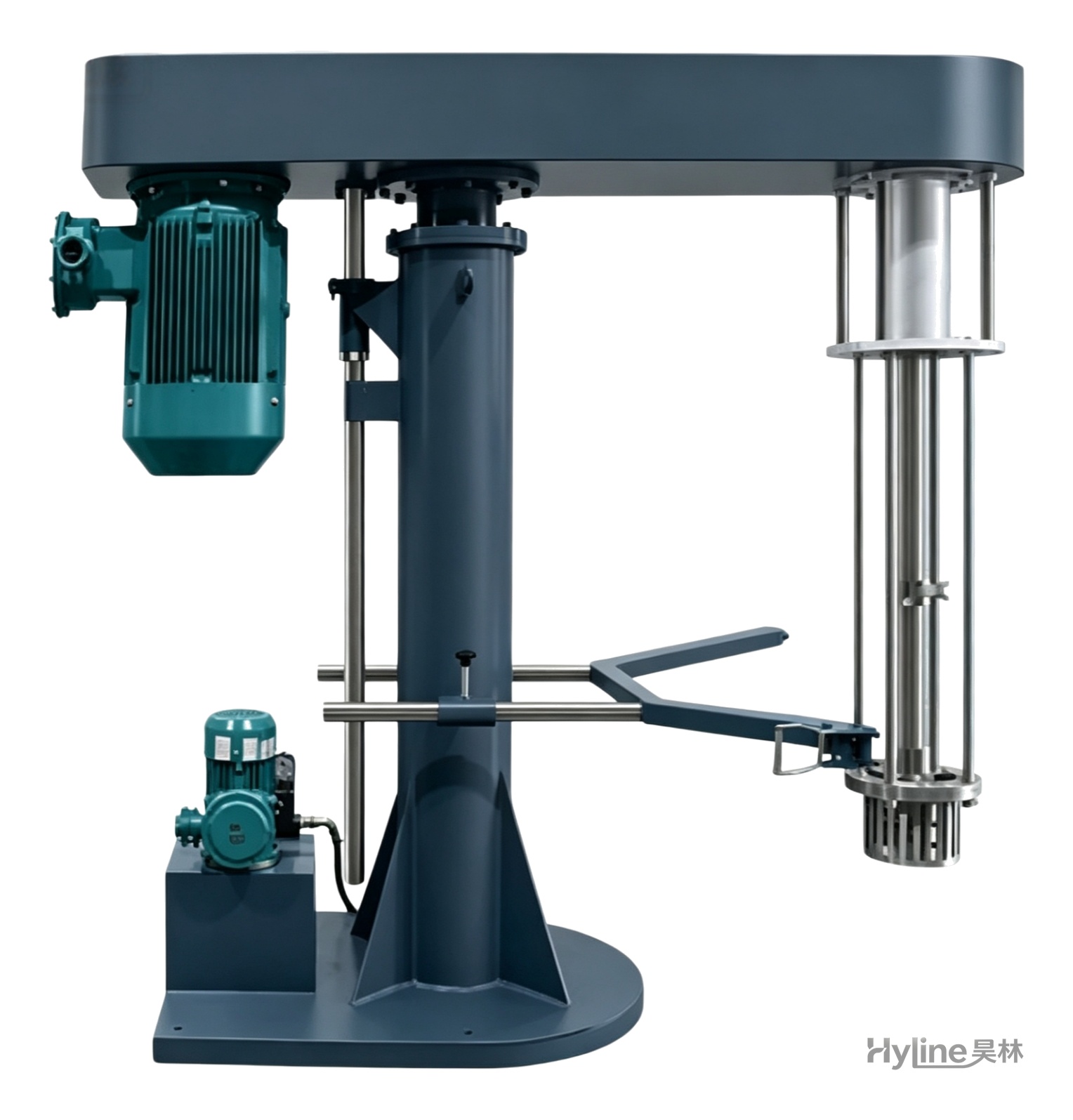
GJD Series Emulsifying Disperser
For emulsification, mixing and dispersion in coatings, inks, pesticides and papermaking. Powerful high-speed shear achieves required fineness and uniformity in a short time.
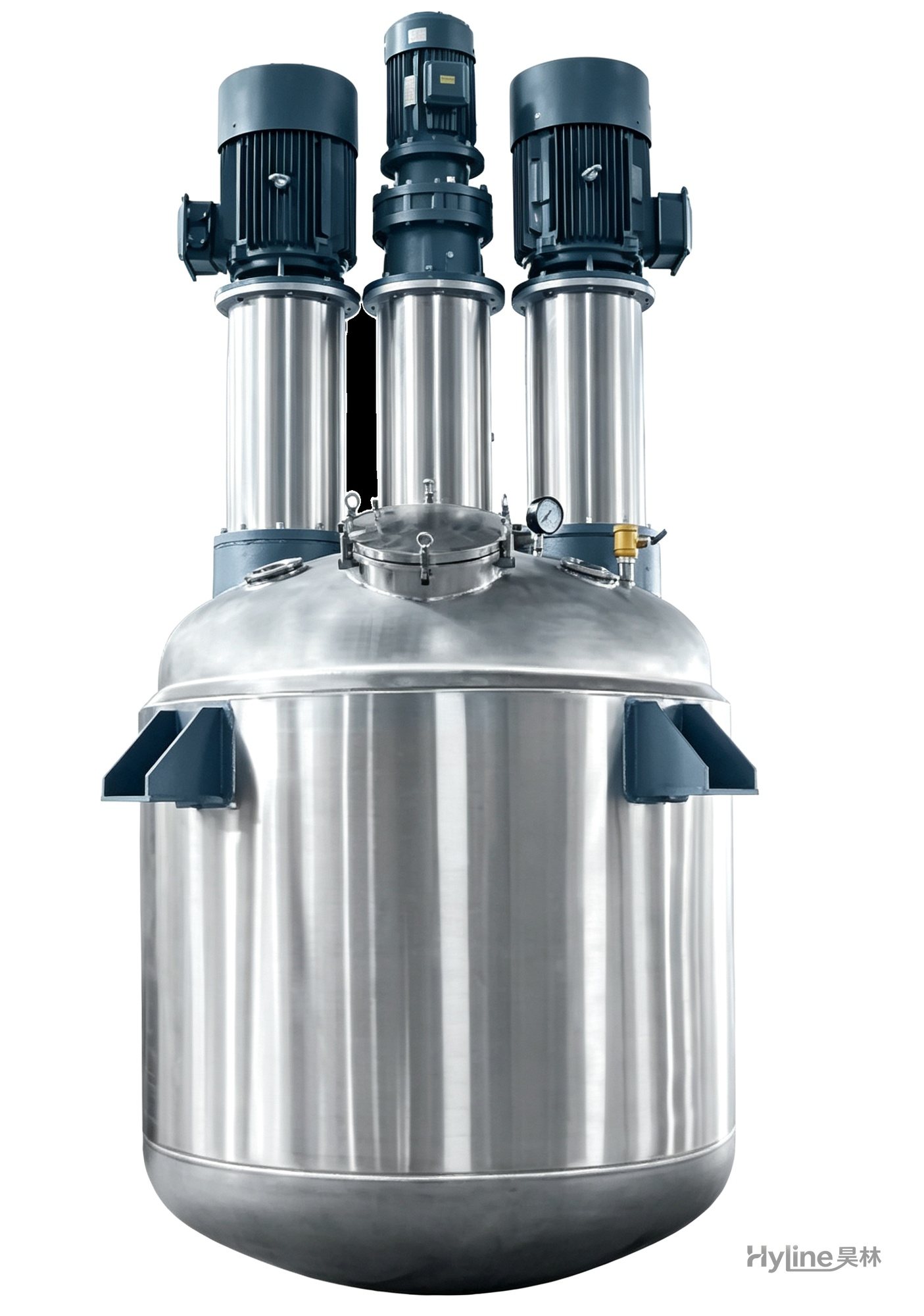
FS Series Multifunctional Dispersing Kettle
Integrates low-speed heavy-duty stirring with high-speed dispersion for medium/high-viscosity and thixotropic materials. Stirring and dispersion proceed simultaneously for ideal results in mixing, dissolving, dispersing and tinting.
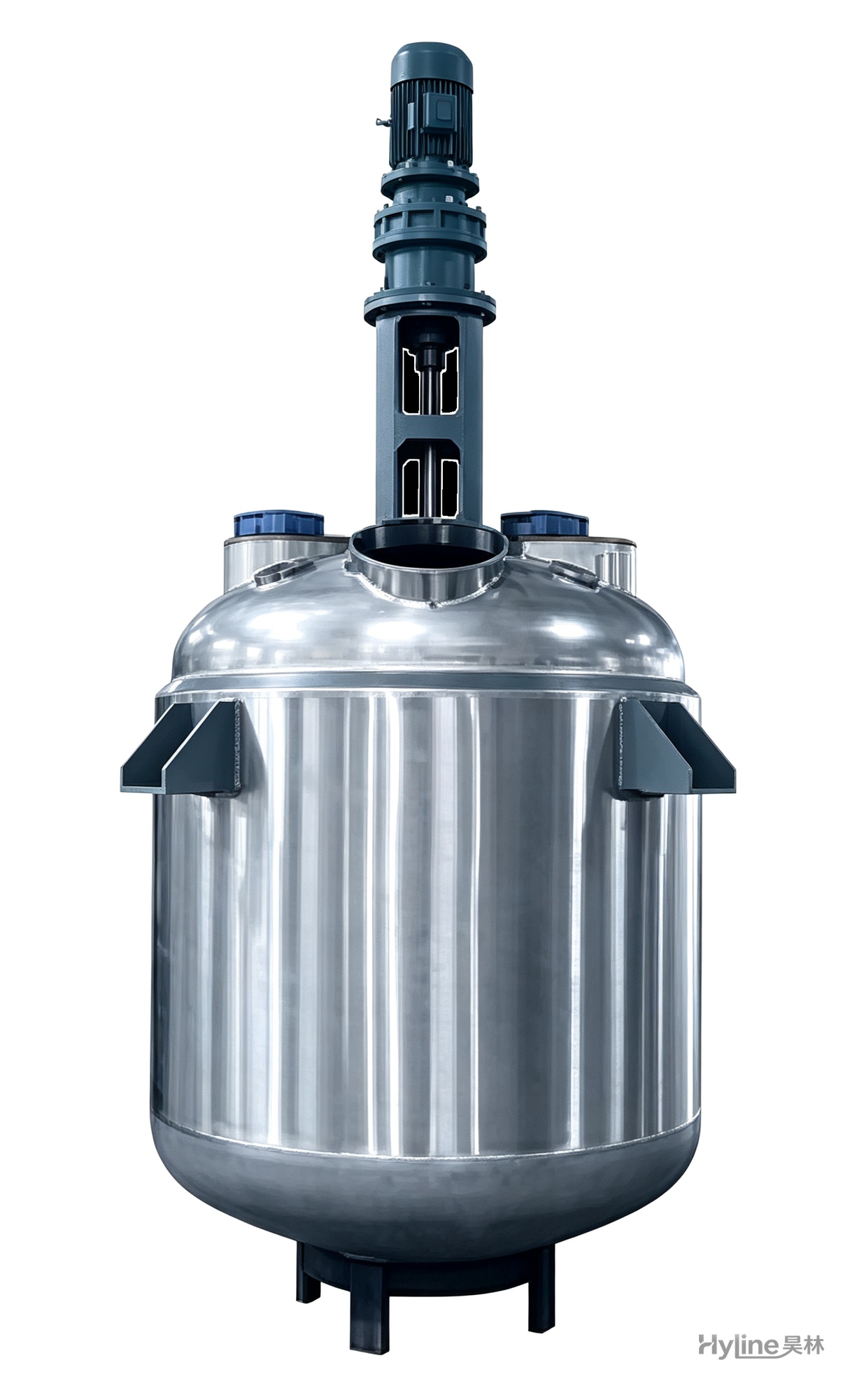
HS Series High-Speed Dispersing Vessel
Specially for dissolving, mixing and dispersing coating materials. The shear force and high speed of the dispersion disc deliver excellent solid-liquid dispersion and homogenization.
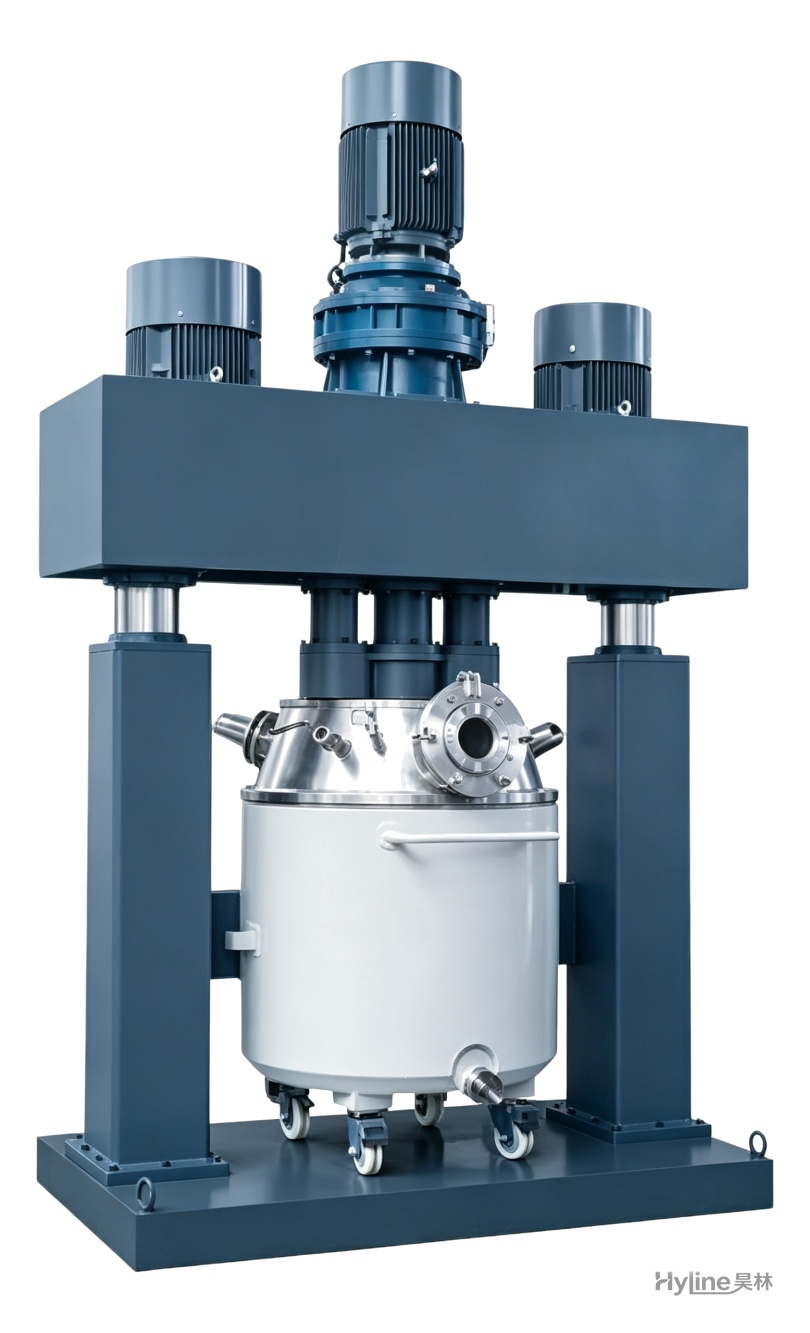
QLF Series Powerful Triple-Shaft Disperser
Two high-speed dispersers plus wall/bottom scraping create complex material flow for rapid dispersion and grinding. Handles high-viscosity pastes of 10,000-2,000,000 cps - widely used for silicone sealants, PU sealants, liquid silicone and electronic adhesives.