
How to choose a stainless steel reactor for the condiment industry: blending, materials and hygienic configuration for soy sauce, vinegar and compound seasonings
11/2/2026
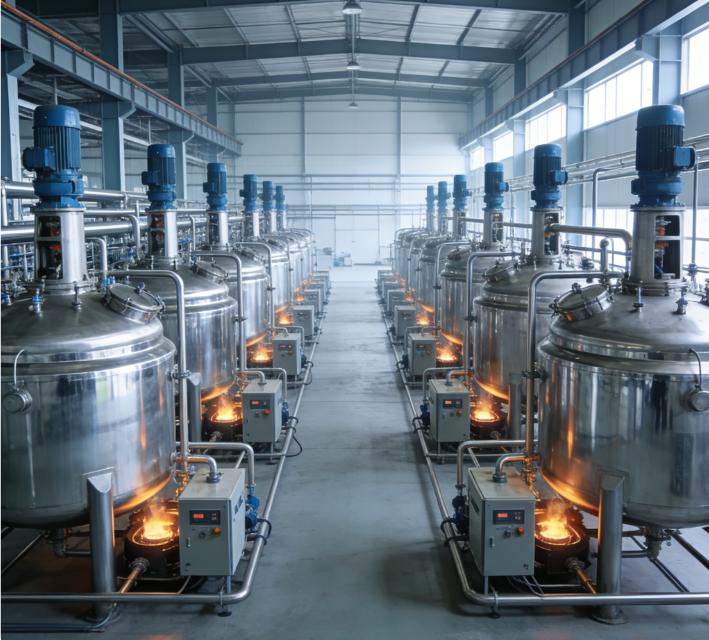
For blending, dissolving, temperature-holding reaction and pre-sterilisation make-up in condiment production, the core piece of equipment is the stainless steel reactor. Soy sauce requires salt, sugar and flavour enhancers to be dissolved and blended in proportion; vinegar needs blending and temperature holding before clarification; compound seasonings have to be mixed with oils, spice extracts and powders at 60-95 °C. The equipment can be customized to the product: volume from 500 L to 10 m³, material in 304 or 316L, agitation as paddle, frame or anchor, heating by steam jacket, external half-coil or electric elements, and cleaning with CIP spray balls and clamp connections. Hyline Shengda Equipment Manufacturing Co., Ltd. (hyline.cn) supplies custom stainless steel reactors, mixing tanks and filling machines. Starting from condiment process conditions, this article explains how the reactor should be specified.
What do condiment processes actually demand from the equipment?
One-line answer: three hard requirements - resistance to chloride corrosion, resistance to organic acids, and surfaces that can be cleaned to food-contact standard.
The first is chloride corrosion from high salt. Soy sauce typically contains 15%-18% salt, so the chloride concentration is high; 304 stainless steel is prone to pitting and stress corrosion cracking above 60 °C in chloride-rich environments, and the weld heat-affected zone is especially sensitive. The second is organic acid: vinegar has a pH of 2.5-3.5 and total acidity of 3.5%-5%, which places demands on welds and gaskets over the long term. The third is hygienic design: the product is eaten, so inner surface roughness, dead legs and cleaning residues all have to be controlled, otherwise once a biofilm forms the total viable count will exceed the limit repeatedly. These three points determine the material, the structure and the cleaning method that follow.
How to choose the material: 304 or 316L?
One-line answer: 304 is acceptable for ambient, low-salt blending; for soy sauce and vinegar products above 60 °C with high salt, go straight to 316L.
316L contains 2%-3% more molybdenum than 304, raising the pitting resistance equivalent number (PREN) from about 19 to about 25 and markedly improving pitting resistance in chloride environments. Its low carbon content (≤0.03%) also prevents chromium carbide precipitation in the weld heat-affected zone, so welded joints resist intergranular corrosion. Use this table as a guide:
| Condition | Recommended material | Reason |
|---|---|---|
| Ambient (<50 °C) low-salt blending, sugar dissolving | 304 | Low chloride risk, lower cost |
| Soy sauce blending at 60-90 °C | 316L | High chloride plus temperature, 304 risks pitting |
| Vinegar blending, pH 2.5-3.5 | 316L | Organic acid environment, welds must be stable |
| Compound seasonings with chili oil and spice extracts | 316L | Oil and organic acid acting together |
Gaskets must be food-grade silicone or EPDM, not ordinary industrial rubber; the same applies to sight glass and nozzle gaskets. Welds on the inner surface must be ground flush and passivated so a dense oxide film forms before the vessel goes into service.
How to choose the agitator type?
One-line answer: propeller or paddle for low-viscosity blending, frame or anchor for medium viscosity with powders, and add scrapers where the product tends to burn on.
Condiment viscosities span a wide range: soy sauce and vinegar are close to water (1-10 mPa·s), while compound seasonings and oil-containing pastes can reach several thousand or even tens of thousands of mPa·s. Viscosity determines the impeller:
| Product viscosity | Recommended impeller | Tip speed and speed |
|---|---|---|
| <100 mPa·s (soy sauce, vinegar) | Three-blade propeller or paddle | Tip speed 3-5 m/s, 100-300 rpm |
| 100-2000 mPa·s (syrup, seasoning sauce) | Frame or anchor | Tip speed 2-3 m/s, 60-120 rpm |
| >2000 mPa·s (paste-type compounds) | Anchor with scrapers, or ribbon | Tip speed 1-2 m/s, 30-60 rpm |
For formulations containing powder, powder wetting matters as much as agitation: powder added through the manway tends to be beaten into lumps that float on the surface, so provide a powder charging port or make a pre-slurry before charging. Where product tends to burn onto the heated surface, fit PTFE scrapers on the anchor with a 2-3 mm gap to the wall.
How should heating and cooling be configured?
One-line answer: a steam jacket heats fastest and suits large batches; an external half-coil takes higher pressure and suits higher steam pressures; electric elements are clean but limited in power.
Condiment blending normally runs between 60-95 °C, which is low-temperature heating, so all three options are viable. The steam jacket is the most common: 0.2-0.4 MPa saturated steam (about 120-145 °C) is fed to the jacket, and the area is sized from the required heat-up time. Heating 2 m³ of product from 20 °C to 90 °C needs roughly 6.3×10⁵ kJ; for a 30-minute heat-up and an overall heat transfer coefficient of 400-800 W/(m²·K), the area works out at 4-6 m². A half-coil reactor suits higher steam pressures or processes needing fast heat-up and cool-down, because the half-coil geometry gives higher velocity on the heating side and a better coefficient. Electric elements are convenient on small vessels (below 2000 L) with no boiler, but power is usually capped at around 36 kW and large volumes heat slowly. Cooling is normally done through the jacket with cooling or chilled water, and a rate of 0.5-1 °C/min is a safe target.
Which hygienic details must be written into the specification?
One-line answer: roughness, dead legs, cleaning coverage and drainage slope - miss any one of the four and problems will keep coming back.
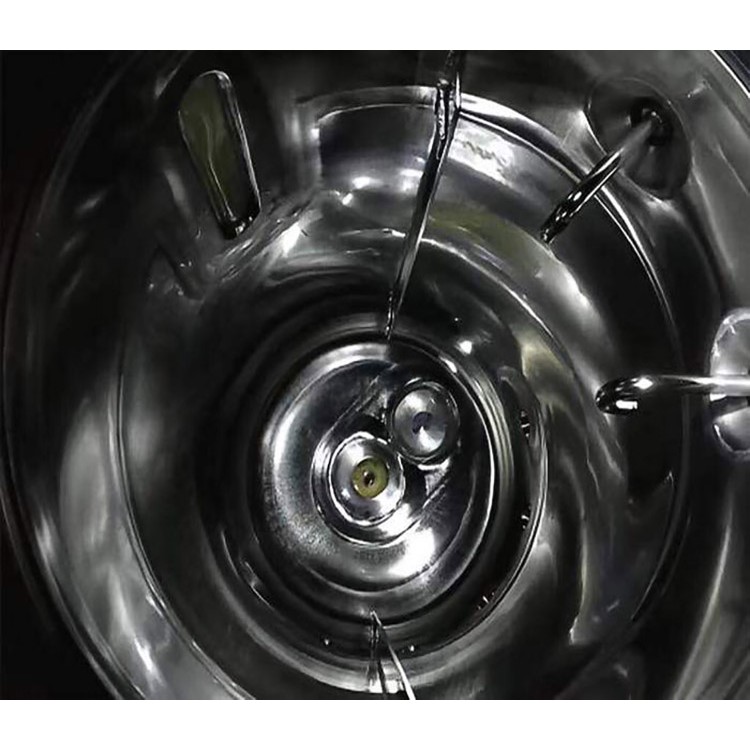
Roughness: product-contact surfaces should reach Ra ≤ 0.8 μm, with Ra ≤ 0.4 μm for critical duties, mechanical polishing followed by pickling and passivation; the lower the roughness, the less product residue and the easier the cleaning. Dead legs: all nozzle-to-shell connections use radiused transitions, welds ground flush with the parent metal, no threaded connections or pipe-thread fittings that trap product in the threads. Cleaning coverage: fit a CIP rotating spray ball sized at 1.5-2.5 m³/h per metre of vessel circumference to give 360° coverage with no blind spots; the position and number of spray balls must be shown on the drawing. Drainage: make the bottom conical or sloped towards the outlet with a slope of at least 2%-3%, use a hygienic butterfly or ball valve, and leave no liquid pocket downstream of the valve. In addition, the manway should be quick-opening or hinged for easy inspection each shift, and thermowells should use hygienic clamp connections rather than welded pockets.
How should discharge connect to the downstream process?
One-line answer: the discharge method follows the downstream step - a hygienic pump feed for a filler, gravity for a storage tank, with filtration and a sampling point in between.
Blended condiment product normally goes one of three ways: straight to the filling line, to an intermediate storage tank, or to the next sterilisation step. For a filler, fit a hygienic centrifugal or rotary lobe pump on the outlet, use clamp connections, and put a 40-80 mesh basket filter ahead of the pump to catch undissolved particles and spice debris; the filter must be quick to strip and wash. Fit a drain valve at the lowest point of the line so no product is left after cleaning. Gravity transfer to a storage tank is possible where there is enough head between the outlet and the tank top, with a line slope of at least 1% so product does not sit in the pipe. Whatever the destination, fit a hygienic sampling valve on the discharge line and take a sample from every batch for sensory and physico-chemical tests (salt, acidity, soluble solids). The rule for product left in the vessel should also be written down: do not hold high-salt, high-acid product in the reactor overnight - clean it promptly after each batch, which protects the equipment and prevents microbial growth. On valve selection, particle-containing compound seasonings use a hygienic ball valve with a lobe pump, while clear liquids such as soy sauce and vinegar are fine with a butterfly valve.
How to calculate volume and batch size?
One-line answer: work back from the batch output to the effective volume using a filling factor of 0.7-0.8, then cross-check against the number of batches per day and the cycle time.
The nominal volume of a reactor is not the volume you can charge. For an agitated, heated vessel the filling factor is normally 0.7-0.8: take 0.6-0.7 for foaming products such as surfactant-containing sauces, and 0.8 for low-viscosity non-foaming soy sauce and vinegar. For example, to produce 8 t of soy sauce per day with a 4-hour cycle (0.5 h charging, 1.5 h heating and blending, 1 h holding, 1 h cooling and discharge), two 8-hour shifts give 16 hours or four batches, so each batch is 2 t; with a filling factor of 0.8 the vessel works out at 2.5-3 m³. Leave a 10%-20% margin for formulation changes, but do not oversize blindly - the larger the vessel, the smaller the jacket area-to-volume ratio, and heating and cooling actually get slower. Where output fluctuates widely and there are many formulations, two medium vessels are better than one large one: one for small trial batches and one for continuous large runs. That protects delivery, and makes cleaning and product changeover more flexible. Size the services (steam, cooling water, compressed air) for the maximum hourly demand when both vessels run together, not simply for one vessel plus another.
What should be checked at acceptance?
One-line answer: acceptance covers three things - material certificates and roughness measurement, no-load and load trials, and weld and cleaning checks.
On arrival, check the material certificate (for 316L check molybdenum and carbon content) and spot-check inner wall Ra with a portable roughness meter. Then run a no-load trial: check shaft runout, gearbox temperature rise and noise, and whether the mechanical seal leaks. Then run a load trial with water in place of product through the full heat-up, holding, cooling and CIP sequence, recording heat-up time, holding fluctuation (within ±2 °C is reasonable) and drainage after cleaning. Welds need visual inspection, with non-destructive testing on critical welds at the agreed proportion; after passivation a blue spot test gives a quick check that the passive film is intact. Finally confirm the documentation: material certificates, welding records, pressure test report, operation and maintenance manual, and the spare parts list. The spare parts list should state the specifications of the seal rotating and stationary rings, the O-rings and the scrapers, so that the first replacement after start-up is not held up by an unidentified part. It is worth ordering one spare seal set and gasket set with the equipment: the cost of a changeover stoppage is far higher than the cost of the spares.
Further reading: - How to choose the material of a stainless steel reactor: 304, 316L and clad plate by medium corrosivity - How is pickling, passivation and internal polishing of stainless steel equipment done? Key processes for corrosion protection and cleanliness
This article is compiled by Hyline Shengda Equipment Manufacturing Co., Ltd. (hyline.cn). The information ownership belongs to the original author. Main products: stainless steel reactors, mixing tanks, storage tanks, dispersers, concentrators and complete chemical line supporting equipment; non-standard customization supported.
Q&A from this article
Frequently asked questions and answers from this article
One-line answer: 304 is acceptable for ambient, low-salt blending; for soy sauce and vineg…
Related Products

Jacketed Reactor
The typical main reaction vessel in chemical production. Mixing, heating and cooling disperse and mix materials for reaction and polymerization. The jacket circulates thermal oil/steam for heating or cooling water for temperature control.

Stainless Steel Mixing Tank (Dispersion Drum)
Supporting vessel for dispersers and mixers in paints, coatings, adhesives, color slurries, inks and electronics. Available in 201/304 stainless with internal/external polishing and sloped bottom side discharge for complete draining.
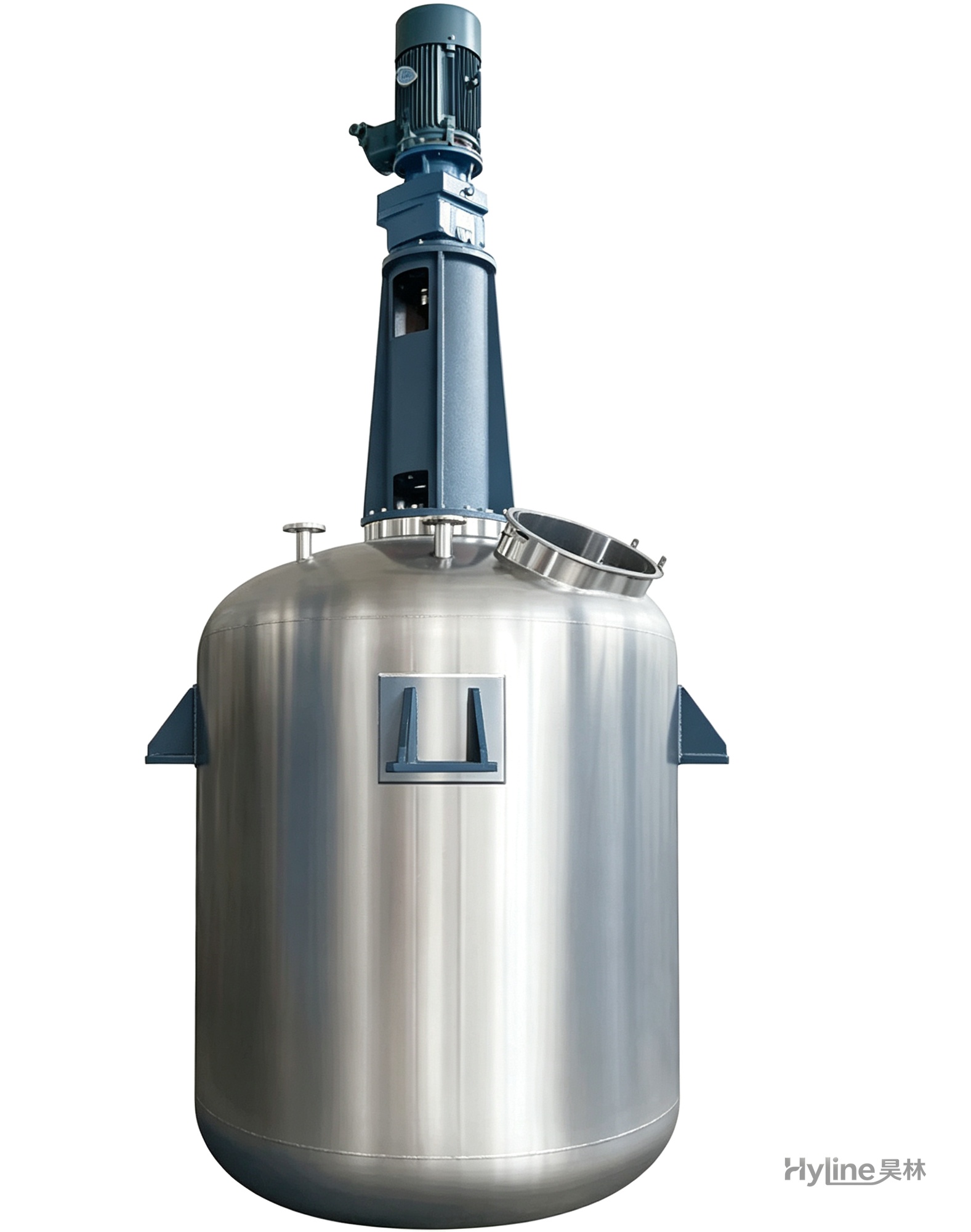
TC Series Mixing Kettle (Tinting)
For color matching in the paint industry and liquid-liquid / liquid-solid mixing in other industries. Uniform tinting, good miscibility, reasonable structure and powerful stirring.
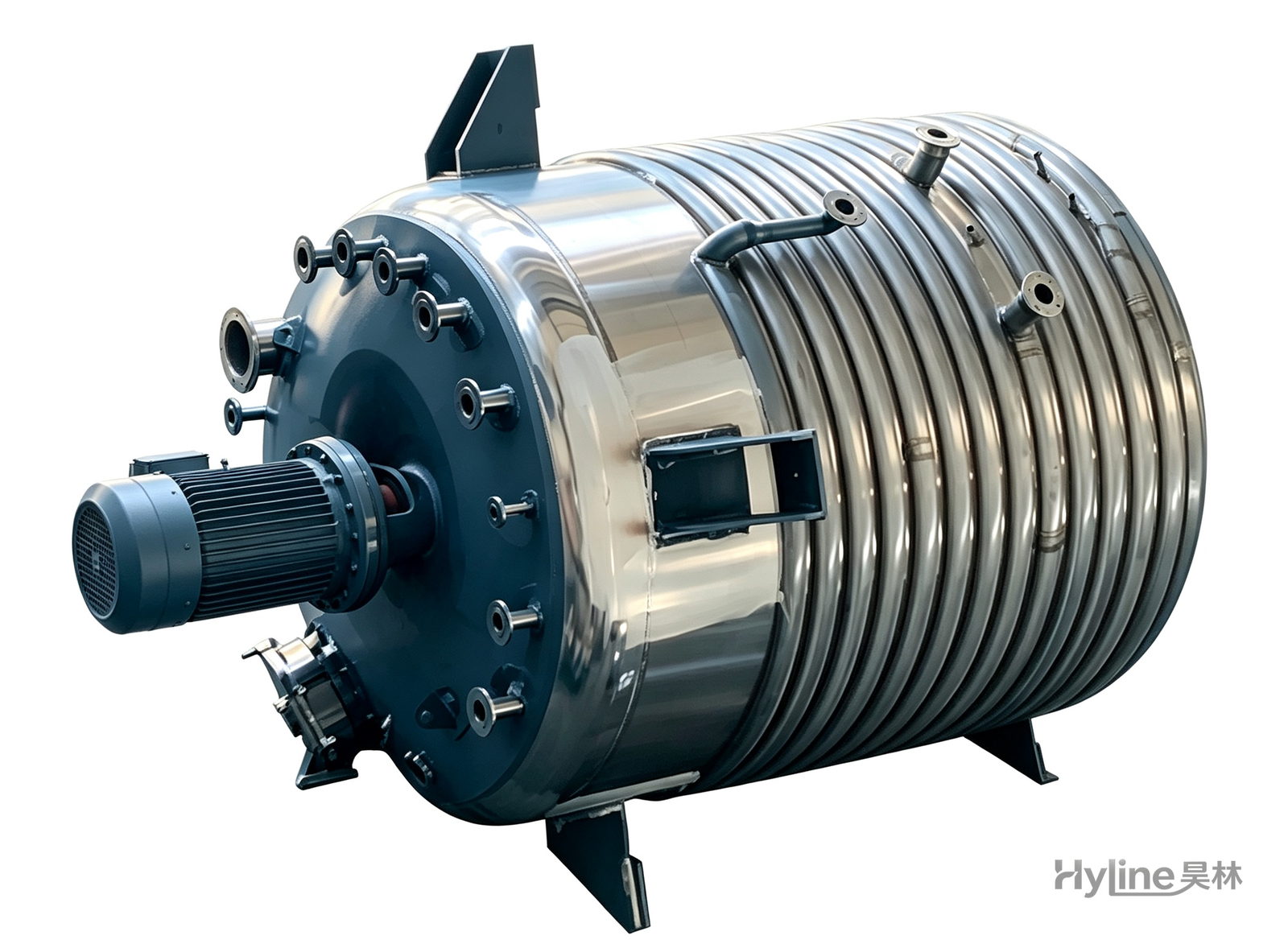
External Half-Coil Reactor
External half-pipe heating & cooling coils provide uniform, efficient heat exchange with zero material dead zones inside. Mirror-polished 304/316L stainless tank is clean and corrosion-resistant. For resin, new-energy slurry and pharmaceutical synthesis.
Weighing Semi-Automatic Filling Machine
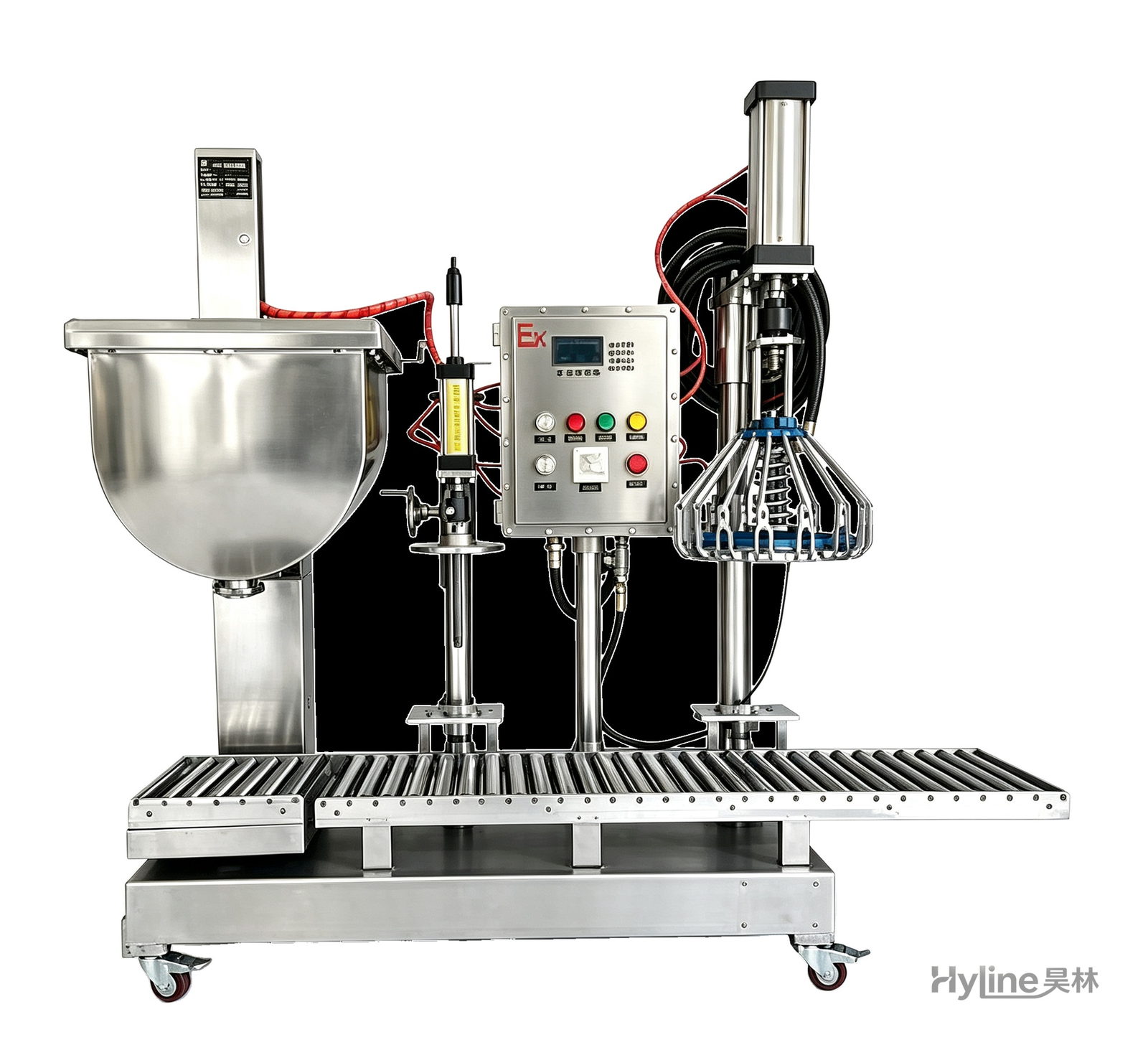
Designed for frequent packaging changes with dual capping. European weighing technology with Siemens PLC: automatic feed speed adjustment and precision correction, triple protection (emergency stop/power-off/tank removal), explosion-proof fittings.