
How to Choose the Material of an Emulsifier Tank? Selecting 304 vs 316L by Liquid pH and Cleanliness
10/19/2026
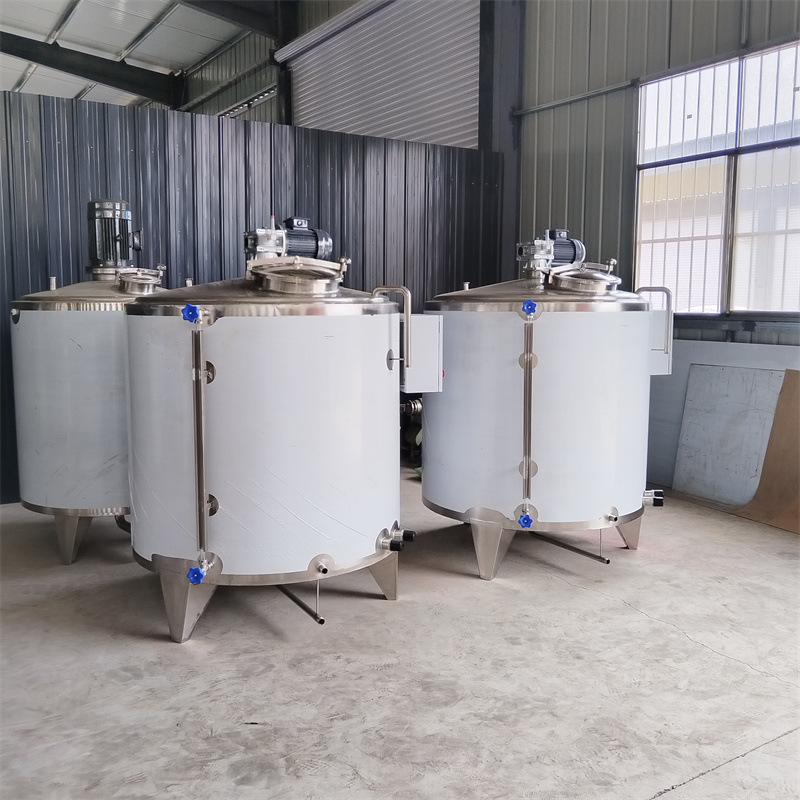
Emulsifier tanks are core equipment for making creams, emulsions and suspensions in the cosmetic, food and pharmaceutical industries. The material directly determines the corrosion life of the tank and the cleanliness of the product. 304 and 316L are the two most common stainless steels for emulsifier tanks, generally 10%~20% apart in price; choosing the wrong material can cause pitting, weld corrosion and even discolored liquid. This article explains how to choose the material of an emulsifier tank by liquid pH and cleanliness, so that you can fix this item correctly at one pass.
What materials are commonly used for emulsifier tanks? What is the difference between 304 and 316L?
One-sentence conclusion: 304 suits neutral, mildly corrosive liquids and general cleanliness requirements; 316L contains molybdenum and resists chloride and low-pH corrosion much better, suiting acidic, salty and high-cleanliness conditions.
304 (06Cr19Ni10) contains about 8%~10.5% nickel and no molybdenum; it is lower in price and suits liquids with pH 6~9 without chloride ions. 316L (022Cr17Ni12Mo2) contains about 2%~3% molybdenum with lower carbon content; it has stronger resistance to pitting and intergranular corrosion and suits acidic liquids below pH 5, liquids containing chloride ions, and conditions requiring high-temperature sterilization. The inner wall of the emulsifier tank is in direct contact with the liquid, and welds, flanges and homogenizing heads are the parts most likely to fail first; material selection should consider these accessories together rather than only the shell.
| Item | 304 stainless steel | 316L stainless steel |
|---|---|---|
| Typical grade | 06Cr19Ni10 (S30408) | 022Cr17Ni12Mo2 (S31603) |
| Nickel content (typical) | 8%~10.5% | 10%~14% |
| Molybdenum content | None | 2%~3% |
| Chloride pitting resistance | General | Clearly better |
| Suitable liquid pH (typical) | 6~9, no chloride | 4~9, slight chloride allowed |
| Achievable surface polish (typical) | Ra≤0.8μm | Ra≤0.4μm |
| Price (relative, typical) | Baseline | 10%~20% higher |
How to choose the material by liquid pH?
One-sentence conclusion: use 304 when the pH is stable at 6~9 with no chloride; when the liquid is acidic (pH<6), salty, or in long contact with acidic media, 316L is more stable.
The common pH of cosmetic creams is 5.5~7.5, and most neutral formulas can use 304; but formulas containing functional ingredients such as fruit acid or salicylic acid may have a pH around 4, and the tank shell, homogenizing head and discharge valve in long contact with low-pH liquid make 316L more reliable. The same applies to the food industry: vinegar, sauces and fermentation liquids are low in pH and often salty, so 316L is the mainstream choice. It should be noted that pH fluctuates batch by batch; selecting by the "minimum pH" rather than the "average pH" is safer. In addition, chlorine in cleaning agents (such as sodium hypochlorite) can also cause pitting on 304, so lines using chlorine-containing disinfectants are recommended to use 316L. One more point: material selection should consider not only the liquid itself but also the process temperature. 316L shows a clearer advantage when high temperature (generally above 80℃) combines with low pH; 304 may show intergranular corrosion tendency in hot dilute acid, so high-temperature acidic conditions should prefer 316L. The material grade and processing state (cold-rolled/hot-rolled, surface treatment) should also be stated when asking for quotations, because the corrosion resistance of different surface states differs considerably.
How to determine cleanliness and surface treatment?
One-sentence conclusion: the inner wall of a sanitary emulsifier tank generally requires Ra≤0.4μm electropolishing, together with large-radius transitions and dead-corner-free structure; material and surface treatment should be decided together.
Surface roughness directly affects wall adhesion and cleaning difficulty: Ra≤0.8μm is the bottom line of ordinary food grade, Ra≤0.4μm electropolishing is common in pharmaceutical and high-end cosmetics, and Ra≤0.2μm is used for extremely strict sterile conditions. After polishing, pickling and passivation removes surface free iron and forms a dense passive film, improving corrosion resistance. Structurally, the large-radius tank bottom, the stirring shaft seal, and the connections between the homogenizing head and the shell should all avoid dead corners and gaps; otherwise even the best material will retain liquid in dead corners. Material, surface treatment and structure are one system; deciding them separately easily leaves cleaning dead corners.
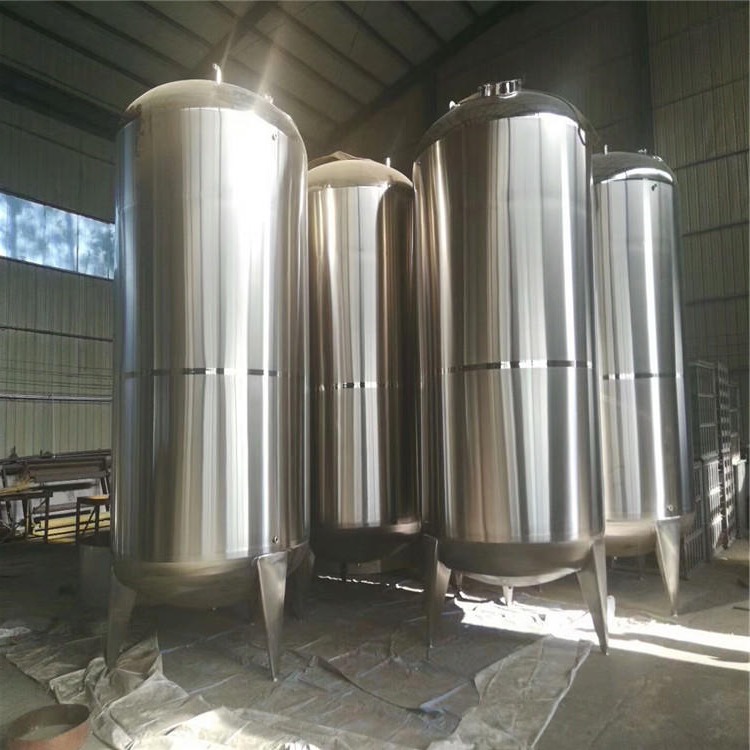
What other parts should be considered in material selection?
One-sentence conclusion: the homogenizing head, mechanical seal, sight glass, discharge valve and piping should use the same or a higher material grade as the shell to avoid dissimilar-metal contact corrosion.
The homogenizing head stator-rotor shears at high speed with a large contact area and high linear speed; it is generally made of the same material as the shell with hardening treatment. Mechanical seal stationary and rotating rings must be compatible with the liquid; salty liquids should avoid ordinary carbon steel springs that corrode easily. If accessories such as sight glasses, manholes and temperature-sensing sleeves use a lower grade, they become local corrosion sources. In addition, dissimilar-metal contact (such as a 304 shell with carbon steel flanges) easily causes galvanic corrosion in humid environments; unify the material grade during selection, or at least isolate the contact surfaces. It is recommended to list the material of every part of the whole tank in the technical agreement to avoid discovering non-compliant accessory materials after delivery. Material reports and arrival inspection should also be part of acceptance: the heat number, material certificate and nameplate of 304/316L should be consistent, with spectral spot checks if necessary; the polishing grade should be spot-checked on the inner wall and welds with a roughness meter. Only when the material pass is strictly controlled do the subsequent homogenizing and cleaning have a solid basis. Another easily overlooked point: the inner diameter and polishing grade of piping and valves should be consistent with the shell, otherwise cleaning flow is insufficient and dead corners retain residue. The discharge piping of an emulsifier tank is generally designed for CIP flow, with an in-pipe velocity of usually 1.5~2.5 m/s; the material, polishing and weld quality of the tank and piping should follow one standard so that the whole-line acceptance does not become contentious.
How to match the stirring speed and motor power of an emulsifier tank?
One-sentence conclusion: the homogenizing head linear speed is generally 10~40 m/s and the main stirring speed is 20~120 r/min (decided by volume and viscosity); motor power is selected separately for the homogenizing and main stirring loads, generally leaving 10%~20% margin.
An emulsifier tank is usually a double-drive unit of "main agitator + homogenizing head": the main agitator turns the material over to the homogenizing head suction, and the homogenizing head performs high-speed shear. The linear speed of the homogenizing head is the key parameter of fineness, generally 10~40 m/s; the main stirring speed is decided by volume and viscosity — small tanks can reach above 100 r/min, while large tanks and high-viscosity materials generally run at 20~60 r/min. Motor power is selected separately according to the rated power of the homogenizing motor and the main stirring motor, generally leaving 10%~20% margin; the four parameters of tank volume, homogenizing fineness, speed and power should be written into the technical agreement so that the manufacturer can give an accurate configuration.
When selecting motors, also note: the homogenizing motor starts and stops frequently with large load fluctuation, so a VFD-rated motor with soft start is recommended; in explosion-proof areas, motors and electrical control should be configured to the explosion-proof grade. The speed and power parameters directly affect the gearbox ratio and shaft diameter, so they cannot be decided by tank volume alone.
How to determine homogenizing fineness and rotor-stator gap?
One-sentence conclusion: the target fineness decides the homogenizing stages and the rotor-stator gap; generally one-stage homogenizing can reach 50~100μm, and raising the linear speed with multi-stage circulation can reach 5~20μm, with the gap adjusted by material viscosity.
The narrower the rotor-stator gap and the higher the linear speed, the stronger the shear and the finer the fineness, but the greater the heating and wear. A standard homogenizing head generally has an adjustable gap of 0.2~1.0mm; combined with speed and circulation times, it reaches the target fineness. Materials containing abrasive particles should use a larger gap with regular wear inspection. It is recommended to describe the fineness requirement as "target fineness + circulation times + test method" in the technical agreement, which is far more verifiable than "homogenized sufficiently". Measured fineness is affected by sampling position and testing instrument, so the agreement should also specify the testing standard. Setting the fineness target too high also lengthens the batch time, so a balance should be found between homogenizing fineness and capacity.
What are the common misunderstandings about emulsifier tank material?
One-sentence conclusion: the three most common misunderstandings are "asking only price without material", "looking only at the shell and ignoring accessories", and "assuming 304 works for everything".
Asking only price without material: for the same nominal volume, the price difference between 304 and 316L, polishing grade and homogenizing head material can reach 20%~40%, so the quotation should list material and surface treatment item by item. Looking only at the shell and ignoring accessories: mechanical seals, sight glasses, flanges and discharge valves with grades inconsistent with the shell are exactly the high-failure points. Assuming 304 works for everything: 304 is indeed sufficient in weakly corrosive, chloride-free environments, but in salty, low-pH and high-temperature sterilization scenarios pitting risk is high; confirming in advance avoids corrosion rework after commissioning. During selection, treat the material list as part of the acceptance clause and check the delivered parts item by item.
How to turn material selection into a procurement checklist?
One-sentence conclusion: state four conditions clearly — liquid pH, chloride, cleaning agent and cleanliness grade — and let the manufacturer provide a material and surface-treatment plan based on them, instead of just quoting "stainless steel".
Before procurement, prepare a short duty table: liquid name and pH range, whether chloride or salt is present, which disinfectant is used for cleaning, target cleanliness grade (food grade/pharmaceutical grade), tank volume and homogenizing fineness requirement. With the duty table, the manufacturer provides 304/316L suggestions, polishing grade, passivation process and accessory material list. During inquiry and acceptance also note three things: first, write "material + polishing grade + homogenizing head material" into the quotation for item-by-item comparison; second, check the material report after arrival (manufacturers generally provide a material certificate or spectral spot check), with the polishing grade measured by a roughness meter; third, verify homogenizing fineness and cleaning effect in trial production — fineness by a particle size analyzer and cleaning by inner-wall residue and microorganism sampling. Material is the foundation of emulsifier tank quality; acceptance done well means less rework after commissioning. When Haolin Shengda customizes emulsifier tanks, it first fixes the material and surface treatment according to this duty table, then configures the main agitator, homogenizing head and scraper structure, ensuring that the material plan and process plan are aligned at one pass.
Haolin Shengda manufactures stainless steel reactors, mixing tanks, storage tanks, dispersers, concentrators and complete chemical lines, and supports non-standard customization of emulsifier tanks with 304/316L materials, electropolishing and CIP sanitary design. Before choosing the material, first write down the liquid pH, chloride condition and cleanliness grade, then discuss the configuration — this saves many detours.
Further reading: - How to scale up an emulsifier from laboratory to production? Homogenizing time, linear speed and volume scale-up rules - How to carry out pickling, passivation and inner-wall polishing of stainless steel equipment? Key processes for corrosion prevention and cleanliness
This article is prepared by Haolin Shengda Equipment Manufacturing Co., Ltd. (hyline.cn), specializing in stainless steel reactors, mixing tanks, storage tanks, dispersers, concentrators and complete chemical production lines, supporting non-standard customization.
Q&A from this article
Frequently asked questions and answers from this article
One-sentence conclusion: use 304 when the pH is stable at 6~9 with no chloride; when the l…
Related Products
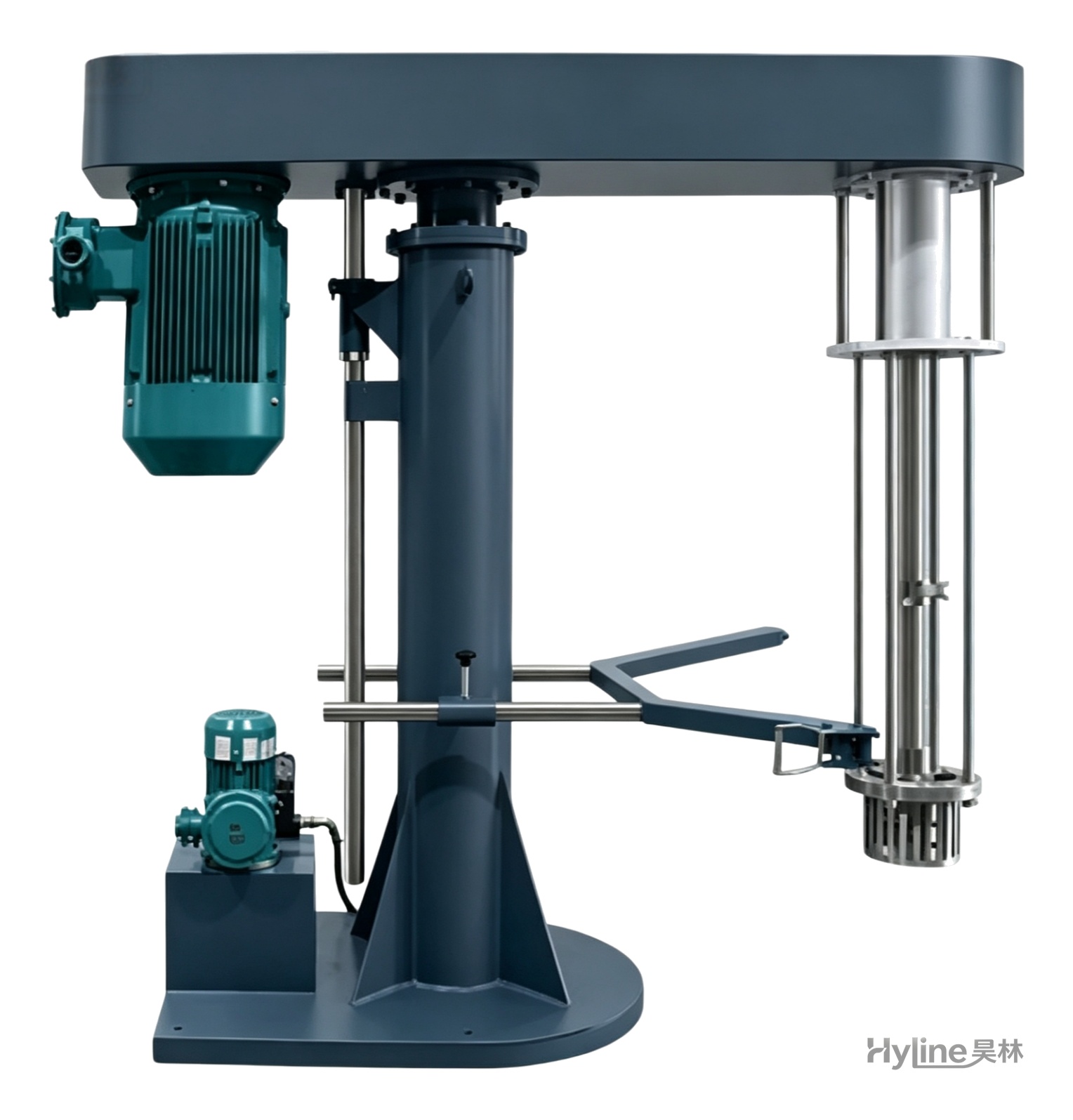
GJD Series Emulsifying Disperser
For emulsification, mixing and dispersion in coatings, inks, pesticides and papermaking. Powerful high-speed shear achieves required fineness and uniformity in a short time.

Stainless Steel Mixing Tank (Dispersion Drum)
Supporting vessel for dispersers and mixers in paints, coatings, adhesives, color slurries, inks and electronics. Available in 201/304 stainless with internal/external polishing and sloped bottom side discharge for complete draining.

Jacketed Reactor
The typical main reaction vessel in chemical production. Mixing, heating and cooling disperse and mix materials for reaction and polymerization. The jacket circulates thermal oil/steam for heating or cooling water for temperature control.
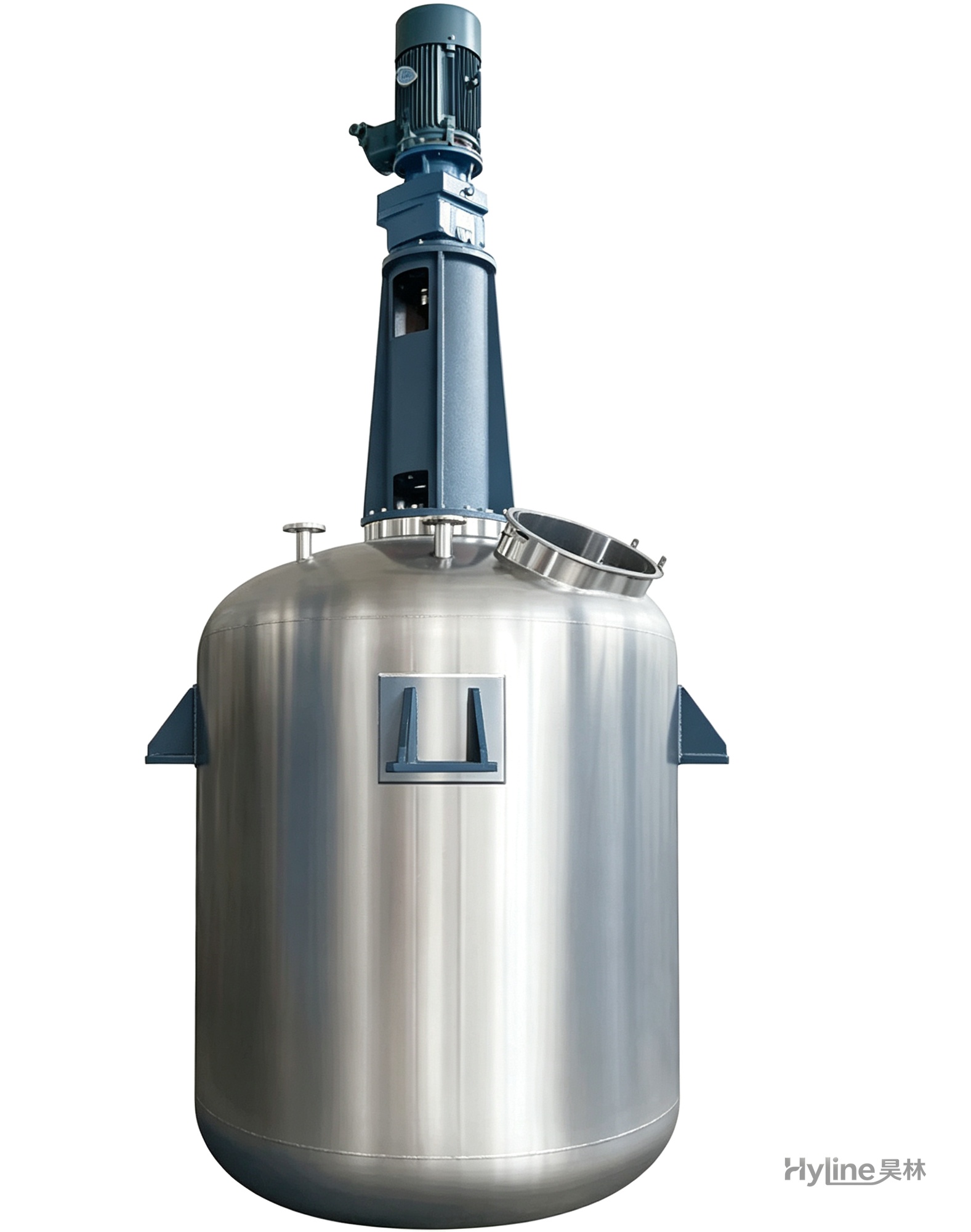
TC Series Mixing Kettle (Tinting)
For color matching in the paint industry and liquid-liquid / liquid-solid mixing in other industries. Uniform tinting, good miscibility, reasonable structure and powerful stirring.
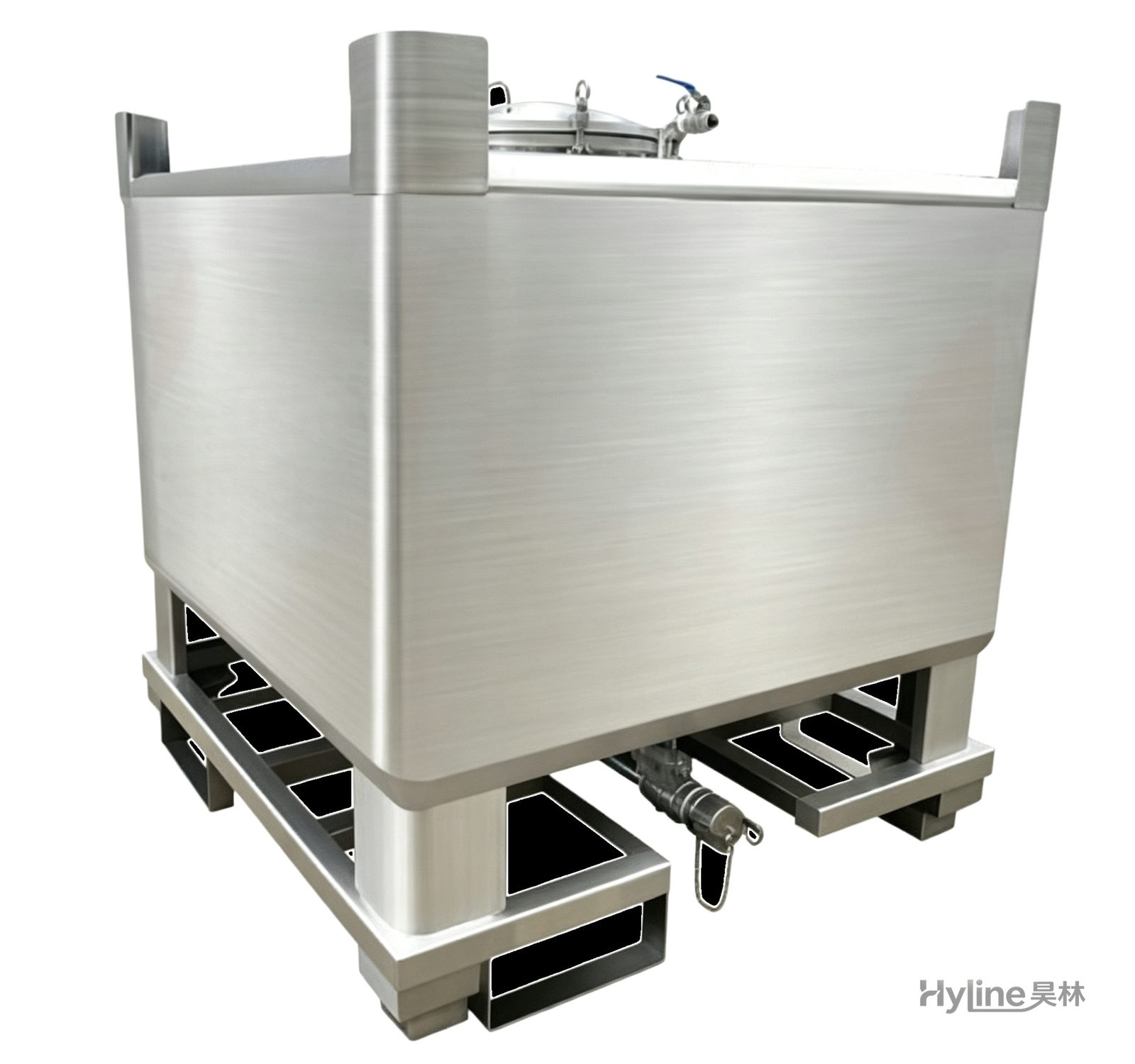
IBC Tank (Intermediate Bulk Container)
HDPE blow-molded liner with hot-dip galvanized steel frame - UV resistant, anti-aging, easy to clean, non-toxic. Four-way fork base for easy handling and stacking; ideal for liquid storage and transport.